What's in this review
- What makes low calorie snacks filling as well as light
- Protein, fiber, and water: the three filling levers
- Calories per gram: the arithmetic behind every snack number
- Calorie density compared, food by food
- A commonly cited calorie table for everyday snacks
- Fullness per 100 calories: what you get for the same energy
- High volume low calorie snacks, ranked by food per calorie
- Why a label serving is rarely what you actually eat
- A worked example: one snack, four numbers
- How to compare two snacks side by side
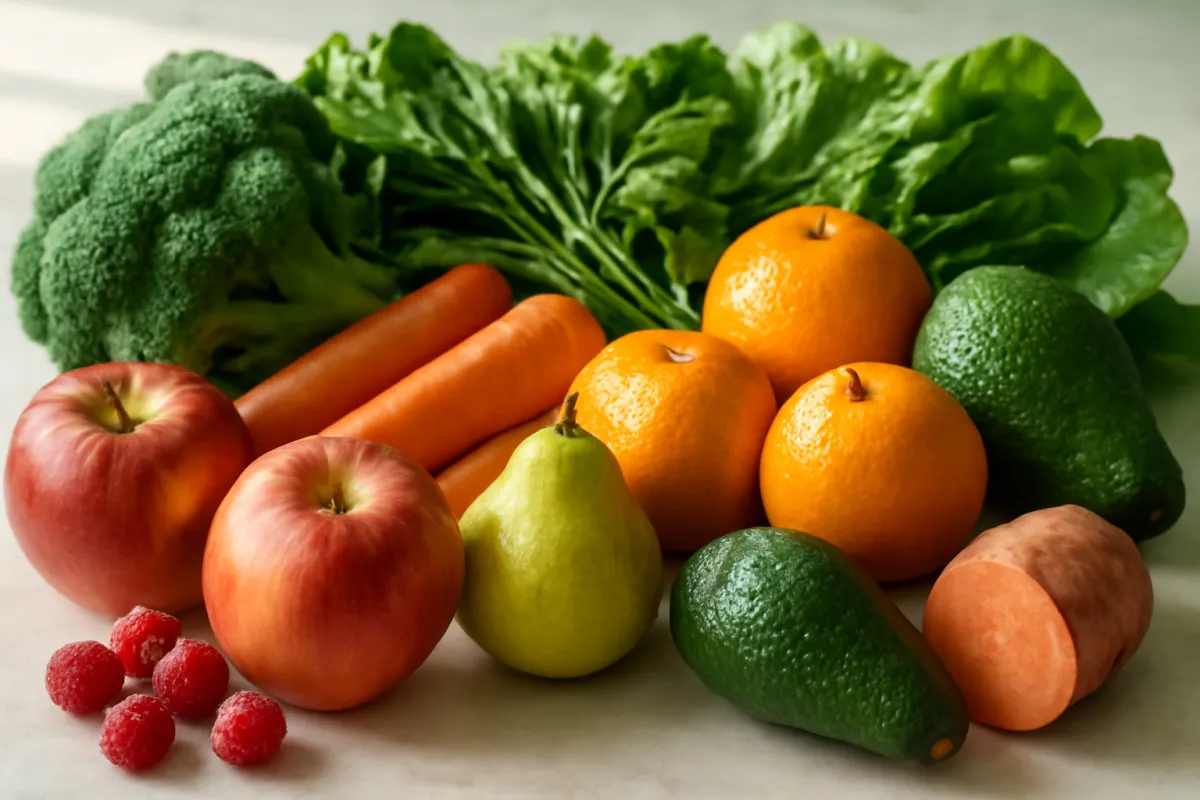
- Fruit snacks that stay naturally low in calories
- Vegetable snacks and high-volume picks
- Protein-forward snacks that keep you full
- Dairy snacks worth knowing
- Whole-grain snacks done sensibly
- High-volume, low-calorie foods explained
- Low calorie snack ideas under 100 calories
- Low calorie filling snacks under 200 calories, built by pairing
- Healthy low calorie snacks: what the phrase should actually mean
- Portioning snacks without a scale
- Store-bought versus homemade snacks
- Lower-calorie swaps for sweet cravings
- Lower-calorie swaps for salty, crunchy cravings
- Snacks for specific moments in the day
- Low calorie snacks away from a fridge
- Snack-planning tips that make it automatic
- Common mistakes with low-calorie snacking
- A quick low-calorie snack checklist
- The bottom line
Short answer: A low calorie snack is mostly a question of calorie density: calories per gram multiplied by the amount eaten. For the same 100 calories you can have roughly 285 grams of baby carrots, 170 grams of plain nonfat Greek yogurt, or 17 grams of almonds. The most filling choices under 200 calories pair water, fiber, or protein with a modest portion: whole fruit, raw vegetables, plain yogurt, eggs, cottage cheese, and edamame.
Low calorie snacks are not really a category of food. They are a category of arithmetic. Almost any snack can be a small number or a large one, and the thing that decides which is the weight of it on the plate. A cup of cherry tomatoes and a small handful of almonds sit at opposite ends of that arithmetic even though both fit in one hand, and the tomatoes are the ones that fill the space in your stomach. Learn the arithmetic once and you stop needing a list to tell you what counts as a light snack, because you can work it out for whatever is actually in the kitchen.
This evidence review is a plain-language reference for low calorie snacks that stay filling. It starts with the calculation that sits underneath every calorie figure you will ever read, calories per gram multiplied by the grams you eat, then applies it to more than forty snack ideas by category, from fruit and vegetables to protein, dairy, and whole grains. It ranks twenty five snacks from the most food per 100 calories to the least, sets the protein and fiber of an ordinary serving beside each one, explains why a serving on a label is rarely the amount anyone eats, and works through portioning, swaps, and the mistakes that make light snacks add up. It describes food composition in general terms and is not a diet plan or medical advice. For daily totals see our calorie needs review, and run the portion arithmetic on your own snack in the companion below.
Key takeaways
- Every snack calorie figure is calories per gram multiplied by grams eaten, so the portion, not the food, usually decides the number.
- Typical calorie density ranges from about 15 calories per 100 grams for cucumber to about 580 for almonds, a spread of nearly forty times for the same weight of food.
- For the same 100 calories you can have roughly 285 grams of baby carrots, 170 grams of plain nonfat Greek yogurt, or 17 grams of almonds; that ratio is the whole idea behind filling low calorie snacks.
- Fullness tracks protein, fiber, and water, so the ranking below sorts twenty five snacks by grams of food per 100 calories and lists the protein and fiber an ordinary serving of each one carries.
- Every figure here is a typical reference that varies by product, variety, and preparation, not a measurement or a personal target; read the panel on your own package.
What makes low calorie snacks filling as well as light
The phrase low calorie snack is only half a description, because a light snack that leaves you hungry forty minutes later has not solved the problem it was reached for. The useful target is a snack that is small in calories and filling at the same time, and those two qualities do not travel together automatically. Five crackers and a cup of steamed edamame land in roughly the same calorie territory, yet the edamame occupies far more room and holds most people longer. The difference is not the calorie total. It is what those calories are made of and how much physical food they represent.
Calorie density is the idea that ties it together, and it is worth naming precisely: the number of calories in a given weight of food, usually written as calories per 100 grams. It varies enormously. Foods built mostly of water and fiber, such as vegetables and whole fruit, sit at the low end, so a large and genuinely filling portion is still a small number. Foods built of fat and refined starch sit at the high end, so a modest portion is already a big number. Snacking on a small calorie budget is mostly a matter of favoring the low-density foods for everyday eating and portioning the high-density ones deliberately. Everything else in this review is an application of that single idea.
Protein, fiber, and water: the three filling levers
Three properties do almost all the work of making a snack filling for its calories. The first is protein, generally regarded as the most satiating of the three main nutrients for most people, which is why a hard-boiled egg or a scoop of plain yogurt steadies appetite well for a modest calorie cost. Our protein needs review covers daily amounts in general terms; here the point is narrower, that protein pulls its weight at snack time and that some snacks carry a lot of it per calorie while others carry almost none.
The second lever is fiber, which slows digestion, adds physical bulk, and arrives free of charge in vegetables, fruit, legumes, and whole grains. Our fiber review goes deeper on why it matters across the day, and the high-fiber foods list is the shopping version of the same information. The third lever is water held inside food rather than drunk alongside it. Water adds weight and volume without adding a single calorie, which is exactly why watery foods have such low calorie density. A snack that stacks two of these, say carrots for fiber and water with hummus for a little protein and more fiber, is doing the most with the fewest calories. The rest of this review is largely a matter of finding foods that stack them.
Calories per gram: the arithmetic behind every snack number
Every calorie figure you will ever read about a snack comes from the same two-part calculation, and knowing it turns a list into a method. A food has a calorie density, its calories per gram, which is a property of the food itself and does not change when you serve more or less of it. Then there is the portion, the grams actually on the plate, which changes constantly. Multiply the two and you have the calories. Written out, calories equal calories per 100 grams multiplied by grams eaten and divided by 100. That is the entire mechanism, and it explains why the same snack shows up at wildly different numbers in different places.
Here are typical calorie densities for common snack foods. They are stated per 100 grams because that is the figure printed on most panels outside the United States and is easy to scale in your head. Treat every one as a typical reference for an ordinary version of the food, not a measurement of the specific product in your kitchen, since variety, ripeness, cut, added oil, salt, or sugar all move it.
| Snack food | Typical calories per 100 g | Roughly, per gram |
|---|---|---|
| Cucumber | ~15 | ~0.15 |
| Celery | ~16 | ~0.16 |
| Cherry tomatoes | ~18 | ~0.18 |
| Bell pepper | ~26 | ~0.26 |
| Watermelon | ~30 | ~0.30 |
| Strawberries | ~33 | ~0.33 |
| Baby carrots | ~35 | ~0.35 |
| Clementine or orange | ~47 | ~0.47 |
| Apple | ~52 | ~0.52 |
| Plain nonfat Greek yogurt | ~59 | ~0.59 |
| Grapes | ~69 | ~0.69 |
| Low-fat cottage cheese | ~80 | ~0.80 |
| Banana | ~89 | ~0.89 |
| Lean turkey slices | ~105 | ~1.05 |
| Canned tuna in water | ~116 | ~1.16 |
| Edamame, shelled | ~120 | ~1.20 |
| Hard-boiled egg | ~145 | ~1.45 |
| Hummus | ~166 | ~1.66 |
| String cheese | ~300 | ~3.00 |
| Air-popped popcorn | ~380 | ~3.80 |
| Rice cakes | ~390 | ~3.90 |
| Whole-grain crackers | ~450 | ~4.50 |
| Almonds | ~580 | ~5.80 |
| Peanut butter | ~590 | ~5.90 |
The spread is the point. Cucumber to almonds is close to a fortyfold difference for the same weight of food, which is why weight is such a poor guide to calories and why calories per gram is such a good one. Notice also where the line sits. Nearly everything under about 100 calories per 100 grams is a food you can eat a large plate of; nearly everything over about 300 is a food that wants a measured portion. Our everyday calorie reference lists more foods at the same level of precision, and single-food references such as calories in an apple, calories in a banana, and calories in peanut butter show how much the number moves with size and spoon.
Calorie density compared, food by food
The table above is easier to feel as a picture. These bars show typical calories per 100 grams for eight common snack foods, scaled against almonds at the top of the range.
Typical calories per 100 grams of snack food
The same weight of each food, compared. Bars scale to almonds at 100 percent. Typical reference figures, not measurements.
Per 100 grams of food, not per serving. Popcorn looks costly here and cheap by the bowl, because 3 cups of it weighs only about 24 grams.
Popcorn is the instructive bar. By weight it is one of the denser foods in the chart, close to seven times the density of an apple, and yet three cups of it lands near 90 calories because three cups of popped corn weigh only about 24 grams. That is the whole reason density alone never settles a question. Density tells you the exchange rate; grams tell you how much you are exchanging. The foods that behave well at snack time are the ones where a satisfying amount of food happens to be a small number of grams, a small number of calories per gram, or both.
A commonly cited calorie table for everyday snacks
Most people think in cups, pieces, and sticks rather than grams, so here is the same information at ordinary serving sizes. Every figure below is the density from the previous table multiplied by a typical weight for that serving, which is why the two tables agree with each other. Ranges are deliberately loose, because a medium apple and a large one differ by a third and a cup of snap peas depends on how they pack.
| Snack | Typical serving | Typical weight | Typical calories |
|---|---|---|---|
| Cucumber slices | 1 cup | ~105 g | ~15 to 20 |
| Celery sticks | 1 cup | ~100 g | ~15 to 20 |
| Cherry tomatoes | 1 cup | ~150 g | ~20 to 30 |
| Bell pepper strips | 1 cup | ~90 g | ~20 to 30 |
| Sugar snap peas | 1 cup | ~65 to 95 g | ~25 to 40 |
| Baby carrots | 1 cup | ~130 g | ~40 to 50 |
| Strawberries | 1 cup | ~150 g | ~45 to 55 |
| Watermelon, cubed | 1 cup | ~150 g | ~40 to 50 |
| Clementine | 1 fruit | ~75 g | ~30 to 40 |
| Orange | 1 medium | ~130 g | ~60 to 70 |
| Apple | 1 medium | ~180 g | ~90 to 100 |
| Banana | 1 medium | ~120 g | ~100 to 110 |
| Grapes | 1 cup | ~150 g | ~100 to 110 |
| Hard-boiled egg | 1 large | ~50 g | ~65 to 75 |
| Edamame, shelled | 1/2 cup | ~80 g | ~90 to 100 |
| Lean turkey slices | 2 oz | ~57 g | ~55 to 65 |
| Canned tuna, drained | 1/2 can | ~55 g | ~55 to 65 |
| Plain nonfat Greek yogurt | 3/4 cup | ~170 g | ~95 to 105 |
| Low-fat cottage cheese | 1/2 cup | ~115 g | ~85 to 95 |
| String cheese | 1 stick | ~28 g | ~80 to 90 |
| Air-popped popcorn | 3 cups | ~24 g | ~85 to 95 |
| Rice cake, plain | 1 cake | ~9 g | ~30 to 40 |
| Whole-grain crackers | 5 crackers | ~20 g | ~85 to 95 |
| Hummus | 2 tbsp | ~30 g | ~45 to 55 |
| Peanut butter | 1 tbsp | ~16 g | ~90 to 100 |
| Almonds | 1 oz | ~28 g | ~160 to 170 |
Read the weight column alongside the calorie column and the pattern jumps out. A cup of cherry tomatoes weighs about five times what an ounce of almonds weighs and costs about a sixth of the calories. That is a thirty-to-one difference in food per calorie between two things that both look like a snack. Nothing here is off limits; the almonds and the peanut butter are nutritious and filling foods that simply belong in the measured column rather than the open-bag one.
Fullness per 100 calories: what you get for the same energy
Turning the arithmetic around is where it gets genuinely useful. Instead of asking how many calories are in a serving, hold the calories constant at 100 and ask what each food gives you for them. Three things are worth comparing at that fixed price: the sheer weight of food, which is what fills the stomach, and the protein and fiber that come along with it, which are the two components most associated with staying power.
| Snack | Grams for ~100 kcal | Protein per ~100 kcal | Fiber per ~100 kcal |
|---|---|---|---|
| Cucumber slices | ~670 g | ~4 g | ~3 g |
| Cherry tomatoes | ~555 g | ~5 g | ~7 g |
| Strawberries | ~300 g | ~2 g | ~6 g |
| Baby carrots | ~285 g | ~3 g | ~8 g |
| Apple | ~190 g | ~0.5 g | ~5 g |
| Plain nonfat Greek yogurt | ~170 g | ~17 g | 0 g |
| Low-fat cottage cheese | ~125 g | ~14 g | 0 g |
| Canned tuna in water | ~85 g | ~22 g | 0 g |
| Edamame, shelled | ~85 g | ~10 g | ~4 g |
| Hard-boiled egg | ~70 g | ~8 g | 0 g |
| Hummus | ~60 g | ~5 g | ~4 g |
| Air-popped popcorn | ~26 g | ~3 g | ~4 g |
| Whole-grain crackers | ~22 g | ~2 g | ~2 g |
| Almonds | ~17 g | ~4 g | ~2 g |
Two different kinds of winner show up, and they win in different ways. The vegetables and watery fruits win on bulk: at the same 100 calories you can hold 670 grams of cucumber or 17 grams of almonds, and one of those is most of a plate while the other is a small pile. The dairy and fish win on protein: tuna and plain Greek yogurt carry thirty to forty times the protein of an apple for identical calories. The snacks people describe as genuinely filling for their calories are usually the ones that score respectably in more than one column, which is why edamame, cottage cheese with tomatoes, or carrots with hummus have such a reputation. Our protein foods reference and our high protein snacks list go much deeper on the protein column specifically. Figures here are typical values for ordinary versions of each food, rounded, and they shift with brand and preparation.
High volume low calorie snacks, ranked by food per calorie
High volume low calorie is a description of a ratio rather than a group of foods, which means it can be put in order. Fix the energy at 100 calories, work out how much of each snack that buys, and sort the result from the heaviest portion to the lightest. That ordering is what the phrase actually means, and it is the part most snack lists skip, because listing forty ideas is easier than ranking them. The column below comes straight from the density table: 100 divided by the calories per 100 grams, multiplied by 100.
Beside the weight sit the two components most associated with staying power, the protein and the fiber in an ordinary serving of the same food. Read the second column for bulk and the last two for what the bulk arrives with. Nothing in the table measures fullness, which is a personal response shaped by the meal before it, sleep, habit, medication, and much else a table cannot see. What is ranked here is the levers, not the outcome.
| Snack | Grams for ~100 kcal | Typical serving | Protein per serving | Fiber per serving |
|---|---|---|---|---|
| Cucumber slices | ~670 g | 1 cup, ~105 g | ~0.7 g | ~0.5 g |
| Celery sticks | ~625 g | 1 cup, ~100 g | ~0.7 g | ~1.5 g |
| Cherry tomatoes | ~555 g | 1 cup, ~150 g | ~1.3 g | ~1.8 g |
| Bell pepper strips | ~385 g | 1 cup, ~90 g | ~0.9 g | ~1.5 g |
| Watermelon, cubed | ~335 g | 1 cup, ~150 g | ~0.9 g | ~0.6 g |
| Strawberries | ~300 g | 1 cup, ~150 g | ~1 g | ~3 g |
| Baby carrots | ~285 g | 1 cup, ~130 g | ~1.2 g | ~3.5 g |
| Sugar snap peas | ~240 g | 1 cup, ~80 g | ~2 g | ~2 g |
| Clementine | ~215 g | 1 fruit, ~75 g | ~0.6 g | ~1.3 g |
| Apple | ~190 g | 1 medium, ~180 g | ~0.5 g | ~4.5 g |
| Plain nonfat Greek yogurt | ~170 g | 3/4 cup, ~170 g | ~17 g | 0 g |
| Grapes | ~145 g | 1 cup, ~150 g | ~1 g | ~1.4 g |
| Low-fat cottage cheese | ~125 g | 1/2 cup, ~115 g | ~13 g | 0 g |
| Banana | ~110 g | 1 medium, ~120 g | ~1.3 g | ~3 g |
| Lean turkey slices | ~95 g | 2 oz, ~57 g | ~10 g | 0 g |
| Canned tuna in water | ~85 g | 1/2 can drained, ~55 g | ~14 g | 0 g |
| Edamame, shelled | ~85 g | 1/2 cup, ~80 g | ~9.5 g | ~4 g |
| Hard-boiled egg | ~70 g | 1 large, ~50 g | ~6 g | 0 g |
| Hummus | ~60 g | 2 tbsp, ~30 g | ~2.5 g | ~2 g |
| String cheese | ~33 g | 1 stick, ~28 g | ~7 g | 0 g |
| Air-popped popcorn | ~26 g | 3 cups, ~24 g | ~3 g | ~3.5 g |
| Rice cake, plain | ~26 g | 1 cake, ~9 g | ~0.8 g | ~0.4 g |
| Whole-grain crackers | ~22 g | 5 crackers, ~20 g | ~2 g | ~2 g |
| Almonds | ~17 g | 1 oz, ~28 g | ~6 g | ~3 g |
| Peanut butter | ~17 g | 1 tbsp, ~16 g | ~3.5 g | ~1 g |
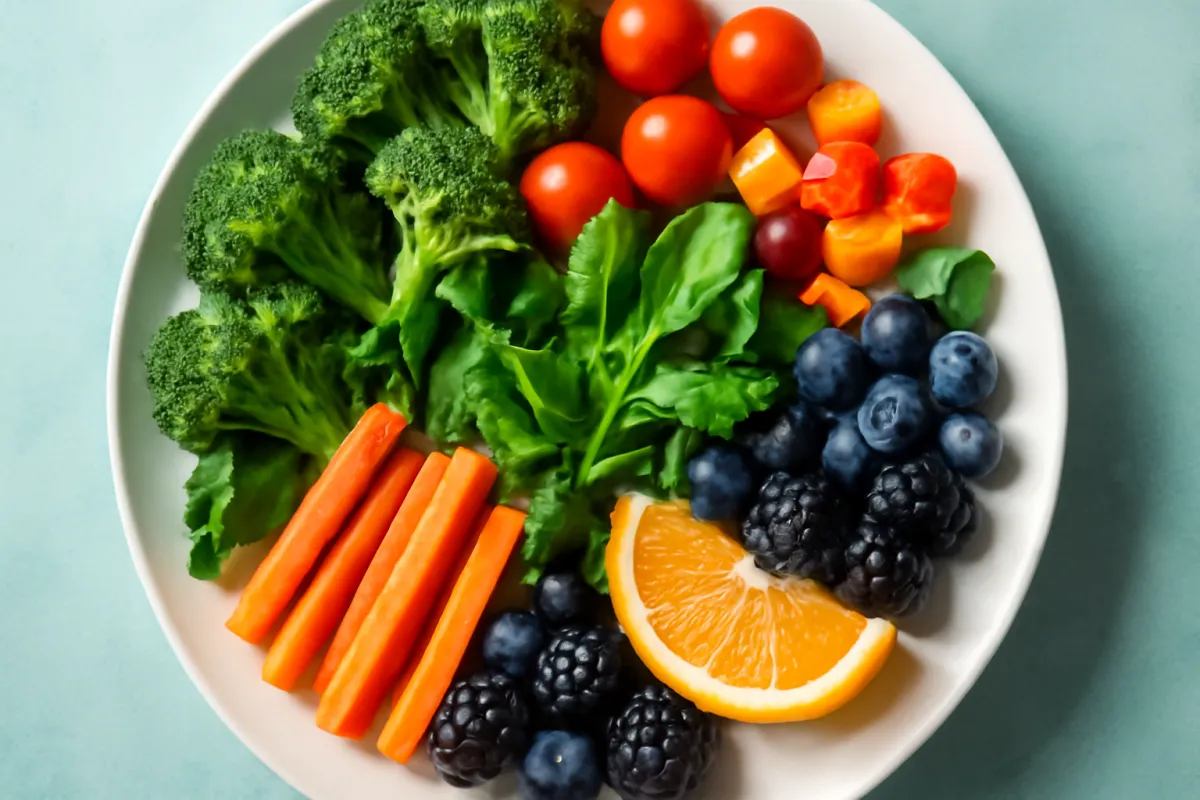
Three bands fall out of the ordering, and each behaves differently at snack time. The top band, everything from cucumber down to the apple, buys between roughly 190 and 670 grams of food for 100 calories. These are the high-volume snacks in the literal sense, and their weakness is visible in the protein column: almost all of them carry under 2 grams a serving, so they fill the space without doing much for a long gap. Their fiber is the useful part, and it is uneven, since a cup of cucumber carries about half a gram while a medium apple carries closer to four and a half.
The middle band, from plain nonfat Greek yogurt down to the egg, buys 70 to 170 grams for the same 100 calories and is where the protein column changes character. Three quarters of a cup of plain nonfat Greek yogurt weighs the same as a small apple and carries something like 17 grams of protein against the apple’s half gram. Half a can of drained tuna weighs a third as much again and still carries around 14. Edamame is the only entry in the band that scores in both the protein and the fiber column, which is a large part of why it turns up on every filling snack list ever written.
The bottom band, from string cheese down, buys 17 to 33 grams for 100 calories, which is to say a small pile. Nothing there is a bad food and several are excellent, but the ranking makes their role obvious: they are partners rather than bases. Popcorn is the honest exception in that band and deserves its reputation, because 100 calories of it is about 26 grams and 26 grams of popped corn is roughly three generous cups, so the plate looks like far more than the weight suggests. That is a volume trick rather than a density one, and it is the only food in the table where the two come apart so far.
Using the ranking takes one habit rather than memorising twenty five rows. Build the snack from the top band, since that is where the bulk is nearly free, then add one item from the middle band for the protein, and treat the bottom band as seasoning measured by the tablespoon or the small handful. A cup of baby carrots with two tablespoons of hummus, a cup of cherry tomatoes with half a cup of cottage cheese, or a cup of strawberries stirred into plain yogurt all follow that shape, and each lands near or under 100 calories. Our high protein snacks list goes deeper on the middle band alone, the high-fiber foods list covers the fiber column across the whole diet rather than just snacks, and the companion below will put any snack you like on this same footing.
One caution belongs with the table. A ranking by weight per calorie rewards water, and water is genuinely filling in the short term but leaves quickly, which is why a large plate of cucumber satisfies at four in the afternoon and less well at nine in the evening. That is a general observation about how these foods behave rather than a finding about any person, and how much any snack holds you is exactly the kind of question a doctor or registered dietitian is better placed to answer than a table. Every figure in the ranking is a typical reference for an ordinary version of the food, rounded, and it moves with variety, brand, cut, and preparation.
Why a label serving is rarely what you actually eat
The single biggest source of snack calorie surprises is not the food. It is the gap between the serving printed on the panel and the amount that ends up eaten. A Nutrition Facts panel states a serving size at the top, and every number below it, calories included, describes that serving only. The panel is not the manufacturer’s invention: in the United States its format and its serving sizes are set by the Food and Drug Administration, which bases them on reference amounts customarily consumed, meaning what people were recorded as eating in one sitting rather than what any authority suggests they eat. If the stated serving is 30 grams and the bag holds 150 grams, the calorie line describes a fifth of what is in your hand. Nothing on the panel is wrong; it is simply answering a question about a portion nobody chose.
The fix is a habit rather than a calculation. Check the serving size first, then ask how many of those servings you are about to eat, then multiply. Two servings means doubling every number on the panel, which is obvious when written down and easy to miss when eating from a bag. It helps to weigh a snack once, just once, to calibrate the eye: pour what you would normally take, weigh it, and compare with the stated serving. Most people find their normal pour of a dense snack is one and a half to two servings and their normal pour of a bulky one is less. After that single calibration the estimate is usually good enough forever. Our note on reading a nutrition label walks the whole panel line by line, and the added sugar guide covers the line that most often inflates a snack quietly.
A worked example: one snack, four numbers
Here is the arithmetic end to end on an ordinary snack, using typical figures rather than any specific product. Plain nonfat Greek yogurt sits near 59 calories per 100 grams. Its panel calls 170 grams, about three quarters of a cup, one serving, which works out at 59 times 170 divided by 100, or about 100 calories. So far this matches every list that says Greek yogurt is a 100-calorie snack.
Now the part the lists leave out. Suppose the bowl you actually fill holds 255 grams, half again as much, which is not an unusual bowl. The same calculation gives 59 times 255 divided by 100, or about 150 calories, and 255 divided by 170 says you have eaten 1.5 servings. The snack did not change and the label did not lie. The portion moved, and it took the calorie figure with it, which is exactly why a per-serving number is a starting point rather than an answer.
The last number makes the comparison concrete. Those same 150 calories in almonds, at about 580 calories per 100 grams, come to 150 divided by 580 times 100, or roughly 26 grams, which is a little under a standard one-ounce portion and would sit comfortably in a cupped palm. So the choice at 150 calories is a generous bowl of yogurt weighing a quarter of a kilogram, carrying something like 25 grams of protein, or a small handful of almonds weighing 26 grams. Both are legitimate snacks. They are simply very different amounts of food for the same energy. Put your own snack, portion, and label serving into the companion below and it runs these same four numbers for you.
How to compare two snacks side by side
With the method in hand, comparing any two snacks takes about ten seconds and two questions. The first question is calories per gram, or per 100 grams, since that is the exchange rate that does not move. The second is what arrives with those calories, meaning protein, fiber, and water, since that is what decides whether the snack holds you. Neither question alone is enough. Density alone would rank plain crackers above hummus, and protein alone would rank cheese above a plate of vegetables, and both rankings miss something obvious.
Run it on a real pair. Five whole-grain crackers weigh about 20 grams at roughly 450 calories per 100 grams, so about 90 calories, with around 2 grams of protein and 2 of fiber. A cup of baby carrots with two tablespoons of hummus weighs about 160 grams at a combined cost near 95 calories, with roughly 4 grams of protein and 6 of fiber. Nearly the same calories, eight times the weight of food, and more of both filling components. That does not make crackers a bad food, and if what you want is a cracker, a vegetable will not substitute for it. It does explain why one of those snacks tends to end an afternoon of grazing and the other tends to start one.
The comparison also flags the cases where the intuitive answer is wrong. Dried fruit and fresh fruit are the same food with the water removed, so the dried version carries several times the calories per gram and a fraction of the bulk. Fruit juice does the same thing to whole fruit. Baked vegetable crisps are mostly starch and oil by weight regardless of the vegetable named on the front. In each case the arithmetic sees a change that the food name hides, which is the main argument for running it rather than trusting the category.
Fruit snacks that stay naturally low in calories
Whole fruit is the original convenient snack, portioned by nature and built mostly of water and fiber. The lightest options are the watery ones: a cup of strawberries or cubed watermelon lands near 50 typical calories, a clementine near 35, a medium orange near 60 to 70. Berries in particular carry fiber and volume for a small number, which is why a full bowl of them feels more substantial than the figure suggests. Even the denser whole fruits stay reasonable at ordinary portions, with a medium banana near 105 and a cup of grapes near 105, and both bring fiber and water that a packaged sweet of the same size would not.
The distinction worth keeping is between whole fruit and fruit with the water taken out. Drying and juicing both remove the component that made the fresh version filling, which concentrates the calories into a much smaller package. Grapes at about 69 calories per 100 grams become raisins in the region of 300, so a small handful of raisins carries what a large bunch of grapes would, with a fraction of the bulk. That is not an argument against dried fruit, which is a real food and useful when portability matters. It is an argument for reading it as a dense snack rather than a light one, and for treating the handful as a measured portion. For everyday snacking, fruit eaten in its original form gives the most food for the fewest calories and needs no preparation beyond a rinse. Add a protein alongside it, such as plain yogurt or a stick of cheese, and a light snack becomes a steadier one.
Vegetable snacks and high-volume picks
If fruit is nature’s convenient snack, non-starchy vegetables are the volume champions. A cup of cucumber slices or celery sits near 15 to 20 typical calories, a cup of cherry tomatoes near 25, a cup of bell pepper strips near 25, and a cup of baby carrots near 45. These are the foods where a genuinely large plate barely registers in the arithmetic, because their calories per gram are so low that portion errors cost almost nothing. Their fiber and water are precisely the two levers that create bulk cheaply, which is why they anchor nearly every approach to filling low calorie snacks.
The practical catch is that plain raw vegetables can feel like a chore, and the usual fix, a rich dip, can cost more than the vegetables it accompanies. The move that keeps the arithmetic intact is a lighter partner: two tablespoons of hummus near 50 calories, a spoon of salsa at close to nothing, a little cottage cheese for protein, or a yogurt-based dip made from the plain tub. Roasting a tray transforms the appeal for very little extra if the oil stays light, though it is worth remembering that oil is close to 900 calories per 100 grams, so a generous pour is the one ingredient that can turn a vegetable tray into a dense snack. Prepping cut vegetables in advance, so a container sits ready at eye level, is one of the highest-return habits in this review, because the filling option only wins when it is also the easy one. Run your own vegetable and dip pairing through the companion below to see where it lands.
Protein-forward snacks that keep you full
When a snack has to bridge a real gap, say a long afternoon before a late dinner, protein is the lever that earns its keep. It is generally regarded as the most satiating of the three main nutrients for most people, and the fullness table above shows why it is efficient at snack time: tuna, plain Greek yogurt, and cottage cheese carry more protein per 100 calories than almost anything else people snack on. The convenient options are wide. A hard-boiled egg is near 70 typical calories, two ounces of lean turkey near 60, half a drained can of tuna near 60, half a cup of shelled edamame near 95, and half a cup of low-fat cottage cheese near 90.
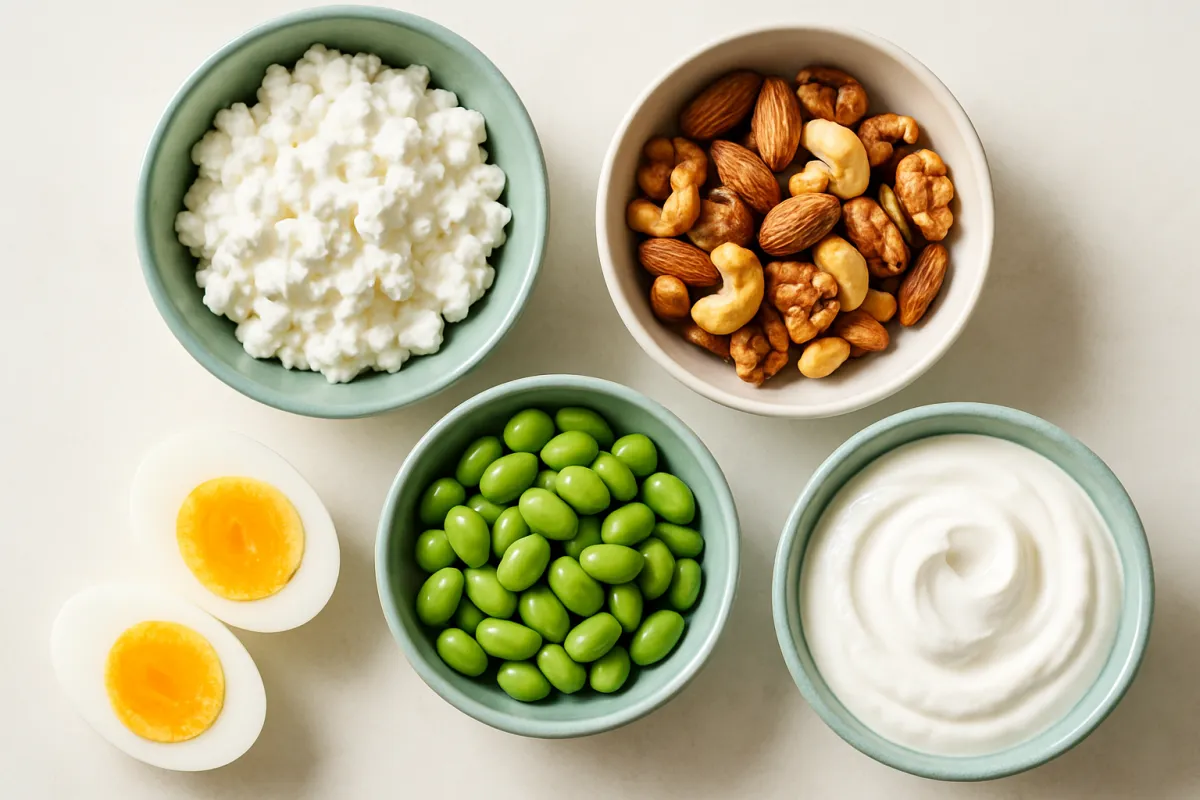
The lean protein sources are the efficient ones for this purpose, since they deliver protein with relatively little accompanying fat: egg whites, white-meat poultry, white fish, canned tuna in water, and nonfat dairy carry the most protein per calorie. Higher-fat protein foods such as cheese and nuts are still filling and nutritious, but they bring far more calories along with the protein, which is a trade rather than a fault. If your snacks routinely leave you hungry, adding a protein source is usually the single most effective change to try, and our note on eating more protein collects easy ways to do it. For the protein content of specific snacks, our high protein snacks list is the dedicated reference and this section deliberately stays shorter than it.
Dairy snacks worth knowing
Dairy earns its own section because it packs protein into small, portable packages that suit snacking unusually well. Plain nonfat Greek yogurt is the standout at roughly 59 calories per 100 grams, so a three-quarter-cup serving of about 170 grams lands near 100 calories while carrying something like 17 grams of protein, and our Greek yogurt protein reference breaks that down by container size. The word nonfat is carrying weight in that sentence. A low-fat or whole-milk plain Greek yogurt of the same weight runs higher, which is why our everyday calorie reference prices a three-quarter-cup serving of plain Greek yogurt nearer 130 calories. Same food, same portion, different fat level, and the panel on your own tub is what settles it. Low-fat cottage cheese is the close cousin at about 80 calories per 100 grams, so half a cup is near 90, and it takes sweet or savory toppings equally well. A stick of string cheese at about 28 grams is near 85 calories and needs no preparation at all.
The thing to watch with dairy is the difference between plain and flavored, because added sugar reshapes the arithmetic quietly. A fruit-on-the-bottom yogurt can carry noticeably more calories than a plain one of the same weight, with much of the difference coming from added sugar rather than the dairy, a pattern our sugar review covers in more detail. Starting with the plain tub and adding fruit yourself buys volume and fiber for fewer calories than the pre-sweetened version. Full-fat dairy is not excluded here and brings its own satisfactions; it simply sits higher on the density table, so the same weight is a bigger number. This is a description of composition rather than a recommendation about what belongs in anyone’s diet.
Whole-grain snacks done sensibly
Grain-based snacks are where a light intention most often goes astray, because most of them are dense by weight. Crackers sit near 450 calories per 100 grams and rice cakes near 390, which puts them in the same territory as many biscuits. What rescues them is that a portion weighs very little: five crackers is about 20 grams and a rice cake about 9. Air-popped popcorn is the clearest case of the same trick, near 380 calories per 100 grams and yet only about 90 calories for three generous cups, because popped corn is mostly air and three cups weigh roughly 24 grams.
That is the whole method for grain snacks. The density is high, so the portion has to be real, and the ones that work are the ones where a satisfying amount is genuinely light. Popcorn wins because volume and weight come apart so dramatically. Rice cakes work as a near-free base for a thin layer of cottage cheese or a slice of tomato. Whole-grain crackers work paired with a protein rather than eaten alone from the box. The trap in every case is the accompaniment, since a heavy pour of butter or oil on popcorn or a thick spread on a cracker can double the number without changing what the snack looks like. Where snacks fit against the rest of the day’s carbohydrate is the subject of our daily carbs review.
High-volume, low-calorie foods explained
The concept underneath most of this review has a name, high-volume eating, sometimes called volumetrics. The idea is to lead with foods that take up a lot of room for few calories and let bulk itself do the work. It follows directly from the fullness table: if 100 calories can be 285 grams of carrots or 17 grams of almonds, then leading with the first and adding a little of the second buys the most food for the energy. The stomach responds to weight and volume as well as to what the food contains, which is why a large watery portion tends to satisfy for a fraction of the calories of a small dense one.
Putting it to work at snack time is straightforward. Lead with the high-volume foods, meaning non-starchy vegetables, whole fruit, broth-based soups, and air-popped popcorn, then let a small measured amount of a denser food ride along for flavor and staying power. A big bowl of berries with a spoon of yogurt, a plate of cut vegetables with hummus, or a large salad eaten as a snack all follow the same shape. The dense foods are not the problem, they are the seasoning. Our balanced meal method applies the same volume-first logic to full plates rather than snacks.
Low calorie snack ideas under 100 calories
Snacks under 100 calories are the easiest place to start, because the whole set fits in your head and none of it needs a recipe. At the typical servings in the table, that group covers nearly every non-starchy vegetable at a full cup, most of the watery fruits, a hard-boiled egg near 70, a stick of string cheese near 85, three cups of air-popped popcorn near 90, two ounces of lean turkey near 60, half a drained can of tuna near 60, half a cup of low-fat cottage cheese near 90, half a cup of shelled edamame near 95, a plain rice cake near 35, and five whole-grain crackers near 90. That is more than a dozen before anything is combined with anything else.
Pairing two small things is where the list stretches, because a combination that stacks two filling levers usually satisfies more than one item of the same cost. These pairings simply add the figures from the tables above.
- Cucumber slices with a couple of tablespoons of salsa, near 25 calories, almost entirely water and fiber.
- A cup of cherry tomatoes with two tablespoons of cottage cheese, near 50, adding protein to a near-free base.
- A plain rice cake with a thin layer of cottage cheese, near 60, a savory base for very little.
- A cup of strawberries with about 60 grams of plain Greek yogurt, near 85, fiber and protein together.
- Bell pepper strips rolled in two ounces of lean turkey, near 85, crunch plus real staying power.
- Three cups of air-popped popcorn with a savory seasoning, near 90, the largest physical volume on the list.
- A cup of baby carrots with two tablespoons of hummus, near 95, the classic fiber and water pairing.
The pattern behind every line is the same: a high-volume base doing the filling and a small dense partner doing the staying power. Because the vegetables and watery fruits cost so little, the pairing is usually lighter than a single packaged snack sold for the same purpose, and it weighs several times as much. Every figure is a typical reference that moves with portion, brand, and preparation, so read the panel on anything packaged rather than trusting these sums exactly.
Low calorie filling snacks under 200 calories, built by pairing
Two hundred calories is a useful ceiling for a snack that has to do a real job, because it is enough room to stack two or three foods and still stay well under the size of a meal. Here is one worked plate, built from the tables above: three quarters of a cup of plain nonfat Greek yogurt at about 170 grams and 100 calories, a cup of strawberries at about 150 grams and 50 calories, and a cup of baby carrots at about 130 grams and 45 calories. That is 195 calories and about 450 grams of food, close to a pound on the plate for under 200 calories.
An illustrative 195-calorie snack plate, by share of its calories
Plain Greek yogurt, strawberries and baby carrots at typical servings. Around 450 grams of food in total.
Segments are each food's share of the 195-calorie total. The yogurt is a little over half the calories and a little over a third of the weight, which is the density difference made visible.
Nine more pairings that land under the same ceiling, all using the same typical figures:
- A medium apple with a tablespoon of peanut butter, near 190 calories, the classic fruit and fat pairing.
- A hard-boiled egg with a medium apple, near 165, protein and fiber with nothing to prepare.
- Three cups of air-popped popcorn with a stick of string cheese, near 175, volume plus protein.
- Half a cup of low-fat cottage cheese with a cup of cherry tomatoes and three whole-grain crackers, near 170.
- Half a drained can of tuna with five whole-grain crackers, near 150, the most protein per calorie on the list.
- An ounce of almonds with a cup of cherry tomatoes, near 190, a measured dense portion beside a free one.
- Half a cup of shelled edamame with a clementine, near 130, protein, fiber and fruit.
- A cup of baby carrots with two tablespoons of hummus and a clementine, near 130.
- A cup of grapes with a stick of string cheese, near 190, sweet and savory together.
Read down that list and the shape repeats: one protein anchor, one bulky partner, and a total that stays under the ceiling because the bulky partner costs so little. The reason to build snacks this way rather than picking a single item is that the pairing usually weighs two to five times as much for the same calories, and weight is the part the stomach notices.
Healthy low calorie snacks: what the phrase should actually mean
Healthy low calorie snacks is a phrase packaging has worn thin, so it is worth defining by what a snack does rather than how it is sold. A snack earns the description when three things are true at once: it is modest in calories at the portion actually eaten, it supplies at least one of the filling levers, and it brings something nutritionally useful with it, such as vitamins from produce or protein from dairy. That third condition is close to what the Dietary Guidelines for Americans, published jointly by the Department of Agriculture and the Department of Health and Human Services, calls nutrient density: the nutrients a food carries relative to the calories it costs. The Guidelines describe eating patterns rather than snack lists, and the official text is the place to read what they actually say. Whole fruit, non-starchy vegetables, plain yogurt, eggs, cottage cheese, edamame, canned tuna, and air-popped popcorn all clear that bar without any claim printed on a box.
Foods that fail the test usually fail on the first or second condition rather than the third. A granola bar can be nutritious in composition and still be dense enough by weight that it functions as a small meal. A low-fat biscuit can be modest in calories and contain nothing that creates fullness, which is why it rarely ends the craving it was reached for. Dried fruit shows both problems at once, since removing the water strips out the bulk and concentrates the calories into a few bites. None of that is a verdict on any food. It is a description of how each behaves at snack time.
The useful check at the shelf is to ignore the front of the package and ask three questions of the panel: how many calories for the amount I will actually eat, is there any protein or fiber here, and would the same calories buy me more food in a less processed form. Our note on reading a nutrition label covers the first, and the high-fiber foods list is a shortcut to the second. Applied consistently, those three questions sort the honestly light snacks from the ones in a wholesome-looking wrapper, which is most of what the phrase needs to mean.
Portioning snacks without a scale
Almost nobody weighs a snack, so translating the arithmetic into portions the hand can judge is what makes it usable. A cupped handful is roughly a cup of berries, grapes, or cut vegetables. A closed fist is about a cup, useful for popcorn or fruit. A thumb from tip to knuckle is about a tablespoon, handy for peanut butter or hummus. A small tight handful is about an ounce of nuts, near 28 grams. These anchors are deliberately rough, and that is fine, because the goal is a repeatable pattern rather than laboratory precision.
Precision matters unevenly, and knowing where it matters is the practical shortcut. On a food at 15 calories per 100 grams, doubling the portion adds almost nothing, so estimating cucumber by eye costs you nothing worth counting. On a food at 580 or 590 calories per 100 grams, a casual pour instead of a measured ounce is the difference between roughly 165 calories and several hundred, and our peanut butter reference shows the same effect on a spoon that is heaped rather than level. Learn the hand estimates for the dense foods, relax about the watery ones, and weigh a dense snack once to calibrate. That single calibration is worth more than a month of guessing, and it turns the tables in this review into something you can apply in any kitchen without equipment.
Store-bought versus homemade snacks
Packaged snacks marketed as healthy fill an aisle, and some are genuinely light while others are dense foods in a wholesome-looking box. The reliable way to tell them apart is to ignore the front of the package, which is marketing, and read the panel, which is not. Words such as natural, wholesome, and made with real fruit are not calorie claims. A granola or trail mix that reads as virtuous can carry more calories per 100 grams than a chocolate bar, mostly from oil, nuts, and dried fruit. That does not make it a bad food; it makes it a dense one that deserves a measured portion.
Homemade versions give back the control that packaging takes away. Cutting your own vegetables, popping your own corn, portioning plain yogurt with fruit, and blending a simple bean dip all let you see exactly what goes in, usually for less money and fewer calories than the packaged equivalent, which our note on eating well on a budget explores in more detail. The convenience gap is smaller than it looks, since most of these take a few minutes and batch well. Some packaged snacks are honestly light and genuinely convenient, including plain rice cakes, single-serve plain yogurt, and pre-portioned cheese, so there is no virtue in making everything from scratch. The workable posture is to read the panel on anything packaged, treat front-of-box language as noise, and lean on simple homemade options for the everyday grazing where the arithmetic quietly drifts.
Lower-calorie swaps for sweet cravings
A sweet craving does not have to mean a dense snack, because most sweet wants can be met by a version that keeps the flavor and drops much of the weight in calories. The foundational swap is whole fruit in place of concentrated sweets: a bowl of berries, a sliced apple, a frozen banana, or grapes frozen into small bites all deliver sweetness with water and fiber attached. Frozen fruit in particular scratches the ice-cream itch for a fraction of the calories, and a small square of very dark chocolate alongside it can settle a chocolate craving at a fraction of the calories of a large bar.
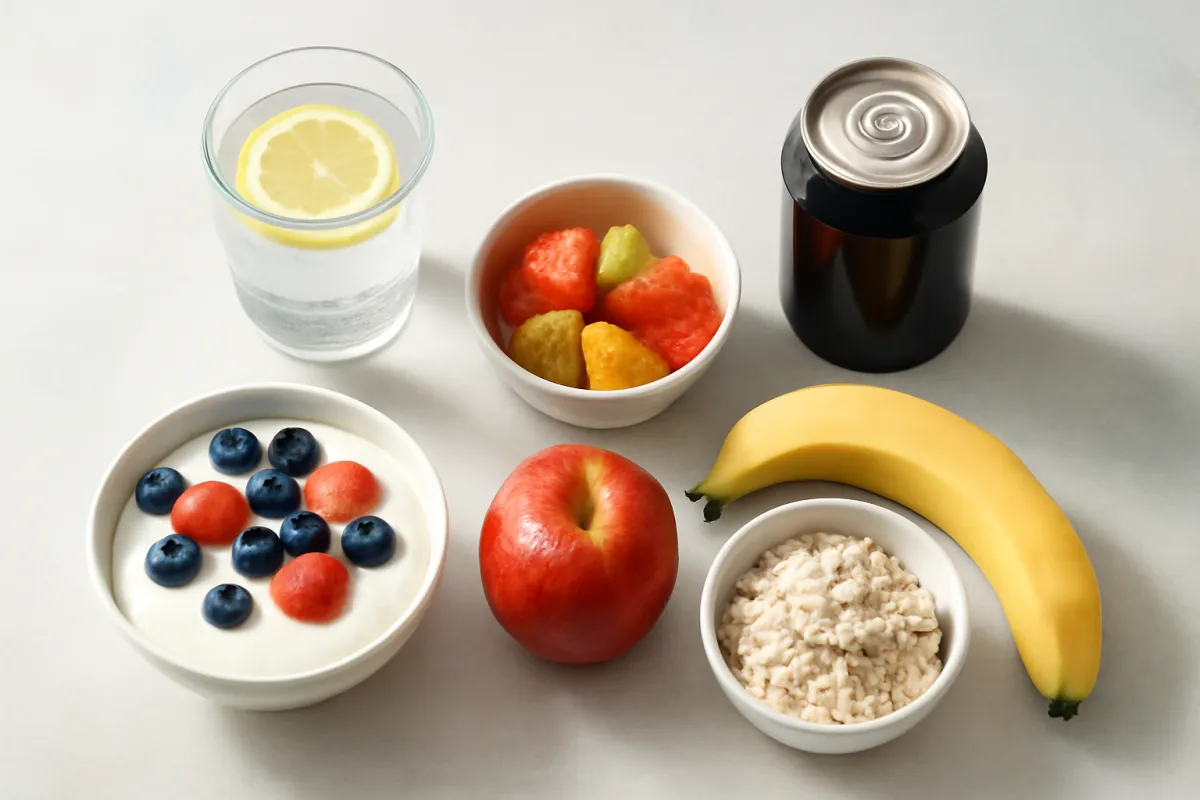
Dairy makes the other useful sweet swap. Plain Greek yogurt sweetened with fruit and a little cinnamon or vanilla stands in for a sugary dessert and adds protein at about 59 calories per 100 grams, well under most pre-sweetened pots. A warm mug of cocoa made with milk and plain cocoa powder can replace a richer dessert. A piece of fruit with a level tablespoon of nut butter, portioned by the thumb rule, turns a craving into a snack that carries protein and fiber with it. The principle across all of these is the same: keep the sweetness, add fiber or protein or water, and measure the concentrated fat and sugar rather than pouring it. None of this rules out a real dessert, which has its place; the swaps are for the everyday cravings where a lighter version genuinely satisfies.
Lower-calorie swaps for salty, crunchy cravings
Salty and crunchy cravings are really cravings for texture and savor, and both can be met without the density of chips. Crunch is the easy part, since raw vegetables supply it in quantity: carrots, celery, bell peppers, cucumbers, radishes, and snap peas all deliver the snap for almost nothing, especially with a light dip for flavor. Air-popped popcorn is the other great crunch delivery system, a large hands-busy volume for modest calories, and a savory seasoning gives it the flavor that fat would otherwise provide.
For the specifically salty want, a few swaps do the work. A pickle or a few pickled vegetables carry the salt and crunch for almost no calories, though they are worth noting if you are watching sodium, which our sodium review covers. Roasted chickpeas or edamame in the pod bring crunch, savor, protein, and fiber together. A rice cake topped with a thin layer of cottage cheese and a savory seasoning, or with a slice of tomato and a pinch of salt, turns a nine-gram base into a real snack. The through-line is to separate what you actually want, meaning the salt, the crunch, and the savor, from the dense vehicle it usually arrives on, then deliver those qualities on a lighter base.
Snacks for specific moments in the day
Different moments call for different snacks, and matching the two makes each one work harder. Before exercise, a small easy-to-digest snack with some carbohydrate, such as a banana, a few crackers, or a small bowl of oats, provides energy without sitting heavily, and it does not need to be large. After exercise, a snack containing some protein, such as plain yogurt or a glass of milk, is a common choice, though for ordinary everyday activity the total across the day matters more than the timing, as our protein review explains.
The late-afternoon gap is the classic snacking moment, and it is where a protein and fiber pairing earns its place by bridging a long stretch to dinner: a hard-boiled egg, an apple with a level tablespoon of peanut butter, or vegetables with hummus all fit inside 200 calories. The trickiest moment is late evening, where habit and boredom rather than hunger drive much of the eating. If a late snack is genuinely wanted, a light and bulky option such as a bowl of berries, a cup of plain yogurt, or air-popped popcorn satisfies without a large number attached, and a glass of water first often reveals the want was mild. Matching the snack to the moment keeps snacking deliberate rather than automatic, which is most of the work.
Low calorie snacks away from a fridge
Most snack lists quietly assume a kitchen, and the moments that actually derail a plan happen at a desk, in a car, on a plane, or halfway through an errand. Shelf-stable options solve that, and there are more of them than the produce-heavy lists suggest. Whole fruit travels better than it gets credit for, since apples, clementines, and bananas need no container and no cooling, and a bag of baby carrots or snap peas survives most of a working day. Air-popped popcorn portioned into a bag is the most food you can carry for the fewest calories, at roughly 24 grams and 90 calories for three cups, and plain rice cakes take up drawer space for almost nothing.
The shelf-stable proteins are where a travel snack earns its keep, since those hold hunger for hours. Single-serve tuna or salmon pouches, roasted chickpeas, shelf-stable jerky, and pre-portioned nuts all fit in a bag and need nothing but hands. The first three are modest in calories for the fullness they deliver. Nuts are the dense outlier, which is exactly why the pre-portioned form matters away from a kitchen, where the alternative is a large bag and nothing to stop the pour. A pack near 28 grams keeps the figure near 165 rather than several hundred.
The setup matters more than the specific foods. A desk drawer or glove box stocked once is what makes the vending machine irrelevant at four in the afternoon, and it costs one decision rather than one decision every day. Keeping water alongside helps too, since mild thirst is easy to misread as hunger, an overlap our hydration review explains. To make the shopping side automatic, our grocery list method covers building a repeatable list so the portable options come home every week rather than only when you remember them.
Snack-planning tips that make it automatic
The best low calorie snack is the one that needs no decision in a hungry moment, which is why preparation matters more than resolve. The highest-return habit is doing the work early: washing and cutting vegetables, portioning fruit, and dividing dense snacks into small bags when the shopping is put away, so the filling options are also the convenient ones. Hunger is impatient and reaches for whatever is closest, so the trick is to make the light choice the path of least resistance. A container of cut vegetables at eye level and a bowl of fruit on the counter quietly outcompete a cupboard.
Placement matters as much as preparation. Keeping dense snacks out of immediate sight and the bulky ones front and center shapes what gets reached for without any moment-to-moment effort. It also helps to attach snacking to a real cue, meaning actual hunger rather than habit or a screen, since a fair amount of snacking is automatic. A glass of water first is a reasonable pause. None of this requires discipline in the moment if the kitchen is arranged in advance, which is the point: plan the snacks while calm and full, and the hungry version of you simply follows the arrangement that already exists.
Common mistakes with low-calorie snacking
A handful of recurring errors explain most of the times a sensible snacking plan drifts, and each is a reading or planning problem rather than a failure of character.
- Trusting the front of the package. Natural, wholesome, and made with real fruit are marketing terms, not calorie claims. The panel on the back is the honest number.
- Ignoring the serving size. A bag that looks like one snack often lists several servings, so the real figure is a multiple of the one printed beside calories.
- Confusing weight with calories. Weight tells you almost nothing on its own, because the same 100 grams can be 15 calories of cucumber or 580 of almonds. Density is what makes weight meaningful.
- Drowning vegetables in a heavy dip. The vegetables are nearly free, but a rich dip or a generous pour of oil can cost more than everything it accompanies.
- Grazing on dense foods from the bag. Nuts, granola, trail mix, and dried fruit are nutritious and dense, so an open-ended pour changes the arithmetic completely. Portion first, eat second.
- Snacking on autopilot. A large share of snacking is habit rather than hunger, so a pause to check, and a glass of water, resolves a fair number of them.
- Treating typical figures as exact. Every number here is a reference for an ordinary version of the food, not a measurement of yours. Read your own label.
Naming these is most of fixing them, because none of them requires willpower to correct. They require a look at the panel, a smaller container, or ten minutes with a knife on the day the shopping arrives.
A quick low-calorie snack checklist
Turn this review into a routine you can run at the shelf and at the fridge door.
- Check the density first, since calories per 100 grams is the number that does not move when the portion does.
- Multiply by the grams you will really eat, not by the serving the label chose, and multiply again if you will have two.
- Lead with volume, filling most of the snack with non-starchy vegetables or whole fruit that cost little for their bulk.
- Add a filling lever, a little protein or fiber such as yogurt, an egg, tuna, or hummus, when the snack has to bridge a real gap.
- Measure the dense foods, using the hand estimates for nuts, nut butter, cheese, and granola so the arithmetic stays where you expect it.
- Prep in advance, cutting vegetables and portioning fruit and dense snacks so the filling choice is also the convenient one.
- Run the numbers once in the companion below on a snack you eat often, and the estimate tends to stick.
Read against our calorie needs review for how a day’s total is generally described, and treat every figure here as a typical reference rather than a target.
The bottom line
Low calorie snacks come down to arithmetic rather than a list. Calories per gram is a property of the food, grams eaten is a choice, and multiplying the two explains every snack figure you will ever read, including the ones that look wrong. That single calculation is why 100 calories can be 285 grams of baby carrots or 17 grams of almonds, why a per-serving number on a panel is a starting point rather than an answer, and why the snacks people call filling are the ones that combine low density with protein, fiber, or water. Lead with the bulky foods, add a measured amount of a dense one for staying power, weigh a dense snack once to calibrate the eye, and read the panel on anything packaged. Do that and more than forty everyday snacks, from cherry tomatoes and apples to eggs, tuna, plain Greek yogurt, and air-popped popcorn, become things you can price at a glance. Every figure in this review is a typical reference for an ordinary version of the food, not a measurement or a personal target, so pair it with our calorie needs review for daily totals and take anything specific to your health to a qualified professional.
Published by NourishMark for general education. This evidence review describes the typical composition of common snack foods and the arithmetic used to estimate their calories; it is not medical, dietetic, or weight-management advice, and reading it creates no clinician-patient relationship. Calorie densities, serving weights, protein and fiber figures, and every worked total above are rounded typical references for ordinary versions of each food, not measurements of any specific product, and real foods vary by variety, size, ripeness, brand, and preparation, so the Nutrition Facts panel on your own package is the authority for that package. Nothing here prescribes what or how much anyone should eat, endorses any product, or makes any claim about health outcomes. For eating patterns and intake figures suited to your circumstances, including any medical condition, medication, or pregnancy, speak with a doctor or registered dietitian.
Frequently asked questions
What are the best snacks for a low calorie diet?
The snacks that do best on a low calorie footing combine a small calorie cost with real staying power, which usually means protein, fiber, or a high water content. Plain Greek yogurt, a hard-boiled egg, cottage cheese, apple slices, berries, baby carrots, cherry tomatoes, edamame, canned tuna, and air-popped popcorn are the usual examples. The calorie figure for any of them depends entirely on how many grams you eat, so every number in this evidence review is a typical range rather than a measurement of the food in front of you. Check the panel on anything packaged. This describes food composition in general terms and is not a diet plan; a registered dietitian can tailor choices to your situation.
What are the most filling low calorie snacks?
Judged by how much food you get for the same calories, the most filling options are the watery, fibrous ones: roughly 285 grams of baby carrots, 300 grams of strawberries, or 555 grams of cherry tomatoes all land near a typical 100 calories, while about 17 grams of almonds does the same. Judged by protein for the same calories, canned tuna in water, plain nonfat Greek yogurt, cottage cheese, and eggs lead. Snacks that stack both, such as vegetables with a bean dip or fruit with plain yogurt, tend to satisfy most for the calories. These are typical composition figures that vary by product and preparation.
What are high volume low calorie snacks?
High volume means a lot of food for the energy, so the ranking is simply grams of food per 100 calories. On typical figures that comes to roughly 670 grams of cucumber slices, 625 of celery, 555 of cherry tomatoes, 385 of bell pepper strips, 335 of cubed watermelon, 300 of strawberries and 285 of baby carrots, against about 26 grams of air-popped popcorn and 17 of almonds at the other end. Popcorn is the odd one out, dense by weight yet about three generous cups for 100 calories, because popped corn is mostly air. The high-volume foods carry little protein, so pairing one with yogurt, an egg, tuna or hummus is what turns bulk into staying power. These are typical composition figures rather than measurements, and they say nothing about how full any particular person will feel.
What makes a snack filling but low in calories?
Three properties do most of the work: protein, generally regarded as the most satiating of the three main nutrients for most people; fiber, which slows digestion and adds bulk; and water, which adds weight and volume without adding any calories at all. Foods built largely of water and fiber carry few calories per gram, so a large portion is still a small number. Foods built of fat and refined starch carry many calories per gram, so a small portion is already a large number. These are general principles about food composition, not predictions about how any one snack will affect a particular person.
Which snacks are under 100 calories?
At a typical serving, plenty land under 100: a cup of cherry tomatoes near 25, a cup of cucumber slices near 15, a cup of baby carrots near 45, a clementine near 35, a medium apple near 95, a hard-boiled egg near 70, a stick of string cheese near 85, three cups of air-popped popcorn near 90, half a cup of shelled edamame near 95, and three quarters of a cup of plain nonfat Greek yogurt near 100. Those are typical figures for typical portions, and the portion is the variable that moves them most. Read the Nutrition Facts panel for any packaged snack rather than trusting a general figure.
How do you compare the calories in two snacks?
Put both on the same footing by working in calories per gram, or the same thing stated as calories per 100 grams, because that is the number that does not change when the portion does. Plain nonfat Greek yogurt sits near 59 calories per 100 grams and almonds near 580, so the same weight of almonds carries roughly ten times the calories. Then multiply by the grams you will actually eat, not the grams the label calls a serving. The second half of the comparison is what the food brings with it, since protein and fiber are the parts that create fullness. These are typical values that vary by product.
Are nuts a good low-calorie snack?
Nuts are nutritious and genuinely filling, but they are among the most calorie-dense snack foods, near a typical 580 calories per 100 grams for almonds, so they are better described as portion-controlled than low-calorie. An ounce is about 28 grams, near 165 calories, and it is a smaller pile than most people picture. Pre-portioning a small handful rather than eating from the bag is what keeps the arithmetic where you expect it. The same applies to nut butters at roughly 590 calories per 100 grams. Figures are typical values that vary by nut, brand, and whether the product is roasted, salted, or sweetened.
Do vegetables really count as filling snacks?
Non-starchy vegetables are the most efficient snacks by weight of food per calorie, precisely because they are mostly water and fiber. A cup of cucumber slices lands near 15 typical calories and a cup of cherry tomatoes near 25, so a genuinely large plate of them is still a small number. Pairing them with a little protein or a bean-based dip such as hummus adds staying power for a modest amount extra, since two tablespoons of hummus is near 50. As with every figure in this evidence review, these are typical references that vary with size, variety, and preparation rather than exact measurements.
What are healthy low calorie snacks?
A useful working definition is a snack that stays modest in calories at the portion you will really eat, supplies at least one of the filling levers of protein, fiber, or water, and brings something nutritionally useful with it. Whole fruit, non-starchy vegetables, plain yogurt, eggs, cottage cheese, edamame, canned tuna, and air-popped popcorn all clear that bar without any health claim on a package. Foods marketed as healthy snacks often fail on calorie density, as granola and trail mix do, or on fullness, as low-fat cookies do. These are descriptions of composition rather than recommendations, and a registered dietitian can tailor choices to you.
What are good low calorie snack ideas for work or travel?
Shelf-stable options travel without refrigeration: whole fruit such as apples and clementines, baby carrots or snap peas, air-popped popcorn portioned into a bag, plain rice cakes, single-serve tuna or salmon pouches, roasted chickpeas, and a pre-portioned ounce of nuts. The protein options are the ones that hold hunger through a long afternoon; the fruit and popcorn deliver the most food for the fewest calories. Stocking a desk drawer once turns snacking into a single decision rather than a daily one. Calorie figures throughout are typical references that vary by brand and portion, so read the panel on anything packaged.

Hamza Hai is the editor of NourishMark. She holds an MBA and reviews the site's articles against our editorial standards, checking that every figure is labelled for what it is, that nothing is presented as verified fact without a source the reader can check, and that the writing stays useful to a non-specialist.

Dr. Shayaan Khan is the medical reviewer for NourishMark. He holds an MBBS from MGM Medical College, Navi Mumbai, and is the author of published research including a narrative review of postpartum anxiety and depression in Mental Health Science. He has taught physiology at university level. He reviews the site's health content for medical accuracy: that physiology and mechanisms are described correctly, that no claim is stated more strongly than the evidence behind it, and that anything specific to an individual reader is sent to that reader's own clinician.
Not medical advice. Dr. Khan reviews NourishMark's health content for medical accuracy. He is not a registered dietitian, he does not hold a United States practising licence, and he is not your doctor. His review does not make anything here medical advice. Always talk to a qualified health professional about your own situation, and never delay or stop care because of something you read here.