What's in this review
- How Much Sodium per Day? The Direct Answer
- Where the 2,300 mg Figure Comes From
- The Lower 1,500 mg Target and Who It Is Discussed For
- Sodium and Salt Are Not the Same Number
- What Sodium Does in the Body
- Why Not Adding Salt Misses the Point
- Where Sodium Actually Comes From
- Sodium in Common Foods: A Reference Table
- Which Foods Carry the Most Sodium per Serving
- Bread: The Contributor Nobody Tastes
- Deli Meat, Bacon and Cured Products
- Cheese, Cottage Cheese and Dairy
- Sauces, Condiments and Dressings
- Canned Soup, Canned Beans and Canned Vegetables
- Breakfast Cereal and Other Quiet Sources
- Sodium in Restaurant and Takeout Meals
- Reading the Nutrition Label for Sodium
- Per Serving Versus Per Container
- The Percent Daily Value Shortcut
- An Illustrative Day at About 3,370 mg
- The Same Day Rebuilt Under 1,500 mg
- How to Cut Sodium Without Food Going Dull
- Retraining the Palate Takes Weeks
- Salt Substitutes and the Potassium Chloride Question
- Athletes, Heat and When Sodium Needs Rise
- Sodium and Blood Pressure: What Can and Cannot Be Said
- Sodium and Potassium Work as a Pair
- Common Mistakes When Counting Sodium
- A Short Lower-Sodium Shopping List
- The Bottom Line
Sodium is the nutrient most people believe they have already handled. The shaker stays in the cupboard, nothing gets salted at the table, and the matter feels closed. The arithmetic disagrees. Commonly cited breakdowns put roughly 70 percent of sodium intake inside packaged, processed and restaurant food, which means the decision was mostly made at the supermarket and the counter rather than at the stove.
This evidence review covers the commonly cited daily ceiling near 2,300 milligrams and the lower figure near 1,500 that comes up in blood pressure conversations, how sodium and salt differ as numbers, where sodium actually enters an ordinary diet, the foods that carry more than their reputation suggests, how to read the sodium line on a label including the per-serving trap, and how to cut intake without meals going dull. Its natural pair is our potassium evidence review, since the two minerals work against each other and the guidance keeps arriving at both together. Sketch your own rough day in the companion below. Everything here is general education describing approximate figures, not medical or dietary advice.
Key takeaways
- General adult guidance commonly cites staying under about 2,300 mg of sodium a day, roughly the sodium in one teaspoon of table salt, with a lower figure near 1,500 mg commonly discussed for people with raised blood pressure.
- Roughly 70 percent of sodium intake is commonly attributed to packaged and restaurant food, so "I do not add salt" leaves most of the total untouched.
- The surprising carriers are bread (~150 mg a slice), deli meat (~550 mg per two ounces), cheese (~180 mg an ounce), sauces and condiments (~900 mg per tablespoon of soy sauce), canned soup (~800 mg a cup) and canned vegetables (~250 mg per half cup).
- Read milligrams and check servings per container before the percentage, because a single package often holds two or more listed servings.
- Most salt substitutes are potassium chloride, which is genuinely unsafe for some readers. Anyone with kidney disease, heart failure or on blood pressure medication should take sodium decisions to a clinician, not to a reference table.
How Much Sodium per Day? The Direct Answer
For healthy adults, the figure general dietary guidance most commonly cites is staying below about 2,300 milligrams of sodium a day. That is roughly the sodium in one level teaspoon of table salt, counting every source across the whole day rather than only what gets added deliberately.
A second, lower figure appears constantly alongside it: about 1,500 milligrams a day, commonly described as an ideal for many adults and raised particularly in the context of blood pressure. The two numbers are not in conflict. The higher one functions as a ceiling that most people are currently above, and the lower one as a direction of travel that some people have specific reasons to move toward.
Neither is a personal prescription. Both are population reference values, and the honest starting position is that typical intakes in the United States are commonly described as running above 3,000 milligrams a day, so the practical question for most readers is not which target to adopt but which direction to move and by how much. Set your own rough day in the companion below and the arithmetic runs against whichever figure you select.
Where the 2,300 mg Figure Comes From
The 2,300 milligram number is not arbitrary, and it is not a measured requirement either. Human sodium requirements are small: the amount the body genuinely needs to function is commonly described as a few hundred milligrams a day, far below anything an ordinary diet supplies. The daily figures in dietary guidance are therefore ceilings rather than targets, which is an unusual arrangement among nutrient numbers and worth registering clearly.
The reasoning behind a ceiling near 2,300 rests on the relationship observed between sodium intake and blood pressure at the population level, together with a judgment about what level is both associated with lower risk and realistically achievable. Federal dietary guidance in the United States has carried a figure in this region for years, and the reference intakes published by the National Academies address sodium with a chronic disease risk reduction framing rather than a simple tolerable upper limit.
Two implications follow. First, going slightly over on a given day is not a discrete event with a consequence attached; the figure describes an average tendency. Second, because these values are set by public bodies and are periodically reviewed, the current official publication rather than any article is the right place to confirm the number that applies today.
The Lower 1,500 mg Target and Who It Is Discussed For
The 1,500 milligram figure is commonly presented as an ideal limit for most adults, with particular emphasis for people who have high blood pressure. It appears in heart health guidance and in the dietary patterns commonly recommended for blood pressure, and it is roughly two thirds of the general ceiling.
What it is not is a threshold anyone should adopt because an article mentioned it. Sodium restriction interacts with medication, kidney function, heart function and individual response, and the people most likely to be told to aim at a lower figure are precisely the people whose situation requires individual assessment. Some conditions call for a specific restriction set by a clinician; some medications change the picture; and very low intakes are not automatically better for everyone.
The useful way to hold both numbers is as a range that describes where the conversation happens. Somewhere under 2,300 is the general position. Nearer 1,500 is where the discussion goes for people with a blood pressure reason to be there. If you have raised blood pressure, kidney disease or heart failure, or take medication related to any of them, the figure that applies to you comes from your clinician, and this review is background reading rather than a plan.
Sodium and Salt Are Not the Same Number
A great deal of confusion dissolves once this distinction is clear. Table salt is sodium chloride, and sodium accounts for roughly 40 percent of its weight while chloride accounts for the rest. So a gram of salt carries roughly 400 milligrams of sodium, not a gram of it.
Run the conversions once and they stay useful. A level teaspoon of table salt weighs somewhere near 6 grams, which is roughly 2,300 milligrams of sodium, which is why the daily ceiling is so often described as about a teaspoon. A half teaspoon is near 1,150 milligrams, a quarter teaspoon near 575, and an eighth of a teaspoon near 290. Those quarter and eighth teaspoon figures are worth memorizing, because they are the units home cooking actually operates in.
| Amount of table salt | Approximate sodium |
|---|---|
| 1/8 teaspoon | ~290 mg |
| 1/4 teaspoon | ~575 mg |
| 1/2 teaspoon | ~1,150 mg |
| 3/4 teaspoon | ~1,725 mg |
| 1 teaspoon | ~2,300 mg |
Going the other direction, a label or a study that quotes salt rather than sodium can be converted by multiplying sodium by about 2.5 to get salt, or dividing salt by about 2.5 to get sodium. United States Nutrition Facts panels list sodium, while some international labels and much of the research literature use salt, which is how the same recommendation ends up looking like two different numbers.
What Sodium Does in the Body
Sodium is an electrolyte, and it is the principal positively charged ion outside cells, in the fluid that surrounds them and in blood plasma. Potassium plays the mirror role inside cells. The difference in concentration across the cell membrane, maintained by a pump that trades sodium out and potassium in, creates the electrical gradient that nerve and muscle cells use to do their work.
Sodium’s other central job is fluid balance. Because water follows sodium osmotically, the amount of sodium in the extracellular fluid is a major determinant of how much fluid that compartment holds, which connects directly to blood volume. The kidneys regulate this continuously, excreting or retaining sodium and water to hold the balance steady, under hormonal control.
That regulatory system is why sodium is genuinely essential and why deficiency from ordinary eating is not a realistic concern for most people. It is also, in outline, why sodium and blood pressure are discussed together: intake influences the volume and pressure the system has to manage. The mechanism described here is general physiology offered as background, not a health claim about any food, supplement or condition.
Why Not Adding Salt Misses the Point
Here is the sentence that appears in almost every conversation about sodium: I never add salt. It is usually true, and it usually does not mean what the speaker thinks it means. Commonly cited breakdowns place only a small single-digit share of total sodium intake at the table, with another modest share added during home cooking. The overwhelming majority arrived already inside the food.
The reason is straightforward. Salt in manufactured food is not primarily a seasoning decision. It preserves, it controls water activity and shelf life, it develops texture and structure in bread and processed meat, it masks off-flavors, and it makes formulations taste consistent across batches. Removing it costs money and changes the product, so it stays in, at levels a home cook would never approach because a home cook is not solving those problems.
The practical consequence is that shaker discipline is close to the least effective lever available. Someone eating a sandwich on commercial bread with deli meat and cheese, a cup of canned soup, and a slice of pizza has passed the daily ceiling before touching a shaker. That is not a moral failure, it is an accounting fact, and it points the effort at shopping and ordering rather than at the table.
Where Sodium Actually Comes From
Where a typical day of sodium originates
Commonly cited approximate shares of total sodium intake by source. Percentages vary by survey and country.
Segments sum to 100 percent. These are commonly cited approximations from dietary survey work, rounded, and they describe populations rather than any individual's day.
The shape of that bar is the single most useful thing in this review. Two thirds and more of the total sits in one segment, and it is the segment nobody adjusts by changing a habit at the table. The two segments people actually think about, cooking and the table, come to roughly 15 percent combined.
There is an important qualification. These shares describe a population where packaged and restaurant food dominates. Someone who cooks nearly everything from unprocessed ingredients has a genuinely different distribution, and for that person the salt added while cooking may be the largest single line. The chart is a description of the typical case rather than a law, and the honest test is which segment your own week resembles.
The naturally present share is worth a sentence too. Milk carries roughly 100 milligrams a cup, an egg roughly 70, fresh meat somewhere near 65 for a three ounce portion, and most raw vegetables and fruit almost none. That baseline is unavoidable and also small, which is why nobody suggests reducing it.
Sodium in Common Foods: A Reference Table
The figures below are commonly cited approximations for ordinary servings. Sodium content varies more between brands than almost any other nutrient, often by a factor of two or three for the same category, so treat these as reference approximations and read the actual package for anything specific.
| Food | Serving | Sodium, roughly |
|---|---|---|
| Instant noodle package | 1 package | ~1,500 mg |
| Restaurant burger with fries | 1 meal | ~1,400 mg |
| Soy sauce | 1 tbsp | ~900 mg |
| Canned soup | 1 cup | ~800 mg |
| Frozen dinner tray | 1 tray | ~800 mg |
| Pizza | 1 slice | ~640 mg |
| Table salt | 1/4 tsp | ~575 mg |
| Deli turkey or ham | 2 oz | ~550 mg |
| Hot dog | 1 | ~500 mg |
| Pasta sauce from a jar | 1/2 cup | ~450 mg |
| Bagel | 1 | ~430 mg |
| Canned beans, undrained | 1/2 cup | ~400 mg |
| Bacon | 2 slices | ~350 mg |
| Cottage cheese | 1/2 cup | ~350 mg |
| Feta cheese | 1 oz | ~320 mg |
| Salad dressing | 2 tbsp | ~300 mg |
| Dill pickle spear | 1 spear | ~300 mg |
| Canned vegetables | 1/2 cup | ~250 mg |
| Flake breakfast cereal | 1 cup | ~200 mg |
| Cheddar cheese | 1 oz | ~180 mg |
| Bread | 1 slice | ~150 mg |
| Ketchup | 1 tbsp | ~150 mg |
| Tortilla chips | 1 oz | ~120 mg |
| Salted nuts | 1 oz | ~120 mg |
| Milk | 1 cup | ~100 mg |
| Salted butter | 1 tbsp | ~90 mg |
| Egg | 1 large | ~70 mg |
| Fresh chicken breast, cooked | 3 oz | ~65 mg |
| Mustard | 1 tsp | ~55 mg |
| Cooked rice or pasta, unsalted | 1 cup | ~5 mg |
| Fresh fruit and most raw vegetables | 1 serving | ~0 to 5 mg |
Read the table from the bottom as well as the top. The last four rows are the reason a diet built on unprocessed ingredients lands low almost automatically: rice, pasta, fruit and vegetables contribute essentially nothing before anything is added to them. The top of the table is where a single item can spend a third of the day.
Which Foods Carry the Most Sodium per Serving
Sodium per common serving
Milligrams per typical portion, against a commonly cited adult ceiling of about 2,300 mg a day. Illustrative approximations that vary widely by brand.
Bars scale to the instant noodle package at 100 percent. Commonly cited approximations only; brand variation within any of these categories is large, and none of these are personal targets.
The chart carries a lesson the table alone does not. The quarter teaspoon of table salt sits sixth, below four foods nobody thinks of as salty decisions, which is the visual version of the argument about the shaker. It is not that the shaker contributes nothing. It is that four ordinary purchases outrank it individually and dozens of small ones outrank it collectively.
The bottom of the chart matters as much as the top. Bread at roughly 150 milligrams a slice looks harmless next to a noodle package, and that impression is exactly the trap, because almost nobody eats one instant noodle package a day while a great many people eat four slices of bread. Frequency times portion beats concentration, which is the theme of the next several sections.
Bread: The Contributor Nobody Tastes
Bread is the clearest case of volume beating concentration. A slice of commercial sandwich bread commonly lands near 150 milligrams of sodium, which is genuinely modest. Two slices of toast at breakfast and a two slice sandwich at lunch is roughly 600 milligrams, or somewhere around a quarter of the general daily ceiling, from a food nobody would describe as salty.
The salt is there for reasons beyond flavor. In bread making, salt interacts with gluten development and gives dough its strength and handling properties, it slows and regulates fermentation so the yeast works at a predictable pace, and it contributes to crust color and to keeping quality. A loaf made without it behaves differently and keeps differently. That structural role is why the level is not easily reduced and why it does not read as salty on the tongue: it sits against starch, sweetness and yeast flavors that mask it.
The practical response is not to stop eating bread. It is to notice that the range between loaves at the same shelf is wide, sometimes close to double, and that the sodium line is the only way to tell them apart. Our nutrition label walkthrough covers how to run that comparison quickly. Rolls, bagels, English muffins, tortillas and pita all belong in the same category, and a bagel at roughly 430 milligrams is close to three slices of bread in one item.
Deli Meat, Bacon and Cured Products
Cured and processed meats are the most concentrated everyday source in most diets, and the sodium is not incidental to them. Curing is a preservation technique built on salt, and the salt content is part of what defines the product rather than a seasoning applied at the end. Two ounces of deli turkey or ham commonly lands near 550 milligrams, two slices of bacon near 350, and a hot dog near 500.
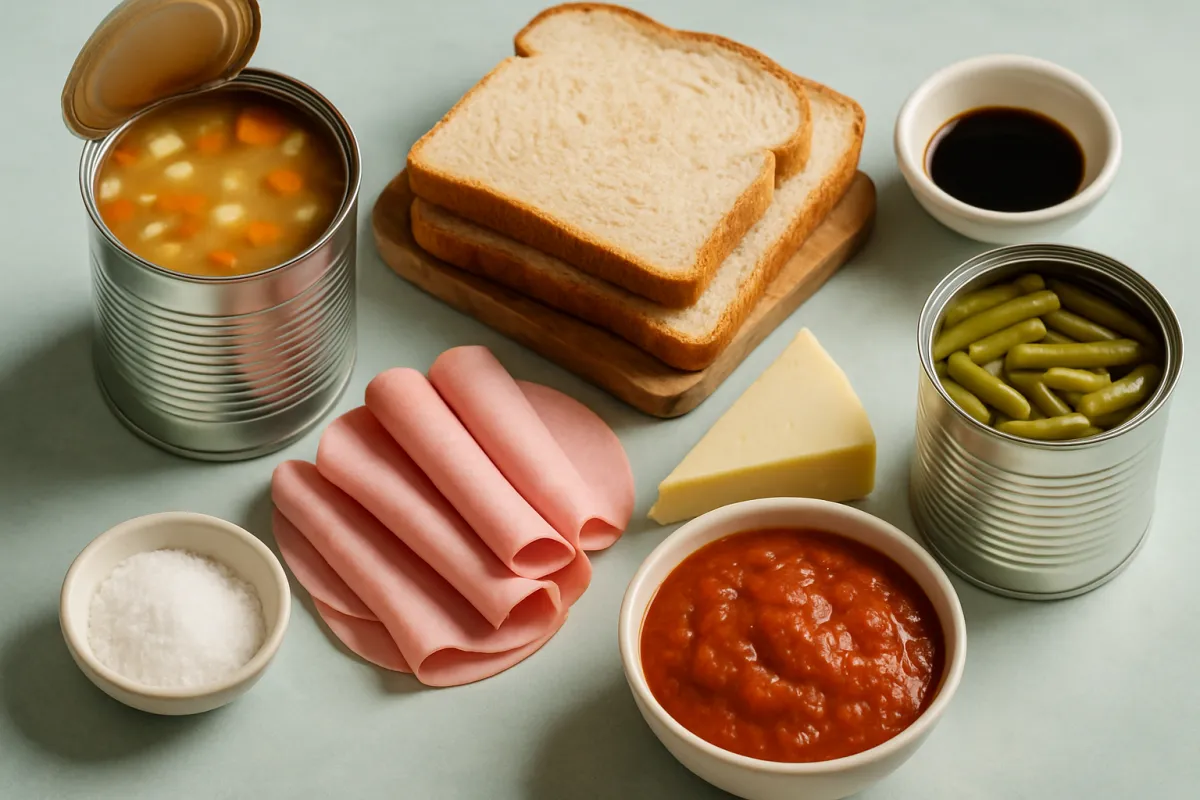
Put the sandwich together and the arithmetic is stark. Two slices of bread at roughly 300, two ounces of deli meat at roughly 550, an ounce of cheese at roughly 180 and a tablespoon of a condiment at roughly 150 reach about 1,180 milligrams, which is half the day’s general ceiling in one lunch that most people would call ordinary. Nothing on that sandwich tastes like a salt bomb.
The most effective single swap in this category is roasting a plain chicken breast or a piece of pork or beef and slicing it for sandwiches, since fresh meat carries somewhere near 65 milligrams for a three ounce portion. That is a change of a few hundred milligrams per sandwich, achieved without eating anything unfamiliar. Lower-sodium deli varieties exist and are a real improvement, though the definition of lower varies by product and the label remains the arbiter.

Cheese, Cottage Cheese and Dairy
Cheese occupies a middle position that catches people out. An ounce of cheddar carries roughly 180 milligrams, which is not alarming, but an ounce is a small piece and cheese rarely appears once in a day. Feta at roughly 320 milligrams an ounce and cottage cheese at roughly 350 per half cup run higher, and processed cheese products are commonly higher still because the emulsifying salts used to make them melt smoothly contribute sodium of their own.
Salt in cheese is functional. It controls moisture, it regulates the bacterial cultures that develop flavor and texture, and it preserves. Brined cheeses such as feta sit in salt solution by definition. This is why cheese cannot be made meaningfully low in sodium without becoming a different food, and why the sensible approach is portion and frequency rather than substitution.
Plain milk and plain yogurt sit far lower, near 100 milligrams a cup for milk and in a similar region for plain yogurt, so the dairy category as a whole is not the problem. It is specifically the aged, brined and processed end of it. Swiss cheese is commonly cited as one of the lower-sodium aged cheeses, and fresh mozzarella lower than most, which gives a couple of practical options without abandoning the category.
Sauces, Condiments and Dressings
Condiments deliver more sodium per unit of volume than almost anything else in a kitchen, and they are measured in tablespoons that nobody measures. A tablespoon of soy sauce commonly lands near 900 milligrams, which is roughly 40 percent of the general daily ceiling in an amount that disappears into a stir fry. Fish sauce, oyster sauce, teriyaki and most marinades run in a similar region.
The Western condiments are lower per spoon but not trivial. Ketchup sits near 150 milligrams a tablespoon, a bottled salad dressing near 300 for two tablespoons, barbecue sauce and hot sauces vary enormously, and mustard is comparatively low at roughly 55 milligrams a teaspoon. Jarred pasta sauce at roughly 450 milligrams a half cup is one of the largest quiet contributors in home cooking, because the half cup is a serving nobody would consider large.
Two habits help without eliminating anything. Measure the high-concentration ones once, just to see what a pour actually amounts to compared with a tablespoon, since most free pours run well over. And treat the sauce aisle as a place where brand comparison pays unusually well, because the spread between products in the same category is wide and reduced-sodium versions of soy sauce and similar condiments are widely available and commonly cited as carrying something in the region of a third less.
Canned Soup, Canned Beans and Canned Vegetables
Canning uses salt as a preservative and a texture agent, so the canned aisle carries sodium as a category property rather than as an occasional flaw. A cup of canned soup commonly lands near 800 milligrams, and since a can often holds more than one listed cup, eating the can can approach or pass the day’s general ceiling on its own.
Canned beans and vegetables are a happier case, because much of their sodium sits in the liquid rather than in the food. Draining and rinsing canned beans is commonly cited as removing something in the region of a third to a bit more of the sodium, which turns a half cup at roughly 400 milligrams undrained into something meaningfully lower. It also carries away a modest amount of potassium, a trade our potassium evidence review covers from the other side, and for someone working on sodium the rinse is still usually the right call.
The simplest structural fixes in this aisle are choosing no-salt-added versions where they exist, which is now common for beans, tomatoes and vegetables, and using frozen plain vegetables instead of canned, since freezing preserves without salt and a half cup lands near 15 milligrams rather than 250. Neither change requires cooking differently or eating anything new.
Breakfast Cereal and Other Quiet Sources
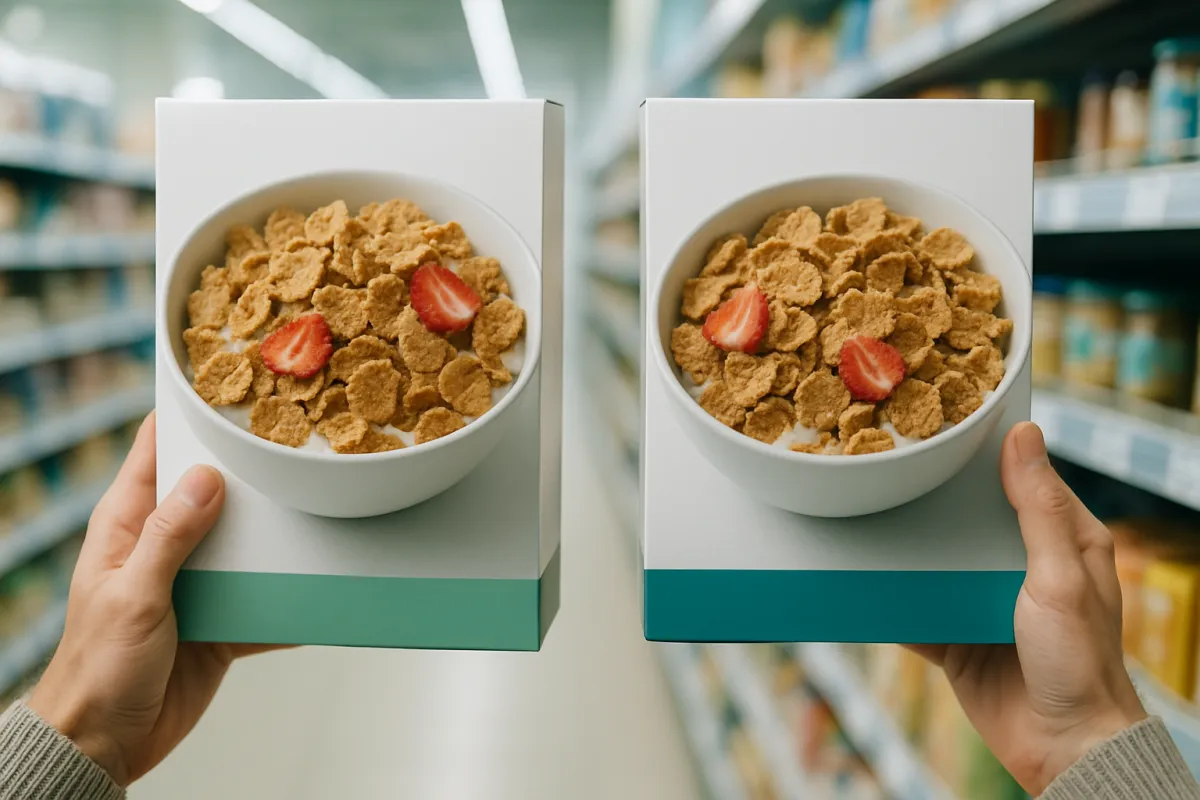
Breakfast cereal surprises almost everyone, because sweet food is not where anyone looks for salt. A cup of flake cereal commonly lands near 200 milligrams, and salt is present for the same reasons it is present in bread: it balances sweetness, it affects texture and crispness, and it makes the flavor read as complete. Plain oats, by contrast, carry almost none until something is added.
The wider category of quiet sources is worth listing because the items share nothing except being unsuspected. Baked goods and biscuits carry sodium from salt and from leavening agents, several of which are sodium compounds. Cottage cheese, already mentioned, reads as a diet food. Vegetable juices and tomato juice can be high. Some breads marketed as healthy run higher than plain white loaves. Restaurant salads with dressing and cheese frequently exceed the entree they replaced.
There is also the sodium hiding in things that are not food in the usual sense. Some over-the-counter medications, particularly effervescent and antacid preparations, contain meaningful amounts of sodium, as do some supplements. That is not a reason for alarm, but it is a reason for anyone under a medically directed sodium restriction to mention every product they take to their pharmacist rather than assuming the restriction applies only to meals.
Sodium in Restaurant and Takeout Meals
Restaurant food is the other half of the 70 percent segment, and it operates under different constraints from home cooking. A kitchen producing consistent food at speed uses salt in prepared bases, stocks, brines, marinades and finishing steps, and the seasoning level is set to what tastes good on the first bite rather than to a daily total. Portion sizes compound it.
Illustrative figures make the scale concrete. A restaurant burger with fries commonly lands somewhere near 1,400 milligrams, a slice of pizza near 640 so that two or three slices reach past 1,300, and many single restaurant entrees are commonly described as carrying more than a day’s general ceiling before any side or appetizer. Soups, sauces, cured meats and anything described as crispy or glazed tend to sit at the higher end.
The practical moves are unglamorous and they work. Chain restaurants in many jurisdictions publish nutrition information including sodium, so checking before ordering is possible in a way it is not at an independent kitchen. Sauces and dressings on the side moves a large, variable amount under your control. Splitting an entree or taking half home halves the sodium along with everything else. And the frequency lever outperforms all of them: eating out four times a week rather than seven changes the weekly total more than any single ordering decision. Our balanced meal method is the home-side version of the same shift.
Reading the Nutrition Label for Sodium
The sodium line on a United States Nutrition Facts panel gives milligrams per serving and a percent Daily Value calculated against 2,300 milligrams. That denominator is convenient, because unlike some other nutrients the label’s reference figure matches the commonly cited general ceiling, so 20 percent Daily Value genuinely means about a fifth of the day.
Read the milligrams first anyway. Milligrams are absolute and comparable across products, they add up across a day without conversion, and they are the only way to compare two products whose serving sizes differ. Two soups showing the same percentage may be listing different serving sizes, in which case the percentage is answering a question you did not ask.
The ingredient list adds context the panel does not. Sodium appears under many names beyond salt, including sodium chloride, monosodium glutamate, sodium bicarbonate, sodium nitrite and nitrate in cured meats, sodium benzoate, disodium phosphate and sodium citrate. Seeing several of them well up the list explains a high number, though the panel remains the place to read the actual quantity, since the ingredient list gives order rather than amount.
Per Serving Versus Per Container
This is the trap that turns a reasonable-looking number into a large one, and it is entirely a matter of arithmetic rather than nutrition. Everything on the panel refers to one serving, and the servings per container line at the very top says how many of those the package holds. A soup can showing 800 milligrams per serving and 2 servings per container carries roughly 1,600 milligrams if the can gets eaten, which is most of the general daily ceiling in one bowl.
The pattern repeats across categories. Frozen pizzas, bottled drinks, snack bags, jars of sauce and multi-serve entrees routinely list a serving smaller than the amount a person actually eats. Nothing is being hidden, since the servings per container line is right there, but the number the eye lands on is the large bold one and the multiplier sits above it in smaller type.
Some packages now carry a dual column format showing per serving and per package side by side, which removes the arithmetic entirely for those products. Where that is absent, the habit worth building is to read two lines rather than one: servings per container, then sodium, then multiply if you intend to eat the whole thing. Labeling requirements are set by the FDA and are periodically revised, so the agency’s current guidance is the authority on what any panel must show.
The Percent Daily Value Shortcut
For quick screening at a shelf, the percentage has one genuine advantage: it is fast. The widely used rule of thumb treats 5 percent Daily Value or less as low for a nutrient and 20 percent or more as high, and for sodium those thresholds correspond to roughly 115 milligrams and roughly 460 milligrams per serving against the 2,300 denominator.
That rule is useful for sorting rather than for adding. It tells you at a glance whether a product belongs in the low pile or the high pile, which is exactly what a shopping decision needs. It is less useful for tracking a day, because percentages of different serving sizes cannot be summed meaningfully and because your own reference figure may be the lower one.
If the figure you are working toward is nearer 1,500 milligrams, remember that every percentage on every panel is still calculated against 2,300. A product showing 20 percent is supplying closer to 31 percent of a 1,500 milligram figure. That gap runs in the direction that makes products look better than they are for the readers with the most reason to care, which is another argument for reading milligrams. The companion below will run your entries against whichever figure you select.
An Illustrative Day at About 3,370 mg
Here is one illustrative day, built entirely from the reference table above, with no salt added at the table or during cooking. It exists to show the arithmetic, not to describe anyone in particular and not as a recommendation.
| Meal | Foods | Sodium |
|---|---|---|
| Breakfast | 2 slices toast (~300), 2 slices bacon (~350), 1 oz cheddar (~180), 1 large egg (~70) | ~900 mg |
| Lunch | Sandwich: 2 slices bread (~300), 2 oz deli turkey (~550), 1 oz cheddar (~180), 1 tbsp ketchup (~150) | ~1,180 mg |
| Snack | 1 oz tortilla chips (~120), 1 oz salted nuts (~120) | ~240 mg |
| Dinner | 1 cup canned soup (~800), 1/2 cup canned vegetables (~250) | ~1,050 mg |
| Total | ~3,370 mg |
That day reaches roughly 3,370 milligrams, about 45 percent above the general 2,300 ceiling and more than double the 1,500 figure, from food most people would describe as unremarkable. The shaker contributed nothing. Bread contributed roughly 600, cheese roughly 360, and the two most obviously processed items, the deli meat and the canned soup, roughly 1,350 between them.
Notice also what is absent. There is no restaurant meal, no pizza, no instant noodles and no soy sauce anywhere in the day. Adding a single takeout dinner to this pattern would push it past 4,000 without anything else changing, which is how typical intakes end up where they are.
The Same Day Rebuilt Under 1,500 mg
Now run the same day through six swaps, each of which keeps the shape of the meal intact. None of them involves an unfamiliar food or a special product.
| Original item | Swap | Sodium saved |
|---|---|---|
| 1 cup canned soup (~800) | Soup from unsalted stock plus 1/8 tsp salt (~330) | ~470 mg |
| 2 oz deli turkey (~550) | 2 oz roasted plain chicken breast (~45) | ~505 mg |
| 2 slices bacon (~350) | A second large egg (~70) | ~280 mg |
| 1 oz cheddar at lunch (~180) | Sliced fresh tomato (~5) | ~175 mg |
| 1/2 cup canned vegetables (~250) | 1/2 cup plain frozen vegetables (~15) | ~235 mg |
| Tortilla chips and salted nuts (~240) | Unsalted nuts and an apple (~5) | ~235 mg |
| Total saved | ~1,900 mg |
Those six swaps take the day from roughly 3,370 milligrams to roughly 1,470, which lands under both commonly cited figures. Nothing was eliminated: there is still a cooked breakfast, still a sandwich on the same bread, still soup for dinner, still a snack. The bread stayed, contributing its roughly 600 milligrams, and the day still worked.
The distribution of the saving is instructive. Two swaps, the deli meat and the canned soup, account for roughly 975 milligrams between them, slightly more than half the total reduction. That is the general pattern with sodium: a small number of items carry most of it, so finding your own two or three biggest lines beats making twenty small adjustments. Build your own version in the companion below.
How to Cut Sodium Without Food Going Dull
Salt does real work in flavor, so removing it without replacing that work produces exactly the flat food people fear. The replacement is not a single substitute but four levers, and used together they cover most of what salt was doing.
Acid is the most underused. A squeeze of lemon or lime, a splash of vinegar, or a spoon of something pickled at the end of cooking brightens a dish in a way that reads as more seasoned rather than more sour. Acid added at the end works better than acid added early, since it fades with heat.
Aromatics build the base. Onion, garlic, shallot, ginger, chili and celery cooked properly at the start create depth that a late pinch of salt cannot manufacture. Browning belongs here too: searing meat, roasting vegetables until the edges caramelize, and letting a pan develop fond all generate savory compounds that reduce how much salt a dish needs to taste complete.
Herbs and spices supply aroma, which is most of what people experience as flavor. Fresh herbs added late, dried herbs and whole spices toasted early, black pepper ground fresh, and heat from chili or mustard all occupy attention that salt would otherwise have to hold. And umami-rich ingredients do salt-adjacent work directly: mushrooms, tomato paste, roasted garlic, a small amount of parmesan, nutritional yeast, and unsalted stock reduced down all deepen a dish. A little salt used where it is tasted, at the surface and at the end, goes further than the same amount stirred into a pot early.
Retraining the Palate Takes Weeks
The most encouraging finding in this whole area is that salt preference appears to be substantially learned rather than fixed. People who reduce sodium gradually commonly report that food tastes normal again after a period of weeks, and that previously ordinary foods start tasting distinctly salty. That is not willpower improving, it is perception recalibrating.
The practical consequence is about pacing. A sudden large cut makes every meal taste flat simultaneously, which is the condition under which people conclude that low-sodium eating is miserable and stop. Stepping down in stages, so that each reduction is small enough to be barely noticeable, arrives at the same place with far less unpleasantness on the way.
It also means the first two or three weeks are a poor time to evaluate the experiment. The adjustment period is real and temporary, and anyone judging the change at day four is judging the hardest part. A useful marker to watch for is the reverse experience: the first time a familiar packaged food or a restaurant meal tastes too salty is the signal that the recalibration has happened.
Salt Substitutes and the Potassium Chloride Question
This is the caution that matters most in a sodium article, because the product that looks like the obvious solution is genuinely unsafe for some readers. Most products sold as salt substitute, lite salt, low-sodium salt or no-salt seasoning are potassium chloride, either alone or blended with ordinary sodium chloride. Someone reducing sodium reaches for one precisely because it seems like the healthy choice, and uses it liberally.
For a healthy adult with normal kidney function that is usually fine. For someone with chronic kidney disease or reduced kidney function, or someone taking an ACE inhibitor, an angiotensin receptor blocker, or a potassium-sparing diuretic such as spironolactone, it is a recognized route to dangerously high blood potassium. Our potassium evidence review sets out that warning in full, and it applies with particular force here because the two groups overlap so heavily: many people told to reduce sodium for blood pressure are taking exactly those medications.
Two habits address it. Read the ingredient list on anything sold as a salt alternative and look for potassium chloride, which is usually first when present, and check reduced-sodium versions of packaged foods and seasoning blends as well, since some use it too. And if any kidney condition, heart failure or any of those medications applies to you, ask your clinician or pharmacist before using one. Nothing in this section diagnoses anything or suggests changing any medication.
Athletes, Heat and When Sodium Needs Rise
The daily ceilings were written for a general population going about ordinary days, and there is a category of people for whom they describe the wrong problem. Sodium is the electrolyte lost in the largest quantity in sweat, so someone sweating heavily for hours, whether in endurance sport, in a hot climate or in physically demanding outdoor work, has losses the general figures do not contemplate.
Two honest limits apply to anything more specific. Sweat sodium concentration varies widely between individuals, and so do sweat rates, so a single replacement number for athletes would be as unhelpful as a single number for everyone else. And most recreational exercise, an hour in a gym or a moderate run, does not produce losses that require any deliberate replacement in someone eating a normal diet.
The situation worth naming carefully is the combination of very long duration, high heat and large volumes of plain water, where drinking a great deal without any sodium replacement carries its own recognized risk. That is the reason endurance events provide electrolyte drinks rather than only water, and our hydration evidence review covers the fluid side of the same question. Anyone training or working at that level is better served by sports medicine or dietetic guidance built around their own conditions than by any population figure, this one included.
Sodium and Blood Pressure: What Can and Cannot Be Said
This is the question underneath most sodium searches, and it deserves a careful answer rather than a confident one. Higher sodium intake is associated with higher blood pressure at the population level, and reducing sodium is among the dietary changes most consistently discussed in blood pressure guidance. The proposed mechanism runs through fluid volume and vascular effects, as described earlier in this review.
What follows from that is more limited than headlines suggest. Individual responses to sodium reduction vary considerably, a variation commonly described as salt sensitivity, and the size of any change in one person cannot be read off a population association. Blood pressure is also shaped by weight, activity, alcohol, sleep, stress, genetics, other conditions and medication, so sodium is one input among many rather than a dial with a predictable output.
The line this review will not cross is prescription. Nothing here diagnoses anything, nothing here is a symptom list, and no reader should adjust intake to manage a blood pressure reading on the strength of an article. If you have raised blood pressure, kidney disease or heart failure, or take medication related to any of them, the appropriate sodium figure for you, and whether reducing it is even the right lever, is a conversation with your own clinician who can see your measurements, your medications and your history.
Sodium and Potassium Work as a Pair
The two minerals sit on opposite sides of the same cell membrane and, in dietary terms, on opposite sides of the same problem. Sodium is abundant in the modern food supply and typical intakes run above the reference ceilings; potassium is concentrated in whole plant foods, dairy and fish and typical intakes commonly fall short of the reference figures. The ratio between them describes a dietary pattern better than either number does alone.
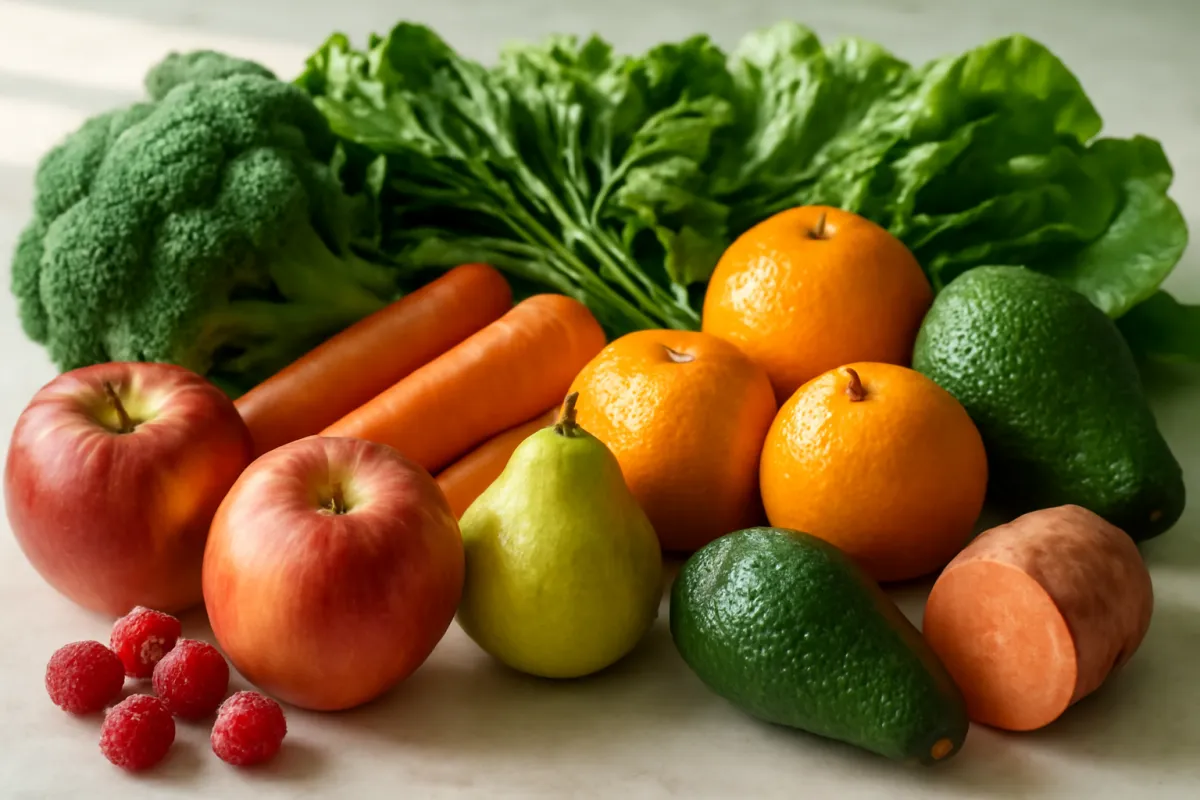
That is convenient, because the two problems have one cause and one fix. A diet leaning on packaged and restaurant food delivers excess sodium and insufficient potassium simultaneously. A diet built more on vegetables, fruit, legumes, plain dairy, minimally processed protein and unsalted grains moves both in the right direction at once, without either being an explicit goal. Our potassium evidence review covers the other half in detail, including the commonly cited adequate intakes and the safety cautions that come with them.
One caution has to travel with that pairing, and it is the same one as before. Raising potassium is not universally safe, and the group most often advised to cut sodium overlaps heavily with the group for whom extra potassium requires medical supervision. The paired advice is a general population principle, not an instruction for a specific person, and our daily nutrient intake reference sets both minerals in the context of the wider table.
Common Mistakes When Counting Sodium
The first mistake is the shaker assumption, covered at length above, which leads people to conclude their intake is low when roughly 85 percent of it was never under shaker control in the first place.
The second is trusting taste. Sweetness masks salt effectively, structure hides it, and the correlation between how salty something tastes and how much sodium it contains is loose enough to be unreliable. Bread, cereal and cottage cheese all demonstrate the point.
The third is reading per serving as per package, which turns an 800 milligram soup into a 1,600 milligram lunch without anything on the label being wrong. The fourth is comparing percentages across products with different serving sizes, when milligrams would have answered the question directly.
The fifth is a category error worth naming: treating sodium as a daily score to be logged. There is no benefit that arrives at a threshold and no penalty attached to a single day, because the figures describe an average tendency over time. The useful work is identifying your own two or three largest sources and changing those, which is a shopping exercise done once rather than a tracking exercise done forever.
The sixth is over-correcting. Very low sodium intakes are not automatically better for everyone, deficiency is a real if uncommon clinical state, and the people for whom a specific low figure is appropriate should have that figure set by a clinician rather than chosen from an article.
A Short Lower-Sodium Shopping List
A compact list beats a comprehensive one. For staples, plain frozen vegetables instead of canned, no-salt-added canned tomatoes and beans, plain rice, pasta, oats and dried lentils, and unsalted nuts. Every one of those carries almost nothing before cooking, and each has a canned or seasoned counterpart that carries a great deal more.
For proteins, fresh or plain frozen chicken, fish and meat rather than cured, breaded or marinated versions, plus eggs and plain dairy. Roasting a plain chicken breast on a Sunday and slicing it for sandwiches replaces the single largest line in most people’s lunch. Our grocery list method can be run alongside this without adding a second shop.
For flavor, the list is longer and cheaper than expected: lemons and limes, a couple of vinegars, garlic and onions, fresh herbs, dried herbs and whole spices, black pepper, chili flakes, mustard, tomato paste, dried mushrooms and unsalted or lower-sodium stock. That basket is what replaces the work the salt was doing, and it is the difference between food that is lower in sodium and food that is simply less interesting.
The two items requiring real thought at the shelf are bread and any sauce in a jar or bottle, since both vary widely between brands in the same category and neither difference is detectable by taste. Those are the two places where reading the sodium line changes the answer most often.
The Bottom Line
How much sodium per day comes down to two commonly cited figures and one uncomfortable fact about where it comes from. General adult guidance points to staying under about 2,300 milligrams a day, roughly the sodium in a teaspoon of table salt, with a lower figure near 1,500 milligrams discussed particularly for people with raised blood pressure. Typical intakes are commonly described as running above 3,000, so the practical question is direction rather than perfection.
The fact is that roughly 70 percent of it arrives inside packaged and restaurant food, so “I do not add salt” leaves most of the total untouched. Bread at roughly 150 milligrams a slice, deli meat at roughly 550 per two ounces, cheese at roughly 180 an ounce, a tablespoon of soy sauce at roughly 900 and a cup of canned soup at roughly 800 do the real work. An ordinary day with no shaker involved reached roughly 3,370 milligrams in the worked example above, and six swaps that kept every meal recognizable took it to roughly 1,470.
Read milligrams before percentages, check servings per container before either, and use acid, aromatics, herbs and browning to do the flavor work while your palate recalibrates over a few weeks. And the caution that overrides all of it: most salt substitutes are potassium chloride, which is genuinely unsafe for some people, and if you have high blood pressure, kidney disease or heart failure, or take medication related to any of them, the sodium figure that applies to you belongs to your clinician rather than to any reference table, this one included.
This evidence review is published for general education and describes commonly cited, approximate nutrition figures. It is not medical, dietary or nutritional advice, it does not diagnose, treat or manage any condition including high blood pressure, and reading it creates no clinician-patient relationship. Every milligram figure above is a rounded reference approximation rather than a measurement of any particular product, and sodium content varies more between brands than almost any other nutrient, so a specific package’s own label is the better source for that package. Daily reference figures and labeling Daily Values are set by public bodies, are periodically reviewed, and can change, so confirm anything consequential against the current official publication. Sodium reduction is not universally appropriate and its effect differs considerably between individuals; salt substitutes are commonly potassium chloride and carry real risk for people with reduced kidney function or on certain blood pressure medications. If you are managing hypertension, kidney disease or heart failure, take related medication, are pregnant, train or work in heat at a level that changes your losses, or are considering any change to what you eat for a health reason, speak with a doctor, pharmacist or registered dietitian who knows your full history before acting on anything here.
Frequently asked questions
How much sodium per day is commonly recommended for adults?
General dietary guidance for adults commonly cites staying below about 2,300 milligrams of sodium a day, which is roughly the amount in one teaspoon of table salt. A lower figure near 1,500 milligrams a day is commonly suggested as an ideal for many adults and is discussed particularly in the context of raised blood pressure. Typical intakes in the United States are commonly described as running above 3,000 milligrams a day, so most people are working downward from a starting point well past the ceiling. These are population reference figures rather than personal prescriptions, and anyone managing high blood pressure, kidney disease or heart failure should follow the figure their own clinician sets rather than a general one.
Is the salt shaker really not the main source of sodium?
For most people it is not. Commonly cited breakdowns put roughly 70 percent of sodium intake in packaged, processed and restaurant foods, with only a small share added during home cooking or at the table. That is why the sentence I do not add salt turns out to be weak reassurance: the sodium was already in the bread, the deli meat, the cheese, the sauce and the soup before any shaker appeared. It also explains why the most effective changes are shopping and ordering decisions rather than shaker discipline. The exact percentages vary by survey and by country and should be treated as approximations.
How much sodium is in a teaspoon of salt?
Table salt is sodium chloride, and sodium makes up roughly 40 percent of its weight, with chloride making up the rest. A level teaspoon of table salt weighs somewhere near 6 grams, which works out to roughly 2,300 milligrams of sodium, and a quarter teaspoon comes to roughly 575 milligrams. That is why the commonly cited daily ceiling is often described as about a teaspoon of salt a day, counting everything, not just what gets sprinkled on. If a package lists salt rather than sodium, multiplying sodium by about 2.5 gives the approximate salt figure, and dividing salt by 2.5 runs it the other way.
Which everyday foods carry the most sodium?
The usual leaders in an ordinary diet are instant noodle packages, restaurant meals, soy sauce and similar condiments, canned soup, pizza, deli and cured meats, and bread. Illustrative per-serving figures commonly cited are near 1,500 milligrams for an instant noodle package, 900 for a tablespoon of soy sauce, 800 for a cup of canned soup, 640 for a slice of pizza, 550 for two ounces of deli turkey and 150 for a slice of bread. Bread is the one that surprises people, because a slice is modest on its own but few people eat only one slice a day. All of these vary enormously by brand, so the package label is the better source for any specific product.
Why does bread contain so much sodium if it does not taste salty?
Salt in bread does structural work as well as flavor work: it interacts with gluten development, slows and regulates yeast activity, and contributes to crust and shelf life, so it is present in quantities that do not read as salty against the sweetness and starch of the loaf. A slice commonly lands near 150 milligrams, which sounds small, but four slices across a day of toast and a sandwich reach roughly 600. Volume rather than concentration is what makes bread significant. Comparing brands at the shelf is worthwhile because the range between loaves is wide, and nothing about a taste test will reveal it.
Are salt substitutes a safe way to cut sodium?
Most products sold as salt substitutes, lite salt or low-sodium salt are potassium chloride, either alone or blended with ordinary sodium chloride, which means swapping to one can deliver a meaningful amount of potassium in a concentrated, easily repeated form. For a healthy adult with normal kidney function that is usually not a problem, but for someone with kidney disease or taking an ACE inhibitor, an angiotensin receptor blocker or a potassium-sparing diuretic, it is a recognized route to dangerously high blood potassium. Our potassium evidence review covers that warning in more detail. Read the ingredient list on anything sold as a salt alternative, and if any of those conditions or medications apply to you, ask your clinician or pharmacist before using one.
How long does it take to get used to less salt?
Taste preference for salt appears to be substantially learned rather than fixed, and people who reduce intake gradually commonly describe food tasting normal again after a period of weeks rather than days. The practical implication is that the first stretch is the hardest and is a poor time to judge whether the change is sustainable. Cutting gradually, so that each step down is small enough to go mostly unnoticed, tends to work better than a sudden drop that makes every meal taste flat at once. Anyone making a change for a medical reason should set the pace with their clinician rather than with an article.
Do athletes and people working in heat need more sodium?
Sodium is the electrolyte lost in the largest amounts in sweat, so people sweating heavily for long periods, in hot conditions or in physically demanding jobs, do have higher losses than the general population the daily ceilings were written for. Endurance events lasting several hours, hot-weather outdoor labor and high sweat rates are the situations where deliberate sodium and fluid replacement is commonly discussed, and it is also where drinking large volumes of plain water without any electrolytes carries its own risk. Sweat sodium losses vary widely between individuals, which is why blanket numbers are unhelpful here. Anyone in that category is better served by sports medicine or dietetic guidance built around their own sweat rate, conditions and duration than by a general population figure.

Hamza Hai is the editor of NourishMark. She holds an MBA and reviews the site's articles against our editorial standards, checking that every figure is labelled for what it is, that nothing is presented as verified fact without a source the reader can check, and that the writing stays useful to a non-specialist.