
What's in this review
- How this meal plan is built
- Daily protein and calorie targets used in this plan
- Why a full week instead of one sample day
- Reading each day’s full macros, not just protein
- Day 1: eggs, chicken, and lentils
- Day 2: yogurt, salmon, and beans
- Day 3: cottage cheese, turkey, and tofu
- Day 4: oats, chicken, and chickpeas
- Day 5: smoothie, beef, and edamame
- Day 6: eggs, tuna, and tempeh
- Day 7: pancakes, roast chicken, and dal
- The week’s protein sources, ranked
- An illustrative day’s protein, by meal
- Grocery list for the week
- Batch cooking strategy for the week
- Keeping this plan affordable
- Storage and food safety across the week
- Snacks across the week
- Portion sizes without a kitchen scale
- Weekend versus weekday differences
- Adjusting for fewer meals or a different eating window
- Food allergies and intolerances
- Adjusting this plan to your own target
- Staying hydrated across a higher protein week
- What to do if a day runs over or under target
- Common mistakes when following a weekly meal plan
- Eating out or swapping a day
- A quick checklist for the week
- The bottom line
Short answer: This sample 7-day high protein meal plan targets roughly 110 to 130 grams of protein a day at about 1,800 to 2,000 calories, using breakfasts, lunches, dinners and a snack built around eggs, Greek yogurt, chicken, fish, legumes, and tofu. Each day includes a vegetarian swap, and the whole week is designed around batch-cooked proteins and grains to cut down on daily cooking.
A 7-day meal plan solves a specific problem that a food list or a protein target alone does not: it removes the decision fatigue of figuring out, meal by meal, how to actually reach a protein target with real food. This plan lays out seven days of breakfasts, lunches, dinners, and a snack, built to land in an illustrative 110 to 130 gram protein range each day, with vegetarian swaps and a shared grocery list so the whole week can be shopped for and prepped in one or two sessions rather than daily improvisation.
Every meal below uses commonly cited, illustrative protein figures rather than exact measurements of any specific product, and the plan is a template to adapt, not a fixed prescription. Treat the seven days as a starting menu to borrow from freely: swap a dinner you dislike, repeat a breakfast you enjoy, and adjust portions to your own appetite and schedule, since the structure behind the numbers is what carries the plan across a real week, not the exact meals as written. For the reasoning behind the protein target itself, see our protein needs review, and for the foods used throughout the week, our protein food composition review. Set your own weight and calorie level in the companion below to see a personalized version of the daily target used here.
Key takeaways
- This sample week targets an illustrative 110 to 130 grams of protein a day at about 1,800 to 2,000 calories, spread across three meals and a snack.
- Each day includes a vegetarian swap using tofu, tempeh, legumes, or a plant-based shake at a comparable protein amount.
- The plan is designed around batch cooking: a few proteins and grains prepared once or twice supply several dinners across the week.
- Days and meals are interchangeable; repeating favorites across the week works as well as following seven distinct days in order.
- All figures are illustrative, commonly cited references for planning meals, not a personal prescription; adjust the calorie level with a professional if you have a specific health goal or condition.
How this meal plan is built
This plan uses a simple, repeatable structure at each meal: a clear protein source, a vegetable or fruit component, and a moderate portion of a whole grain or starch, adjusted meal to meal so the day’s total protein lands in the illustrative target range. That structure mirrors our balanced meal guide, applied specifically toward a higher protein total than a typical mixed diet would produce.
The illustrative target used throughout, 110 to 130 grams of protein and roughly 1,800 to 2,000 calories a day, sits in a commonly cited range for weight maintenance or a modest deficit for many adults, but it is a worked example rather than a personal number. Someone with a different body size, activity level, or goal would reasonably use a different target, which is exactly what the companion below is for: enter your own weight and calorie level and see how the target shifts.
Daily protein and calorie targets used in this plan
Here is the illustrative target this plan is built around, alongside how it might scale for two other common calorie levels, for reference.
| Daily calories | Illustrative protein target | Approx. share of calories |
|---|---|---|
| 1,500 kcal | ~100 g | ~27% |
| 1,800 kcal | ~120 g | ~27% |
| 2,200 kcal | ~140 g | ~25% |
The meals in this plan are written at the 1,800 to 2,000 calorie level; scaling portions up or down by roughly 15 to 20 percent adapts the same structure to the other rows in this table without redesigning the week from scratch.
Why a full week instead of one sample day
Most high protein content online shows a single sample day and asks the reader to repeat it, which quietly assumes unlimited appetite for the same three meals indefinitely. A 7-day structure exists specifically to solve that problem: it shows that a protein target can be hit through genuinely different meals, so the plan survives contact with an actual week that includes a busy Tuesday, a slower Sunday, and a night when cooking from scratch is not realistic.
The seven days below are also built to reuse ingredients rather than requiring seven completely separate shopping trips or seven different proteins purchased in small quantities. Chicken appears more than once, as does rice, tofu, and Greek yogurt, which keeps the grocery list manageable and supports the batch cooking approach described later in this review. Variety here means different meals, not necessarily different raw ingredients at every turn, which is a more realistic version of variety for anyone actually shopping and cooking on a weekly basis.
Reading each day’s full macros, not just protein
Protein is this plan’s organizing principle, but carbohydrate and fat still make up most of the plate across the week, and it is worth seeing them together rather than only tracking the protein line. Here is an illustrative macro breakdown for the seven days above, rounded for readability.
| Day | Protein | Carbohydrate | Fat | Approx. calories |
|---|---|---|---|---|
| Day 1 | ~100 g | ~190 g | ~55 g | ~1,750 kcal |
| Day 2 | ~90 g | ~205 g | ~60 g | ~1,800 kcal |
| Day 3 | ~94 g | ~180 g | ~65 g | ~1,750 kcal |
| Day 4 | ~102 g | ~195 g | ~58 g | ~1,800 kcal |
| Day 5 | ~100 g | ~200 g | ~62 g | ~1,850 kcal |
| Day 6 | ~91 g | ~185 g | ~60 g | ~1,750 kcal |
| Day 7 | ~98 g | ~210 g | ~57 g | ~1,850 kcal |
The week averages out close to the illustrative 1,800 to 2,000 calorie, 95 to 105 gram protein range described earlier, with some natural day-to-day variation, which is normal and not something to correct meal by meal. Looking at the week as a whole rather than any single day is a more forgiving and, for most people, more sustainable way to judge whether a high protein pattern is actually being followed. Carbohydrate here comes mostly from rice, oats, quinoa, bread, and fruit, and fat mostly from cooking oil, avocado, nuts, and the natural fat content of foods like salmon and eggs; neither is minimized deliberately, since this plan is built around emphasizing protein rather than restricting the other two macronutrients.
Day 1: eggs, chicken, and lentils
Breakfast: two eggs scrambled with spinach, a slice of whole grain toast, and a cup of berries. Illustrative protein: about 15 g. Lunch: a grain bowl with 150 g grilled chicken breast, brown rice, roasted broccoli, and a light dressing. Illustrative protein: about 40 g. Dinner: lentil and vegetable stew with a side of crusty whole grain bread. Illustrative protein: about 22 g. Snack: a cup of plain Greek yogurt with a spoon of honey. Illustrative protein: about 17 g. Day total: approximately 94 to 110 g depending on portions, adjustable toward the upper end with a larger chicken or lentil portion. Vegetarian swap: replace the chicken at lunch with 200 g of firm tofu, pan-seared, for a similar protein amount.
Day 2: yogurt, salmon, and beans
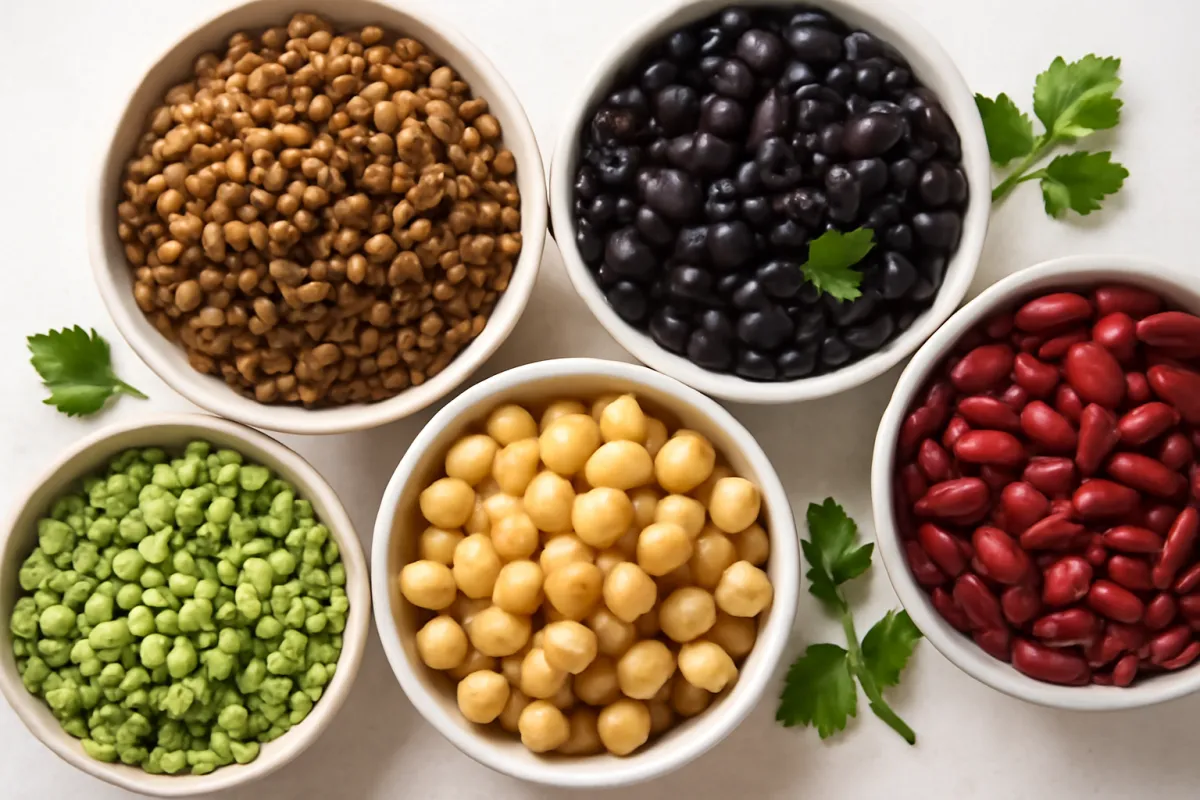
Breakfast: Greek yogurt parfait with granola and mixed berries. Illustrative protein: about 20 g. Lunch: a black bean and vegetable burrito bowl with a small portion of cheese. Illustrative protein: about 24 g. Dinner: baked salmon with roasted potatoes and green beans. Illustrative protein: about 34 g. Snack: a handful of roasted edamame. Illustrative protein: about 12 g. Day total: approximately 90 g, scalable upward with a larger salmon portion or an added egg at breakfast. Vegetarian swap: replace the salmon at dinner with a marinated tempeh steak at a similar weight, for a comparable protein amount, alongside the same sides.
Day 3: cottage cheese, turkey, and tofu
Breakfast: cottage cheese with sliced peaches and a sprinkle of cinnamon. Illustrative protein: about 22 g. Lunch: a turkey and vegetable wrap with a side salad. Illustrative protein: about 28 g. Dinner: a tofu and vegetable stir-fry over rice. Illustrative protein: about 20 g. Snack: a protein shake made with water or milk. Illustrative protein: about 24 g. Day total: approximately 94 g, adjustable with a larger tofu or turkey portion toward the 110 to 130 g range. Vegetarian swap: replace the turkey wrap with a chickpea and vegetable wrap using a similar quantity of chickpeas mashed with a light dressing.
Day 4: oats, chicken, and chickpeas
Breakfast: overnight oats made with milk, chia seeds, and a scoop of protein powder. Illustrative protein: about 25 g. Lunch: leftover grilled chicken from Day 1’s batch cook, over a large mixed salad with chickpeas. Illustrative protein: about 38 g. Dinner: baked white fish with quinoa and roasted vegetables. Illustrative protein: about 30 g. Snack: a hard-boiled egg and a small handful of almonds. Illustrative protein: about 9 g. Day total: approximately 102 g, near the middle of the illustrative range. Vegetarian swap: replace the chicken at lunch with an extra serving of chickpeas and a soft-boiled egg on the salad.
Day 5: smoothie, beef, and edamame
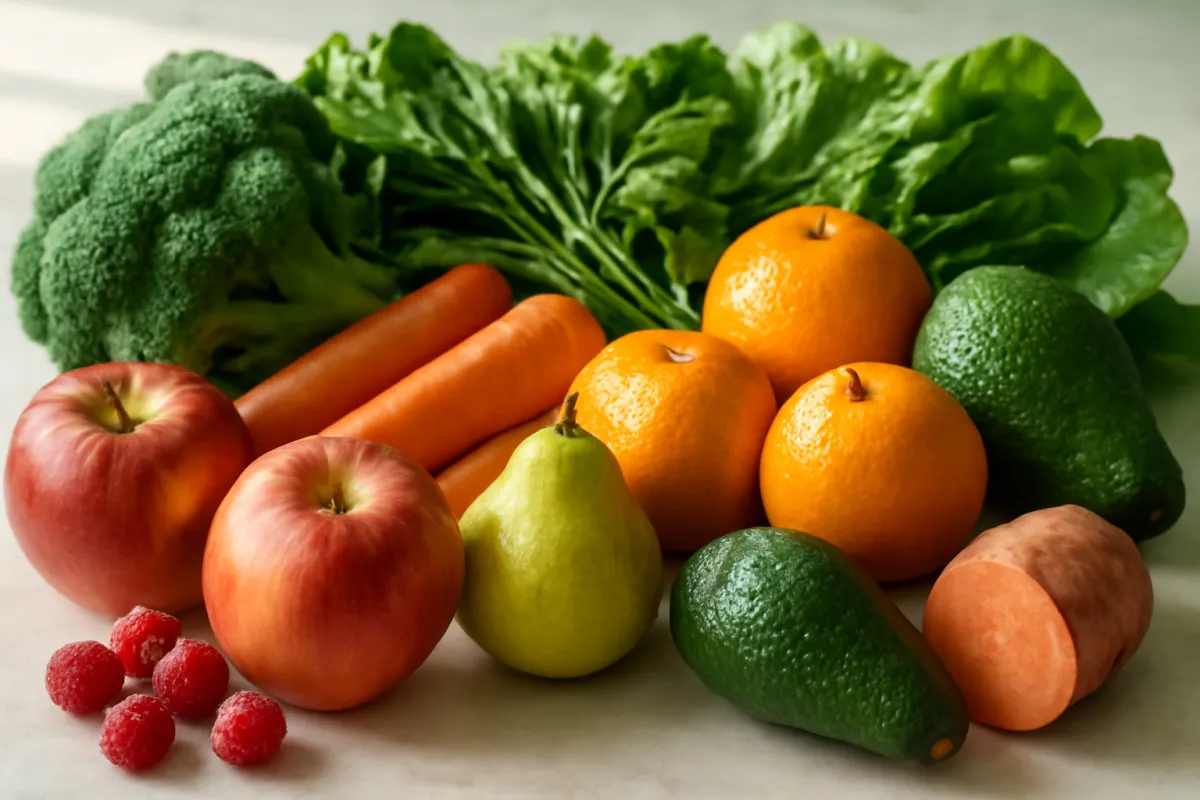
Breakfast: a protein smoothie with milk, a banana, a scoop of protein powder, and peanut butter. Illustrative protein: about 30 g. Lunch: a lean beef and vegetable stir-fry over brown rice, using batch-cooked rice from earlier in the week. Illustrative protein: about 32 g. Dinner: a large salad with grilled shrimp, mixed greens, and avocado. Illustrative protein: about 26 g. Snack: edamame and a piece of fruit. Illustrative protein: about 12 g. Day total: approximately 100 g, adjustable upward with a larger beef or shrimp portion. Vegetarian swap: replace the beef at lunch with a lentil and vegetable stir-fry, and the shrimp at dinner with baked tofu cubes at a similar weight.
Day 6: eggs, tuna, and tempeh
Breakfast: a vegetable omelet with two eggs and a side of Greek yogurt. Illustrative protein: about 27 g. Lunch: a tuna salad sandwich on whole grain bread with a side of vegetables. Illustrative protein: about 26 g. Dinner: tempeh and vegetable curry with a small portion of rice. Illustrative protein: about 24 g. Snack: cottage cheese with cucumber slices. Illustrative protein: about 14 g. Day total: approximately 91 g, scalable with a larger tempeh or tuna portion toward the target range. Vegetarian swap: replace the tuna sandwich with a white bean and vegetable sandwich spread, using a similar quantity of beans mashed with a light dressing.
Day 7: pancakes, roast chicken, and dal
Breakfast: protein pancakes made with a protein powder blend, topped with berries and a spoon of Greek yogurt. Illustrative protein: about 28 g. Lunch: leftover roast chicken from a weekend batch cook, over a grain salad with mixed vegetables. Illustrative protein: about 35 g. Dinner: a red lentil dal with a side of steamed vegetables and a small portion of rice. Illustrative protein: about 20 g. Snack: a protein shake or a serving of nuts and cheese. Illustrative protein: about 15 g. Day total: approximately 98 g, adjustable upward with a larger chicken portion or an added egg at breakfast. Vegetarian swap: replace the roast chicken at lunch with a large portion of marinated tofu or tempeh, roasted alongside the same grain salad.
The week’s protein sources, ranked
Across the seven days above, a handful of foods do most of the work. Here is how their commonly cited protein per typical serving compares.
Illustrative protein grams per serving used in this plan
Approximate figures for the portions used across the week above.
Bars scale to a 150 gram chicken breast at 100 percent. These are the anchor portions used above; smaller or larger servings scale the figures up or down.
An illustrative day’s protein, by meal
Using Day 4 as a representative example, here is how one day’s protein is distributed across meals.
Day 4's protein, by meal
Approximate grams summing to about 102 g across the day.
Segments show one day's meal-by-meal share of an illustrative 102-gram total. Every day in the plan follows a similar shape with different foods.
Grocery list for the week
Shopping once for most of the week, rather than daily, is what makes a 7-day plan practical. A core list covering the meals above includes chicken breast, salmon or another fish, lean beef, shrimp, eggs, Greek yogurt, cottage cheese, firm tofu, tempeh, canned or dried lentils, black beans, and chickpeas, plus a rotating selection of vegetables and fruit, whole grain bread, rice, quinoa, and oats.
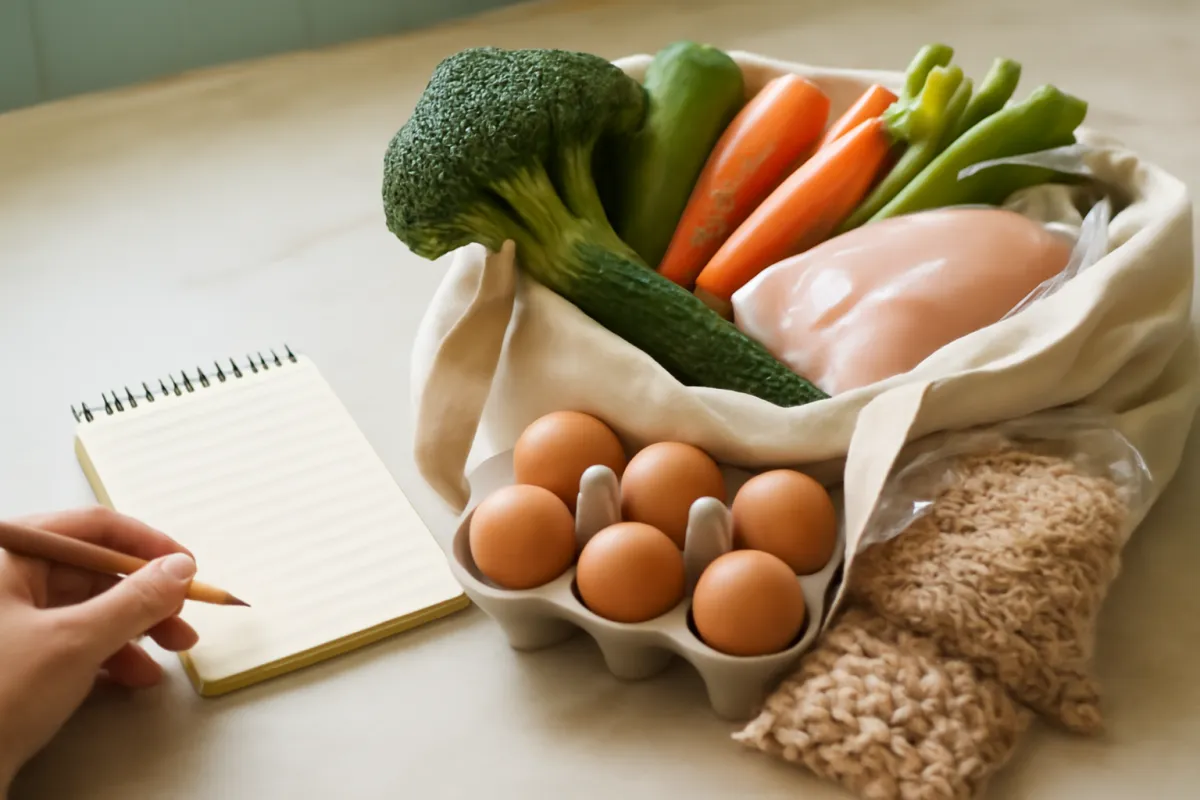
Our budget grocery list guide and eating healthy on a budget review go further into building a list like this affordably, including which items are usually cheaper bought in bulk or frozen. Checking what is already in the pantry and freezer before shopping avoids duplicate purchases and is a simple habit that keeps a weekly plan like this one from becoming more expensive than it needs to be.
Batch cooking strategy for the week
This plan assumes two cooking sessions rather than seven: a larger batch of grilled chicken and roasted vegetables early in the week supplies Day 1’s lunch and reappears in Day 4’s lunch, and a larger roast chicken over a weekend supplies Day 7’s lunch. Grains, rice and quinoa, are cooked in bulk once and portioned out across several dinners rather than made fresh each night.
Our meal prep guide covers this batching approach step by step, including how to store proteins and grains safely across a week and which components hold up best when reheated versus which are better added fresh, such as leafy greens and delicate herbs.
Keeping this plan affordable
High protein foods have a reputation for being expensive, but the plan above leans on several of the most economical protein sources available specifically to keep cost manageable. Eggs, canned and dried legumes, chicken thighs rather than breast where a recipe allows, frozen fish, and cottage cheese are consistently among the cheaper options per gram of protein, and they appear repeatedly across the week for that reason alongside their nutritional fit.
Buying dried beans and lentils rather than canned, cooking a larger batch of chicken or grains than a single meal requires, and choosing frozen vegetables and fish when fresh options are priced high are all practical ways to lower the week’s total grocery cost without changing the plan’s structure. Our eating healthy on a budget review goes further into stretching a grocery budget around a protein-forward week like this one, and swapping any single pricier item, salmon for a frozen white fish, or beef for extra lentils and chicken, adjusts cost without meaningfully changing the protein total.
Storage and food safety across the week
Batch cooking across several days only works if the food stays safe to eat, so a few basic habits matter here. Cooked chicken, fish, and grains generally keep well refrigerated for a few days when cooled promptly and stored in sealed containers, and portioning a batch into individual meal containers right after cooking, rather than storing it as one large block, helps it cool faster and makes grabbing a single portion easier through the week. Anything not going to be eaten within a few days is better frozen at the time of cooking than left in the refrigerator until it is questionable.
Reheating cooked chicken, fish, and grains until steaming hot throughout, rather than briefly, is a standard food safety practice worth following regardless of how the meal fits into a broader eating plan, and a food thermometer removes any guesswork for anyone unsure whether a reheated portion is genuinely hot enough all the way through. Leafy greens, fresh herbs, and anything meant to stay crisp are the exceptions to batch cooking in this plan; they are better added fresh at the time of eating rather than prepared several days ahead, which our meal prep guide covers in more detail alongside general storage times for common foods.
Snacks across the week
The snacks in this plan, Greek yogurt, edamame, a hard-boiled egg, a protein shake, cottage cheese, are chosen for the same reason as the main meals: they deliver meaningful protein without requiring much preparation. Our high protein snacks review lists more than 40 further options by protein count if you want to rotate beyond what is shown here, and any of them can be substituted into a given day without disrupting the overall plan.
Portion sizes without a kitchen scale
Every gram figure in this plan assumes a specific portion, and translating that into something you can recognize on a plate makes the plan far easier to follow without weighing every ingredient. A 150 gram chicken breast is roughly the size and thickness of an adult palm; a 200 gram tofu block is about a third of a standard package; a cup of cooked rice or lentils is about the size of a closed fist; and a tablespoon of oil or nut butter is about the size of a thumb tip.
Weighing food for the first week or two, particularly the protein portions, is still the fastest way to calibrate your eye if precision matters to you, after which most people can estimate the same portions reasonably well without a scale. Our macro counting guide covers tracking in more depth for anyone who wants to move beyond estimation for a period.
Weekend versus weekday differences
The seven days in this plan are written without labeling any of them as a specific day of the week, deliberately, because most people’s schedules do not treat every day the same. In practice, the days built around a larger batch cook, Day 1’s grilled chicken and Day 7’s roast chicken, tend to fit better on a day with more time to cook, often a weekend, while the simpler assembly meals, wraps, salads, a quick stir-fry, tend to fit better on a busy weekday when leftovers from the batch cook are doing most of the work.
There is no requirement to match the plan to a literal calendar week this way; the point is that the plan already contains both higher-effort and lower-effort days, so it can be dropped onto an actual week in whatever order fits, higher-effort cooking days landing where there is more time, and the leftover-based days landing where there is less.
Adjusting for fewer meals or a different eating window
This plan is written around three meals and a snack, but the same weekly structure adapts to other eating patterns without much difficulty. Anyone following a reduced eating window, such as one form of intermittent fasting, can consolidate the same foods into two or three larger eating occasions rather than four, as long as the day’s total protein and calories land in a similar range; our intermittent fasting review covers that pattern specifically. Someone who prefers five or six smaller meals instead of four can split the same daily total further, using the leucine-threshold reasoning discussed in our protein per meal review to keep each smaller meal still meaningfully protein-forward rather than diluting it too thin.
The underlying principle across every version of this adjustment is the same: the weekly total of protein and calories is what this plan is actually built to hit, and the number of eating occasions used to get there is a preference, not a requirement.
Food allergies and intolerances
This plan uses common allergens, including eggs, dairy, fish, shellfish, soy, and gluten-containing grains, across different days, and none of them are essential to the underlying structure. Egg-based breakfasts can be replaced with a dairy or soy-based option; dairy items, Greek yogurt, cottage cheese, cheese, can be swapped for a fortified soy or pea-protein alternative; and fish or shellfish days can use poultry, beef, or a plant protein instead, at a similar protein amount using the figures in our protein food composition review.
Because this review cannot see your specific allergies, intolerances, or medical dietary restrictions, treat every named food here as an example of a protein-dense option rather than a required ingredient, and substitute freely using foods you can safely eat. Anyone managing a diagnosed food allergy, celiac disease, or another condition affecting diet should build a plan like this with a doctor or registered dietitian who knows the specifics of that condition.
Adjusting this plan to your own target
The 110 to 130 gram, 1,800 to 2,000 calorie range used throughout this plan is a worked illustration, not everyone’s right number. Someone with a smaller body size, a lower activity level, or a different goal would reasonably scale portions down; someone larger, more active, or specifically working toward muscle gain would reasonably scale portions up, generally by increasing the size of the protein and starch portions at each meal rather than redesigning the meals themselves.
Use the companion below to enter your own weight and calorie target and see an illustrative gram figure to aim for, and see our high protein diet for weight loss and high protein diet for muscle gain reviews for how the calorie side of this same meal structure shifts for each specific goal.
Staying hydrated across a higher protein week
A higher protein intake is commonly discussed alongside adequate water intake, partly because protein metabolism involves the kidneys processing more nitrogen waste than a lower protein diet would produce, and staying hydrated is a reasonable general habit regardless of what a given week’s diet looks like. Our hydration guide covers a practical, non-prescriptive approach to daily water intake that pairs well with a week like this one.
Fiber is worth a mention alongside hydration, since a higher protein, higher meat week can sometimes crowd out fiber if vegetables, fruit, and legumes are not deliberately kept in the picture. This plan keeps legumes and vegetables present most days specifically for that reason, and it is worth keeping that balance rather than letting protein-dense foods push produce off the plate as the week goes on. Our fiber needs review covers a reasonable daily reference for anyone wanting to check that side of the plate too.
What to do if a day runs over or under target
Some days in this plan will run a little over or under the illustrative target once real portions, brands, and appetite are factored in, and that is expected rather than a sign the plan has failed. A day that runs short on protein is easily corrected the next day by adding an extra serving of Greek yogurt, an egg, or a scoop of protein powder to one meal, rather than needing to fix the shortfall within the same day. A day that runs over is not a problem to correct at all in most cases; total weekly intake, not a single day’s exact number, is what the commonly cited evidence associates with the outcomes this plan is built around.
This flexible framing is part of why a 7-day structure is more useful than a single rigid daily target repeated seven times: it gives room for normal day-to-day variation in appetite, schedule, and available food, while still keeping the week as a whole pointed toward the same illustrative range.
Common mistakes when following a weekly meal plan
A handful of patterns undercut a plan like this more often than any single meal choice does.
- Treating the plan as rigid. Swapping days, repeating a favorite meal, or reordering the week does not undermine the approach; the weekly total is what matters most.
- Skipping the batch cooking step. Cooking every meal fresh, daily, is what makes a 7-day plan feel unsustainable; the batching described above is part of the design, not optional.
- Under-portioning to compensate for a bigger day. If dinner runs large, there is no need to under-eat at other meals; total daily and weekly intake, not any single meal, is the relevant total.
- Ignoring the vegetarian swaps if plant-based some days. Mixing omnivorous and plant-based days across the same week works fine and can lower cost and add variety.
- Copying the exact grams without adjusting for your own size. The figures here are illustrative for an example body size and calorie level; the companion below adjusts them to yours.
Eating out or swapping a day
Life does not always cooperate with a written plan, and this one is built to flex around that. Eating out on any given day can simply replace that day’s meals with a restaurant equivalent, a grilled protein with vegetables and a moderate starch, using the same plate-building logic described in our balanced meal guide. A day that runs short on protein because of travel or a busy schedule is not a failure of the plan; picking the total back up the next day, or across the week as a whole, is a perfectly reasonable way to use a 7-day structure rather than a strict daily one.
A quick checklist for the week
- Shop once for most of the week, using the grocery list above as a starting template.
- Batch cook two rounds of protein and grains, early in the week and again over a weekend, rather than cooking fresh at every meal.
- Keep 2 to 3 snack options on hand, Greek yogurt, a hard-boiled egg, edamame, for days that run short on time.
- Use the vegetarian swap on any day without needing to plan a separate plant-based week.
- Check your own target in the companion, and adjust portions up or down rather than redesigning the meals.
- Treat the seven days as a template, repeating or reordering meals as your week actually goes.
The bottom line
A written week beats a repeated single day for most people trying to sustain a higher protein pattern past the first few days. This 7-day high protein meal plan is a template for reaching an illustrative 110 to 130 gram daily protein target at about 1,800 to 2,000 calories, using breakfasts, lunches, dinners, and a snack built around eggs, Greek yogurt, chicken, fish, legumes, and tofu, each with a vegetarian swap included. The structure, not the exact grams, is the part worth keeping: a clear protein source at every meal, batch cooking to reduce daily effort, and a weekly rather than daily view of whether the target is being met. Adjust the calorie level and portions to your own situation using the companion below, and pair this plan with our protein needs review for how a personal target is actually set. A plan you actually follow across a real, imperfect week will outperform a stricter one abandoned by Wednesday, which is the practical reasoning behind every flexibility built into this template.
This meal plan is published for education and describes one illustrative way to structure high protein meals across a week; it is not medical or dietary advice, and reading it creates no clinician-patient relationship. Every protein figure, calorie level, and portion size above is an illustrative, commonly cited reference for planning meals, not a personal prescription or a measurement of any specific product, and real foods vary by brand, cut, and preparation. This article does not diagnose any condition or set a target for weight loss, muscle gain, or any other goal. Anyone with a medical condition, food allergy, or specific dietary need should adapt this plan, or set a different one, with a doctor or registered dietitian.
Frequently asked questions
How much protein is in this 7-day meal plan?
This sample plan is built around an illustrative target of roughly 110 to 130 grams of protein a day at about 1,800 to 2,000 calories, spread across three meals and a snack each day. That range is a worked example to show how ordinary meals add up across a week, not a personal target. Our companion below lets you enter your own weight and calorie level to see a different illustrative target, and our protein needs review covers how a personal target is actually set.
Can I follow a 7-day high protein meal plan if I am vegetarian or vegan?
Yes. Each day in this plan includes a vegetarian swap that replaces the animal protein with tofu, tempeh, legumes, or a plant-based protein shake at a similar protein amount, and several days lean on legumes and dairy already. A fully vegan version is achievable by also swapping any dairy for a fortified soy or pea-based alternative. Our step-by-step guide to getting protein without meat goes further into building a full plant-based week.
Do I need to follow this plan exactly, day by day?
No. The seven days are a template showing how a high protein week can be structured, not a fixed prescription, and the meals within each day are interchangeable with any other day's meals that supply a similar protein amount. Repeating a favorite day two or three times a week, or reordering the days entirely, does not undermine the plan; consistency in the daily total across the week matters far more than which specific day a meal appears on.
How many calories are in this meal plan?
The sample week is built around an illustrative 1,800 to 2,000 calories a day, a common range for weight maintenance or a modest deficit in many adults, but it is not a personal calorie target. Our calorie deficit review and calorie needs review cover how to estimate your own figure, and the meals here can be scaled up or down in portion size to fit a different calorie level while keeping the same protein-forward structure.
What if I don't have time to cook every meal in this plan?
The plan is designed with batch cooking in mind: several dinners reuse the same cooked protein and grains prepared once or twice across the week, which is a standard meal-prep strategy rather than a requirement to cook fresh at every meal. Our meal prep guide covers batching a week's proteins, grains, and vegetables in one or two sessions, and canned, frozen, and pre-cooked options, canned beans, frozen fish, rotisserie chicken, are reasonable substitutes for any homemade item in this plan.
Is this meal plan safe for weight loss?
This plan is built at a maintenance-range calorie level as a general template, and it is not automatically a weight loss plan or a muscle gain plan on its own; the calorie level and portion sizes are what determine which goal it serves. Our high protein diet for weight loss review and high protein diet for muscle gain review adapt this same style of eating to each specific goal with different calorie and protein targets, and either adjustment can be layered onto the meal structure shown here.
Can I repeat meals instead of following seven different days?
Yes, and many people find repeating two or three favorite high protein meals across the week easier to sustain than a fully different menu every day. The seven distinct days in this plan are meant to illustrate variety and give options, not to imply that variety itself is required for the approach to work; total daily protein and calories across the week are what the commonly cited evidence associates with the outcome, not how many different meals were eaten to get there.

Hamza Hai is the editor of NourishMark. She holds an MBA and reviews the site's articles against our editorial standards, checking that every figure is labelled for what it is, that nothing is presented as verified fact without a source the reader can check, and that the writing stays useful to a non-specialist.

Dr. Shayaan Khan is the medical reviewer for NourishMark. He holds an MBBS from MGM Medical College, Navi Mumbai, and is the author of published research including a narrative review of postpartum anxiety and depression in Mental Health Science. He has taught physiology at university level. He reviews the site's health content for medical accuracy: that physiology and mechanisms are described correctly, that no claim is stated more strongly than the evidence behind it, and that anything specific to an individual reader is sent to that reader's own clinician.
Not medical advice. Dr. Khan reviews NourishMark's health content for medical accuracy. He is not a registered dietitian, he does not hold a United States practising licence, and he is not your doctor. His review does not make anything here medical advice. Always talk to a qualified health professional about your own situation, and never delay or stop care because of something you read here.