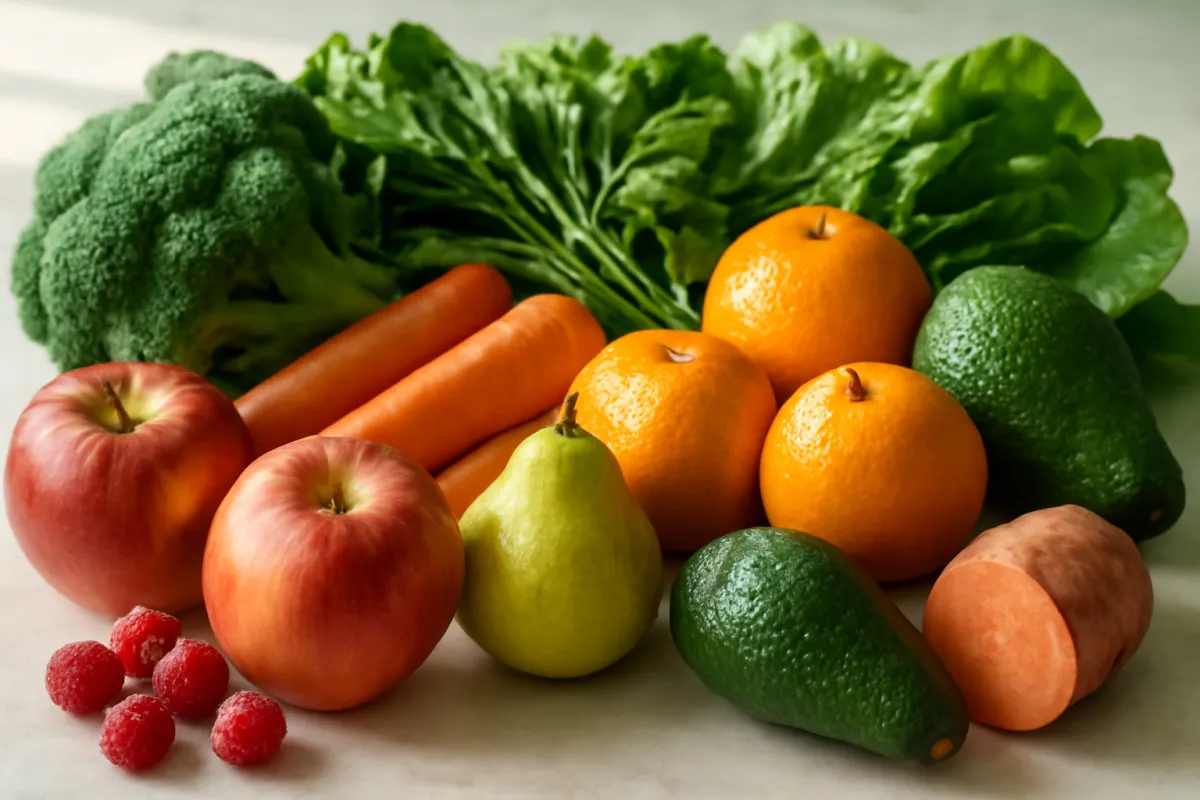
What's in this review
- How many calories in an apple
- Calories in an apple by size
- An apple size and nutrient table
- Calories in an apple per 100 grams
- The carbs in an apple
- Where an apple’s carbohydrate goes
- Sugar in an apple
- Fiber in an apple, and what peeling costs
- Apple varieties and whether they change the number
- Apple juice, applesauce, and dried apple
- How an apple compares with other fruit
- Are apples filling for their calories
- Vitamins, minerals, and the skin
- Common mistakes when counting apple calories
- How to count an apple accurately
- Cooked apples and what heat changes
- Apples in a balanced diet
- How many apples a day is reasonable
- How many calories in an apple, in every phrasing
- The bottom line
Short answer: A medium apple of about 182 grams carries about 95 calories, a small one about 77, and a large one about 116, using commonly cited USDA figures, with raw apple with skin listed near 52 calories per 100 grams. A medium apple carries roughly 25 grams of carbohydrate, about 19 grams of it natural sugar and close to 4 grams of fiber. Peeling removes roughly half the fiber while saving very few calories.
How many calories are in an apple? A medium apple carries about 95 calories, a small one about 77, and a large one about 116, using commonly cited figures from the United States Department of Agriculture. As with most whole fruit, the entire spread comes down to one thing, the size of the apple, which is why the same fruit seems to carry a different number every time you look it up. Underneath the size figures sits one steady value: roughly 52 calories per 100 grams of raw apple with the skin on. Nearly all of that energy is carbohydrate, and it arrives with around 4 grams of fiber in a medium fruit, most of it concentrated in and just beneath the skin.
This evidence review is a plain-language reference for the calories in an apple, arranged so you can find the size you have and understand the figure once you do. It answers the headline question first, then works through calories by USDA size, the per 100 gram value, the carbohydrate, sugar, and fiber an apple carries, what peeling costs you, how variety and preparation change the number, and how an apple compares with other fruit and with juice or sauce. It describes food composition only and is not diet or medical advice. For the wider table, see our reference on calories in common foods, for the closest sibling fruit our banana review, and for how much you personally need our calorie needs review. You can tally an apple in the companion below.
Key takeaways
- USDA figures put a medium apple (about 182 grams, roughly three inches across) near 95 calories, with a small near 77 and a large near 116, so size drives the number.
- Per 100 grams, USDA lists raw apple with skin near 52 calories, which makes an apple one of the lighter common fruits by weight.
- A medium apple carries roughly 25 grams of carbohydrate, about 19 grams of it natural sugar and close to 4 grams of fiber.
- Peeling removes roughly half the fiber while saving very few calories, because much of an apple's fiber sits in and just under the skin.
- Every figure here is a commonly cited, USDA-based reference rather than an exact measurement; for personal targets consult a doctor or registered dietitian.
How many calories in an apple
Start with the figure people search for. Using USDA reference data, a medium apple, described as roughly three inches in diameter and about 182 grams with the skin on, is commonly cited at about 95 calories. That is the value most databases attach to an average apple, and it follows directly from the USDA figure of about 52 calories per 100 grams scaled to the weight of a medium fruit. A smaller apple lands lower and a larger one higher, because in whole fruit the calories track the weight far more closely than they track anything else.
Almost all of those calories come from carbohydrate. A medium apple carries only a trace of protein and a trace of fat, so its roughly 25 grams of carbohydrate account for essentially the entire figure. What the number hides is everything arriving alongside it: about 4 grams of fiber, a large amount of water, some vitamin C, potassium, and the plant compounds concentrated in the skin. That is the difference between 95 calories from an apple and 95 calories from something with no other nutrients. Read 95 as a commonly cited, USDA-based reference for an average medium fruit, not as a measurement of the apple in your hand.
Calories in an apple by size
Because an apple’s calories follow its weight, the most useful way to answer the question is by size, and USDA publishes reference weights for the common apple sizes. The names below are the standard size categories, and the calorie figures are the values that follow from the per 100 gram number, rounded and framed as approximate because real apples vary.
Illustrative calories in an apple by USDA size
Commonly cited figures scaled from USDA reference weights for raw apple with skin, rounded. Approximate values, not measurements of any one fruit.
Bars scale to the large apple at 100 percent. Figures follow USDA reference weights and the per 100 gram calorie value for raw apple with skin; a real apple varies by variety and water content.
The spread is worth sitting with. An extra small apple near 53 calories and a large one near 116 differ by more than double, which is why a single quoted figure so often feels wrong for the apple someone is actually holding. Modern supermarket apples also skew large, so the fruit in most shopping bags is closer to the medium and large rows than to the small one. The practical habit is to compare your apple against the diameter ranges before reaching for a number. When you need to be exact, a kitchen scale plus the per 100 gram figure below beats any size label, since two apples of the same width can differ noticeably in weight.
An apple size and nutrient table
Here is the same information as a quick table, with the carbohydrate, sugar, and fiber that travel alongside the calories, scaled from USDA per 100 gram values to each size’s reference weight. The weight column is what the figures actually describe, and it is the first thing to check.
| Apple size | Approx. weight | Calories | Carbs | Sugar | Fiber |
|---|---|---|---|---|---|
| Extra small (~2.5 in) | ~101 g | ~53 | ~14 g | ~10.5 g | ~2.4 g |
| Small (~2.75 in) | ~149 g | ~77 | ~21 g | ~15.5 g | ~3.6 g |
| Medium (~3 in) | ~182 g | ~95 | ~25 g | ~19 g | ~4.4 g |
| Large (~3.25 in) | ~223 g | ~116 | ~31 g | ~23 g | ~5.4 g |
| Sliced | 1 cup (~109 g) | ~57 | ~15 g | ~11 g | ~2.6 g |
| Chopped | 1 cup (~125 g) | ~65 | ~17 g | ~13 g | ~3 g |
| Peeled, medium | ~172 g | ~83 | ~22 g | ~18 g | ~2.2 g |
Two rows deserve a second look. The sliced and chopped rows are the ones that quietly change a calorie count in the other direction: a cup of apple slices is a bit more than half a medium apple, so measuring by the cup often means eating less apple than counting one fruit suggests, which is the opposite of the trap that catches people with denser fruits. The peeled row is the important one for fiber. Peeling a medium apple trims only about a dozen calories but removes roughly half the fiber, because the skin and the tissue directly beneath it carry a disproportionate share of it.
Calories in an apple per 100 grams
The steadiest way to talk about apple calories, and the one that sidesteps size entirely, is per 100 grams. USDA lists raw apple with skin at about 52 calories per 100 grams, and because that figure is anchored to a fixed weight rather than a subjective size, it is the number to reach for whenever you weigh the fruit. Multiply the weight of your apple in grams by 0.52 and you have its calories, which is as precise as a home kitchen gets.
That per 100 gram value also lets you place an apple honestly among other foods. At 52 calories per 100 grams, an apple is lighter than a banana at about 89, lighter than grapes, and heavier than the very watery fruits like watermelon and strawberries that sit in the 30s and 40s. It is many times lighter than dried fruit or nuts, which are concentrated by the removal of water or by fat content. An apple’s lightness is mostly a water story: the fruit is largely water by weight, and water carries no calories. The 52 figure is a commonly cited USDA average across many apples, so your particular fruit scatters around it, but for weighing and comparing it is the most reliable number in this review.
The carbs in an apple
Carbohydrate is the whole story of an apple’s calories, because nearly all of them come from it. USDA figures put raw apple with skin near 13.8 grams of carbohydrate per 100 grams, which works out to roughly 25 grams in a medium fruit, about 21 grams in a small one, and about 31 grams in a large one. Since carbohydrate carries about 4 calories per gram, that 25 grams accounts for essentially the whole 95 calorie figure, with protein and fat present only in traces.
That total carbohydrate splits into three parts worth separating: natural sugars, fiber, and a small remainder including starch, which is more present in an underripe apple and largely converts to sugar as the fruit ripens. For anyone tracking carbohydrate for a personal reason, a medium apple’s roughly 25 grams is a moderate amount, comparable to a slice or two of bread, and it deserves to be counted as such rather than treated as free because it is fruit. Our look at how many carbs per day puts a single apple in the context of a whole day. These are commonly cited USDA-based figures that move with size and variety, and they describe the raw fruit before anything is cooked, dried, or added.
Where an apple’s carbohydrate goes
Pulling the carbohydrate apart shows why an apple behaves the way it does in a meal, and why the fiber matters more than its small gram count suggests.
What the carbohydrate in a medium apple is made of
Illustrative breakdown of roughly 25 grams of carbohydrate in a medium apple with the skin on, by share. Approximate USDA-based figures.
Shares are of a medium apple's carbohydrate and sum to 100 percent. An underripe apple shifts weight from sugars toward starch; totals are illustrative USDA-based figures.
The fiber slice looks small on the chart and does disproportionate work in practice. About 4 grams in a medium fruit is a real contribution toward a daily target most adults miss, and because a meaningful share of it is soluble fiber, it slows how quickly the fruit’s sugar is absorbed and adds to the fullness a whole apple provides. Peel the fruit and this slice shrinks by roughly half while the sugar slice barely moves, which changes the character of what you are eating far more than it changes the calorie count. That is the single most useful thing this chart shows: the calories are almost all sugar, and the fiber is what keeps them behaving like food rather than like a sweet.
Sugar in an apple
Sugar is the part of an apple people ask about most, and the honest answer separates two things that get blurred. USDA lists raw apple with skin at about 10.4 grams of sugar per 100 grams, which is roughly 19 grams in a medium fruit and about 23 grams in a large one. That is real sugar, and it is why a ripe apple tastes sweet. But it is the fruit’s own sugar, bound up with fiber, water, and skin inside a whole food, which is different in important ways from added sugar stirred into a processed product.
The difference is mechanical rather than moral. Fiber and water slow how quickly a whole fruit’s sugar is digested and add fullness that a spoonful of table sugar does not, and an apple simply takes time to chew, which matters more than it sounds. That is not a claim that fruit sugar carries no calories or that quantity never matters, since the energy per gram is the same. It is why nutrition guidance commonly distinguishes naturally occurring sugar in whole fruit from added sugar, and why the common limits discussed in our note on how much sugar per day are aimed at added sugar rather than at apples. Anyone managing blood sugar for a medical reason should follow personalized guidance from a clinician rather than a general figure.
Fiber in an apple, and what peeling costs
Fiber is the counterweight to an apple’s sugar, and it is the nutrient most affected by how you eat the fruit. USDA figures put raw apple with skin near 2.4 grams of fiber per 100 grams, which comes to roughly 4 grams in a medium fruit. Peeled apple is commonly cited nearer 1.3 grams per 100 grams, so removing the skin removes something close to half the fiber while saving only around a dozen calories on a medium apple. That is an unusually lopsided trade, and it is the clearest practical reason to eat apples whole when you comfortably can.
The fiber itself is a mix. Pectin, a soluble fiber apples are known for, forms a gel in the gut, slows digestion, and is the reason apples set well in cooking. Insoluble fiber in the skin adds bulk. Together they are a large part of why a whole apple satisfies more than the same calories of apple juice, which has had most of the fiber removed. For how a single apple fits a daily target, our guide to how much fiber you need lays out the commonly cited numbers, and our list of high fiber foods places apples among the other options. Some people find skins harder to tolerate for individual digestive reasons, which is a legitimate exception and one to discuss with a clinician rather than push through.
Apple varieties and whether they change the number
This is where intuition tends to overreach. Varieties differ noticeably in sweetness, acidity, crispness, and water content, so a Fuji or Honeycrisp tastes far sweeter than a Granny Smith, and it is natural to assume the calorie counts diverge to match. In practice the calorie density of raw apple flesh sits in a fairly narrow band across common supermarket varieties, which is why USDA publishes a single reference value for raw apple with skin rather than a table by cultivar. Perceived sweetness tracks the balance of sugar to acid as much as it tracks total sugar, so a tart apple can carry a similar sugar load to a sweet one.
What genuinely changes your number is size, and varieties differ there more than they differ per gram. Some cultivars are routinely grown and sold larger than others, so choosing a variety can move your calorie count mostly by moving the weight of the average fruit you buy. The practical guidance is simple: pick apples for taste, texture, and how you plan to use them, weigh the fruit if you need precision, and treat any per-variety calorie figure you see quoted as approximate. Every number in this review describes raw apple generically, and a database entry for a specific cultivar is a refinement rather than a correction.
Apple juice, applesauce, and dried apple
The same fruit becomes a different food once it is processed, and this is where apple calorie counts most often go wrong. A cup of unsweetened applesauce is commonly cited near 105 calories, roughly a medium apple’s worth of energy but with a fraction of the fiber, since the skin is usually removed and the flesh is broken down. Sweetened applesauce climbs well above that depending on how much sugar is added, so the label is the only reliable source there.
Apple juice is the bigger departure. A cup lands in a similar calorie neighborhood to a medium apple while carrying very little fiber, because juicing removes most of it, and a glass of juice is drunk in a fraction of the time an apple takes to eat. Dried apple is a different problem again: removing the water concentrates everything, so dried apple runs several times higher per gram than fresh, and a small handful can carry more calories than a whole apple. None of these are foods to avoid, and each has a legitimate place, but they should never be counted against the fresh-fruit figures in this review. Our walkthrough on reading a nutrition label covers how to check the packaged versions.
How an apple compares with other fruit
Placing an apple among other fruits clears up the sense that it is either unusually sugary or unusually light. Per 100 grams an apple sits toward the lighter end of common fruit, and per typical serving it lands in the ordinary middle, because a medium apple is a decent amount of fruit by weight.
| Fruit | Common serving | Illustrative calories |
|---|---|---|
| Strawberries | 1 cup | ~49 |
| Watermelon | 1 cup, diced | ~46 |
| Orange | 1 medium | ~62 |
| Apple | 1 medium | ~95 |
| Grapes | 1 cup | ~104 |
| Banana | 1 medium | ~105 |
| Avocado | 1/2 fruit | ~120 |
Read the serving column beside every figure, because it explains most of the apparent contradictions. Berries look light partly because a cup of them is mostly water and air. An apple looks a little higher than an orange mainly because a medium apple weighs more than a medium orange. Per gram the ordering shifts, and the apple moves toward the light end. The useful conclusion, consistent with our calories in common foods reference and our banana review, is that apples are an ordinary, nutrient-carrying fruit rather than an outlier in either direction.
Are apples filling for their calories
This is one of the few claims about apples that has a plausible mechanical basis rather than a marketing one, and it is worth stating carefully. A whole apple combines three features that tend to increase fullness for a given calorie count: a high water content, a few grams of fiber including soluble pectin, and a texture that requires real chewing. Eating a medium apple takes several minutes, which is much longer than most 95 calorie snacks, and slow eating gives normal fullness signals more time to register.
The honest limits matter. Fullness is highly individual, it depends heavily on what else is in the meal, and no single food determines appetite across a day. An apple eaten alongside a source of protein or fat, a spoon of nut butter or a piece of cheese, tends to hold longer than an apple alone, which is a general property of combining macronutrients rather than anything special about apples. Our note on building a balanced meal works through that combination in more detail. Nothing here is a claim that eating apples produces weight change, only a description of why a whole apple often feels more substantial than the same energy in liquid or refined form.
Vitamins, minerals, and the skin
An apple is not a nutrient powerhouse and it does not need to be. What it carries is a modest, useful spread: some vitamin C, a small amount of potassium, a little of several B vitamins, and a range of plant compounds concentrated in the skin. USDA lists raw apple with skin near 107 milligrams of potassium per 100 grams, which comes to roughly 195 milligrams in a medium fruit, and near 4.6 milligrams of vitamin C per 100 grams, about 8 milligrams in a medium fruit.
Those figures place an apple as a contributor rather than a headline source. A medium apple supplies a small share of a day’s vitamin C compared with citrus or peppers, and far less potassium than a banana, a potato, or a cup of beans. Its nutritional value comes mostly from being a whole food with fiber and water that people actually eat regularly, which is a real advantage over foods with better numbers that nobody keeps in a bag. The skin is where a disproportionate share of the fiber and plant compounds sit, which is one more argument for eating apples whole. All of these are illustrative USDA-based averages, and personal vitamin or mineral needs are a matter for a clinician or dietitian.
Common mistakes when counting apple calories
A handful of recurring errors explain most of the confusion, and each is easy to avoid once named.
- Ignoring the size. A quoted figure like 95 calories describes a medium apple, so applying it to an extra small or large fruit can be off by 20 calories or more in either direction.
- Counting juice or sauce as fruit. A cup of juice carries an apple’s calories without an apple’s fiber, and sweetened sauce carries more of both. These belong on their own line.
- Forgetting dried apple is concentrated. Removing water multiplies the calories per gram several times over, so a small handful of dried rings is not equivalent to a small apple.
- Peeling to save calories. Peeling trims a dozen calories or so from a medium apple and removes roughly half its fiber, which is a poor trade if fiber is the reason you reached for fruit.
- Treating the figures as exact. Every number here is a commonly cited USDA-based average with a real margin, not a precise reading of the apple in front of you.
Each of these is a reading error more than an eating one, and clearing them up makes the tables and charts above considerably more useful. The numbers are only as reliable as your grasp of which apple, in which form, the figure describes.
How to count an apple accurately
When a rough estimate is not enough, counting an apple precisely is simple and beats any size label. Weigh the fruit in grams and multiply by the USDA per 100 gram values: about 0.52 for calories, 0.138 for carbohydrate, 0.104 for sugar, 0.024 for fiber, and 1.07 for potassium in milligrams. A 190 gram apple works out to roughly 99 calories, about 26 grams of carbohydrate, and close to 4.5 grams of fiber, which is as exact as a home kitchen gets.
Two details keep that accurate. Weigh the whole fruit as you will eat it, since the core and stem you discard are a small share of the total and most published figures already describe the edible portion, so a small overestimate is the safe direction. And count anything you add on its own line, because a spoon of nut butter, a drizzle of caramel, or a pastry crust can easily carry more calories than the apple itself. You can run your own size and count through the companion below to see calories, carbohydrate, sugar, and fiber move together. Every value here is a commonly cited USDA-based reference, not a measurement of your fruit.
Cooked apples and what heat changes
Cooking an apple changes texture and flavor far more than it changes the underlying nutrition, with two real exceptions. The first is water: baking or drying drives water off, which concentrates everything per gram even though the total calories in the fruit barely move. A baked apple that has lost a third of its weight to evaporation carries nearly the same total calories in a smaller package, which makes per gram comparisons between raw and cooked misleading unless you account for it.
The second exception is what gets added. In practice, cooked apple rarely appears alone. Sugar, butter, pastry, oats, and syrup are where the calories in a baked apple dessert actually come from, and they typically dwarf the roughly 95 calories the fruit contributed. Some heat-sensitive nutrients, vitamin C in particular, decline with cooking, while fiber survives largely intact. The sensible framing is that cooking an apple is neutral for the fruit and consequential for everything you cook it with, so count the fruit and the additions separately, as our note on reading food labels for sugar suggests for packaged versions.
Apples in a balanced diet
Zoom out from the single fruit and the honest framing is that an apple is one ordinary, useful component of a varied diet, not a food to build around or to fear. Its modest calories, fiber, water, and portability make it an easy addition to a lunch box, a desk drawer, or a plate, and its convenience is a genuine virtue given how often the whole-fruit option is the harder one to reach for. Sliced into oatmeal, paired with a spoon of nut butter, or added to a salad, it does useful work without much effort.

Balance is the operative idea. An apple pairs well with protein and fat, which slow digestion and add staying power, so an apple with cheese or nut butter is a steadier snack than an apple alone. It also complements other fruits and vegetables, since variety spreads the range of nutrients no single food provides, and the old idea that one apple a day carries special protective power is folklore rather than a finding. For putting an apple onto a plate that hangs together, our note on building a balanced meal walks through the proportions. None of this is a rule about how much fruit anyone should eat, only a description of how an apple commonly fits.
How many apples a day is reasonable
People ask whether there is a limit, and the honest answer is that there is no universal number, only sensible context. For most healthy people, an apple or two a day fits easily within a varied diet, contributing modest calories, useful fiber, and water without crowding out other foods. Nothing about apples makes them risky at ordinary intakes, and the fiber they carry is the kind most adults are commonly advised to get more of rather than less.
The caveats are practical rather than alarming. Apples carry carbohydrate, so someone counting it for a personal reason should fold apples into that count rather than treating fruit as free. Eating a great many apples in place of other fruits and vegetables narrows the range of nutrients a diet provides, so variety matters more than any single fruit’s virtues. Some people find a sudden increase in fiber uncomfortable, which is a reason to increase gradually rather than to avoid fruit. And anyone managing a digestive condition, blood sugar, or any medical situation should follow their clinician’s guidance rather than a general figure. There is no correct number of apples, and this review does not set one.
How many calories in an apple, in every phrasing
The question arrives in a dozen wordings and the answer does not change with any of them: a medium apple is commonly cited near 95 calories, a small one near 77, a large one near 116, all of it scaled from about 52 calories per 100 grams of raw apple with the skin on. Whether someone asks how many, how much, or what an apple has in it, they are asking the same thing, and the figure they want is the one attached to the size of fruit in front of them.
Form is the second variable, and it changes the number far more than phrasing does. A cup of slices reads near 57 calories because a cup holds a bit more than half a medium apple. A cup of unsweetened applesauce lands near 105 with much less fiber. A cup of juice carries similar calories with almost none. Dried rings run several times higher per gram than fresh fruit. A baked apple dessert is mostly the sugar, butter, and pastry rather than the fruit. Separate the apple from everything around it, count each on its own line, and the answer stays honest in every phrasing. These are commonly cited USDA-based reference values for food composition, illustrative rather than exact, and nothing here is a recommendation about how much fruit anyone should eat.
The bottom line
The calories in an apple stop being confusing the moment you know which apple you are holding. Using USDA figures, an extra small apple sits near 53 calories, a medium near 95, and a large near 116, all of it almost entirely carbohydrate arriving with about 4 grams of fiber, roughly 19 grams of natural sugar in a medium fruit, and a large amount of water. Per 100 grams the fruit reads near 52 calories, which puts an apple toward the lighter end of common fruit. Variety changes taste far more than it changes the number, peeling costs roughly half the fiber for barely a dozen calories, and juice, sauce, and dried rings are separate foods that should never be counted against the fresh figures. An apple is a moderate, useful fruit that fits many diets without being a food to build a plan around or to avoid. Pair these figures with our calories in common foods reference and our calorie needs review, weigh the fruit when precision matters, and confirm anything tied to your weight, blood sugar, digestion, or any medical condition with a qualified professional such as a doctor or registered dietitian.
This evidence review is published for education and describes the commonly cited, USDA-based nutrient content of apples. It is not medical, dietetic, or dietary advice, and reading it creates no clinician-patient relationship. Every calorie, gram, and milligram above is an illustrative reference averaged from USDA data rather than a measurement of any particular fruit, and real apples vary by variety, size, growing conditions, and water content. Packaged apple products including juice, sauce, dried fruit, and baked goods carry their own figures that only their labels can supply. This article does not tell anyone how many apples to eat, endorse any eating pattern, or make claims about weight, blood sugar, digestion, or any health condition. For a calorie, carbohydrate, fiber, or fruit intake plan suited to your body, goals, medications, pregnancy, or any medical condition, consult a qualified health professional such as a doctor or registered dietitian.
Frequently asked questions
How many calories are in an apple?
Size is what moves the number, and USDA figures put a medium apple, roughly three inches across and about 182 grams with the skin on, near 95 calories. A small apple lands closer to 77 and a large one nearer 116, so the honest answer is a range with a familiar anchor rather than one fixed figure. Nearly all of those calories are carbohydrate, arriving with about 4 grams of fiber that a bare calorie count never shows. Treat 95 as a commonly cited USDA-based reference for an average medium fruit rather than an exact reading of the apple in your hand, and weigh the fruit when you need precision.
How many calories are in a medium apple?
A medium apple, described by USDA as roughly three inches in diameter and about 182 grams, is commonly cited near 95 calories with the skin on. That figure follows directly from the USDA value of about 52 calories per 100 grams of raw apple with skin, scaled to the weight of a medium fruit. About 25 grams of carbohydrate supply nearly all of those calories, with only trace protein and fat alongside roughly 4 grams of fiber. As with every figure in this review, 95 is an illustrative, widely referenced average rather than a measurement, since real apples vary by variety, size, and water content.
Are apples high in calories?
Not particularly, and per gram an apple is one of the lighter common fruits. USDA lists raw apple with skin near 52 calories per 100 grams, below a banana at about 89 and below grapes, and above watery fruits like watermelon and strawberries. A medium apple reads near 95 calories mostly because a medium apple is a fair amount of fruit by weight, not because the fruit is dense. The fiber and water in a whole apple also make it comparatively filling for that energy. Whether an apple fits a given day depends on the whole diet and on personal goals, which is a question for you and a qualified professional rather than a fruit's calorie count.
How much sugar and carbohydrate are in an apple?
USDA figures put raw apple with skin near 13.8 grams of carbohydrate per 100 grams, of which about 10.4 grams is sugar and 2.4 grams is fiber. Scaled to a medium apple of roughly 182 grams, that works out to about 25 grams of carbohydrate, around 19 grams of it sugar and close to 4 grams fiber. The sugar in a whole apple is the fruit's own natural sugar, packaged with fiber, water, and skin, which behaves differently in a meal than added sugar in processed food. These are commonly cited reference figures that shift with size and variety, and a kitchen scale plus a database refines them.
How much fiber is in an apple?
A medium apple with the skin on carries roughly 4 grams of fiber, based on the USDA value of about 2.4 grams per 100 grams of raw apple with skin. That is a meaningful contribution toward the daily fiber most adults are commonly advised to get and often fall short of. A large share of that fiber sits in and just under the skin, which is why peeling costs you a real portion of it: peeled apple is commonly cited nearer 1.3 grams per 100 grams. Fiber is a big part of why a whole apple feels more satisfying than the same calories from juice, and these figures are illustrative averages rather than exact measurements.
Do different apple varieties have different calories?
Less than most people expect, and far less than size does. Varieties differ in sweetness, acidity, texture, and water content, so a Fuji tastes noticeably sweeter than a Granny Smith, but the calorie density of raw apple flesh sits in a narrow band across common varieties and USDA publishes a single reference value for raw apple with skin. What actually changes your number is how big the apple is, whether you eat the skin, and how the fruit is prepared. Choosing a variety for taste rather than for calories is the sensible approach, and any per-variety figure you see quoted should be read as approximate.
Is it better to eat an apple with the skin on?
For fiber, yes, and it is the clearest nutritional difference between the two. USDA lists raw apple with skin near 2.4 grams of fiber per 100 grams and peeled apple closer to 1.3, so peeling a medium apple removes something in the neighborhood of half its fiber while trimming only a small number of calories. The skin also carries a share of the fruit's micronutrients and plant compounds. There are honest reasons to peel, including texture preference, digestive comfort for some people, and recipes that call for it, so this is a preference rather than a rule. Wash whole fruit before eating it, and follow any specific guidance from your own clinician.
How do apple juice and applesauce compare with a whole apple?
They are different foods nutritionally, even though they start from the same fruit. A cup of unsweetened applesauce is commonly cited near 105 calories with a fraction of the fiber of the whole fruit, and a cup of apple juice lands in a similar calorie neighborhood with very little fiber at all, since juicing removes most of it. Sweetened applesauce climbs well above both. The practical point is that a whole apple takes longer to eat, carries its fiber intact, and tends to be more filling than the same calories in liquid form. All of these are illustrative USDA-based reference values, so read the label on any packaged version.
Are apples good for weight loss?
No single food causes or prevents weight change, and an apple is neither a fat-burning food nor one to avoid. What a whole apple offers is fiber, water, and volume for a modest, commonly cited 95 calories or so in a medium fruit, plus the simple fact that it takes a while to eat, which some people find genuinely filling. It is also portable, portioned by nature, and a common swap for more processed snacks. Weight change tracks total intake and many other factors over weeks and months, so anyone with a specific goal should work it out with a doctor or registered dietitian rather than adding or cutting one fruit.

Hamza Hai is the editor of NourishMark. She holds an MBA and reviews the site's articles against our editorial standards, checking that every figure is labelled for what it is, that nothing is presented as verified fact without a source the reader can check, and that the writing stays useful to a non-specialist.

Dr. Shayaan Khan is the medical reviewer for NourishMark. He holds an MBBS from MGM Medical College, Navi Mumbai, and is the author of published research including a narrative review of postpartum anxiety and depression in Mental Health Science. He has taught physiology at university level. He reviews the site's health content for medical accuracy: that physiology and mechanisms are described correctly, that no claim is stated more strongly than the evidence behind it, and that anything specific to an individual reader is sent to that reader's own clinician.
Not medical advice. Dr. Khan reviews NourishMark's health content for medical accuracy. He is not a registered dietitian, he does not hold a United States practising licence, and he is not your doctor. His review does not make anything here medical advice. Always talk to a qualified health professional about your own situation, and never delay or stop care because of something you read here.