What's in this review
- Low-carb foods at a glance
- How to read the carb figures in this list
- Non-starchy vegetables: the freely-eat core
- Protein foods: meat, poultry, fish, eggs, and plant options
- Fats and oils on a low-carb list
- Dairy: which kinds fit easily
- Fruit: the lower-carb choices
- Nuts and seeds
- Legumes: where they fit
- Grains and starchy vegetables to limit
- The complete low-carb food list by group
- Foods with the lowest carbs per serving
- Where a low-carb day’s calories commonly come from
- A worked example: a day built from this list
- Low-carb foods for breakfast
- Low-carb snacks
- Foods that look low-carb but are not
- Common mistakes when building a low-carb list
- How this list differs from a strict keto list
- Low-carb foods on a budget
- A quick low-carb shopping checklist
- The bottom line
Short answer: The lowest-carb foods are meat, poultry, fish, and eggs, which carry effectively no carbohydrate, followed by non-starchy vegetables commonly cited under 5 grams net per cup, cheese and plain dairy around 1 to 8 grams per serving, and berries around 6 to 11 grams net per cup. Legumes, commonly cited near 18 to 20 grams net per cup cooked, and grains and starchy vegetables, often 25 grams or more per serving, sit highest and are the foods a stricter low-carb or keto list limits most.
A low-carb food list sounds like it should be simple, meat good, bread bad, but the real list is more useful once it is organized by group and shows roughly how much carbohydrate sits where. Vegetables alone span an enormous range, from leafy greens with almost none to a potato carrying more than a slice of bread. Fruit varies by a factor of five between berries and a banana. Legumes sit in a genuine gray zone that depends entirely on how strict a given plan is.
This low-carb food list is a plain-language reference organized by group, so the actual shape of a low-carb plate is visible at a glance. It gives illustrative, commonly cited net carb grams per typical serving for vegetables, protein foods, dairy, fruit, nuts and seeds, legumes, and grains, explains why legumes and whole grains are a judgment call rather than a fixed rule, and shows how a day’s worth of these foods adds up against a carbohydrate target. For the principles and tiers behind this list, see our companion low-carb diet review; for the stricter version of this list built around keto’s narrower ceiling, see our keto diet review. This piece is the foods reference; those two cover the why. It is general information describing illustrative figures, not medical or dietary advice, and you can run your own tally in the companion below.
Key takeaways
- Meat, poultry, fish, and eggs carry effectively no carbohydrate; non-starchy vegetables are next lowest, commonly cited under 5 grams net per cup.
- Cheese and plain dairy run low to moderate (~1 to 8 g per serving); berries are the lowest-carb fruit group (~6 to 11 g net per cup), well below bananas, grapes, or dried fruit.
- Legumes (~18 to 20 g net per cup cooked) and grains and starchy vegetables (often 25 g or more per serving) sit highest, and how strictly they are limited depends on which low-carb tier a plan follows.
- These figures are illustrative, commonly cited references that vary by brand, variety, ripeness, and preparation, not lab-verified measurements of any specific food in front of you.
- A low-carb food list and a keto food list overlap heavily but are not identical; keto's stricter ceiling generally excludes legumes and most fruit beyond berries that a general low-carb list can include in moderation.
Low-carb foods at a glance
Before the group-by-group detail, it helps to see the overall shape. Meat, poultry, fish, and eggs sit at zero or effectively zero carbohydrate and anchor nearly every version of a low-carb list regardless of strictness. Non-starchy vegetables and most cheese and plain dairy come next, commonly cited under about 5 grams net per typical serving. Berries and a handful of other lower-sugar fruits follow, commonly in the 6 to 11 gram range per cup. Nuts and seeds sit in a similar low-to-moderate range once fiber is accounted for. Legumes step up noticeably, commonly cited around 18 to 20 grams net per cup cooked, and grains and starchy vegetables sit highest of all, frequently 25 grams or more per serving.
The useful pattern to notice is how sharply the numbers jump between the first few groups and the last two. A whole plate of non-starchy vegetables can cost less carbohydrate than a single slice of bread, which is why nearly every low-carb approach, strict or liberal, treats vegetables as close to unrestricted while treating grains and starchy vegetables as the primary foods to measure. The rest of this reference walks each group in turn, gives a commonly cited figure per typical serving, and gathers everything into one master table. Every number here is an illustrative reference that varies by variety, ripeness, and preparation, not an exact measurement of the food in front of you.
How to read the carb figures in this list
A brief note on the numbers keeps this list honest and useful. Every gram figure below is a net carb figure, total carbohydrate minus fiber, since fiber is generally not counted toward a low-carb budget the way digestible carbohydrate is, and the convention most popular low-carb resources use, though it is worth knowing this convention is not universal and some sources use total carbohydrate instead. Figures are commonly cited, rounded, and illustrative, drawn from the kind of food-composition data that nutrition labels and general guidance echo, not a lab measurement of any specific item.
Real foods vary: a large tomato carries more carbohydrate than a small one, a heaped cup of cooked lentils differs from a level one, and ripeness shifts a fruit’s sugar content noticeably. That variation is why this reference leans on the tilde and words like “about,” “near,” and “commonly cited” throughout, and why a specific product’s own nutrition label, when one is in front of you, is more reliable for that product than any general figure here. Use this list to compare food groups and plan meals; use the label for the exact number on a specific package.
Non-starchy vegetables: the freely-eat core
Non-starchy vegetables are the one category nearly every low-carb list, strict or liberal, treats as close to unrestricted, since their carbohydrate content per serving is small relative to the fiber, volume, and micronutrients they deliver. Leafy greens sit at the very bottom, commonly cited under 1 to 2 grams net per cup, and cucumber, celery, and radishes sit in a similar range. Cruciferous vegetables, broccoli, cauliflower, and cabbage, and other common staples like zucchini, peppers, and mushrooms, commonly run 3 to 5 grams net per cup, still modest against almost any carbohydrate ceiling.
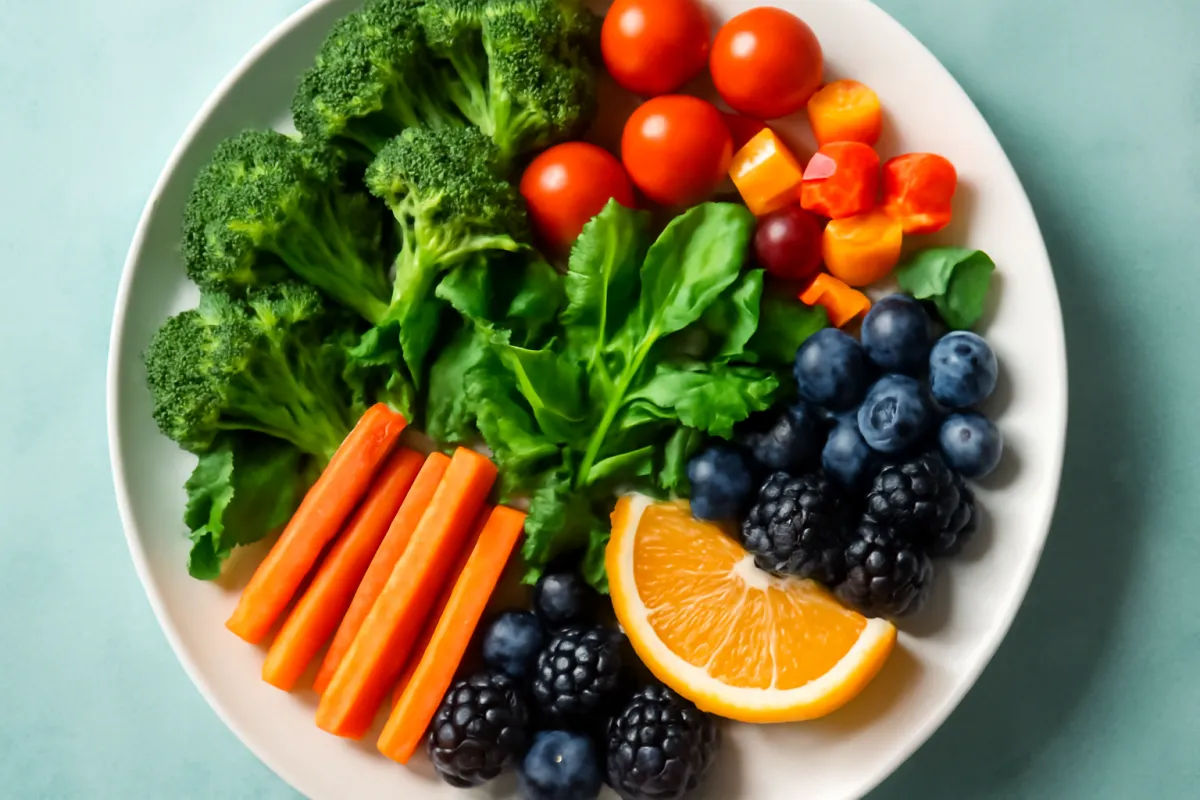
The table below lists commonly cited net carb figures for staple non-starchy vegetables per typical serving. Nearly every plan, from the most liberal low-carb approach to strict keto, treats this entire group the same way: eat generously, with little need to measure precisely.
| Non-starchy vegetable | Typical serving | Net carbs |
|---|---|---|
| Spinach, raw | 1 cup | ~0.4 g |
| Lettuce, romaine | 1 cup | ~0.5 g |
| Cucumber | 1 cup, sliced | ~2 g |
| Celery | 1 cup, chopped | ~2 g |
| Zucchini | 1 cup, sliced | ~3 g |
| Cauliflower | 1 cup, chopped | ~3 g |
| Mushrooms | 1 cup, sliced | ~2 g |
| Bell pepper | 1 cup, chopped | ~4 g |
| Broccoli | 1 cup, chopped | ~4 g |
| Cabbage | 1 cup, chopped | ~4 g |
A slow read of the table shows why these foods rarely need careful tracking even on a strict low-carb or keto plan: a generous two-cup serving of most of these vegetables still costs less carbohydrate than a single piece of fruit.
Protein foods: meat, poultry, fish, eggs, and plant options
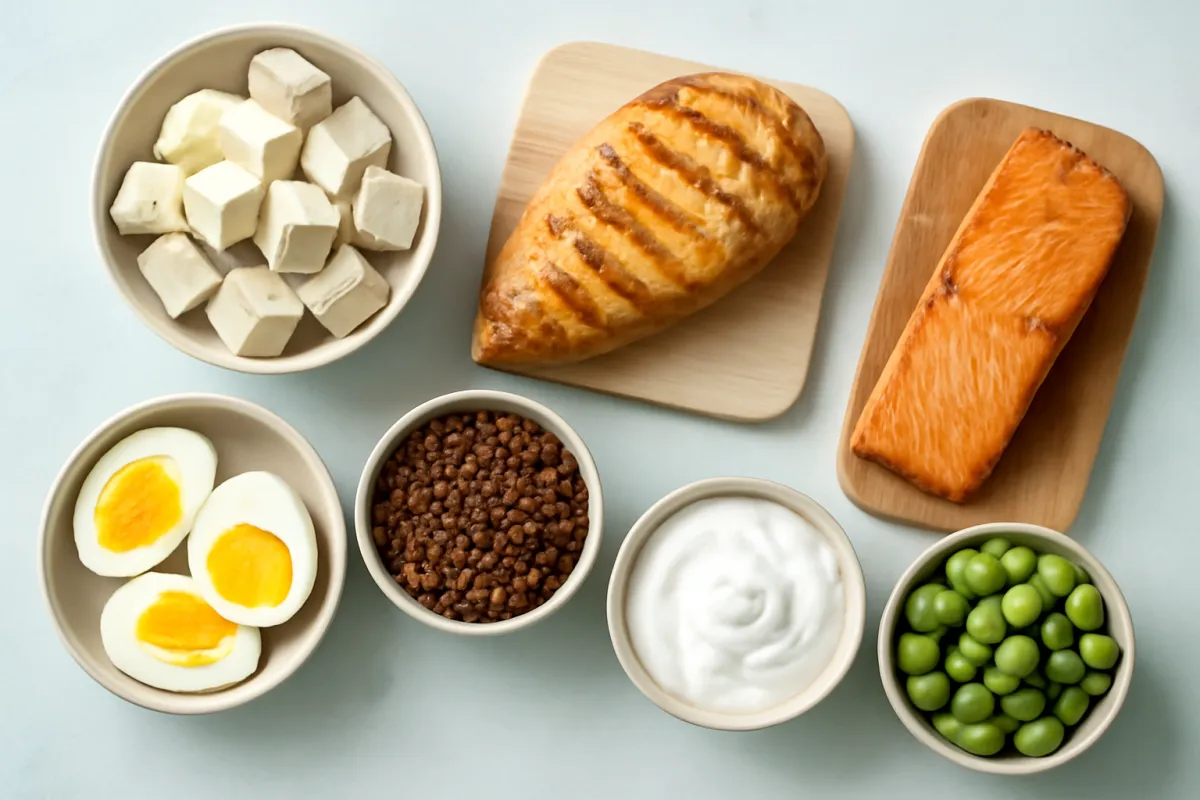
Meat, poultry, fish, and eggs carry effectively no carbohydrate, which makes this the one food group every low-carb list, regardless of strictness, agrees on without qualification. Beef, chicken, turkey, pork, and fish and shellfish of all kinds fall at or near zero grams, and eggs are similarly negligible, commonly cited under 1 gram each.
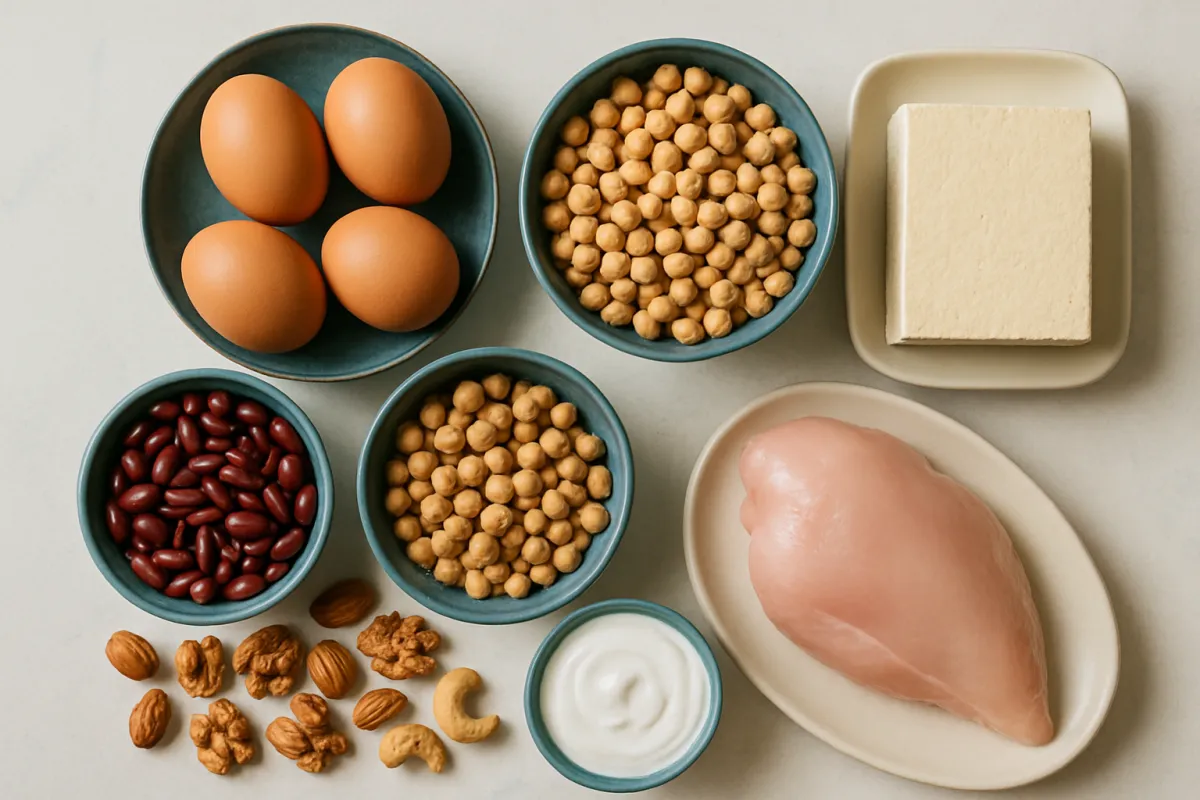
Plant-based protein is more varied: tofu and tempeh are commonly cited in the low single digits of net carbohydrate per serving, while legumes, covered in their own section below, carry considerably more and sit in a different tier entirely. Our plant protein guide covers building a complete plant-based protein intake in more depth, including how legumes and grains interact with a low-carb budget specifically.
Fats and oils on a low-carb list
Pure fats and oils, olive oil, butter, avocado oil, and similar cooking fats, carry zero or effectively zero carbohydrate, since they are almost entirely fat with no meaningful carbohydrate content. Avocado itself is the frequently cited exception worth naming specifically among produce: despite being a fruit, it runs commonly cited around 2 grams net carb for half a fruit, thanks to its high fiber content offsetting most of its total carbohydrate, which is why it appears on nearly every low-carb list regardless of strictness.
These foods matter to a low-carb list less for their own carbohydrate contribution, which is negligible, and more as the calories that typically replace the carbohydrate being cut, covered in more depth in our daily fat guide.
Dairy: which kinds fit easily
Dairy’s carbohydrate content varies more by type than almost any other group on this list, which makes it worth a closer look rather than a single blanket figure. Hard and semi-hard cheeses, cheddar, mozzarella, and similar styles, are commonly cited under 1 gram of carbohydrate per ounce, since cheesemaking removes most of the lactose, milk sugar, along with the whey. Plain, unsweetened yogurt runs moderate, commonly cited around 7 to 8 grams per cup, and milk carries more still, commonly cited around 12 grams per cup, since lactose remains largely intact in liquid milk.
Flavored and sweetened dairy products, flavored yogurt, chocolate milk, and sweetened creamers, can carry considerably more from added sugar on top of the naturally occurring lactose, which is a detail worth checking on the label rather than assuming from the product’s plain-dairy reputation. Our nutrition label guide covers reading the total carbohydrate and added sugar lines directly.
Fruit: the lower-carb choices
Fruit is where a low-carb list requires the most judgment, since the carbohydrate range across common fruit spans roughly fivefold. Berries anchor the lower end: raspberries and blackberries are commonly cited around 6 to 7 grams net per cup, largely because their high fiber content offsets a meaningful share of their total sugar. Strawberries run a little higher, commonly cited near 8 grams net per cup, and watermelon, despite its sweet taste, is mostly water and commonly cited around 10 to 11 grams net per cup for a typical serving.
The table below lists commonly cited net carb figures for fruit per typical serving, roughly ordered from lowest to highest. Bananas, grapes, and dried fruit sit clearly at the top and are the fruits most low-carb lists, even liberal ones, treat most cautiously.
| Fruit | Typical serving | Net carbs |
|---|---|---|
| Raspberries | 1 cup | ~6 g |
| Blackberries | 1 cup | ~7 g |
| Strawberries | 1 cup, sliced | ~8 g |
| Watermelon | 1 cup, diced | ~10 g |
| Cantaloupe | 1 cup, diced | ~12 g |
| Peach | 1 medium | ~13 g |
| Orange | 1 medium | ~12 g |
| Apple | 1 medium, with skin | ~20 g |
| Banana | 1 medium | ~24 g |
| Grapes | 1 cup | ~26 g |
Berries pairing naturally with yogurt or a handful of nuts for a low-carb-friendly breakfast or snack is one of the more consistently repeated pieces of practical advice across popular low-carb resources, and the table above shows roughly why: the gap between a cup of raspberries and a cup of grapes is large enough to matter for almost any daily carbohydrate ceiling.
Nuts and seeds
Nuts and seeds carry a moderate, generally manageable amount of carbohydrate once their fiber content is subtracted, which makes them a commonly cited low-carb snack and topping despite not being zero-carb like meat or pure fat. Almonds and walnuts are commonly cited around 2 grams net carb per ounce, and most other common nuts fall in a similar low single-digit range. Seeds vary more: chia seeds are notably low once fiber is accounted for, commonly cited around 1 gram net per two tablespoons, while cashews run a little higher than most other nuts, commonly cited closer to 8 grams net per ounce.
Because nuts and seeds are calorie-dense, servings on a low-carb list tend to be modest regardless of their favorable carbohydrate profile, an ounce of nuts or a couple of tablespoons of seeds, which keeps them useful as a snack or topping rather than a primary component of a meal.
Legumes: where they fit
Legumes are the clearest gray area on any low-carb food list, and the honest answer about where they belong depends entirely on which tier of low-carb eating a person is following. Lentils, chickpeas, and beans carry meaningful carbohydrate, commonly cited around 18 to 20 grams net per cup cooked, but they also carry substantial fiber and plant protein, which is why a liberal or moderate low-carb list often includes them in measured half-cup to one-cup portions while a stricter low-carb list, and especially a keto list, generally limits or removes them.
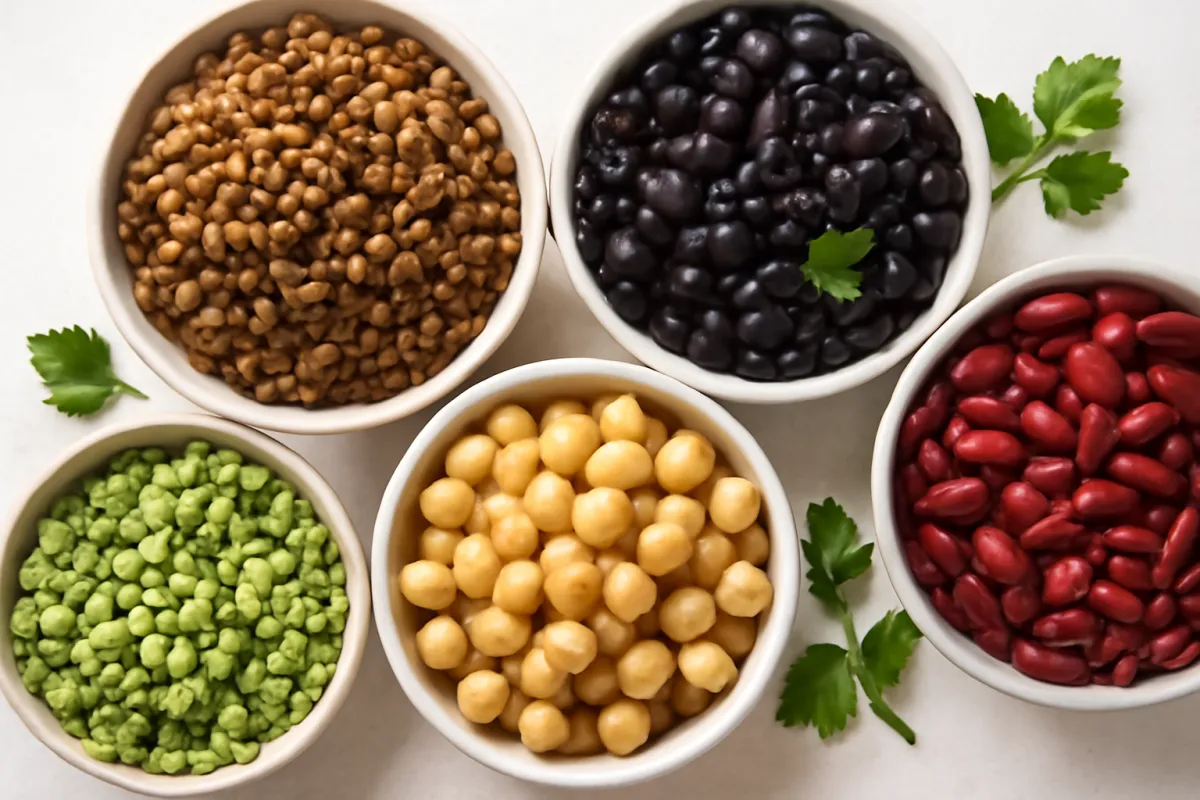
This is not a case where one source is right and another wrong; it is a genuine tradeoff between a lower carbohydrate count and the fiber, protein, and micronutrients legumes bring, and our companion low-carb diet review covers how the different low-carb tiers handle this tradeoff in more depth.
Grains and starchy vegetables to limit
Grains and starchy vegetables sit at the top of nearly every low-carb list’s carbohydrate count, and how strictly they are limited is one of the main variables separating a liberal low-carb approach from a strict one or from keto. A medium potato is commonly cited around 27 grams net carb, white rice around 44 grams net per cooked cup, and a slice of bread commonly runs 10 to 14 grams depending on the type.
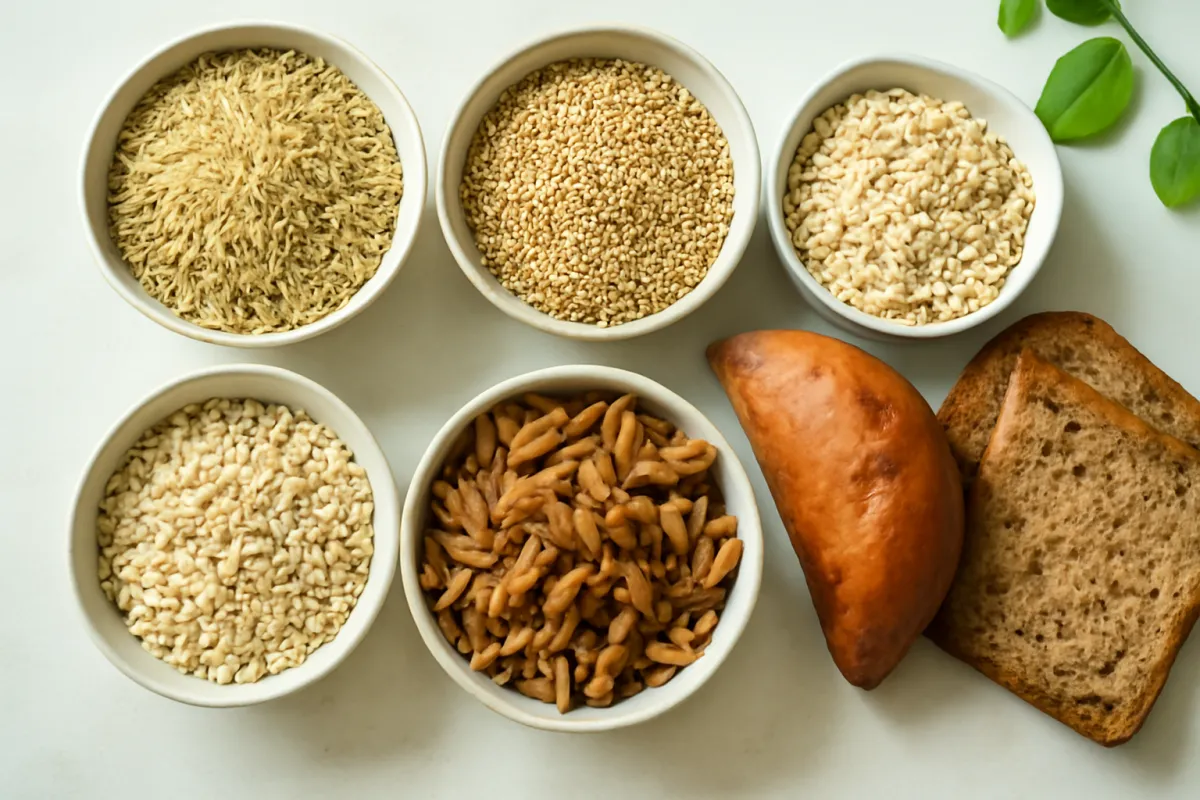
Whole grain versions carry roughly the same total carbohydrate as their refined counterparts but more fiber, which modestly lowers the net figure and is part of why some liberal and moderate low-carb plans permit a measured portion of whole grains while treating refined versions more cautiously. Corn and winter squash join potatoes among starchy vegetables commonly cited well above the non-starchy group covered earlier in this list.
The complete low-carb food list by group
With each group covered, here is the master reference: a single list of common low-carb-relevant foods across all groups with their commonly cited, illustrative net carbs per typical serving, roughly ordered from lowest to highest. Protein foods and fats cluster at zero, non-starchy vegetables and most dairy fill the low end, berries and nuts sit in the low-to-moderate middle, and legumes, grains, and starchy vegetables round out the top.
| Food | Group | Typical serving | Net carbs |
|---|---|---|---|
| Chicken breast, cooked | Protein | 4 oz | ~0 g |
| Salmon, cooked | Protein | 4 oz | ~0 g |
| Eggs | Protein | 1 large | ~0.5 g |
| Olive oil | Fat | 1 tbsp | ~0 g |
| Spinach, raw | Vegetable | 1 cup | ~0.4 g |
| Cheddar cheese | Dairy | 1 oz | ~0.5 g |
| Cucumber | Vegetable | 1 cup | ~2 g |
| Avocado | Fruit (used as fat) | 1/2 fruit | ~2 g |
| Chia seeds | Seed | 2 tbsp | ~1 g |
| Almonds | Nut | 1 oz | ~2 g |
| Zucchini | Vegetable | 1 cup | ~3 g |
| Broccoli | Vegetable | 1 cup | ~4 g |
| Bell pepper | Vegetable | 1 cup | ~4 g |
| Plain Greek yogurt | Dairy | 1 cup | ~8 g |
| Raspberries | Fruit | 1 cup | ~6 g |
| Strawberries | Fruit | 1 cup | ~8 g |
| Cashews | Nut | 1 oz | ~8 g |
| Watermelon | Fruit | 1 cup | ~10 g |
| Milk, whole | Dairy | 1 cup | ~12 g |
| Bread, white | Grain | 1 slice | ~13 g |
| Chickpeas, cooked | Legume | 1 cup | ~18 g |
| Lentils, cooked | Legume | 1 cup | ~18 g |
| Black beans, cooked | Legume | 1 cup | ~20 g |
| Banana | Fruit | 1 medium | ~24 g |
| Sweet potato, with skin | Starchy vegetable | 1 medium | ~20 g |
| Potato, with skin | Starchy vegetable | 1 medium | ~27 g |
| Brown rice, cooked | Grain | 1 cup | ~42 g |
| White rice, cooked | Grain | 1 cup | ~44 g |
Read down the list and the strategy for almost any low-carb tier writes itself: anchor meals with protein and fat, fill the plate with non-starchy vegetables, use berries and dairy as the comfortable middle ground, and treat legumes, grains, and starchy vegetables as the foods worth measuring, with how generously depending on the tier chosen.
Foods with the lowest carbs per serving
To make the comparison visual, the chart below lines up eight foods from across the groups by their commonly cited net carbs per typical serving, scaled against the highest figure shown so the bars make the relative gap easy to see at a glance.
Net carbs per typical serving, by food
Commonly cited net carb grams per typical serving. Illustrative reference figures that vary by variety and preparation, not exact measurements.
Bars scale to the white rice figure at 100 percent. These are commonly cited reference figures that vary by variety and preparation; confirm any specific product against its label.
The shape of this chart is the practical argument running through the whole list: vegetables, protein, and dairy barely register against a cup of rice, which is why swapping the grain side of a meal for a vegetable side does far more for a low-carb total than any other single change.
Where a low-carb day’s calories commonly come from
It helps to see how a low-carb day tends to distribute its calories across groups, not just its carbohydrate. The illustrative breakdown below shows a common shape for a moderate low-carb day, with protein and fat doing most of the work, non-starchy vegetables providing volume for comparatively few calories, and a modest allowance for fruit, dairy, and either legumes or a small starch portion rounding things out.
Where a moderate low-carb day's calories commonly come from
Illustrative share of a day's calories by food group on a typical moderate low-carb day. Shares sum to 100 percent and are a reference shape, not a rule.
Segments show one illustrative shape for a moderate low-carb day's calories, not a prescription. A stricter or more liberal tier shifts the last two segments.
A stricter low-carb or keto day would shrink that final segment further and grow the fat segment to compensate, while a more liberal day would grow it to make more room for fruit, legumes, or grains, which is the same tier logic covered in our companion low-carb diet review applied here to the food list itself.
A worked example: a day built from this list
To make the arithmetic concrete, here is one illustrative day assembled from this list to land near a 100 gram net carb target, using the commonly cited figures above. Nothing here is a recommendation to eat these specific foods or hit this specific number; it is simply a worked example of how ordinary servings add up.
Breakfast is two eggs, about 1 gram, with a cup of spinach sauteed in olive oil, under 1 gram, and a cup of raspberries, about 6 grams, for roughly 8 grams before lunch. A midday salad built on grilled chicken, mixed greens, cucumber, and bell pepper contributes around 7 grams, with a tablespoon of olive oil dressing adding none. An afternoon snack of an ounce of almonds and a half cup of plain Greek yogurt adds about 6 grams. A dinner of salmon, a cup of broccoli, about 4 grams, and a half-cup portion of chickpeas, about 9 grams, pushes the day to roughly 34 grams, leaving considerable room within a 100 gram moderate low-carb target even with legumes included.
The example makes two things visible. First, a moderate 100 gram target leaves real flexibility, enough for a full serving of legumes and two servings of fruit in the same day. Second, the foods are freely interchangeable: swap the raspberries for strawberries, the chickpeas for black beans, the almonds for walnuts, and the day still lands in a similar range, because the figures cluster tightly within each group. Run your own version in the companion below; a hundred grams is an illustrative reference chosen to show the arithmetic, not a number this reference advises anyone in particular to hit.
Low-carb foods for breakfast
Breakfast is one of the easier meals to build from this list, since eggs, a near-zero-carb staple, pair naturally with nearly every other low-carb category: vegetables sauteed alongside them, a slice of cheese, a scoop of yogurt and berries, or a side of avocado. A denser option swaps eggs for cottage cheese or plain yogurt topped with a small handful of nuts and berries, landing in a similar carbohydrate range through a different set of foods.
The pattern worth noticing is the same one that runs through this entire list: anchor the plate with protein, add a non-starchy vegetable or a small portion of berries, and the carbohydrate total stays modest without any single food needing to be heroic or any precise counting required for most of what lands on the plate.
Low-carb snacks
Snacks from this list lean on the same low-carb-friendly groups as the rest of the day: a small handful of nuts, a stick of cheese, hard-boiled eggs, cucumber or pepper slices with a dip, or a half cup of berries each land in the low single digits to roughly 8 grams of net carbohydrate per serving. Jerky and other plain cured meats are commonly cited near zero carbohydrate as well, provided the specific product does not carry added sugar in its cure, which is worth checking on the label.
The processed snack aisle remains the main trap even for a snack search built from this list: crackers, chips, and most granola or snack bars carry considerably more carbohydrate than their size suggests, often 15 to 30 grams or more per serving, which is why reaching for whole foods from the groups above tends to produce a more predictable result than a packaged snack marketed as a healthy choice.
Foods that look low-carb but are not
A final caution keeps this list honest, because packaging can mislead. Some products marketed as “keto” or “low-carb” lean on sugar alcohols or isolated fibers to lower the advertised net carb figure, and while these ingredients do behave differently from regular sugar for some people, they are not universally carbohydrate-free in their effect on everyone, and the marketing claim is not a substitute for checking the actual nutrition label.
The more common trap runs the other direction: foods that sound healthy but carry more carbohydrate than expected. Fruit juice, even from fruit that would be low-carb whole, concentrates sugar and strips the fiber that would otherwise offset it. Flavored yogurt frequently carries far more sugar than its plain counterpart. Many sauces, dressings, and marinades carry added sugar that is easy to miss without reading the label directly, a habit our hidden sugar guide walks through in more detail.
Common mistakes when building a low-carb list
A handful of recurring errors trip people up when turning this kind of list into actual meals, and each is easy to avoid once named.
- Treating all fruit as equally off-limits. Berries are meaningfully lower in carbohydrate than bananas or grapes; lumping the whole category together over-restricts unnecessarily on a liberal or moderate plan.
- Forgetting that legumes are a judgment call, not a fixed rule. Whether beans and lentils fit depends on the chosen tier, not a universal yes or no.
- Trusting a “keto” or “low-carb” label without reading it. Sugar alcohols and marketing claims vary in how reliably they reflect actual carbohydrate impact; the nutrition panel is the more dependable source.
- Undercounting sauces, dressings, and drinks. These are some of the most common places hidden carbohydrate accumulates across a day.
- Chasing exact grams instead of learning the tiers. The figures here are illustrative references; learning which foods sit in the low, moderate, and high tiers matters more than memorizing a decimal.
How this list differs from a strict keto list
It is worth being explicit about where this general low-carb food list diverges from a strict keto food list, since the two are often confused. This list includes legumes and a wider range of fruit in its moderate category because a general low-carb approach, commonly cited from roughly 50 to 150 grams of carbohydrate a day, has room for them depending on the tier. A strict keto list, built around a commonly cited 20 to 50 gram ceiling, generally excludes legumes almost entirely and limits fruit to berries in small portions, since there is simply less daily carbohydrate budget to work with.
The non-starchy vegetable, protein, fat, and most-dairy categories are essentially identical across both lists; the difference lives almost entirely in how much room is left for fruit, legumes, and any grain once those lower-carb categories are accounted for. Our keto diet review covers that stricter list and its reasoning in full detail, and reading the two side by side makes the relationship clearer than either piece does alone.
Low-carb foods on a budget
The lowest-carb foods on this list are not, as a group, the most expensive ones. Eggs, chicken thighs, ground meat, canned fish, frozen non-starchy vegetables, and cheese are all relatively affordable staples that anchor a low-carb list without requiring specialty products. Frozen vegetables in particular carry the same carbohydrate profile as fresh at a lower and more stable price, and canned fish is an inexpensive way to hit the zero-carb protein category without much preparation.
Where cost tends to rise is in the specialty “low-carb” and “keto” snack aisle, flour alternatives, bars, and pre-made items marketed specifically at this audience, which usually cost more than building the same macronutrient result from the plain staples on this list. Our budget grocery list guide applies directly to building a low-carb-compatible cart without overspending on branded convenience items.
A quick low-carb shopping checklist
Turn the whole list into a habit with a short routine you can carry into the store.
- Start with protein, meat, poultry, fish, and eggs, since this category needs no carbohydrate tracking at all.
- Fill the cart with non-starchy vegetables, fresh or frozen, as the close-to-unrestricted base of nearly every meal.
- Choose berries over higher-sugar fruit as the default, keeping bananas, grapes, and dried fruit for occasional use depending on your tier.
- Decide your legume and grain stance up front, based on which low-carb tier you are following, rather than deciding meal by meal.
- Check labels on anything packaged, especially sauces, dressings, and anything marketed as “low-carb” or “keto.”
- Reserve the branded specialty aisle for convenience, not necessity, since the plain staples above usually cost less and track more predictably.
Run your chosen foods against a target in the companion below to see how close a day from this list lands and what tier it reflects.
The bottom line
A low-carb food list, organized by group, is more useful than a simple good-food, bad-food split: meat, poultry, fish, and eggs carry effectively no carbohydrate, non-starchy vegetables and most dairy run low, berries sit moderate, and legumes, grains, and starchy vegetables carry the most, commonly 18 grams or more per serving. How strictly the higher-carbohydrate groups are limited depends entirely on which low-carb tier a person follows, with keto representing the strictest, narrowest version of this same list. Every figure here is a commonly cited illustrative reference rather than a personal prescription, so pair this list with our companion low-carb diet review for the tiers and principles, and our keto diet review for the stricter version, and confirm anything specific to your health with a qualified professional.
This food reference is published for general education and describes commonly cited dietary figures, not medical, nutritional, or dietary advice, and reading it creates no clinician-patient relationship. Every net carb figure and serving amount above is an illustrative, rounded population reference rather than an exact measurement of any specific food, and real varieties, sizes, ripeness, and preparations vary widely, so confirm a particular product against its own label. Carbohydrate needs and appropriate restriction differ from person to person, and some medical conditions call for a specific, individualized approach, so this general list does not apply to everyone. For an intake suited to your body, diet, medications, or any medical condition, and before making changes, consult a qualified health professional such as a doctor or registered dietitian.
Frequently asked questions
What foods have the lowest carbs?
Meat, poultry, fish, and eggs carry effectively no carbohydrate, which puts them at the very bottom of any low-carb list by default. Among plant foods, non-starchy vegetables are lowest: leafy greens, cucumber, and spinach commonly run under 2 grams net per cup, with broccoli, cauliflower, zucchini, and peppers a little higher, commonly cited around 3 to 4 grams net per cup. Cheese and plain, unsweetened dairy also run low, commonly cited around 1 to 3 grams per typical serving. These are commonly cited illustrative figures that vary by brand, variety, and preparation, so this is general educational information rather than lab-verified values for any specific product.
What vegetables are lowest in carbs?
Leafy greens such as spinach and lettuce are commonly cited at under 1 to 2 grams net carb per cup, cucumber and celery sit in a similar range, and cruciferous vegetables like broccoli, cauliflower, and cabbage commonly run 3 to 5 grams net per cup. Starchy vegetables are the clear exception and sit far higher: a medium potato is commonly cited around 27 grams net, and corn and winter squash are both well above the non-starchy group. Checking your own produce against a label or a reputable food-composition source is more reliable than any general figure for a specific variety or portion.
What fruits are lowest in carbs?
Berries are consistently the lowest-carb fruit group, with raspberries and blackberries commonly cited around 6 to 7 grams net per cup, thanks to their relatively high fiber content offsetting some of the sugar. Strawberries run a little higher, commonly cited near 8 grams net per cup, and watermelon, despite tasting sweet, is mostly water and commonly cited around 10 to 11 grams net per cup. Bananas, grapes, and dried fruit sit at the higher end of the fruit group and are generally the ones a low-carb list treats most cautiously. These are illustrative, commonly cited figures that vary by ripeness and variety.
Is a low-carb food list the same as a keto food list?
They overlap heavily but are not identical, and the difference matters. A keto food list is built around a much stricter daily carbohydrate ceiling, commonly cited near 20 to 50 grams, which generally excludes legumes, most fruit beyond berries, and any whole grains. A general low-carb food list, covered here, serves a broader range of carbohydrate ceilings, commonly cited from roughly 50 to 150 grams a day depending on strictness, and includes more foods in moderate portions, legumes, a wider range of fruit, and occasionally a whole grain. Our companion keto diet review and low-carb diet review cover that distinction in full.
Are legumes considered low-carb?
It depends on how strict the specific low-carb approach is, and this is one of the more useful distinctions within the category. Legumes, lentils, chickpeas, and beans, carry meaningful carbohydrate, commonly cited around 18 to 20 grams net per cup cooked, but also substantial fiber and protein, which is why a liberal or moderate low-carb list often includes them in measured portions while a stricter low-carb or keto list generally limits or removes them. There is no single universal rule; it is a decision each plan makes based on its chosen carbohydrate ceiling.
Can you eat dairy on a low-carb diet?
Most dairy fits a low-carb list reasonably well, though the carbohydrate content varies considerably by type. Hard and semi-hard cheeses are commonly cited under 1 gram of carbohydrate per ounce, since most of the lactose, milk sugar, is removed during cheesemaking, and plain, unsweetened yogurt runs moderate, commonly cited around 7 to 8 grams per cup. Milk itself carries more lactose, commonly cited around 12 grams per cup, and flavored or sweetened dairy products can carry considerably more from added sugar, which is worth checking on the label rather than assuming.
What foods should you avoid or limit on a low-carb diet?
Refined grains and anything made from them, white bread, white rice, most packaged cereal, and pasta, sit at the top of nearly every low-carb list's limit category, alongside added sugar and sweetened beverages. Starchy vegetables, potatoes, corn, and winter squash, and higher-sugar fruit, bananas, grapes, and dried fruit, follow close behind. How strictly these are limited, a liberal plan allowing small portions, a strict plan removing them almost entirely, depends on which tier of low-carb eating a person is following, covered in our companion low-carb diet review.
Are the carb figures on this list exact?
No, and treating them as exact would overstate what a general reference list can responsibly claim. Every figure here is a commonly cited, rounded, illustrative reference for a typical serving, and real foods vary by variety, ripeness, growing conditions, and preparation. A specific product's nutrition label is more reliable for that product than any general figure in this list, so use this reference for comparing food groups and planning meals, and confirm a specific packaged food against its own label.

Hamza Hai is the editor of NourishMark. She holds an MBA and reviews the site's articles against our editorial standards, checking that every figure is labelled for what it is, that nothing is presented as verified fact without a source the reader can check, and that the writing stays useful to a non-specialist.

Dr. Shayaan Khan is the medical reviewer for NourishMark. He holds an MBBS from MGM Medical College, Navi Mumbai, and is the author of published research including a narrative review of postpartum anxiety and depression in Mental Health Science. He has taught physiology at university level. He reviews the site's health content for medical accuracy: that physiology and mechanisms are described correctly, that no claim is stated more strongly than the evidence behind it, and that anything specific to an individual reader is sent to that reader's own clinician.
Not medical advice. Dr. Khan reviews NourishMark's health content for medical accuracy. He is not a registered dietitian, he does not hold a United States practising licence, and he is not your doctor. His review does not make anything here medical advice. Always talk to a qualified health professional about your own situation, and never delay or stop care because of something you read here.