What's in this review
- Foods with the highest dietary fiber, at a glance
- How to read the fiber figures in this list
- Legumes: the highest-fiber food group
- Whole grains: oats, barley, and bran
- Fruit: raspberries, pear, and apple
- Vegetables: artichoke, broccoli, and brussels sprouts
- Nuts and seeds: chia, almonds, and flax
- The complete high-fiber foods list by group
- Which foods have the highest dietary fiber per serving
- Soluble versus insoluble fiber in these foods
- Where a high-fiber day’s fiber comes from
- The daily fiber target these foods add up to
- High-fiber foods on a budget
- High-fiber breakfast foods
- High-fiber snacks
- Fiber per 100 calories: the most fiber-dense foods
- How to add these foods gradually, and hydrate
- A worked example: a day built from this list
- Common mistakes when building a high-fiber list
- Refined foods that look high-fiber but are not
- A quick high-fiber shopping checklist
- The bottom line
Short answer: The highest-fiber foods are legumes, with a cup of cooked split peas, lentils, or black beans commonly cited near 15 to 16 grams. Next come chia seeds at about 10 grams for two tablespoons, raspberries near 8 grams a cup, a whole artichoke and green peas near 7 grams, then pears, apples, and broccoli at several grams each. Commonly cited daily reference figures are about 25 grams for women and 38 for men.
The foods with highest dietary fiber are not exotic or expensive: they are legumes, whole grains, fruit, vegetables, nuts, and seeds, the plainest aisles in the store. Fiber gets almost none of the attention that protein and calories do, yet the foods that carry it are ordinary, cheap, and already on the shelf. The trouble is rarely willpower. It is simply not knowing which foods carry real fiber and how much, so that a day drifts by on refined bread, meat, and processed convenience foods that feel filling while delivering a small fraction of what a body is generally guided toward.
This high-fiber foods list is a plain-language reference organized by group so you can see at a glance where the fiber actually lives. It gives illustrative, commonly cited grams of fiber per typical serving for legumes, whole grains, fruit, vegetables, and nuts and seeds, explains the soluble and insoluble split, and shows how these foods add up against a daily target. For the amount question, how many grams you personally need and why most people fall short, see our companion evidence review on how much fiber you need; this piece is the foods list that answers what to eat. It is general information describing illustrative figures, not medical or dietary advice, and you can run your own tally in the companion below.
Key takeaways
- Legumes are the highest-fiber food group by a wide margin: a cup of cooked split peas, lentils, or black beans is commonly cited near 15 to 16 grams, more than half of a typical daily target.
- After legumes come chia seeds (~10 g for 2 tbsp), raspberries (~8 g a cup), a whole artichoke and green peas (~7 g), then pears, apples, broccoli, and brussels sprouts at several grams each.
- Almost every whole food here carries both soluble and insoluble fiber, so a varied plate supplies both types without any tracking or ratios to engineer.
- These foods add up toward the Dietary Reference Intakes commonly cited as about 25 grams a day for women and 38 for men under 50, figures set by the National Academies of Sciences, Engineering, and Medicine.
- Add these foods gradually over a week or two and drink more fluids, favor whole over refined and skins over peeled, and confirm your own needs with a doctor or registered dietitian.
Foods with the highest dietary fiber, at a glance
Before the group-by-group detail, it helps to see the headline. The foods with highest dietary fiber per serving are, in rough order, legumes, then a few standout seeds and fruits, then whole grains and the starchier vegetables. A cup of cooked split peas near 16 grams sits at the top, trailed closely by lentils and black beans near 15, chickpeas near 12, and two tablespoons of chia seeds near 10. From there the list descends through raspberries, a whole artichoke, and green peas in the 7 to 8 gram range, into pears, apples, broccoli, and brussels sprouts at roughly 5 grams each.
The single most useful thing to notice is how much daylight there is between the top of the list and the everyday middle. One cup of legumes can carry more fiber than an entire day of refined bread, meat, and snacks combined, which is why almost every practical high-fiber plan is built on beans first. The rest of this reference walks each group in turn, gives a commonly cited figure per typical serving, and gathers everything into one master table. Every number here is an illustrative reference that varies by variety, size, ripeness, and preparation, not an exact measurement of the food in front of you.
How to read the fiber figures in this list
A quick word on the numbers keeps the whole list honest. Every gram figure below is a commonly cited, rounded, illustrative reference for a typical serving, drawn from the kind of food-composition data that nutrition labels and general guidance echo. Real foods vary: a large pear carries more than a small one, a heaped cup of cooked lentils differs from a level one, and the same vegetable shifts a little between raw and cooked as water content changes. The figures are meant for reasoning and comparison, not for precise counting.
That is why this reference leans on the tilde and words like “about,” “near,” and “commonly cited” throughout. A serving worth roughly 5 grams is a handy mental unit: it takes only a handful of such servings, spread across the day, to move from the average shortfall toward the general range. Rather than chase a food’s exact gram count, it is far more useful to learn which foods sit in the high, medium, and low tiers, and to anchor meals accordingly. When a label is in front of you, the printed fiber line is more reliable for that specific product than any general figure, so confirm with the label, and treat this list as the map rather than the territory.
Legumes: the highest-fiber food group
Legumes, the family that includes beans, lentils, split peas, and chickpeas, are the undisputed leaders of any high-fiber list, and it is not close. A single cup of most cooked legumes lands somewhere between 12 and 16 grams of fiber, which is half or more of a common daily target from one ingredient. They also happen to be inexpensive, shelf-stable in dried or canned form, high in plant protein, and endlessly flexible across soups, stews, salads, bowls, dips, and spreads. If a person changes only one thing to eat more fiber, adding a daily serving of legumes is the highest-leverage move available.
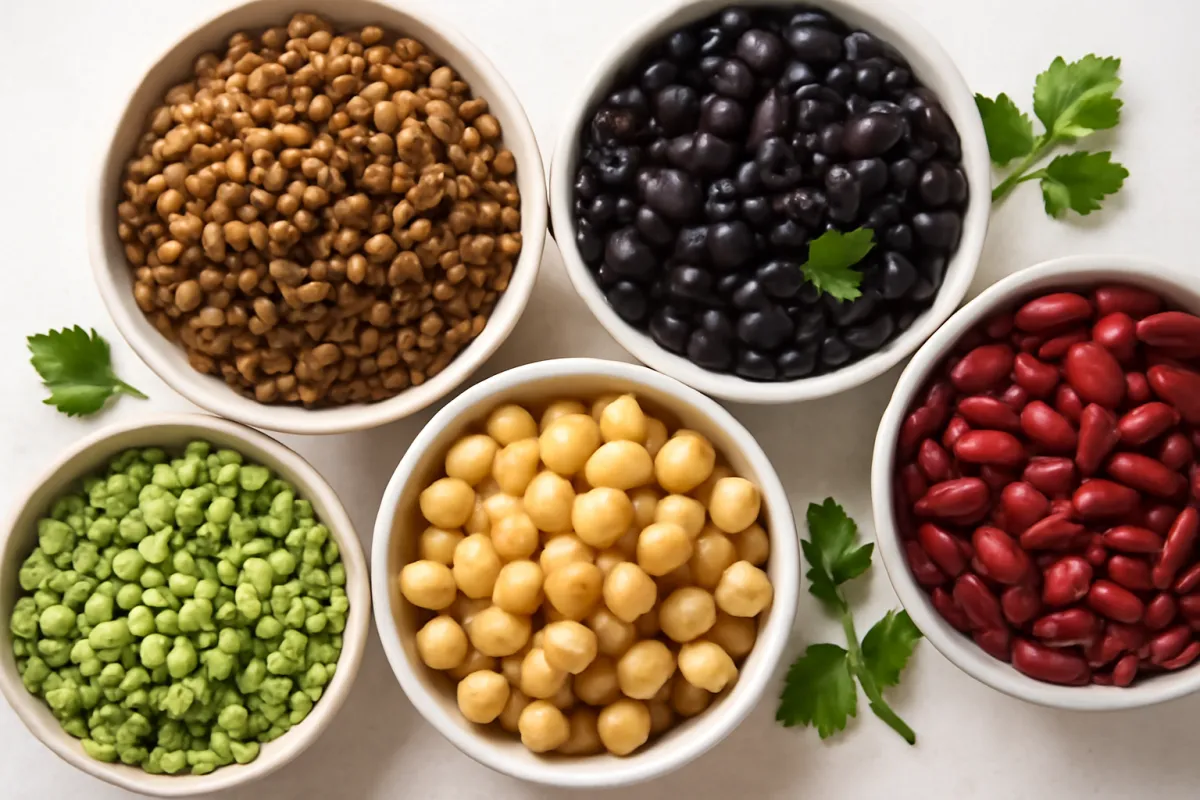
The table below lists commonly cited fiber figures for staple legumes per cup cooked, unless noted. Split peas and lentils edge out the beans, but the whole group clusters tightly, so the practical message is simply to eat any of them regularly. Canned varieties, drained and rinsed, carry similar fiber to home-cooked, which makes the convenience version a fair swap.
| Legume | Typical serving | Fiber per serving |
|---|---|---|
| Split peas, cooked | 1 cup | ~16 g |
| Lentils, cooked | 1 cup | ~15 g |
| Black beans, cooked | 1 cup | ~15 g |
| Navy beans, cooked | 1 cup | ~19 g |
| Pinto beans, cooked | 1 cup | ~15 g |
| Kidney beans, cooked | 1 cup | ~13 g |
| Chickpeas, cooked | 1 cup | ~12 g |
| Edamame, shelled | 1 cup | ~8 g |
| Hummus | 1/4 cup | ~4 g |
A slow read turns up two useful facts. First, the range across common legumes is narrow enough that you can pick by taste and recipe rather than optimizing for the highest number. Second, even a smaller serving, half a cup in a soup or a few tablespoons of hummus, still contributes meaningfully, so legumes reward any amount rather than demanding a full cup at a sitting.
Whole grains: oats, barley, and bran
Whole grains form the reliable second tier, and the operative word is whole. Milling a grain to make it refined, white flour, white rice, is largely a process of removing the bran and germ where most of the fiber lives, which is why a whole grain and its refined version can differ severalfold in fiber. Choosing whole grain bread, pasta, and rice, and reaching for oats, barley, bulgur, quinoa, and wheat bran, quietly stacks several grams into meals that a refined choice would have left nearly empty.
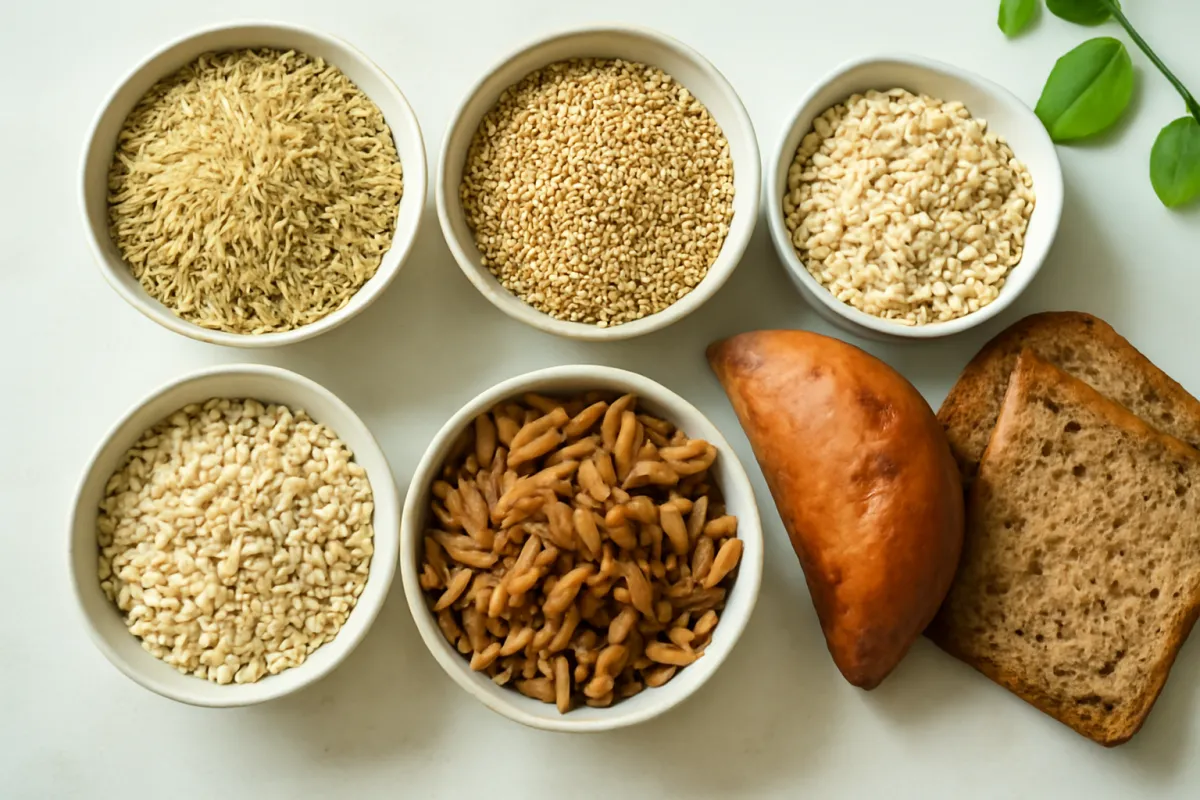
Oats and barley deserve a special mention because they are rich in beta-glucan, a viscous soluble fiber that features in a great deal of general heart-healthy eating advice. Wheat bran, meanwhile, is one of the most concentrated insoluble-fiber foods on the shelf, which is why a spoon of it or a bran cereal is a classic way to add bulk. The table gathers commonly cited figures for staple grains per typical serving.
| Whole grain | Typical serving | Fiber per serving |
|---|---|---|
| Wheat bran, raw | 1/4 cup | ~6 g |
| Barley, cooked | 1 cup | ~6 g |
| Whole wheat pasta, cooked | 1 cup | ~6 g |
| Bulgur, cooked | 1 cup | ~8 g |
| Oats, dry | 1/2 cup | ~4 g |
| Quinoa, cooked | 1 cup | ~5 g |
| Brown rice, cooked | 1 cup | ~3.5 g |
| Whole grain bread | 1 slice | ~2.5 g |
| Popcorn, air-popped | 3 cups | ~3.5 g |
Notice that popcorn, a whole grain, earns a quiet place on any snack list, and that the difference between a whole grain slice near 2.5 grams and a white slice under a gram repeats itself across every grain choice in a day. Those small, repeated swaps are where whole grains do their real work.
Fruit: raspberries, pear, and apple
Fruit is the group people most often underestimate, partly because juicing and peeling strip away the fiber that makes whole fruit worthwhile. Eaten whole and with the skin, fruit adds several grams a serving along with water, vitamins, and natural sweetness. Raspberries and other berries are the standouts, carrying an unusually high fiber load for their calories thanks to their many tiny seeds and skins, and they pair naturally with the oats and yogurt of a fiber-forward breakfast.
The table lists commonly cited fiber figures for fruit per typical serving, assuming the skin is left on where relevant. The gap between a whole fruit and its juiced or peeled version is the recurring lesson: an apple with skin near 4.5 grams becomes a near-fiberless glass of juice once pressed.
| Fruit | Typical serving | Fiber per serving |
|---|---|---|
| Raspberries | 1 cup | ~8 g |
| Blackberries | 1 cup | ~8 g |
| Pear, with skin | 1 medium | ~5.5 g |
| Avocado | 1/2 fruit | ~5 g |
| Apple, with skin | 1 medium | ~4.5 g |
| Orange | 1 medium | ~3 g |
| Banana | 1 medium | ~3 g |
| Strawberries | 1 cup | ~3 g |
| Blueberries | 1 cup | ~3.5 g |
| Dried figs | 2 figs | ~3.5 g |
The practical habits here are small and durable: keep the skin on apples and pears, lean on berries when they are affordable or frozen, and treat whole fruit as the default over juice. None of it requires a special shopping trip, and each piece quietly adds a few grams to the daily running total.
Vegetables: artichoke, broccoli, and brussels sprouts
Vegetables are the workhorses of a high-fiber plate, less because any single one is a champion and more because they show up in volume across meals. A whole cooked artichoke is the standout, commonly cited near 7 grams, followed by green peas at a similar level and the brassicas, broccoli and brussels sprouts, around 5 grams a cup. Starchy vegetables such as sweet potato and winter squash add several grams each, especially with the skin left on, and even a plain carrot or a cup of leafy greens contributes.
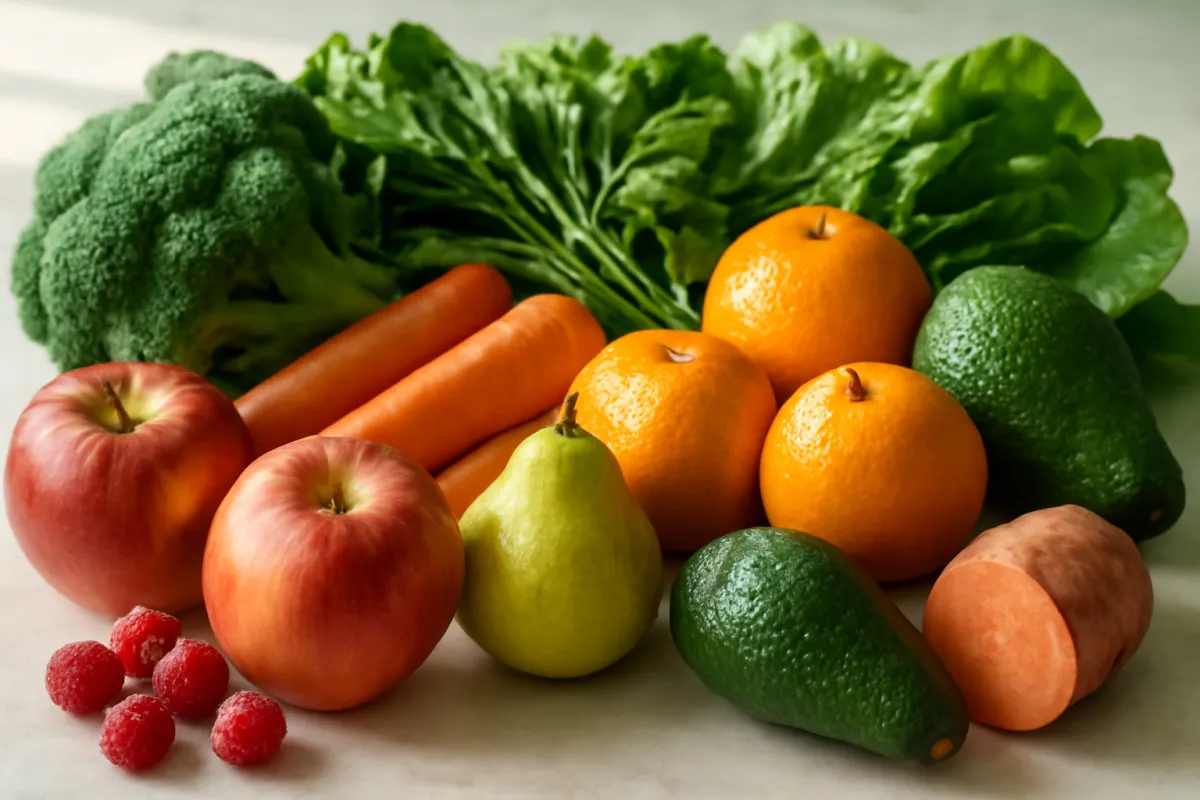
The table lists commonly cited fiber figures for vegetables per typical serving. Cooking shifts the numbers a little as water content changes, and the skins of potatoes and squash carry a real share of the total, so peeling costs fiber.
| Vegetable | Typical serving | Fiber per serving |
|---|---|---|
| Artichoke, cooked | 1 medium | ~7 g |
| Green peas, cooked | 1 cup | ~7 g |
| Sweet potato, with skin | 1 medium | ~4 g |
| Broccoli, cooked | 1 cup | ~5 g |
| Brussels sprouts, cooked | 1 cup | ~4 g |
| Winter squash, cooked | 1 cup | ~5.5 g |
| Carrot, raw | 1 medium | ~1.7 g |
| Spinach, cooked | 1 cup | ~4 g |
| Potato, with skin | 1 medium | ~4 g |
| Corn | 1 cup | ~4 g |
The takeaway is one of volume rather than any single hero: filling half the plate with vegetables, keeping skins on where they are edible, and treating beans-and-greens combinations as a base will move the daily total more than hunting for the one highest-fiber vegetable.
Nuts and seeds: chia, almonds, and flax
Nuts and seeds are the concentrated finishers of a high-fiber list, delivering a lot of fiber in a small, calorie-dense package. Seeds lead the group: two tablespoons of chia seeds carry roughly 10 grams of fiber, and ground flax and other seeds are close behind, which is why a spoon stirred into oatmeal, yogurt, or a smoothie is such an efficient add. Nuts sit a step lower per serving but still contribute, with almonds near 3.5 grams an ounce, and they double as a portable, fiber-bearing snack.
The table lists commonly cited fiber figures for nuts and seeds per typical serving. Because these foods are calorie-dense, the servings are modest, an ounce of nuts or a couple of tablespoons of seeds, so they complement the bulkier groups rather than replacing them.
| Nut or seed | Typical serving | Fiber per serving |
|---|---|---|
| Chia seeds | 2 tbsp | ~10 g |
| Ground flaxseed | 2 tbsp | ~4 g |
| Almonds | 1 oz (~28 g) | ~3.5 g |
| Pistachios | 1 oz | ~3 g |
| Pumpkin seeds | 1 oz | ~2 g |
| Sunflower seeds | 1 oz | ~3 g |
| Walnuts | 1 oz | ~2 g |
| Peanuts | 1 oz | ~2.5 g |
| Pecans | 1 oz | ~2.7 g |
The practical role of this group is the topping and the snack: a spoon of chia or flax on breakfast, a small handful of almonds or pistachios in the afternoon. Small servings, a few grams each, but they land in the gaps between meals where the bulkier groups do not reach.
The complete high-fiber foods list by group
With each group covered, here is the master reference, a single sorted list of high-fiber foods across all five groups with their commonly cited illustrative fiber per typical serving. Legumes cluster at the top, seeds and berries punch above their size, whole grains and starchy vegetables fill the middle, and everyday fruit and vegetables round out the base. Use it as a quick lookup when planning meals or a shopping list.
| Food | Group | Typical serving | Fiber per serving |
|---|---|---|---|
| Navy beans, cooked | Legume | 1 cup | ~19 g |
| Split peas, cooked | Legume | 1 cup | ~16 g |
| Lentils, cooked | Legume | 1 cup | ~15 g |
| Black beans, cooked | Legume | 1 cup | ~15 g |
| Pinto beans, cooked | Legume | 1 cup | ~15 g |
| Kidney beans, cooked | Legume | 1 cup | ~13 g |
| Chickpeas, cooked | Legume | 1 cup | ~12 g |
| Chia seeds | Seed | 2 tbsp | ~10 g |
| Bulgur, cooked | Grain | 1 cup | ~8 g |
| Raspberries | Fruit | 1 cup | ~8 g |
| Blackberries | Fruit | 1 cup | ~8 g |
| Edamame, shelled | Legume | 1 cup | ~8 g |
| Artichoke, cooked | Vegetable | 1 medium | ~7 g |
| Green peas, cooked | Vegetable | 1 cup | ~7 g |
| Barley, cooked | Grain | 1 cup | ~6 g |
| Wheat bran, raw | Grain | 1/4 cup | ~6 g |
| Whole wheat pasta, cooked | Grain | 1 cup | ~6 g |
| Winter squash, cooked | Vegetable | 1 cup | ~5.5 g |
| Pear, with skin | Fruit | 1 medium | ~5.5 g |
| Broccoli, cooked | Vegetable | 1 cup | ~5 g |
| Avocado | Fruit | 1/2 fruit | ~5 g |
| Quinoa, cooked | Grain | 1 cup | ~5 g |
| Apple, with skin | Fruit | 1 medium | ~4.5 g |
| Brussels sprouts, cooked | Vegetable | 1 cup | ~4 g |
| Sweet potato, with skin | Vegetable | 1 medium | ~4 g |
| Ground flaxseed | Seed | 2 tbsp | ~4 g |
| Oats, dry | Grain | 1/2 cup | ~4 g |
| Almonds | Nut | 1 oz | ~3.5 g |
| Brown rice, cooked | Grain | 1 cup | ~3.5 g |
| Banana | Fruit | 1 medium | ~3 g |
| Whole grain bread | Grain | 1 slice | ~2.5 g |
| Carrot, raw | Vegetable | 1 medium | ~1.7 g |
Read down the list and the strategy writes itself: anchor a meal with a legume, keep a seed or bran topping on breakfast, choose whole grains, and pile on produce with the skins intact. No single food has to be heroic when a few from different tiers each chip in.
Which foods have the highest dietary fiber per serving
To make the ranking visual, the chart below lines up ten of the highest-fiber single servings from across the groups. Split peas set the top of the scale, and every other bar is drawn as its share of that figure, so the lengths show at a glance how legumes tower over even the strongest fruit and vegetable servings.
Foods with the highest dietary fiber per serving
Commonly cited fiber per typical serving, in grams, for ten high-fiber foods. Illustrative reference figures that vary by variety and preparation, not exact measurements.
Bars scale to the split peas figure at 100 percent. These are commonly cited reference figures that vary by variety, size, and preparation; confirm any specific product against its label.
The shape of the chart is the whole argument for building meals around legumes first. The top four bars are all beans and peas, and the single best fruit or vegetable serving reaches only about half the length of the top legume. That does not make produce optional, since volume and variety matter, but it does explain why nearly every workable high-fiber plan starts with a cup of something from the bean aisle.
Soluble versus insoluble fiber in these foods
Fiber is a family, not a single substance, and the split that matters most for everyday purposes is soluble versus insoluble. Soluble fiber dissolves in water and forms a soft gel, which slows digestion, feeds gut bacteria, and is the type most associated with modestly steadier blood sugar and modestly lower LDL cholesterol. Oats and barley, beans and lentils, apples and citrus, and psyllium are its common homes. Insoluble fiber does not dissolve; it adds bulk and helps move material through the gut, and it dominates in wheat bran, whole grains, nuts, and the skins of fruits and vegetables.
The reassuring part is that almost every whole food on this list carries both types in some proportion, so there is no ratio to engineer and nothing to track separately. A plate with beans, whole grains, fruit, and vegetables supplies both by default. The rough guide below groups common foods by which type they lean toward, purely to illustrate the pattern, not as a rule to follow.
| Leans soluble | Mixed, carries both | Leans insoluble |
|---|---|---|
| Oats and barley | Beans and lentils | Wheat bran |
| Apples and pears | Chia and flax | Whole wheat and brown rice |
| Citrus fruit | Sweet potato | Nuts and seeds |
| Psyllium | Broccoli and carrots | Skins of fruit and vegetables |
The practical upshot is simple: eat a variety of whole foods and both types take care of themselves. This is a general description of how the two behave, not tailored advice, and anyone managing a digestive condition should follow guidance specific to their situation rather than a general table.
Where a high-fiber day’s fiber comes from
It helps to see how a fiber-adequate day tends to distribute its fiber across the groups. The illustrative breakdown below shows a common shape, with legumes and whole grains doing the heaviest lifting, fruit and vegetables close behind, and nuts and seeds rounding it out. The shares are illustrative and sum to 100 percent; a real day can lean differently and still land well.
Where a high-fiber day's fiber comes from
Illustrative share of a day's fiber by food group on a typical high-fiber day. Shares sum to 100 percent and are a reference shape, not a rule.
Segments show each group's illustrative share of a high-fiber day's total fiber. Swap the emphasis to suit your tastes; this is a reference shape, not a prescription.
The point is not to hit these exact shares but to see that no single food has to carry the day. When a portion of legumes, a couple of servings of whole grains, several pieces of produce, and a small handful of nuts or seeds each contribute, the total assembles almost by accident. That additive logic is the same one behind building a day to any nutrient target, and it is what makes a number that sounds demanding in the abstract turn out to be ordinary on the plate. Run your own mix in the companion below to see how the groups stack up for you.
The daily fiber target these foods add up to
A list of foods only means something against a target, so it is worth naming the reference these servings add up toward. The Dietary Reference Intakes, set by the National Academies of Sciences, Engineering, and Medicine, are the figures that nutrition labels and health bodies echo: commonly cited as about 25 grams of fiber a day for adult women and about 38 grams for adult men under 50, easing lower after 50 to roughly 21 and 30 grams, or expressed another way as about 14 grams for every 1,000 calories eaten. Those are population reference figures rather than a personal quota, and the honest goal for most people is to move from the widespread shortfall toward the general range.
Against that target, the arithmetic of this list is encouraging. A cup of legumes alone covers half of a common 30-gram goal, a bowl of oats with berries adds a third, and a couple of vegetable servings and a seed topping close the rest. The companion below tallies a few servings from this list against a target you set, and our full evidence review on how much fiber you need covers where the numbers come from, why most people fall short, and how the calorie-based version works. This reference deliberately stays on the foods; the amount question lives there. For a target suited to your body, diet, and any medical condition, confirm the figure with a doctor or registered dietitian rather than treating a population average as a personal rule.
High-fiber foods on a budget
One of the quietly encouraging facts about this whole list is that the highest-fiber foods are also among the cheapest in the store. Dried beans, lentils, and split peas cost little per serving, store for a long time, and cook from a bag into several meals. Oats, brown rice, barley, and whole wheat pasta are similarly inexpensive staples, and frozen vegetables and frozen berries carry the same fiber as fresh at a lower and steadier price. A high-fiber diet is not a premium diet; if anything, leaning on legumes and whole grains tends to lower a grocery bill rather than raise it.
The budget-friendly core of a high-fiber shop is short: a few bags of dried or canned legumes, a canister of oats, a bag of brown rice or barley, whole grain bread, frozen mixed vegetables, frozen berries, and a bag of seeds such as chia or flax that lasts for weeks. From that small, cheap set, most of a week’s fiber can be built without specialty foods or supplements. If you are also assembling a broader shopping plan, our grocery list method pairs naturally with this list, since the fiber staples slot neatly into a structured cart. Frugality and fiber, unusually, point the same direction.
High-fiber breakfast foods
Breakfast is the easiest place to bank several grams of fiber before the day has really begun, largely because the fiber-rich options are the traditional ones. Oats are the anchor: a half cup dry carries about 4 grams, and topped with a cup of raspberries at 8 grams and a spoon of chia at 5, a single bowl reaches roughly 12 to 17 grams, half a day’s target from one breakfast. Whole grain toast, a bran cereal, whole fruit with the skin, and a dollop of yogurt with berries and seeds all belong in the same rotation.
The pattern that makes breakfast work is stacking small additions rather than relying on one hero food. A base of oats or whole grain toast, a fruit, and a seed or nut topping each add a few grams, and together they carry a real share of the day. Swapping a refined breakfast, white toast, a pastry, a sugary low-fiber cereal, for this kind of plate is one of the single largest fiber upgrades available in a day, and it costs nothing extra. As with everything here, build up gradually if your usual breakfast is low in fiber, and pair it with fluid.
High-fiber snacks
Snacks are the other place fiber quietly accumulates, and the high-fiber options are portable and ordinary. A handful of almonds or pistachios adds a few grams, air-popped popcorn is a whole grain that gives about 3.5 grams for three cups, and fruit eaten with the skin, an apple or a pear, adds several more. Roasted chickpeas, raw vegetables with a bean-based dip such as hummus, and a small bowl of berries all turn a snack into a fiber contribution rather than a gap.
The reason snacks matter is timing: they land in the stretches between meals where the bulkier groups do not reach, so a fiber-bearing snack keeps the daily total climbing instead of stalling. The trap to avoid is the processed snack aisle, where most options, chips, crackers, sweets, carry little fiber despite feeling substantial. Keeping a default high-fiber snack on hand, a bag of almonds, some fruit, a container of roasted chickpeas, removes the decision in the moment. These are illustrative amounts, and anyone raising fiber quickly should spread snacks across the day and drink accordingly to stay comfortable.
Fiber per 100 calories: the most fiber-dense foods
Ranking foods by fiber per serving tells one story; ranking them by fiber per calorie tells another that is worth a glance. Vegetables and berries, which look modest on the per-serving chart, are extraordinarily fiber-dense for their calories because they are mostly water and bulk. Broccoli, brussels sprouts, raspberries, and leafy greens deliver a lot of fiber for very few calories, which is part of why fiber-rich foods tend to be filling for their energy content and why they anchor so many general eating patterns focused on fullness.
Legumes score well on both measures at once, carrying a large absolute amount of fiber and a strong amount per calorie, which is another reason they sit at the center of this list. Nuts and seeds, by contrast, are fiber-rich per serving but calorie-dense, so their fiber per calorie is lower; that is not a mark against them, only a reminder to keep their servings modest. The general principle, that whole plant foods deliver more fiber per calorie than refined or animal foods, is one of the more durable observations in nutrition, and our calorie needs review puts the energy side of that ledger in context. This is a general pattern, not a diet plan, and the right emphasis for you depends on your own goals and health.
How to add these foods gradually, and hydrate
Knowing the list is only half the task; adding it comfortably is the other half. The one practical rule that prevents most fiber-related misery is to increase fiber gradually and drink more fluids as you do. Fiber works partly by absorbing water and adding bulk, so a sudden jump from a low-fiber diet to a high one, without enough fluid, is the classic recipe for gas, bloating, cramping, and even constipation. The gut and its bacteria adapt over a week or two, so easing the amount up gives them time and spares the discomfort that makes people quit.
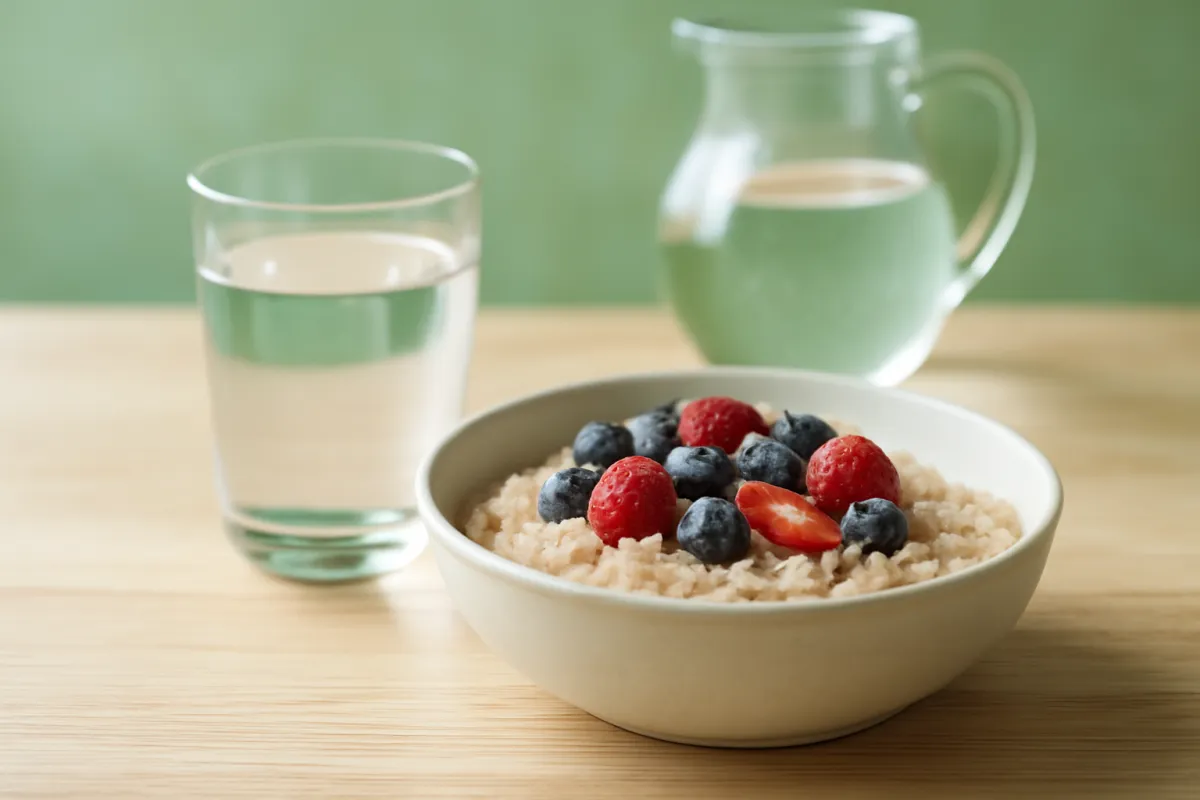
In practice that means adding one food from this list at a time: a serving of beans this week, fruit with the skin the next, a switch to whole grain bread after that, rather than overhauling every meal at once. Spreading fiber across the day rather than loading it into a single giant salad also helps, and keeping a glass of water alongside fiber-rich meals covers the hydration side. Our hydration review covers fluids in general, and the two topics genuinely reinforce each other. If discomfort persists despite a gradual approach and adequate fluid, that is a reason to check with a doctor rather than push through.
A worked example: a day built from this list
To make the arithmetic concrete, here is one illustrative day assembled from this list to land near a 30-gram target, using the commonly cited figures above. Nothing here is a recommendation to eat these specific foods or hit this specific number; it is simply a worked example of how ordinary servings add up.
Breakfast is a half cup of oats, about 4 grams, topped with a cup of raspberries, about 8 grams, and a spoon of chia, about 5, for roughly 17 grams before lunch. A midday bowl built on three quarters of a cup of lentils contributes around 11 grams, with a handful of vegetables adding a couple more, carrying the running total past 28 grams by early afternoon. A one-ounce handful of almonds as a snack adds about 3.5 grams. A dinner of a cup of cooked broccoli, roughly 5 grams, alongside a whole grain side of another 2 to 3 grams, pushes the day comfortably past 35 grams of fiber in total.
The example makes two things visible. First, a target that sounds demanding assembles from unremarkable food, with no supplement and no oversized portions, once legumes, oats, and produce anchor the day. Second, the foods are freely interchangeable: swap the raspberries for a pear, the lentils for black beans, the almonds for pistachios, and the day still lands in the same neighborhood, because the figures are similar within each group. Build up to a day like this gradually if your current intake is much lower, and run your own version in the companion below. Thirty grams is an illustrative reference chosen to show the arithmetic, not a number this reference advises anyone in particular to hit.
Common mistakes when building a high-fiber list
A handful of recurring errors trip people up when they turn a fiber list into meals, and each is easy to avoid once named.
- Peeling and juicing away the fiber. Much of a fruit or potato’s fiber sits in the skin, and juicing removes nearly all of it, so peeled and juiced versions land far lower than the whole food.
- Counting on refined foods. White bread, white rice, and most processed snacks carry little fiber despite feeling filling, so they do not substitute for their whole counterparts.
- Adding it all at once. A sudden jump without a gradual ramp is the main cause of gas and bloating, and it makes people quit; ease it up over a week or two.
- Forgetting fluids. Fiber needs water to work well, so more fiber without more fluid can backfire into discomfort or constipation.
- Skipping the legume aisle. Because legumes carry so much more fiber per serving than any other group, a list that leans on fruit and vegetables alone works far harder for the same total.
- Chasing exact grams. The figures are illustrative references, so learning the high, medium, and low tiers and anchoring meals accordingly beats counting to a decimal.
Each of these is a planning slip rather than a failure of willpower, and clearing them up makes a high-fiber diet far easier to build comfortably.
Refined foods that look high-fiber but are not
A final caution keeps the list honest, because the label can mislead. Some processed foods look wholesome and carry a healthy-sounding fiber number, but that number comes from isolated fibers, inulin, chicory root fiber, added cellulose, stirred into an otherwise refined product rather than from the natural fiber matrix of a whole food. These added fibers count on the label and can contribute, but they do not carry the accompanying vitamins, minerals, and mix of fiber types that a bean or an apple brings, and some people find them harder to tolerate.
The more common trap is the reverse: refined foods that feel substantial but carry almost no fiber. A large plate of white pasta, a sandwich on white bread, or a bowl of a sugary low-fiber cereal can fill a person up while delivering a fraction of what the whole grain version would. The reliable way to tell is to read the fiber line on the nutrition label and to favor foods that are whole rather than refined, a habit our label-reading review walks through in detail. When a food’s fiber claim rests on a short ingredient list of recognizable whole foods, it is usually genuine; when it rests on added isolated fibers in a long list, treat the number with a little more skepticism.
A quick high-fiber shopping checklist
Turn the whole list into a habit with a short routine you can carry into the store.
- Start in the legume aisle, dried or canned, since beans, lentils, split peas, and chickpeas are the highest-fiber, lowest-cost core of the cart.
- Choose whole over refined for bread, pasta, and rice, and add oats, barley, or bran as a breakfast base.
- Keep skins on fruit and vegetables, lean on berries fresh or frozen, and default to whole fruit over juice.
- Add a seed, chia or ground flax, as a cheap, concentrated topping that lasts for weeks.
- Stock a high-fiber snack, almonds, popcorn, or roasted chickpeas, for the gaps between meals.
- Ramp up gradually over a week or two and drink more fluids, and confirm your own needs with a doctor or registered dietitian if you have any digestive condition.
Run your chosen foods against a target in the companion below to see how close the list gets you and what might close the rest.
The bottom line
The foods with highest dietary fiber are ordinary and inexpensive, led by legumes at roughly 15 grams a cup, followed by seeds and berries, then whole grains and starchy vegetables, then everyday fruit and vegetables at several grams each. Almost every one carries both soluble and insoluble fiber, so a varied plate supplies both without any tracking, and the whole list adds up toward the Dietary Reference Intakes commonly cited as about 25 grams a day for women and 38 for men under 50. Building a high-fiber day is refreshingly plain: anchor meals with legumes, keep skins on produce, choose whole grains, top with seeds, and snack on nuts or fruit, adding it all gradually with plenty of fluid. Every figure here is a commonly cited illustrative reference rather than a personal prescription, so pair this list with our evidence review on how much fiber you need for the amount side, and confirm anything specific to your health with a qualified professional.
This food reference is published for general education and describes commonly cited dietary figures, not medical, nutritional, or dietary advice, and reading it creates no clinician-patient relationship. Every fiber figure and serving amount above is an illustrative, rounded population reference rather than an exact measurement of any specific food, and real varieties, sizes, ripeness, and preparations vary widely, so confirm a particular product against its own label. Fiber needs differ from person to person, and some medical conditions call for less fiber or a specific type, so this general list does not apply to everyone. For an intake suited to your body, diet, medications, digestion, or any medical condition, and before making changes, consult a qualified health professional such as a doctor or registered dietitian.
Frequently asked questions
What foods have the highest dietary fiber?
The foods with highest dietary fiber per serving are legumes, with a cup of cooked split peas, lentils, or black beans commonly cited around 15 to 16 grams. After legumes come chickpeas near 12 grams, chia seeds around 10 grams for two tablespoons, and a cup of raspberries near 8 grams. Whole grains, a whole cooked artichoke, green peas, pears and apples with the skin, broccoli, and almonds each add several grams more. These are commonly cited illustrative figures that vary by variety, size, and preparation, so this is general educational information rather than a personal plan, and anyone with a digestive condition should confirm their approach with a doctor or registered dietitian.
Which food group has the most fiber?
Legumes are the highest-fiber food group by a wide margin, which is why beans, lentils, split peas, and chickpeas anchor almost every high-fiber list. A single cup of cooked legumes can supply half of a common daily target on its own, more than most people get from a whole day of refined foods. Whole grains and starchy vegetables form a solid middle tier, and fruit, vegetables, nuts, and seeds fill in from there. The pattern is consistent enough that leaning on legumes is usually the single most effective change a person can make, though the right amount for you depends on your body and any medical conditions.
What are the highest-fiber fruits and vegetables?
Among fruit, raspberries lead at roughly 8 grams a cup, with pears and apples eaten with the skin near 5 grams, and avocado around 5 grams for half a fruit. Among vegetables, a whole cooked artichoke is commonly cited near 7 grams, green peas near 7 grams a cup, and broccoli and brussels sprouts around 5 grams a cup. The habit that matters most is eating produce with the skin on and choosing whole over juiced, since juicing removes most of the fiber. These are illustrative figures that shift with size and ripeness, offered as general information rather than a prescription for any specific need.
How much fiber should these foods add up to in a day?
The National Academies of Sciences, Engineering, and Medicine sets the Dietary Reference Intakes that health bodies echo, commonly cited as about 25 grams a day for adult women and about 38 grams for adult men under 50, easing lower after 50, or roughly 14 grams for every 1,000 calories eaten. Those are population reference figures, not a personal quota your body demands each day. Most people land near half of that, so the practical goal is usually to move from the widespread shortfall toward the general range rather than to hit a precise number. For a target suited to you, and for any medical condition, confirm the figure with a doctor or registered dietitian, and see our companion review on how much fiber you need for the full picture.
What is the difference between soluble and insoluble fiber in these foods?
Soluble fiber dissolves in water and forms a gel, and it is the type most associated with slowing digestion, feeding gut bacteria, and modestly supporting healthy cholesterol and steadier blood sugar; oats, barley, beans, apples, and citrus are common sources. Insoluble fiber does not dissolve, adds bulk, and helps move material through the digestive tract, and it is common in whole grains, wheat bran, nuts, and many vegetables. Almost every whole food on this list carries a mix of both types, so a varied plate supplies both without any tracking. This is a general description of how the two behave, not advice for any specific condition.
What are good high-fiber foods for breakfast and snacks?
For breakfast, oats, whole grain toast, berries, a spoon of chia or ground flax, and fruit with the skin each add several grams before the day has really started, and a bowl of oats topped with raspberries can carry roughly 12 grams on its own. For snacks, a handful of almonds, popcorn, fruit with the skin, roasted chickpeas, or raw vegetables with a bean dip all add fiber without much effort. Spreading these across the day rather than loading fiber into one giant salad is gentler on digestion. These are illustrative amounts, and anyone increasing fiber quickly should do so gradually and drink more fluids, checking persistent discomfort with a professional.
Are refined foods like white bread high in fiber?
No, refined foods are generally low in fiber because milling and processing strip most of it out, which is why white bread, white rice, and fruit juice contribute far less than their whole counterparts. A slice of white bread may carry under a gram of fiber where a whole grain slice carries a few, and juice removes nearly all the fiber that the whole fruit contained. Some processed foods add isolated fibers such as inulin or chicory root to raise the label number, which is not the same as the natural fiber matrix of a whole food. Reading the fiber line on the nutrition label, and favoring foods that are whole rather than refined, is the reliable way to tell, as our label-reading review explains.
Can you get too much fiber from these foods?
For most healthy adults, eating a variety of fiber-rich whole foods is not a concern, but increasing fiber very quickly, or greatly overdoing it without enough fluid, can cause gas, bloating, cramping, and even constipation. The common advice is to add fiber gradually over a couple of weeks and to drink more water as you do, since fiber works partly by absorbing water. Some people, including those with certain digestive conditions or a history of bowel obstruction, are specifically advised to limit fiber at times, which is the opposite of the general message. Anyone with a medical condition affecting digestion should follow their own clinician's guidance rather than a general list, and persistent symptoms are worth raising with a doctor.

Hamza Hai is the editor of NourishMark. She holds an MBA and reviews the site's articles against our editorial standards, checking that every figure is labelled for what it is, that nothing is presented as verified fact without a source the reader can check, and that the writing stays useful to a non-specialist.

Dr. Shayaan Khan is the medical reviewer for NourishMark. He holds an MBBS from MGM Medical College, Navi Mumbai, and is the author of published research including a narrative review of postpartum anxiety and depression in Mental Health Science. He has taught physiology at university level. He reviews the site's health content for medical accuracy: that physiology and mechanisms are described correctly, that no claim is stated more strongly than the evidence behind it, and that anything specific to an individual reader is sent to that reader's own clinician.
Not medical advice. Dr. Khan reviews NourishMark's health content for medical accuracy. He is not a registered dietitian, he does not hold a United States practising licence, and he is not your doctor. His review does not make anything here medical advice. Always talk to a qualified health professional about your own situation, and never delay or stop care because of something you read here.