What's in this review
- What counts as constipation
- How a high fiber diet helps with constipation
- Soluble and insoluble fiber: softening and bulk
- High fiber foods for constipation that help
- Prunes and the fruits with a gentle reputation
- The fiber foods ranked by how much they carry
- The critical water pairing: fiber needs fluid
- How much fiber to aim for
- How to increase fiber gradually
- Movement and routine that support regularity
- Where a high-fiber day’s fiber comes from
- Fiber supplements: a brief look
- A worked example: a gentle high-fiber day
- When a high-fiber diet is not enough: when to see a doctor
- Fiber and constipation in specific situations
- Common mistakes with a high fiber diet for constipation
- A quick high-fiber, high-fluid checklist
- The bottom line
Short answer: A high fiber diet for constipation helps because insoluble fiber adds bulk that moves stool along and soluble fiber holds water that softens it. High fiber foods for constipation that come up most often include prunes, pears, kiwi, beans and lentils, oats, chia and flax, and whole grains. Increase fiber gradually and drink more fluid, since fiber without water can make things worse. Severe pain, blood, weight loss, or constipation lasting more than one to two weeks needs a doctor.
The high fiber foods constipation sufferers hear about most, prunes, beans, oats, and pears with the skin, sit at the heart of one of the first and plainest measures general health guidance tends to raise: a high fiber diet for constipation, a fiber rich diet built on ordinary foods that happen to help the digestive system keep things moving. Constipation is one of the most common complaints there is, uncomfortable and quietly disruptive, and the reflex is often to reach for a quick fix. Yet for many everyday cases the more durable answer is unglamorous: a bit more fiber from ordinary food, a lot more attention to fluid, and a little patience while the gut adjusts. The trouble is that fiber is widely misunderstood, and done carelessly it can disappoint or even backfire.
This article explains, in plain language, how a high fiber diet supports regularity, which high fiber foods for constipation are most often discussed, and the single most important pairing that makes fiber work rather than backfire: water. It covers the difference between soluble and insoluble fiber, how much fiber the reference intakes point toward, how to add it gradually, where movement and routine fit, and a brief, careful look at fiber supplements. Just as importantly, it flags the warning signs that mean constipation needs a doctor rather than a diet change. This is general educational information, not medical advice, and it is not a substitute for a doctor or registered dietitian who knows your history. For the amount question in depth see our evidence review on how much fiber you need, and for the foods themselves our high-fiber foods list by group; you can also run a rough fiber-and-fluid tally in the companion below.
Key takeaways
- Fiber supports regularity in two ways: insoluble fiber adds bulk that helps move stool along, and soluble fiber absorbs water to form a gel that helps soften it.
- The water pairing is critical: fiber holds and needs fluid to work, so adding fiber without more water can worsen constipation rather than relieve it.
- Commonly discussed high-fiber foods include prunes, pears, kiwi, beans and lentils, oats, chia and flax, whole grains, and leafy greens, with a mix supplying both fiber types.
- Increase fiber gradually over a week or two, spread it across the day, drink more fluid, and let movement and routine help; a sudden jump often causes gas and bloating instead of relief.
- See a doctor for constipation with severe pain, blood, unexplained weight loss, a sudden change in habits, or that lasts more than one to two weeks: persistent or severe constipation needs medical care, and this article is general education only.
What counts as constipation
Before reaching for fiber it helps to know what constipation actually describes, because the word covers a wider range than many people assume. There is no single “normal” number of bowel movements: anywhere from roughly three times a day to three times a week falls within the range that general references treat as typical, and what matters more is a change from your own usual pattern. Constipation is commonly described as stools that are hard, dry, difficult or painful to pass, infrequent relative to your norm, or accompanied by a feeling of incomplete emptying. Occasional bouts are extremely common and often tied to diet, travel, dehydration, stress, or a change in routine.
The reason this matters for a fiber approach is that fiber is most relevant to the everyday, diet-related kind of irregularity, which is where a gentle increase in fiber and fluid tends to be discussed first. Constipation that is sudden, severe, painful, persistent, or accompanied by other symptoms is a different situation that belongs with a professional, as the safety section below spells out. This article deals with the general, everyday case and describes commonly cited principles, not a diagnosis of your specific situation. If you are unsure which kind you are dealing with, that uncertainty is itself a good reason to check with a doctor.
How a high fiber diet helps with constipation
Fiber is the part of plant foods the body does not digest, and rather than being useless, that indigestibility is exactly what makes it work in the gut. A high-fiber diet supports regularity mainly by changing the size, softness, and speed of what passes through the digestive tract. Fiber adds bulk that stimulates the natural wave-like muscle contractions of the intestine, and it holds water so that stool stays softer and easier to move. Together these effects tend to make bowel movements more regular and more comfortable, which is why fiber sits at the center of so much general guidance on everyday constipation.
There is a second, slower benefit worth naming. Much of the fiber that reaches the large intestine is fermented by gut bacteria, which supports a healthier microbial balance and produces compounds that help the gut environment, and a well-fed gut community is part of a smoothly functioning digestive system over time. None of this is a cure or a guaranteed result, and the effect builds with consistent habits rather than a single high-fiber meal. Fiber is a general dietary support for regularity, not a medication, and this article describes how it behaves for most people rather than promising an outcome for anyone in particular. The companion below can show how far a few added servings move your rough daily total.
Soluble and insoluble fiber: softening and bulk
Fiber is a family rather than a single substance, and for constipation the split between soluble and insoluble types is genuinely useful to understand. Soluble fiber dissolves in water and forms a soft, viscous gel. In the context of regularity, that gel holds water and helps soften stool, making it easier to pass, and soluble fiber is also the type most fermented by gut bacteria. Its common homes are oats and barley, beans and lentils, apples, citrus, psyllium, and the flesh of many fruits. Because it depends so directly on water to form its gel, soluble fiber is a clear illustration of why the fluid pairing matters.
Insoluble fiber does not dissolve. Instead it adds bulk and draws water into the gut, and that added bulk helps stimulate the intestine to keep material moving along, which is the sense in which it is often described as “roughage”. It dominates in wheat bran, whole grains, nuts and seeds, and the skins of fruits and vegetables. For constipation both types pull in the same direction, softening and moving, and the reassuring part is that almost every whole food carries a mix of both, so there is no ratio to engineer. Eating a variety of whole plant foods supplies both by default. This is a general description of how the two behave, not tailored advice, and anyone managing a digestive condition should follow guidance specific to their situation.
High fiber foods for constipation that help
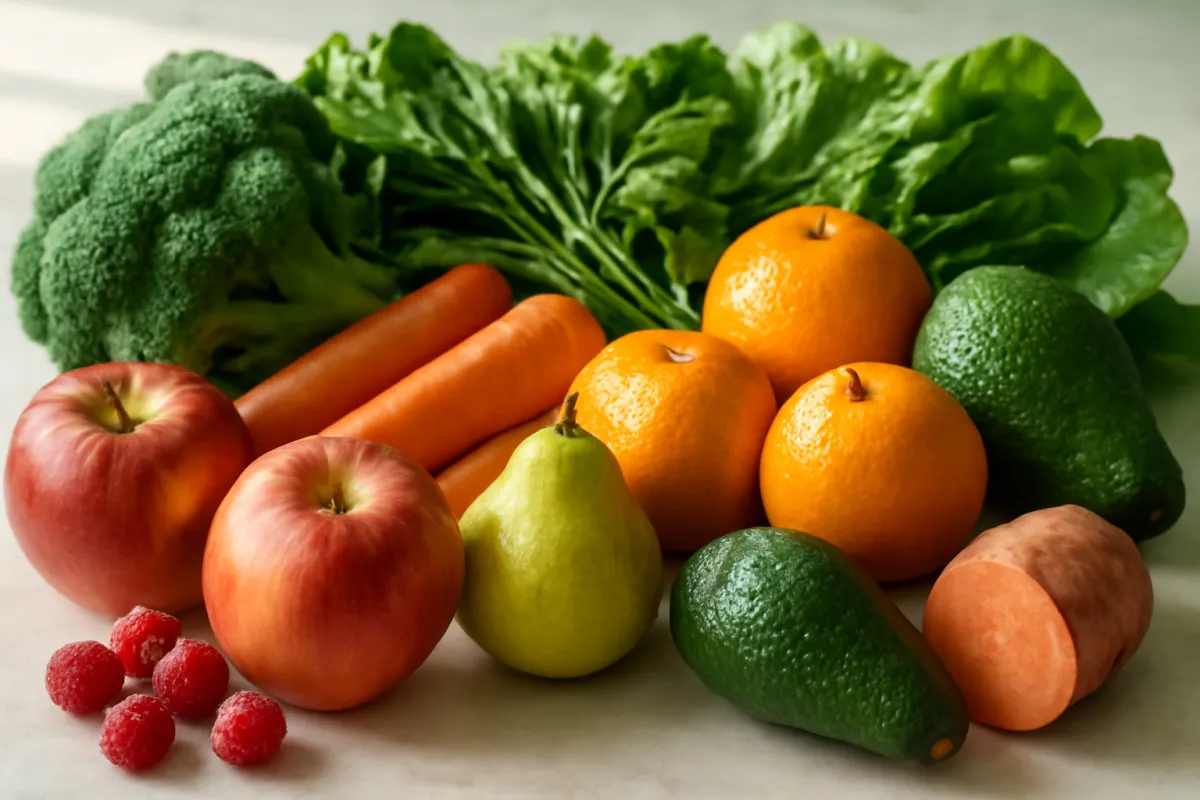
The high fiber foods for constipation most often discussed are ordinary and inexpensive, and they span every plant group. Fruit is a natural starting point: prunes (dried plums) have a long-standing gentle reputation, and pears and apples eaten with the skin, kiwi, berries, and citrus all add fiber along with water and, in some cases, natural sugars such as sorbitol that draw fluid into the gut. Legumes are the heavyweight of any fiber list, with beans, lentils, split peas, and chickpeas carrying a large amount per serving, and they anchor many high-fiber patterns. Whole grains such as oats, barley, bulgur, and whole grain bread, plus a spoon of wheat bran, add steady fiber to everyday meals.
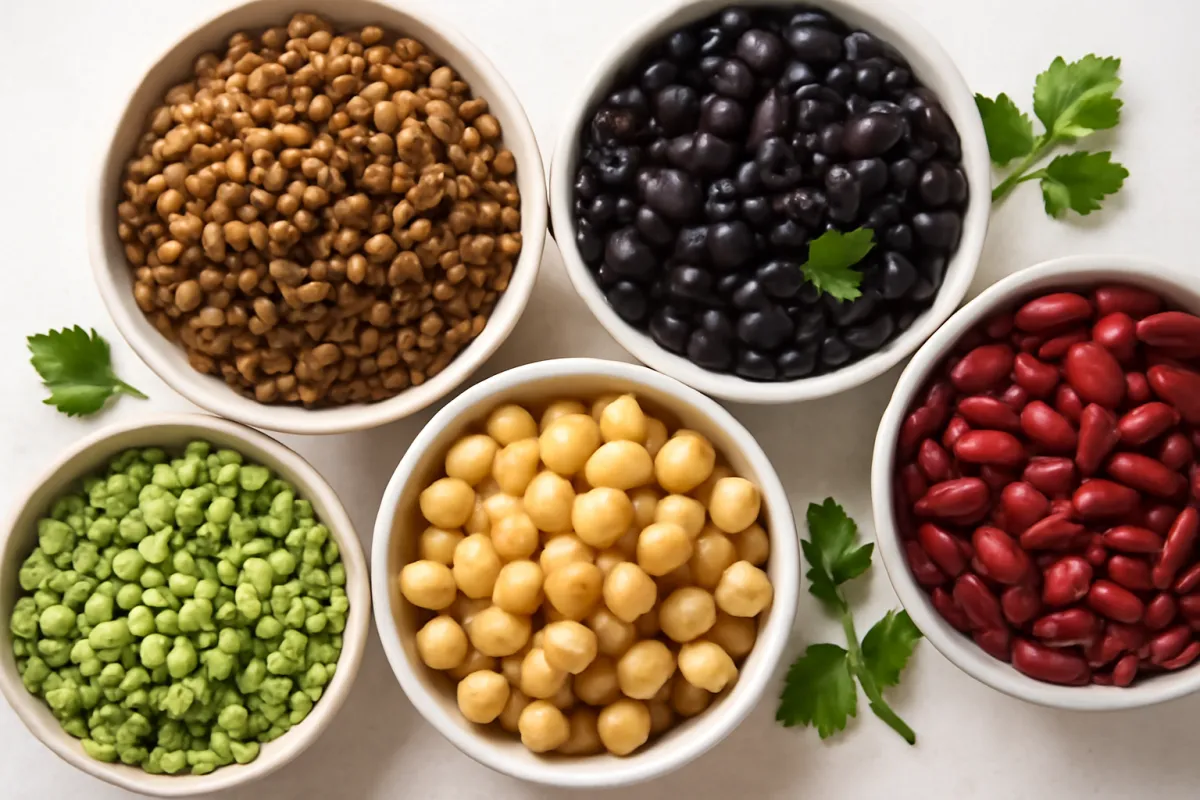
Seeds and greens round out the picture. Chia and ground flaxseed are concentrated, easy to stir into oatmeal or yogurt, and they carry soluble fiber that gels with water. Leafy greens and other vegetables add volume and fiber across meals, especially with skins left on where they are edible. The table below lists commonly cited, illustrative fiber figures per typical serving for foods frequently discussed for constipation; every figure is a rounded reference that varies by variety, size, and preparation, not an exact measurement.
| Food | Typical serving | Illustrative fiber |
|---|---|---|
| Black beans, cooked | 1 cup | ~15 g |
| Lentils, cooked | 1 cup | ~15 g |
| Chia seeds | 2 tbsp | ~10 g |
| Raspberries | 1 cup | ~8 g |
| Pear, with skin | 1 medium | ~5.5 g |
| Oats, dry | 1/2 cup | ~4 g |
| Spinach, cooked | 1 cup | ~4 g |
| Ground flaxseed | 2 tbsp | ~4 g |
| Prunes, dried | 1/4 cup (~5 to 6) | ~3.5 g |
| Whole grain bread | 1 slice | ~2.5 g |
| Kiwi | 1 medium | ~2 g |
The practical message is variety and regularity rather than any single hero food. A serving of beans, some fruit with the skin, a whole grain base, a spoon of seeds, and a helping of vegetables each add a few grams, and together they carry a real share of a day. Our high-fiber foods list by group covers the full catalogue if you want to build a broader repertoire, and these are illustrative examples for general education, not a treatment plan for anyone in particular.
Prunes and the fruits with a gentle reputation
Among the foods discussed for constipation, prunes have earned a particular place in general lore, and there is a plausible reason beyond folklore. Dried plums carry fiber, but they also contain sorbitol, a natural sugar alcohol the body absorbs slowly, which draws water into the gut and can have a mild softening effect. That combination of fiber plus sorbitol is why prunes and prune juice come up so often in everyday conversations about regularity. As with everything here, they are a general dietary option rather than a remedy, and the effect varies from person to person; too many at once may cause gas or loosening, which is its own kind of discomfort.
Several other fruits share parts of this profile. Pears and apples, eaten with the skin, carry fiber and a share of sorbitol; kiwi is frequently mentioned for regularity and has been a subject of general interest; and citrus and berries add soluble fiber and water. Dried fruit in general, including figs and apricots, concentrates both fiber and sugars into a small serving, which is useful but also easy to overdo. The sensible approach is a modest, regular helping of a variety of these fruits rather than a large one-off dose, and to pair them, as always, with fluid. These are commonly cited examples offered for general education, and anyone with ongoing symptoms or a condition affecting digestion should seek personal advice rather than rely on a fruit’s reputation.
The fiber foods ranked by how much they carry
To make the comparison visual, the chart below lines up several foods frequently discussed for constipation by their illustrative fiber per typical serving. Beans set the top of the scale, and every other bar is drawn as its share of that figure, so the lengths show at a glance how legumes tower over even fiber-rich fruit and seeds per serving. The point is not that the biggest bar is the only one that matters, but that a mix of these foods across a day adds up quickly.
Illustrative fiber per serving in foods discussed for constipation
Commonly cited fiber per typical serving, in grams, for foods frequently mentioned for regularity. Illustrative reference figures that vary by variety and preparation, not exact measurements or a treatment plan.
Bars scale to the black beans figure at 100 percent. These are commonly cited reference figures that vary by variety, size, and preparation; confirm any specific product against its own label.
Read the chart as an argument for combining foods rather than chasing the single largest number. Prunes and kiwi sit low on a pure per-serving fiber ranking, yet they are prized for constipation partly for reasons beyond fiber alone, such as their sorbitol and water content, which the bar length does not capture. That is a useful reminder that a fiber figure is one input among several, and that the comfortable, sustainable path is a varied plate rather than a single large dose of any one food.
The critical water pairing: fiber needs fluid
If there is one idea in this entire article to hold onto, it is this: fiber and water work as a pair, and fiber without enough fluid can make constipation worse rather than better. The mechanism is direct. Soluble fiber forms its softening gel by absorbing water, and insoluble fiber draws water into the gut to create soft, mobile bulk. Take away the water and you are left with dry bulk, which is harder to pass, not easier. This is why nearly every credible general source that recommends more fiber recommends more fluid in the same breath, and why loading up on bran or a fiber supplement while under-drinking is a classic way to feel worse.
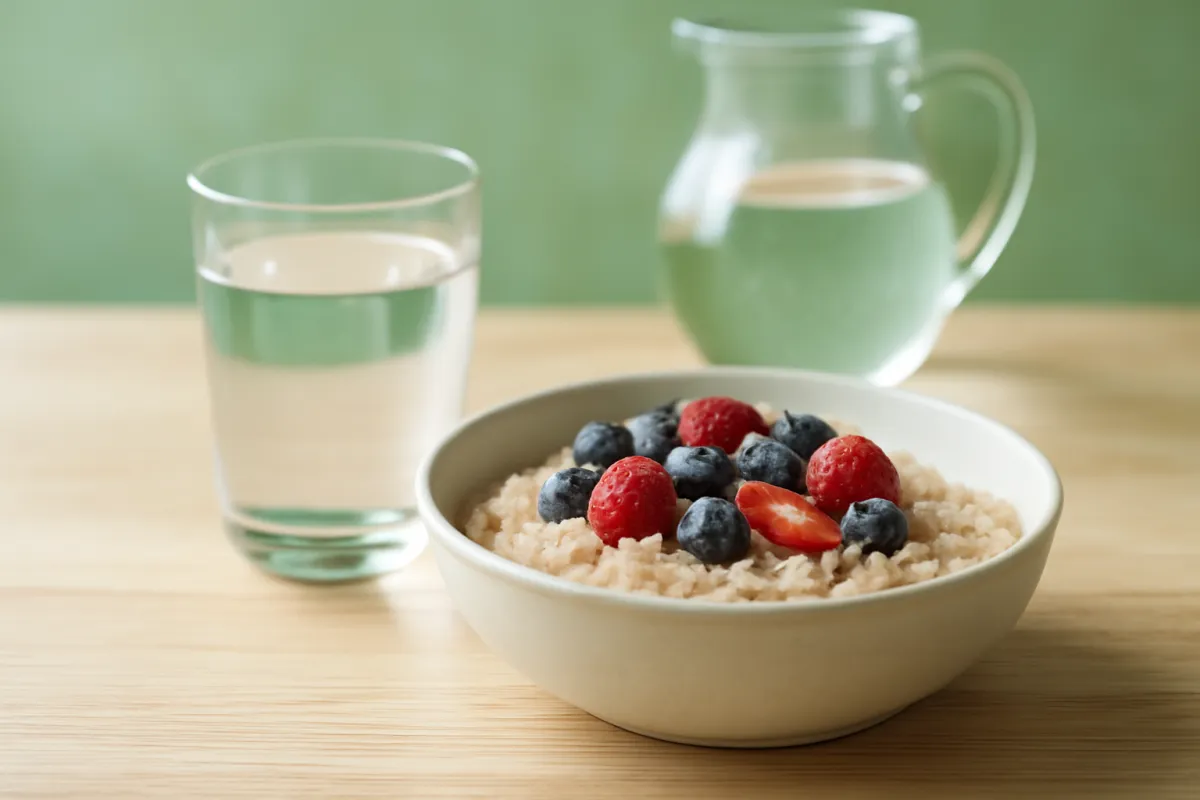
In practice the rule is simple: whenever you add fiber, add fluid alongside it, keeping a glass of water with fiber-rich meals and drinking through the day. General references often frame total water intake around commonly cited figures such as about 2.7 liters a day for women and 3.7 liters for men, including the water in food, though individual needs vary with size, climate, and activity. Roughly four fifths of that total is commonly described as coming from drinks, which works out near 9 cups of about 8 ounces a day for women and 12 for men, and those are the illustrative fluid figures the companion on this page uses. Water, plain and simple, is the usual mainstay, and warm drinks in the morning are a traditional habit many people find helpful for getting things moving. Our hydration review and our practical guide to staying hydrated cover fluids in depth. These are general figures, not personal targets, and anyone with a condition that limits fluids should follow their clinician’s guidance instead. Use the companion below to see a rough fluid figure alongside your fiber tally.
How much fiber to aim for
A fiber approach only means something against a target, so it is worth naming the reference. The Dietary Reference Intakes, set by the National Academies of Sciences, Engineering, and Medicine, are the figures that nutrition labels and health bodies echo: commonly cited as about 25 grams of fiber a day for adult women and about 38 grams for adult men under 50, easing lower after 50 to roughly 21 and 30 grams, or expressed another way as about 14 grams for every 1,000 calories eaten. Those are population reference figures rather than a personal quota, and most people land well below them, which is part of why everyday irregularity is so widespread.
For constipation specifically, the honest framing is that the goal is usually to move from a low intake toward that general range gradually, not to sprint to a precise number. Overshooting quickly tends to cause more discomfort than relief. The right amount for any one person depends on body size, diet, activity, medications, and any medical condition, and some conditions call for less fiber rather than more, so a population average is a starting point for reasoning, not a rule. Our full evidence review on how much fiber you need walks through where the numbers come from and why most people fall short. For a target suited to you, confirm the figure with a doctor or registered dietitian rather than treating an average as a personal prescription.
How to increase fiber gradually
The single practical rule that prevents most fiber-related misery is to increase fiber gradually and drink more fluid as you do. Fiber works partly by absorbing water and adding bulk, so a sudden jump from a low-fiber diet to a high one, without enough fluid, is the classic recipe for gas, bloating, cramping, and sometimes worse constipation rather than better. The gut and its bacteria adapt over a week or two, and easing the amount up gives them time and spares the discomfort that makes people abandon the effort just as it starts to help.
In concrete terms, that means adding one food at a time rather than overhauling every meal at once: a serving of beans this week, fruit with the skin the next, a switch to whole grain bread after that, and a spoon of chia or bran on breakfast somewhere along the way. Spreading fiber across the day rather than loading it into a single giant salad is gentler, and pairing each addition with fluid covers the water side. A little movement after meals helps too. If gas and bloating appear, they are usually a sign to slow the pace rather than to stop entirely. And if discomfort persists despite a gradual approach and adequate fluid, that is a reason to check with a doctor rather than push through. This is a general approach, not a personal plan.
Movement and routine that support regularity
Diet is the centerpiece of this article, but a fiber approach works better inside a few supporting habits, and physical activity is the most reliable of them. Movement, even ordinary walking, helps stimulate the natural muscle activity of the intestine, which is part of why a sedentary day and a constipated one so often coincide. General guidance frequently pairs “more fiber and fluid” with “and keep moving”, and for many people a regular walk is a simple, no-cost complement to a higher-fiber diet. None of this is a prescription for a specific exercise dose; it is the well-worn observation that a body that moves tends to keep its digestion moving too.

Routine matters as well. The body’s urge tends to follow patterns, often strongest in the morning and after meals, and honoring that urge rather than delaying it is a small habit that supports regularity. A consistent morning routine, an unhurried few minutes, and not routinely ignoring the signal all fit into the same picture. Sleep, stress, and travel can all disrupt the pattern, which is why constipation so often accompanies a disrupted schedule. These are general lifestyle observations rather than medical instructions, and they support a fiber-and-fluid approach rather than replacing it. If regularity does not return once diet, fluid, movement, and routine are in reasonable order, that is a signal to seek advice.
Where a high-fiber day’s fiber comes from
It helps to see how a fiber-adequate day tends to distribute its fiber across the food groups, because it shows that no single food has to carry the whole load. The illustrative breakdown below reflects a common shape, with legumes and whole grains doing the heaviest lifting, fruit and vegetables close behind, and nuts and seeds rounding it out. The shares are illustrative and sum to 100 percent; a real day can lean differently and still land well.
Where a high-fiber day's fiber comes from
Illustrative share of a day's fiber by food group on a typical high-fiber day. Shares sum to 100 percent and are a reference shape, not a rule or a treatment plan.
Segments show each group's illustrative share of a high-fiber day's total fiber. Swap the emphasis to suit your tastes; this is a reference shape, not a prescription.
The point is not to hit these exact shares but to see that a day assembles from ordinary servings. When a portion of legumes, a couple of servings of whole grains, several pieces of fruit and vegetables, and a small handful of nuts or seeds each contribute, the total comes together almost by accident, and both soluble and insoluble fiber are covered without any tracking. That additive logic is what makes a number that sounds demanding in the abstract turn out to be unremarkable on the plate. Run your own mix in the companion below to see how a few added servings move your rough total.
Fiber supplements: a brief look
When diet alone is hard to change, fiber supplements sometimes come up in general conversations about constipation, and a brief, careful word is warranted. Common types include psyllium (a soluble, gel-forming fiber), methylcellulose, wheat dextrin, and inulin, each with a slightly different profile. The same water rule applies with even more force: fiber supplements are typically taken with a full glass of water, because a concentrated dose of fiber without adequate fluid is exactly the situation that can worsen constipation. Supplements can be a practical way to add fiber, but they do not carry the water, vitamins, minerals, and natural variety that whole foods bring, which is why food is usually the first thing general guidance points to.
There are real cautions here that put this firmly in professional territory. Fiber supplements can interact with the absorption of some medications, so timing and suitability matter, and they are not appropriate for every person or every kind of constipation. Anyone considering a supplement, especially alongside prescription medicines, a chronic condition, or ongoing symptoms, should check with a pharmacist, doctor, or registered dietitian first. This article does not recommend any particular product, dose, or brand; it simply notes that supplements exist as a general option and that they carry the same fluid requirement and more caveats than food. As always, persistent or severe constipation is a medical question, not a supplement one.
A worked example: a gentle high-fiber day
To make the arithmetic concrete, here is one illustrative day assembled from the foods above to land near a 30-gram fiber target, using the commonly cited figures in this article. Nothing here is a recommendation to eat these specific foods or hit this specific number; it is simply a worked example of how ordinary servings, paired with fluid, add up. Someone whose usual intake is much lower would build toward a day like this gradually over a week or two, not overnight.
Breakfast is a half cup of oats, about 4 grams, topped with a spoon of chia, about 5 grams, and a handful of raspberries, about 4 grams for half a cup, with a large glass of water alongside, for roughly 13 grams before the morning is out. A few prunes as a mid-morning snack add another 3 to 4 grams. Lunch built on three quarters of a cup of lentils contributes around 11 grams, with a helping of leafy greens adding a couple more, carrying the running total past 28 grams. A pear with the skin in the afternoon, about 5 grams, and a dinner with a whole grain side push the day comfortably past 35 grams, all of it paired with water through the day.
Two things stand out. First, the target assembles from unremarkable food, with no supplement and no oversized portions, once beans, oats, fruit, and greens anchor the day. Second, the foods are freely interchangeable: swap the raspberries for kiwi, the lentils for black beans, the pear for an apple with the skin, and the day lands in the same neighborhood, because the figures are similar within each group. Thirty grams is an illustrative reference chosen to show the arithmetic, not a number this article advises anyone in particular to hit, and the fluid running alongside is as much the point as the fiber. Build your own version in the companion below.
When a high-fiber diet is not enough: when to see a doctor
This is the most important section in the article, and it deserves to be read carefully. A high-fiber diet is a general measure for everyday, diet-related constipation, but constipation is also a symptom that can sometimes point to something that needs medical attention, and no amount of fiber substitutes for a professional assessment when warning signs are present. Persistent or severe constipation is a medical matter, not a diet project.
See a doctor promptly if constipation comes with any of the following: severe or persistent abdominal pain or cramping; blood in the stool, black or tarry stools, or bleeding; unexplained weight loss; vomiting; or a sudden, unexplained change in your usual bowel habits, especially in mid-life or later. Constipation that lasts longer than one to two weeks despite more fiber, more fluid, and movement, or that keeps returning, is also worth having checked, as is constipation that alternates with diarrhea, or that comes with a feeling of a blockage or an inability to pass gas. Anyone with a known digestive condition, a history of bowel obstruction, or who is pregnant, and anyone caring for a child or an older adult with these symptoms, should seek advice rather than self-manage.
The reason to be cautious rather than casual is simple: these signs can occasionally reflect conditions that a diet change will not address and that benefit from being found early. A doctor or registered dietitian can weigh your full picture, medications, and history in a way a general article never can. If you are ever unsure whether your situation is the ordinary kind or the concerning kind, treat that uncertainty as a reason to ask a professional. This article is general educational information only, it does not diagnose or treat anything, and reading it is no substitute for individual medical care.
Fiber and constipation in specific situations
A general fiber approach does not apply identically to everyone, and a few situations deserve particular care rather than a one-size message. Some medical conditions, including certain inflammatory or motility disorders, narrowing of the bowel, or a history of obstruction, call for a specific, sometimes reduced, fiber approach set by a clinician, which is the opposite of the general “more fiber” message and a clear reason to follow personal guidance instead of a population figure. People taking certain medications, including some pain medicines, may experience constipation as a side effect that needs a tailored plan rather than diet alone. Pregnancy commonly brings constipation, and while fiber and fluid are often part of the general picture, the specifics belong with a healthcare provider.
Children and older adults are two more groups where caution matters. Constipation in a child, or a new or worsening pattern in an older adult, is best discussed with a professional rather than managed from a general article, both because the right approach differs and because the warning signs carry more weight. Older adults may also drink less than they need, which makes the fluid side of the fiber pairing especially relevant. The through-line across all of these is the same: this article describes general principles for everyday, uncomplicated constipation, and the more a situation involves a medical condition, a medication, a vulnerable age group, or a warning sign, the more it belongs with a doctor or registered dietitian rather than a general approach.
Common mistakes with a high fiber diet for constipation
A handful of recurring errors trip people up when they turn to fiber for regularity, and each is easy to avoid once named.
- Skimping on fluid. This is the big one: adding fiber without adding water can worsen constipation, since fiber needs fluid to soften and move. Raise fiber and fluid together, always.
- Adding it all at once. A sudden jump from a low-fiber diet to a high one is the main cause of gas, bloating, and cramping, and it makes people quit. Ease it up over a week or two instead.
- Expecting instant results. Fiber is not a fast-acting remedy; it works with consistent habits over days, not minutes, so patience is part of the approach.
- Relying on a single food or a big dose. A large one-off serving of bran or prunes is more likely to cause discomfort than a steady, varied intake spread across the day.
- Peeling and juicing away the fiber. Much of a fruit or potato’s fiber sits in the skin, and juicing removes most of it, so whole beats juiced and skins-on beats peeled.
- Ignoring warning signs. Treating severe pain, blood, weight loss, or a persistent problem as a fiber issue rather than a medical one is the most important mistake to avoid.
Each of these is a planning slip rather than a failure of willpower, and clearing them up makes a high-fiber approach far more comfortable and far more likely to help.
A quick high-fiber, high-fluid checklist
Turn the whole approach into a habit with a short routine you can carry into the day.
- Add fiber gradually, one food at a time over a week or two, rather than overhauling every meal at once.
- Drink more fluid alongside it, keeping a glass of water with fiber-rich meals and through the day, since fiber needs water to work.
- Lean on variety: a serving of beans or lentils, fruit with the skin such as pears or prunes, whole grains and oats, a spoon of chia or flax, and plenty of vegetables.
- Spread fiber across the day rather than loading it into one large meal, which is gentler on digestion.
- Keep moving with regular activity such as walking, and honor the body’s natural urge rather than routinely delaying it.
- Know the warning signs and see a doctor for severe pain, blood, unexplained weight loss, a sudden change in habits, or constipation lasting more than one to two weeks.
Run your chosen foods and fluid against a rough target in the companion below to see how the pieces add up, and treat the whole list as general education rather than a personal plan.
The bottom line
A high fiber diet for constipation helps by adding bulk that keeps stool moving and by holding water that keeps it soft, and it works best as a gradual, varied, everyday habit rather than a quick fix. The foods are ordinary and inexpensive, from prunes, pears, and kiwi to beans, oats, chia, and leafy greens, and a mix supplies both soluble and insoluble fiber without any tracking. The one idea to carry above all others is the water pairing: fiber and fluid work together, and raising fiber without raising water can make constipation worse rather than better. Increase fiber slowly, drink more as you go, keep moving, and give it time. Most importantly, know the limits of a diet approach: persistent, severe, or worsening constipation, or any of the warning signs above, needs a doctor rather than more fiber. Everything here is commonly cited general education, not medical advice, so pair it with our review on how much fiber you need and confirm anything specific to your health with a doctor or registered dietitian.
This article is published for general education and describes commonly cited dietary principles, not medical, nutritional, or dietary advice, and reading it creates no clinician-patient relationship. Constipation can have many causes, some of which need medical assessment, and a high-fiber approach is a general measure for everyday cases rather than a treatment for any individual. Every fiber figure and serving amount above is an illustrative, rounded population reference rather than an exact measurement, and needs differ from person to person, with some conditions calling for less fiber or a specific type. Warning signs such as severe pain, blood, unexplained weight loss, a sudden change in bowel habits, or symptoms lasting more than one to two weeks warrant prompt medical attention. For an approach suited to your body, medications, digestion, or any medical condition, and before making changes, consult a qualified health professional such as a doctor or registered dietitian.
Frequently asked questions
Does a high-fiber diet help with constipation?
For many people, gradually increasing dietary fiber alongside more fluid is one of the first general measures discussed for occasional constipation, because fiber adds bulk and helps soften and move stool through the gut. The effect is not instant and not universal, and it works best when fiber is raised slowly and paired with plenty of water. Some people, and some medical conditions, respond differently, and in a few situations more fiber is not the right move at all. This is general educational information rather than medical advice, so anyone with ongoing or severe symptoms should speak with a doctor or registered dietitian rather than rely on a general approach.
What are the best high-fiber foods for constipation?
Commonly discussed choices include prunes and other dried and fresh fruit such as pears, apples with the skin, and kiwi, along with beans and lentils, oats, chia and ground flax, whole grains, and leafy greens. Prunes in particular have a long-standing gentle reputation, carrying both fiber and natural sorbitol. Variety matters more than any single food, since a mix supplies both soluble and insoluble fiber, and each is easy to add in small amounts. These are illustrative examples offered for general education, not a treatment plan, and persistent constipation is worth raising with a professional.
Why does fiber need water to help constipation?
Fiber works partly by holding water: soluble fiber absorbs fluid to form a soft gel that helps soften stool, and insoluble fiber draws water into the gut to add bulk that keeps things moving. Without enough fluid, adding fiber can backfire and actually worsen constipation, because dry bulk is harder, not easier, to pass. That is why nearly all general guidance pairs any increase in fiber with an increase in water and other fluids. If you raise fiber, raise fluid alongside it, and treat this as a general principle rather than a personal prescription, checking with a professional if problems continue.
How much fiber should I aim for to stay regular?
The Dietary Reference Intakes set by the National Academies of Sciences, Engineering, and Medicine are commonly cited as about 25 grams a day for adult women and about 38 grams for adult men under 50, easing lower after 50, or roughly 14 grams for every 1,000 calories eaten. Most people fall well short of that, which is part of why irregularity is so common. The practical goal is usually to move from the widespread shortfall toward the general range gradually, not to hit an exact number overnight. These are population reference figures rather than a personal target, so for an amount suited to you and any medical condition, confirm it with a doctor or registered dietitian.
How quickly does fiber relieve constipation?
There is no single timeline, and it varies widely from person to person and food to food. Some people notice a difference within a day or two of adding fiber-rich foods and more fluid, while for others it takes a week or more of consistent habits, and the gut and its bacteria generally need a week or two to adjust to a higher-fiber pattern. Adding fiber too fast tends to cause gas and bloating rather than faster relief, so a gradual increase is usually more comfortable and more sustainable. If constipation is severe, painful, or does not improve within a week or two, that is a reason to see a doctor rather than keep waiting.
Can too much fiber make constipation worse?
Yes, it can, especially when fiber is increased very quickly or without enough fluid, which can lead to gas, bloating, cramping, and in some cases worse constipation rather than better. A very large jump in bulking insoluble fiber without adequate water is the classic way this happens, since the bulk needs fluid to stay soft and mobile. The general advice is to add fiber gradually over a week or two, spread it across the day rather than loading it into one meal, and drink more fluid as you go. Some digestive conditions call for a specific or even reduced fiber approach, which is the opposite of the general message, so anyone with a diagnosed condition should follow their own clinician's guidance.
Are fiber supplements as good as food for constipation?
Fiber supplements such as psyllium, methylcellulose, and others are sometimes discussed as a general option when diet alone is hard to change, and they are often taken with a full glass of water for the same fluid reason that applies to food. Whole foods carry fiber alongside water, vitamins, minerals, and a natural mix of fiber types, which supplements do not fully replicate, so food is usually the first thing general guidance points to. Supplements can interact with medications and are not right for every situation, so they are worth discussing with a pharmacist, doctor, or registered dietitian before starting. This is general information, not a recommendation to take any particular product.
When should I see a doctor about constipation?
Constipation is often occasional and diet-related, but certain signs mean it should be checked promptly rather than managed with food alone. See a doctor if constipation comes with severe or persistent abdominal pain, blood in the stool or black stools, unexplained weight loss, vomiting, or a sudden and unexplained change in your usual bowel habits, and if constipation lasts more than one to two weeks despite more fiber and fluid. Persistent, severe, or worsening symptoms, or constipation alternating with diarrhea, also warrant medical attention. These are general educational pointers, not a diagnosis, and when in doubt it is always reasonable to have a professional weigh your full picture.
Which high fiber foods should I try first for constipation?
A gentle starting lineup comes straight from the high fiber foods constipation discussions mention most often: a few prunes, a serving of beans or lentils, oats at breakfast, and a pear or apple eaten with the skin. Each adds a few grams of fiber, together they supply both soluble and insoluble types, and they are easy to add one at a time over a week or two rather than all at once. Pair every addition with a glass of water, since fiber without enough fluid can make constipation worse instead of better. These are commonly discussed, illustrative examples offered for general education rather than a treatment plan, and anyone with persistent, severe, or worsening constipation should speak with a doctor or registered dietitian rather than rely on food changes alone.

Hamza Hai is the editor of NourishMark. She holds an MBA and reviews the site's articles against our editorial standards, checking that every figure is labelled for what it is, that nothing is presented as verified fact without a source the reader can check, and that the writing stays useful to a non-specialist.

Dr. Shayaan Khan is the medical reviewer for NourishMark. He holds an MBBS from MGM Medical College, Navi Mumbai, and is the author of published research including a narrative review of postpartum anxiety and depression in Mental Health Science. He has taught physiology at university level. He reviews the site's health content for medical accuracy: that physiology and mechanisms are described correctly, that no claim is stated more strongly than the evidence behind it, and that anything specific to an individual reader is sent to that reader's own clinician.
Not medical advice. Dr. Khan reviews NourishMark's health content for medical accuracy. He is not a registered dietitian, he does not hold a United States practising licence, and he is not your doctor. His review does not make anything here medical advice. Always talk to a qualified health professional about your own situation, and never delay or stop care because of something you read here.