What's in this review
- Before you start: what you need
- How added sugar shows up on a label
- Step 1: Find the Added Sugars line
- Step 2: Convert grams to teaspoons
- Step 3: Scan the ingredient list for sugar aliases
- Step 4: Watch the serving-size tricks
- Step 5: Compare added sugar per 100 grams
- Step 6: Spot the no-added-sugar marketing traps
- Step 7: Set a daily added-sugar budget and apply it
- A worked example: one shopping cart’s hidden sugar
- Common mistakes when hunting for added sugar
- Troubleshooting and edge cases
- Your hidden-sugar label checklist
- The bottom line
Short answer: On a US Nutrition Facts panel, read the indented line that says Includes Xg Added Sugars rather than Total Sugars, because only that line separates sugar added in processing from sugar naturally in the food. Divide the grams by four to picture teaspoons, check the serving size first, and scan the ingredient list for aliases such as sucrose, dextrose, cane juice, corn syrup, and fruit juice concentrate. Front-of-package claims are marketing.
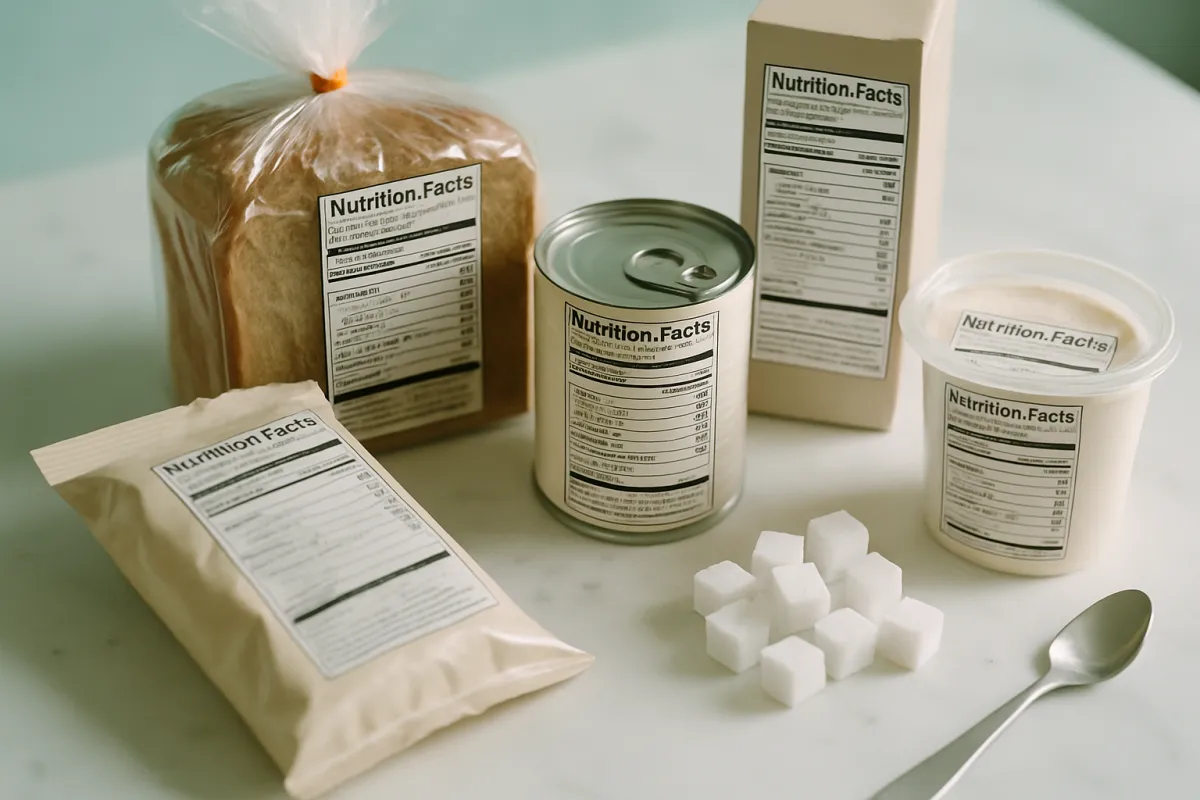
Two boxes of the same food can sit side by side on a shelf showing identical Total Sugars, and one can be almost pure added sugar while the other is barely sweetened at all. The number that tells them apart is not the one most people read. The front of a package will happily say lightly sweetened, made with real fruit, or no added sugar while the back tells a different story, and the whole skill of shopping past that gap comes down to knowing which line to read and what the ingredient names really mean. Once you can find added sugar on labels in a few seconds, the marketing on the front loses most of its power.
This evidence review is a step-by-step walkthrough for how to find added sugar on labels, the sugar-focused companion to our broader nutrition label walkthrough. It covers what to have on hand, a short tour of where sugar lives on the panel, seven steps in order, from finding the Added Sugars line and converting grams to teaspoons to scanning the ingredient list for sugar aliases, catching serving-size tricks, comparing products per 100 grams, seeing past no added sugar claims, and setting a daily budget, then a worked example, the common mistakes, the edge cases, and a checklist. For the fuller picture on how much sugar a day is commonly recommended, see our added sugar evidence review, and for the carbohydrate context, our carbs evidence review. Everything here is general information, not medical or dietary advice, and every number is a commonly cited illustration rather than a personal target. Run a product through the companion below as you read.
Key takeaways
- On the US Nutrition Facts panel, read the indented Includes Xg Added Sugars line, not Total Sugars, because that single line separates sugar added in processing from sugar that was naturally in the food.
- Roughly 4 grams of sugar is about 1 teaspoon, so divide the grams by four to picture the spoon count, and a single can of regular soda can carry close to 10 teaspoons on its own.
- Added sugar hides under many names in the ingredient list, from sucrose and dextrose to cane juice, corn syrup, and fruit juice concentrate, and several can spread through one list.
- Every number is per serving, so check the serving size first, and compare two products on the same basis, per 100 grams, before trusting any front-of-package claim.
- Commonly cited guidance keeps added sugar near or under 25 grams a day for women and 36 for men, but these are illustrative population ceilings, not personal prescriptions, so confirm your own with a doctor or registered dietitian.
Before you start: what you need
Finding added sugar on a label takes almost nothing and gets faster with practice, so the first read of a new product might take a minute while a familiar one takes a few seconds. The reason to gather a couple of things first is that a sugar number becomes meaningful only when you connect it to your real portion and to a rough daily budget, rather than reading a lone figure in isolation.
- The package, turned to the back. The front is marketing; the standardized Nutrition Facts panel and ingredient list on the back are where the answer lives. Turning the package over is the whole first move.
- An honest sense of your portion. Have a rough idea of how much you actually eat in one sitting, since the label’s serving size may be smaller than your real portion and the Added Sugars figure scales with it.
- The grams-to-teaspoons rule. Keep the roughly 4 grams per teaspoon conversion in mind, or just use the companion below, which turns the label’s grams into teaspoons and a share of a daily budget for you.
- A rough daily budget. A commonly cited ceiling near 25 grams a day for women and 36 for men gives you something to measure a single food against, though these are illustrative population figures rather than a rule set for you.
Difficulty here is genuinely low. There is no math beyond dividing by four and, occasionally, a quick per-100-gram comparison. What matters is reading the right line and recognizing sugar under its many aliases. Everything below is a general educational framework, not a diet plan, and it does not replace guidance from a registered dietitian or doctor, especially if you manage diabetes or another condition where carbohydrate and sugar intake matter closely.
How added sugar shows up on a label
Before the steps, a short tour, because added sugar appears in two separate places on a package and the two work together. The first is the Nutrition Facts panel, where sugar sits inside the Total Carbohydrate block: Total Sugars is listed first, and directly beneath it, indented, is the Includes Xg Added Sugars line that this whole walkthrough centers on. The second place is the ingredient list, where added sugars appear by name, in order of weight. The panel tells you how much; the ingredient list tells you what and, roughly, how much of the food it makes up.
The Added Sugars line is a relatively recent and genuinely useful addition to the standard US panel, because before it existed a label could only show Total Sugars, leaving shoppers unable to tell a naturally sweet food from a heavily sweetened one. Now the indented line does that work in a single figure. It also carries a % Daily Value, based on a general reference of 50 grams of added sugar a day, which is the panel’s own way of flagging whether one serving is a little or a lot.
The chart below turns the abstract grams into something you can feel, showing the added sugar in a set of illustrative everyday servings converted to teaspoons. It is the picture the rest of the steps build on, because teaspoons make the number real in a way grams rarely do.
Added sugar in illustrative everyday servings
Commonly cited, illustrative added-sugar amounts for typical single servings, with the grams shown and the teaspoon equivalent at roughly 4 grams per teaspoon. Longer bars mean more added sugar per serving.
Figures are commonly cited illustrations of typical products, not measurements of any specific brand, and real products vary widely. Bars are scaled to the largest value shown. This is general information, not a personal recommendation.
Step 1: Find the Added Sugars line
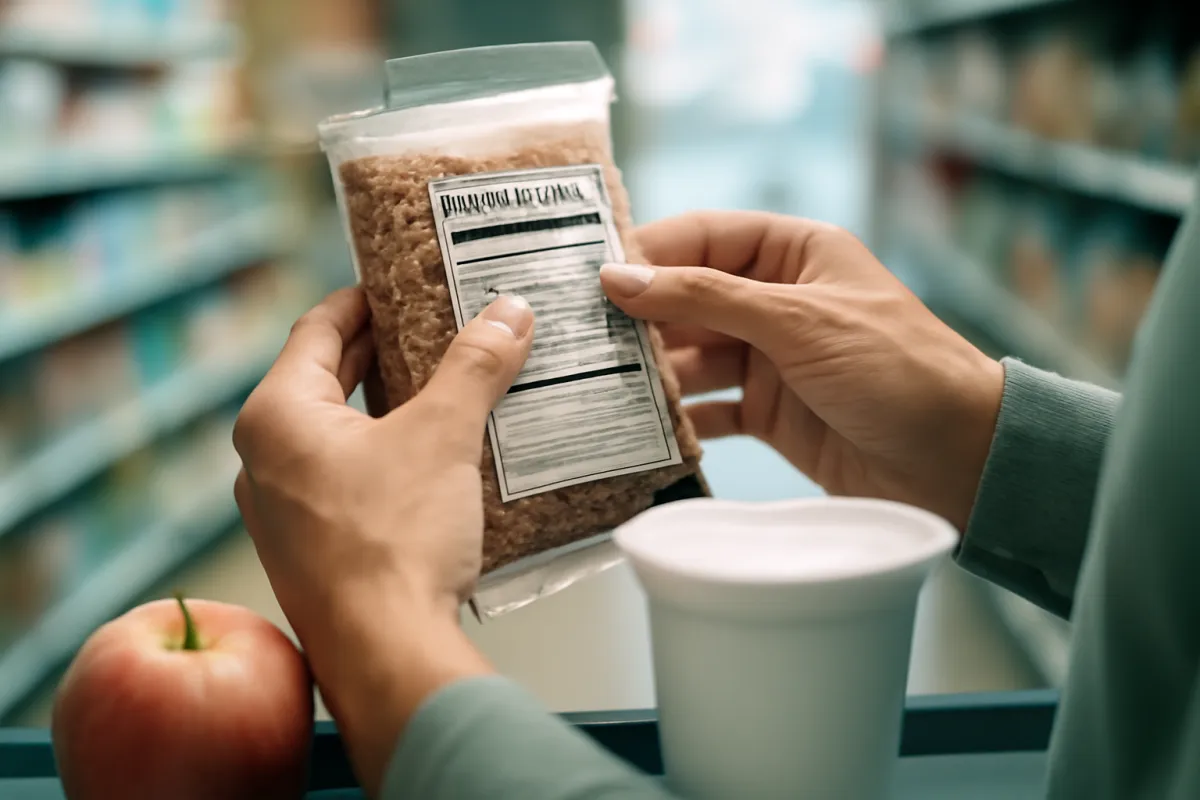
Start by turning the package over and finding the Includes Xg Added Sugars line, because this is the one number that answers the question directly. It sits inside the Total Carbohydrate block, indented beneath Total Sugars, and the indentation is the visual cue: anything indented under a nutrient is a subset of it, so Added Sugars is the portion of Total Sugars that was put in during processing. Read that indented figure, not the Total Sugars line above it.
The reason this matters is that Total Sugars alone cannot answer the question. A container of plain yogurt might list 12 grams of Total Sugars with 0 grams Added Sugars, because all of it is the natural lactose in milk, while a sweetened yogurt might list 20 grams of Total Sugars of which 14 grams are added. Reading only Total Sugars would make the plain yogurt look almost as sugary as the sweetened one, which is backwards. The Added Sugars line corrects that in a single glance.
Note the % Daily Value printed next to the line as well, since the panel bases it on a general reference of 50 grams of added sugar a day. A rough rule many people use is that 5 percent DV or less is low in a nutrient and 20 percent DV or more is high, which applies here as a quick read. Watch out for one thing: some imported or older packages may not carry a separate Added Sugars line at all, in which case the ingredient list in step 3 becomes your main tool. Run the grams you find through the companion below to see them as teaspoons and as a share of a daily budget.
Step 2: Convert grams to teaspoons
Grams are hard to feel, so the second step is to translate the Added Sugars figure into teaspoons, which is where the number tends to land emotionally. The conversion is simple and standard: roughly 4 grams of sugar equals about 1 teaspoon, so you divide the grams on the label by four. A product showing 12 grams of added sugars carries about 3 teaspoons; one showing 24 grams carries about 6.
Doing this turns an abstract figure into a mental image of spoonfuls, and that image is often what changes behavior. A can of regular soda near 39 grams of added sugars works out to close to 10 teaspoons, which is difficult to picture as grams but vivid as a stack of spoons poured into a glass. A flavored coffee drink, a sweetened cereal, or a single dessert can each translate into several teaspoons the same way. The added sugar evidence review walks through why drinks in particular carry so much, since liquid sugar is easy to consume quickly.
The conversion also makes daily budgeting intuitive, because commonly cited ceilings are often quoted in both units: near 25 grams, about 6 teaspoons, for women, and about 36 grams, about 9 teaspoons, for men. Watch out for two things. First, divide the Added Sugars grams, not Total Sugars, or you will over-count the natural sugar in fruit and dairy. Second, remember the grams are per serving, so if you eat two servings, double the teaspoons before you judge the food. The 4 grams per teaspoon rule is a fixed conversion, but the daily figures it feeds are illustrative population references, not a personal limit.
Step 3: Scan the ingredient list for sugar aliases
The Added Sugars line tells you how much; the ingredient list tells you what form the sugar takes and, because ingredients are listed in order of weight from most to least, roughly how much of the food it makes up. This step is where added sugar reveals itself even on packages that try to downplay it, because sugar travels under dozens of names and manufacturers can spread it across several so that no single sweetener climbs to the top of the list.
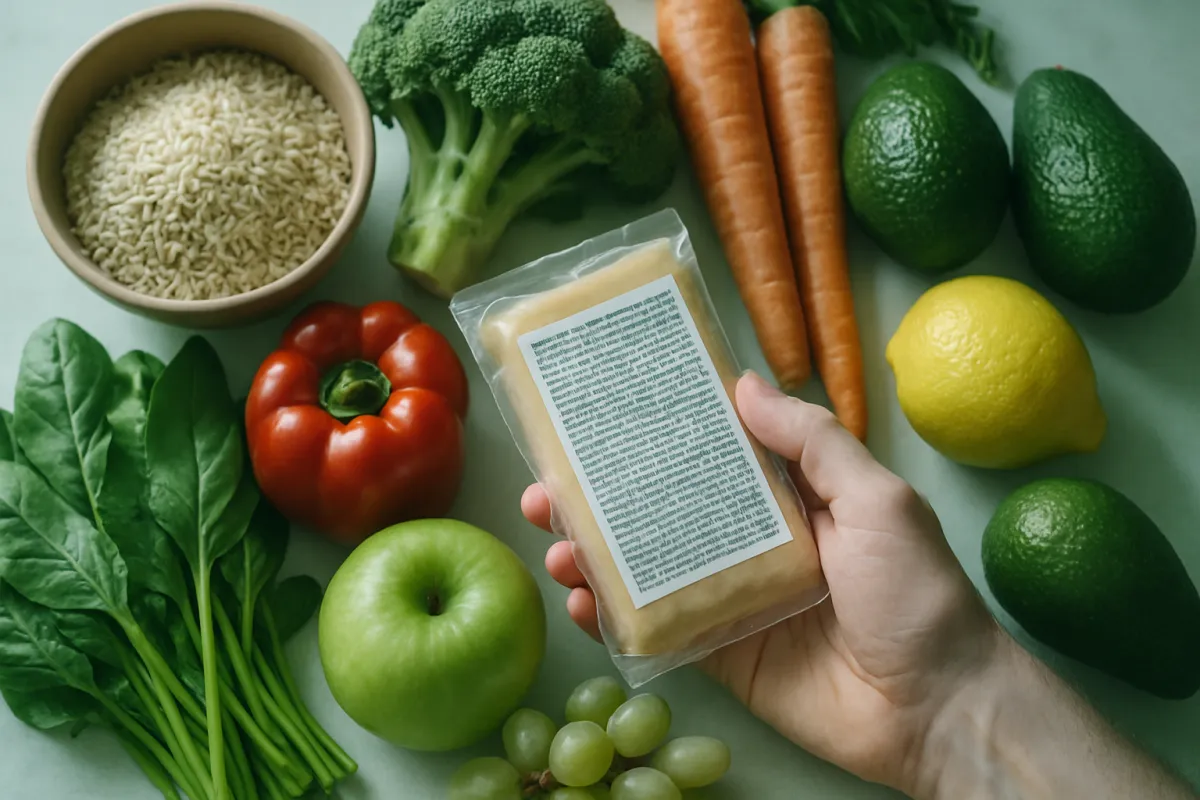
Learn the aliases so they stop hiding. Many end in the letters ose: sucrose, dextrose, maltose, glucose, and fructose. Others are syrups: high-fructose corn syrup, corn syrup, brown rice syrup, malt syrup, and rice syrup. A large family reads as some form of cane or fruit: cane sugar, raw cane sugar, evaporated cane juice, fruit juice concentrate, and grape or apple juice concentrate. Then come the natural-sounding sweeteners that are still added sugar on the label: honey, molasses, agave nectar, maple syrup, coconut sugar, invert sugar, and barley malt. None of these is more virtuous than another once it is added to a food; they are all added sugar.
The practical habit is to read the whole list, not just the first ingredient, and to watch for the pattern of multiple sweeteners appearing at positions two, four, and six, a common way to keep any one of them from leading the list. Watch out for two traps: sugar alcohols such as sorbitol, xylitol, erythritol, and maltitol are sweeteners but are not counted as added sugars on the panel, and maltodextrin is a starch-derived carbohydrate that is not labeled as sugar either, so the ingredient list and the Added Sugars line answer slightly different questions and are best read together. This is a factual description of ingredient names, not a verdict on any product.
Step 4: Watch the serving-size tricks
Every figure on the panel, including Added Sugars, is listed per serving, so the fourth step is to read the serving size and servings per container before you trust any sugar number. This is the step that most quietly changes the answer, because the serving size printed on the label is a standardized reference amount, not a promise of how much you will actually eat, and the two often diverge.
The classic case is a drink. A bottle that looks like a single beverage can list two or even two and a half servings, so a label showing 26 grams of added sugars per serving is really carrying 52 or more grams if you drink the bottle, which nearly doubles the teaspoons. The same thing happens with a small bag of snacks listed as two servings, a pint of ice cream listed as three or four, or a jar of sauce listed as many small portions. The number your eye lands on is honest per serving and misleading per package unless you check the servings-per-container line.
The fix is the habit from our broader nutrition label walkthrough: read the serving line first, then multiply the added sugars by how many servings you truly have. If a serving is 12 grams of added sugars and you eat two servings, that is 24 grams, about 6 teaspoons, not 3. Watch out for packages engineered to look single-serving while listing more than one serving, since the smaller per-serving number reads better on the shelf. The companion below does this multiplication for you: enter the added sugars per serving and how many servings you eat, and it shows the real total in grams and teaspoons.
Step 5: Compare added sugar per 100 grams
Once you can read one label, the fifth step lets you fairly compare two, which is where label reading pays off most in a store. The obstacle is that two products can use different serving sizes, so a straight number-to-number comparison of their Added Sugars lines can be misleading, favoring whichever brand chose the smaller serving. The fix is to put both on the same basis, and the simplest common basis is added sugar per 100 grams.
Many labels list a per-100-gram column, especially outside the US, and where they do not you can estimate it: divide the added sugars by the serving weight in grams, then multiply by 100. If a cereal lists 9 grams of added sugars in a 40-gram serving, that is about 22.5 grams per 100 grams; a rival listing 6 grams in a 30-gram serving is about 20 grams per 100 grams, so the two are closer than their per-serving numbers first suggested. Comparing per 100 grams strips out the serving-size gamesmanship and lines the products up on equal footing.
The per-100-gram view is especially useful across a whole category, letting you rank several yogurts, cereals, or sauces quickly by how sweet they really are rather than by how their servings were drawn. Watch out for comparing a dense food and an airy one by weight alone, since 100 grams of a dry cereal and 100 grams of a wet yogurt are very different amounts of food, so per-100-gram is best used within a category rather than across unlike foods. For nutrients beyond sugar, our carbs evidence review and fiber evidence review cover the rest of the carbohydrate block that rounds out the comparison.
Step 6: Spot the no-added-sugar marketing traps
The sixth step is to read front-of-package claims for what they are, because the words about sugar on the front are marketing language, far less standardized than the panel on the back, and several common claims are engineered to sound better than the label supports. The most important is no added sugar, which means no sugars or sugar-containing ingredients were added during processing, but says nothing about the naturally occurring sugar the food already carries.
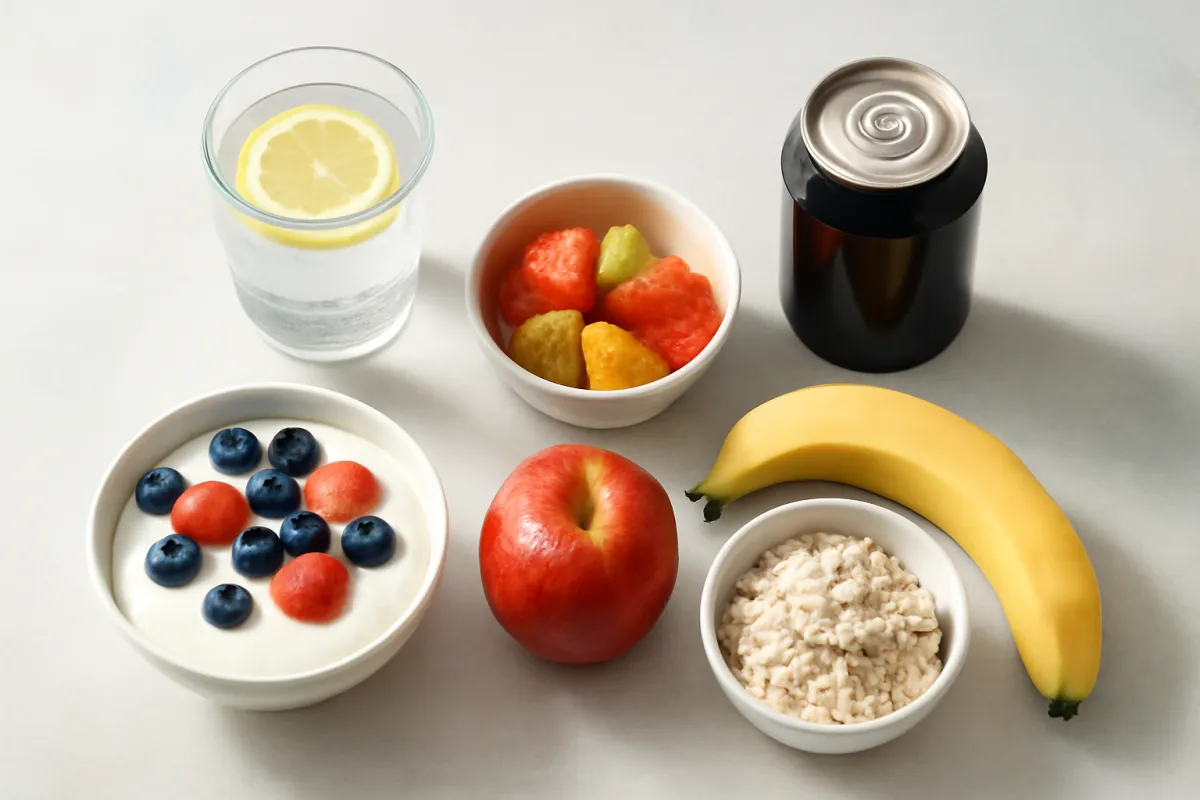
A no added sugar fruit juice or smoothie can still be very high in natural sugar, because the fruit brings it; a no added sugar dried-fruit snack concentrates that sugar further. Some no added sugar products also swap in non-sugar sweeteners or sugar alcohols to keep the taste, which the claim does not mention. Related claims play similar games: reduced sugar or less sugar only means less than the original or a reference product, not low; lightly sweetened has no fixed definition; made with real fruit describes an ingredient, not an amount; and a bold natural stays silent on sugar entirely. Each highlights one flattering fact and leaves the panel to tell the rest.
The reliable move never changes: treat the front as an advertisement and let the Added Sugars line and ingredient list settle the question. If the front says no added sugar, check that the ingredient list truly names no sweeteners and note whether sugar alcohols or non-sugar sweeteners appear instead. Watch out for assuming a health-framed product is low in sugar, since granola, sports drinks, flavored waters, plant milks, and protein bars can all carry meaningful added sugar behind wholesome branding. This is a general reading habit, not a judgment on any specific product.
Step 7: Set a daily added-sugar budget and apply it
The final step gives the single-food numbers a frame, because a gram figure only means something against a daily budget. General guidance commonly cites keeping added sugar under about 25 grams a day, roughly 6 teaspoons, for women and under about 36 grams, roughly 9 teaspoons, for men, with a broader guideline of keeping added sugar under 10 percent of daily calories, which on a 2,000-calorie day is about 50 grams. Pick the figure that fits and hold it as a ceiling for the day.
Applying it is a matter of subtraction across the day rather than judging any one food in isolation. If your budget is about 36 grams and a single sweetened drink carries 39, that one item has spent the whole day’s ceiling on its own, which reframes the choice more powerfully than the raw number did. Reading labels this way, you start to spend the budget deliberately: a small planned treat fits, while three or four unnoticed sources, the sauce, the granola, the flavored yogurt, the drink, can quietly overrun it before dessert. The added sugar evidence review covers where the budget tends to go first, with drinks leading by a wide margin.
Watch out for treating the budget as a target or a hard medical line. There is no dietary need for added sugar at all, so the figure is a ceiling to stay under, not a goal to reach, and a gram over it is not harm any more than a gram under it is virtue. These are illustrative population references, and your own sensible ceiling can sit above or below them depending on your diet, calorie needs, and health. The chart below shows where added sugar commonly comes from across a day, which is the map you apply the budget against. Set your own numbers in the companion below to see how one food spends the budget.
Where added sugar commonly comes from
An illustrative breakdown of the typical sources of added sugar across a day, drawn from commonly cited dietary survey patterns. Shares sum to 100 percent.
Shares are illustrative and vary by country and survey; they are not a measurement of your diet. This is a general guide to where added sugar tends to come from, not a personal recommendation.
A worked example: one shopping cart’s hidden sugar
Pulling the seven steps together on a realistic cart shows how fast the method works and how much sugar can hide in a wholesome-looking basket. Meet an illustrative afternoon shop: a flavored yogurt, a box of granola, a jar of pasta sauce, and a bottle of a fruit smoothie labeled no added sugar on the front. Nothing here is a real product; the numbers are invented for the walkthrough and are illustrative only.
Step 1, find the line. The yogurt shows 14 grams Added Sugars per serving, the granola 9 grams, the pasta sauce 8 grams per half-cup, and the smoothie shows 0 grams Added Sugars but 28 grams Total Sugars. Step 2, teaspoons. Dividing by four, that is about 3.5 teaspoons in the yogurt, 2.25 in the granola serving, and 2 in the sauce. Step 3, aliases. The granola’s ingredient list names cane sugar, honey, and brown rice syrup separately, three sweeteners spread through the list so none leads it, a classic pattern that the single 9-gram figure understated as a story. Step 4, serving size. The granola serving is two-thirds of a cup, and a realistic bowl is closer to a cup and a half, so the true added sugars roughly double to about 20 grams, near 5 teaspoons.

Step 5, per 100 grams. Put the two breakfast options side by side on the same basis and the granola turns out sweeter per 100 grams than a plainer cereal nearby, despite similar per-serving numbers. Step 6, the claim. The smoothie’s no added sugar banner is accurate, yet its 28 grams of natural sugar make it the single sweetest item in the cart, which the front of the bottle would never tell you; the Added Sugars line reads zero while the Total Sugars line does the talking. Step 7, the budget. Tallied against an illustrative 36-gram ceiling, the yogurt, the real granola portion, and the sauce alone come to roughly 42 grams of added sugar, already over the day’s ceiling before the smoothie’s natural sugar is even counted. The lesson is the whole point of turning packages over: three wholesome-looking items quietly outran the budget. Run your own cart through the companion below to see where it lands.
Common mistakes when hunting for added sugar
Most sugar misreadings are not about arithmetic but about which line the eye trusts, and each is easy to fix once named.
- Reading Total Sugars instead of Added Sugars. The two are different lines with different meanings. Total Sugars includes the natural sugar in fruit and dairy, so reading it makes plain, wholesome foods look as sugary as sweetened ones. Read the indented Added Sugars line.
- Forgetting the serving size. Added Sugars is per serving, so a bottle listing two servings carries double what the number first suggests. Check servings per container and multiply before you judge the food.
- Trusting a no added sugar claim. The claim means none was added, not that the food is low in sugar. Fruit juice, dried fruit, and dairy can be high in natural sugar despite the banner.
- Reading only the first ingredient. Sugar is often split across several aliases at positions two, four, and six so none leads the list. Read the whole list and recognize the names.
- Missing sugar aliases. Cane juice, corn syrup, agave nectar, and fruit juice concentrate are all added sugar. Not knowing the aliases lets sweeteners hide in plain sight.
- Comparing on different serving sizes. Two labels with different servings cannot be compared number to number. Put them on the same basis, per 100 grams, first.
Clear these six and the panel does its job calmly, with no single line or claim able to mislead you.
Troubleshooting and edge cases
A few common situations change the practical details, though never the core habit of reading the Added Sugars line and the ingredient list together. What if the label has no Added Sugars line at all? Some imported products and older packaging predate or omit the separate line. In that case the ingredient list becomes your main tool: scan for the sugar aliases and note how high they sit, since a sweetener in the first few positions signals a meaningfully sweetened food even without the grams.
What if the food has natural sugar but zero added sugar? This is the plain-yogurt and whole-fruit case, and it is exactly what the Added Sugars line was designed to handle. A 0 on that line with meaningful Total Sugars tells you the sweetness is natural, which general guidance treats very differently from added sugar, as our added sugar evidence review explains. Whole fruit and plain dairy are not the target of the daily ceilings.
What if the product uses sugar alcohols or non-sugar sweeteners? Sugar alcohols such as erythritol, xylitol, and maltitol, and non-sugar sweeteners such as stevia, sucralose, and aspartame, provide sweetness without counting as added sugars on the panel, so a low or zero Added Sugars figure can coexist with a sweet taste from these instead. Whether they suit you is an individual matter that the label alone does not settle.
What if you follow a medical diet? This is the important one. Conditions such as diabetes, prediabetes, reactive hypoglycemia, and others can make total carbohydrate, not just added sugar, the number that matters, and they call for individualized guidance that overrides any general reading habit here. If that is you, use this walkthrough as background only and set the numbers that matter with your doctor or a registered dietitian, since a population reading habit cannot substitute for a plan built around your body and any medications.
Your hidden-sugar label checklist
Keep this short routine on hand to find added sugar on any label quickly, whether you are choosing between two products or checking one before it goes in the cart.
- Turn the package over and find the indented Includes Xg Added Sugars line under Total Sugars, and read that figure, not Total Sugars.
- Check the serving size and servings per container, then multiply the added sugars by how many servings you actually eat.
- Divide the grams by four to picture the teaspoons, remembering roughly 4 grams is about 1 teaspoon.
- Scan the whole ingredient list for sugar aliases: words ending in ose, any syrup, cane or fruit juice concentrate, honey, molasses, and agave.
- Compare products per 100 grams, not per serving, so different serving sizes cannot tilt the comparison.
- Read front-of-package claims as marketing, and let the Added Sugars line and ingredient list settle whether no added sugar or lightly sweetened holds up.
- Measure the food against a daily budget, a commonly cited ceiling near 25 grams for women or 36 for men, held as a ceiling rather than a target.
Run a product through the companion below to turn a per-serving label into the real total in teaspoons and a share of the day’s budget.
The bottom line
Finding added sugar on a label comes down to reading one line that most people skip. Turn the package over and read the indented Added Sugars figure rather than Total Sugars, because that single line separates sugar added in processing from the natural sugar in fruit and dairy. Divide the grams by four to see the teaspoons, check the serving size so a two-serving bottle does not fool you, scan the ingredient list for the many aliases sugar hides behind, compare products per 100 grams so different servings cannot tilt the picture, read no added sugar and lightly sweetened as the marketing they are, and measure the whole against a daily budget held as a ceiling. Run the illustrative cart through those steps and three wholesome-looking items overrun the day before dessert, which is the entire reason to turn packages over. The Added Sugars line is one of the most useful numbers in the store, and reading it well is a habit anyone can build in an afternoon. Every figure here is a commonly cited illustration rather than a personal prescription, so pair this walkthrough with our added sugar, nutrition label, carbs, and fiber evidence reviews, and confirm anything specific to your health, goals, or conditions with a qualified professional.
This evidence review is published for general education and describes a commonly cited, illustrative way to find added sugar on a standard Nutrition Facts panel, not medical, nutritional, or dietary advice, and reading it creates no clinician-patient relationship. The grams-to-teaspoons conversion and the panel’s Added Sugars line are standard, but every gram amount, teaspoon count, percentage, and product in the examples is a general reference or invented illustration rather than a measurement or a personal recommendation, and real foods, labels, and needs vary widely. Commonly cited daily added-sugar figures are population references that differ from person to person with diet, calorie needs, and health, and some situations, including diabetes, prediabetes, pregnancy, and feeding young children, call for individually managed nutrition that overrides any general reading habit here. For food choices suited to your health, goals, medications, or any medical condition, consult a qualified health professional such as a doctor or registered dietitian.
Frequently asked questions
How do you find added sugar on a food label?
On the US Nutrition Facts panel, added sugar has its own line that reads Includes Xg Added Sugars, indented just beneath Total Sugars inside the Total Carbohydrate block. That indented line is the number to read, because it separates sugar put into the food during processing from the sugar that was naturally there. Total Sugars above it lumps both together, so it does not answer the question on its own. This is a general reading habit rather than dietary advice, and anyone managing a condition where carbohydrate matters should confirm specifics with a doctor or registered dietitian.
What is the difference between total sugars and added sugars on a label?
Total Sugars counts every sugar in the food, both the sugar that occurs naturally, such as the lactose in plain milk or the fructose in fruit, and any sugar added during processing. Added Sugars is the separate indented line that counts only what was put in. Two foods can show the same Total Sugars while one is almost entirely added and the other is entirely natural, which is exactly why the Added Sugars line exists. Plain yogurt and fruit can show meaningful total sugars that are all natural, so reading the Added Sugars line is what tells them apart. This is general educational information, not a personal recommendation.
How do I convert grams of sugar to teaspoons?
Roughly 4 grams of sugar equals about 1 teaspoon, so you divide the grams on the label by four to picture the spoon count. A product listing 12 grams of added sugars carries about 3 teaspoons, and a can of regular soda near 39 grams works out to close to 10 teaspoons. Seeing the number as teaspoons tends to make it feel real in a way grams do not. The 4 grams per teaspoon figure is a standard conversion, though the teaspoon count is an illustration rather than a personal limit, and individual needs vary.
What names does added sugar hide under in the ingredient list?
Added sugar appears under many names, and a single product can spread it across several. Common aliases include sucrose, dextrose, maltose, and other words ending in ose, plus high-fructose corn syrup, corn syrup, cane sugar, evaporated cane juice, invert sugar, molasses, honey, agave nectar, maple syrup, brown rice syrup, barley malt, malt syrup, fruit juice concentrate, and coconut sugar. Because ingredients are listed from most to least by weight, several sweeteners scattered through a list can add up even when none sits at the very top. This is a factual description of common ingredient names, not a judgment on any specific product.
Does no added sugar on the front mean the food has no sugar?
No. A no added sugar claim means no sugars or sugar-containing ingredients were added during processing, but the food can still be high in naturally occurring sugar, and it may contain non-sugar sweeteners or sugar alcohols instead. Fruit juice, dried fruit, and dairy all carry natural sugar that a no added sugar label does not erase. The reliable move is to turn the package over and read the Added Sugars line and the ingredient list rather than trusting the front. This is a general reading habit; claims are marketing language and the panel on the back is the standardized source.
Why does serving size matter when reading sugar on a label?
Every number on the Nutrition Facts panel, including Added Sugars, is listed per serving, and the serving size may be smaller than the amount most people actually eat. A bottle that looks like one drink can list two or more servings, which quietly doubles the added sugar you take in versus the number your eye lands on. The habit that keeps the figure honest is to read the serving size and servings per container first, then multiply the added sugars by how many servings you really have. This is a general reading step rather than a personal target, and portion guidance for a specific goal belongs with a professional.
How can I compare added sugar between two products fairly?
Two labels can use different serving sizes, so comparing them number to number can mislead. The fair approach is to put both on the same basis, most simply the added sugars per 100 grams, which many labels list or which you can estimate from the grams and the serving weight. Comparing per 100 grams, or per identical serving, lets you line up the products on equal footing and see which truly carries more added sugar. This is a practical, general way to choose between foods on the shelf, not a personalized plan, and choices tied to a health condition should be confirmed with a registered dietitian.
How much added sugar per day is commonly recommended?
General guidance commonly cites keeping added sugar under about 25 grams a day, roughly 6 teaspoons, for women and under about 36 grams, roughly 9 teaspoons, for men, along with a broader guideline of under 10 percent of daily calories. These are population reference figures rather than a personal prescription, and the right amount for you can differ with your diet, calorie needs, and any medical conditions. Read them as a ceiling to stay under, not a target to reach, since there is no dietary need for added sugar at all. Confirm anything specific to your health with a doctor or registered dietitian.

Hamza Hai is the editor of NourishMark. She holds an MBA and reviews the site's articles against our editorial standards, checking that every figure is labelled for what it is, that nothing is presented as verified fact without a source the reader can check, and that the writing stays useful to a non-specialist.

Dr. Shayaan Khan is the medical reviewer for NourishMark. He holds an MBBS from MGM Medical College, Navi Mumbai, and is the author of published research including a narrative review of postpartum anxiety and depression in Mental Health Science. He has taught physiology at university level. He reviews the site's health content for medical accuracy: that physiology and mechanisms are described correctly, that no claim is stated more strongly than the evidence behind it, and that anything specific to an individual reader is sent to that reader's own clinician.
Not medical advice. Dr. Khan reviews NourishMark's health content for medical accuracy. He is not a registered dietitian, he does not hold a United States practising licence, and he is not your doctor. His review does not make anything here medical advice. Always talk to a qualified health professional about your own situation, and never delay or stop care because of something you read here.