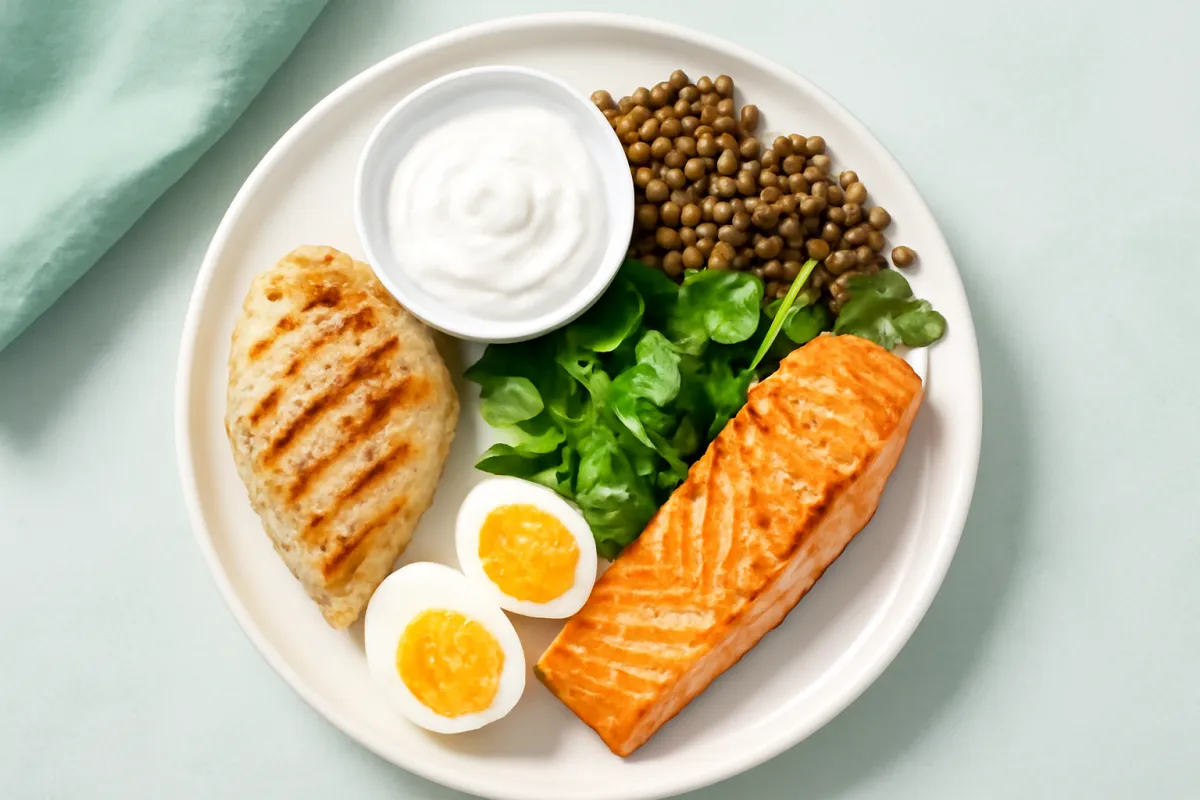
What's in this review
- How much protein per meal can your body actually use?
- Absorption versus utilization: the distinction that clears up the myth
- Can your body only use 30g of protein at once?
- How much protein can you absorb in one meal?
- The 20 to 40 gram muscle-building window per meal
- Is 30g of protein per meal enough?
- Spreading protein evenly across meals
- Spreading protein versus one big dose
- How much protein per meal to build muscle
- Protein per meal for weight loss
- Per-meal protein for maintenance
- Why older adults may need more protein per meal
- Leucine and the muscle-building threshold
- Protein quality: getting the most from each meal
- How many meals to hit your daily protein target
- Where per-meal protein fits in your calories
- The excess protein question
- A worked example: hitting a daily goal across meals
- Common per-meal protein mistakes
- The bottom line
Short answer: Your body absorbs essentially all the protein you eat, so the idea that anything over 30 grams per meal is wasted is a myth. What plateaus per meal is the muscle-building response, which for most people levels off in a commonly cited range of roughly 20 to 40 grams. Protein above that still counts toward your daily total, and the daily total matters more than how it is spread across meals.
How much protein should you eat at each meal, and how much of it can your body actually use? It is one of the most misunderstood questions in all of nutrition, wrapped in a myth so sticky that even careful eaters repeat it: the claim that anything over 30 grams in a sitting is wasted. It is not true in the way people think, and untangling why reveals something more useful than the myth ever offered.
This evidence review separates two ideas that get collapsed into one, absorption and utilization, and then walks through the numbers that actually matter for building muscle, losing fat, and aging well: the commonly cited per-meal range, how many meals it takes to reach a daily target, why older adults are often advised to aim higher per meal, and where protein quality fits. It is educational, not medical advice, and pairs naturally with our companion piece on how much protein you need in a day. You can sketch your own daily picture in about a minute with our BMI and daily calorie tool.
Key takeaways
- The idea that your body can only use about 30 grams of protein per meal is a myth: you absorb essentially all the protein you eat.
- What plateaus per meal is muscle-protein synthesis, the muscle-building response, which for most people levels off in a commonly cited range of roughly 20 to 40 grams.
- Protein above that per-meal range is not wasted; it still counts toward your daily total and the many other jobs amino acids do.
- Your total daily protein matters most; spreading it across meals helps modestly, and older adults may need more per meal to get the same response.
- Every figure here is a commonly cited general reference, not a personal prescription, and anyone with a health condition should confirm targets with a clinician.
How much protein per meal can your body actually use?
Here is the direct answer first. The idea that your body can only use 30 grams of protein per meal is a myth. You absorb essentially all the protein you eat. What plateaus is muscle-protein synthesis, the muscle-building response, which for most people levels off somewhere around 20 to 40 grams in a single meal.
That one distinction dissolves almost every argument you have heard on this topic. The 30-gram number floating around gyms and forums is a garbled version of a real finding: the amount of protein in a meal that maximally stimulates muscle building appears to plateau, and that plateau lands in a range often cited around 20 to 40 grams of high-quality protein for a typical adult. It was never a claim that the digestive system caps out and dumps the rest. Your gut is not a bucket that overflows at 30 grams. It is a highly efficient system that breaks a large protein meal into amino acids and absorbs them over hours, putting them to work across the whole body. The rest of this article unpacks that difference and turns it into practical numbers for real goals.
Absorption versus utilization: the distinction that clears up the myth
The single most important idea on this page is that absorption and utilization are two different things, and the per-meal myth survives only by blurring them. Absorption is whether the amino acids from your food make it out of your digestive tract and into your bloodstream. For healthy people eating ordinary meals, the answer is nearly all of it, whether the meal held 20 grams of protein or 60. Digestion of a big protein dose simply takes longer, releasing amino acids more gradually, which the body handles without difficulty.
Utilization is the more interesting question: what the body does with those amino acids once they arrive. One of their jobs is muscle-protein synthesis, the process that repairs and builds skeletal muscle, and it is this specific process, not absorption, that shows a per-meal ceiling. Feed the muscle-building machinery beyond a certain dose in one sitting and its response stops climbing much, even though the amino acids are all still absorbed and still used for other purposes. So the honest sentence is not “your body can only use 30 grams of protein per meal.” It is “the muscle-building response to a single meal plateaus at a certain dose, while the protein itself is fully absorbed and put to use.” Keep those two apart and the whole topic becomes clear.
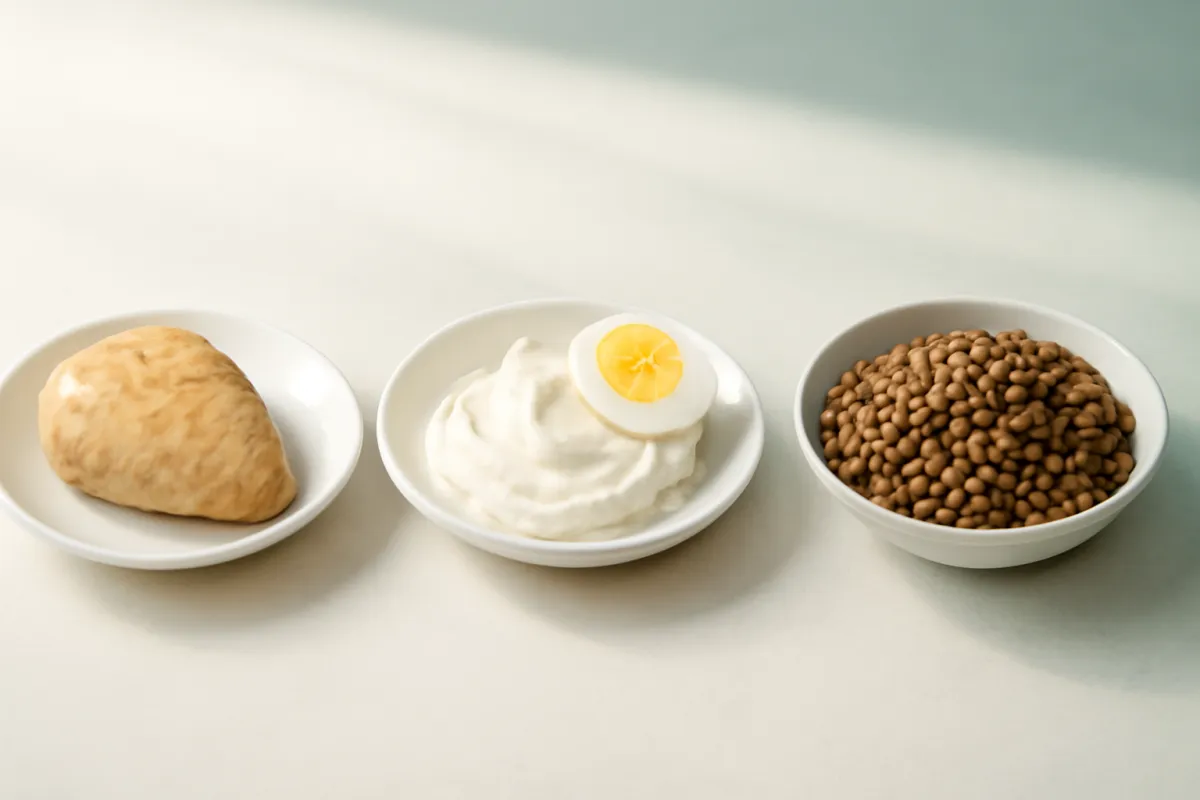
Can your body only use 30g of protein at once?
No, and it helps to see exactly where the 30-gram figure comes from and what it was never meant to say. Studies that feed people different doses of protein and measure the muscle-building response tend to find that synthesis climbs as the dose rises, then flattens out, with the flattening commonly described in the region of 20 to 40 grams for a typical adult eating high-quality protein. Somewhere in popular retellings, the middle of that range hardened into a hard cap of 30 grams, and the careful phrase “the muscle-building response plateaus” got swapped for the dramatic and false “everything above this is wasted.”
The wasted-protein claim does not survive contact with basic physiology. Amino acids beyond what a meal uses for muscle synthesis are not excreted en masse or flushed away. They are used to repair skin, gut lining, and other tissues, to build enzymes and hormones, to support immune function, and to meet energy needs, with the body converting and storing as appropriate. A large protein meal, such as a big steak or a protein-rich holiday dinner, is digested and used, not partly binned. The practical takeaway is not that big meals are pointless, but that if muscle building is your goal, several moderate protein doses across the day tend to keep the muscle-building signal switched on more often than one enormous dose, a point the sections on spreading and muscle building return to.
How much protein can you absorb in one meal?
Framed purely as absorption, the answer is close to “as much as you eat,” which surprises people primed by the myth. Human digestion is slow and thorough by design. A protein-heavy meal empties from the stomach and is broken down and absorbed across several hours, and studies that track amino acids after very large protein doses find the body takes them up rather than passing them through. There is no meaningful per-meal absorption ceiling that ordinary eating runs into.
What changes with a very large single dose is timing and fate, not whether absorption happens. A bigger meal releases amino acids more slowly and over a longer window, and a larger share of them get directed toward uses other than building muscle, precisely because the muscle-building response has its plateau. This is worth holding onto because it reframes the practical question. The useful thing to ask is not “how much can I absorb,” since the answer is essentially all of it, but “how do I arrange my protein so the muscle-building response is triggered well and my daily total is met.” For food-by-food absorption and quality differences, our review of protein in common foods is a useful companion. That reframing, from absorption to utilization and daily total, is what turns a myth into a plan.
The 20 to 40 gram muscle-building window per meal
Bring the muscle-building response into a picture and the plateau becomes intuitive. As you increase the protein in a single meal from small to moderate, the muscle-building response rises steeply; past a certain point, adding more protein to that same meal produces only a small additional bump. The chart below sketches that shape with illustrative relative numbers, not precise measurements, to show why a moderate per-meal dose does most of the work.
Illustrative per-meal muscle-building response, by protein amount
Relative muscle-protein-synthesis response to a single meal. Illustrative shape only, not measured values.
An illustrative curve, not data: the muscle-building response rises fast then flattens. The extra protein past the plateau is still absorbed and used for the body's other needs.
Two honest caveats keep the window in perspective. First, the plateau is a soft shoulder, not a wall, and its exact location varies with body size, age, activity, and the protein’s quality, which is why a range like 20 to 40 grams is more truthful than a single number. Larger and more muscular people generally sit toward the upper end. Second, the chart shows the response to one meal; it says nothing about your day. Four meals each landing in this window add up to a far larger daily stimulus than one giant meal, which is the whole practical argument for spreading protein out. The window is a per-meal guide, and the daily total is still the headline figure, as our piece on how much protein you need lays out.
Is 30g of protein per meal enough?
For a lot of people, roughly 30 grams of high-quality protein per meal is a sensible anchor, because it sits comfortably inside the commonly cited range associated with a strong muscle-building response. If you eat three or four meals like that across the day, you also clear most commonly cited daily targets without any special effort, which is why the number became popular in the first place. As a rough default for a mid-sized adult, aiming for something in the neighborhood of 30 grams per meal is reasonable general guidance.
Whether it is enough for you specifically depends on three things. Your body size matters, since larger and more muscular people generally sit toward the upper part of the per-meal range and may want closer to 40 grams. Your daily goal matters, because the meals have to add up to it; someone chasing a high total across only three meals needs bigger per-meal doses than someone eating five. And your age matters, since older adults may need more per meal to get the same response, as a later section covers. So “is 30 grams enough” is really “does 30 grams, times your number of meals, reach your daily target, given your size and age.” That is exactly the arithmetic the companion tool on this page runs, and it is a question of matching numbers, not of a universal cutoff.
Spreading protein evenly across meals
A reasonably even spread, with a genuine protein source at each meal rather than a token breakfast, a light lunch, and a mountain of protein at dinner, is a commonly suggested approach, and the muscle-building logic from the plateau supports it. If a single meal’s muscle-building response tops out around a moderate dose, then splitting your protein into several such doses across the day switches that response on more times than one oversized evening meal does. Several controlled studies point in this direction, generally finding a modest advantage for a balanced distribution when the daily total is held equal.
The key word is modest. The effect of distribution is real but usually smaller than the effect of the daily total itself, so the priorities go in that order: hit an adequate daily total first, then, if you can, spread it sensibly. A lopsided day that still reaches an adequate total beats a perfectly balanced day that falls short. In practice, “even” does not mean weighing food into identical portions. It means not treating breakfast and lunch as protein-free zones. Eggs or yogurt in the morning, a real protein source at lunch, and your usual dinner protein is the entire technique, and it also happens to make a high daily total far easier to assemble, which is the underrated second benefit.
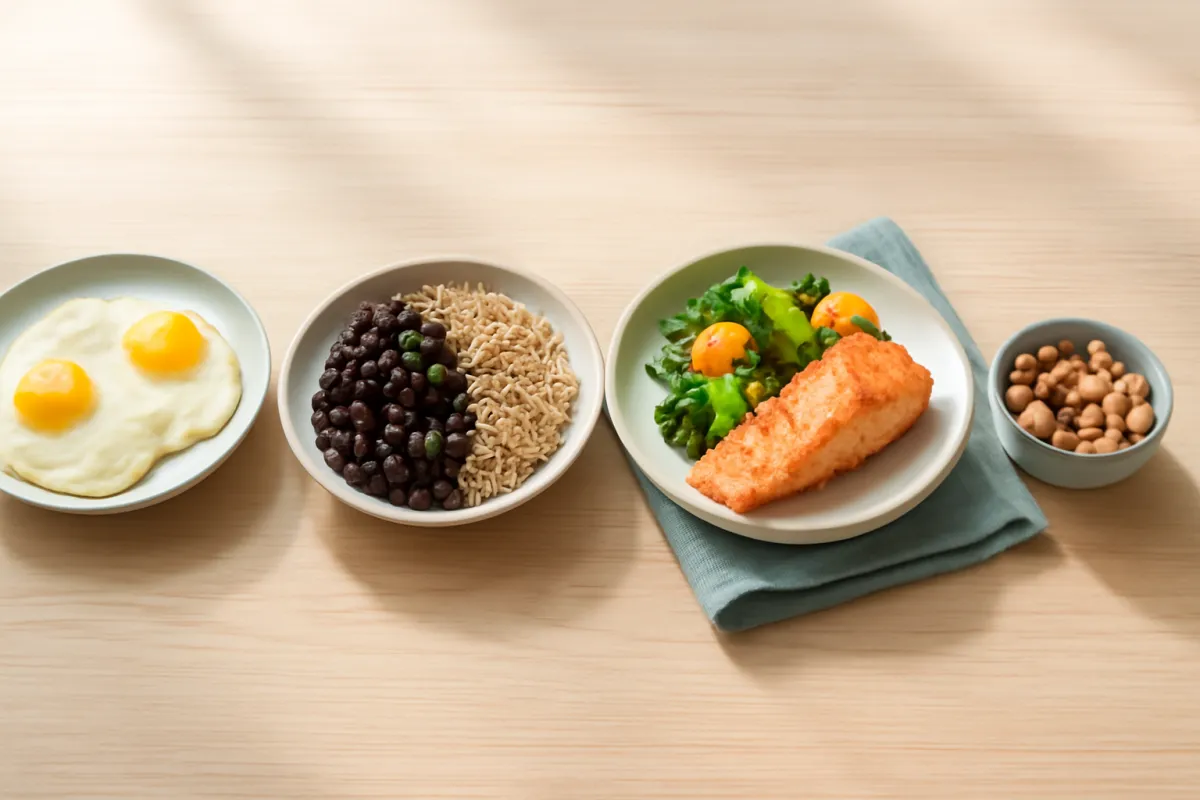
Spreading protein versus one big dose
It helps to see the spread as a picture. Suppose the daily target is around 120 grams. One way to hit it is a light day capped by an enormous dinner; another is four moderate meals, each landing near the muscle-building window. Both reach the same daily total, but the four-meal version triggers the muscle-building response several times instead of once, which is the modest edge the research points to.
A day's protein spread across meals
Illustrative distribution of a roughly 120-gram day across four meals. Figures are approximate.
Each meal lands near the commonly cited per-meal window, and the four together reach a daily total that one oversized meal would struggle to deliver comfortably.
None of this makes one big meal harmful. If your schedule or appetite genuinely suits fewer, larger meals, you can still reach an excellent daily total and build muscle, since the protein beyond a single meal’s plateau is used, and total intake plus training remain the dominant factors. The spread is an optimization, not a requirement, and it is worth reaching for mainly because it is easy and because it doubles as the simplest way to hit a large daily number. You can estimate your own daily figure alongside your calories with our BMI and daily calorie tool.
How much protein per meal to build muscle
For building muscle specifically, the per-meal target follows directly from the plateau: land a meaningful dose, commonly cited in the region of 20 to 40 grams of quality protein, at each of several meals, and pair it with the strength training that actually drives growth. A frequently referenced per-meal figure is around 0.4 grams per kilogram of body weight, which scales up for larger people, so a 90-kilogram lifter might aim nearer the top of the window while a smaller person does well lower in it. The companion tool on this page estimates that per-meal dose from your body weight.
The important framing is that protein supplies the material, and training supplies the signal; neither builds muscle without the other. Someone eating perfect per-meal doses without progressive strength work is feeding a stimulus that is not there, and someone training hard without adequate protein is asking the body to build without bricks. Within sensible ranges, the differences between, say, 30 and 35 grams at a meal are far less important than consistently training and consistently hitting an adequate daily total spread across meals. Chasing the last gram at each sitting is where people waste attention that would pay off better in the gym or in simply reaching their daily number more days of the week. For the daily side of this equation, see our review of how much protein you need.
Protein per meal for weight loss
During weight loss the per-meal question sits underneath a bigger one: keeping the daily total adequate, often toward the higher commonly cited ranges, so the body preserves muscle while fat comes off, and so protein’s strong fullness effect makes a calorie deficit easier to live with. Muscle is metabolically valuable and hard-won, and adequate protein plus strength training is the well-supported combination for holding onto it while the scale moves. That is why sensible weight-loss guidance almost always raises protein’s priority even as total calories fall.
Translated to meals, an adequate daily total spread across three or four meals commonly lands in the region of 25 to 40 grams per meal for many adults, though the right figure depends on your size and your goal rather than any universal rule. The fullness benefit is a per-meal effect worth using deliberately: a breakfast anchored by protein tends to blunt mid-morning hunger far better than a carbohydrate-only one, which quietly makes the whole day’s deficit more comfortable. Everything here is general information, not a personal prescription, and weight loss with a medical condition in the picture belongs with a clinician or registered dietitian who can set targets for your situation. Calories set the direction of the scale, a subject our daily calorie needs review covers in depth.
Per-meal protein for maintenance
If you are not chasing muscle gain or fat loss, the per-meal picture relaxes, but it does not disappear. For general maintenance and healthy aging, the useful habit is simply a real protein source at each meal, on the order of 20 to 30 grams for a typical adult, which keeps the muscle-building response ticking over and helps preserve the muscle you already have. Muscle is not just for athletes; it underpins strength, balance, and independence, and it erodes quietly with age unless it is fed and used.
The maintenance version of this advice is forgiving. You do not need to weigh food, hit identical numbers, or supplement, and the daily total remains the figure that matters most. What you are really guarding against is the common pattern of protein-light breakfasts and lunches that leave the whole day’s protein riding on dinner, which tends to undershoot both the total and the distribution. A protein source at each meal fixes both at once, and it tends to settle the rest of the diet into better shape, since meals built around protein and vegetables leave less room for ultra-processed filler. For a food-by-food sense of what a protein source looks like, our note on protein in common foods is the quickest reference.
Why older adults may need more protein per meal
Age changes the per-meal math in a specific and well-documented way. Older muscle appears less responsive to a given dose of protein than younger muscle, a pattern researchers describe as anabolic resistance, which means an older adult may need a larger per-meal dose to trigger the same muscle-building response a younger person gets from a smaller one. This is a genuinely per-meal phenomenon, not just a daily one, and it is a major reason guidance for older adults often points toward a higher per-meal protein target, frequently discussed toward the upper part of the commonly cited window, alongside the strength-preserving activity that gives the protein something to do.

The practical challenge is that appetite often fades with age at exactly the moment per-meal needs rise, so smaller meals quietly undershoot. The response is to make each meal count: leaning on easy, dense sources like eggs, dairy, fish, and legumes, and making sure breakfast and lunch carry real protein rather than saving it all for a small dinner. Preserving muscle is one of the strongest levers on quality of life in later decades, and adequate per-meal protein plus regular strength work is the unglamorous, well-supported combination behind it. As always, anyone managing health conditions should set personal targets with their clinician, since some conditions change protein advice.
Leucine and the muscle-building threshold
Behind the per-meal plateau sits a specific amino acid: leucine. Of the building blocks in protein, leucine acts as a kind of trigger for muscle-protein synthesis, and researchers often describe a leucine threshold, a rough amount of leucine in a meal needed to flip the muscle-building switch fully on. This is part of why the muscle-building response looks like a step up to a plateau rather than a smooth line, and part of why protein quality, not just quantity, shapes how well a meal works.
Leucine content is one reason the commonly cited per-meal window exists where it does: a moderate dose of high-quality, leucine-rich protein tends to clear the threshold comfortably, while a small dose or a low-leucine source may not. It also helps explain anabolic resistance in older adults, who may need more leucine, and therefore more total protein, per meal to reach the same trigger point. None of this means anyone needs to count leucine; it is not a practical daily metric, and whole foods deliver it as a matter of course. It is simply the mechanism underneath the advice, and knowing it is there makes the rest make sense: quality-protein meals of moderate size, several times a day, reliably clear the threshold that matters.
Protein quality: getting the most from each meal
Because the muscle-building response depends on getting enough of the essential amino acids, especially leucine, the quality of the protein at a meal matters alongside the amount. Animal proteins, meat, fish, eggs, and dairy, are complete and leucine-rich, so a moderate serving clears the threshold easily; this is why a couple of eggs, a palm of chicken, or a serving of Greek yogurt are such efficient per-meal anchors. Our reviews of protein in an egg and protein in a chicken breast give exact per-serving figures for two of the most common choices.
Plant proteins can absolutely do the job, with one practical adjustment: many individual plant sources are lower in one amino acid or another, and some are less leucine-dense, so plant-based eaters often benefit from slightly larger per-meal portions and from combining sources, such as beans with grains or soy foods that are complete on their own. Eating a reasonable variety across the day covers the full amino-acid range for most people, no meal-by-meal engineering required. The overall message is not that you must eat animal protein, but that per-meal quality is a lever: a moderate serving of a complete, leucine-rich source does more for the muscle-building response than the same grams from a low-quality one. For the full spread of options and their figures, our protein in common foods review is the reference.
How many meals to hit your daily protein target
Once you accept that the daily total is the headline and the per-meal window is the sensible unit, the number of meals falls out as simple division. Take your daily target, divide by a comfortable per-meal dose inside the window, and you have roughly how many protein-bearing meals your day needs. A person aiming for 120 grams at around 30 grams a meal needs four; someone aiming for 90 grams is fine with three; a larger person chasing 160 grams may want four or five, or larger doses at fewer meals. The companion tool on this page does exactly this arithmetic from your goal and meal count.
This is where the per-meal window earns its keep as a planning tool rather than a rule. It tells you that very high daily targets are hard to reach in two meals and easy to reach in four, because each meal contributes a moderate, well-utilized dose rather than one improbable giant one. It also gently caps how few meals make sense for a high target: piling 90 grams into a single sitting is possible, and the protein is used, but you have concentrated your muscle-building stimulus into one hit instead of spreading it. For most people the honest answer is three or four protein-containing meals, sized to reach the daily total, which is both effective and easy to live with. Your daily total itself is best estimated alongside your calories, which our BMI and daily calorie tool helps with.
Where per-meal protein fits in your calories
Per-meal protein targets do not float free of the rest of your plate; they live inside your total calorie picture, and seeing the two together prevents a common confusion. Protein carries about 4 calories per gram, so a 30-gram meal contributes roughly 120 calories from protein, typically a modest slice of a meal’s total once the accompanying food, vegetables, grains, and fats, is counted. Hitting a sensible per-meal protein dose is therefore not, by itself, a large calorie commitment, and it leaves ample room for the rest of a good meal.
The interaction runs both ways across your goals. In a calorie deficit for weight loss, protecting the per-meal protein dose is exactly what helps preserve muscle while total calories fall, which is why protein’s share of the plate should hold or rise even as portions shrink. When calories are high to support heavy training, the per-meal targets are easier to hit almost incidentally, since bigger meals carry more of everything. Thinking in this order, calories set the budget, protein claims a sensible share of each meal first, the rest fills in around it, keeps both numbers honest and is exactly the view our daily calorie needs review is designed to give. Protein per meal is a lever within your calories, not a separate accounting system.
The excess protein question
If the muscle-building response plateaus per meal, is a big protein meal a waste of money and effort? For muscle specifically, the marginal dose past the plateau does little extra for that single meal, so from a pure muscle-building standpoint there are more efficient ways to arrange protein than one huge dose. But “does nothing extra for muscle in this meal” is not the same as “wasted,” and this is where the myth quietly overreaches. The extra amino acids are absorbed and used for the body’s many other protein needs, and they still count toward your daily total, so a large meal is not thrown away.
The genuinely useful cautions about excess protein are about the whole diet, not a per-meal cap. For most healthy people, protein intakes within and somewhat above the commonly cited ranges are generally considered manageable, but more is not better without limit, and a plate so dominated by protein that vegetables, fruits, and whole grains get crowded out has traded one imbalance for another. The important medical caveat stands apart: people with kidney disease or certain other conditions may need to limit protein, and for them, targets are a clinical decision rather than a lifestyle one. For everyone else, the practical message is unfussy: aim for sensible per-meal doses toward a sensible daily total, enjoy the occasional big meal without guilt, and keep the rest of the plate balanced.
A worked example: hitting a daily goal across meals
Put the whole picture together with an ordinary day. Imagine a mid-sized adult with a daily protein goal around 120 grams who eats four times. Divided across those meals, that is roughly 30 grams each, comfortably inside the commonly cited per-meal window, and assembled entirely from normal food without a single shake.
Breakfast is two or three eggs with a serving of Greek yogurt, landing near 30 grams and anchoring the morning against hunger. Lunch is a chicken or lentil bowl, another 30 or so. Dinner is a palm-sized portion of fish or tofu with the usual sides, nearer 35. A snack of cottage cheese or a handful of nuts with some dairy fills the last 25. Four ordinary meals, four moderate protein doses, one adequate daily total, and the muscle-building response triggered several times across the day rather than once. Scale the portions modestly up or down and the same shape covers a smaller person’s maintenance or a larger, training person’s higher goal. The lesson of the example is the lesson of the whole article: per-meal protein is a pattern of sensible doses toward a daily total, not a race against an imaginary 30-gram ceiling. You can run your own version of this arithmetic in the companion tool on this page.
Common per-meal protein mistakes
A handful of errors account for most of the gap between the theory here and how people actually eat.
- Believing the 30-gram cap. The muscle-building response plateaus per meal; absorption does not, and protein past the plateau is still used and still counts toward your total.
- Saving all the protein for dinner. One large evening dose triggers the muscle-building response once, undershoots the distribution, and often the daily total too, since a light breakfast and lunch are hard to make up.
- Ignoring per-meal quality. A moderate serving of complete, leucine-rich protein does more for the response than the same grams from a low-quality or very small source.
- Overcomplicating the numbers. Chasing the exact gram at each meal matters far less than consistently training and consistently reaching an adequate daily total.
- Applying general figures to a medical situation. Kidney and certain other conditions change protein advice, and those targets belong with a doctor.
Each of these is cheap to fix once seen, and the first two, dropping the cap myth and putting protein at breakfast, fix more diets than any supplement ever has.
The bottom line
How much protein per meal your body can use is a question with a clear and reassuring answer once absorption and utilization are pulled apart. You absorb essentially all the protein you eat; what plateaus per meal is the muscle-building response, in a range commonly cited around 20 to 40 grams, and protein beyond that is used for the body’s many other needs rather than wasted. The reliable levers are an adequate daily total, a sensible spread across three or four meals, decent per-meal quality, and, for older adults, a somewhat higher per-meal dose, all paired with training if muscle is the goal. Skip the imaginary 30-gram ceiling, aim for moderate doses toward a daily number that fits your body and goals, and confirm your personal targets with a professional if any health condition is in the picture. Protein per meal is not a cap to fear; it is a pattern to build, and your grocery list can deliver it.
This evidence review is offered strictly for general education and reflects broad scientific consensus rather than individualized care, and reading it establishes no clinician-patient relationship. Every per-meal and daily figure above, including the commonly cited 20-to-40-gram range and the leucine and per-kilogram references, is a general population estimate rather than a dose prescribed for you, and real needs shift with body size, age, training, pregnancy, medications, and medical conditions. Nothing here should be read as a recommendation to consume a specific amount of protein; before setting or changing protein targets, speak with a qualified professional such as a physician or registered dietitian, and do so first if you live with kidney disease or any other condition that affects how much protein is safe for you.
Frequently asked questions
How much protein per meal can your body use?
Your body absorbs essentially all of the protein you eat at a meal, so in the strict sense there is no per-meal cap on absorption. What levels off is muscle-protein synthesis, the muscle-building signal a meal triggers, which for most healthy adults appears to plateau somewhere around 20 to 40 grams of high-quality protein in a single sitting. Larger amounts are still used by the body for other purposes and are not wasted. These are commonly cited general figures, and your own numbers depend on body size, age, and activity.
Can your body only use 30 grams of protein at once?
No, this is a widespread myth. The 30-gram idea confuses absorption with the muscle-building response. You digest and absorb the amino acids from a much larger meal, and the body puts them to use building and repairing many tissues, not just muscle. What the research actually suggests is that the muscle-protein-synthesis response to a single meal tends to plateau in a range often cited around 20 to 40 grams, above which the extra protein still counts toward your daily total. Nothing meaningful is thrown away.
Is 30 grams of protein per meal enough?
For many people, roughly 30 grams of high-quality protein per meal sits comfortably inside the commonly cited range associated with a strong muscle-building response, so it is a reasonable general anchor. Whether it is enough for you depends on your body size, your total daily protein goal, and how many meals you eat. A larger or older person, or someone training hard, may aim toward the upper part of the range. The daily total still matters more than any single meal, and a professional can tailor the numbers to you.
How much protein per meal do you need to build muscle?
General guidance for muscle building often points to landing a meaningful dose of protein, frequently cited in the region of 20 to 40 grams, at each of several meals across the day, alongside the strength training that actually drives the adaptation. A commonly referenced per-meal figure is around 0.4 grams per kilogram of body weight, which naturally rises for larger people. The reliable levers are hitting an adequate daily total, spreading it across meals, and training consistently, rather than obsessing over any single number. Individual needs vary.
How many grams of protein per meal for weight loss?
During weight loss the priority is keeping total daily protein adequate, often toward the higher commonly cited ranges, so that the body holds onto muscle while fat comes off, and protein's fullness effect makes a calorie deficit easier to sustain. Spread across three or four meals, that daily total commonly translates to something in the region of 25 to 40 grams per meal for many adults, though the right figure depends on your size and goal. This is general information rather than a personal prescription, and a clinician or dietitian can set targets for your situation.
Should you spread protein evenly across meals?
A reasonably even spread, with a meaningful protein source at each meal rather than almost all of it at dinner, is a commonly suggested approach and appears modestly helpful for muscle maintenance. The effect is real but usually smaller than the effect of the daily total, so a lopsided day that still hits an adequate total is far better than a balanced day that falls short. For most people the practical version is simply including protein at breakfast and lunch, not weighing food into identical portions. The total remains the main event.
Do older adults need more protein per meal?
Many experts suggest they do. Older muscle appears less responsive to a given dose of protein, a pattern sometimes described as anabolic resistance, so a larger per-meal amount may be needed to trigger the same muscle-building response. This is one reason guidance for older adults often points toward a higher per-meal protein target alongside strength-preserving activity. Because appetite frequently declines with age at the same time, meeting these amounts can take deliberate attention. Anyone managing health conditions should confirm personal targets with their clinician.
What happens to protein your body cannot use for muscle in one meal?
It is not wasted. Amino acids absorbed beyond what a meal uses for muscle-protein synthesis are used throughout the body: repairing other tissues, making enzymes and hormones, supporting the immune system, and contributing to your energy needs, with some converted and stored as the body sees fit. The muscle-building response to a single large dose may plateau, but the protein itself still counts toward your daily total and its many other jobs. This is why the daily figure, not a per-meal cap, is the number most guidance centers on.

Hamza Hai is the editor of NourishMark. She holds an MBA and reviews the site's articles against our editorial standards, checking that every figure is labelled for what it is, that nothing is presented as verified fact without a source the reader can check, and that the writing stays useful to a non-specialist.

Dr. Shayaan Khan is the medical reviewer for NourishMark. He holds an MBBS from MGM Medical College, Navi Mumbai, and is the author of published research including a narrative review of postpartum anxiety and depression in Mental Health Science. He has taught physiology at university level. He reviews the site's health content for medical accuracy: that physiology and mechanisms are described correctly, that no claim is stated more strongly than the evidence behind it, and that anything specific to an individual reader is sent to that reader's own clinician.
Not medical advice. Dr. Khan reviews NourishMark's health content for medical accuracy. He is not a registered dietitian, he does not hold a United States practising licence, and he is not your doctor. His review does not make anything here medical advice. Always talk to a qualified health professional about your own situation, and never delay or stop care because of something you read here.