What's in this review
- Before you start: a rough target and your meal pattern
- Eating more protein is about habits, not heroics
- Step 1: Know your rough daily target first
- Step 2: Anchor every meal with a protein
- Step 3: Upgrade your breakfast
- Step 4: Choose higher-protein snacks
- Step 5: Use lean meats, fish, eggs, and dairy
- Step 6: Get enough as a vegetarian or vegan
- Step 7: Consider protein powder wisely
- Step 8: Spread it across the day, not one big dose
- A worked example: a day from low to adequate protein
- Common mistakes when trying to eat more protein
- Troubleshooting and edge cases
- Your eat-more-protein checklist
- High protein foods for weight loss
- The bottom line
Short answer: Eating more protein is mostly habit changes at meals and snacks rather than special products. Start with a rough daily target, anchor every meal with a clear protein food, and upgrade breakfast, which is usually the lowest-protein meal. Lean meats, fish, eggs, dairy, beans, lentils, and tofu reach a reasonable intake without any powder, and spreading protein across the day is more practical than one big dose, though the daily total matters most.
Most advice on protein stops at telling you that you probably need more of it, then leaves you at the fridge with no idea what to actually change. This walkthrough does the opposite. It assumes you already suspect your intake is on the low side, and it hands you eight concrete, low-effort swaps that turn an ordinary low-protein day into an adequate one, without a food scale, a rigid meal plan, or a cabinet full of supplements. Each step is something you can do at your next meal, and none of them requires eating in a way you would find strange or joyless.
This evidence review walks through how to eat more protein in eight simple ways, starting with a rough sense of how much you are aiming for and ending with how to spread it sensibly across the day. It covers what to sort out before you start, the eight steps in order, a worked example that carries one illustrative day from low protein to adequate, the mistakes that quietly keep intake low, and the edge cases worth knowing. For the numbers underneath all of this, see our protein needs evidence review, our review of protein per meal, our protein in common foods evidence review, and our walkthrough on building a balanced meal. Everything here is general information, not medical or dietary advice, and every gram figure is a commonly cited illustrative guideline rather than a personal prescription. Try your own numbers in the companion below as you read.
Key takeaways
- Eating more protein is mostly about habit changes at meals and snacks, not willpower or special products: eight simple swaps do almost all the work.
- Start with a rough daily target so you know roughly how far you are aiming, then anchor every meal with a clear protein food and upgrade breakfast, which is usually the lowest-protein meal.
- Whole foods do the job for most people: lean meats, fish, eggs, dairy, beans, lentils, tofu, and other plant proteins reach a reasonable intake without any powder.
- Spreading protein in moderate amounts across the day is more practical than one big dose, though the total over the day is what matters most.
- This is a general educational walkthrough, and every gram figure here is a commonly cited illustrative guideline, so confirm anything specific to your health with a doctor or registered dietitian.
Before you start: a rough target and your meal pattern
Eating more protein takes no equipment and no tracking app, and the changes below become automatic within a week or two. Before you start swapping foods, it helps to have two loose things in mind, neither of which needs to be exact.
- A rough daily target. You do not need a precise number, just a sense of the ballpark you are aiming for, so you know whether you are far short or nearly there. Our protein needs evidence review and the companion below both give an illustrative estimate from your body weight.
- Your usual meal pattern. Notice how many times a day you actually eat, and which of those meals or snacks are currently lightest on protein. For most people that weak spot is breakfast, snacks, or both, and knowing where the gaps are tells you where these steps will pay off fastest.
Difficulty here is genuinely low. If you can decide what goes on your plate, you can do this, and no scale, macro tracker, or special shopping trip is required, though a rough mental tally for a day or two can show you where your protein currently comes from. The one thing worth being honest about is your starting point, because it is easy to assume you eat plenty when a quick look at a typical day tells a different story. Everything below is a general educational framework, and none of it substitutes for guidance from a registered dietitian or doctor, particularly if you manage a health condition such as kidney disease, take medication, are pregnant, or have any history of disordered eating, since some of those situations change how much protein is appropriate for you.
Eating more protein is about habits, not heroics
Before the steps, one idea that makes all of them easier, because the whole approach rests on it. Eating more protein is not a feat of discipline or a matter of choking down joyless food. It is a set of small, repeatable habit swaps, each one trading a lower-protein choice for a higher-protein version of roughly the same thing. Change a handful of defaults and your daily total climbs on its own, without any single meal feeling like a chore.
The reason this works is that most low-protein days are not low because someone is avoiding protein, they are low because protein was never the starting point of the meal. Breakfast defaulted to cereal or toast, a snack defaulted to crackers or fruit, and dinner leaned on a large helping of pasta or rice with a small piece of protein on the side. None of those choices is wrong, they simply put protein last. The steps below move protein to the front of each decision, which is the entire trick.
It also helps to see what protein actually looks like in food, because the gap between a low and an adequate day is often just two or three swaps of ordinary ingredients. The chart below lays out commonly cited protein figures for a handful of everyday foods, per typical serving, so the steps that follow have concrete numbers behind them. These are general reference estimates, not exact measurements, and real portions and products vary.
Protein per serving of common foods (illustrative)
Commonly cited protein figures for everyday foods, per typical serving. These are general illustrative estimates that vary by product, cut, and preparation, not exact measurements.
Bars scale to cooked chicken breast at 100 percent. Figures are commonly cited general estimates per typical serving; see our protein in common foods review for more.
Step 1: Know your rough daily target first
Begin by giving yourself a rough number to aim at, because eating more protein is much easier when you know how much more actually means for you. Without a target, more is just a vague direction, and it is hard to tell whether you are nearly there or far short. With even a loose figure in mind, every meal becomes a small step toward a total you can picture.
A commonly cited floor for healthy sedentary adults is around 0.8 grams of protein per kilogram of body weight, which works out to roughly 0.36 grams per pound. Many active adults and older adults are often advised to aim somewhat higher, into a range frequently cited as about 0.5 to 0.7 grams per pound. For an illustrative 160-pound adult, that spans a wide band of roughly 58 grams at the floor to about 112 grams toward the higher end, with a common middle-ground aim landing near 80 grams. Those are general population figures, not a prescription, and the honest takeaway is that there is a broad reasonable range rather than one correct number. Our protein needs evidence review walks through where these figures come from and how they shift with age and activity.
You do not need to hit the number exactly, and precision here is not the point. The value of the target is direction and scale: it tells you roughly how many protein-rich choices your day needs to include. If your current day is well under the low end of your range, the steps below will move you a long way with just a few swaps.
Watch out for treating the target as a hard rule to obsess over rather than a rough compass. Protein needs genuinely vary with body size, activity, age, and health, and anyone with kidney disease or another relevant condition may be advised to aim for a specific, different amount, so this general range is a starting frame only. Run your own weight through the companion below to see an illustrative figure, and confirm anything specific with a professional.
Step 2: Anchor every meal with a protein
With a rough target in mind, the highest-leverage habit is to decide the protein first at every meal, before you think about anything else on the plate. When protein is the starting point rather than the garnish, a reasonable amount lands at each sitting almost automatically, and the day’s total takes care of itself. This one reordering of how you build a meal does more than any other single change.
In practice, anchoring a meal means naming the protein before the sides. For a breakfast, that might be eggs, Greek yogurt, or cottage cheese. For a lunch or dinner, it might be chicken, fish, beans, lentils, or tofu. Once the protein is chosen and given a real portion, you build the rest of the meal around it: vegetables, a whole grain or starch, and a little healthy fat. Our walkthrough on building a balanced meal uses exactly this logic, giving protein a defined quarter of the plate so it is never crowded out. A handy visual portion for many adults is a palm-sized serving of a cooked protein, which scales naturally with body size.
Spreading the target across your meals is what makes a large daily number feel small. If a middle-ground aim is around 80 grams and you eat three or four times a day, that is only about 20 to 27 grams per meal, a very ordinary amount that a palm of chicken, a cup of lentils, or a generous serving of yogurt easily supplies. Our review of protein per meal covers the per-sitting detail.
Watch out for the reverse habit of building the meal around the carbohydrate and adding a token protein at the end, which is the most common way meals stay low. If you notice a plate is mostly rice, pasta, or bread with a small piece of protein beside it, that is the signal to make the protein the anchor next time. This is general guidance, and portions should fit your own needs and appetite rather than a fixed serving.
Step 3: Upgrade your breakfast
Turn your attention to breakfast next, because it is usually the lowest-protein meal of the day and therefore the single easiest place to add a large amount for very little effort. Cereal, toast, pastries, oatmeal, and fruit are common breakfasts, and while none is a poor choice, most are light on protein, which means the day often starts in a hole it never climbs out of. Fixing breakfast alone can shift an entire day from low to adequate.
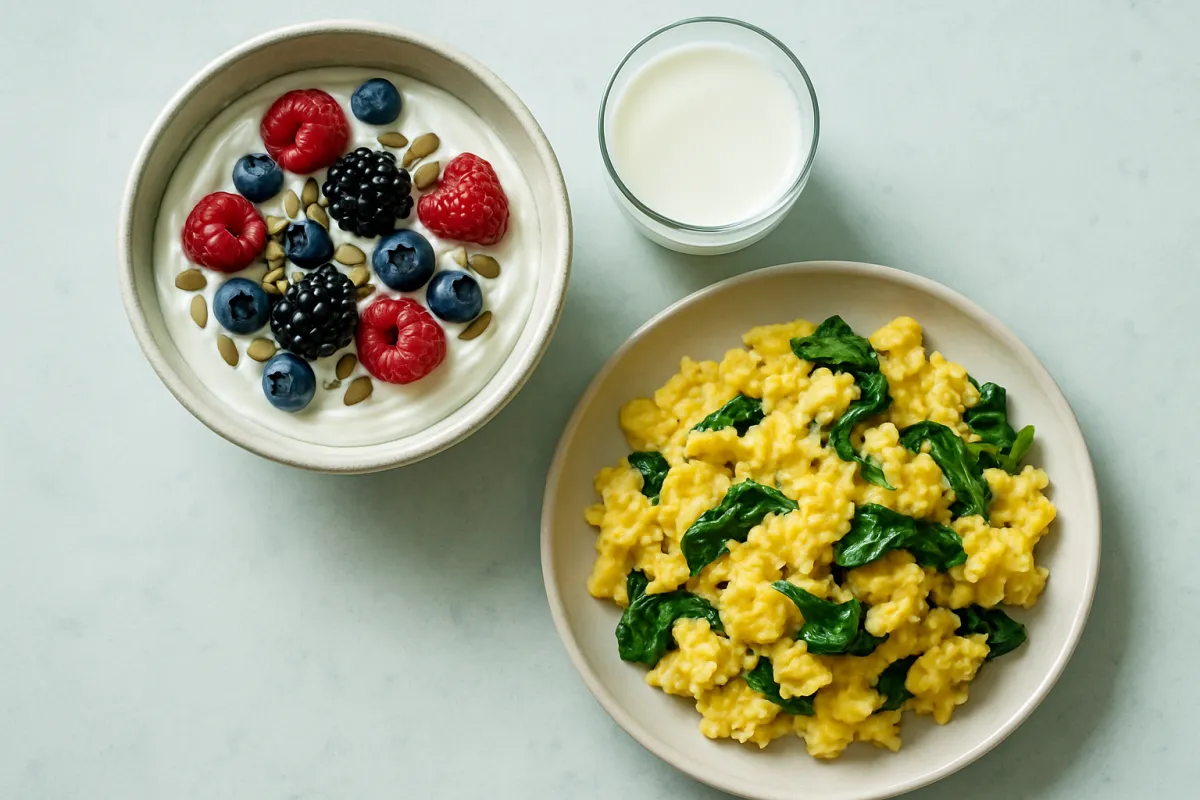
The simplest upgrade is to add a clear protein to whatever you already eat. Two eggs alongside toast, a bowl of plain Greek yogurt with your fruit, a glass of milk with cereal, or a spoon of protein-rich Greek yogurt or a scoop of nut butter stirred into oats each add a meaningful amount. As illustrative figures, two large eggs carry around 12 grams of protein and three quarters of a cup of Greek yogurt around 17 grams, so a breakfast that pairs the two lands near 30 grams before anything else. A savory breakfast built around eggs, beans, or tofu with vegetables is another route to a protein-forward start.
If mornings are rushed, lean on grab-and-go protein: a tub of Greek yogurt or cottage cheese, a couple of hard-boiled eggs cooked in advance, or a glass of milk take almost no time. The goal is not an elaborate breakfast, it is simply one that includes protein rather than skipping it.
Watch out for foods marketed as high in protein that deliver less than they suggest, and for sweetened breakfast items where added sugar crowds out room you meant to give to protein. Check the amount rather than trusting the front of the box. These are general illustrative ideas, and the right breakfast is one that fits your tastes, budget, schedule, and any dietary needs, so adapt them rather than forcing a template that does not suit you.
Step 4: Choose higher-protein snacks
Look next at snacks, because for many people they are pure protein-free calories, and swapping them for higher-protein options is an easy way to top up the day between meals. Chips, crackers, cookies, granola bars, and fruit alone are common snacks that add little protein, so each one is a quiet missed opportunity. Trading even one or two a day for a protein-bearing choice moves the total meaningfully.
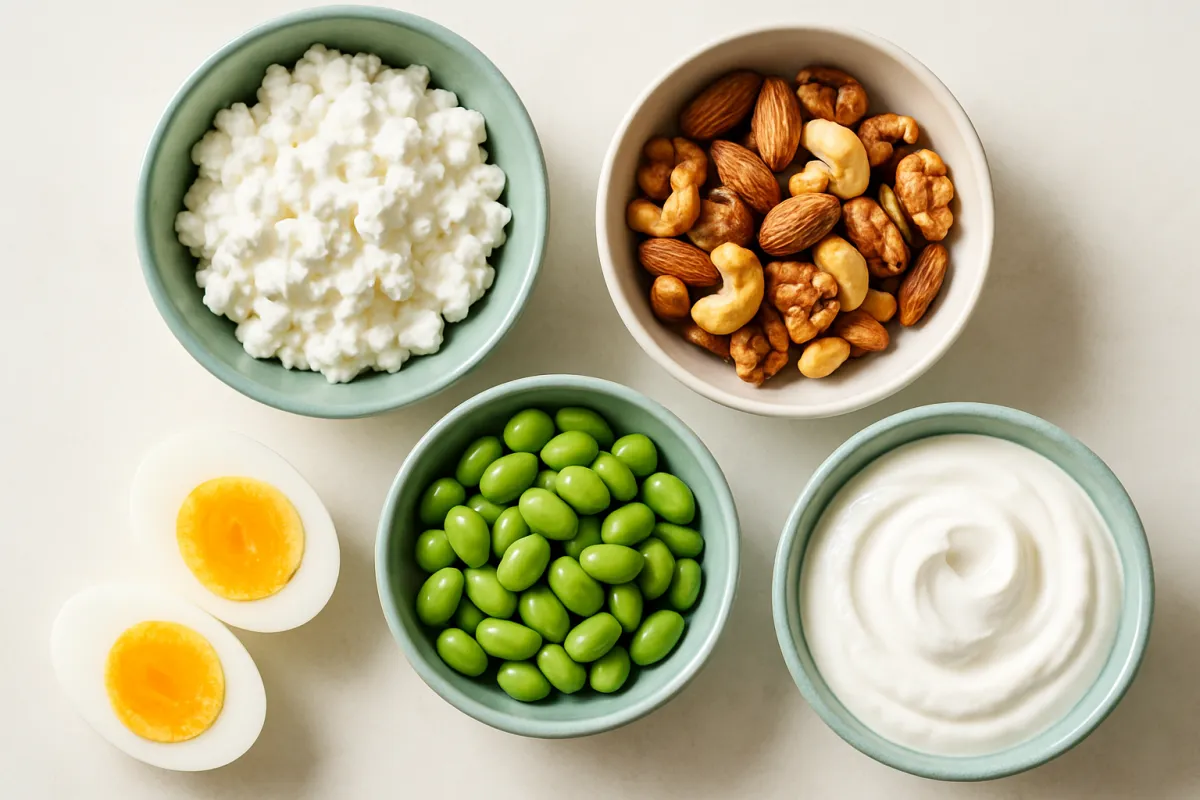
Higher-protein snacks are simple and familiar. A cup of Greek yogurt or cottage cheese, a hard-boiled egg or two, a handful of nuts or a spoon of nut butter with fruit or vegetables, a small tin of tuna, some edamame, roasted chickpeas, or a piece of cheese all bring protein along with the snack. Pairing a protein with a fruit or vegetable, such as apple slices with peanut butter or carrots with a yogurt-based dip, also makes the snack more filling. As illustrative figures, half a cup of cottage cheese carries around 14 grams of protein and a hard-boiled egg around 6 grams, so a modest snack can add as much protein as a small meal.
Snacks are also a natural place to catch up if a meal ran low on protein. If breakfast or lunch was light, a protein-forward snack an hour or two later quietly fills the gap without any planning.
Watch out for snacks that are marketed as protein products but are closer to candy, where a small amount of added protein sits alongside a large amount of added sugar. A genuine protein snack should carry a worthwhile amount of protein for its calories, so read the label rather than trusting the name. This is general information rather than a recommendation of any product, and snack choices should fit your own tastes, budget, and any dietary needs.
Step 5: Use lean meats, fish, eggs, and dairy
For those who eat animal foods, lean meats, fish, eggs, and dairy are among the most efficient ways to reach a protein target, so leaning on them at meals makes the whole thing easier. These foods pack a lot of protein into a modest portion and a modest number of calories, which is exactly what you want when the goal is more protein without a large jump in everything else. Building meals around them is often the shortest path to an adequate day.
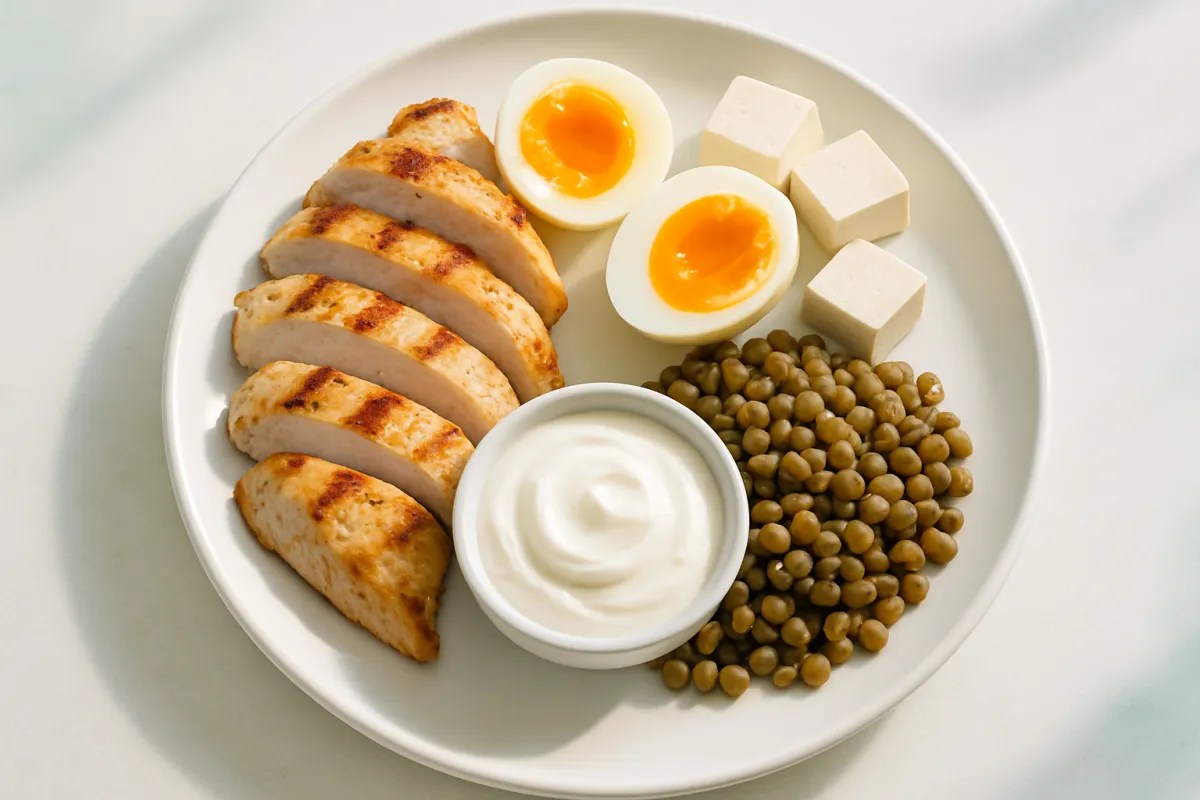
Everyday choices are familiar and flexible. Poultry such as chicken and turkey, fish and seafood, eggs, lean cuts of beef and pork, and dairy such as Greek yogurt, cottage cheese, and milk all deliver protein efficiently. As commonly cited illustrative figures, 100 grams of cooked chicken breast carries around 31 grams of protein, and lean options generally keep the calories that ride along with the protein on the lower side. Choosing leaner cuts and preparations most of the time, such as grilling, baking, or poaching rather than frying, keeps the protein high while holding calories in check. Our protein in common foods evidence review lays out more of these reference figures across a range of foods.
Variety across the week matters more than any single best choice, and mixing different animal proteins, and including plant proteins too, suits most eating patterns. There is no need to eat the same chicken breast every day to hit a target.
Watch out for two things. First, leaner is not the only virtue, and fattier fish such as salmon bring useful fats along with their protein, so leanness is a general lean rather than an absolute rule. Second, processed and cured meats are easy to over-rely on for convenience, and moderating them in favor of less-processed sources is a sensible general habit. These are general guidelines, and anyone managing cholesterol, heart conditions, kidney health, or another concern should follow their clinician’s advice on which proteins and how much.
Step 6: Get enough as a vegetarian or vegan
If you eat little or no animal food, the same protein target is very reachable, it just gets built from plant sources instead, so this step is about knowing which plant foods carry the most protein and leaning on them. A common worry is that plant-based eating means falling short on protein, but with meals built around the right foods, a reasonable intake is entirely achievable. The key is to make plant proteins the anchor rather than an afterthought.
The workhorses of plant protein are legumes and soy foods. Beans, lentils, and chickpeas, along with tofu, tempeh, and edamame, carry the most protein per serving among common plant foods, and building meals around them does most of the work. As illustrative figures, a cup of cooked lentils carries around 18 grams of protein and 100 grams of firm tofu around 13 grams, so a plant-based plate anchored by either is already well on its way. Nuts, seeds, and higher-protein grains such as quinoa add more, and for vegetarians who include them, dairy and eggs are efficient additions. Eating a variety of these across the day helps cover the full range of amino acids the body uses.
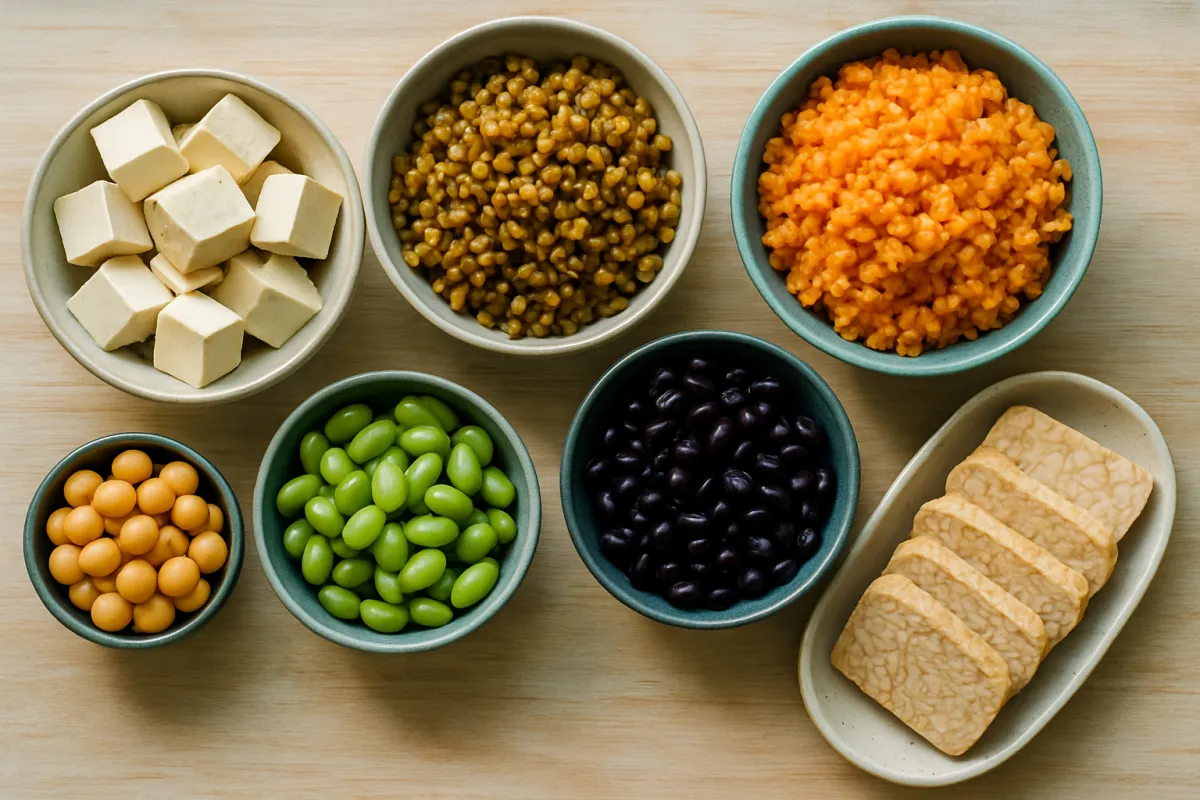
A practical habit is to include a protein-rich plant food at every meal, the same anchoring idea from step two applied to plants: lentils or beans in a soup or bowl, tofu or tempeh in a stir-fry, edamame as a snack, or a bean-based spread on toast. For a full plan built around this pattern, including vegan and dairy-free versions, see our step-by-step review of how to get protein without meat.
Watch out for meals that are all vegetables and grains with no clear protein anchor, which is the most common way a plant-based day stays low. Some plant proteins also carry meaningful carbohydrate, which is fine and even convenient, but it means the protein anchor still needs to be deliberate. This is general guidance, and anyone following a fully plant-based pattern who is unsure about meeting their protein or nutrient needs, especially during pregnancy, childhood, or with a health condition, should work with a registered dietitian.
Step 7: Consider protein powder wisely
Only after the food-first steps does it make sense to think about protein powder, and even then as an optional convenience rather than a requirement, so this step is about using it wisely if at all. Powder is simply a concentrated, portable, shelf-stable source of protein, useful for topping up a busy day or a light meal, but it is not a food group and not a substitute for real meals. Most people reach a reasonable intake without it.
Where powder earns its place is convenience. A scoop blended into milk or a smoothie, stirred into oats, or mixed into yogurt is a fast way to add protein when appetite, time, or circumstances make whole food harder, such as a rushed morning, a small appetite, or right around exercise for those who train. As an illustrative habit, a single scoop stirred into a meal that ran light can close a gap that would otherwise leave the day short. The point is to use it to supplement food, not to replace it.
The case for keeping it optional is that whole foods bring more than protein: fiber, a range of vitamins and minerals, and the satisfaction of a real meal, none of which a powder provides. Reaching for food first and powder only to fill a genuine gap keeps the diet grounded in actual meals, which is where most of the benefit lives.
Watch out for a few things with any supplement. Products vary widely in quality and added ingredients, supplements are loosely regulated compared with food, and it is easy to let a powder crowd out the whole foods that should form the base of the diet. Read the label rather than the marketing, and treat powder as a tool, not a foundation. This is general information rather than a recommendation, and anyone considering a supplement alongside a health condition, pregnancy, medication, or kidney concerns should check with a doctor or registered dietitian first.
Step 8: Spread it across the day, not one big dose
The final step ties the others together: aim to spread your protein in moderate amounts across your meals rather than loading it all into one large serving at dinner. Many people eat most of their protein at the evening meal and very little earlier, and simply moving some of it to breakfast and lunch tends to make the day both easier to digest and easier to hit the target. A steadier supply through the day is the practical way an adequate total gets built.
The reasoning is both practical and physiological. Practically, a moderate protein serving at each of three or four meals is far easier to eat, and to fit around a normal schedule, than one very large portion. On the physiological side, a steadier supply of protein across the day suits how the body uses it, and while the total amount over the day is generally considered the most important factor, an even spread is a sensible refinement rather than a burden. Our review of protein per meal covers the per-sitting detail and the commonly cited moderate per-meal range.
An illustrative pattern makes it concrete. Rather than a day that is nearly protein-free until a large steak at dinner, aim for a protein-forward breakfast, a protein at lunch, a protein-bearing snack, and a protein at dinner, each a moderate amount. The chart below shows one illustrative way a day’s protein might spread across meals and snacks, purely to make the idea visible.
Spreading protein across a day
One illustrative way a day's protein might spread across meals and a snack. This is a general example of distribution, not a target; the right pattern is the one that fits your schedule and appetite.
Segments are one illustrative distribution of a day's protein across meals and a snack and sum to 100 percent. Meal timing and number are personal; this is a general example, not a recommendation.
Watch out for turning this into another rule to stress over. The even spread is a helpful default, not a requirement, and a day that lands the right total in an uneven pattern is still a good day. These are general guidelines rather than personal targets, so use them as a loose frame.
A worked example: a day from low to adequate protein
Pulling the eight steps together on one day shows how quickly a few swaps change the total. Meet an illustrative moderately active adult who weighs about 160 pounds and wants to raise a low-protein day toward a middle-ground aim near 80 grams. Nothing here is a recommendation for any real person, it is one day walked through the steps so the numbers are concrete, and every figure is a commonly cited illustrative estimate.
The low-protein starting day. As it stands, breakfast is a bowl of cereal with a little milk, around 8 grams of protein. A mid-morning snack is a granola bar, a few grams. Lunch is a large sandwich with a thin layer of turkey, maybe 15 grams. An afternoon snack is a piece of fruit, near zero. Dinner is a big plate of pasta with a small amount of meat sauce, around 20 grams. The day totals somewhere near 45 grams, well under the aim.
The same day, upgraded through the steps. Breakfast keeps the cereal but adds two eggs and swaps in a cup of Greek yogurt with the fruit, lifting it to around 30 grams. The mid-morning bar becomes a handful of nuts with the same fruit. Lunch keeps the sandwich but doubles the turkey and adds a piece of cheese, reaching around 30 grams. The afternoon snack becomes a cup of cottage cheese, adding around 14 grams. Dinner keeps a smaller portion of pasta but anchors the plate with a palm-sized piece of chicken, reaching around 30 grams. The upgraded day lands near 100 grams, comfortably past the aim, without any exotic food or a single supplement.
Spread across four eating occasions, that is roughly 25 grams per meal or snack, an ordinary amount at each. The point of the example is not the exact figures, which are illustrative, but the shape of the change: each swap traded a low-protein default for a higher-protein version of the same meal, and the small additions compounded into a large difference by the end of the day. Change the person, and only the numbers move while the method holds. Run your own weight and meal count through the companion below to see an illustrative version for you.
Common mistakes when trying to eat more protein
Most attempts to eat more protein stall for a handful of predictable reasons, and each is easy to sidestep once named.
- Relying on one big meal. Eating almost no protein until a large dinner leaves the earlier day empty and makes the total harder to reach. Moving some protein to breakfast and lunch is usually the fix, since a moderate amount at each meal adds up more reliably than one heroic serving.
- A low-protein breakfast. Starting the day on cereal, toast, or pastries alone puts you in a hole that later meals have to dig out of. Because breakfast is so often the weak spot, adding a single protein there, such as eggs or Greek yogurt, is frequently the highest-value change of all.
- Sugary snacks dressed as protein. Many bars and drinks marketed as high in protein carry a small amount of protein alongside a large amount of added sugar, so they function more like a treat than a protein source. Check the actual protein per serving against the sugar rather than trusting the label’s claim.
- Over-relying on powder. Reaching for shakes while neglecting real meals swaps away the fiber, vitamins, and satisfaction that whole foods provide. Powder is a convenient top-up, not a foundation, and food should come first.
- Ignoring plant sources. Assuming protein has to mean meat leaves a large, convenient category on the table. Beans, lentils, tofu, tempeh, edamame, dairy, and eggs all contribute, and leaning on them adds variety as well as protein.
Clear these five and eating more protein stops feeling like a project and settles into a set of easy defaults.
Troubleshooting and edge cases
A few common situations change the practical details, though never the underlying idea of anchoring meals with protein. What if you are vegetarian or vegan? The approach is the same, you simply build meals around plant proteins such as beans, lentils, chickpeas, tofu, tempeh, and edamame, adding dairy and eggs if you include them, and eat a variety across the day. Getting enough total protein from a mix of sources is the main thing worth planning, and our protein in common foods evidence review covers plant options.
What if you have a small appetite? When large portions feel like too much, favor protein-dense foods that pack more protein into a smaller volume, such as Greek yogurt, cottage cheese, eggs, fish, and lean meat, and lean on more frequent smaller meals and protein-bearing snacks rather than a few large plates. A scoop of protein powder blended into milk or a smoothie can also be an easy, low-volume way to add some when solid food is hard to face.
What if protein feels expensive? Some of the most economical proteins are also among the most flexible: eggs, canned tuna and other tinned fish, dried or canned beans, lentils, chickpeas, tofu, milk, and larger tubs of plain yogurt all deliver a lot of protein per dollar. Buying in larger sizes, cooking legumes from dried, and choosing cheaper cuts stretch a budget while keeping protein high, so cost need not be a barrier.
What if you have a dietary restriction or health condition? This is the important one. Kidney disease, certain metabolic conditions, food allergies, pregnancy, and other situations can call for a specific protein amount or specific foods that override this general shape, sometimes in ways that mean aiming lower rather than higher. If any of these apply to you, treat this walkthrough as background reading only and follow the plan set by your doctor or registered dietitian.
Your eat-more-protein checklist
Keep this short routine on hand to raise your protein intake without tracking or fuss, whether you are planning a day or standing at the fridge.
- Know your rough target, a ballpark figure from your body weight, so you have a direction to aim rather than a vague more.
- Anchor every meal with a protein, deciding the protein food first and building the rest of the plate around it.
- Upgrade breakfast first, adding at least one clear protein such as eggs, Greek yogurt, cottage cheese, or milk to your usual morning.
- Swap in higher-protein snacks, trading chips, cookies, and plain fruit for yogurt, eggs, nuts, edamame, or cheese.
- Lean on efficient proteins, using lean meats, fish, eggs, dairy, beans, lentils, and tofu that pack protein into a modest portion.
- Use powder only to fill a gap, treating it as an optional convenience rather than a replacement for meals.
- Spread it across the day, aiming for a moderate amount at each meal rather than one large dose at dinner.
Run your own body weight and meals per day through the companion below to see an illustrative daily target and a per-meal note.
High protein foods for weight loss
Protein earns its reputation in a deficit for one reason: it is the most satiating macronutrient per calorie, so the same energy budget leaves you less hungry. That makes a deficit easier to hold, which is the mechanism that actually matters.
The foods that do this best deliver protein at a low calorie cost. Plain Greek yogurt, cottage cheese, egg whites, white fish, prawns, chicken breast, tinned tuna in water, and unsweetened soy milk all sit at the strong end. Edamame, tofu and lentils bring fibre alongside the protein, which adds to fullness for very little extra energy.
Protein also helps preserve lean mass while losing weight, which is why intake is often raised rather than lowered during a deficit.
Two honest caveats. Protein has calories like anything else, and protein-marketed products are frequently energy-dense: bars, nut butters and trail mixes are easy to overeat precisely because they feel virtuous. And no food causes weight loss on its own; the deficit does, and protein simply makes living with one more comfortable.
Our list of high protein snacks covers the between-meals half of this, and how much protein you need covers the daily target to aim at.
The bottom line
Eating more protein is far simpler than it is usually made to sound, because it comes down to a handful of habit swaps rather than willpower or special products. Give yourself a rough daily target so you know the scale you are aiming for, anchor every meal with a clear protein food, upgrade the breakfast that is probably dragging your day down, trade low-protein snacks for higher-protein ones, lean on efficient proteins whether animal or plant, treat powder as an optional top-up rather than a foundation, and spread the whole thing in moderate amounts across the day instead of one large dose. Make those swaps your defaults and an adequate day builds itself, no scale or tracking app required. Every gram figure here is a commonly cited, illustrative general guideline rather than a personal prescription, so pair it with our protein needs, protein per meal, protein in common foods, and balanced meal evidence reviews, and confirm anything specific to your health, goals, or conditions with a qualified professional such as a doctor or registered dietitian.
This evidence review is published for general education and describes commonly cited, illustrative ways to eat more protein from everyday food, not medical, nutritional, or dietary advice, and reading it creates no clinician-patient relationship. Every gram figure, daily range, and worked example above is a general guideline or illustration rather than a measurement or a personal recommendation, and real bodies, appetites, foods, and needs vary widely. Protein requirements differ from person to person with body size, activity, age, and health, and some situations, including kidney disease, certain metabolic and digestive conditions, food allergies, pregnancy, and any history of disordered eating, call for an individually managed intake that may be higher or lower than any general figure here and that overrides this walkthrough. For an approach suited to your body, goals, medications, or any medical condition, and before making significant changes to how you eat, consult a qualified health professional such as a doctor or registered dietitian.
Frequently asked questions
What is the easiest way to eat more protein?
The single easiest change for most people is to anchor every meal with a clear protein food before filling in the rest of the plate. Deciding on the protein first, whether that is eggs, yogurt, chicken, fish, beans, tofu, or lentils, means the meal is built around it rather than treating it as an afterthought. Upgrading breakfast, which tends to be the lowest-protein meal of the day, usually adds the most for the least effort. These are general educational suggestions rather than a personal prescription, and anyone with a health condition should confirm the details with a doctor or registered dietitian.
How much protein should I aim for in a day?
There is no single number that fits everyone, but a commonly cited floor for healthy sedentary adults is around 0.8 grams of protein per kilogram of body weight, which is roughly 0.36 grams per pound. Many active adults and older adults are often advised to aim somewhat higher, into a range that is frequently cited as about 0.5 to 0.7 grams per pound. For an illustrative 160-pound adult, that lands in a wide band of roughly 58 to 112 grams a day. These figures are general guidelines, not personal targets, and needs vary with body size, activity, age, and health, so a registered dietitian can tailor a number to you.
Can you eat too much protein?
For most healthy people, moderately higher protein intakes from food are generally considered well tolerated, and the body uses protein it takes in rather than storing it as a special reserve. That said, more is not endlessly better, extremely high intakes offer no guaranteed extra benefit, and protein still contributes calories that count toward your day. People with kidney disease or certain other medical conditions may be specifically advised to limit or manage their protein intake. Because this is individual, anyone with a relevant health condition, who is pregnant, or who takes medication should set their protein target with a clinician rather than from a general article.
What are good high-protein foods to start with?
Common everyday choices include poultry such as chicken and turkey, fish and seafood, eggs, and dairy such as Greek yogurt, cottage cheese, and milk, alongside plant sources such as beans, lentils, chickpeas, tofu, tempeh, and edamame. As commonly cited illustrative figures, 100 grams of cooked chicken breast carries around 31 grams of protein, a cup of cooked lentils around 18 grams, three quarters of a cup of Greek yogurt around 17 grams, and two large eggs around 12 grams. Variety across the week matters more than any single best food. Our review of protein in common foods lays out more of these reference figures, all of which are general estimates rather than exact measurements.
How can vegetarians and vegans eat more protein?
Plant-based eaters can reach a reasonable protein intake by building meals around legumes, soy foods, and other plant proteins rather than around meat. Beans, lentils, and chickpeas, tofu, tempeh, and edamame, along with nuts, seeds, and higher-protein grains such as quinoa, all contribute, and dairy and eggs add more for those who include them. Eating a variety of plant proteins across the day helps cover the range of amino acids. Getting enough total protein from a mix of sources is the main thing worth planning, and this is general information rather than a personal plan, so anyone following a fully plant-based pattern who is unsure about meeting their needs should work with a registered dietitian.
Do I need protein powder to eat more protein?
No. Protein powder is a convenience, a concentrated and portable source that some people use to top up a busy day, not a requirement for eating enough. Most people can comfortably reach a reasonable protein intake from ordinary food, and whole foods bring other nutrients that a powder does not. A scoop can be a practical way to close a gap when appetite or time is short, but it is optional rather than necessary. Supplements are loosely regulated, so anyone considering one, especially alongside a health condition, pregnancy, or medication, should read the label and check with a doctor or registered dietitian first.
How do I get more protein at breakfast?
Breakfast is where a low-protein day usually starts, because cereal, toast, pastries, and fruit are often light on protein. Simple upgrades include eggs in any form, plain Greek yogurt or cottage cheese with fruit, adding milk or a spoon of protein-rich Greek yogurt to oats, or a savory option built around eggs, beans, or tofu. Even keeping the same breakfast and adding one protein food, such as a side of yogurt or a couple of eggs, shifts the whole day. These are general illustrative ideas rather than a prescription, and the right breakfast is one that fits your tastes, budget, and any dietary needs.
What are some good high-protein snacks?
Simple high protein snacks include plain Greek yogurt or cottage cheese, a hard-boiled egg or two, a handful of nuts or a spoon of nut butter with fruit or vegetables, edamame, roasted chickpeas, a small tin of tuna, or a piece of cheese. As commonly cited illustrative figures, half a cup of cottage cheese carries around 14 grams of protein and a hard-boiled egg around 6 grams, so a modest snack can add as much protein as a small meal. Pairing a protein with a fruit or vegetable, such as apple slices with peanut butter, also makes the snack more filling. These are general educational ideas rather than product recommendations, and snack choices should fit your own tastes, budget, and any dietary needs, which a registered dietitian can help tailor.
Is it better to spread protein across meals or eat it all at once?
For many people, spreading protein across the day in moderate amounts at each meal is a practical approach, partly because it is easier to digest and fit in than one very large serving, and partly because a steadier supply suits how the body uses protein through the day. The total amount you eat over the day is generally considered the most important factor, with the exact per-meal split a secondary refinement. A common illustrative pattern is a moderate protein serving at each of three or four meals rather than a single large dose at dinner. This is general educational guidance, and our review on protein per meal covers the per-sitting detail, all as commonly cited estimates rather than rules.

Hamza Hai is the editor of NourishMark. She holds an MBA and reviews the site's articles against our editorial standards, checking that every figure is labelled for what it is, that nothing is presented as verified fact without a source the reader can check, and that the writing stays useful to a non-specialist.

Dr. Shayaan Khan is the medical reviewer for NourishMark. He holds an MBBS from MGM Medical College, Navi Mumbai, and is the author of published research including a narrative review of postpartum anxiety and depression in Mental Health Science. He has taught physiology at university level. He reviews the site's health content for medical accuracy: that physiology and mechanisms are described correctly, that no claim is stated more strongly than the evidence behind it, and that anything specific to an individual reader is sent to that reader's own clinician.
Not medical advice. Dr. Khan reviews NourishMark's health content for medical accuracy. He is not a registered dietitian, he does not hold a United States practising licence, and he is not your doctor. His review does not make anything here medical advice. Always talk to a qualified health professional about your own situation, and never delay or stop care because of something you read here.