What's in this review
- Why pregnancy slows digestion
- The fibre that does the most work
- Fluid is not optional
- Increase gradually, not all at once
- Movement, within what is appropriate for you
- What to be cautious about
- When to contact your provider
- A day of meals that reaches the target
- What to do if it is still not improving
- Common misunderstandings
- Trimester by trimester, because it changes
- Soluble and insoluble fibre, and why the mix matters
- Making legumes comfortable
- Foods and drinks that can work against you
- Building it into a week
- Haemorrhoids, and why straining matters
- What the evidence supports, and what it does not
- Eating well when nausea is the obstacle
- Fibre supplements, if food is not enough
- Questions worth bringing to your appointment
- A shopping list that covers it
- Why generic constipation advice underperforms here
- The bottom line
Constipation affects a large share of pregnancies, and it is one of the few common discomforts of pregnancy where food genuinely helps rather than merely being suggested. The complication is that the usual advice, eat more fibre, addresses only part of what is happening.
This evidence review covers why pregnancy slows digestion, the iron connection that gets overlooked, which high fibre foods do the most work, why fluid matters as much as fibre, and where the line sits between something to manage at home and something to raise with your provider. Every figure is illustrative and this is general information, not advice about your own pregnancy.
Key takeaways
- Several causes stack at once: hormonal slowing, iron supplements, physical pressure and reduced intake.
- Iron in prenatal vitamins is a common contributor, and the fix is a conversation with your provider rather than stopping it.
- Legumes and berries carry the most fibre per serving of anything commonly eaten.
- Increasing fibre without increasing fluid can make constipation worse rather than better.
- Build up gradually; a sudden large increase usually produces bloating and cramping.
Why pregnancy slows digestion
Four things contribute, and they overlap, which is why single fixes often disappoint.
Progesterone. Levels rise substantially in pregnancy, and progesterone relaxes smooth muscle throughout the body. The intestinal wall is smooth muscle, so it contracts less vigorously and food moves through more slowly. The longer material sits in the colon, the more water is absorbed from it, and the harder and drier it becomes.
Iron. Prenatal supplements commonly contain iron, and iron is constipating for a substantial number of people. This is the contributor most often missed, because the supplement is framed as unambiguously good and the side effect is not always mentioned.
Physical pressure. As pregnancy progresses the uterus takes up more room and presses on the bowel, which does nothing to help transit and becomes more noticeable in the third trimester.
Reduced intake. Nausea in the first trimester frequently reduces both fluid and fibre intake at precisely the point the other three factors are arriving.
Illustrative contributors to pregnancy constipation
An illustration of how the causes stack rather than measured proportions. Which dominates differs considerably between people and across trimesters.
The practical implication of a stacked cause is that partial measures produce partial results. Adding fibre while leaving fluid unchanged, or addressing diet without mentioning the iron to your provider, commonly disappoints.
The fibre that does the most work
Illustrative fibre per serving
Illustrative typical values for ordinary portions. Varieties and preparation change these; the nutrition panel is the reliable figure.
Legumes are in a category of their own, which is why a cup of lentils in a soup or stew moves the daily total more than most deliberate efforts elsewhere. Our full high fibre foods list covers the rest by group.
The categories worth building around:
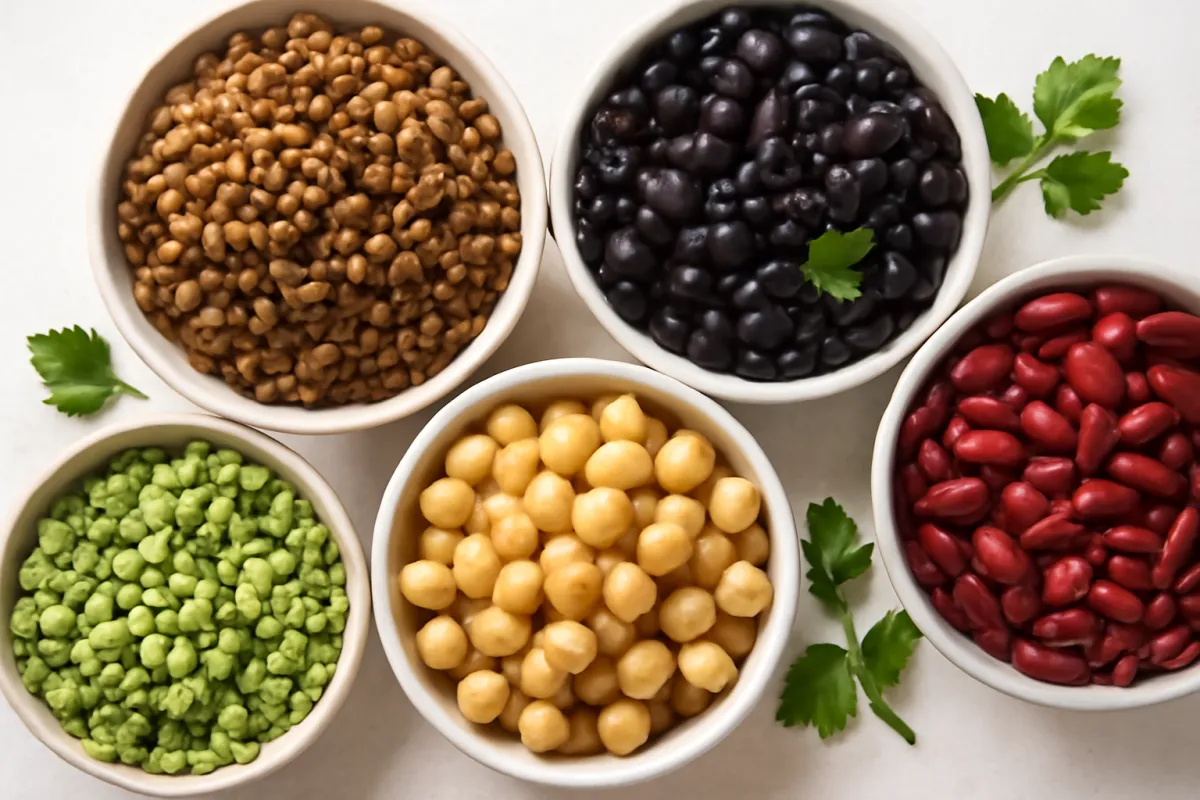
Legumes. Lentils, black beans, chickpeas, split peas and kidney beans. These are the highest fibre foods most people eat regularly, and they are easy to add to soups, stews and salads without changing a recipe much.
Berries. Raspberries and blackberries are unusually high for fruit, and berries also carry water. Frozen work as well as fresh here and keep, which matters on the weeks when shopping is the last thing you feel like doing.
Pears, apples and kiwi. Eaten with the skin where applicable, since a meaningful share of the fibre sits in it. Kiwi has a particular reputation for digestive comfort and is gentle enough to be an easy first addition.
Prunes. Fibre plus sorbitol, a sugar alcohol that draws water into the bowel. Effective enough that starting with two or three rather than a handful is sensible, and worth checking with your provider first if you have gestational diabetes.
Oats and wholegrains. Oatmeal, wholegrain bread, brown rice and barley. Oats are worth singling out because they carry soluble fibre, which is the type doing most of the softening work in the usual pregnancy pattern.
Chia and ground flaxseed. Small volumes carrying substantial fibre, easy to add to yogurt or porridge. Flax needs grinding to be useful, since whole seeds largely pass through undigested.
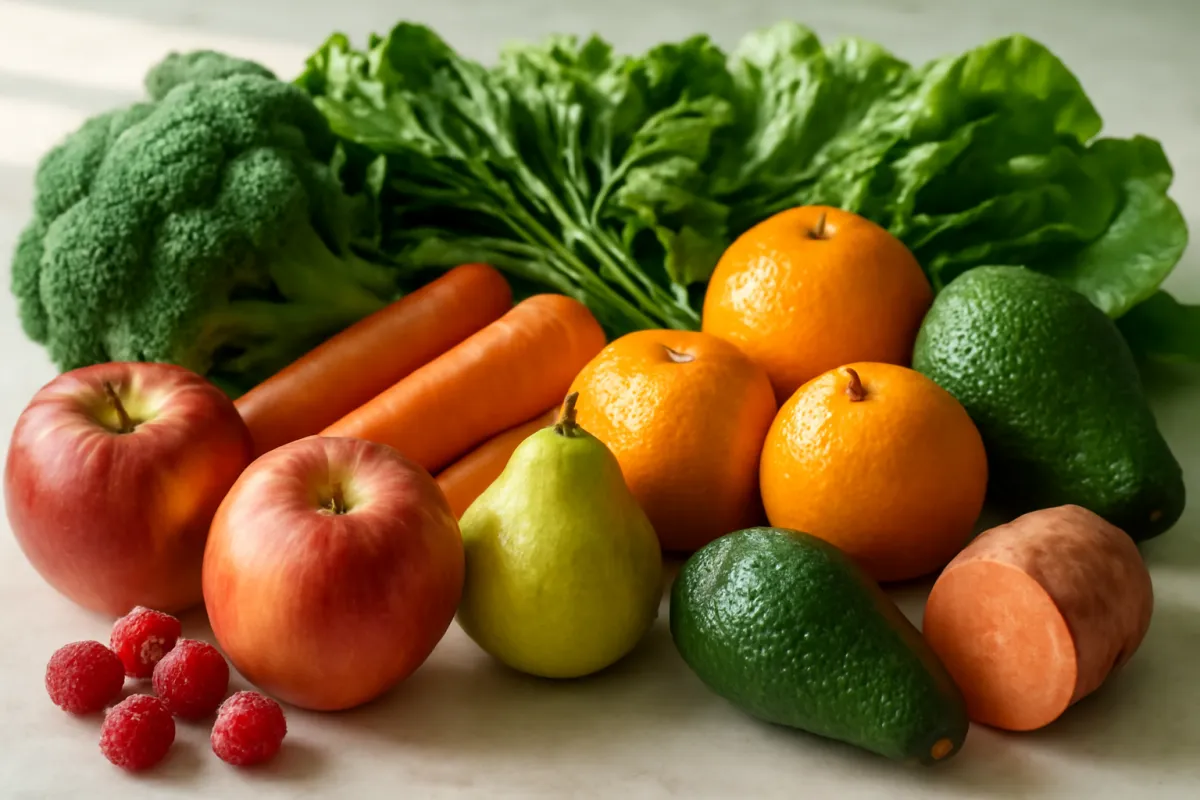
Vegetables. Broccoli, carrots, sweet potato with skin, peas, and leafy greens, which add fluid alongside fibre. Peas are worth keeping frozen: they are among the higher fibre vegetables and need no preparation at all.
Fluid is not optional
This is the part that turns an increase in fibre from helpful to uncomfortable when it is skipped.
Fibre works largely by holding water, keeping stool soft and giving it bulk the bowel can move. Without enough fluid, added fibre has nothing to hold, and the result is frequently more bloating and harder stools rather than relief.
Fluid needs are higher in pregnancy anyway, and the days you increase fibre are the days to pay more attention to it.
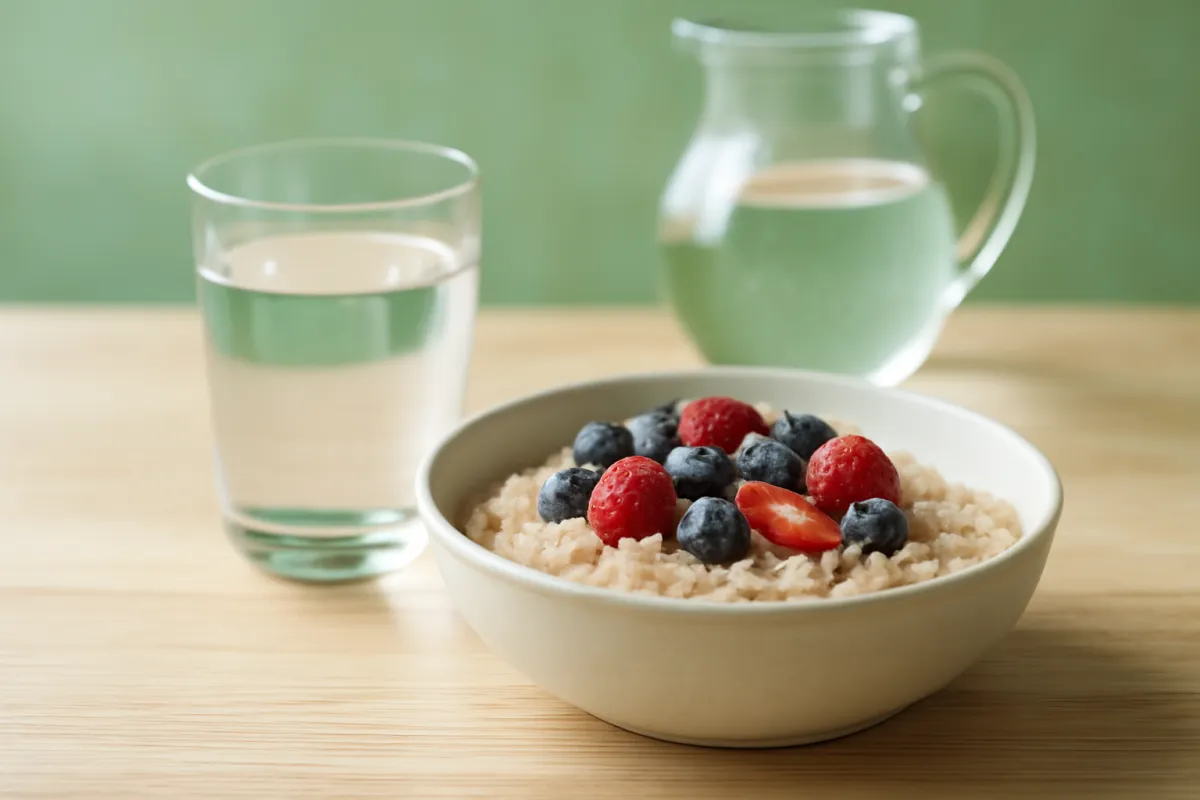
Water is the simplest route, though soups, fruit, vegetables and milk all contribute to the daily total. Drinking steadily through the day tends to be more comfortable and more effective than a few large amounts, particularly later in pregnancy when bladder capacity is already compromised. Our notes on staying hydrated and how much water you need cover the general picture.
Increase gradually, not all at once
The most common mistake is treating this as a problem to solve in a day.
Going from a low fibre intake to a high one overnight reliably produces gas, bloating and cramping, which in pregnancy is both uncomfortable and alarming. The gut adapts, but it needs a week or two rather than an afternoon.
A workable approach is adding one high fibre element at a time: legumes to one meal, then berries at breakfast, then a wholegrain swap, increasing fluid alongside each step. If a change produces bloating, hold at that level rather than adding more.
Spreading fibre across meals is also more comfortable than concentrating it. A very high fibre dinner is more likely to cause discomfort than the same amount distributed across the day.
Movement, within what is appropriate for you
Physical activity supports intestinal motility, and it is one of the few levers that does not involve eating anything.
Walking is the usual recommendation because it is accessible, free, and easy to repeat daily without planning. Gentle activity of any kind that is appropriate for your own pregnancy helps, and consistency matters more than intensity.
What is appropriate varies substantially and depends on your own pregnancy, your history, and any complications. This is not a domain for general advice, and your provider’s guidance on activity governs over anything here.
The practical framing is that regular gentle movement is more useful than occasional intense effort, and that even short walks after meals are worth building in.
What to be cautious about
Several things marketed for digestion warrant care in pregnancy, and general safety is not something an article can assess for your situation.
Herbal teas and supplements are not automatically safer than pharmaceutical options. Some herbs used traditionally for constipation are specifically cautioned against in pregnancy, and supplement labelling is not a reliable guide.
Over-the-counter laxatives vary considerably. Some are commonly considered appropriate in pregnancy and others are not recommended, and the answer depends on the product type and your circumstances. This is a provider question.
Stopping your prenatal iron because it is uncomfortable is not a decision to make alone. Iron requirements rise in pregnancy and deficiency carries real consequences. Raise the side effect with your provider instead; adjustments to formulation, dose or timing are often available.
Very large sudden fibre increases, covered above.
High doses of any single supplement, including fibre supplements, without discussing them first.

When to contact your provider
Some symptoms warrant a call rather than a dietary adjustment.
Constipation that is severe, or that does not improve after a couple of weeks of dietary change. Significant abdominal pain. Bleeding from the rectum or blood in the stool. An unusually long period without passing a stool. Constipation alternating with diarrhoea. Straining that has produced haemorrhoids or persistent discomfort.
Severe or persistent abdominal pain in pregnancy warrants prompt medical attention regardless of what you believe is causing it.
None of this is intended to alarm. Constipation in pregnancy is usually ordinary and manageable. The point of a list like this is that you should not spend weeks quietly enduring something that is either treatable or worth investigating.
A day of meals that reaches the target
An illustrative pattern rather than a prescription, showing what roughly 28 to 30 grams of fibre looks like without any single meal being extreme.
Breakfast. Oatmeal made with milk, topped with raspberries and a tablespoon of ground flaxseed, with a glass of water. Roughly 10 grams.
Mid-morning. A pear eaten with the skin. Roughly 5 grams.
Lunch. A lentil soup with a slice of wholegrain bread. Roughly 10 grams.
Afternoon. A small handful of prunes, started at two or three rather than a larger portion, with water. Roughly 3 grams.
Dinner. A vegetable-heavy main with broccoli and sweet potato eaten with the skin. Roughly 6 grams.
That lands comfortably above the commonly cited target while spreading the load, which is the part that matters for comfort. Fluid runs alongside each element rather than being added as an afterthought.
Change one variable and it stops working: keep the same food and halve the fluid, and the likely result is more bloating rather than more relief.
What to do if it is still not improving
If two weeks of consistent change has not helped, the useful next steps are specific rather than more of the same.
Check the iron. If you have not raised it with your provider, do. It is the single most common overlooked contributor.
Check the fluid honestly. People frequently believe they have increased fluid more than they actually have. Tracking it for two days rather than estimating is revealing.
Check the fibre type. A diet high in wheat bran and low in soluble fibre from oats, legumes, and fruit can be bulky without being softening. Balance matters, and our note on high fibre diets for constipation covers soluble against insoluble in more depth.
Check the timing. Bowel habits respond to routine, and a consistent morning pattern with breakfast and a short walk is more effective than the same inputs at random times.
Then ask your provider what is appropriate for you beyond diet. That is the point at which the question stops being nutritional.
Common misunderstandings
That constipation means something is wrong with the pregnancy. It is one of the most common ordinary discomforts of pregnancy, driven mostly by normal hormonal change.
That more fibre is always better. Beyond a point, and particularly without fluid, additional fibre adds discomfort rather than relief.
That fibre supplements are equivalent to food. They can be useful, but whole foods bring fluid, a mix of fibre types, and other nutrients alongside. Discuss supplements before adding them.
That prune juice is the same as prunes. The juice retains the sorbitol but carries considerably less fibre.
That it will resolve on its own after delivery so it is not worth addressing. It usually does improve, but weeks of straining can cause haemorrhoids and real discomfort in the meantime, and that is preventable.
That you must simply tolerate the iron side effect. Adjustments are frequently possible.
Trimester by trimester, because it changes
The problem does not stay the same shape across a pregnancy, and what helps shifts with it.
First trimester. Progesterone is already rising, and nausea is often the dominant practical obstacle. Fibre-rich foods can be unappealing precisely when they would help, and vomiting reduces fluid. The realistic goal here is often maintenance rather than optimisation: whatever fibre and fluid you can tolerate, taken in small frequent amounts, and starting the iron conversation early if a supplement has been introduced.
Second trimester. Nausea usually eases and appetite returns, which makes this the easiest window to build habits. If you are going to increase fibre gradually, this is the comfortable time to do it. Iron supplementation is often increased around this period as blood volume expands, so a problem that was manageable can worsen without any change in diet.
Third trimester. Physical pressure from the uterus is now a genuine factor, stomach capacity is reduced, and heartburn frequently competes with the advice to eat more. Smaller, more frequent fibre-containing meals tend to work better than large ones. Movement becomes harder at exactly the point it would help most, so short frequent walks beat longer sessions.
After delivery. Constipation commonly persists for a period, and can be complicated by perineal soreness, a caesarean recovery, or the reluctance to strain that follows either. It generally resolves, but it is worth raising rather than assuming it must simply be endured, particularly if haemorrhoids have developed.
The consistent thread is that the underlying causes accumulate rather than rotate, so the measures that help early continue to help later, with the emphasis moving from tolerability toward practicality.
Soluble and insoluble fibre, and why the mix matters
Fibre is not one substance, and a diet high in the wrong type for your situation can add bulk without adding comfort.
Soluble fibre dissolves in water and forms a gel. It softens stool and makes it easier to pass. Oats, barley, legumes, apples, pears, citrus, psyllium and chia are the main sources.
Insoluble fibre does not dissolve. It adds bulk and speeds transit through the colon. Wheat bran, wholegrains, nuts, and the skins of many fruits and vegetables carry it.
For constipation where stools are hard and dry, which is the usual pregnancy pattern, soluble fibre and fluid do most of the useful work. A diet loaded with wheat bran and short on soluble sources can produce more bulk without more softness, which is uncomfortable rather than helpful.
Most whole foods contain both, which is why a varied intake works better than concentrating on any single ingredient. Legumes are notable for carrying meaningful amounts of each, which is part of why they perform so well here.
The practical version: if you have increased fibre and things feel bulkier but no easier, look at whether what you added was mostly bran and wholegrain, and shift some of it toward oats, legumes and soft fruit. Our note on high fibre diets for constipation covers the distinction in more depth.
Making legumes comfortable
Legumes are the highest-value food on this page and the one people most often abandon, usually because of gas rather than taste.
Introduce them gradually. A half cup added to one meal, a few times a week, is a better starting point than a large serving. Tolerance genuinely improves with regular exposure.
Rinse tinned varieties thoroughly. This removes some of the oligosaccharides that ferment in the gut, and it lowers sodium substantially at the same time.
Cook dried legumes fully. Undercooked legumes are harder to digest, and lentils in particular are frequently served firmer than is comfortable.
Start with the gentler ones. Lentils and split peas are commonly better tolerated than kidney beans or chickpeas.
Pair with fluid, as with all fibre.
Blend them. Lentils in a puréed soup, or beans blended into a sauce, are often easier than whole.
Some gas when increasing legumes is normal and usually settles within a couple of weeks of regular intake. Severe bloating or pain is not, and is worth mentioning to your provider rather than pushing through.
Foods and drinks that can work against you
Alongside what to add, a few things commonly make pregnancy constipation worse.
Very low fibre convenience foods eaten because they are the only thing that appeals during nausea. Understandable, and worth balancing where you can once appetite allows.
Large amounts of dairy displacing fibre-containing foods in the diet, rather than through any direct effect.
Insufficient fluid, covered above, and the most common single omission.
Ignoring the urge. Delaying when the urge arrives allows more water to be absorbed and makes the eventual passage harder. Simple and frequently overlooked.
Very low overall food intake during periods of nausea, which reduces the volume moving through.
Calcium or iron supplements taken without discussion, where more than one supplement is contributing.
Note what is not on this list: there is no need to eliminate broad food groups, and advice suggesting you should during pregnancy deserves scepticism.
Building it into a week
The habits that work are the ones that survive a bad day, so they need to be small.
Choose one high fibre breakfast you actually like and repeat it. Oatmeal with berries and ground flaxseed is the default for a reason: it carries soluble fibre, fruit fibre and fluid together.
Keep tinned legumes in the cupboard. They require no planning and turn any soup, salad or sauce into a meaningful fibre contribution.
Keep fruit visible. Fruit in a bowl on the counter gets eaten; fruit in a drawer does not.
Fill a water bottle in the morning and keep it in sight, since fluid is the piece most often lost on busy days.
Walk after a meal where you can, even briefly.
And raise the iron question at your next appointment rather than waiting for a bad week to prompt it.
Our high fibre foods list covers the full range by food group, and how much fibre you need covers the daily target this is working toward.
Haemorrhoids, and why straining matters
The complication most worth preventing gets little attention until it arrives.
Straining against hard stool raises pressure in the veins around the rectum, and pregnancy already raises that pressure through increased blood volume and the weight of the uterus pressing on pelvic veins. The two together are why haemorrhoids are so common in later pregnancy, and why constipation is worth addressing before it becomes an entrenched pattern rather than after.
Practical measures that reduce straining are unglamorous and effective. Responding to the urge promptly rather than delaying. Not sitting on the toilet for extended periods, which itself increases pressure. Using a small footstool to raise the knees, which changes the angle and reduces the effort required. And keeping stool soft through the fluid and fibre measures described above, which is the upstream fix.
If haemorrhoids have already developed, that is worth raising with your provider rather than managing silently. Several approaches are commonly considered appropriate in pregnancy, and which one suits you is a clinical question. What is not sensible is choosing a treatment from a pharmacy shelf on the assumption that anything sold without prescription must be fine during pregnancy.
The general principle throughout this article applies here too: the discomforts of pregnancy are common, which makes them normal, but common does not mean you have to endure them without help.
What the evidence supports, and what it does not
Being clear about the strength of the underlying evidence is more useful than presenting everything with equal confidence.
Reasonably well supported. That pregnancy slows intestinal transit through hormonal change. That iron supplementation contributes to constipation for many people. That dietary fibre combined with adequate fluid improves stool consistency and frequency in the general population. That physical activity supports motility.
Supported but with more variability. The specific quantity of fibre that helps any individual, which varies considerably. The effect of particular foods such as prunes and kiwi, which have reasonable support but sit well short of certainty. The degree to which increasing fluid alone helps someone whose intake was already adequate.
Not well supported. Claims that particular supplements or teas reliably resolve pregnancy constipation. Detox framing of any kind. Suggestions that eliminating broad food groups helps.
The honest position is that the basic measures are sensible, low-risk and frequently effective, and that the specific promises made by products in this space usually outrun what is known. That is a reason to start with food, fluid and movement, and to treat anything beyond that as a conversation with your provider rather than a purchase.
Eating well when nausea is the obstacle
For many people the first trimester makes every recommendation above harder, and advice that ignores that is not useful.
Work with what appeals rather than against it. If only bland carbohydrates are tolerable, wholegrain versions of those carbohydrates still contribute: wholegrain toast rather than white, oatmeal rather than a low fibre cereal. Small substitutions survive nausea in a way wholesale changes do not.
Cold foods are often better tolerated than hot, since aroma drives a lot of nausea. Chilled fruit, yogurt with berries, and smoothies frequently work when a cooked meal does not.
Small and frequent beats large and planned. An empty stomach worsens nausea for many people, and small regular intake also suits fibre better than concentrated meals.
Fluid in small amounts through the day. Large volumes at once are more likely to be brought back up. Sipping steadily is both gentler and more effective.
Smoothies do useful double duty, carrying fruit fibre and fluid together in a form that is often more tolerable than the same ingredients eaten separately. Blending retains the fibre that juicing removes.
Take the iron with food if your provider agrees, since that can reduce nausea, though it can also affect absorption; whether it suits you is a question for them rather than a general rule.
If vomiting is frequent or you are unable to keep fluids down, that is a medical situation rather than a dietary one and needs prompt attention. Constipation is the lesser concern at that point.
Fibre supplements, if food is not enough
Sometimes food alone does not get there, and the question of supplements comes up. It is worth understanding the categories before raising it with your provider.
Bulk-forming fibre supplements are the type most closely equivalent to dietary fibre, working by the same mechanism of holding water and adding bulk. Psyllium is the most common. They require adequate fluid to work and can worsen matters without it.
Stool softeners work differently, drawing water into the stool rather than adding bulk.
Osmotic products draw water into the bowel by a different route again.
Stimulant products act on the bowel wall directly and are the category most often cautioned against in pregnancy.
Which of these is appropriate, if any, is a clinical decision that depends on how far along you are, your history, and what else you are taking. This article deliberately does not recommend one, and any source that confidently does without knowing your circumstances is overreaching.
What is reasonable to do yourself is arrive at the conversation prepared: what you have already tried, for how long, what your fluid intake actually is, and whether the iron has been discussed. That turns a vague complaint into a specific question, and it is the difference between being told to eat more fibre and getting a useful answer.
Questions worth bringing to your appointment
Prenatal appointments are short and constipation rarely makes the agenda unless you raise it. These are the questions that produce useful answers rather than general reassurance.
Is the iron in my prenatal supplement likely to be contributing, and is there an alternative formulation, dose or schedule that would be gentler while still meeting my requirement?
Am I taking anything else that could be contributing, including calcium or any other supplement?
Given my history, is there anything you would recommend beyond diet and fluid, and is there anything you would specifically advise against?
Are the symptoms I am describing within the ordinary range, or is there anything here you would want to look at?
If I develop haemorrhoids, what should I do and what should I avoid?
At what point should I contact you rather than waiting for the next appointment?
Writing these down before the appointment matters more than it sounds, because constipation is easy to forget to mention and easy to minimise once you are in the room. It is also, unlike many pregnancy discomforts, frequently improvable, which makes it worth the two minutes it takes to ask.
A shopping list that covers it
If you want the whole of this article as a list to take to a supermarket, this is it.
Cupboard. Tinned lentils, black beans, chickpeas and kidney beans. Rolled oats. Wholegrain bread. Brown rice. Ground flaxseed. Chia seeds. Prunes. Wholegrain or bran-containing cereal you actually like.
Fresh. Raspberries and blackberries. Pears. Apples. Kiwi. Oranges. Broccoli. Carrots. Sweet potatoes. Leafy greens. Avocado.
Frozen. Berries, which are cheaper than fresh and last, and peas, which are among the higher fibre vegetables and require no preparation.
Fluid. Whatever makes you actually drink water. A bottle you like, or fruit to add to it, is not a trivial detail when fluid is the step most often skipped.
Two notes on using the list. You do not need all of it, and buying everything at once usually produces waste; three or four items you will genuinely eat beat a full trolley of good intentions. And the frozen items exist for the weeks when fresh produce quietly rots in a drawer, which happens to everyone and happens more when you are exhausted.
Cost is worth mentioning too. Tinned legumes, oats, frozen berries and carrots are among the cheapest foods in a supermarket, which makes this one of the few dietary recommendations that reduces a grocery bill rather than raising it.
Why generic constipation advice underperforms here
It is worth naming why standard advice, which is not wrong, often disappoints during pregnancy.
Generic guidance assumes a single cause and offers a single fix: eat more fibre. In pregnancy at least three causes are usually operating at once, and only one of them is dietary. Fibre addresses the intake component while doing nothing about hormonal slowing and nothing about iron, which is why people who follow the advice diligently and see little change conclude reasonably that it does not work.
Generic guidance also assumes normal appetite and normal tolerance, neither of which is reliable in the first trimester.
And it rarely mentions iron at all, despite iron being one of the most consistent contributors and the one with an available adjustment.
The version of the advice that actually performs is therefore broader than food: increase fibre gradually, increase fluid genuinely alongside it, move regularly within what is appropriate for you, respond to the urge promptly, and have the supplement conversation. Doing four of those and skipping the fifth is the most common pattern, and it is usually the fifth that was holding things up.
None of which makes fibre unimportant. It makes fibre necessary rather than sufficient, which is a different claim and a more useful one.
The bottom line
Pregnancy constipation has several causes at once, so the effective approach addresses several at once: more fibre, genuinely more fluid alongside it, gentle regular movement, and a conversation with your provider about the iron in your prenatal supplement.
Legumes and berries do the most work per serving, and building intake up over a week or two is far more comfortable than a sudden increase.
If two weeks of consistent change has not helped, the next step is a conversation rather than more fibre.
And treat persistent symptoms as a reason to ask rather than to endure. Most of the time this is ordinary and manageable at home, which is exactly why the cases that are not deserve to be identified early rather than absorbed into weeks of assuming it is normal.
A note on how to read this: NourishMark publishes evidence reviews rather than personalised advice, and this article is general nutrition information, not medical advice about your pregnancy. Pregnancy is a situation where individual circumstances matter unusually much, and nothing here replaces guidance from your midwife, obstetrician, GP or a registered dietitian who knows your history. Every fibre figure, portion and proportion above is an illustrative typical value drawn from commonly cited ranges rather than a laboratory analysis. Do not start or stop any supplement, including prenatal iron, and do not take any laxative, stool softener, herbal preparation or fibre supplement during pregnancy without discussing it with your prenatal care provider first. Seek prompt medical attention for severe or persistent abdominal pain, rectal bleeding, or any symptom that worries you.
Frequently asked questions
Why is constipation so common during pregnancy?
Several things happen at once. Rising progesterone relaxes smooth muscle throughout the body, including the intestinal wall, which slows the rate at which food moves through the gut and gives the bowel more time to absorb water from it. Iron in prenatal supplements is constipating for many people and is a frequently overlooked contributor. As pregnancy progresses, the growing uterus adds physical pressure on the bowel. And nausea in early pregnancy often reduces both fluid and fibre intake at exactly the moment they matter more. Because the causes stack, addressing only one of them frequently produces disappointing results, which is why the food, fluid and movement side are usually tackled together.
How much fibre should I eat while pregnant?
General guidance for adults commonly cites somewhere around 25 to 30 grams of fibre a day, and pregnancy does not lower that; if anything the slowed transit makes reaching it more useful. Most people fall well short of it, so the practical goal is usually increasing intake rather than hitting an exact figure. The important detail is how you increase it: adding a large amount of fibre suddenly, particularly without increasing fluid alongside it, commonly produces bloating, gas and cramping and can make the discomfort worse rather than better. Building up over a week or two is far more comfortable. Your prenatal care provider can advise on what suits your own situation.
Do iron supplements cause constipation in pregnancy?
Iron is constipating for many people and prenatal vitamins commonly contain it, so it is a frequent contributor that gets missed while people focus on diet. That does not make iron optional: iron requirements rise substantially in pregnancy and deficiency carries real risks, so stopping a supplement because it is uncomfortable is not a decision to make alone. What is worth doing is raising it with your provider, because there are often adjustments available: a different formulation, a different dose schedule, or taking it at a different time. Those are clinical decisions rather than dietary ones, which is why this belongs in a conversation with whoever is managing your care.
Which high fibre foods are best for pregnancy constipation?
Legumes are the strongest single category, with cooked lentils, black beans and split peas among the highest fibre foods commonly eaten. Berries, particularly raspberries, are unusually high for fruit. Pears and apples eaten with the skin, prunes, kiwi, oats, wholegrain bread, chia and ground flaxseed all contribute meaningfully. Vegetables including broccoli, carrots, sweet potato with skin, and leafy greens add both fibre and fluid. The practical approach is spreading these across the day rather than concentrating them, since a single very high fibre meal is more likely to produce bloating than steady intake is.
Are prunes safe during pregnancy?
Prunes and prune juice are ordinary foods and are widely used for constipation in pregnancy. Alongside fibre they contain sorbitol, a sugar alcohol that draws water into the bowel, which is why they have the reputation they do. Because that effect is dose-dependent, starting with a small portion and seeing how you respond is more comfortable than starting with a large one. Prune juice contains less fibre than whole prunes but retains the sorbitol. As with any change during pregnancy, if you have gestational diabetes or another condition affecting how you handle sugars, check with your provider before adding fruit juices or dried fruit in quantity.
Can I take laxatives while pregnant?
This is a question for your prenatal care provider rather than for an article, and that is not a formality. Some products commonly used for constipation are generally considered appropriate in pregnancy, others are not recommended, and the answer depends on the type of product, how far along you are, and your own history. Herbal teas and supplements marketed for digestion are not automatically safer than pharmaceutical options and some are specifically cautioned against in pregnancy. The sensible sequence is to address food, fluid and movement first, then ask your provider what is appropriate for you if that is not enough, rather than choosing something yourself from a shelf.
Does drinking more water actually help?
Fluid is the part most often skipped, and increasing fibre without it can make constipation worse rather than better. Fibre works largely by holding water in the stool to keep it soft and bulky, so without enough fluid the added fibre has nothing to work with. Fluid needs rise in pregnancy anyway. Water is the straightforward option, and foods with high water content including fruit, vegetables and soups contribute as well. There is no need to force unusual amounts; the practical test is drinking regularly through the day rather than in a few large amounts, and paying more attention to it on the days you increase fibre.
When should I contact my provider about constipation?
Contact them if constipation is severe or does not improve with dietary changes over a couple of weeks, if you have significant abdominal pain, if there is bleeding from the rectum or blood in the stool, if you have not passed a stool for an unusually long period, or if constipation alternates with diarrhoea. Also raise it if straining is causing haemorrhoids or discomfort, because that is treatable rather than something to endure. Any severe or persistent abdominal pain in pregnancy warrants prompt medical attention regardless of what you think is causing it. None of the guidance in this article replaces an assessment by someone who knows your history.

Hamza Hai is the editor of NourishMark. She holds an MBA and reviews the site's articles against our editorial standards, checking that every figure is labelled for what it is, that nothing is presented as verified fact without a source the reader can check, and that the writing stays useful to a non-specialist.