
What's in this review
- Protein Needs for Women: The Direct Answer
- Why “Women’s Protein Needs” Is Mostly a Body-Size Question
- The Baseline: Grams Per Kilogram of Body Weight
- How to Calculate Your Own Baseline
- Activity Level: Sedentary, Active, and Strength Training Ranges
- Protein and the Menstrual Cycle: What’s Actually Established
- Pregnancy: The Commonly Cited Increase and Why
- Breastfeeding: The Second Commonly Cited Increase
- Postpartum Recovery: A Life Stage the Generic Calculator Skips
- Teen Girls and Young Women: A Brief Note
- Reading a Nutrition Label as a Woman
- Building a Grocery List Around Your Target
- Tracking Without Obsessing Over the Number
- Perimenopause and Menopause: Why Guidance Often Points Higher
- Protein and Bone Health Across Life Stages
- Protein and Preserving Muscle With Age
- How Commonly Cited Ranges Compare, by Situation
- Three Women, Three Different Targets
- Spreading Protein Across the Day
- Protein on a Plant-Forward Plate
- An Illustrative Day of Protein, Distributed Across Meals
- Protein and Weight Management
- Can Women Eat Too Much Protein?
- Do You Need Protein Powders or Supplements?
- How This Compares to the General Protein Calculator
- Protein Alongside Other Nutrients Women Often Track
- Common Mistakes in This Calculation
- When to Talk to a Professional
- The bottom line
Short answer: The commonly cited baseline for women, like adults generally, is about 0.8 grams of protein per kilogram of body weight per day. Active women are often guided toward frequently referenced ranges of roughly 1.2 to 2.0 grams per kilogram, and pregnancy and breastfeeding each carry a commonly cited increase of around 25 grams a day above an individual baseline. Your own number depends on weight, activity, and life stage, and a clinician can tailor it further.
Search “protein calculator” and most of what comes back is built for a generic adult body, with no obvious place to enter pregnancy, breastfeeding, or the hormonal shifts of midlife. Those are not footnotes for a meaningful share of readers: they are the entire question. This nutrition review builds the same baseline math used across general protein guidance, then walks through where it shifts specifically for women, including life stages the generic version skips.
It is educational, not medical advice, and the companion below is a sketch built from your own entries, not a personal prescription. For the general version of this same calculation that applies to any adult, see our protein intake review. For a faster starting estimate before working through the life-stage detail here, our daily protein target tool on the homepage gives a quick figure from your weight and activity. You can run your own fuller numbers in about a minute with the companion below.
Key takeaways
- The baseline for women is the same per-kilogram figure used for adults generally: about 0.8 grams per kilogram of body weight per day.
- Active women are commonly guided toward higher ranges, frequently cited as roughly 1.2 to 2.0 grams per kilogram depending on training.
- Pregnancy and breastfeeding each carry a commonly cited increase of about 25 grams a day above an individual's own baseline.
- Guidance commonly trends toward the higher end of the adult range around midlife, alongside resistance activity, to help support muscle and bone.
- Body size, not sex alone, drives most of the commonly quoted gap between men's and women's reference figures on labels.
Protein Needs for Women: The Direct Answer
The short version is that women use the same baseline formula as adults generally: roughly 0.8 grams of protein per kilogram of body weight per day, commonly framed as adequate for most healthy, relatively sedentary adults. What changes for women specifically are the life stages layered on top of that baseline, pregnancy, breastfeeding, and the hormonal shifts around menopause, each of which nutrition guidance discusses with its own commonly cited adjustment.
The rest of this review walks through the baseline math, the activity-level ranges that apply to anyone regardless of sex, and then the women-specific layers one at a time, with a worked example for each so the numbers stay concrete rather than abstract.
Why “Women’s Protein Needs” Is Mostly a Body-Size Question
A large share of the commonly quoted gap between men’s and women’s protein figures on nutrition labels and reference charts comes down to one thing: reference calculations commonly use a smaller average reference body weight for women than for men, not a meaningfully different requirement per kilogram of body weight. The per-kilogram math itself, 0.8 grams per kilogram at baseline, applies the same way regardless of sex.
This matters because it reframes the whole question. A woman who weighs the same as a man of similar activity level lands on a very similar protein target using the same formula. The commonly cited “46 grams for women, 56 grams for men” figures that show up on packaging are built from reference weights of roughly 57 and 70 kilograms respectively, and they stop being useful the moment your own weight differs from either reference point, which is true for most people. Your own weight, not your sex alone, is what the calculation actually needs.

The Baseline: Grams Per Kilogram of Body Weight
The baseline recommendation, sometimes called the Recommended Dietary Allowance in US and Canadian guidance, is built around a simple per-kilogram figure: about 0.8 grams of protein for every kilogram of body weight, each day. It is generally framed as the amount adequate to meet basic needs for most healthy, relatively sedentary adults, which is a meaningful standard but a different question from what best supports training, pregnancy, or healthy aging, topics the sections ahead cover one at a time.
Applied to a commonly referenced reference weight for women of about 57 kilograms, or roughly 125 pounds, the baseline works out to approximately 46 grams a day. That figure is the one most often printed on nutrition labels as the daily value for protein, and it is worth repeating that it describes one reference body, not a target calculated from your own weight.
How to Calculate Your Own Baseline
The arithmetic itself takes under a minute. Take your body weight in kilograms and multiply by 0.8 to get your baseline in grams. If you know your weight in pounds instead, multiplying by roughly 0.36 gives a close approximation of the same figure, since a kilogram is about 2.2 pounds. A woman weighing 140 pounds, for instance, lands near 50 grams a day at baseline; a woman weighing 180 pounds lands near 65 grams.
Two refinements make the number more useful in practice. First, the calculation scales with body size, so it changes meaningfully if your weight changes over time, and it is worth recalculating periodically rather than treating one number as fixed forever. Second, for someone significantly above a commonly referenced healthy weight range, some practitioners calculate from a reference or adjusted body weight rather than total weight, which is exactly the kind of judgment call where individualized guidance from a dietitian beats a formula applied uniformly. Treat the baseline as a floor, the sections ahead cover where commonly cited guidance suggests building above it.
Activity Level: Sedentary, Active, and Strength Training Ranges
Once the baseline is set, activity is the next lever, and it applies to women the same way it applies to any adult. Commonly cited sports-nutrition ranges for people doing regular structured exercise run from roughly 1.2 up to about 2.0 grams per kilogram per day, with the higher end of that range more frequently discussed for people doing serious strength training or working toward building muscle specifically.
For the 140-pound woman from the example above, that range translates to roughly 76 to 127 grams a day depending on training intensity, compared with a sedentary baseline near 50 grams. That is a wide range on purpose: a person doing light recreational activity two or three times a week sits toward the lower end, while someone following a structured strength program several days a week, or actively working to build muscle, is more often guided toward the upper end. Our muscle-building protein guide covers the training-specific end of this range in more depth.
Protein and the Menstrual Cycle: What’s Actually Established
There is comparatively little established guidance suggesting protein needs shift meaningfully across the phases of a typical menstrual cycle, and this review is not going to invent a cycle-phase multiplier that reference sources do not support. What is more consistently discussed is the relationship between menstruation and iron, a separate nutrient entirely, since monthly blood loss is the main reason the reference intake for iron is markedly higher for menstruating women than for men, a topic our iron deficiency symptoms review covers directly.
Where protein and the cycle do intersect in commonly discussed terms is appetite: many people report changes in hunger and food preferences across the cycle, which can make hitting any nutrient target, protein included, feel easier some weeks than others. That is a practical planning note rather than a reason to change the underlying target itself.
Pregnancy: The Commonly Cited Increase and Why
Pregnancy is one of the two life stages where nutrition guidance most consistently departs from the general adult baseline. Reference sources commonly cite an increase on the order of roughly 25 grams a day above an individual’s own non-pregnant baseline, reflecting the combined demands of a growing baby, expanding maternal tissue, and the structural changes pregnancy involves. For a woman with a baseline near 50 grams, that commonly cited figure would land the pregnancy target in the neighborhood of 75 grams, though the precise number any individual should target is a decision for the clinician or dietitian managing that specific pregnancy.
This review deliberately does not go further than naming the commonly cited increment. Trimester-specific adjustments, guidance for twin or multiple pregnancies, and any condition-specific modification all belong with the professional overseeing prenatal care, who has access to an individual history this article does not.
Breastfeeding: The Second Commonly Cited Increase
Breastfeeding carries its own commonly cited increase, often discussed in a similar rough range to the pregnancy increment, reflecting the protein content of milk production layered on top of ordinary needs. Exactly how guidance frames the figure varies somewhat by source and by how much milk is being produced, which is one more reason this is better treated as a starting point for a conversation with a lactation consultant, registered dietitian, or doctor than as a fixed number to hit precisely.
Both the pregnancy and breastfeeding increments are commonly discussed as temporary, life-stage-specific additions on top of an individual’s ordinary baseline, not permanent changes to it. The companion below lets you toggle a life-stage selection to see roughly how either increment shifts your own illustrative number.
Postpartum Recovery: A Life Stage the Generic Calculator Skips
The weeks and months after giving birth are a third life stage generic protein calculators tend to skip entirely, moving straight from pregnancy figures to a return to baseline with no transition. Postpartum recovery itself, tissue repair, blood volume normalizing, and, for many, broken sleep layered on top of physical recovery, is commonly discussed as a period where nutrition needs remain elevated above a pre-pregnancy baseline for a meaningful stretch of time, not a date on which figures snap back overnight.
For someone breastfeeding, the breastfeeding increment covered above is the relevant figure to use throughout that period. For someone not breastfeeding, guidance is less specific about exactly how long an elevated figure makes sense, which is less a gap in this review than an honest reflection of a question better answered by the clinician or midwife involved in that specific postpartum care, who can factor in how the birth went and how recovery is progressing.
Teen Girls and Young Women: A Brief Note
This review is written for adult women, and the baseline figure of 0.8 grams per kilogram specifically describes adult requirements. Reference intakes for teenage girls are generally set somewhat higher per kilogram than the adult figure, reflecting ongoing growth, and they are commonly published separately by age band rather than as a single teen figure. A parent or a teenager with questions about protein during adolescence is better served checking age-specific guidance or asking a pediatrician or dietitian than applying the adult calculation in this review to a still-growing body.
Reading a Nutrition Label as a Woman
The protein line on a nutrition label states grams per serving, and the percent daily value beside it is calculated against a single reference figure, commonly 50 grams, that does not adjust for your sex, body weight, or activity level at all. That reference figure is a regulatory convention for comparing products, not a personal target, and it applies the same flat number to every shopper regardless of whether they are the 125-pound sedentary example or the 155-pound strength-training example used earlier in this review.
The practical label-reading skill worth building is ignoring the percent daily value for protein specifically and looking at the gram figure instead, then mentally checking it against your own calculated target rather than the one-size label convention. Our nutrition label guide covers this skill for every nutrient on the panel, not protein alone.
Building a Grocery List Around Your Target
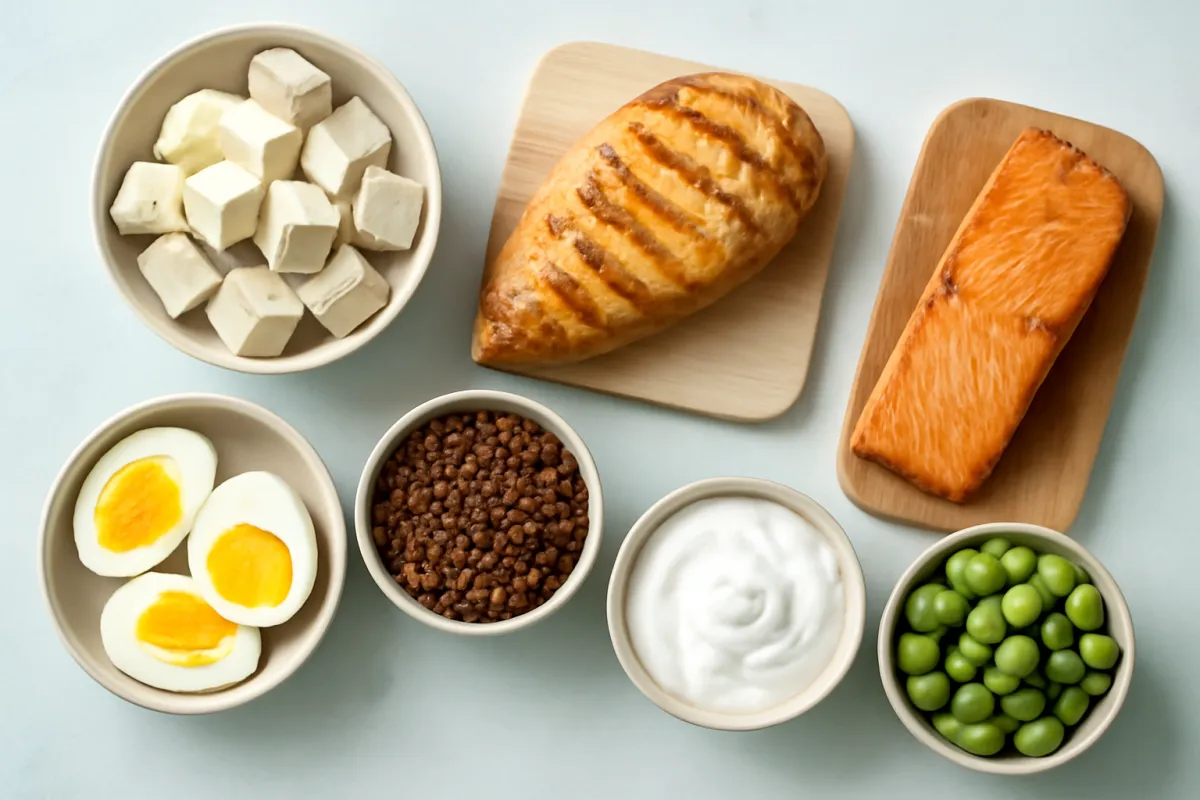
Translating a daily gram target into an actual grocery list is more useful than staring at the number alone. A reasonable approach is picking two or three protein anchors to build meals around for the week, a poultry or fish option, a dairy or egg option, and a legume or tofu option, then checking that each meal includes at least one of them rather than trying to hit the daily figure through snacking alone.
Batch-cooking a protein source at the start of the week, grilled chicken, baked tofu, or a pot of lentils, and portioning it across several meals tends to make hitting a higher target far less effortful day to day than cooking protein fresh at every single meal. Our grocery list guide walks through building a full week’s list with this kind of anchor approach.
Tracking Without Obsessing Over the Number
For most women, the goal of this calculation is a rough target to aim toward over most days, not a figure to hit with precision every single day. Tracking intake closely for a few representative days, using the worked example method earlier in this review, is generally enough to learn roughly where your ordinary eating pattern lands relative to your target, after which many people find they can estimate reasonably well without logging every meal indefinitely.
If tracking food intake closely ever starts to feel stressful or compulsive rather than informative, that is worth raising with a professional, since an unhealthy relationship with food tracking is a real pattern clinicians watch for, not a sign of insufficient discipline.
Perimenopause and Menopause: Why Guidance Often Points Higher
Around midlife, many nutrition sources discuss protein guidance trending toward the higher end of the commonly cited adult activity range, frequently alongside resistance exercise, rather than toward a single fixed number. Two mechanisms are commonly cited as the reasoning. First, age-related muscle loss is a well-documented pattern across adulthood, and some guidance suggests that getting enough protein, and spreading it across meals, may help support the muscle that resistance activity builds and maintains. Second, hormonal shifts around menopause are commonly discussed alongside changes in bone density, which connects to the next section.
None of this amounts to a single prescribed target specific to menopause, and this review is not going to invent one. The more defensible, honestly hedged takeaway is that commonly cited guidance leans toward the higher end of the general active-adult range for many women in this life stage, paired with strength-preserving activity, with anything more specific belonging to an individualized conversation with a clinician or dietitian.
Protein and Bone Health Across Life Stages
Protein is one of several nutrients commonly discussed alongside bone health, since bone tissue itself contains a meaningful amount of protein as part of its structure, alongside the minerals most people associate with bones first. This is a supporting role rather than the main one. Calcium and vitamin D are generally discussed as the primary nutrients for bone density specifically, and adequate protein is commonly described as working alongside them rather than substituting for either.
This review will not quote a specific protein target tied to bone outcomes, since the research connecting protein intake to bone density outcomes is generally described as less settled than the calcium and vitamin D evidence. Anyone with a specific bone health concern, including a family history of osteoporosis or a bone density scan result to discuss, should raise nutrition as part of that conversation with their own clinician.
Protein and Preserving Muscle With Age
Age-related muscle loss, sometimes called sarcopenia in clinical terminology, is a pattern commonly discussed across adulthood and is one reason guidance for older adults, women included, often points toward the higher end of the commonly cited protein range rather than the sedentary baseline. The mechanism generally discussed is that muscle tissue responds less efficiently to a given amount of protein with age, a pattern sometimes called anabolic resistance in research literature, which is part of why simply maintaining the same baseline intake across decades may undersell what guidance for older adults commonly suggests.
Resistance activity is consistently named alongside protein in this context, since guidance commonly frames the two together rather than protein intake alone as the lever that matters most for preserving muscle and strength with age.
How Commonly Cited Ranges Compare, by Situation
Illustrative daily protein range by situation, for a 140-pound (about 63.5 kg) reference woman
Grams per day at the low end of each commonly cited range, for comparison only. Your own number depends on your actual weight and the specifics of your situation.
Bar width is each figure scaled against the strength-training value of 127 grams as 100 percent. These are illustrative points along commonly cited ranges, not personal prescriptions, and pregnancy or breastfeeding figures depend on an individual's own baseline and situation.
Reading the chart is more useful than any single bar. Pregnancy and breastfeeding land in a similar neighborhood to regular activity in this illustration, not because the mechanisms are related, but because the commonly cited increments happen to land near that range for this particular reference weight. Strength training sits highest because the upper end of the commonly cited activity range is wide, and the gap between “regularly active” and “strength training” is often larger in practice than the gap between the sedentary baseline and general activity.
Three Women, Three Different Targets
Concrete examples make the formula easier to apply than the abstract ranges alone. Consider three illustrative women, none of them real individuals, built purely to show how the same baseline math plays out differently.
The first is a 125-pound sedentary office worker with no particular training routine. Her baseline comes to roughly 45 grams a day, and without a specific activity or life-stage reason to go higher, that baseline is a reasonable illustrative starting point for her, built from the same math as everyone else.
The second is a 155-pound woman doing structured strength training three times a week, working toward building muscle. Using the commonly cited 1.6 grams per kilogram figure often discussed for that goal, her illustrative target lands near 113 grams a day, more than double her sedentary baseline alone.
The third is a 150-pound woman in her second trimester of pregnancy with a light activity routine. Her non-pregnant baseline is roughly 55 grams, and adding the commonly cited pregnancy increment of about 25 grams puts her illustrative target near 80 grams a day, a figure she would confirm with her own prenatal care provider rather than treat as fixed from this page alone.
Spreading Protein Across the Day
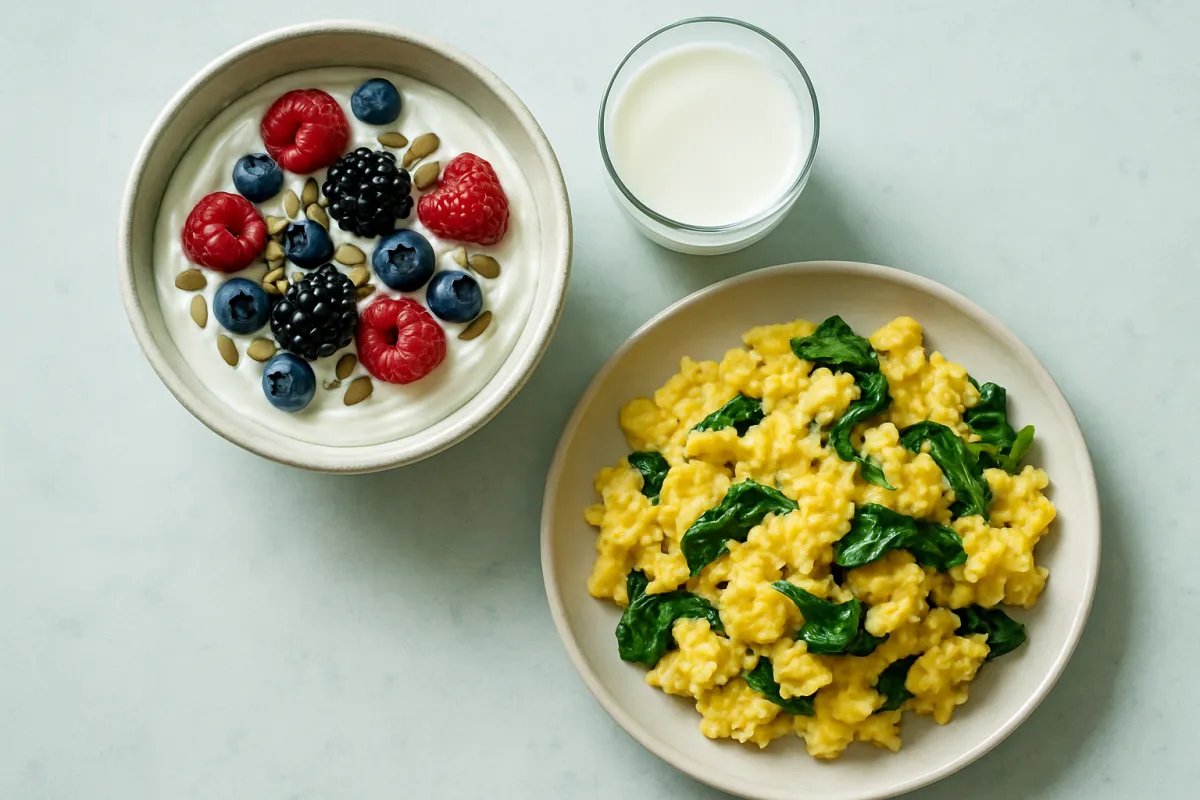
However the target is calculated, commonly cited guidance suggests distributing protein reasonably across meals rather than concentrating nearly all of it at one sitting, particularly dinner, which research on muscle protein synthesis frequently discusses as a pattern worth avoiding. A practical approach is including a meaningful protein source at each meal, eggs or yogurt at breakfast, a protein-forward lunch, and a balanced dinner, rather than saving the bulk of the day’s total for the evening.
For a woman targeting roughly 90 grams a day across three meals, that works out to about 30 grams per meal on average, though meals rarely split perfectly evenly in practice, and that is generally fine. The total for the day is what commonly cited guidance treats as the figure that matters most, with the spread as a secondary consideration that tends to make the total easier to reach.
Protein on a Plant-Forward Plate
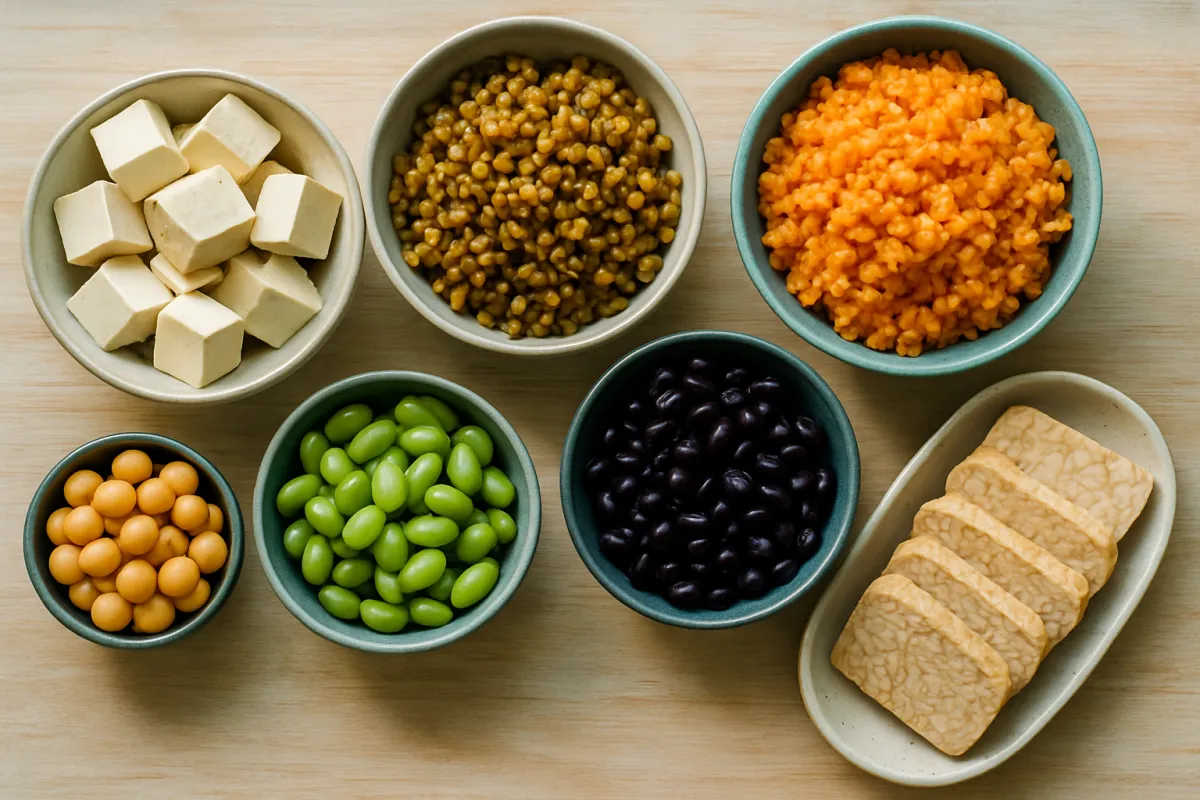
Women following a vegetarian or vegan pattern can meet any of the targets discussed above with reasonable planning, using beans, lentils, chickpeas, tofu, tempeh, edamame, nuts, seeds, and, for vegetarians, eggs and dairy. The main adjustment commonly discussed for a fully plant-based diet is eating a reasonable variety of plant protein sources across the day rather than relying heavily on just one or two, since individual plant proteins vary in which amino acids they supply generously.
Our plant protein guide walks through specific combinations and portions in more depth. The target itself, the grams-per-day figure calculated earlier in this review, does not change based on whether the sources are animal or plant; what changes is the planning required to reach it comfortably.
An Illustrative Day of Protein, Distributed Across Meals
One illustrative day near a 90-gram target, by meal
A constructed example for a woman with an illustrative target near 90 grams a day, spread across three meals and a snack. Not a meal plan or a personal target.
Segments sum to 100 percent of one illustrative 90-gram day, built for illustration rather than representing any real meal plan or recommended distribution.
The pattern worth taking from the chart is the shape, not the exact grams: a protein source at each meal, including breakfast, rather than a skipped morning followed by all the day’s protein crammed into dinner. The companion below recalculates this same spread using your own numbers.
Protein and Weight Management
Protein is commonly discussed as more filling per calorie than carbohydrate or fat for many people, which is one reason higher-protein approaches frequently appear in weight management guidance. A second commonly cited mechanism is that adequate protein, especially alongside resistance activity, may help preserve muscle during a calorie deficit, which matters because muscle loss during weight loss is a pattern many sources describe as worth minimizing.
Protein alone is not a weight loss method on its own, and overall calorie balance still does the central work in any weight change, a topic our calorie deficit guide covers directly. Treating protein as one supportive piece of a broader approach, rather than the whole plan, is the more accurate way to use this guidance.
Can Women Eat Too Much Protein?
For most healthy women, moderately high protein intakes within the commonly cited ranges discussed throughout this review are generally considered manageable. More is not automatically better past a point, and extremely high intakes offer diminishing benefit while potentially crowding out other nutrients, fiber and a wider range of plant foods among them, that a varied plate would otherwise supply.
Importantly, people with kidney disease or certain other conditions may need to limit protein specifically, which is a decision that belongs with the clinician managing that condition rather than with general guidance. Anyone with an existing health condition should confirm their own appropriate protein range before making a significant change.
Do You Need Protein Powders or Supplements?
Most women can meet any of the targets discussed in this review from ordinary food, and food brings along other nutrients, fiber, vitamins, and minerals among them, that a powder alone does not. A protein supplement is a convenience tool, useful when appetite, schedule, or a specific higher target makes food alone impractical on a given day, not a requirement for reaching any of the figures calculated above. Our protein shake guide covers how to use one sensibly if you choose to.
Anyone considering a supplement during pregnancy or breastfeeding specifically should check with their own clinician first, since not every product is formulated with those life stages in mind.
How This Compares to the General Protein Calculator
Our general protein intake review uses the identical baseline formula and the identical activity-level ranges described earlier in this review, 0.8 grams per kilogram at the sedentary baseline, 1.2 to 2.0 grams per kilogram across commonly cited active ranges. The math does not change based on sex. What this review adds on top of that shared foundation is the life-stage layer, pregnancy, breastfeeding, postpartum recovery, and the midlife trend toward the higher end of the range, none of which a generic adult calculator is built to walk through.
If none of those life stages currently apply to you, the general calculator and this one will return the same illustrative number for a given weight and activity level, which is exactly what consistent math should do. This review exists for the reader whose situation includes one of those additional layers and wants the reasoning spelled out rather than guessed at.
Protein Alongside Other Nutrients Women Often Track
Protein rarely travels alone in practice. Iron, discussed earlier in connection with menstruation, is frequently tracked alongside protein because many of the same foods, meat, poultry, fish, legumes, and fortified grains, contribute meaningfully to both. Calcium and vitamin D are commonly discussed together in the context of bone health across the life stages covered in this review, pregnancy, breastfeeding, and the years around menopause among them, though as noted earlier, protein plays a supporting role in that picture rather than the lead one.
None of this means tracking every nutrient at once is necessary or even helpful for most people. A protein target is a reasonable single focus to start with precisely because protein-rich foods, chicken, fish, eggs, dairy, beans, and tofu, tend to bring several of these other nutrients along with them, which is one more reason building meals around whole protein sources is generally more useful than chasing any single nutrient figure in isolation.
Common Mistakes in This Calculation
The most common mistake is applying a single flat number, often the 46-gram label figure, to every woman regardless of her actual body weight, which undersells the target for anyone heavier than the roughly 57-kilogram reference weight that figure assumes. A second common mistake is ignoring activity level entirely and defaulting to the sedentary baseline even for someone training regularly, which can leave a meaningful gap between intake and what commonly cited sports-nutrition guidance suggests for that activity level.
A third mistake is treating the pregnancy or breastfeeding increment as a fixed number that applies identically to everyone, rather than an addition on top of an individual’s own baseline that still depends on her specific weight and situation. A fourth, more general mistake is chasing protein numbers found on social media that are far outside any commonly cited range, which usually reflects marketing rather than nutrition science.
When to Talk to a Professional
This calculation is a starting point, not a substitute for individualized guidance. Anyone who is pregnant or breastfeeding should confirm their specific target with the clinician or dietitian managing that care. Anyone with kidney disease, a history of disordered eating, a digestive condition affecting absorption, or another condition that could change protein guidance should raise the topic directly with their own doctor rather than relying on general ranges. And anyone simply wanting a more personalized number than a formula can provide, accounting for a fuller picture of health history and goals, is well served by a conversation with a registered dietitian.
None of those situations require arriving with a self-diagnosed number already in hand. Describing your situation and letting a professional help set the target is the more reliable process, and it is exactly what the figures in this review are meant to support rather than replace.
The bottom line
Protein needs for women start from the same baseline math used for adults generally, about 0.8 grams per kilogram of body weight a day, and shift from there based on activity, pregnancy, breastfeeding, and, commonly, the years around menopause. A woman’s own number depends far more on her actual weight and situation than on a single figure printed on a label, and the life-stage increments discussed throughout this review are commonly cited starting points rather than fixed prescriptions.
Use the companion below, or the homepage’s daily protein target tool for a quicker version, to sketch your own illustrative number from your weight, activity, and life stage, and bring anything specific to pregnancy, breastfeeding, a health condition, or a more personalized target to a registered dietitian or doctor who knows your full history.
This nutrition review is published for general education about protein intake guidance commonly discussed for women and is not medical, dietary, or prenatal advice; reading it creates no clinician-patient relationship. Every figure here, including the baseline, activity ranges, and the pregnancy and breastfeeding increments, is presented as a commonly cited, illustrative reference rather than a personal prescription, and real guidance varies by source and by individual circumstances. Nothing here recommends a specific target for any pregnancy, any breastfeeding situation, or any health condition. Anyone who is pregnant or breastfeeding, anyone managing kidney disease or another condition that affects protein guidance, and anyone wanting an individualized target should consult a registered dietitian, doctor, or other qualified professional who knows their history rather than relying on this article alone.
Frequently asked questions
How much protein do women need per day?
The commonly cited baseline is about 0.8 grams of protein per kilogram of body weight per day, the same figure used for adults generally, which works out to roughly 46 grams for a woman at a commonly referenced weight of about 57 kilograms. Many nutrition guidelines point active women toward higher ranges, commonly 1.2 to 2.0 grams per kilogram, and pregnancy and breastfeeding both carry their own commonly cited increases above an individual baseline. Your own number depends on your weight, activity, and life stage, and a registered dietitian or doctor can tailor it further.
Do women need less protein than men?
Not really, once body size is accounted for. The baseline recommendation of about 0.8 grams per kilogram applies to adults generally regardless of sex, and the commonly quoted difference between men's and women's protein figures on nutrition labels mostly reflects the fact that reference calculations use a smaller average reference weight for women, not a different requirement per kilogram. A woman and a man of the same body weight and activity level land on very similar baseline targets using the same math.
How much more protein do you need during pregnancy?
Nutrition guidance commonly cites an additional increment on the order of roughly 25 grams a day above an individual's own non-pregnant baseline, reflecting the demands of a growing baby, expanding tissue, and supporting changes in the body. This is a commonly referenced illustrative figure rather than a universal prescription, and anyone pregnant should confirm their own target with the clinician or dietitian managing their prenatal care, since individual circumstances can shift it.
Does breastfeeding increase protein needs too?
Yes, nutrition guidance commonly cites a comparable increase during breastfeeding, often described in the same rough range as the pregnancy increment, reflecting the protein content of milk production on top of ordinary needs. The exact figure guidance quotes can vary by source and by how much milk is being produced, so this is best treated as a starting point to discuss with a lactation consultant, dietitian, or doctor rather than a fixed number.
Do protein needs change at menopause?
Many nutrition sources discuss protein needs trending toward the higher end of the commonly cited adult range around midlife and beyond, partly because muscle mass and bone density both tend to decline with age, and because protein paired with resistance activity is commonly discussed as supportive of preserving both. This is general guidance rather than an exact target, and anyone managing menopause symptoms or bone health specifically should raise protein and overall nutrition with their own clinician.
Can eating more protein help with weight management?
Protein is commonly discussed as more filling per calorie than carbohydrate or fat for many people, and higher protein intakes within commonly cited ranges are often part of approaches to weight management, partly because protein helps preserve muscle during a calorie deficit. Protein alone is not a weight loss method, and overall calorie balance still does the central work; anyone pursuing significant weight changes benefits from individualized guidance rather than a single macronutrient rule.
What are good protein sources for women who don't eat meat?
Plant sources including beans, lentils, chickpeas, tofu, tempeh, edamame, nuts, seeds, and fortified plant milks can meet protein needs with reasonable variety across the day, often alongside eggs and dairy for those who eat them. Our plant protein guide on this site covers specific combinations in more depth, and spreading sources across meals rather than concentrating them at one sitting tends to make a target easier to reach.
Is it possible to eat too much protein?
For most healthy women, moderately high protein intakes within commonly cited ranges are generally considered manageable, though very high intakes offer diminishing returns and can crowd out other nutrients on the plate. People with kidney disease or certain other conditions may need to limit protein specifically, which is a decision for a clinician familiar with the condition. Anyone with an existing health condition should confirm their own appropriate range rather than following general guidance.

Hamza Hai is the editor of NourishMark. She holds an MBA and reviews the site's articles against our editorial standards, checking that every figure is labelled for what it is, that nothing is presented as verified fact without a source the reader can check, and that the writing stays useful to a non-specialist.

Dr. Shayaan Khan is the medical reviewer for NourishMark. He holds an MBBS from MGM Medical College, Navi Mumbai, and is the author of published research including a narrative review of postpartum anxiety and depression in Mental Health Science. He has taught physiology at university level. He reviews the site's health content for medical accuracy: that physiology and mechanisms are described correctly, that no claim is stated more strongly than the evidence behind it, and that anything specific to an individual reader is sent to that reader's own clinician.
Not medical advice. Dr. Khan reviews NourishMark's health content for medical accuracy. He is not a registered dietitian, he does not hold a United States practising licence, and he is not your doctor. His review does not make anything here medical advice. Always talk to a qualified health professional about your own situation, and never delay or stop care because of something you read here.