What's in this review
- Calories in a Sweet Potato: The Direct Answer
- Calories in a Sweet Potato by Size and Preparation: A Quick Table
- How Many Calories in a Medium Baked Sweet Potato?
- Calories in 100g of Sweet Potato
- Calories in a Boiled Sweet Potato
- Calories in Mashed Sweet Potatoes
- Roasted Sweet Potato and the Oil Question
- Sweet Potato Fries: Baked vs Fried
- Candied Sweet Potatoes and Marshmallow Casserole
- Sweet Potato vs White Potato Calories
- Orange, White, Purple, and Japanese Sweet Potatoes Compared
- What a Sweet Potato Is Made Of
- Carbs and Fiber in a Sweet Potato
- Vitamin A and the Beta-Carotene Story
- Skin On or Off?
- Sweet Potatoes and Blood Sugar
- Sweet Potatoes and Fullness
- Toppings: How a Plain Sweet Potato Becomes a Loaded One
- How a Sweet Potato Fits Your Daily Calories
- A Worked Example: A Sweet Potato Dinner by the Numbers
- Common Mistakes Counting Sweet Potato Calories
- The Bottom Line
Short answer: A plain medium baked sweet potato with skin, about 130 grams, lands near 115 calories, built from a commonly cited rate near 90 calories per 100 grams. Boiled and drained runs lighter, near 76 per 100 grams, while mashed with butter climbs to roughly 105 to 110, oven fries near 150, deep-fried fries near 300, and a sugared casserole well past 190. A medium sweet potato carries roughly 25 grams of carbohydrate and a standout amount of vitamin A.
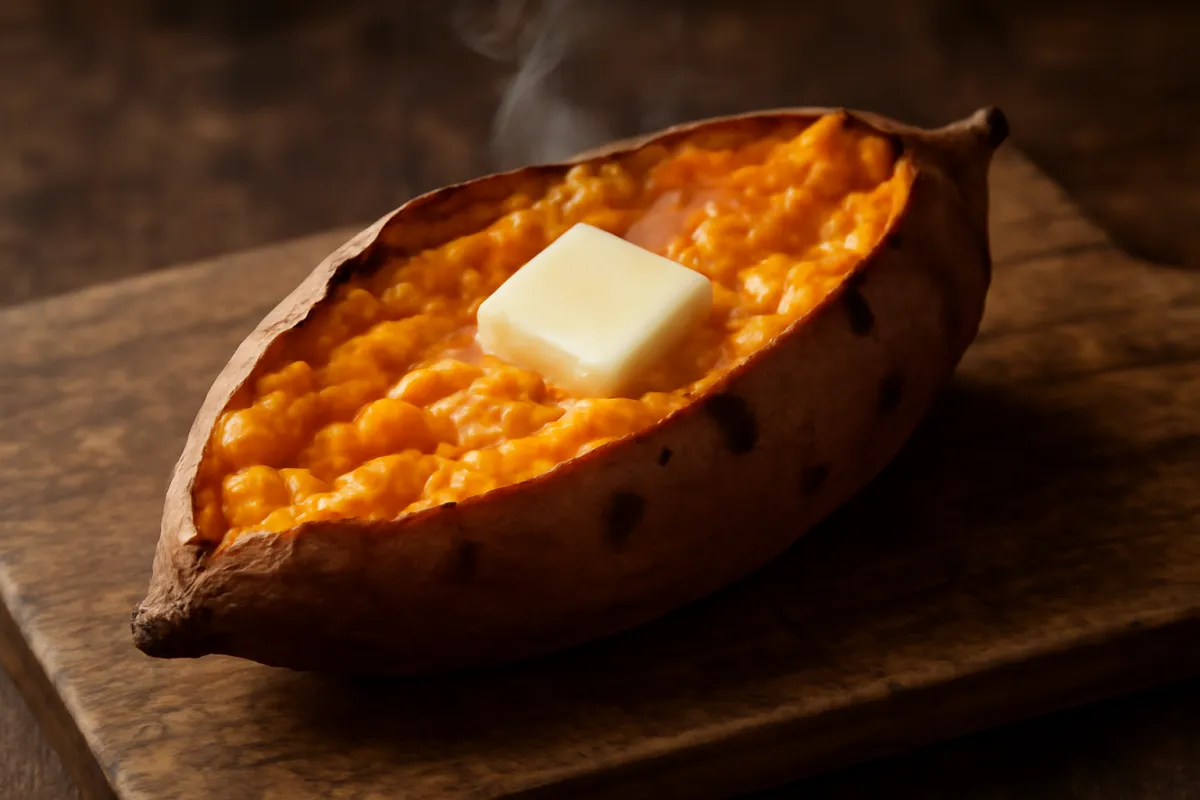
Calories in a sweet potato depend far less on the vegetable itself than on what happens to it between the garden and the plate. Using commonly cited food composition figures, a plain medium sweet potato baked in its skin, about 130 grams, lands near 115 calories, and the same root boiled and drained runs lighter still, near 76 calories per 100 grams. Fried, sugared, or buttered, the exact same vegetable becomes a very different food: oven-baked fries sit near 150 calories per 100 grams, deep-fried fries near 300, and a holiday casserole built on butter, brown sugar, and marshmallow can clear 200 per 100 grams without anyone measuring anything. The sweet potato’s calorie story is a preparation story first, and this reference walks it rung by rung, the way our companion piece on potato calories does for its white-fleshed cousin.
This food reference is organized so you can find the size and method you actually have in front of you: baked, boiled, mashed, roasted, fried, candied, and the white potato comparison that comes up in nearly every conversation about either vegetable. It works through commonly cited figures by size and method, what a sweet potato is physically made of, the vitamin A story that sets it apart nutritionally, the fiber and blood sugar questions that complicate its health-food reputation, and the counting mistakes that make this root seem less predictable than it is. It pairs with our review of how many carbs per day, since a sweet potato is first and foremost a carbohydrate serving, and with our calorie needs review for the day it sits inside. It is educational, describes food composition only, and is not diet or medical advice. You can tally your own sweet potato in the companion below.
Key takeaways
- Commonly cited figures put a plain medium baked sweet potato with skin, about 130 grams, near 115 calories, with baked near 90 calories per 100 grams and boiled, drained, near 76.
- Preparation is the whole story: mashed with butter runs near 105 to 110 calories per 100 grams, oven-baked fries near 150, deep-fried fries near 300, and a sugared casserole well past 190, all the same vegetable plus added fat, sugar, or lost water.
- A medium sweet potato carries roughly 25 grams of carbohydrate with about 3 to 4 grams of fiber, comparable to a cup of cooked rice or two slices of bread, and is nearly identical in calories to a same-sized white potato.
- Sweet potatoes are commonly cited as unusually rich in vitamin A, delivered as beta-carotene, often enough in one medium potato to clear a full day's commonly cited reference intake on its own.
- Every figure here is a commonly cited, illustrative reference, not an exact measurement or a personal target; for anything tied to your health, consult a doctor or registered dietitian.
Calories in a Sweet Potato: The Direct Answer
The direct answer is that a plain medium sweet potato baked in its skin carries roughly 115 calories, built from a commonly cited rate near 90 calories per 100 grams and a typical medium weight around 130 grams. Boiled and drained sweet potato reads lower per gram, near 76 calories per 100 grams, because some of the root’s natural sugars move into the cooking water, a pattern different from white potato, which barely changes between boiling and baking.
Size scales the figure the way it does for any vegetable: a small sweet potato near 100 grams runs about 90 calories, a large one near 180 grams about 160. Preparation scales it far more, and that is the thread running through every section below: the plain sweet potato is a moderate-calorie food, and nearly everything people associate with heavier sweet potato dishes, candied sides, loaded fries, dessert-adjacent casseroles, comes from added sugar and fat rather than from the vegetable itself. It is also worth saying plainly that a sweet potato is a substantial carbohydrate serving, near 25 grams for a medium one, so it occupies the starch position on a plate rather than the free vegetable position of a leafy green. Set your own sweet potato, by size and method, in the companion below, and treat every number here as a commonly cited, illustrative reference rather than a measurement of the root on your counter.
Calories in a Sweet Potato by Size and Preparation: A Quick Table
Because size and method both move the figure, a short table is the fastest way to see the whole picture. The rows below draw on commonly cited food composition data for plain preparations, with widely cited restaurant-style ranges for the fried and candied rows.
| Sweet potato | Portion | Calories, roughly | Carbs, roughly |
|---|---|---|---|
| Baked, with skin | Small (~100 g) | ~90 kcal | ~21 g |
| Baked, with skin | Medium (~130 g) | ~115 kcal | ~26 g |
| Baked, with skin | Large (~180 g) | ~160 kcal | ~36 g |
| Baked, with skin | 100 g | ~90 kcal | ~21 g |
| Boiled, drained | 100 g | ~76 kcal | ~18 g |
| Mashed, with butter | 1 cup (~250 g) | ~270 kcal | ~45 g |
| Roasted in oil | 100 g | ~135 kcal | ~20 g |
| Fries, oven-baked | 100 g | ~150 kcal | ~24 g |
| Fries, deep-fried | Medium serving (~115 g) | ~345 kcal | ~42 g |
| Candied or casserole | 1/2 cup (~125 g) | ~260 kcal | ~40 g |
The table’s shape repeats the pattern most starchy vegetables follow. The plain rows, baked and boiled, sit in a narrow band near 75 to 90 calories per 100 grams, while every step toward added fat or sugar climbs: a moderate step for home mashing, a bigger one for roasting in oil, and a different category altogether once sugar and marshmallow enter the picture. Use whichever row matches your plate and treat the totals as commonly cited references rather than exact measurements, since sweet potato size varies by variety and season more than most produce.
How Many Calories in a Medium Baked Sweet Potato?
The medium baked sweet potato is the natural reference point, and its arithmetic is simple: about 130 grams at a commonly cited rate near 90 calories per 100 grams with skin, landing near 115 calories. Alongside ride roughly 25 grams of carbohydrate, 2 grams of protein, 3 to 4 grams of fiber, and almost no fat, a profile close enough to a white potato’s that the calorie label rarely settles which one to choose.
Two things about that figure are worth holding onto. First, “medium” does real work here, more than with most vegetables: sweet potatoes sold loose at a grocery store commonly run anywhere from 90 grams to well past 250, so the honest range for “a baked sweet potato” is roughly 80 to 220 calories, and foodservice portions tend toward the larger end. Weighing one occasionally is the only way to calibrate the eye. Second, the 115 calorie figure describes a naked sweet potato, and sweet potatoes are rarely served naked at a holiday table. A tablespoon of butter adds roughly 100 calories, a drizzle of maple syrup or honey near 60, and a scoop of brown sugar and marshmallow can add more than the potato itself contains, which is how a dressed sweet potato side commonly lands well above 300 calories. The toppings section below prices that ladder in full. These are illustrative, commonly cited figures, and your sweet potato’s actual weight is the variable that matters most.
Calories in 100g of Sweet Potato
Stated per 100 grams, plain sweet potato sits in familiar starchy-vegetable territory. Commonly cited figures put baked sweet potato with skin near 90 calories per 100 grams, boiled and drained near 76, and raw near 86, the boiled figure lowest because some natural sugars leach into the cooking water during boiling, a detail that differs from white potato, where boiling and baking land closer together. For comparison on the same basis, cooked rice runs near 130, bread near 265, and cooked pasta near 160, which places sweet potato at roughly a third to two thirds the density of the starches it most often substitutes for.
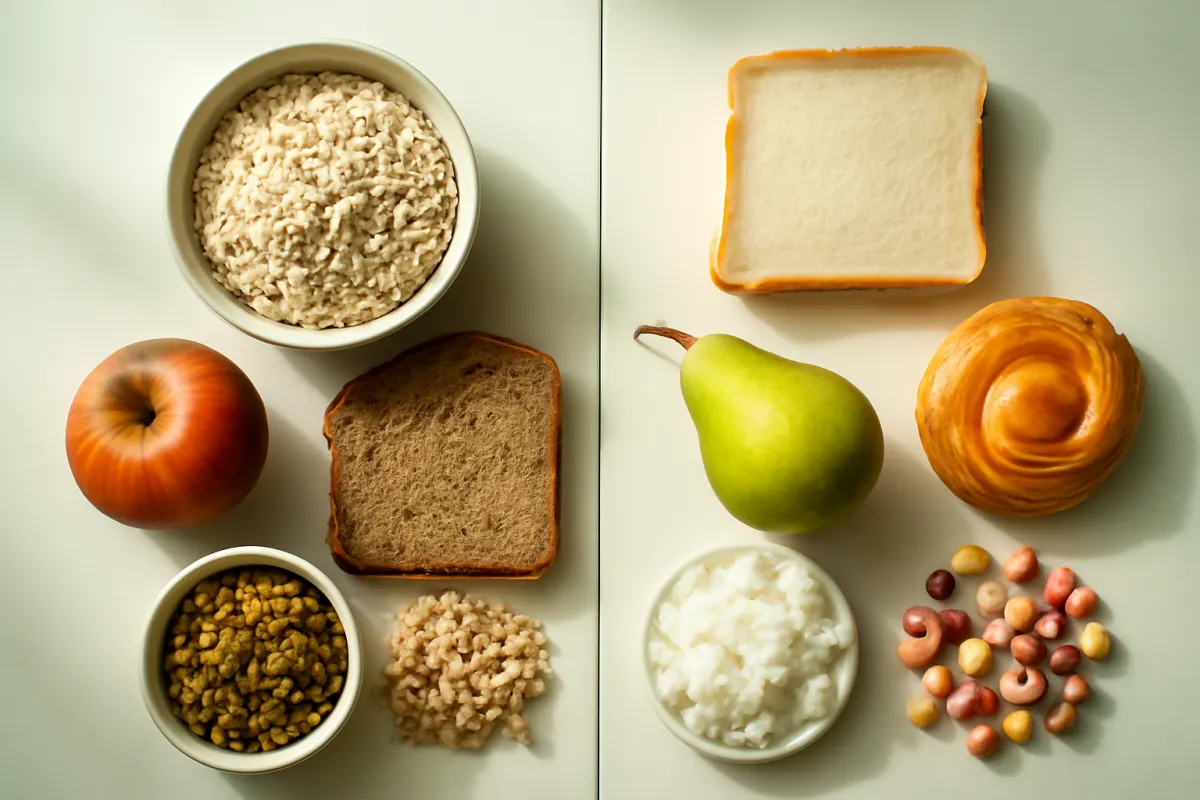
That modest density is part of the sweet potato’s appeal: a generous 250 gram serving of boiled sweet potato costs about 190 calories, the price of less than a cup of cooked rice, while delivering substantial food by weight and volume along with fiber and vitamin A that rice does not carry. The density ladder still climbs with preparation, the same two levers doing the work, added fat and lost water, which the chart below lays out across the whole range of common preparations.
Sweet potato calories per 100 g by preparation
Approximate calories per 100 g of the same root vegetable across common preparations, based on commonly cited food composition figures. Illustrative reference values.
Bars scale to deep-fried fries at 100 percent. Each step up the ladder adds fat, sugar, or both, or removes water; the sweet potato's own energy never changes. Illustrative references, not a target.
The chart is the reference compressed into one view: plain preparations cluster at the light end, home enrichments step up gradually, and the fried and sugared forms stand well apart. These are commonly cited, illustrative figures that vary with variety, size, and recipe, and a label or recipe calculator for your own dish is the better source for anything precise.
Calories in a Boiled Sweet Potato
Boiled sweet potato is the lightest common preparation, commonly cited near 76 calories per 100 grams, so a medium sweet potato boiled runs near 100 calories, a 200 gram portion near 150, and a generous 300 gram serving near 230. The lower figure compared with baking is a genuine composition effect: sweet potatoes are relatively high in soluble sugars, and some of those sugars dissolve into the boiling water rather than staying concentrated in the flesh, the reverse of what baking does by driving water off and concentrating what remains.
Practical counting notes are few. Peeling before or after boiling makes little calorie difference, since the skin is thin and contributes modestly to the total weight. Boiling in large chunks rather than whole loses a little more to the water than boiling whole, an effect worth knowing if you cut before cooking. And the moment butter, brown sugar, or cream enters the pot, as it does in many mashed and candied preparations, the dish should be counted as its own recipe rather than as plain boiled sweet potato. A plain boiled sweet potato with herbs or a squeeze of lime remains one of the lighter full starch servings on the stove. These are illustrative, commonly cited figures.
Calories in Mashed Sweet Potatoes
Mashed sweet potato is the first rung on the enrichment ladder, and like its white-fleshed cousin, its calories are really a recipe question. A standard home version, sweet potato mashed with a tablespoon or two of butter and a splash of milk or cream, is commonly cited near 105 to 110 calories per 100 grams, which works out to roughly 265 to 275 calories in a one cup serving of about 250 grams.
The spread across recipes is wide. Mashed with broth or a small amount of plant milk and no added fat sits close to the boiled sweet potato rate, near 80 per 100 grams. The standard buttered version adds 30 to 45 percent over that baseline. Versions sweetened with brown sugar, maple syrup, or a splash of vanilla, common at holiday tables, commonly run 140 to 170 per 100 grams before any marshmallow goes on top, since sugar is added calories with no fiber or protein alongside it. The sweet potato itself contributes a fairly steady base; everything above that line is dairy, fat, and sugar. The counting method is the one that works for any mixed dish: price the sweet potato at its plain rate, price each addition by the spoon that actually went in, and total the recipe once. These are illustrative, commonly cited ranges, and your own pot is the real number.
Roasted Sweet Potato and the Oil Question
Roasted sweet potato cubes or wedges sit between the oven and the fryer, and the variable, as with white potato, is almost entirely the oil. Sweet potato roasted with a typical coating of oil is commonly cited near 135 calories per 100 grams, against about 90 for dry-baked, with the figure set by how generously the pan is dressed and how much cut surface the pieces expose. Small cubes pick up more oil per gram than large wedges or a whole roasted potato, for the same surface-area reason that applies to any roasted vegetable.
The arithmetic is worth running once. A tablespoon of olive oil carries roughly 120 calories, and a typical roasting tray for four might use two tablespoons, adding about 240 calories across the batch, or 60 calories per serving on top of the sweet potato’s own 90 per 100 grams. That is a moderate addition rather than a dramatic one, which is why oven-roasting with a measured amount of oil is the standard move for anyone who wants caramelized edges without fryer-level calories. Air fryers push the same trade further, commonly landing roasted sweet potato near 110 to 125 per 100 grams with a teaspoon or two of oil. The counting rule stays mechanical: log the sweet potato at its plain rate and the oil by the spoon that actually went on the tray. These are commonly cited, illustrative figures that vary with recipe and cut.
Sweet Potato Fries: Baked vs Fried
Sweet potato fries have built a health-food reputation that the calorie numbers only partly support. Oven-baked sweet potato fries, cut into wedges or sticks and tossed with a measured tablespoon or two of oil, are commonly cited near 150 calories per 100 grams, noticeably lighter than the fried version and close to a well-oiled roast. Deep-fried restaurant sweet potato fries are a different matter, commonly cited near 280 to 320 calories per 100 grams, which lands in the same range as deep-fried white potato fries rather than meaningfully below it.
A typical side order of sweet potato fries, around 110 to 120 grams, commonly totals near 320 to 360 calories fried, versus roughly 165 to 180 baked at home. The reason sweet potato fries are often perceived as lighter has more to do with portion size, since a restaurant side is frequently smaller than a full white-potato-fries order, and with the vitamin A they carry that plain fries do not, than with any fundamental calorie advantage per gram. The sugar in sweet potato does make it brown and sometimes burn faster in hot oil, which is a cooking detail cooks manage with lower temperatures, not a calorie difference. Thin-cut sweet potato fries absorb more oil per gram than thick wedges, the same pattern seen with any fried potato. These are commonly cited, illustrative figures that vary by cut, oil, and fryer.
Candied Sweet Potatoes and Marshmallow Casserole
The candied sweet potato, often built with butter, brown sugar, and sometimes a marshmallow topping, is where this vegetable’s calorie story diverges furthest from the plain root. A home-style candied sweet potato or casserole is commonly cited in the range of 190 to 240 calories per 100 grams, roughly two to three times the plain baked rate, and a generous half-cup serving, about 125 grams, can land anywhere from 240 to 350 calories depending on how much butter, sugar, and marshmallow the recipe calls for.
The arithmetic behind that range is straightforward once it is broken into lines. The sweet potato base contributes something close to its plain mashed rate, perhaps 80 to 100 calories per 100 grams of the finished dish. A generous pour of butter and brown sugar adds the next 80 to 120. A layer of toasted marshmallow on top, which is essentially pure sugar, can add 40 to 80 more depending on thickness. None of these additions are hidden; they are simply easy to lose track of in a dish eaten as a side rather than a dessert, even though its composition is closer to dessert than to a vegetable. There is no single standard recipe for this dish, so counting it well means pricing the specific recipe in front of you rather than reaching for one figure. These are illustrative, commonly cited ranges.
Sweet Potato vs White Potato Calories
The comparison that comes up in nearly every conversation about either vegetable turns out to be close to a tie. Baked sweet potato is commonly cited near 90 calories per 100 grams and baked white potato with skin near 93, a gap small enough to sit inside normal measurement variation. A medium baked sweet potato, near 130 grams, lands close to a medium baked white potato in total calories once their typical sizes are accounted for, since white potatoes often run a little larger.
| Per 100 g, baked plain | Sweet potato | White potato |
|---|---|---|
| Calories | ~90 kcal | ~93 kcal |
| Carbohydrate | ~21 g | ~21 g |
| Fiber | ~3 g | ~2 g |
| Protein | ~2 g | ~2 g |
| Vitamin A | Commonly cited as very high | Commonly cited as minimal |
| Potassium | Commonly cited as moderate | Commonly cited as somewhat higher |
Where the two genuinely separate is character rather than calories. Sweet potatoes carry substantially more vitamin A, delivered as beta-carotene in amounts few vegetables match, along with a little more natural sugar, which is the sweetness on the tongue, and slightly more fiber per typical serving. White potatoes answer with a bit more potassium and a starchier profile that some cooking methods favor. Our companion reference on potato calories covers the white-fleshed side of this comparison in full. The honest conclusion is to choose by flavor, dish, and the rest of the plate rather than by calories, since the calorie line will not decide it either way.
Orange, White, Purple, and Japanese Sweet Potatoes Compared
Sweet potato is not one uniform food. Orange-fleshed varieties are the most common in North American groceries and the ones most of this reference’s figures describe. White-fleshed and purple-fleshed sweet potatoes, along with the drier, sweeter Japanese and Korean varieties sometimes labeled “Japanese sweet potato” or “murasaki,” share a similar calorie range, commonly cited within roughly 85 to 100 calories per 100 grams cooked plain, but differ meaningfully in flesh color, moisture, and sweetness.
The orange varieties carry the most dramatic beta-carotene content and the moistest texture. Purple-fleshed varieties carry a different set of plant pigments, anthocyanins, associated in commonly cited nutrition writing with antioxidant activity, though the specific health claims attached to any pigment are an active area of research this reference does not summarize as settled fact. White-fleshed sweet potatoes tend to read less sweet and starchier, closer to a dense white potato in mouthfeel despite sharing the sweet potato name and root structure. For counting purposes, the variety differences are modest enough that any plain-cooked sweet potato can be estimated near 85 to 95 calories per 100 grams without much risk of being far off, while the nutrient profile, especially vitamin A, does shift meaningfully by color. These are commonly cited, illustrative figures.
What a Sweet Potato Is Made Of
Understanding a sweet potato’s composition explains most of its numbers, in the same way it does for white potato. A medium baked sweet potato, about 130 grams, is dominated by water even after baking, with carbohydrate a distant second and everything else a small fraction of the total.
What a medium baked sweet potato is made of (by weight)
Approximate makeup by weight of a ~130 g baked sweet potato with skin, based on commonly cited food composition figures. Illustrative reference values.
Segments show each component's share of the sweet potato's weight. The ~115 calories come almost entirely from the carbohydrate slice, since fat is a trace. Illustrative figures.
The chart explains the sweet potato’s whole calorie personality. Because roughly three quarters of the weight is water, the plain root is filling and moderate per gram; because nearly all the dry matter is carbohydrate, split between starch and natural sugar, the calories track carbohydrate closely, at about 4 calories per gram, with trace fat contributing almost nothing. Every heavier sweet potato dish works by attacking one or both segments: frying shrinks the water slice and adds fat, while butter, sugar, and marshmallow bolt sugar and fat onto a food that naturally has very little of either. These are commonly cited, illustrative figures that vary with size and bake time.
Carbs and Fiber in a Sweet Potato
A sweet potato is a carbohydrate serving before it is anything else, and honest counting treats it that way. A medium baked sweet potato carries roughly 26 grams of carbohydrate, at a commonly cited rate near 21 grams per 100 grams baked and 18 boiled, which places it beside a cup of cooked rice, near 45 grams, or two slices of bread, near 30, as the starch of the meal.
Within that carbohydrate, about 3 to 4 grams is fiber, and a meaningfully larger share than in white potato is natural sugar, commonly cited around 5 to 7 grams per 100 grams, which is the main reason sweet potato tastes sweet without any added sugar at all. Two details reward attention here. First, sweet potatoes eaten with the skin are a solid fiber contributor, comparable per serving to many whole grains, a subject our high-fiber foods list covers more broadly. Second, the natural sugar content, while genuine, does not make sweet potato equivalent to a sweetened food; it is still a whole vegetable carrying fiber, water, and micronutrients alongside that sugar. For anyone budgeting carbohydrate across a day, the frameworks in our how many carbs per day review apply directly, with the sweet potato counted like any other starch serving. Anyone managing diabetes should set carbohydrate targets with their clinician. These are commonly cited, illustrative figures.
Vitamin A and the Beta-Carotene Story
The sweet potato’s most distinctive nutritional feature has nothing to do with calories. Orange-fleshed sweet potato is commonly cited as one of the richest whole-food sources of beta-carotene, the plant pigment the body converts into vitamin A, and the amount in a single medium baked sweet potato is commonly cited as exceeding a full day’s reference intake for vitamin A for most adults, in some commonly cited figures by a wide margin. That single property is responsible for much of the vegetable’s health-food reputation, independent of its calorie count.
This is worth stating carefully rather than with an invented precise number, since beta-carotene content varies with variety, size, and how deeply orange the flesh is. What can be said generally is that the deeper the orange color, the more beta-carotene is commonly present, and that cooking method affects it only modestly, since beta-carotene is relatively heat-stable and is somewhat better absorbed from cooked sweet potato than raw, especially when eaten with a little fat. White-fleshed and purple-fleshed sweet potato varieties carry far less beta-carotene than orange-fleshed ones despite sharing the same calorie range, which is the clearest nutritional argument for choosing orange sweet potato specifically when vitamin A is the goal. Vitamin A needs and any supplementation question belong with a doctor or registered dietitian rather than a food reference, particularly during pregnancy, when vitamin A intake is handled with specific caution.
Skin On or Off?
The skin question moves a sweet potato’s nutrition slightly more than its calories, echoing the pattern seen with white potato. A medium baked sweet potato with skin carries about 3 to 4 grams of fiber; peeled, closer to 2 to 3. The calorie difference from peeling is small, since the skin is thin and light relative to the whole root, so skin-on sweet potato is the modestly higher-fiber version of essentially the same calorie figure.
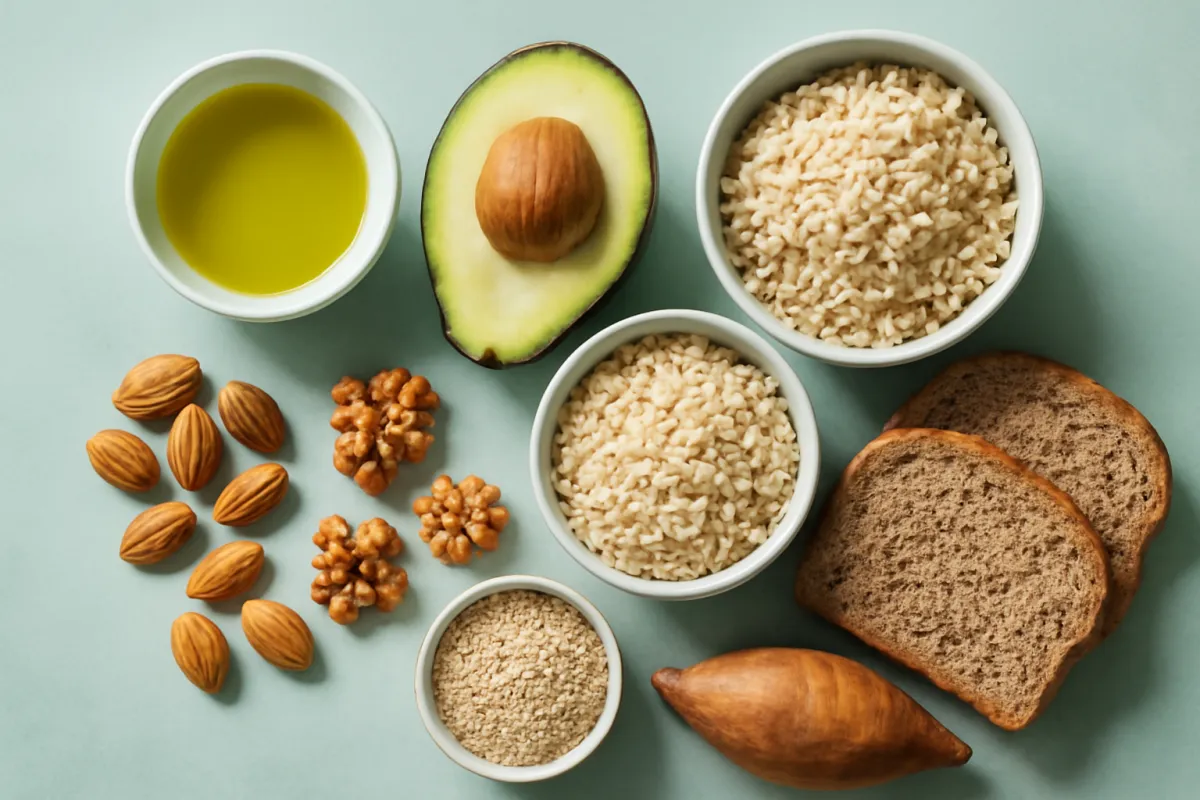
The practical case for skin-on baking goes beyond fiber. Baking a sweet potato whole in its skin helps it hold its shape and keeps the flesh from drying out as much as peeled chunks would in the same oven time. Roasted skin-on wedges also crisp at the edges with less oil than peeled cubes, for the same surface-tension reason that applies to white potato. The case for peeling is mostly textural, a silkier mash or a smoother soup, and occasionally practical for anyone who finds the thin skin unappealing to eat. Washed well, the skin is a low-cost upgrade on most preparations. These are general food-composition points, commonly cited and illustrative, not a rule anyone must follow.
Sweet Potatoes and Blood Sugar
Sweet potatoes are a starchy food, and like any starch they raise blood glucose, though commonly cited glycemic index tables generally place boiled sweet potato somewhat lower than baked russet potato, while baked sweet potato itself can read closer to baked white potato depending on variety and cooking time. That nuance matters, because the popular claim that sweet potato simply “doesn’t spike blood sugar” oversimplifies a comparison that depends heavily on cooking method.
Several factors moderate the response for either vegetable in practice. Eating sweet potato with protein, fat, and vegetables, which is how it is usually served, flattens the glucose rise relative to the root alone. Boiling tends to read lower than baking for both potatoes, likely related to how starch structure changes with each cooking method. Portion size scales everything, since 25 grams of carbohydrate behaves differently from double that amount in one sitting. Individual glucose responses vary widely between people, a variability modern glucose monitoring has made visible even among people without diabetes. For most people the practical guidance mirrors the one for white potato: treat sweet potato as a normal starch, portioned like one, within the balanced-plate pattern our balanced meal guide describes. Anyone managing diabetes or prediabetes should build their carbohydrate approach with their own clinician. This is educational context, not medical advice.

Sweet Potatoes and Fullness
Sweet potatoes share a property with plain white potatoes that their dessert-adjacent reputation obscures: the plain versions are genuinely filling for their calorie cost. The combination of roughly three quarters water weight, a meaningful fiber content, and a moderate glycemic load gives plain baked or boiled sweet potato a reasonable fullness-per-calorie profile, similar in direction to the satiety properties commonly described for white potato, even though sweet potato has not been studied in quite the same depth in the specific satiety research literature that made plain potatoes famous for that property.
That caveat matters: this reference is not claiming a specific study ranking for sweet potato and will not invent one. What can be said is the mechanical argument, which holds regardless of study specifics: a food that is mostly water and fiber, eaten plain, tends to fill the stomach at a lower calorie cost than the same ingredient fried or heavily sweetened, because frying and sugaring both concentrate calories into less volume. The practical pattern follows from that mechanism rather than from a headline number: plain or lightly dressed sweet potato as a meal’s starch, portioned like any starch, is a reasonably filling choice; the fried and candied versions are treats to portion deliberately, exactly as with white potato. These are general, illustrative points offered as context, not a weight-loss claim.
Toppings: How a Plain Sweet Potato Becomes a Loaded One
The baked sweet potato’s topping bar decides its final calorie count more than anything discussed so far, and pricing it once makes every future sweet potato easier to read. The plain medium baker starts near 115 calories. Cinnamon, a pinch of salt, and a squeeze of lime leave it there. A teaspoon of honey adds about 20. A tablespoon of butter adds near 100. Two tablespoons of brown sugar add near 100 more. A scoop of toasted marshmallow can add 60 to 100 depending on how much is used.
Stack the holiday classics, butter, brown sugar, and marshmallow, and a loaded sweet potato lands near 350 to 400 calories, three times its plain base, with the sweet potato now a minority contributor to its own dish, mirroring exactly the trajectory a loaded white baked potato takes with cheese and bacon. The lighter builds move the same ladder downward: a sprinkle of cinnamon and a few chopped pecans add flavor and texture for a modest calorie cost; plain Greek yogurt or a small pat of butter alone keeps the dish recognizable as a vegetable rather than a dessert. The counting rule stays the same one this reference applies throughout: the sweet potato is the stable line, near 90 calories per 100 grams, and every topping is its own entry. These are commonly cited, illustrative figures that vary by spoon and kitchen.
How a Sweet Potato Fits Your Daily Calories
A sweet potato’s calories only mean something against a daily total, and that total is personal, set by body size, activity, age, and goals, the territory of our review of how many calories you need. Against the 2,000 calorie day used on nutrition labels for illustration, the sweet potato’s forms span a wide range: a plain medium baker near 115 calories is about 6 percent of such a day, a half cup of home mashed near 135 about 7 percent, a loaded holiday serving near 375 nearly a fifth, and a fast-food side of fries near 345 similar, as a side alone.
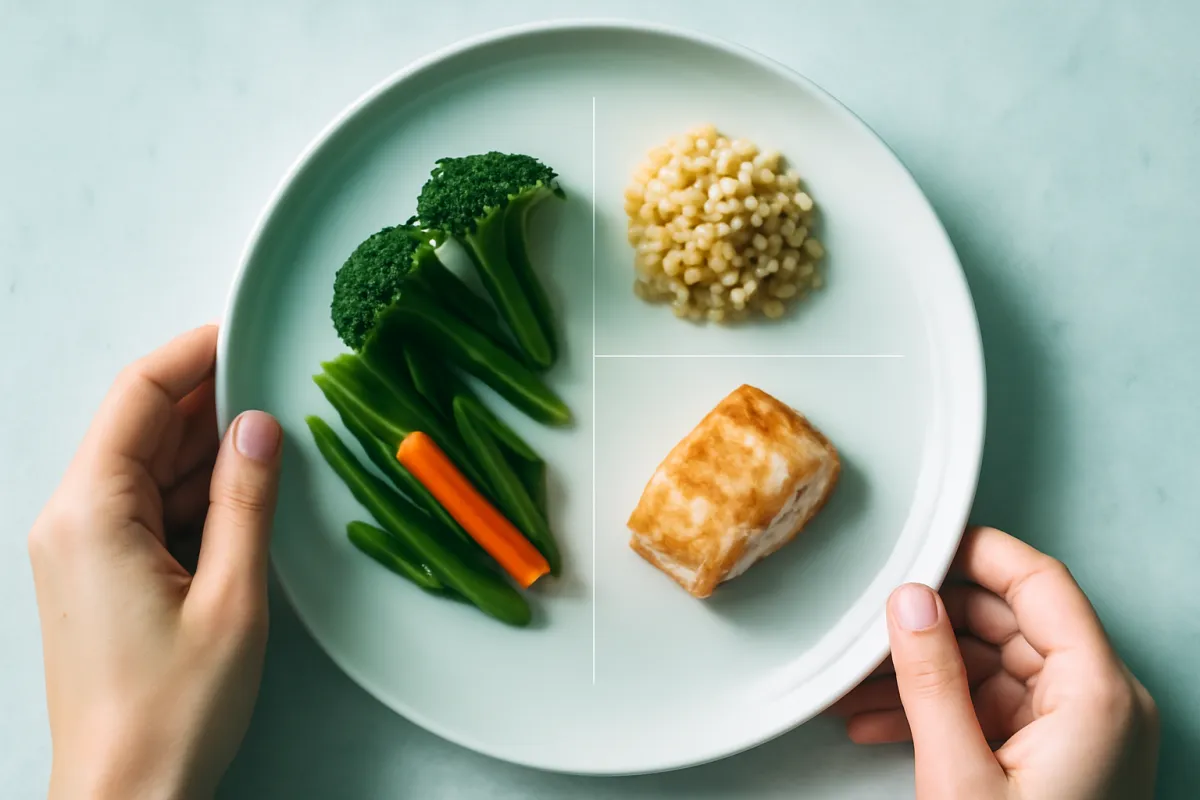
The plate position matters as much as the number. As the meal’s starch quarter, in the pattern our balanced meal guide lays out, a medium sweet potato is a moderate, nutrient-dense anchor that pairs with a protein and vegetables into a complete dinner. As a side next to another starch, or as fries beside a sandwich, the same calories stack on top of an already complete meal, which is where days quietly overrun. Carbohydrate budgeting follows the same logic, with the sweet potato’s roughly 25 grams counted alongside the day’s other starches; our daily nutrient reference tabulates the commonly cited daily figures it fits into. Set your own day in the companion below and watch each preparation become a share of your target. These are illustrative reference points, not targets; your own numbers belong with a qualified professional.
A Worked Example: A Sweet Potato Dinner by the Numbers
To pull the arithmetic together, here is one illustrative dinner priced line by line, chosen to show the method rather than to recommend a meal. The starch: a medium baked sweet potato with skin, about 130 grams, near 115 calories. The protein: a 4 ounce cooked chicken breast, near 185 calories. The vegetables: a generous pile of roasted green beans and carrots tossed with one teaspoon of the tray’s oil, near 80 calories with its share of oil counted. The sweet potato’s dressing: a small pat of butter, near 50 calories, and a sprinkle of cinnamon, essentially free.
The plate lands near 430 calories, with roughly 40 grams of carbohydrate, 40 grams of protein, and the fiber of both the sweet potato skin and the vegetables, a balanced dinner by most common reference points. The instructive part is the sensitivity analysis. Swap the single pat of butter for the full brown sugar and marshmallow treatment and the plate passes 650. Swap the baked sweet potato for a deep-fried side of sweet potato fries and it passes 700 with less fiber and vitamin A. Shrink the sweet potato to a small one and the plate drops near 400. The sweet potato itself was never the swing variable; the preparation and the toppings were, which is the same lesson our potato calories reference demonstrates on its own plate. Build your own version in the companion below. All figures are illustrative, chosen to show the math.
Common Mistakes Counting Sweet Potato Calories
A short list of recurring errors explains most sweet potato miscounts, and each is easy to fix once named.
- Treating every sweet potato as medium. Real sweet potatoes run from 90 to 250-plus grams, an honest range of roughly 80 to 220 calories; grocery sizes vary more than packaged foods do.
- Assuming “sweet” means lower calorie. Baked sweet potato and baked white potato land within a few calories of each other per 100 grams; neither is meaningfully lighter.
- Logging candied sweet potatoes or casserole as plain baked. Butter, brown sugar, and marshmallow commonly double or triple the plain figure, and the dish deserves its own line.
- Treating sweet potato fries as automatically lighter than regular fries. Deep-fried sweet potato fries sit in the same calorie range as deep-fried white potato fries; the baked version is the lighter choice, not the vegetable itself.
- Ignoring tray oil on roasted sweet potato. Two tablespoons across a roasting pan add roughly 240 calories to the batch, a spoon-counted entry rather than a rounding error.
- Treating illustrative figures as exact. Every number here is a commonly cited reference that varies with size, variety, and recipe, not a measurement of the sweet potato on your counter.
Each of these is a counting error rather than an eating error. Corrected, the sweet potato becomes a predictable food: near 90 calories per plain 100 grams baked, plus whatever the kitchen honestly added.
The Bottom Line
The calories in a sweet potato are, like its white-fleshed relative, mostly a preparation story: plain baked sweet potato near 90 calories per 100 grams and boiled, drained, near 76, so a plain medium baker lands near 115 calories, a figure essentially tied with a same-sized white potato. Every higher number attached to this vegetable comes from the ladder above that baseline, mashed near 108 per 100 grams, oven fries near 150, deep-fried fries near 300, candied or casserole well past 190, built the same way every time, by adding fat and sugar or removing water. A medium sweet potato is a genuine carbohydrate serving, roughly 25 grams with 3 to 4 of fiber, and it stands out nutritionally for its vitamin A content, commonly cited as enough in one potato to clear a full day’s reference intake on its own. Sweet and white potatoes tie closely on calories and differ mainly in character, so the honest choice between them is about flavor, dish, and micronutrients rather than a calorie advantage. Every figure here is a commonly cited, illustrative reference, not a personal target, so pair it with our potato calories reference for the white-fleshed comparison, our calorie needs review for the day around the plate, and confirm anything specific to your health with a qualified professional.
This food reference is offered for general education about the commonly cited composition of sweet potatoes and their common preparations, and none of it is medical, dietetic, or weight-management advice for any individual, nor a substitute for your own clinician’s guidance. Every calorie, carbohydrate, fiber, and vitamin A figure above is an illustrative approximation: real sweet potatoes vary widely in size and variety, recipes vary in added fat and sugar, and restaurant figures vary by chain, so the number on your plate is only ever near these references. This article does not tell anyone how many sweet potatoes, fries, or servings of casserole to eat, and it does not substitute for a blood test or clinical assessment of vitamin A or any other nutrient status. Anyone managing diabetes or prediabetes, who is pregnant or considering a vitamin A supplement, or who has any other health matter that touches diet, and anyone setting personal calorie or carbohydrate targets, should take those decisions to a doctor or registered dietitian.
Frequently asked questions
How many calories are in a medium sweet potato?
A medium baked sweet potato in its skin, roughly 130 grams, is commonly cited near 115 calories, drawing on food composition figures of about 90 calories per 100 grams for the plain baked flesh and skin together. A small one around 100 grams runs closer to 90 calories, and a large sweet potato near 180 grams reaches about 160. Those figures describe the plain vegetable; butter, brown sugar, and marshmallow change the number far more than the size of the potato does. Treat these as commonly cited, illustrative references rather than an exact reading of any particular root, since sweet potatoes vary in size more than most packaged foods.
How many calories are in 100g of sweet potato?
Plain baked sweet potato with skin is commonly cited near 90 calories per 100 grams, boiled and drained near 76, and raw near 86, with the boiled figure lower because some sugars move into the cooking water. That places sweet potato close to white potato on a per-gram basis, both well below bread and only a little below cooked rice. The figure climbs with preparation: mashed with butter commonly reads near 105 to 110 per 100 grams, oil-roasted near 135, baked fries near 150, deep-fried fries near 300 or more, and a sugared casserole well past 190. Same root vegetable, several different dishes. These are illustrative reference values that vary by variety and recipe.
Are sweet potatoes healthier than regular potatoes?
Neither wins outright, because they are close on calories and differ mainly in character. Baked sweet potato and baked white potato both sit near 90 calories per 100 grams, a gap too small to matter in practice. Sweet potatoes carry substantially more vitamin A as beta-carotene and a little more natural sugar, while white potatoes carry a bit more potassium and a slightly higher protein share. Fiber is similar in a typical medium serving of either. The honest answer is that they are nutritionally different foods that happen to share a calorie count, and rotating both covers more ground than picking a winner. This is general food-composition information, not a recommendation for any individual diet.
How many calories are in sweet potato fries?
It depends heavily on the fryer. Oven-baked sweet potato fries tossed with a measured tablespoon or two of oil are commonly cited near 150 calories per 100 grams, while deep-fried restaurant sweet potato fries commonly run near 280 to 320 calories per 100 grams, in the same range as deep-fried white potato fries. A typical fast-food side of sweet potato fries, around 110 to 120 grams, lands near 320 to 360 calories. The sugar in sweet potatoes browns and crisps differently in the fryer than white potato starch does, which is a cooking detail rather than a calorie one; the oil absorbed is still what drives the number. These are commonly cited, illustrative figures that vary by cut, oil, and kitchen.
How many calories are in candied sweet potatoes or sweet potato casserole?
A holiday-style casserole built from mashed sweet potato, butter, brown sugar, and a marshmallow topping is commonly cited in the range of 190 to 240 calories per 100 grams, roughly double to triple the plain baked rate, and a typical half-cup serving can land anywhere from 240 to 350 calories depending on how generous the butter and marshmallow are. The sweet potato itself contributes a modest share of that; the added sugar and fat contribute the rest, in much the same way toppings dominate a loaded baked potato. There is no single standard recipe, so this dish is best counted by the actual ingredients used rather than by a fixed figure. These are illustrative, commonly cited ranges, and a specific recipe's math will differ.
Do sweet potatoes spike blood sugar more than regular potatoes?
Commonly cited glycemic index tables place boiled sweet potato somewhat lower than a baked russet potato, though baked sweet potato can read closer to baked white potato depending on the variety and cooking method, so the comparison is not as clean as marketing sometimes suggests. Both are starchy foods that raise blood glucose faster than most whole foods, and both respond to the same moderating factors: eating them with protein, fat, and fiber; choosing boiling over baking where a lower reading matters; and watching portion size, since glycemic response scales with the amount of carbohydrate eaten. Anyone managing diabetes or prediabetes should set an approach to either vegetable with their own clinician rather than from a general comparison. This is educational context, not medical advice.
How many carbs are in a sweet potato?
A medium baked sweet potato with skin carries roughly 24 to 27 grams of carbohydrate, of which about 3 to 4 grams is fiber and several grams is natural sugar, with the remainder mostly starch. Per 100 grams, baked sweet potato runs near 21 grams of carbohydrate. That makes it a close match for a cup of cooked rice or two slices of bread as a carbohydrate serving, and a near-identical carbohydrate load to a similarly sized white potato. Sweet potatoes eaten with their skin also contribute meaningful fiber and potassium for a starch. How much total carbohydrate suits a day is individual, and anyone managing blood sugar should set targets with a doctor or registered dietitian. These are illustrative, commonly cited figures.
Are sweet potatoes good for weight loss?
Sweet potatoes on their own are neither good nor bad for weight loss, because no single food determines that outcome; calorie balance across the whole diet does. Plain baked or boiled sweet potato is a moderate-calorie starch, near 76 to 90 calories per 100 grams, that also delivers fiber and water weight that can support fullness per calorie. The reputation problem is the same one that follows white potatoes: the popular preparations, fries and sugared casseroles, run two to four times denser in calories than the plain root. A plain or lightly dressed sweet potato fits a weight goal easily; a loaded casserole fits it the way any dessert does. Anyone pursuing weight change with a health condition should work with a doctor or registered dietitian rather than food-level rules.

Hamza Hai is the editor of NourishMark. She holds an MBA and reviews the site's articles against our editorial standards, checking that every figure is labelled for what it is, that nothing is presented as verified fact without a source the reader can check, and that the writing stays useful to a non-specialist.

Dr. Shayaan Khan is the medical reviewer for NourishMark. He holds an MBBS from MGM Medical College, Navi Mumbai, and is the author of published research including a narrative review of postpartum anxiety and depression in Mental Health Science. He has taught physiology at university level. He reviews the site's health content for medical accuracy: that physiology and mechanisms are described correctly, that no claim is stated more strongly than the evidence behind it, and that anything specific to an individual reader is sent to that reader's own clinician.
Not medical advice. Dr. Khan reviews NourishMark's health content for medical accuracy. He is not a registered dietitian, he does not hold a United States practising licence, and he is not your doctor. His review does not make anything here medical advice. Always talk to a qualified health professional about your own situation, and never delay or stop care because of something you read here.