What's in this review
- What makes a snack high protein
- Dairy and egg snacks
- Plant-based protein snacks
- Meat, fish and shelf-stable options
- Protein per serving, compared
- Why some snacks sound high protein and are not
- Combinations that work better than their parts
- Protein bars, powders and shakes
- Snacks that sound high protein and are not
- Building a week that works
- Protein per calorie, ranked roughly
- Snacks by situation
- Cost per gram of protein
- Reading a nutrition panel properly
- Does timing matter?
- What the evidence supports about protein and fullness
- Portion traps worth knowing
- Savoury or sweet, and why it matters
- A week of snacks, worked out
- Common questions people actually ask
- The full list, by category
- If you are increasing protein for the first time
- Storage, safety and how long things keep
- The bottom line
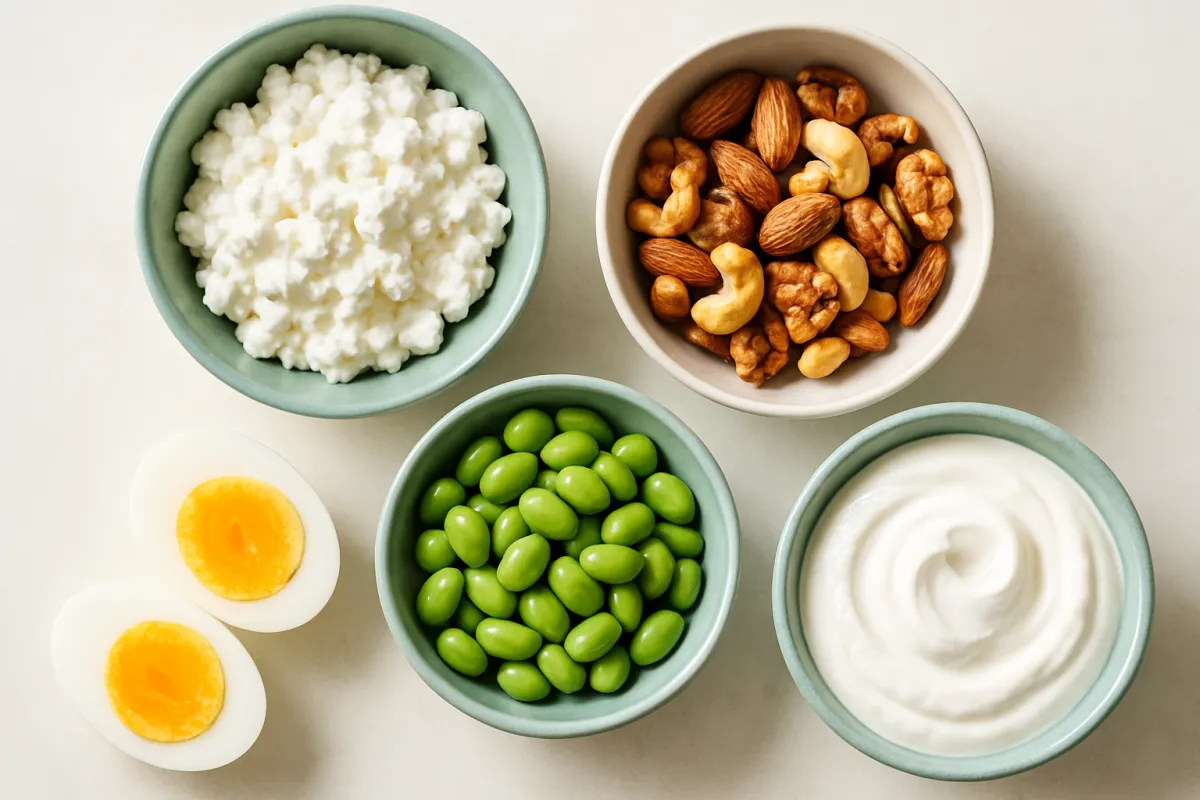
Most snack advice tells you to eat more protein without telling you what that looks like at four in the afternoon when you are hungry and have twenty minutes. This evidence review lists more than forty high protein snacks by category, with illustrative protein ranges and the portion that actually delivers them.
The working threshold used throughout is around 10 grams of protein per serving, because that is roughly where a snack starts measurably changing how full you feel. Every figure below is an illustrative typical value rather than a measured analysis; the panel on the packet is always more reliable than a general number.
Key takeaways
- Around 10 grams of protein per serving is a useful threshold for a snack to be worth calling high protein.
- Judge protein against calories, not on its own; many protein-marketed snacks are calorie-dense.
- Dairy, eggs, soy and tinned fish deliver the most protein per calorie with the least preparation.
- Shelf-stable options matter more than perfect ones, because the snack you have with you is the one you eat.
- Protein bars are a convenience tool rather than a daily habit; the panel settles which ones qualify.
What makes a snack high protein
Two numbers decide it, and reading only the first is the common mistake.
The first is protein per serving. Around 10 grams is a reasonable floor, 15 to 20 grams suits a longer gap before the next meal, and beyond roughly 25 grams you are eating a small meal rather than a snack.
The second is what comes with it. A handful of nuts and a pot of Greek yogurt can deliver similar protein, but the calorie cost differs substantially. Neither is wrong; they suit different situations. If the snack sits inside a day where total energy matters, protein per calorie is the number to compare.
A third consideration is the serving the figure refers to. Panels frequently quote a portion smaller than anyone eats, and the difference between the stated serving and the handful you actually take is where most estimates go wrong.
Our guide on how much protein you need covers daily targets, and how much protein per meal covers spreading it sensibly rather than loading it into one sitting.
Dairy and egg snacks
This category delivers the most protein for the least preparation, which is why it dominates most lists.
Greek yogurt, plain. Commonly cited around 15 to 20 grams per standard container. Plain rather than flavoured is the meaningful choice, since flavoured versions can carry substantial added sugar. Fruit or a spoon of nut butter added yourself keeps control of that.
Cottage cheese. Commonly around 11 to 14 grams per half cup. Works savoury with pepper and tomato, or sweet with fruit.
Skyr and quark. Similar territory to Greek yogurt, often slightly higher and thicker.
Hard-boiled eggs. Around 6 grams each, so two make a snack. Batch-boiling a few at the start of the week is the single highest-return habit in this whole article.
Cheese portions. Roughly 6 to 8 grams per ounce depending on type. Calorie-dense, so portion rather than graze.
Milk and unsweetened soy milk. Around 8 grams per cup. Easy to overlook as a snack in its own right.
String cheese. Around 6 to 8 grams, shelf-stable for a few hours, and portioned by design.
Plant-based protein snacks
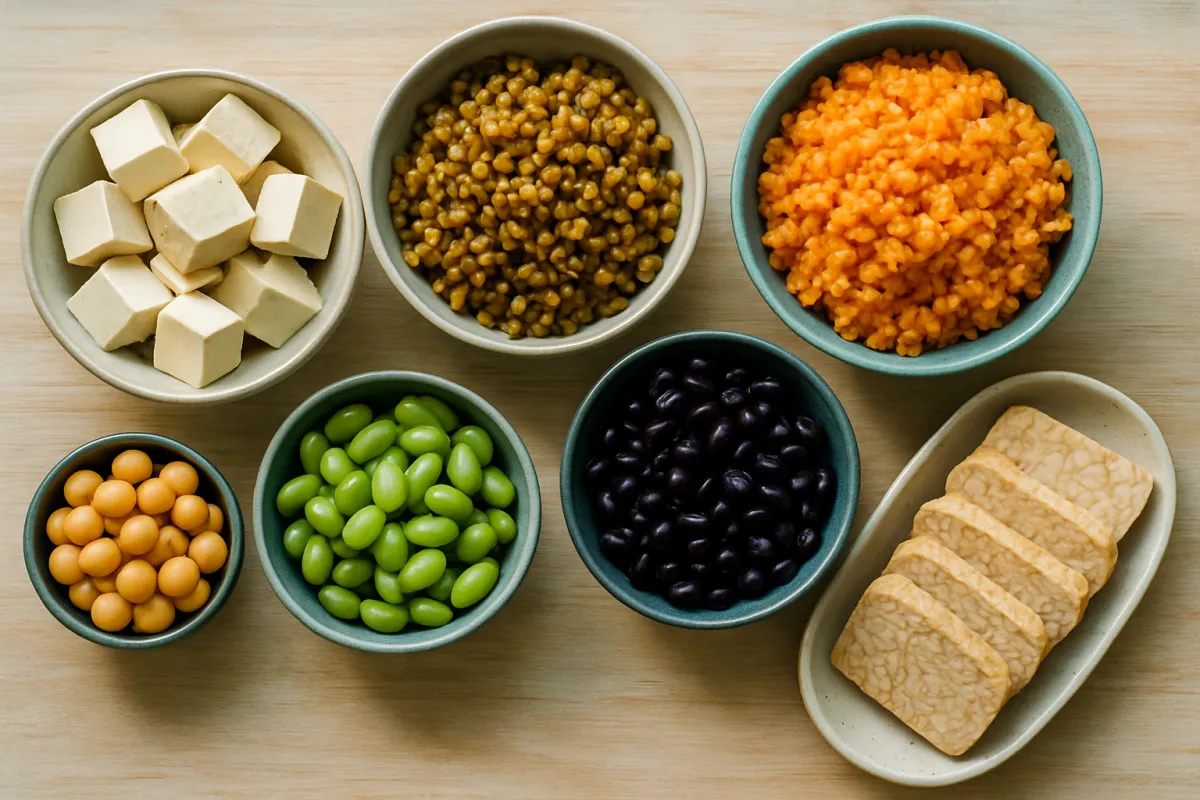
Several of these are the cheapest options on the page, and they carry fibre alongside the protein.
Edamame. Around 17 grams per cup of shelled beans. Frozen, thawed, salted. Among the best protein-per-calorie snacks available.
Roasted chickpeas. Roughly 6 to 7 grams per half cup, shelf-stable, and crunchy enough to replace a crisp habit.
Lentils and black beans. Around 8 to 9 grams per half cup. Better as a component than eaten alone.
Tofu and tempeh. Tempeh is the denser of the two, commonly cited near 15 grams per half cup against roughly 10 for firm tofu.
Peanut and other nut butters. Around 7 to 8 grams per two tablespoons, with a high calorie cost that rewards measuring rather than dipping straight from the jar.
Pumpkin seeds. Around 8 to 9 grams per ounce, one of the strongest seeds for protein.
Hemp seeds. Around 9 to 10 grams per three tablespoons, easy to scatter onto yogurt.
Unsweetened soy milk. Around 7 to 8 grams per cup, comparable to dairy milk.
Seitan. Very high per serving, commonly cited above 20 grams per three ounces, though not suitable for anyone avoiding gluten.
Our guide on getting protein without meat covers combining these across a day.
Meat, fish and shelf-stable options
These are the snacks that survive a bag or a desk drawer, which is what makes them practical rather than aspirational.
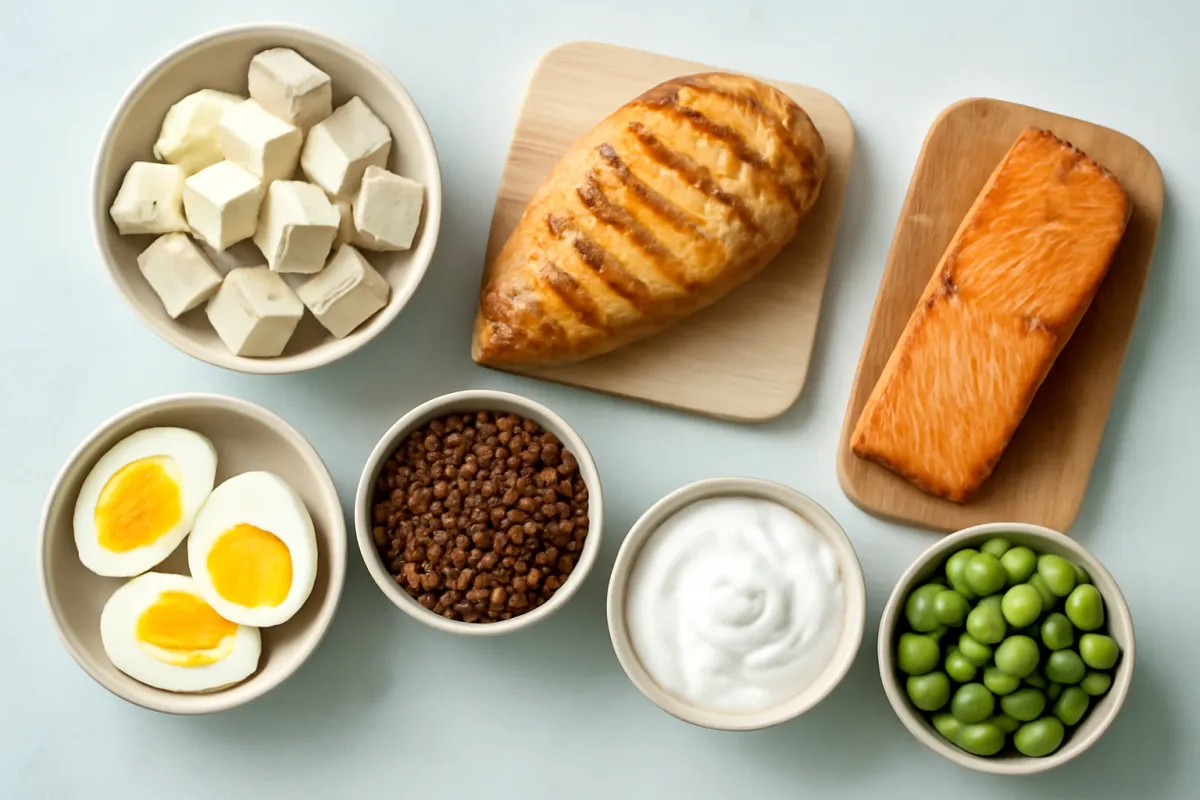
Tinned tuna. Around 20 to 25 grams per tin. Pouches avoid needing a can opener or draining.
Tinned salmon or sardines. Similar protein with more omega-3 fats, and sardines add calcium from the bones.
Jerky or biltong. Roughly 9 to 12 grams per ounce. Watch sodium, which is frequently high.
Rotisserie or leftover chicken. Around 25 grams per three ounces, and among the cheapest per gram if a whole bird is portioned rather than picked at. Our note on protein in chicken breast covers portions.
Prawns, cooked and chilled. Around 20 grams per three ounces, very low in fat.
Turkey slices. Around 5 to 6 grams per slice; choose less processed versions where you can.
Tinned mackerel. Similar to salmon, usually cheaper.
Protein per serving, compared
Illustrative protein in a typical serving
Illustrative typical values for common portions. Brands and preparations vary; the panel on the product is the reliable figure.
The bottom bar is the useful one. Nuts are genuinely nutritious and belong in a snack rotation, but they deliver roughly a quarter of the protein of a tin of tuna at a considerably higher calorie cost, which is why they work better alongside a protein source than as one.
Why some snacks sound high protein and are not
Illustrative calorie split of a typical trail mix
An illustration of where the energy in a nut-and-dried-fruit mix actually comes from, not an analysis of any specific product.
This is the shape behind most snacks that feel protein-forward without being it. The food is not bad; the label is just describing the smallest slice. Reading protein as a share of calories rather than as a headline number is what separates the two.
Combinations that work better than their parts
A few pairings deliver more staying power than either component alone, usually by adding fibre or fat to slow things down.
Greek yogurt with berries and a spoon of seeds. Apple slices with peanut butter. Cottage cheese on wholegrain crackers. Hummus with vegetable sticks, adding a boiled egg if you want it to hold longer. Tuna on oatcakes. Edamame with a squeeze of lime and flaked salt. Cheese with a pear. A boiled egg alongside a small handful of almonds.
The principle is protein first, then fibre, then a small amount of fat. That order is what turns a snack into something that stops you eating again in forty minutes.
The reason pairing works is that the three slow things down at different points. Protein drives the satiety signal, fibre adds volume and slows gastric emptying, and fat extends the whole process. A snack with only one of the three tends to satisfy briefly; one with all three tends to hold until the next meal, which is the entire practical goal.
Protein bars, powders and shakes
Bars are the most marketed and the least consistent category on this page.
A workable rule of thumb is at least 10 grams of protein per 200 calories, then read where the remaining calories come from. Bars built on syrups and coatings can carry confectionery-level sugar at several times the price. The genuinely useful bars are the plainer ones, and they earn their place in a gym bag or on a journey rather than as a daily habit.
Protein powder shaken into water is the cheapest high-protein snack available per gram, commonly 20 to 25 grams per scoop. Whey is the usual default; soy and pea are comparable plant options. Our protein shakes guide covers when a shake makes sense against food.
Ready-to-drink shakes carry the same caution as bars: read the panel rather than the front of the bottle.
Snacks that sound high protein and are not
Flavoured yogurts. Often carry a fraction of the protein of plain Greek yogurt with substantially more sugar.
Granola and trail mix. Frequently dominated by oats, dried fruit and chocolate, with the protein contribution small relative to a large calorie load.
Peanut butter crackers. The cracker usually outweighs the peanut butter.
Most smoothies bought ready-made. Fruit-forward unless protein has been deliberately added.
Protein cookies and crisps. Often technically qualifying while sitting far closer to confectionery than to a snack.
Nuts alone. Genuinely nutritious and worth eating, but the protein per calorie is modest compared with dairy or soy. They belong on the list as a fat-and-fibre option rather than as a protein play.
Popcorn marketed as high protein. Usually a small protein figure attached to a large volume, which feels substantial while delivering little.
Cereal bars with added protein. Frequently the same product as the standard version with a few grams added and a higher price.
The general test for this whole category is simple: if the protein claim is the largest text on the front of the pack, check the panel before believing it.
Building a week that works
The failure mode with protein snacking is not knowledge, it is availability at the moment of hunger.
Boil six eggs at the start of the week. Portion nuts into small containers rather than eating from the bag. Keep one shelf-stable option in a desk drawer and one in a bag, since the fridge is not always where you are. Buy plain yogurt and add flavour yourself. Keep frozen edamame, which thaws in minutes.
Our walkthrough on eating more protein covers the same logic across whole meals, and the practical point is identical: decide once, in advance, rather than repeatedly in the moment.
Protein per calorie, ranked roughly
If the goal is protein at a low energy cost, the ordering is fairly consistent.
Strongest: plain Greek yogurt, cottage cheese, egg whites, prawns, tinned tuna in water, skyr.
Strong: whole eggs, edamame, chicken breast, unsweetened soy milk, plain protein powder in water.
Moderate: tempeh, tofu, cheese, jerky, roasted chickpeas.
Weakest on this measure, though still worth eating: nuts, nut butters, seeds, most bars.
None of these is a bad food. The ranking only answers one question, which is how much protein arrives per calorie, and that question matters most when overall intake is being managed. Our reference on protein in common foods gives fuller figures.
Snacks by situation
The right snack depends less on which is best and more on where you will be when hunger arrives.
At a desk with a fridge nearby. Greek yogurt, cottage cheese, boiled eggs, cheese, hummus with vegetable sticks. These are the highest protein-per-calorie options and the least effort.
At a desk without a fridge. Jerky, tinned tuna pouches, roasted chickpeas, nuts, single-serve protein powder, shelf-stable milk cartons. Keep two options rather than one, because the same snack every day stops being appealing within a fortnight.
In a bag, all day, possibly warm. Jerky, roasted chickpeas, nuts and seeds, plainer protein bars, tinned fish in pouches. Anything dairy is a poor traveller.
Before or after training. Whey or soy protein in water is the fastest, followed by milk, Greek yogurt or a boiled egg with fruit. If the session is long, carbohydrate alongside the protein matters more than the protein alone.
Late evening. Cottage cheese and Greek yogurt are the traditional choices because they are slower-digesting and low in sugar. A boiled egg or cheese works equally well. The main thing is choosing something portioned, since evening snacking is where handfuls turn into meals.
For children. Cheese, yogurt, milk, boiled eggs, hummus, edamame and nut butter on wholegrain toast all work, with allergy-safe substitutions where needed. Portion sizes and protein needs differ from adults, and the sweetened yogurts marketed to children are frequently closer to dessert.

Cost per gram of protein
If budget is a constraint, the ordering differs from the nutrition ranking, and some of the cheapest sources are also among the strongest.
Eggs, milk, dried lentils, tinned beans, tofu, peanut butter, cottage cheese in larger tubs, and plain yogurt bought by the kilogram sit at the cheap end. Bulk protein powder is competitive per gram, often cheaper than most whole foods.
At the expensive end sit protein bars, ready-to-drink shakes, single-serve yogurts, prepared snack packs, jerky, and anything marketed with a protein claim on the front of the pack. The convenience premium in this category is substantial.
Two habits close most of the gap. Buying larger containers and portioning them yourself, since single-serve packaging is where much of the cost sits. And treating bars and shakes as the travel option rather than the default, because that is what they are good at.
None of this means the expensive options are wrong. It means that if protein intake feels financially out of reach, it usually is not: eggs, lentils and a large tub of yogurt deliver more protein per pound than almost anything sold as a protein product.
Reading a nutrition panel properly
Three things on the panel decide whether a snack is what it claims.
The serving size, first. Everything else on the label refers to it, and it is frequently smaller than a realistic portion. A bag containing two and a half servings is describing a third of what most people eat in one sitting.
Protein against calories. Divide one by the other. Anything delivering roughly 10 grams of protein per 200 calories is doing well; well below that is a snack with protein in it rather than a protein snack.
Where the other calories come from. Sugar and fat both belong in a diet, but a bar carrying 20 grams of sugar is confectionery whatever its protein figure says.
Two further details are worth a glance. Sodium, which is often high in jerky, tinned fish and processed meat. And the ingredients order, since a list beginning with syrup tells you more than the front of the pack does.
Our walkthrough on reading a nutrition label covers the panel in full.
Does timing matter?
Less than the internet suggests, and the honest summary is that total daily protein matters considerably more than when it arrives.
The area with the most support is distribution: spreading protein across meals and snacks tends to be more useful than concentrating most of it in one meal, which is a reasonable argument for a protein-forward snack in a long gap between lunch and dinner.
The narrow post-training window that once dominated advice has been substantially revised. Getting protein within a few hours of training is sensible; the idea that it must arrive within minutes has weakened considerably in the evidence.
Evening protein is neither harmful nor magical. Cottage cheese before bed is popular because it is slow-digesting and low in sugar, not because the clock changes how protein works.
The practical takeaway is that if a snack helps you reach a sensible daily total and stops you arriving at dinner ravenous, the timing has done its job. Our note on protein per meal covers distribution in more detail.
What the evidence supports about protein and fullness
Protein is the most satiating macronutrient per calorie, and that is the mechanism behind most of the claims made for protein snacking.
Several things follow from it that are reasonably well supported. A protein-forward snack tends to reduce later intake more than an equivalent-calorie carbohydrate snack. Higher-protein patterns tend to make an energy deficit easier to maintain, which matters more than any direct metabolic effect. And protein contributes to preserving lean mass during weight loss, which is why intake often rises rather than falls when people are trying to lose weight.
Several things do not follow. Protein does not create a meaningful calorie deficit through its own digestion; the thermic effect is real but small. Eating protein does not cause weight loss independently of overall energy balance. And “high protein” on a package is a marketing claim rather than a nutritional guarantee.
The honest framing is that protein is a useful tool for managing appetite, which makes other things easier. Treating it as a mechanism that works regardless of what else you eat is where the claims outrun the evidence.
Portion traps worth knowing
Eating from the bag. Nuts, trail mix and roasted chickpeas are all easy to eat well past a portion. Decanting into a small container solves it.
Nut butter from the jar. A tablespoon is smaller than most spoons deliver, and the calories are dense enough that the difference matters.
Flavoured yogurt as a health choice. Frequently carrying a fraction of the protein of plain Greek yogurt with several times the sugar.
Cheese as a snack rather than a component. Excellent protein, high calorie density, and very easy to graze.
Large single-serve bars. Some are portioned as two servings, which halves every figure you read.
Smoothies. Fruit-forward unless protein is deliberately added, and easy to drink 400 calories without registering them as food.
None of these foods is a problem. The portion is.
Savoury or sweet, and why it matters
Most snack lists ignore the craving that actually drove someone to the kitchen, which is why the advice often fails.
For a sweet craving: Greek yogurt with berries, cottage cheese with pineapple or peach, milk, a protein shake with cocoa, apple with peanut butter, or plain yogurt with a small amount of honey added by you rather than the manufacturer.
For a savoury craving: boiled eggs with salt and pepper, roasted chickpeas, edamame with flaked salt, jerky, tinned tuna on oatcakes, cheese, hummus with vegetable sticks, or cottage cheese with black pepper and tomato.
For a crunch craving specifically, which is often what a crisp habit is really about: roasted chickpeas, roasted edamame, nuts, and crunchy vegetables with a protein dip.
Matching the craving matters because a snack that satisfies the wrong one tends to be followed by the snack you actually wanted.
A week of snacks, worked out
An illustrative pattern rather than a prescription, to show what two protein snacks a day actually looks like in practice.
Sunday, twenty minutes. Boil six eggs. Portion a large bag of almonds into six small containers. Move a bag of frozen edamame to the fridge shelf. Buy one large tub of plain Greek yogurt and one of cottage cheese rather than single-serve pots.
Monday to Friday, mid-morning. A boiled egg with a portioned handful of almonds. Roughly 12 grams of protein, no decision required.
Monday to Friday, mid-afternoon. Greek yogurt with berries and a spoon of pumpkin seeds on three days; cottage cheese with tomato and black pepper on two. Roughly 15 to 20 grams either way.
Two evenings. Edamame with flaked salt while cooking, which is the snack that most reliably prevents eating the dinner ingredients.
In the bag, permanently. One pouch of tinned tuna and one bag of roasted chickpeas, replaced when used. These exist for the days that do not go to plan.
Across a week that is roughly 150 to 180 grams of additional protein from about twenty minutes of preparation and no cooking beyond boiling water. The point of writing it out is that nothing in it requires willpower at the moment of hunger, which is the only moment that matters.
Change one variable and it stops working: buy single-serve pots instead of tubs and the cost roughly doubles, or skip the Sunday twenty minutes and by Wednesday the honest answer is whatever is in the vending machine.
Common questions people actually ask
Is it better to snack or to eat larger meals? Neither is inherently better. If three meals leave you fine, snacks are optional. If a long afternoon gap has you arriving at dinner ready to eat anything, a protein snack is doing real work.
Do I need a snack after every workout? No. If a meal is within a couple of hours, that meal is sufficient for most people and most training.
Will more protein help me build muscle without training? No. Protein supports the adaptation; the training drives it.
Can I get enough protein without any animal products? Yes, and the plant section above covers the sources. It requires slightly more attention to variety across the day, not more effort per snack.
Are two protein snacks a day too many? For most healthy adults, no. Spread across a day it sits comfortably inside typical intakes.
Does cooking change the protein? Not meaningfully. Cooking changes water content, which is why cooked portions look smaller per gram of protein, but the protein itself is largely unaffected.
The full list, by category
Gathered in one place, with illustrative protein per typical serving.
Dairy and eggs. Plain Greek yogurt (~18 g per container). Cottage cheese (~13 g per half cup). Skyr (~17 g). Quark (~14 g). Hard-boiled egg (~6 g each). Egg whites (~4 g each). Milk (~8 g per cup). String cheese (~7 g). Cheddar (~7 g per ounce). Ricotta (~7 g per half cup). Kefir (~9 g per cup).
Soy and plant. Edamame (~17 g per cup shelled). Tempeh (~15 g per half cup). Firm tofu (~10 g per half cup). Unsweetened soy milk (~8 g per cup). Roasted chickpeas (~7 g per half cup). Black beans (~8 g per half cup). Lentils (~9 g per half cup). Seitan (~21 g per three ounces). Plant yogurt with added protein (~10 g).
Nuts and seeds. Pumpkin seeds (~9 g per ounce). Hemp seeds (~10 g per three tablespoons). Peanut butter (~8 g per two tablespoons). Almonds (~6 g per ounce). Pistachios (~6 g per ounce). Sunflower seeds (~6 g per ounce). Chia (~5 g per two tablespoons). Almond butter (~7 g per two tablespoons).
Meat and fish. Tinned tuna (~25 g per tin). Tinned salmon (~22 g). Sardines (~23 g per tin). Cooked prawns (~20 g per three ounces). Rotisserie chicken (~25 g per three ounces). Jerky (~11 g per ounce). Turkey slices (~6 g per slice). Tinned mackerel (~20 g).
Prepared and convenience. Protein powder in water (~24 g per scoop). Ready-to-drink shake (~20 to 30 g). Protein bar (~10 to 20 g, quality varies widely). Hummus (~4 g per quarter cup, better paired than alone). Protein yogurt pouches (~10 to 15 g).
That is more than forty options, and the honest observation is that most people rotate four or five. Choosing which four or five suit your fridge, your budget and your actual cravings matters far more than the length of the list.
If you are increasing protein for the first time
Going from a low-protein pattern to a deliberately protein-forward one is worth doing gradually, for reasons that are practical rather than medical.
Digestion adjusts. Particularly with plant sources, which bring fibre alongside the protein. Doubling bean and lentil intake in a week is uncomfortable in a way that doubling it over a month is not.
Fullness changes portion instincts. Protein-forward snacks are more satisfying, so the amount that feels right shifts downward after a week or two. Judging portions on the first day tends to overestimate.
Hydration matters more. Higher protein intake modestly increases fluid needs, and some of what gets attributed to protein feeling heavy is simply not drinking enough alongside it.
Variety prevents the drop-off. The most common failure is choosing one snack, eating it daily, and abandoning the whole effort within three weeks because it became tedious. Rotating four or five is more durable than optimising one.
The target is daily, not per snack. A snack that lands at 8 grams rather than 12 is not a failure. What matters is the total across the day, and consistency beats precision comfortably.
Anyone with kidney disease, diabetes, or another condition affecting how protein or carbohydrate is handled should take individual advice rather than general guidance before making a substantial change. Our overview of how much protein you need covers where typical targets sit.
Storage, safety and how long things keep
Most of the reliable options need a fridge, and a few practical points prevent the waste that quietly ends a snacking habit.
Hard-boiled eggs keep for around a week refrigerated in their shells, and noticeably less once peeled. Boiling six on Sunday is fine; peeling all six on Sunday is not.
Opened tubs of yogurt and cottage cheese keep for several days after opening, and cottage cheese tends to go first. Buying two smaller tubs rather than one large one can waste less if you are the only one eating it.
Tinned fish keeps almost indefinitely sealed, but should be refrigerated in a covered container once opened and used within a couple of days.
Cooked chicken is best used within three to four days refrigerated, and is a common source of avoidable waste when a rotisserie bird is bought without a plan.
Nuts and seeds go rancid rather than mouldy, which is easy to miss. Cool, dark and sealed extends them considerably; a bag left open on a warm counter degrades within weeks.
Frozen edamame is the most forgiving item on this list, which is much of why it appears so often above.
Protein powder keeps for a long time sealed but clumps with humidity, so a scoop left in the tub with damp hands is what ruins it.
Two general habits help more than any specific rule: date things when they are opened, and keep the fridge organised so protein options are visible rather than behind leftovers. What you can see is what you eat.
The bottom line
A high protein snack is one delivering roughly 10 grams or more per serving at a calorie cost you are happy with. The most reliable sources need almost no preparation: plain Greek yogurt, cottage cheese, boiled eggs, edamame, tinned fish, and soy milk.
Read the panel rather than the packaging on anything marketed as a protein product, particularly bars and flavoured yogurts, where the protein claim and the sugar content frequently sit on the same label.
And solve availability before variety. Six boiled eggs in the fridge and one shelf-stable option in your bag will do more for your protein intake than any amount of reading about which bar ranks highest.
The pattern behind everything above is that protein snacking fails on logistics rather than on knowledge. Almost nobody is unaware that Greek yogurt has more protein than a biscuit. What decides the outcome is whether there is yogurt in the fridge at four in the afternoon, portioned and visible, when the alternative is whatever is nearest. Twenty minutes once a week settles that question for the following seven days, which is a better return than any individual food choice on this page.
A note on how to read this: NourishMark publishes evidence reviews rather than personalised advice, and this article is general nutrition information rather than medical or dietetic guidance for any individual. Every protein figure, calorie reference and portion above is an illustrative typical value drawn from commonly cited ranges rather than a laboratory analysis; brands and preparations vary substantially, and the nutrition panel on the product you actually buy is the reliable source. Protein needs differ with body size, activity, age, pregnancy and health status, and anyone with kidney disease or another condition affecting protein handling should follow the advice of their own clinician rather than general guidance. If you are making a substantial change to your diet, discuss it with a qualified dietitian or your doctor.
Frequently asked questions
What counts as a high protein snack?
A useful working threshold is around 10 grams of protein or more per serving, which is enough to make a measurable difference to how full a snack leaves you. Many foods marketed as protein snacks fall well short of that once you read the panel against the actual portion, particularly bars and flavoured yogurts where sugar carries much of the calorie load. The other half of the definition is what comes with the protein: a snack delivering 12 grams alongside 400 calories is a small meal, while one delivering the same 12 grams for 120 calories is genuinely a snack. Judge both numbers together rather than the protein figure alone.
How much protein should a snack have?
Somewhere in the range of 10 to 20 grams suits most people for a between-meals snack, with the upper end more relevant if the gap to your next meal is long or you have trained recently. There is little practical benefit to pushing a single snack far beyond that, because protein is used best when spread across the day rather than concentrated. If you are working toward a daily target, dividing it across meals and snacks is more effective than trying to make up a shortfall in one sitting. Our guides on how much protein you need and how much protein per meal cover the daily arithmetic in more detail.
Are high protein snacks good for weight loss?
Protein is the most satiating of the three macronutrients, so a protein-forward snack tends to keep hunger down for longer than an equivalent number of calories from carbohydrate or fat alone. That can make an energy deficit easier to sustain, which is the mechanism that matters. The caveat is that protein has calories too, and snacks marketed on their protein content are frequently calorie-dense: nut butters, trail mixes and many bars sit far above what most people assume. Weight change follows overall energy balance rather than any single food, so the useful move is choosing snacks that deliver protein at a low calorie cost, several of which are listed below.
What are the best high protein snacks with no cooking?
The strongest no-cook options are Greek yogurt, cottage cheese, ready-cooked hard-boiled eggs, tinned tuna or salmon, edamame that only needs thawing, roasted chickpeas, jerky or biltong, cheese portions, milk and unsweetened soy milk, and protein powder shaken into water. Between them these cover roughly 10 to 25 grams of protein per serving without a pan. For a desk drawer or a bag, the shelf-stable subset is jerky, tinned fish, roasted chickpeas or edamame snacks, nuts, and single-serve protein powder. Everything else on that list needs a fridge, which is worth planning around rather than discovering at four in the afternoon.
Are protein bars a good snack?
Some are, many are confectionery with a protein claim on the front. The panel settles it: look for a bar delivering a reasonable protein figure relative to its calories, commonly cited as a useful rule of at least 10 grams of protein per 200 calories, and check where the remaining calories come from. Bars built mostly on syrups and coatings can carry as much sugar as a chocolate bar while costing several times more. They earn their place as a convenience option for travel or a gym bag rather than as a daily habit, because whole-food sources generally deliver the same protein with more volume, more micronutrients and less cost per gram.
What high protein snacks work for vegetarians and vegans?
Plenty, and several are among the cheapest options available. Edamame, roasted chickpeas, lentils, black beans, tofu, tempeh, seitan, unsweetened soy milk, peanut and other nut butters, pumpkin and hemp seeds, and plant-based yogurts with protein added all qualify. Soy foods in particular provide protein comparable to animal sources per serving. The practical difference is that plant sources often carry more fibre alongside the protein, which adds to fullness but can be less comfortable in large amounts if you are not used to it. Our guide on getting protein without meat covers combining sources across a day.
Is cottage cheese or Greek yogurt higher in protein?
They are closer than most people expect and both are excellent, with cottage cheese commonly edging ahead per equivalent serving while plain Greek yogurt is typically thicker and lower in sodium. Illustrative figures often cited put cottage cheese somewhere around 11 to 14 grams of protein per half cup and plain Greek yogurt around 15 to 20 grams per standard container, though brands vary considerably and the panel on the tub is more reliable than any general figure. Choose on taste, sodium if that matters to you, and what you will actually eat regularly, because the best protein snack is the one that does not sit in the fridge until it expires.
Can you eat high protein snacks every day?
For most healthy adults, yes, and spreading protein across the day is generally more useful than concentrating it. Protein needs are commonly expressed relative to body weight and activity, and a couple of protein-forward snacks fit comfortably inside typical targets. Two practical cautions: variety matters, so rotating sources rather than eating the same bar daily brings a wider range of nutrients, and anyone with kidney disease or another condition affecting protein handling should follow individual medical advice rather than general guidance. If you are increasing protein substantially and quickly, doing it gradually is easier on digestion.

Hamza Hai is the editor of NourishMark. She holds an MBA and reviews the site's articles against our editorial standards, checking that every figure is labelled for what it is, that nothing is presented as verified fact without a source the reader can check, and that the writing stays useful to a non-specialist.