What's in this review
- What a high protein diet for weight loss actually means
- Why protein specifically helps with weight loss
- The calorie deficit is still the driver
- How much protein to aim for
- Protein, carbohydrate, and fat at a few calorie levels
- Ranking common protein sources by protein per calorie
- A sample day, worked out
- High protein breakfasts for weight loss
- High protein lunches and dinners
- Snacks that fit a high protein weight loss diet
- Vegetarian and vegan high protein weight loss options
- Weighing and measuring without obsessing over it
- Hydration and fiber alongside the protein
- Common mistakes on a high protein weight loss diet
- Who should be cautious with a high protein diet
- How a high protein diet compares to other popular approaches
- Eating out and traveling on a high protein diet
- Grocery list basics for a high protein kitchen
- Transitioning into a higher protein pattern gradually
- A note on protein quality during weight loss
- Building your own high protein day
- Tracking progress beyond the scale
- A quick checklist for getting started
- The bottom line
Short answer: A high protein diet does not burn fat on its own; a calorie deficit does. Protein helps because it is commonly described as the most satiating macronutrient per calorie and it supports keeping more lean mass while losing weight, which is why intake is often raised, not lowered, during a cut. A commonly cited illustrative range for weight loss runs roughly 1.2 to 1.6 grams per kilogram of body weight, spread across meals from foods like chicken, fish, eggs, yogurt, tofu, and beans.
Ask someone what a high protein diet for weight loss actually involves and the answer usually arrives as a food list: more chicken, more eggs, more Greek yogurt, fewer refined carbohydrates. That is not wrong, but it skips the part that actually explains why the approach tends to work for the people it works for. Protein is not a fat-burning ingredient. It is a lever on appetite and on what kind of tissue a calorie deficit takes from, and understanding that lever is what separates a high protein diet that sticks from one that quietly turns into a low calorie diet with extra chicken.
This evidence review lays out the mechanism first: why protein affects hunger, how it interacts with a calorie deficit, and what a reasonable daily target looks like. From there it works through a sample day, macros at a few common calorie levels, foods that fit the goal well, and the honest caveats, including who should check with a professional before raising protein meaningfully. For the calorie side of the equation, see our calorie deficit review, and for the protein target itself, our protein needs review. Build your own day in the companion below.
Key takeaways
- A high protein diet supports weight loss by improving appetite control and helping preserve lean mass in a calorie deficit; the deficit itself still does the work.
- A commonly cited illustrative range for weight loss is about 1.2 to 1.6 grams of protein per kilogram of body weight, higher than the general population reference intake.
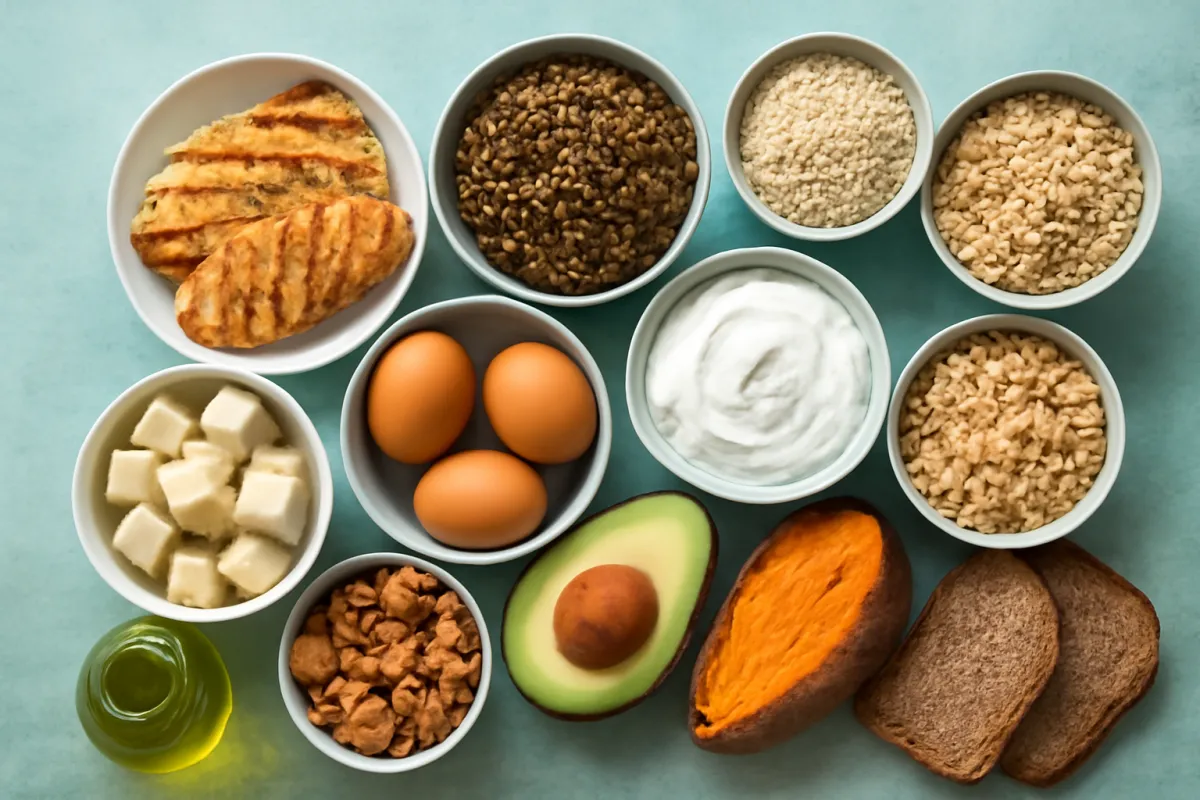
- Foods that deliver protein at a relatively low calorie cost, like chicken breast, white fish, egg whites, nonfat Greek yogurt, tofu, and beans, do the most work for this specific goal.
- Spreading protein across meals, rather than saving it for dinner, is a commonly suggested pattern for both fullness and lean mass support.
- These figures are illustrative references for reasoning about a diet, not a personal prescription; anyone with kidney disease or another condition should confirm a target with a doctor or registered dietitian.
What a high protein diet for weight loss actually means
A high protein diet, in the weight loss context, is simply an eating pattern where protein makes up a larger share of total calories than a typical baseline diet, while total calories are set below what the body burns. There is no single official definition of the cutoff, but plans in this space commonly land somewhere between 25 and 35 percent of calories from protein, compared with roughly 15 percent in a more typical mixed diet. The other calories still come from carbohydrate and fat; a high protein diet is not the same as a no carbohydrate or no fat diet, though it is sometimes combined with a lower carbohydrate approach.
The defining feature is the emphasis, not an exclusion. Someone on a high protein weight loss plan is still eating vegetables, fruit, grains, and some fat; they are simply making sure protein shows up at every meal in a meaningful amount, often by leading meal planning with a protein source and building the rest of the plate around it. That framing matters because a high protein diet that starves out every other food group tends to be harder to sustain and is not what the evidence behind this approach is actually describing.
Why protein specifically helps with weight loss
Three separate mechanisms are usually cited together, and it helps to know them apart rather than treating “protein helps you lose weight” as one vague idea. First, satiety: protein is commonly described as the most filling macronutrient per calorie, more so than carbohydrate or fat, meaning a given number of calories from protein tends to leave you feeling fuller than the same calories from other sources. Second, the thermic effect of food: digesting and processing protein burns a small but real number of calories on its own, somewhat more than carbohydrate or fat, though this effect is modest and not a substitute for a deficit. Third, lean mass preservation: in a calorie deficit, the body sheds some tissue, and a higher protein intake, especially alongside resistance training, is associated with a larger share of that loss coming from fat rather than muscle.
None of these mechanisms creates weight loss from nothing. They all operate inside a calorie deficit, making that deficit either easier to hold, slightly larger through the thermic effect, or better composed in terms of what is actually lost. That distinction is the single most important thing to understand about a high protein diet for weight loss, and it is why this review keeps returning to it.
The calorie deficit is still the driver
It bears repeating because it is the most commonly misunderstood part of this topic: no amount of protein causes fat loss without a calorie deficit. If total intake matches or exceeds what the body burns, raising the protein share alone will not produce weight loss, though it may still change body composition somewhat and support fullness. Our calorie deficit review covers how a deficit is set and why the size of it matters; this review assumes a deficit is already in place and focuses on how protein interacts with it.
The practical implication is that “high protein” and “low calorie” need to happen together for this specific goal. A high protein diet built on fatty cuts of meat, cheese, and protein bars can carry as many calories as any other diet, because protein has calories too, four per gram, the same as carbohydrate. The foods section below focuses on sources that deliver protein without also delivering a large calorie load, which is the combination that actually supports the goal.
How much protein to aim for
Our protein needs review covers the full range of factors, including body weight, activity, and age, but for weight loss specifically, a commonly cited illustrative range runs from about 1.2 to 1.6 grams of protein per kilogram of body weight, noticeably above the general reference intake most healthy adults are given. Some structured programs use figures toward the higher end of that range or slightly beyond, particularly for people also doing resistance training, though those higher figures are typically discussed under professional guidance rather than presented as a general-audience default.
The reasoning behind raising the target during weight loss, rather than leaving it at baseline, is that a calorie deficit already puts some pressure on lean tissue, and a higher protein intake is one of the more evidence-supported ways to blunt that. This is an illustrative range for reasoning about a diet, not a personal prescription, and it does not apply the same way to everyone; pregnancy, certain medications, and kidney or liver conditions can change the picture meaningfully, which is why a doctor or registered dietitian should confirm any specific number for those situations.
Protein, carbohydrate, and fat at a few calorie levels
Here is how an illustrative high protein split, aiming for roughly 30 percent of calories from protein, might translate into grams at three common calorie targets used during weight loss. These are worked examples to show the arithmetic, not recommended calorie levels for any individual.
| Daily calories | Protein (~30%) | Carbohydrate (~35%) | Fat (~35%) |
|---|---|---|---|
| 1,400 kcal | ~105 g | ~123 g | ~54 g |
| 1,800 kcal | ~135 g | ~158 g | ~70 g |
| 2,200 kcal | ~165 g | ~193 g | ~86 g |
Two things are worth reading off this table. First, the protein figure at every level sits well above what a typical mixed diet would provide at the same calories, which is the entire point of calling it a high protein approach. Second, carbohydrate and fat are still substantial, not eliminated, which is consistent with this being an emphasis rather than an exclusion diet. Set your own calorie level and see the grams in the companion below.
Ranking common protein sources by protein per calorie
For this specific goal, protein per calorie, sometimes called protein density, is a more useful lens than protein per 100 grams alone, because it captures which foods deliver the most fullness-supporting protein for the least energy cost.
Illustrative protein grams per 100 calories
Higher bars mean more protein for the same calorie cost. Commonly cited, illustrative reference figures.
Bars scale to egg whites at 100 percent. A whole egg, salmon, or lean beef still fit a high protein diet; they simply carry more calories alongside the protein.
The pattern across these foods is consistent: lean, low fat proteins deliver the most protein for the fewest calories, while fattier cuts of the same food, dark meat chicken instead of breast, or salmon instead of white fish, still contribute good protein but at a somewhat higher calorie cost per gram. Neither is wrong to eat; the chart simply shows which choices do the most work when the specific goal is protein density during a deficit.
A sample day, worked out
Here is one illustrative way a day might distribute protein across meals at a roughly 1,800 calorie target, aiming for about 135 grams of protein total.
An illustrative day's protein, by meal
Approximate grams summing to about 135 g at an illustrative 1,800 calorie target.
Segments show each meal's share of an illustrative 135-gram day. Swap in tofu, turkey, or beans and the shape holds; figures are approximate references, not a prescribed menu.
Notice that no single meal is carrying the whole day’s target, which is deliberate. A commonly suggested pattern is to include a meaningful protein source at every eating occasion rather than concentrating it at dinner, partly because that spreads the satiety benefit across the day rather than leaving mornings and midday hungry. Set your own meals and target in the companion below to see how your usual day compares.
High protein breakfasts for weight loss
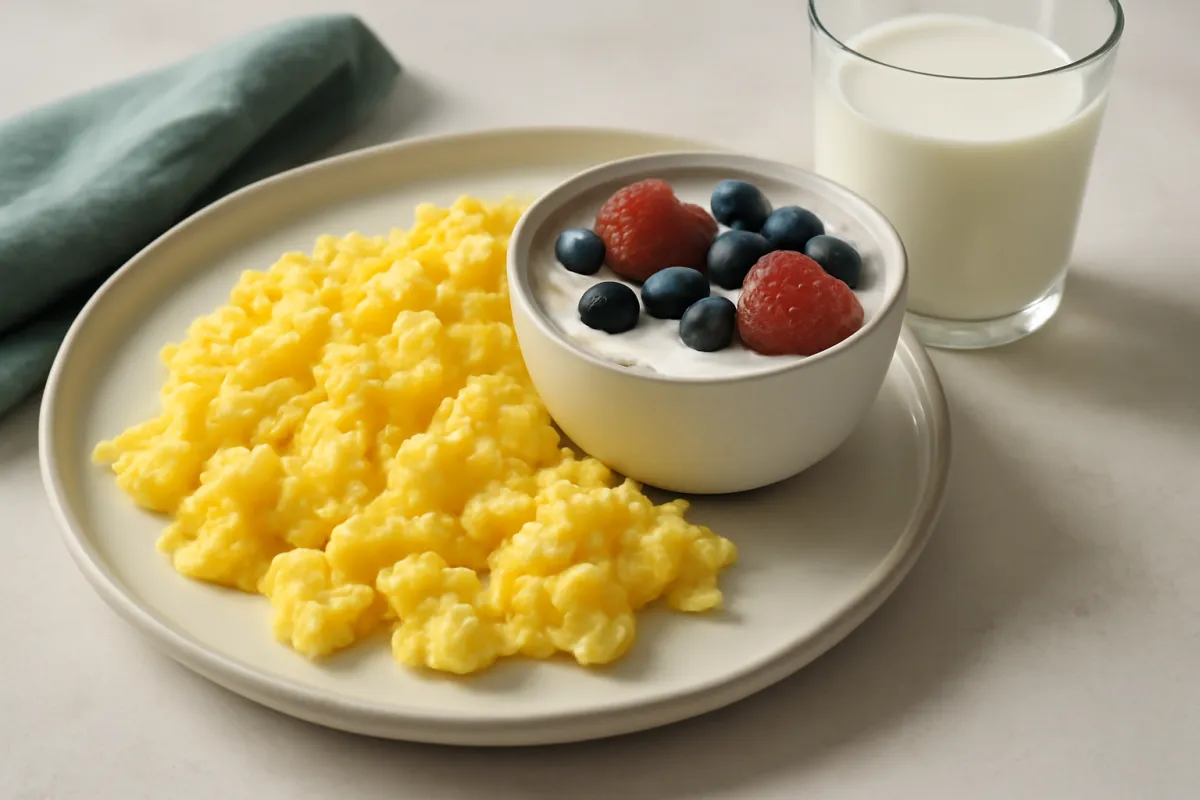
Breakfast is commonly the weakest meal for protein on a typical diet, which makes it a good place to start when shifting toward a higher protein pattern. Eggs in any form, an omelet, scrambled with vegetables, or hard boiled ahead of time, are a straightforward anchor. Plain nonfat or low fat Greek yogurt, higher in protein than standard yogurt for similar calories, works well alone or with fruit and a small amount of nuts or seeds. Cottage cheese, savory with vegetables or with fruit, is another dense, low calorie option.
For anyone who prefers a savory start, leftover chicken, canned tuna, or smoked salmon alongside vegetables is a less conventional but effective option. The through-line across all of these choices is the same one from the mechanism section: they deliver meaningful protein without a large calorie cost, which is exactly the profile a high protein weight loss diet is built around.
High protein lunches and dinners
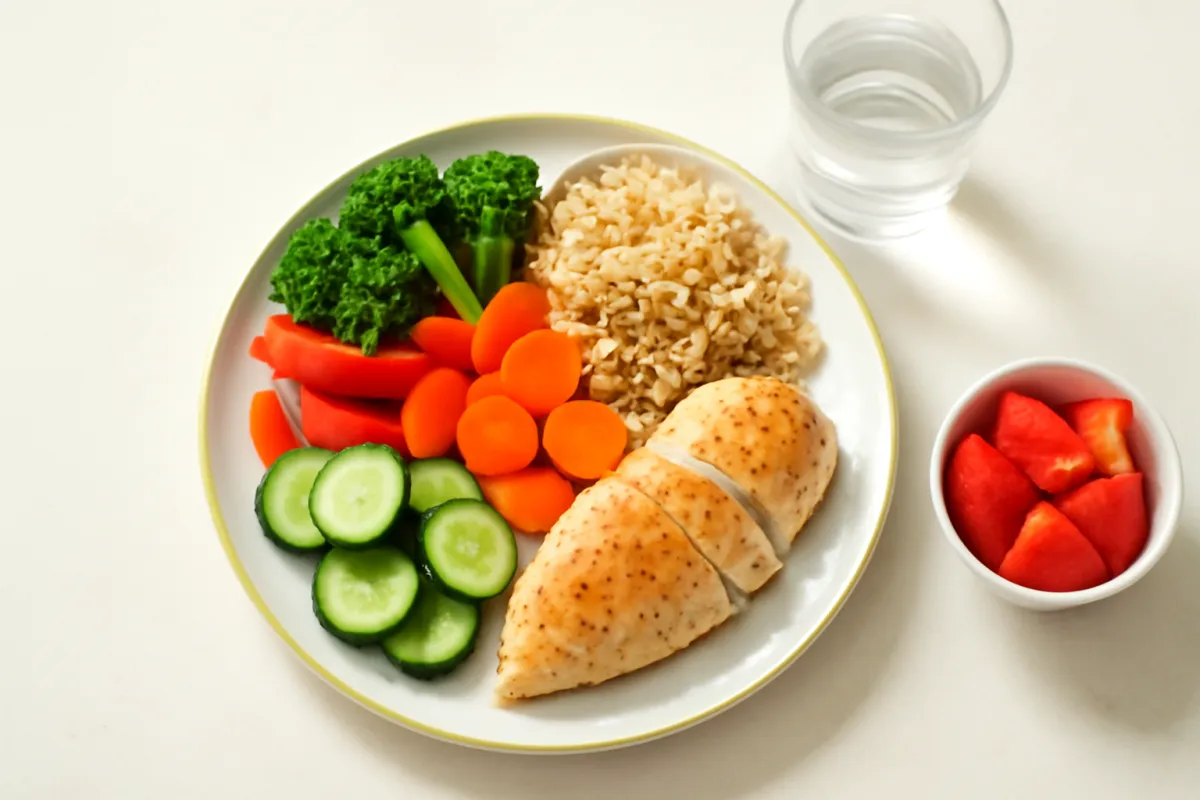
For the two larger meals of the day, a simple template works reliably: a palm-sized portion of a lean protein, roughly a quarter to a third of the plate; a substantial serving of non-starchy vegetables, filling much of the remaining space; and a modest portion of a whole grain or starchy vegetable. Chicken breast, turkey, white fish, shrimp, tofu, and lean cuts of beef or pork all fit the protein role. Our step-by-step balanced meal guide covers this plate structure in more depth for any meal, not only weight loss focused ones.
Legumes deserve a specific mention here because they do double duty: lentils, chickpeas, and beans contribute real protein alongside fiber, and fiber is itself linked with fullness, making these foods efficient on both counts for a calorie-conscious plate. A lunch or dinner built around lentils or beans, with vegetables and a smaller portion of animal protein or none at all, is a legitimate way to hit a high protein target without leaning entirely on meat.
Snacks that fit a high protein weight loss diet
Snacking does not have to work against this goal if the snack itself carries real protein rather than mostly carbohydrate or fat. Our high protein snacks review lists more than 40 options by protein count, but the shapes that tend to fit a weight loss target specifically are the lower calorie ones: a single serving of Greek yogurt, a hard boiled egg, sliced turkey or chicken, edamame, or a protein shake made with water rather than a calorie-dense milk alternative if a shake is the chosen format.
The foods to be more careful with are the ones marketed as high protein but also calorie dense, certain protein bars, flavored nut butters, and trail mixes among them. None of these are off limits, but reading the label rather than the front-of-package claim, as our nutrition label guide covers, is the reliable way to know whether a snack is actually helping the calorie side of the equation or quietly working against it.
Vegetarian and vegan high protein weight loss options
A plant-based approach can absolutely support a high protein weight loss diet, though it typically requires a bit more deliberate planning because most individual plant foods are less protein-dense than meat, fish, eggs, or dairy. Tofu, tempeh, edamame, lentils, chickpeas, and other beans are the core building blocks, commonly cited in the range of 12 to 20 grams per cooked cup or serving, and they carry the added benefit of fiber, which supports fullness for relatively few calories.
Our step-by-step guide to getting protein without meat turns this into a full meal-by-meal approach, including dairy-inclusive and fully vegan versions. Anyone building an entirely plant-based weight loss plan is well served by checking the overall nutritional picture, not protein alone, with a registered dietitian.
Weighing and measuring without obsessing over it
Precision helps some people and overwhelms others, so it is worth knowing there is a middle path. Weighing protein portions on a kitchen scale for a week or two is one of the fastest ways to calibrate your eye, after which many people can estimate portions reasonably well by sight, using a palm-sized piece of meat or fish as a rough stand-in for a common serving.
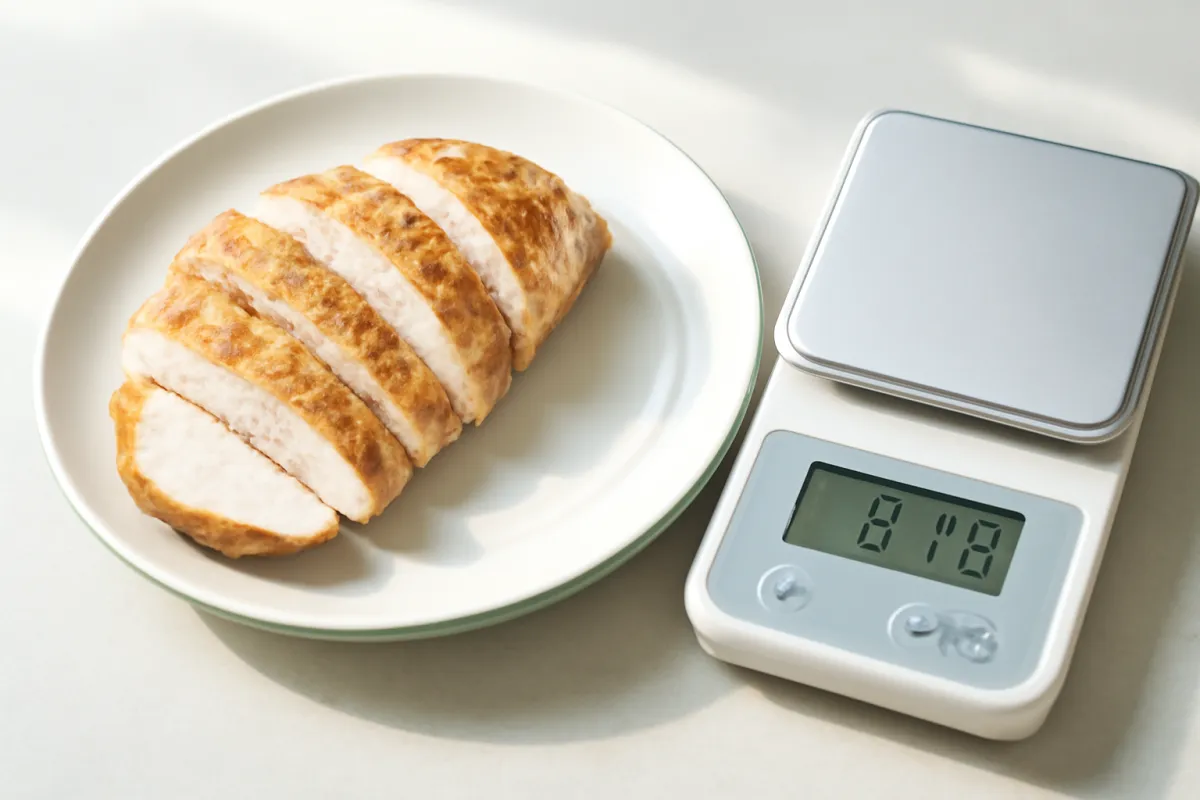
For anyone using an app or spreadsheet to track intake, our macro counting guide walks through the process step by step, including how to handle eating out and packaged foods where exact weights are not available.
Hydration and fiber alongside the protein
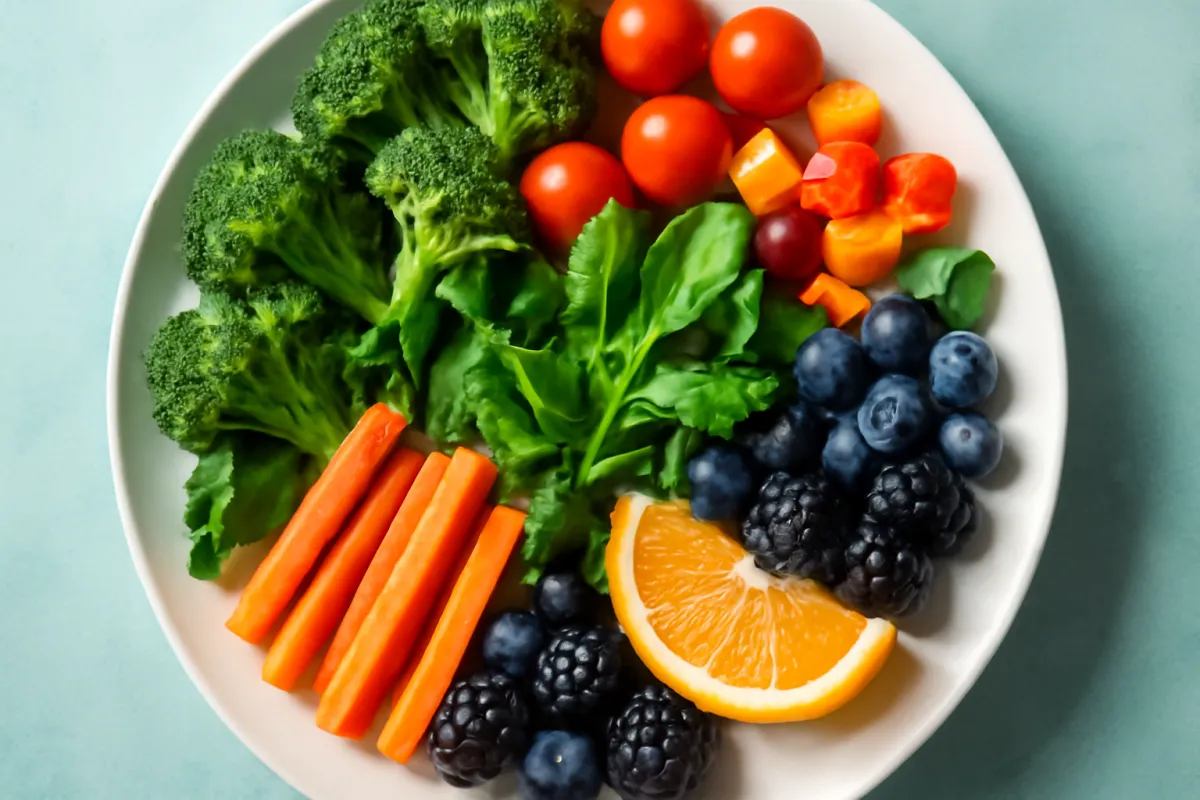
A high protein diet is easy to focus on in isolation, but two supporting habits make it work better in practice. Adequate water intake is commonly discussed alongside higher protein diets, partly because protein metabolism involves the kidneys processing more nitrogen waste, and staying hydrated is a reasonable general habit regardless of diet composition; our hydration guide covers a practical approach. Fiber, from vegetables, fruit, legumes, and whole grains, supports fullness in its own right and helps offset a common complaint about higher protein, higher meat diets, namely a lower fiber intake if vegetables and plant foods are crowded out rather than added alongside.
Neither hydration nor fiber is a substitute for the calorie deficit or the protein target; they are complementary habits that tend to make the whole approach more comfortable and more sustainable over weeks and months rather than days.
Common mistakes on a high protein weight loss diet
A handful of patterns undercut this approach more often than any single food choice does.
- Treating high protein foods as calorie-free. Protein has four calories per gram, same as carbohydrate; a large steak or a handful of protein bars can still add up to more calories than the day’s target allows.
- Cutting vegetables and fiber to make room for more meat. This often backfires on fullness and on regularity, and it is not what the evidence behind high protein diets actually recommends.
- Concentrating protein at one meal. Spreading it across the day is more commonly associated with the fullness and lean mass benefits than loading it all at dinner.
- Skipping strength training. Protein supports lean mass retention best alongside resistance exercise; without it, some of the benefit is left on the table.
- Assuming more protein always means more results. Beyond the illustrative 1.2 to 1.6 gram per kilogram range, additional protein is not consistently shown to add further weight loss benefit and simply displaces other calories.
Who should be cautious with a high protein diet
This approach is not appropriate for everyone without professional guidance. People with chronic kidney disease or reduced kidney function are commonly advised to limit protein rather than raise it, since their kidneys already struggle to process protein byproducts. Anyone with liver disease, a metabolic condition, or who is pregnant or breastfeeding should set a protein target with a doctor or registered dietitian rather than following a general figure. Adolescents and older adults also have different reference needs that a general weight loss article cannot responsibly set for an individual.
None of this means a high protein diet is risky for the general healthy adult population; the commonly cited evidence in that group is reassuring within the ranges discussed here. It means the specific number that is right for you depends on factors this review cannot see, which is exactly what a qualified professional is positioned to evaluate.
How a high protein diet compares to other popular approaches
A high protein diet is often discussed alongside low carbohydrate diets, keto, and intermittent fasting, and it is worth being precise about how these overlap and where they differ. A high protein diet, as described in this review, says nothing specific about carbohydrate or fat other than that protein takes a larger share; it is compatible with a moderate carbohydrate intake and does not require entering ketosis. A low carbohydrate or keto diet is defined by restricting carbohydrate specifically, and many keto plans are moderate, not high, in protein, since very high protein intake can interfere with the ketosis some keto followers are aiming for. Intermittent fasting is a timing pattern, restricting when you eat rather than what, and it can be combined with a high protein approach or with any other diet composition.
None of these approaches is inherently superior for weight loss in the commonly cited evidence; adherence, meaning how consistently someone can follow a pattern over months, tends to matter more than which specific structure is chosen. A high protein diet has a particular appeal in this respect because its appetite-supporting effect is one of the more consistently replicated findings in this area of nutrition research, which is part of why it appears as a component inside many other named diets rather than only as a standalone approach. Our intermittent fasting review covers that pattern specifically if combining the two interests you.
Eating out and traveling on a high protein diet
Restaurant meals and travel are where a high protein pattern most often slips, not because the food is impossible to find but because default portions and preparations tend to favor calorie-dense sides and sauces over the protein itself. A reliable habit is to identify the protein on the menu first, grilled or roasted chicken, fish, a lean cut of beef, tofu, or a bean-based dish, and then ask for vegetables or a side salad in place of fries or extra starch, which most kitchens will accommodate.
Buffets, hotel breakfasts, and fast food are more workable than they first appear once the same principle is applied: eggs, plain yogurt, and grilled proteins are almost always available in some form, and reading a posted nutrition sheet, where one exists, catches the sauces and dressings that quietly add calories without adding protein. A cooler bag with hard boiled eggs, Greek yogurt, or a protein shake covers gaps on travel days when reliable food is not close at hand.
Grocery list basics for a high protein kitchen
A short, repeatable grocery list makes this pattern far easier to sustain than reinventing meals from scratch each week. A workable core list runs through eggs, chicken breast or thighs, a white fish or salmon, canned tuna, plain Greek yogurt, cottage cheese, tofu or tempeh, canned or dried beans and lentils, and a rotating selection of vegetables and a fruit or two. Whole grains, a cooking oil, and a few flavor builders, herbs, spices, garlic, and a couple of sauces, round it out without turning grocery shopping into a project. Our budget grocery list guide and eating healthy on a budget review go further into stretching a list like this without a large food bill.
Buying proteins in bulk when the price is favorable and freezing portions is a practical way to keep the list affordable, and canned or dried legumes are consistently among the cheapest protein sources available, which helps offset the cost of leaner cuts of meat and fish that can run higher per pound.
Transitioning into a higher protein pattern gradually
Jumping straight from a typical mixed diet to a high protein target in one day is not necessary and, for some people, is uncomfortable, particularly if fiber and water intake do not rise alongside protein. A gradual approach, adding one protein-forward swap per week, Greek yogurt instead of regular yogurt, an egg added to breakfast, a bean-based lunch once or twice a week, tends to be easier to sustain and gives the body time to adjust.
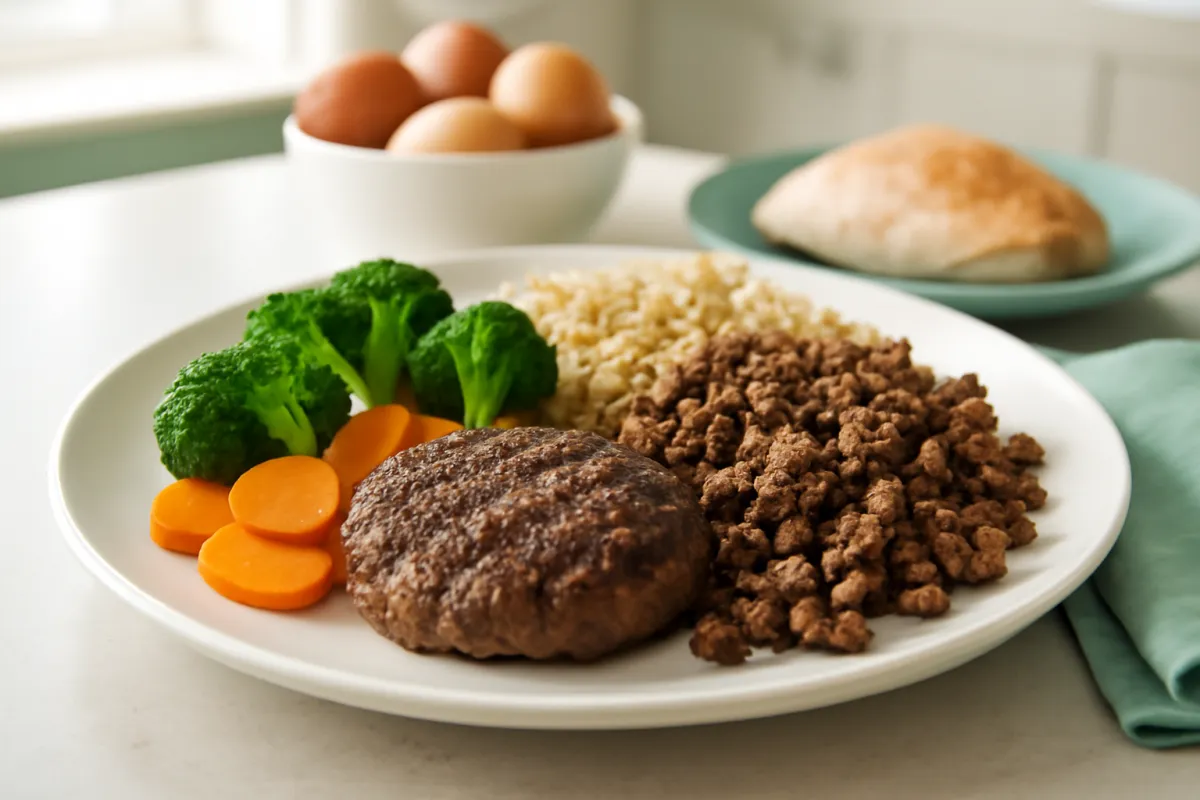
Tracking loosely for the first two or three weeks, even just noting protein sources at each meal without weighing everything, is usually enough to reveal whether the pattern is actually shifting in the intended direction, after which many people settle into it without needing to track closely at all.
A note on protein quality during weight loss
Not all protein sources are interchangeable in every respect, even when the gram totals match. Animal proteins and soy are generally complete, supplying all nine essential amino acids in useful proportions, while many individual plant proteins are lower in one or another of them, a distinction covered in more depth in our protein food composition review. During weight loss specifically, quality matters somewhat more than at maintenance, because the body is already under some stress from the calorie deficit, and complete, easily digested proteins are commonly favored for supporting lean mass under those conditions.
This does not rule out a plant-forward or vegetarian high protein weight loss diet; it simply means variety across plant proteins, legumes, soy, whole grains, and nuts together rather than any single source, becomes more important than it would be at maintenance. Leucine content, one particular amino acid linked with muscle protein synthesis, is another factor sometimes discussed in this context, and it is notably higher in animal proteins and soy than in most other plant foods, which is one reason soy is often highlighted specifically within plant-based higher protein approaches.
Building your own high protein day
Bringing the pieces together: pick a calorie target appropriate for your situation, aim for roughly 25 to 35 percent of those calories from protein using the illustrative 1.2 to 1.6 gram per kilogram range as a cross-check, and anchor each meal with a protein source before filling in vegetables, whole grains, and fat. None of the individual numbers in this review are a personal prescription; they are a worked framework for reasoning about a high protein weight loss diet that you can adapt with real foods and, ideally, professional input on your specific target.
Use the companion below to set your own weight and calorie level and see an illustrative gram target and how a day of meals compares to it.
Tracking progress beyond the scale
Body weight is the most common way people track a weight loss diet, but it is a noisy signal day to day, moving with water retention, sodium intake, and hormonal cycles as much as with actual fat loss. A weekly average, rather than a single daily reading, smooths out most of that noise and gives a clearer trend over several weeks. Alongside the scale, how clothes fit, energy levels, and, for anyone strength training, whether lifts are holding steady or improving are all reasonable signals that a high protein approach is preserving lean mass as intended rather than only producing a smaller number.
A body tape measure at the waist, hips, and a couple of other sites is a low cost way to track composition changes that the scale alone cannot show, particularly useful for anyone who is also resistance training and may be gaining a small amount of muscle while losing fat, a combination that can leave the scale nearly unchanged for weeks despite real progress. None of these methods require special equipment or an app, and combining two or three of them tends to give a more honest picture than any single number.
If several weeks of consistent effort produce no movement across any of these signals, it is worth revisiting the calorie deficit itself, since protein intake supports a deficit but cannot manufacture one that is not actually there, and our calorie deficit review covers how to reassess it.
A quick checklist for getting started
- Set a calorie deficit first, using our calorie deficit review, since protein supports the deficit rather than replacing it.
- Aim for roughly 1.2 to 1.6 g of protein per kilogram of body weight as an illustrative starting range, confirmed with a professional if any condition applies.
- Anchor every meal with a protein source rather than concentrating it at one meal.
- Choose leaner, lower calorie proteins most of the time: chicken breast, white fish, egg whites, nonfat yogurt, tofu, and legumes.
- Keep vegetables, fiber, and water in the picture, since they support fullness alongside the protein rather than competing with it.
- Check in with a doctor or registered dietitian before adopting a higher protein target if you have kidney disease, liver disease, or another relevant condition.
The bottom line
A high protein diet supports weight loss by making a calorie deficit easier to sustain and by helping preserve lean mass while the deficit is in effect, not by burning fat directly. A commonly cited illustrative range for this goal is about 1.2 to 1.6 grams of protein per kilogram of body weight, delivered through foods like chicken, fish, eggs, yogurt, tofu, and legumes, spread across meals rather than concentrated at one. The deficit itself still does the primary work, vegetables and fiber still belong on the plate, and anyone with kidney disease, liver disease, or another relevant condition should set a personal target with a doctor or registered dietitian rather than a generic figure. Pair this review with our protein needs review and calorie deficit review for the rest of the framework.
This evidence review is published for education about how protein intake is commonly discussed in relation to weight loss, and it is not medical or dietary advice, and reading it creates no clinician-patient relationship. Every gram figure, percentage, and calorie level above is an illustrative, commonly cited reference for reasoning about a diet, not a personal target or a guaranteed outcome, and individual needs vary with body size, activity, health status, and medications. This article does not diagnose any condition or replace a personalized eating plan. Anyone with kidney disease, liver disease, diabetes, or another medical condition, and anyone who is pregnant or breastfeeding, should set a protein and calorie target with a doctor or registered dietitian before changing their diet.
Frequently asked questions
Does a high protein diet actually help you lose weight?
A higher protein intake does not cause weight loss by itself; a calorie deficit does. What protein does is make that deficit easier to sustain, because protein is commonly described as the most satiating macronutrient per calorie, so a given energy budget tends to leave you less hungry. Higher protein intake is also linked with preserving more lean mass while eating less, which matters for the number on the scale being more fat and less muscle. Several controlled studies on high protein diets report modestly better appetite control and fat loss preservation compared with lower protein plans at the same calorie level, though results vary by person and study design. Treat protein as a tool that supports the deficit, not a substitute for one.
How much protein should I eat per day to lose weight?
There is no single number that fits everyone, and our companion protein needs review works through the variables in detail, but a commonly cited illustrative range during weight loss runs roughly 1.2 to 1.6 grams per kilogram of body weight, higher than the general population reference intake, with some plans going higher still under professional supervision. The reasoning is that a calorie deficit already asks the body to give up some tissue, and a higher protein intake is one lever that helps more of that loss come from fat rather than lean mass. This is a general, educational range, not a personal prescription, and anyone with kidney disease, liver disease, or another condition should set a target with a doctor or registered dietitian rather than a generic figure.
Can I lose weight on a high protein diet without counting calories?
Some people do lose weight simply by prioritizing protein at meals, because doing so tends to crowd out lower-satiety foods and reduce total intake without deliberate counting, an effect sometimes called protein leverage. It is not guaranteed, though, and it depends heavily on what else is on the plate; a high protein meal that also carries a large amount of added fat or refined carbohydrate can still run high in calories. For people who want more certainty, tracking intake for a few weeks, even loosely, tends to reveal whether the informal approach is actually creating a deficit. Our companion below lets you sketch a day of meals and see where the numbers land.
What foods should I eat on a high protein weight loss diet?
The foods that work best for this goal deliver protein at a relatively low calorie cost: chicken breast, turkey, white fish, shrimp, eggs or egg whites, nonfat or low fat Greek yogurt, cottage cheese, tofu, edamame, lentils, and beans all fit that description. Vegetables that are low in calories but high in fiber and volume, such as leafy greens, broccoli, peppers, and cucumber, pair naturally with these proteins and add fullness for very little energy. Whole grains, fruit, and healthy fats still belong on the plate in reasonable amounts; the goal is a higher share of protein, not the exclusion of other food groups. Our protein food composition review lists common figures for these foods side by side.
Is a high protein diet safe for kidneys?
For people with healthy kidneys, the commonly cited evidence does not show that a higher protein intake within the ranges typically used for weight loss causes kidney damage. The picture is different for anyone who already has reduced kidney function, chronic kidney disease, or a related condition, where limiting protein is sometimes part of medical management, and a higher intake could be inappropriate. Because this is a genuine medical distinction rather than a general nutrition question, anyone with existing kidney disease, a family history of it, diabetes, or another relevant condition should set their protein target with a doctor or registered dietitian before increasing intake, rather than relying on a general-audience article.
How long should you stay on a high protein diet for weight loss?
A higher protein intake is generally described as a sustainable, ongoing eating pattern rather than a short-term phase, partly because its benefits, appetite control and lean mass preservation, apply for as long as you are in a calorie deficit and arguably afterward too, since protein needs do not disappear once weight loss ends. There is no widely cited fixed duration after which a high protein approach should stop; many people simply keep protein relatively high as a habit while adjusting total calories to their current goal, whether that is continued loss, maintenance, or a different phase. Anyone following a structured or extreme high protein program should still check in with a healthcare provider periodically.
Do I need a protein supplement to lose weight?
No single supplement is required for weight loss, and whole foods can supply a high protein target for most people, as our protein food composition review lays out with commonly cited figures. Protein powders and shakes are a convenience, useful when time, appetite, or a higher target makes whole food alone impractical, but they are optional rather than necessary. Some shakes and bars also carry meaningful added sugar or calories despite a high protein claim on the label, so reading the panel matters more than the marketing. Anyone considering a supplement, especially at a higher dose than a typical serving, is well served by checking with a doctor or registered dietitian first, particularly alongside any medication or health condition.
What is a good daily protein target on a 1500 calorie diet?
Using the illustrative 1.2 to 1.6 gram per kilogram range discussed above, someone weighing around 70 kilograms following an illustrative 1500 calorie plan might land near 85 to 110 grams of protein a day, which is roughly 23 to 29 percent of total calories at 4 calories per gram, a share commonly described as high protein territory. That is a worked example for illustration, not a personal number: your own reasonable target depends on your body weight, activity level, and any health conditions, and our companion below lets you enter your own weight and calorie level to see where the figure lands for you. A doctor or registered dietitian can confirm what is appropriate given your full health picture.

Hamza Hai is the editor of NourishMark. She holds an MBA and reviews the site's articles against our editorial standards, checking that every figure is labelled for what it is, that nothing is presented as verified fact without a source the reader can check, and that the writing stays useful to a non-specialist.

Dr. Shayaan Khan is the medical reviewer for NourishMark. He holds an MBBS from MGM Medical College, Navi Mumbai, and is the author of published research including a narrative review of postpartum anxiety and depression in Mental Health Science. He has taught physiology at university level. He reviews the site's health content for medical accuracy: that physiology and mechanisms are described correctly, that no claim is stated more strongly than the evidence behind it, and that anything specific to an individual reader is sent to that reader's own clinician.
Not medical advice. Dr. Khan reviews NourishMark's health content for medical accuracy. He is not a registered dietitian, he does not hold a United States practising licence, and he is not your doctor. His review does not make anything here medical advice. Always talk to a qualified health professional about your own situation, and never delay or stop care because of something you read here.