What's in this review
- Before you start: what you need to build a grocery list
- Step 1: Plan your meals for the week first
- Step 2: Build the list around the balanced plate
- Step 3: Organize the list to shop the perimeter first
- Step 4: Read labels to choose better packaged foods
- Step 5: Make budget-friendly swaps that keep it healthy
- Step 6: Stock a core of healthy staples to keep on hand
- Step 7: Shop your list to avoid impulse buys
- A worked example: one week’s list from plan to cart
- Common grocery-list mistakes
- Troubleshooting and edge cases
- Your healthy grocery-list checklist
- The bottom line
Short answer: A healthy grocery list is a balanced plate written down before you shop. Plan the week's meals first, build the list on the commonly cited plate shape of roughly half produce, a quarter protein, and a quarter whole grains, then group items by store section so you shop in one loop. Shop the perimeter first for produce, protein, and dairy, add staples such as beans and oats, and never shop hungry.
The moment a healthy week of eating is won or lost is rarely at the stove. It is at the store, or more precisely in the few minutes before it, because a cart is only ever as good as the list that filled it, and an unplanned trip on an empty stomach fills the cart with whatever is loudest. A written list built from a real plan flips that. It turns a store full of thousands of tempting choices into a short, calm errand where the deciding is already done, the balanced food lands in the cart almost automatically, and the impulse buys quietly lose their grip.
This evidence review is a step-by-step walkthrough for how to make a healthy grocery list, from planning your meals through checking out without the impulse pile. It covers what to sort out before you start, the seven steps in order, a worked example that runs one illustrative week from plan to cart, the mistakes that quietly wreck a good list, and the edge cases worth knowing. Because a healthy list is really a balanced plate written down in advance, it leans on our walkthrough on building a balanced plate, our nutrition-label walkthrough, and, for the cooking that comes after the shopping, our weekly meal-prep walkthrough. Everything here is general information, not medical or dietary advice, and every cost, portion, and proportion figure is a commonly cited illustrative guideline rather than a personal prescription. Try your own numbers in the companion below as you read.
Key takeaways
- A healthy grocery list is a balanced plate written down before you shop, so plan the meals first and let the list fall out of the plan rather than the other way around.
- Build the list on the commonly cited plate shape, roughly half produce, a quarter protein, and a quarter whole grains, then group it by store section so you shop in one efficient loop.
- Shopping the perimeter first anchors the cart in fresh produce, protein, and dairy, but the center aisles hold inexpensive staples like beans, oats, and frozen vegetables that belong on any healthy list.
- The two habits that keep a list working are stocking a small core of shelf-stable staples and shopping from the written list without shopping hungry, which is what defeats impulse buys.
- This is general educational information, and every cost and portion figure here is a commonly cited illustrative guideline, so confirm anything specific to your health or diet with a doctor or registered dietitian.
Before you start: what you need to build a grocery list
Building a grocery list needs almost nothing but a few minutes and a little honesty about the week ahead, which is exactly why it is such a high-return habit: a small planning cost up front saves money, time, and a great deal of dinner-hour stress later. Before your first list, it helps to have three things loosely settled, none of which requires precision.
- A rough meal plan. You do not need a rigid menu, only a general sense of how many breakfasts, lunches, and dinners you actually need to cover, and a handful of meals you are happy to eat. The list is built from the plan, so even a loose plan beats no plan, because it is the plan that decides what belongs in the cart.
- A quick pantry and fridge check. Before you write anything, glance at what you already own, since half-used bags of rice, freezer proteins, and pantry beans often cover more of a week than you expect. Building a list without this check is the fastest way to buy a second jar of something you already have while forgetting the thing you actually need.
- A format you will actually use. A notepad, a phone note, or a grocery app all work, and the best one is the one you will keep on hand. Grouping the list by store section is the single formatting trick that most speeds up the trip, so leave room for produce, proteins, grains and pantry, dairy, and frozen.
Difficulty here is genuinely low, and the payoff compounds every week you do it. The one thing worth being honest about is how much fresh food you will realistically eat before it spoils, because the most common way a well-meant healthy list wastes money is buying more perishable produce than a single week can use. Everything below is a general educational framework, and none of it substitutes for guidance from a registered dietitian or doctor, particularly if you manage a health condition, take medication, are pregnant, or have any history of disordered eating.
Step 1: Plan your meals for the week first
Begin by planning the meals before you write a single grocery item, because the list is downstream of the plan, and a list built from a plan buys exactly what the week needs while a list built from habit or hunger buys a cart of loosely related food that never quite becomes meals. This first step is where a healthy trip is really decided, and it takes only a few minutes.
Start by counting the meals you actually need to cover rather than an imaginary perfect week. Look at how many breakfasts, lunches, and dinners will happen at home, subtract the ones already handled by leftovers or plans to eat out, and you are left with the real number the list has to feed. The companion below turns your household size, days, and meals per day into that total, which is the figure every later quantity scales from. Planning to your true number is what stops both the empty-fridge scramble and the overflowing-fridge waste.
Then sketch the actual meals, leaning on a small rotation you like rather than a fresh set of recipes every week. A practical trick is to plan for mix-and-match components, a couple of proteins, a grain or two, and a spread of vegetables, so a handful of ingredients recombine into several meals with different sauces. This keeps the list short while the meals stay varied, and it makes the eventual cooking, whether that is nightly or a single meal-prep session, far simpler.
Watch out for planning meals you like the idea of but will not actually cook, and for planning around a single showpiece recipe with a long tail of one-use ingredients that sit in the fridge until they spoil. Plan realistic meals from foods you already reach for, and treat the plan as the thing that protects both your budget and your good intentions. This is a general planning framework, not a prescription, so adapt it to your own tastes, schedule, and any dietary needs.
Step 2: Build the list around the balanced plate
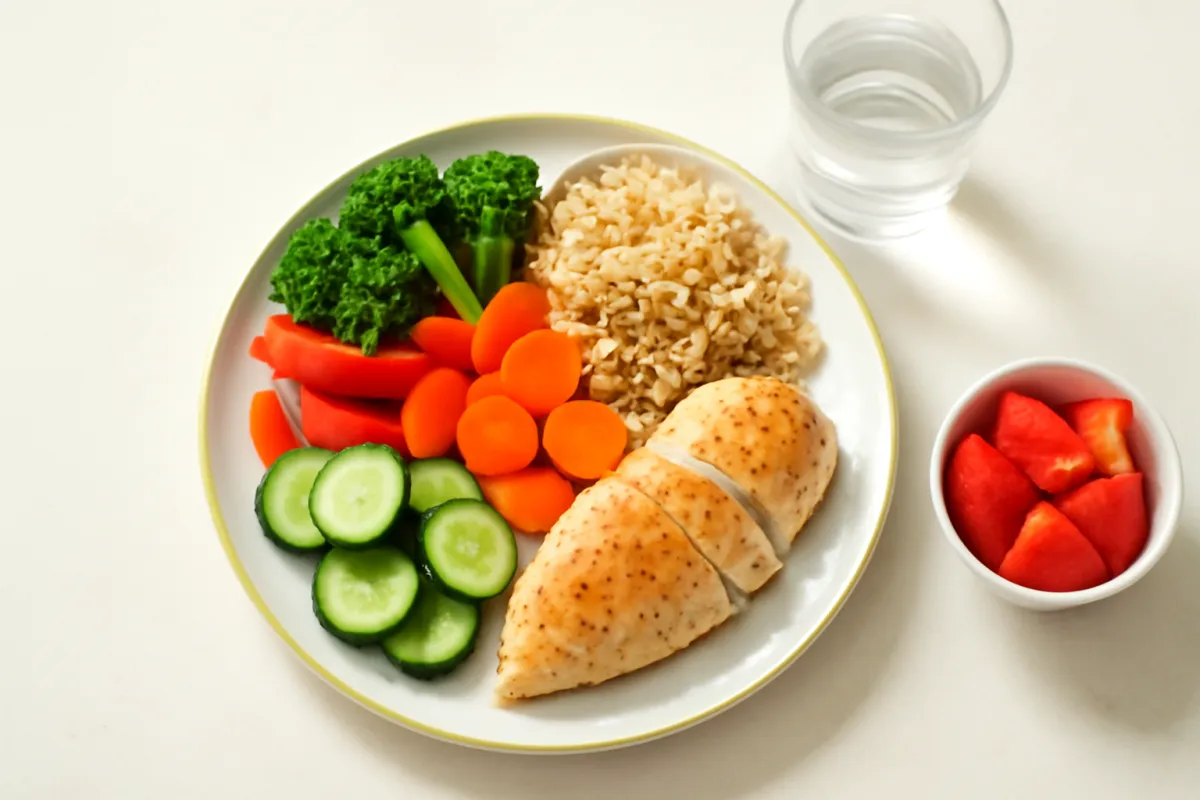
With meals planned, translate them into a list that is nutritious by design, and the simplest way to do that is to build the list on the same shape a good plate takes: roughly half produce, about a quarter quality protein, and about a quarter whole grains, plus a little healthy fat. When the list mirrors the plate, the cart fills with balance automatically instead of by willpower at the shelf, which is the whole point of planning ahead.
Go meal by meal through your plan and write down every component each one needs, then sanity-check the whole list against those proportions. If half your plate is meant to be vegetables and fruit but produce is a short afterthought at the bottom of the list, the balance is lost before you ever reach the store, so pull produce to the top and let it lead. Our balanced-plate walkthrough lays out the full shape, and the same logic applies whether you are listing for one dinner or a full week.
A balanced grocery list by plate proportion
One illustrative way to picture how a healthy weekly list divides across the plate shape. These are general guidelines meant to be flexible, not exact measurements for any one cart.
Segments are the commonly cited plate proportions and sum to 100 percent, with a little healthy fat folded through rather than given its own zone. General illustrative guideline, not a measurement.
Watch out for a list that is protein-heavy and produce-light because vegetables feel like the fussy part, and for forgetting the small amount of healthy fat, such as olive oil, nuts, or avocado, that rounds a plate out. Keep the list produce-forward and vegetable-first, scale each component to the meal count from Step 1, and treat these proportions as a flexible general guideline rather than a rule to hit exactly.
Step 3: Organize the list to shop the perimeter first
Before you head out, organize the list by where things live in the store, and organize it to start on the perimeter, because the outer ring of most stores holds the fresh produce, proteins, and dairy that anchor balanced meals, and grouping the list this way turns the trip into one efficient loop instead of a back-and-forth scramble that invites impulse detours. A list ordered by section is also a list you can shop quickly, and speed is quietly one of the best defenses against overspending.
Group your items under a few headers: produce, proteins, dairy, whole grains and pantry, and frozen. Shopping the produce, protein, and dairy on the perimeter first fills most of the cart with whole foods early, which both anchors the meal balance and leaves less room and less appetite for the center-aisle extras. Then enter the center aisles with a targeted list rather than a wander, picking up the specific staples your meals call for and skipping the rest.
Illustrative share of a balanced grocery cart by section
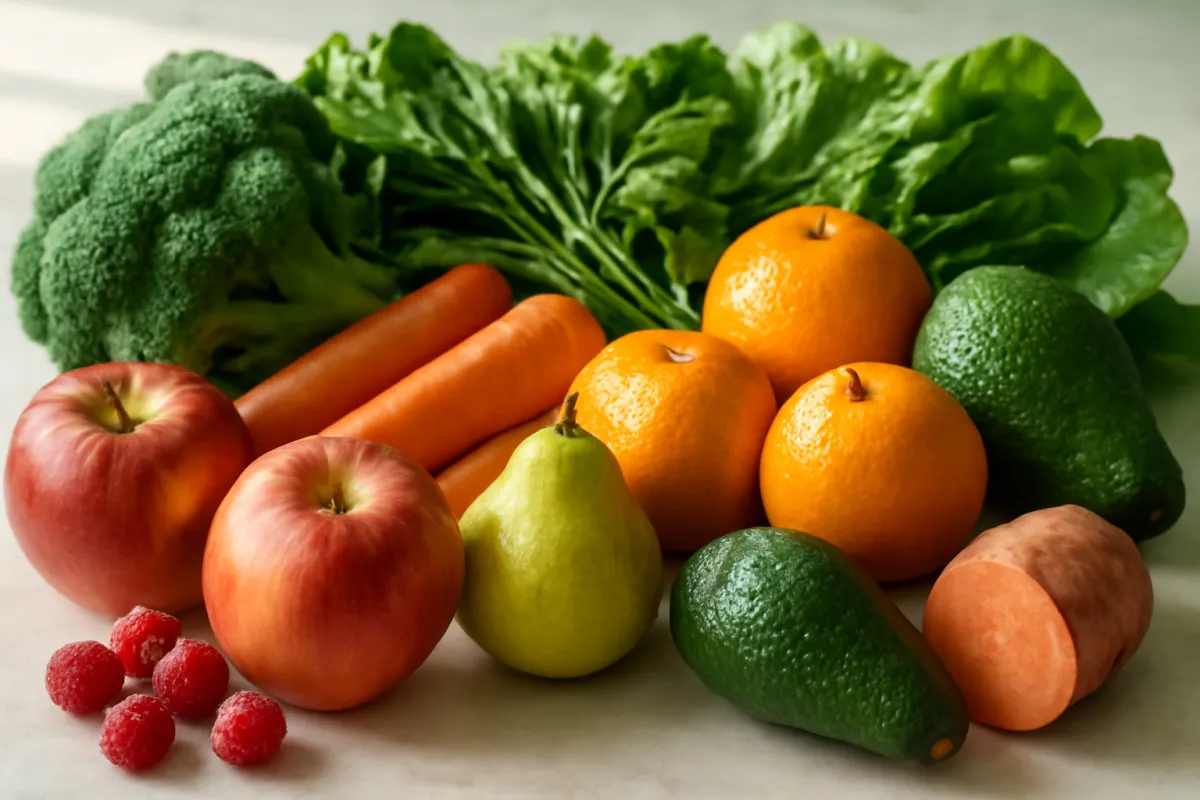
A rough sense of how a produce-forward weekly cart tends to divide across store sections. These are general illustrative shares, not measured figures, and your real split depends on your meals, tastes, and budget.
Bars scale to the largest section, produce at 100 percent of the bar, while the labels show each section's illustrative share of the whole cart, which sums to 100 percent. General guideline, not a measurement.
The perimeter rule is a helpful shortcut, though, not a law, and treating it as a law would have you skip some of the best value in the store. Plenty of nutritious, affordable staples live in the center aisles: beans, lentils, oats, brown rice, whole-grain pasta, canned tomatoes, canned fish, olive oil, and the frozen vegetables and fruit that count fully toward the produce half while lasting far longer than fresh. The better framing behind the shortcut is to fill the cart mostly with whole and minimally processed foods wherever they happen to sit, and to enter the packaged aisles with named items rather than an open mind.
Watch out for reading the perimeter rule so strictly that you skip the affordable center-aisle staples, and for crisscrossing the store because the list is a jumble, which wastes time and multiplies the chances of an impulse grab. Group the list by section, lead with the perimeter, and hit the center aisles with purpose. This is a general shopping strategy, not a nutrition rule.
Step 4: Read labels to choose better packaged foods
For the packaged items that do belong on a healthy list, the tool that separates the genuinely good choices from the well-marketed ones is the label, so build a quick habit of reading it rather than the front-of-box claims. Front labels are advertising; the Nutrition Facts panel and the ingredient list are the closest thing to the truth on the shelf, and a few seconds with them is what keeps a list honest.
Start with the serving size, because every other number on the panel is stated per serving, and a package that looks reasonable per serving can hold several servings, which quietly multiplies the calories, sodium, and added sugar you actually take in. From there, glance at the nutrients most people benefit from limiting, such as saturated fat, sodium, and added sugars, and the ones worth getting more of, such as fiber and protein, using the commonly cited rule of thumb that around 5 percent of the Daily Value is low and around 20 percent is high. Our nutrition-label walkthrough covers the full method, and our added-sugar label walkthrough drills into the sugar line specifically.
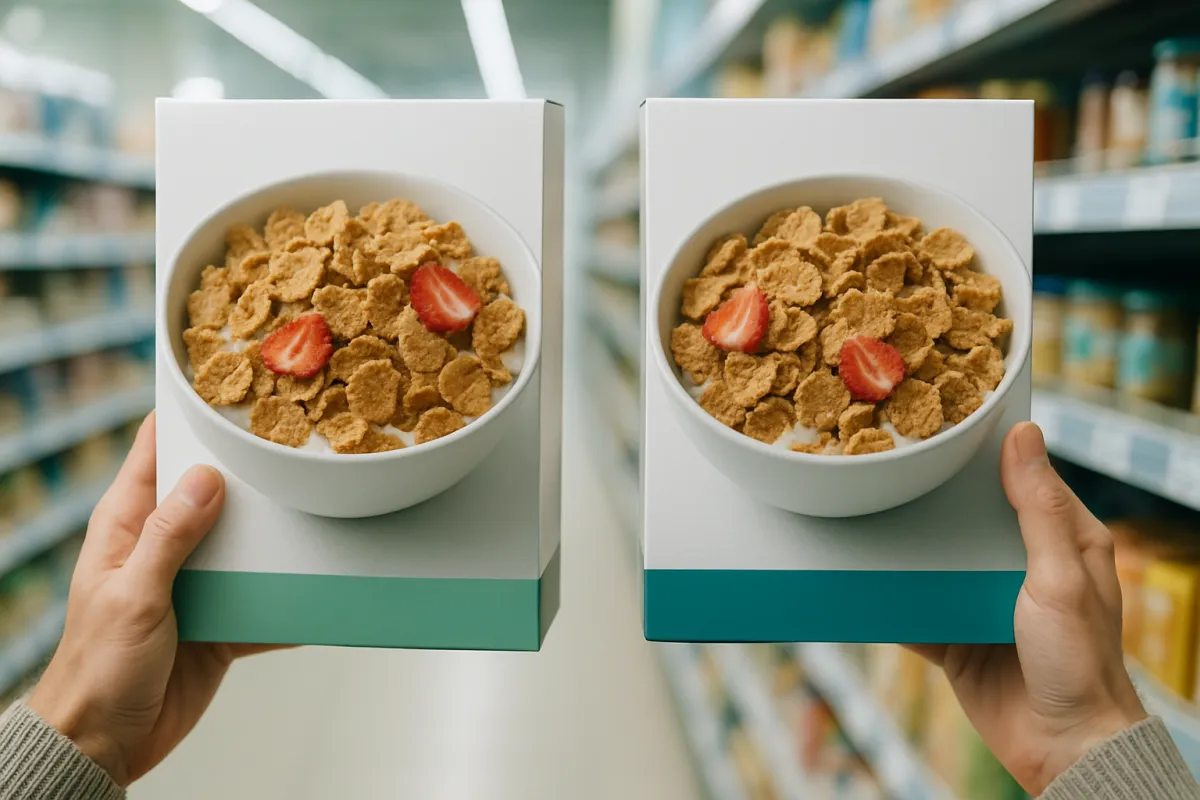
The ingredient list is the other half of the read, since it runs from most to least by weight, so a shorter list led by recognizable whole foods is generally a better sign than a long one led by refined grains, oils, or sweeteners under their many names. When two similar products sit side by side, comparing them on the same per-serving basis, then checking which has the shorter, cleaner ingredient list, is a fast way to make the better pick without agonizing over it.
Watch out for judging a food by its front-of-box health claims, which are marketing, and for forgetting to scale the panel to how much you will really eat. Read the serving size first, use the panel and ingredient list to choose, and remember these thresholds are general guidelines rather than personal targets. Anyone managing a condition that calls for tracking specific nutrients should set those targets with a professional.
Step 5: Make budget-friendly swaps that keep it healthy
A healthy list and an affordable list are not opposites, and the step that reconciles them is a deliberate pass for budget-friendly swaps, because the same nutrition can very often be bought for less by trading expensive forms of a food for cheaper ones that keep the balance intact. Done as a habit, this pass is what lets a produce-forward, protein-adequate list survive contact with a real grocery budget.
The most reliable swaps trade pricey convenience and premium cuts for inexpensive staples that deliver the same role on the plate. Frozen and canned vegetables and fruit stand in for out-of-season fresh at a fraction of the cost while counting fully toward the produce half and lasting far longer. Beans, lentils, eggs, canned fish, and cheaper cuts of meat stretch the protein budget furthest, and plain oats, brown rice, and whole-grain pasta anchor the grain quarter cheaply. Buying whole ingredients and doing a little prep at home, rather than paying for pre-cut, pre-seasoned, or single-serving versions, is a swap that repeats across the whole list.
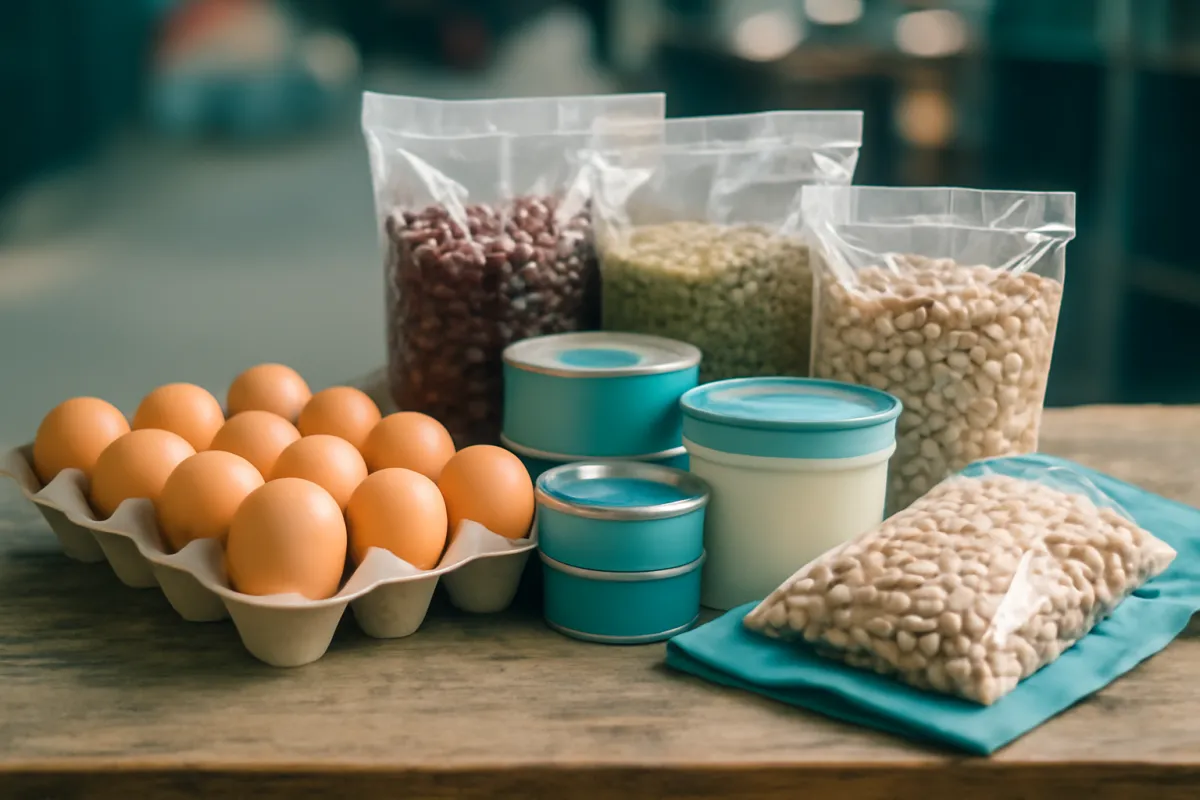
Timing and planning are the other levers. Building the list around what is on sale or in season, buying shelf-stable and freezer staples in slightly larger quantities when the price is good, and scaling perishable produce to what a single week can actually use all lower the cost of a healthy cart. Any dollar figures here are illustrative and vary widely by region and season, so treat cost savings as a likely benefit for most people rather than a guarantee.
Watch out for the false economy of over-buying perishable food because it was cheap, only to throw half of it away, and for assuming healthy always costs more, which is often untrue once staples do the heavy lifting. Swap toward inexpensive staples, buy perishables to your real needs, and let the plan protect the budget. This is general budgeting guidance, not financial or dietary advice.
Step 6: Stock a core of healthy staples to keep on hand
Beyond the week-specific items, a healthy list is far easier to build, and far cheaper to run, when a small core of shelf-stable and freezer staples is always on hand, because that core shortens every future list to just the fresh additions and guarantees that even an unplanned night still has the makings of a real meal. Stocking this base once and topping it up is one of the highest-leverage habits in the whole process.
A commonly cited core is built from foods that keep for a long time, cost little per serving, and combine into quick balanced meals: dried or canned beans and lentils, oats, brown rice or another whole grain, whole-grain pasta, canned tomatoes, canned fish such as tuna or salmon, eggs, olive oil, and basic seasonings, plus frozen vegetables and frozen fruit in the freezer. With that base present, a tired evening can become a bowl of grains, beans, and frozen vegetables in minutes, which is exactly the meal a bare kitchen would have sent to takeout instead.
Keeping the core stocked also changes the weekly list itself. Instead of rebuilding a pantry from scratch each trip, you add only the fresh produce, proteins, and dairy the coming week needs, which makes the list shorter, the trip faster, and the spending steadier. A simple running note of what has run low turns restocking into a quick check rather than a guess, and prevents both the empty-shelf surprise and the duplicate-jar waste.
Watch out for treating staples as invisible and letting the core quietly empty, and for stocking so aggressively that shelf-stable food expires before it is used. Keep a modest, genuinely used core, note what runs low, and let it carry the meals your fresh list does not. These are general illustrative suggestions to adapt to your own tastes, budget, storage, and any dietary needs, not a fixed shopping order.
Step 7: Shop your list to avoid impulse buys
The last step is the discipline that protects everything the first six built: actually shop the list you made, and shop it in a way that gives impulse buys as little opening as possible, because a carefully planned list still fails if the trip itself turns into an aisle-by-aisle browse on an empty stomach. Getting this step right is what converts a good list into a good cart.
A few well-supported habits do most of the work here. Do not shop hungry, since arriving fed blunts the very appetite that makes impulse buys tempting, and a small snack beforehand pays for itself. Stick to the sections your grouped list sends you to rather than walking every aisle, because unplanned aisles are where unplanned items appear. Shopping from a written list, on a predictable weekly cadence rather than frequent quick trips, keeps both time and impulse spending down, and for many people ordering online for pickup removes the temptation almost entirely by turning the store into a search box.
None of this needs to be joyless. Leaving a little planned room on the list for one or two genuine treats tends to reduce the all-or-nothing feeling that drives bigger splurges, so a healthy list is not a list with zero pleasures, it is a list where the pleasures are chosen on purpose rather than grabbed at the shelf. The point of the plan was never restriction, it was to move the deciding to a calm moment so the store visit is just execution.
Watch out for the two classic openings this step exists to close: shopping hungry, and treating the list as a suggestion once the endcap displays start working on you. Eat first, shop the list, keep to your sections, and build in a treat or two on purpose. These are general behavioral strategies rather than rules, and there is nothing wrong with planned indulgences in an otherwise balanced pattern.
A worked example: one week’s list from plan to cart
Pulling the seven steps together across one illustrative week shows how quickly the method turns a vague intention into a clean, balanced cart. Meet a general example: a two-person household planning dinners for a week and a few weekday lunches, wanting balanced meals and a steadier grocery bill. Nothing here is a recommendation for any real person, it is one week run through the steps so the flow is concrete.
Step 1, plan the meals: they count the week honestly, five dinners at home and three packed lunches for two people, and the companion below turns that into a total meal count the list scales from. They choose a small mix-and-match rotation, a chicken-and-vegetable bowl, a lentil pasta, a fish-and-rice plate, and a bean chili that doubles as lunches. Step 2, plate shape: they check the list leads with produce, a spread of vegetables and some fruit filling about half, with two proteins and a couple of whole grains behind it. Step 3, organize by section: the list is grouped into produce, proteins, dairy, grains and pantry, and frozen, ordered to shop the perimeter first.
Step 4, labels: for the pasta and the canned goods, they read serving sizes and ingredient lists, picking a whole-grain pasta and a no-salt-added canned tomato after a quick side-by-side compare. Step 5, budget swaps: they take frozen broccoli and spinach instead of pricier out-of-season fresh, canned salmon for one meal, and dried lentils and beans, scaling perishable produce to what the week will really use. Step 6, staples: because oats, rice, olive oil, and canned goods are already stocked, the list is short and mostly fresh. Step 7, shop it: they eat a snack first, order half for pickup and grab the fresh produce in person, and keep to the list, leaving room for one planned treat.
The finished trip reads cleanly: a produce-forward cart built on the plate shape, two proteins and two grains, an already-stocked staple core doing quiet work, and almost nothing unplanned in the cart. Change one input, say the household grows or they add breakfasts, and the same steps scale up: the meal count rises, the quantities climb with it, and the companion’s total moves to match. That is the point of building it this way, the process stays constant and only the scale moves.
Common grocery-list mistakes
Most grocery-list failures are not exotic, they are a handful of predictable slips, and each is easy to sidestep once named.
- Shopping with no list or plan. Walking in without a list built from a plan is how a cart fills with loosely related food that never becomes meals, and how the bill climbs. Plan the meals first, then let the list fall out of the plan.
- A protein-heavy, produce-light list. Because vegetables feel like the fussy part, they often end up an afterthought, which loses the plate balance before the trip starts. Lead the list with produce and let it fill about half.
- Over-buying perishable food. Buying more fresh produce than a single week can use, often because it was cheap or looked good, quietly turns a healthy habit into wasted money. Scale perishables to your real meal count and lean on frozen for the rest.
- Believing front-of-box claims. Health claims on the front are marketing; the panel and ingredient list are the truth. Read the serving size and ingredients rather than the advertising.
- Shopping hungry and browsing every aisle. An empty stomach and an open-ended wander are the two biggest openings for impulse buys. Eat first and keep to the sections your list sends you to.
- Letting the staple core run dry. When the pantry base quietly empties, every list gets longer and every unplanned night defaults to takeout. Keep a modest core stocked and note what runs low.
Clear these six and the list does its job calmly, handing you a balanced cart with almost no in-store willpower required.
Troubleshooting and edge cases
A few common situations change the practical details, though never the underlying seven-step logic. What if you are cooking for one? Scale the quantities down and lean harder on staples and the freezer, since a single person is where fresh produce most often spoils before it is used. Buy smaller amounts of perishables, freeze half of anything bought in bulk, and let shelf-stable staples cover the meals a small fresh list cannot.
What if you are feeding a family or a crowd? The plate shape and the steps hold, but the quantities and the staple core both grow, and planning becomes more valuable, not less, because waste and impulse spending scale with the cart. Buying larger quantities of staples when the price is good, and building meals that stretch, such as bean and grain dishes, tend to keep a bigger list affordable.
What if your budget is very tight? Lean the list almost entirely on the cheapest nutritious staples, beans, lentils, eggs, oats, rice, frozen vegetables, and canned fish, and build the week’s meals around whatever produce and protein is on sale. A produce-forward, staple-anchored list is often cheaper than a cart of convenience food, so the plan itself is a budgeting tool. Any figures are illustrative and vary by region and season.
What if you have little time to plan or shop? Shrink the scope rather than skipping it: keep a short repeating list of the same reliable meals, keep the staple core stocked so the weekly list is only the fresh additions, and consider online pickup to remove both the browse and the impulse aisles. Even a rough five-minute list beats an unplanned trip.
What if you have a medical condition or special diet? This is the important one. Diabetes, kidney disease, heart conditions, food allergies, celiac disease, pregnancy, digestive disorders, and other situations can call for a specific approach that overrides this general shape, sometimes changing which foods and quantities belong on the list at all. If any of these apply, treat this walkthrough as background only and follow the list set with your doctor or registered dietitian.
Your healthy grocery-list checklist
Keep this short routine on hand to build a balanced, budget-aware list any week, whether it is a few dinners or a full stock-up.
- Plan the meals first, counting the real meals you need to cover and choosing a small mix-and-match rotation you will actually cook.
- Build the list on the plate shape, leading with produce to fill about half, then a quarter protein, a quarter whole grains, and a little healthy fat.
- Group the list by store section, ordered to shop the perimeter first and enter the center aisles with named staples.
- Read labels on packaged items, starting with the serving size, then the panel and ingredient list, comparing similar products on the same basis.
- Make budget-friendly swaps, trading premium and convenience forms for inexpensive staples like beans, canned fish, frozen produce, and plain whole grains.
- Keep a core of staples stocked, so each list is only the fresh additions and an unplanned night still has the makings of a meal.
- Shop the list without shopping hungry, keeping to your sections, on a predictable cadence, with a planned treat or two so it never feels all-or-nothing.
Run your own household size, days, and meals per day through the companion below to see how many meals your list needs to cover and a rough balanced breakdown.
The bottom line
Building a healthy grocery list is less about grocery-store willpower than about moving the deciding to a calm moment before you go, so the store visit becomes execution rather than temptation. Plan the meals first, build the list on the balanced-plate shape with produce leading, group it by section and shop the perimeter first, read labels on the packaged items, make budget-friendly swaps toward inexpensive staples, keep a small staple core stocked, then shop the list itself without shopping hungry. Keep a treat or two on the list on purpose, because the goal was never restriction, only a cart that fills with balance by design. Every cost, portion, and proportion figure here is a commonly cited, illustrative general guideline rather than a personal prescription, so pair it with our balanced plate, nutrition-label, and weekly meal-prep evidence reviews, and confirm anything specific to your health, budget, or conditions with a qualified professional.
This evidence review is published for general education and describes commonly cited grocery-planning and nutrition practices as an illustrative framework, not medical, nutritional, or dietary advice, and reading it creates no clinician-patient relationship. Every cost estimate, portion, and plate proportion above is a general guideline or worked example rather than a measurement or a personal recommendation, and real budgets, households, tastes, and needs vary widely. Food prices and availability change constantly by region and season, so treat any savings here as a likely benefit rather than a promise. Nutritional needs also differ from person to person, and some situations, including diabetes, kidney disease, heart conditions, digestive disorders, food allergies, celiac disease, pregnancy, and any history of disordered eating, call for an individually managed approach that overrides any general shape here. For a grocery list and eating pattern suited to your body, goals, budget, medications, or any medical condition, consult a qualified health professional such as a doctor or registered dietitian.
Frequently asked questions
How do I make a healthy grocery list?
The most reliable way is to plan your meals first, then work backward: list every ingredient each planned meal needs, group the list by store section, and check what you already have before you leave. Building the list around the balanced-plate shape, roughly half produce, a quarter protein, and a quarter whole grains, keeps the list nutritious rather than just convenient. Adding a short core of shelf-stable staples means you always have the makings of a meal even on an unplanned week. This is general educational information, and anyone with a medical condition or specific dietary needs should tailor a list with a registered dietitian.
What should be on a healthy grocery list?
A balanced list usually leans hardest on produce, both fresh and frozen, then a couple of quality proteins, a whole grain or two, some dairy or dairy alternatives, and a small set of pantry staples such as beans, lentils, canned fish, oats, and olive oil. Filling roughly half the list with vegetables and fruit mirrors the commonly cited plate proportions and is the single change that most improves a cart. Frozen and canned produce count fully toward that half and cut both cost and waste. These are general illustrative categories rather than a prescription, and the right specifics depend on your tastes, budget, and any dietary needs, which a registered dietitian can help you set.
How do I build a grocery list on a budget?
Plan meals around inexpensive staples that store well, such as beans, lentils, eggs, oats, brown rice, frozen vegetables, and cheaper cuts of protein, then build the list from that plan so you buy only what the meals need. Checking store sales and seasonal produce before you finalize the list, and scaling quantities to how much you will realistically eat before it spoils, are the two habits that protect a budget most. Any dollar figures are illustrative and vary widely by region and season, so treat cost savings as a likely benefit rather than a guarantee. Buying to a list, not to a mood, is what usually turns a grocery trip from a drain into a plan.
Should I shop the perimeter of the grocery store?
The perimeter of many stores holds the fresh produce, proteins, and dairy that tend to anchor a balanced meal, so organizing a list to start there and treat the center aisles as targeted stops is a useful general habit. It is a helpful shortcut rather than a rule, though, because plenty of nutritious, affordable staples live in the center aisles, including beans, lentils, oats, brown rice, canned fish, frozen vegetables, and plain frozen fruit. The better framing is to fill the cart mostly with whole and minimally processed foods wherever they sit, and to enter the center aisles with specific list items rather than browsing. This is a general shopping strategy, not a nutrition prescription.
How do I stop buying junk food at the grocery store?
The habits that help most are shopping from a written list, not shopping while hungry, and keeping to the sections your list actually sends you to rather than browsing every aisle. Eating something before you go blunts the hunger that makes impulse buys tempting, and building a satisfying, balanced list in advance means you arrive with your decisions already made. Some people also find that shopping less often, ordering for pickup, or leaving a little planned room for one or two genuine treats reduces the all-or-nothing feeling that drives bigger splurges. These are general behavioral strategies rather than rules, and there is nothing wrong with planned treats in a balanced pattern.
What healthy staples should I always keep on hand?
A commonly cited core includes shelf-stable and freezer items that combine into quick balanced meals: dried or canned beans and lentils, oats, brown rice or another whole grain, canned tomatoes, canned fish such as tuna or salmon, eggs, frozen vegetables, frozen fruit, olive oil, and basic seasonings. These keep for a long time, cost relatively little per serving, and mean an unplanned night still has the makings of a real meal rather than takeout. Keeping this core stocked also shortens your weekly list, because you only add the fresh produce and proteins each week rather than rebuilding a pantry from scratch. These are general illustrative suggestions to adapt to your own tastes, budget, and any dietary needs.
How often should I make a grocery list and go shopping?
Many people find that planning and shopping once a week works well, because it matches the commonly cited three to four day fridge window for the most perishable items while a single trip keeps time and impulse spending down. Others prefer one larger stock-up for staples and frozen items plus a short midweek top-up for fresh produce, which keeps produce from wilting before it is used. The right rhythm depends on your schedule, your storage space, how much fresh food you eat, and how far the store is. The general principle is that shopping to a plan on a predictable cadence beats frequent unplanned trips, which are where extra spending and impulse buys tend to creep in.
Is building a grocery list the same as meal prep?
They are closely related but distinct: building a grocery list is the planning and shopping stage that decides what food comes into the house, while meal prep is the cooking and portioning stage that turns those groceries into ready meals. A good list makes meal prep far easier because the right ingredients are already on hand and scaled to the week, which is why the two work best together. You can build a healthy grocery list without doing any batch cooking, and you can meal prep only what a solid list brought home. For the cooking side, our companion walkthrough on prepping a week of meals picks up where the list leaves off. This is general educational information rather than a personalized plan.

Hamza Hai is the editor of NourishMark. She holds an MBA and reviews the site's articles against our editorial standards, checking that every figure is labelled for what it is, that nothing is presented as verified fact without a source the reader can check, and that the writing stays useful to a non-specialist.

Dr. Shayaan Khan is the medical reviewer for NourishMark. He holds an MBBS from MGM Medical College, Navi Mumbai, and is the author of published research including a narrative review of postpartum anxiety and depression in Mental Health Science. He has taught physiology at university level. He reviews the site's health content for medical accuracy: that physiology and mechanisms are described correctly, that no claim is stated more strongly than the evidence behind it, and that anything specific to an individual reader is sent to that reader's own clinician.
Not medical advice. Dr. Khan reviews NourishMark's health content for medical accuracy. He is not a registered dietitian, he does not hold a United States practising licence, and he is not your doctor. His review does not make anything here medical advice. Always talk to a qualified health professional about your own situation, and never delay or stop care because of something you read here.