What's in this review
- What is a protein shake?
- When a protein shake actually helps
- Protein shakes are not a default meal replacement
- How much protein you actually need
- The anabolic window myth, and what the evidence says
- Why total daily protein matters most
- Types of protein powder, compared
- Whey protein, the fast dairy option
- Casein protein, the slow dairy option
- Plant proteins, soy, pea, and blends
- Whole food versus a shake
- Who benefits most from protein shakes
- When a shake is the practical choice
- Protein shakes around a workout
- How to build a sensible shake
- Reading a protein powder label
- Common protein shake mistakes
- How much is too much
- Protein shakes and weight management
- Protein shakes for older adults
- How to use protein shakes: a simple framework
- The bottom line
Short answer: What is a protein shake? Protein powder mixed with water or milk, so one scoop supplies a concentrated dose of protein, commonly around 20 to 25 grams. It is a convenient way to add protein to your day, useful when meals fall short or whole food is not practical, and unnecessary when they do not. Drink it whenever it fits, because total protein across the day matters far more than timing around a workout. Whey, casein, and plant powders all work; the best one is the one you tolerate and will use consistently, alongside whole food.
Protein shakes are one of the most misunderstood products on the shelf: treated by some as a required part of any fitness routine and by others as a shortcut that replaces real food. The honest, evidence-based picture is calmer than either camp. A protein shake is a convenient way to add protein to your day, useful in specific situations and unnecessary in others, and it earns its place as a supplement to a diet built on food rather than a substitute for it.
This evidence review explains protein shakes in plain language: what a protein shake actually is, how much protein is in one, how to use protein shakes well, when they genuinely help, and where the popular claims run ahead of the science. It covers the overstated anabolic window, the types of protein powder and how they differ, how much protein you really need, the whole food versus shake question, who benefits most, and the common mistakes worth avoiding. It is educational, not medical advice, and anyone with a health condition should confirm their approach with a clinician. You can estimate your own daily protein target in about a minute with our BMI and daily calorie tool.
Key takeaways
- A protein shake is a convenience for adding protein, best used as a supplement to meals rather than a default meal replacement.
- The anabolic window is overstated: total protein across the whole day matters far more than the exact minute you drink a shake.
- The Recommended Dietary Allowance from the National Academies of Sciences, Engineering, and Medicine is about 0.8 grams per kilogram, with athletes and older adults often guided higher.
- Whey, casein, and plant powders (soy, pea, and blends) each have a profile, and the best one is simply the one you tolerate and will use consistently.
- Common mistakes are too much added sugar and over-reliance on shakes in place of whole food, which carries fiber and nutrients a powder does not.
What is a protein shake?
A protein shake, at its simplest, is protein powder mixed with a liquid such as water or milk. The powder is protein that has been separated from a food source, dried, and often flavored. How much protein is in a protein shake? A single scoop commonly delivers around 20 to 25 grams, though the amount varies by product and scoop size, so the label is the reliable source. It arrives in a form that mixes in seconds. That convenience is the entire point: a shake turns a protein target that might otherwise take planning and cooking into something you can assemble at a desk, in a gym bag, or on a commute.
What a protein shake is not is a special or superior form of protein. The amino acids in a scoop of whey are the same building blocks your body pulls from chicken, beans, eggs, or yogurt, and your muscles cannot tell the difference between protein that arrived as a drink and protein that arrived as dinner. A shake is faster and more portable than a meal, and nothing more than that. Understanding this one point defuses most of the marketing around these products: they are a delivery method, not a magic ingredient, and they compete with a sandwich on convenience, not with medicine on effect.
When a protein shake actually helps
Shakes earn their place in a handful of concrete situations rather than as an everyday requirement. The first is plain convenience: mornings when there is no time to cook, long stretches between meals, travel, or any moment when the alternative is skipping protein entirely. A shake that closes a gap you would otherwise leave open is doing real work, because the protein you actually consume beats the balanced meal you did not have time to make.
The second situation is a genuinely high protein target. Someone training hard for muscle, an athlete with elevated needs, or a person recovering from certain conditions may be aiming for a daily figure that is simply tedious to hit from food alone, and a shake makes the arithmetic easier. The third is appetite: people who struggle to eat enough, including some older adults and those recovering from illness, sometimes find a drink easier to get down than another plate of food. In each case the shake solves a specific, identifiable problem. If none of those describe you, and your meals already reach your target, a shake is optional rather than something you are missing out on.

Protein shakes are not a default meal replacement
One of the most consequential misunderstandings is treating a plain protein shake as a stand-in for a meal. A scoop of powder in water delivers protein and little else, whereas a meal delivers protein alongside fiber, healthy fats, a range of vitamins and minerals, and the fullness that comes from actual food. Swap a balanced lunch for a bare shake regularly and you keep the protein while quietly losing much of what made the meal nourishing, which is a poor trade over time.
There is a separate product category, formulated meal replacements, that adds fiber, fats, vitamins, and minerals specifically so a drink can stand in for a meal when needed, and those are designed for that job. A standard protein powder is not that. The sensible default is to treat a shake as a top-up that sits alongside food, or as an occasional bridge when a meal is genuinely impossible, rather than as a permanent substitute for eating. If you are considering shakes as ongoing meal replacements for weight or medical reasons, that is a conversation for a registered dietitian or doctor, not a decision to make from a label.
How much protein you actually need
Before deciding whether a shake helps, it is worth knowing the target it is meant to help you reach. The baseline most guidance is built on is the Recommended Dietary Allowance, set by the National Academies of Sciences, Engineering, and Medicine (NASEM), of about 0.8 grams of protein per kilogram of body weight per day for healthy adults. For a 70-kilogram adult that is roughly 56 grams a day; for someone at 60 kilograms, about 48 grams. This figure is framed as the amount adequate to meet the basic needs of most healthy, relatively sedentary people, a floor rather than an optimum for every goal.
Needs commonly rise above that baseline in specific situations. Sports-nutrition guidance frequently references ranges of roughly 1.2 to 2.0 grams per kilogram per day for active people, with strength and muscle-building goals sitting toward the higher end. Older adults are often advised to aim above the baseline as well, because aging muscle appears to use protein less efficiently. The point for shakes is simple: the higher your target, the more a convenient top-up can help you reach it, while at the baseline most people clear the number from ordinary food without any powder. Our review of how much protein you need walks through the numbers in detail, and you can estimate your own with the wellness tool.
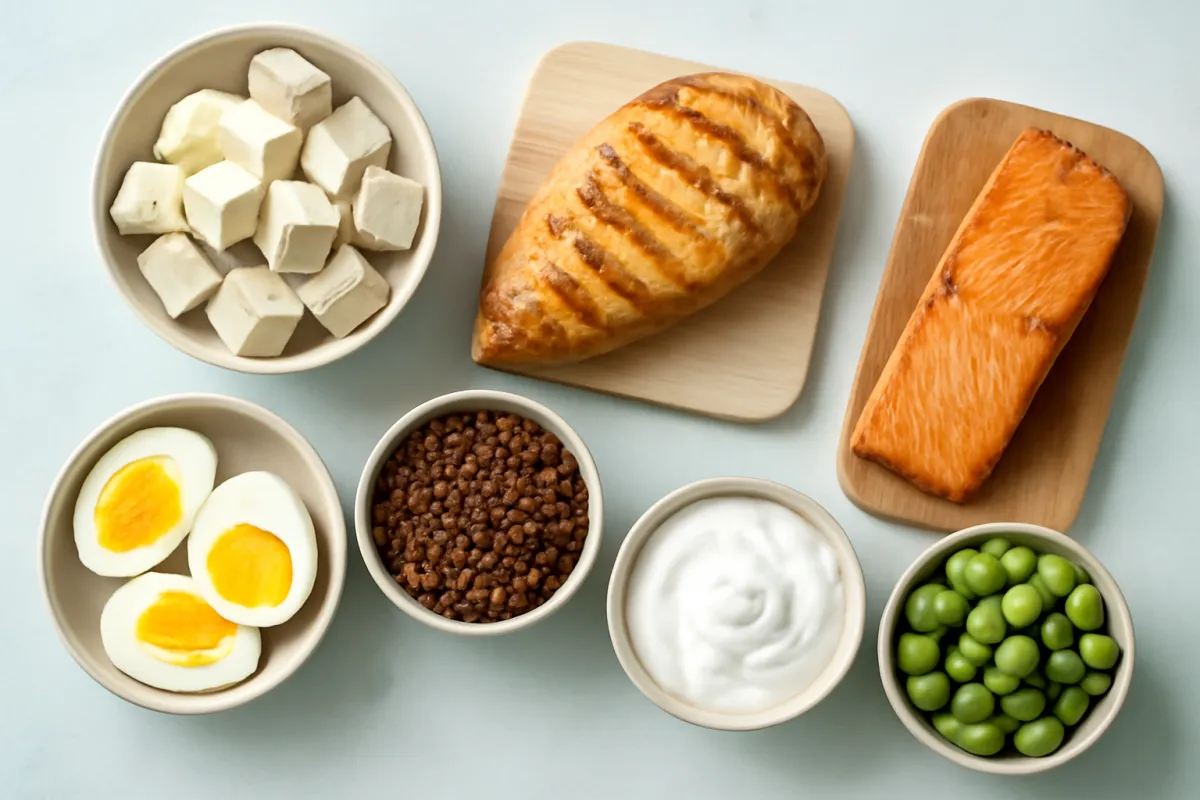
Protein per typical serving, shakes and whole foods
Grams of protein per common serving. Commonly cited, approximate figures.
A scoop of powder is a convenient dose, not a magic one: ordinary foods sit in the same range. Figures vary by product and portion, so the label is the reliable source.
The anabolic window myth, and what the evidence says
Few fitness ideas are repeated as confidently, or as inaccurately, as the anabolic window: the claim that you must consume protein within a narrow period after training, often stated as thirty to sixty minutes, or the session is wasted. This urgency sells a lot of shakes. Current evidence suggests it is substantially overstated. The period during which resistance training elevates the body’s use of protein for repair and adaptation lasts many hours, not minutes, which means a meal or shake within a few hours of training is generally sufficient for most people to capture the benefit.

This does not mean timing is meaningless. Having protein reasonably near your training, and spreading it across the day rather than saving it all for dinner, is a sensible pattern. But the difference between drinking a shake ten minutes after a workout and eating a normal meal ninety minutes later is trivial compared with whether you hit your protein target across the whole day and train consistently over months. The honest takeaway is that you can put the stopwatch away. If a post-workout shake is convenient, use it because it is convenient, not because a clock is ticking.
Why total daily protein matters most
Behind the timing myth sits the principle that actually drives results: your total protein over the day, repeated consistently, is what supports muscle, recovery, and the many other jobs protein does. A single well-timed shake cannot rescue a day that fell short overall, and a day that hits its target comfortably does not need perfect timing to work. This is liberating, because it moves the focus from a stressful minute-by-minute game to a simple, forgiving question: did your day, on the whole, deliver roughly the protein you were aiming for?
Distribution plays a supporting role. Spreading protein across meals, so each one carries a meaningful amount rather than concentrating it all in the evening, is commonly suggested as more supportive of muscle than one large bolus, and our protein per meal review covers that pattern. A shake can help here too, filling in a meal that would otherwise be protein-light, usually breakfast. But the hierarchy is clear: the daily total comes first, sensible spread second, and exact timing a distant third. Get the first right most days and the rest is fine-tuning.
One illustrative high-protein day, about 120 grams
Where a day's protein can come from, with a single shake as a top-up. Illustrative shares only.
Food carries most of the day here, with the shake filling a single gap. The total, not the timing of any one piece, is what does the work.
Types of protein powder, compared
Walk down the supplement aisle and the variety can feel overwhelming, but the powders sort into a few honest categories defined by their source and how quickly they digest. Whey and casein both come from dairy; soy, pea, rice, and blends come from plants; and a few specialty proteins such as egg white and collagen occupy their own corners. The table below lays out the categories and their general profiles. These are descriptions of common product types, not endorsements of any brand, and the right choice depends on your diet, tolerance, and taste rather than any ranking.
| Protein type | Source | Digestion speed | General profile |
|---|---|---|---|
| Whey concentrate | Dairy | Fast | Complete protein, mixes easily, contains some lactose and fats |
| Whey isolate | Dairy | Fast | More filtered, higher protein per scoop, lower lactose |
| Casein | Dairy | Slow | Complete protein, digests gradually, often used for overnight |
| Soy | Plant | Moderate | Complete plant protein, dairy-free, common vegetarian choice |
| Pea | Plant | Moderate | Dairy-free, often blended to round out amino acids |
| Blended plant | Plant | Moderate | Combines sources (pea, rice, others) to cover the amino range |
| Egg white | Egg | Moderate | Complete, dairy-free, an option for lactose intolerance |
| Collagen | Animal connective tissue | Moderate | Not a complete protein, marketed for skin and joints, not muscle-building |
The practical lesson from the table is that most mainstream powders will meet a protein target perfectly well, and the meaningful differences are about tolerance and preference. Someone who avoids dairy rules out whey and casein; someone who dislikes the texture of one plant blend can try another. The one genuine caveat is collagen, which is not a complete protein and is not a sensible choice if your goal is supporting muscle, whatever the packaging suggests.
Whey protein, the fast dairy option
Whey is the most familiar protein powder for good reason: it is a complete protein derived from milk, it digests quickly, and it mixes into a smooth drink with minimal effort. Because it contains all the essential amino acids in favorable amounts, it is an efficient way to add protein, and its quick digestion is why it became associated with the post-workout shake, though as covered above, that timing matters far less than the marketing implies. Whey comes in a few forms, mainly concentrate and isolate, where isolate is more filtered, tends to carry more protein per scoop, and has less lactose, which can matter for people who are sensitive.
The honest limits of whey are simple. It is a dairy product, so it is unsuitable for anyone who is vegan or significantly lactose intolerant, though isolate and lactose-free formulations reduce the issue for many. It offers no advantage over the same amount of protein from food or from a well-formulated plant powder; its appeal is convenience, mixability, and cost per gram, not any special muscle-building property. For someone who tolerates dairy and wants an easy, economical top-up, whey is a reasonable default, and nothing more dramatic than that.
Casein protein, the slow dairy option
Casein is whey’s slower sibling, the other major protein in milk, and its defining trait is that it digests gradually, releasing amino acids over a longer period rather than in a quick rush. This slow release is why casein is sometimes taken in the evening, on the reasoning that it provides a steadier supply of amino acids overnight. It is worth keeping that rationale in proportion: the effect is modest, and for most people the overnight fast is not a problem that needs solving with a special powder. If total daily protein is adequate, the timing of a slow versus fast protein is a minor detail.
Casein is a complete protein and, like whey, comes from dairy, so it shares the same suitability limits for those avoiding milk. In practice, many people never need to think about casein specifically; it appears in some blended powders and as a standalone product for those who like the idea of a slower protein before bed. Treated as one option among several rather than a required part of a routine, it is perfectly fine. It is not, however, a product most people need to seek out, and choosing it over whey should come down to preference rather than any belief that it dramatically changes results.
Plant proteins, soy, pea, and blends
Plant protein powders have improved considerably and now meet the needs of most people who prefer or require a dairy-free option. Soy protein is complete on its own, carrying all the essential amino acids, which makes it a straightforward choice. Pea protein is popular and dairy-free but is lower in one amino acid, which is why it is frequently blended with rice or other plant sources so the combination covers the full range. Blended plant powders are built precisely for this reason, mixing sources so the finished product behaves like a complete protein even when its individual ingredients are not.
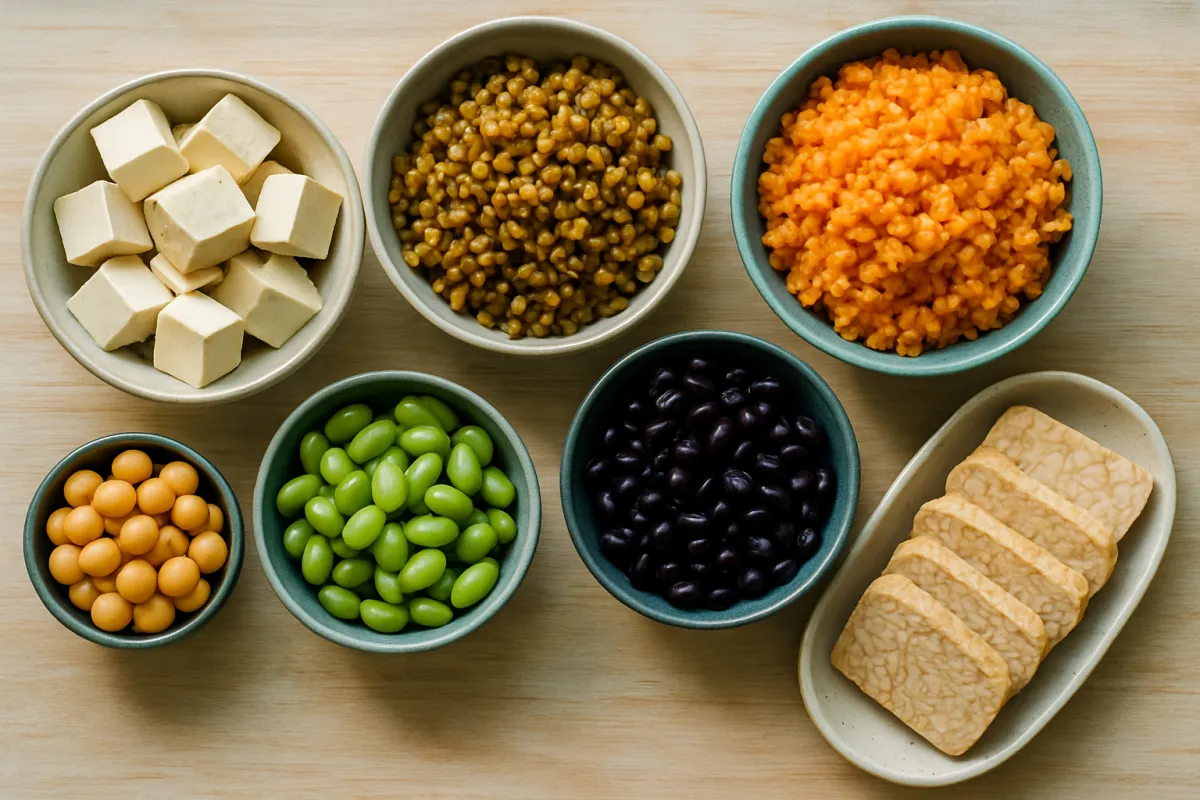
For vegans, vegetarians, and anyone who finds dairy hard to tolerate, a good plant powder is a genuinely equivalent tool for reaching a protein target, not a compromise. The differences that remain are practical: texture and taste vary more across plant powders than across whey, so it can take a try or two to find one you like, and some carry a slightly grittier mouthfeel. As with every other category, the plant powder that works is the one you tolerate and will actually use. Our review of eating more protein covers the whole-food plant sources these powders echo.
Whole food versus a shake
The most useful comparison is not between one powder and another but between a shake and the food it might replace. Whole foods carry protein wrapped in a package of other value: fiber, healthy fats, a spectrum of vitamins and minerals, and the satisfaction of chewing and eating, which supports fullness in a way a quick drink does not. A chicken breast, a bowl of Greek yogurt, a lentil stew, or a plate of eggs delivers protein and a great deal more, which is why food-first guidance is the default for almost everyone.
The shake wins on exactly one axis: convenience. It is faster, more portable, and requires no cooking, which is why it is valuable in the specific situations described earlier. But convenience is not nutrition, and a diet that leans on shakes at the expense of meals trades away fiber, micronutrients, and diet quality for speed. The sensible arrangement puts whole food at the center and uses a shake to fill the gaps that food could not, on the days those gaps appear. Our protein in common foods review shows how easily ordinary meals cover most targets, which is the context that keeps shakes in their proper, modest role.
Who benefits most from protein shakes
Shakes are not equally useful to everyone, and being honest about who benefits keeps expectations realistic. The clearest beneficiaries are people with high protein targets and busy lives: strength trainers and athletes aiming well above the baseline who find hitting the number from food alone genuinely time-consuming. For them, a shake is a practical efficiency, not a crutch. A second group is people with poor appetite or difficulty eating enough, including some older adults and those recovering from illness or surgery, for whom a drink can be easier to consume than another meal, though medical situations should always be guided by a clinician.
A third group is anyone facing a recurring structural gap in their day, such as an early start with no time to prepare breakfast, where a shake reliably prevents a protein-light stretch. For most everyday, moderately active people who cook regular meals, the honest answer is that shakes are optional and easily skipped. There is nothing wrong with using one for convenience, but no one should feel that omitting shakes leaves a hole in an otherwise good diet. The benefit tracks the problem: the bigger your protein gap or the busier your schedule, the more a shake helps, and the smaller those are, the less you need it.
When a shake is the practical choice
It helps to picture the ordinary moments where a shake beats the alternative, because those, not the gym mythology, are where it truly earns its keep. A morning that starts before you can face cooking, where the real choice is a shake or no breakfast protein at all, is the classic case. So is the long afternoon with no chance to eat properly, the trip where kitchens are unavailable, or the hour after training when the next real meal is still a while away and a portable option prevents the protein from slipping.
In every one of these, the comparison that matters is the shake against nothing, not the shake against an ideal meal you were never going to have. Framed that way, the decision is easy: a convenient top-up that keeps your daily total on track is a good use of a shake, full stop. The mistake is inverting this, reaching for a shake when a decent meal was fully available, and letting the drink displace food that would have served you better. Used to fill genuine gaps rather than to replace convenient meals, a shake is a sensible, low-stakes tool.
Protein shakes around a workout
Because so much shake marketing is built around exercise, it is worth stating the workout picture plainly. Consuming protein in the broad vicinity of training, within a few hours on either side, supports the repair and adaptation that training stimulates, and a post-workout shake is a convenient way to do that if a meal is not close at hand. That is the whole truth of it. The frantic thirty-minute window is not supported by current evidence, and a normal meal an hour or two after training accomplishes the same thing for the overwhelming majority of people.
What genuinely matters around a workout is unglamorous: showing up consistently, training with enough effort to create a stimulus, hitting your protein target across the day, and sleeping enough to recover. A shake can be a small, convenient contributor to the protein piece, and that is a fine reason to use one. It is not, however, the lever that produces results, and treating it as such distracts from the training and consistency that actually do. If you enjoy a post-workout shake and it helps you reach your daily protein, keep it; just hold it in perspective as a convenience rather than a requirement.
How to build a sensible shake
If you decide a shake fits your routine, building a good one is simple. The base is a scoop of a protein powder you tolerate, mixed with water for the leanest option or with milk or a plant milk for a richer drink and a little extra protein. From there, restraint is the theme. It is easy to turn a modest protein drink into a calorie-dense dessert by adding several spoons of nut butter, sweeteners, syrups, and large amounts of fruit, which can be appropriate if you are deliberately trying to add calories but works against you if you are not.
A sensible everyday shake keeps additions purposeful: perhaps a piece of fruit or a handful of berries for flavor and fiber, or a spoon of nut butter if you want more calories, chosen with your overall goals in mind. The point is to know what your shake is for. A lean protein top-up and a high-calorie recovery drink are different tools, and problems arise mainly when someone builds the second while believing they are drinking the first. Keep the recipe aligned with the job, check the calories if weight is a concern, and a homemade shake stays close to its purpose.
Reading a protein powder label
The label is where a shake either stays useful or quietly drifts off course, and reading a few lines protects you. Start with the protein per serving, stated in grams, and confirm the serving size, since the impressive number on the front is per scoop and some products count two scoops as a serving. Next, look at added sugars: many flavored powders and most ready-to-drink shakes carry them, sometimes in amounts that turn a protein drink into a sugary one. Our review of reading a nutrition label walks through the whole panel in order.

Total calories deserve a glance too, especially for anyone managing weight, because add-ins and rich formulations can push a shake well past what you expect from a protein drink. Beyond those, treat long ingredient lists and bold health claims with mild skepticism, since supplements are less tightly regulated than foods and a busy label is not a sign of quality. You do not need to decode every line. The protein grams, the added sugars, the serving size, and the calories tell you almost everything you need to judge whether a product fits your goals, and our review of reading labels for sugar covers the sugar line in more depth.
Common protein shake mistakes
The same handful of errors accounts for most of the trouble people run into with shakes, and each is easy to avoid once named.
- Too much added sugar. Many flavored powders and ready-to-drink shakes carry significant added sugar, turning a protein drink into a sweet one. Checking the label, choosing lower-sugar options, and mixing plain powder yourself keeps a shake honest. Our review of how much sugar per day puts the amounts in context.
- Over-reliance on shakes. Leaning on shakes in place of meals sacrifices fiber, micronutrients, and diet quality for convenience. Food should anchor the diet, with shakes filling gaps.
- Believing timing beats total. Chasing the anabolic window while missing the daily target is backward; the total across the day is what matters.
- Turning a shake into a dessert. Piling on nut butter, syrups, and fruit can double the calories, which undermines weight goals if that was not the intent.
- Assuming more protein is always better. Beyond commonly cited ranges, extra protein delivers diminishing returns and displaces other foods a good diet needs.
- Ignoring medical context. People with kidney disease or other conditions may need to limit protein, a decision that belongs with a doctor, not a label.
Each mistake is cheap to fix once seen, and avoiding them keeps a shake in its useful, modest lane rather than letting it distort the diet around it.
How much is too much
Honesty requires looking at the upper end as well. For most healthy people, protein intakes within and somewhat above the commonly cited ranges are generally considered manageable, and the popular fear that ordinary high-protein eating harms healthy kidneys is not the settled picture headlines sometimes imply. But more protein is not better without limit. Past the ranges that support training and health, additional protein delivers diminishing returns while crowding out other nutrients, and stacking multiple shakes on top of an already adequate diet mostly adds cost and calories rather than benefit.
The genuinely important caution is medical. People with kidney disease or certain other conditions may need to limit protein, and for them the target is a clinical decision rather than a lifestyle one. The same applies to anyone managing a significant health condition, who should set their numbers with a doctor or registered dietitian rather than from general guidance or a supplement label. For everyone else, the practical ceiling is less about danger and more about balance: a diet so dominated by protein powder that whole foods, vegetables, and variety get squeezed out has traded one imbalance for another. The goal was always a good overall diet that happens to be adequate in protein, not a diet built around shakes.
Protein shakes and weight management
Protein earns a specific mention in weight management, and shakes can play a supporting role within it. Protein is the most satiating of the major nutrients for most people, so keeping intake adequate helps control hunger, and preserving protein while calories fall helps the body hold onto muscle as it loses fat, especially alongside strength training. A protein shake can be a convenient, controlled way to add protein without much cooking, which some people find helpful when managing a calorie target. Used that way, as a lean, predictable protein source, it can genuinely support the process.
The catch is that shakes cut both ways on calories. A plain protein shake is modest, but a shake loaded with nut butter, sweeteners, and fruit can carry as many calories as a meal while feeling like a drink, which quietly works against a weight goal. The safeguards are the same as always: check the calories, keep add-ins purposeful, and remember that total daily calories still govern the direction of the scale. A shake is a tool that can help within a sensible plan, not a weight-loss product in itself, and anyone with significant weight or health goals should build their approach with a professional. Our wellness tool can put your calorie and protein picture in one place.
Protein shakes for older adults
Older adults are a group where shakes can be genuinely useful, for two reasons that pull in the same direction. First, protein needs are often higher in later life, because aging muscle appears to respond less efficiently to protein and preserving muscle strongly supports independence and quality of life. Second, appetite frequently declines with age, so meeting even the baseline can become harder just as the target rises. That combination, greater need and smaller appetite, is exactly the kind of structural gap a shake is well suited to fill, since a drink can be easier to get down than another full plate.
Used this way, a shake becomes a practical bridge rather than a fitness accessory: a manageable way to add protein for someone whose meals have shrunk, ideally paired with the gentle strength-preserving activity that gives the protein a job to do. The usual cautions apply with extra weight here, because older adults are more likely to have health conditions, including kidney concerns, that change protein advice. Anyone in this situation should set their target and approach with a doctor or registered dietitian rather than from general guidance. Within those bounds, a shake can be a sensible, low-effort help for a real and common challenge.
How to use protein shakes: a simple framework
Pulling the review together, a short framework answers how to use protein shakes and keeps them in their sensible place.
- Start from your target. Estimate your daily protein need first, from the NASEM baseline of about 0.8 grams per kilogram, adjusted up if you train hard or are older.
- Build on food. Let whole foods anchor the diet, since they carry fiber and nutrients a powder does not, and check whether food alone already reaches your target.
- Use a shake for real gaps. Reach for one when the honest alternative is missing protein, not when a good meal was available.
- Pick a powder you tolerate. Whey, casein, soy, pea, or a blend all work; the best is the one you will actually use, and collagen is not the choice for muscle.
- Read the label. Check protein per serving, added sugars, and calories, and keep add-ins purposeful.
- Hold timing lightly. Protein within a few hours of training is plenty; the daily total matters far more than the minute.
- Confirm medical situations. Anyone with kidney disease or another condition should set targets with a professional.
Follow that and a shake stays what it should be: a convenient tool that supports a food-first diet, used when it helps and skipped when it does not.
The bottom line
Protein shakes are neither the essential supplement the marketing implies nor the shortcut critics dismiss; they are a convenience for adding protein, valuable in specific situations and optional the rest of the time. The evidence deflates the anxious parts of the story, the anabolic window is overstated, timing matters far less than your total protein across the day, and a shake offers no advantage over the same protein from food. What it offers is speed and portability, which genuinely help busy people, high-target trainers, and those with poor appetite. Build your diet on whole food, know your protein target, use a shake to fill real gaps rather than to replace meals, watch the added sugar, and confirm your numbers with a professional if any health condition is in the picture. Kept in that modest role, a protein shake is a useful tool, and nothing you need to overthink.
This evidence review is published for general education, not as medical or dietetic advice, and reading it creates no clinician-patient relationship. Every protein figure and range above is a commonly cited general reference rather than a personal recommendation, and individual needs shift with body size, activity, age, pregnancy, medications, and health conditions. Supplements are less tightly regulated than foods, so read labels carefully and treat bold claims with caution. Before adding protein shakes or supplements, or changing your diet, confirm your approach with a qualified professional such as a doctor or registered dietitian, especially if you live with kidney disease, diabetes, or any other medical condition.
Frequently asked questions
When should you drink a protein shake?
A protein shake is best treated as a convenient way to add protein when whole food is impractical, such as a busy morning, a gap between meetings, or right after training when you are not near a kitchen. There is no single magic time, because what matters most for muscle and health is your total protein across the whole day rather than the exact hour a shake lands. Many people find one shake fits naturally into breakfast or the post-workout window, but if your meals already meet your target, a shake is optional rather than required. If you have a health condition, confirm with a doctor or registered dietitian before adding supplements.
Do I need protein right after a workout, in the anabolic window?
The idea that you must consume protein within a narrow window right after exercise, often described as thirty to sixty minutes, is widely considered overstated by current evidence. Research suggests the period during which training raises the body's use of protein lasts many hours, not minutes, so a meal or shake within a few hours of training is generally sufficient for most people. Total daily protein and consistent training matter far more than precise timing. Elite athletes training multiple times a day have more specific needs, which a sports dietitian can tailor.
Are protein shakes a meal replacement?
By default a protein shake is a supplement to meals, not a replacement for them, because a scoop of powder in water supplies protein but little of the fiber, healthy fats, vitamins, and minerals a balanced meal provides. Some products are formulated as complete meal replacements with added nutrients, and those are a different category designed for that purpose. A plain protein shake works best as a top-up alongside real food or as an occasional bridge when a meal is genuinely not possible. Relying on shakes in place of meals over the long term is one of the more common mistakes, and anyone considering it should speak with a professional.
What type of protein powder is best, whey or plant?
There is no single best powder, only the one that fits your diet, tolerance, and preferences. Whey, a dairy protein, is a complete protein that digests quickly and mixes easily, which makes it popular, while casein, also from dairy, digests slowly. Plant options such as soy, pea, and blended plant powders can meet needs well, with soy being complete on its own and many pea or rice blends formulated to cover the full amino acid range. People who avoid dairy, follow a plant-based diet, or find whey hard to tolerate often do better with a plant powder, and the practical choice is the one you will use consistently.
How much protein is in a typical shake, and how much do I need?
A typical single scoop of protein powder supplies somewhere around 20 to 25 grams of protein as a commonly cited figure, though this varies by product and scoop size, so the label is the reliable source. For daily needs, the Recommended Dietary Allowance set by the National Academies of Sciences, Engineering, and Medicine is about 0.8 grams per kilogram of body weight for healthy adults, with athletes and older adults commonly guided higher, often into ranges of roughly 1.2 to 2.0 grams per kilogram. A shake is simply one way to help reach that daily total. Your personal target depends on your body size, activity, and goals, and a professional can tailor it.
Can protein shakes help you build muscle?
Protein shakes can support muscle building, but only as part of the larger picture, because muscle is built by the combination of resistance training and adequate total protein, not by any powder on its own. A shake is a practical tool for reaching a higher daily protein target when food alone is inconvenient, which is where it genuinely helps. It does not replace the training that creates the stimulus, and it offers no advantage over the same amount of protein from food. Consistency in training, protein, and sleep across weeks and months is what produces results.
Can you have too many protein shakes?
Yes, in the sense that leaning heavily on shakes tends to crowd out whole foods that carry fiber, vitamins, minerals, and other benefits a powder does not, which can leave the overall diet poorer even if protein is adequate. For most healthy people, moderate protein intakes within commonly cited ranges are generally considered manageable, but more protein is not automatically better and extremely high intakes offer diminishing returns. People with kidney disease or certain other conditions may need to limit protein, which is a medical decision. Using shakes as an occasional convenience rather than a dietary foundation avoids most of these issues.
Are protein shakes healthy, and do they have too much sugar?
A plain protein powder mixed with water or milk can be a reasonable, convenient source of protein, but many ready-to-drink shakes and flavored powders carry added sugars, and some blend in extra calories that add up quickly. Reading the label for added sugars and total calories is the simple safeguard, and choosing lower-sugar options or mixing plain powder yourself keeps a shake closer to its purpose. Health depends far more on the whole diet than on any single product. Anyone with diabetes, kidney concerns, or another condition should confirm their approach with a doctor or registered dietitian.

Hamza Hai is the editor of NourishMark. She holds an MBA and reviews the site's articles against our editorial standards, checking that every figure is labelled for what it is, that nothing is presented as verified fact without a source the reader can check, and that the writing stays useful to a non-specialist.

Dr. Shayaan Khan is the medical reviewer for NourishMark. He holds an MBBS from MGM Medical College, Navi Mumbai, and is the author of published research including a narrative review of postpartum anxiety and depression in Mental Health Science. He has taught physiology at university level. He reviews the site's health content for medical accuracy: that physiology and mechanisms are described correctly, that no claim is stated more strongly than the evidence behind it, and that anything specific to an individual reader is sent to that reader's own clinician.
Not medical advice. Dr. Khan reviews NourishMark's health content for medical accuracy. He is not a registered dietitian, he does not hold a United States practising licence, and he is not your doctor. His review does not make anything here medical advice. Always talk to a qualified health professional about your own situation, and never delay or stop care because of something you read here.