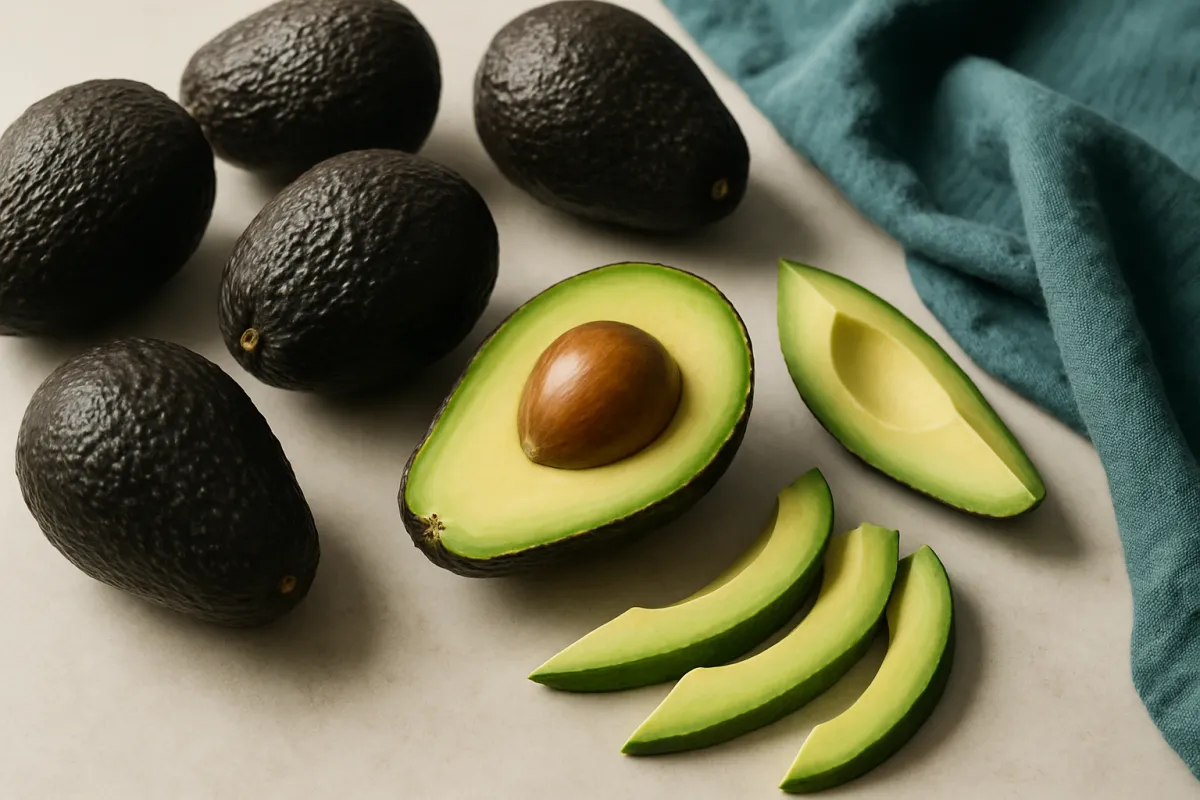
What's in this review
- How many calories in an avocado
- Calories in half an avocado
- Calories in a whole avocado by size
- An avocado portion and nutrient table
- Calories in avocado per 100 grams
- Where the calories in an avocado come from
- The fat in an avocado
- Fiber in an avocado
- Carbs and sugar in an avocado
- Protein in an avocado
- Potassium and other minerals in an avocado
- Hass versus Florida avocados
- Does ripeness change avocado calories
- Why an avocado is calorie dense but filling
- How an avocado compares with other fruit
- Avocado toast, guacamole, and the calories around the fruit
- How an avocado fits a daily calorie target
- Practical ways to portion an avocado
- How to count an avocado accurately
- Common mistakes when counting avocado calories
- Avocado in a balanced diet
- How much avocado a day is reasonable
- How many calories in an avocado, in every phrasing
- The bottom line
How many calories are in an avocado? A whole medium Hass avocado carries about 240 calories, half of one about 120, and a single slice around 30, using commonly cited approximate values for the edible flesh once the skin and pit are discarded. What makes avocado different from almost every other fruit is where that energy comes from: roughly 90 percent of it is fat, not sugar. That single fact explains the density, the satiety, the confusion, and most of the arguments people have about whether avocado belongs in a calorie-controlled day. Underneath the portion figures sits one steady approximate value of about 160 calories per 100 grams of flesh, which is nearly double a banana and roughly three times an apple by weight.
This evidence review is a plain-language reference for the calories in an avocado, arranged so you can find the portion you actually eat and understand the figure once you do. It works through half, whole and sliced portions, the per 100 gram value that sits underneath all of them, the fat-dominant macro split, the fiber and potassium that travel alongside, how much the count moves between Hass and the larger green-skinned varieties, and how an avocado fits into a daily calorie target without either being feared or waved through. It describes food composition only and is not diet or medical advice. For the wider table see our reference on calories in common foods, for the fruits people usually compare against see the apple review and the banana review, and for how much you personally need our calorie needs review. You can price your own portion in the companion below.
Key takeaways
- Commonly cited approximate values put a whole medium Hass avocado near 240 calories, half near 120, a third near 80, a quarter near 60, and a single slice near 30, all measured as edible flesh.
- Per 100 grams of flesh, avocado reads near 160 calories, which is high for a fruit because it stores energy as oil rather than sugar.
- Roughly 90 percent of those calories come from fat, about 5 percent from protein and about 5 percent from the small amount of carbohydrate the body actually counts.
- A whole medium fruit carries roughly 24 grams of fat, 9 grams of fiber, 3 grams of protein and around 730 milligrams of potassium, more potassium than a medium banana.
- Every figure here is a commonly cited approximate value that varies with fruit size, variety and ripeness rather than a precise measurement; for personal targets consult a doctor or registered dietitian.
How many calories in an avocado
Start with the figure people search for. A whole medium Hass avocado, the small dark pebbly-skinned fruit that fills most supermarket bins, weighs roughly 200 grams in the hand and yields about 150 grams of edible flesh once the skin and the large pit are removed. At the commonly cited approximate value of 160 calories per 100 grams, that flesh comes to about 240 calories. Cut it in half and you are eating about 120. Take a quarter and you are near 60.
The distinction between fruit weight and flesh weight is the first thing that trips people up, and it is worth fixing before any other number lands. Skin and pit together commonly account for something in the region of a quarter of an avocado’s total weight, so a 200 gram fruit does not give you 200 grams of food. Every figure in this review describes flesh, because flesh is what you eat. If you weigh a whole avocado on a kitchen scale and apply the per 100 gram figure directly, you will overcount by roughly a quarter, which on a medium fruit is around 80 calories of phantom energy.
The second thing worth fixing early is that avocado calories are almost entirely fat calories. A medium fruit carries about 24 grams of fat, 3 grams of protein and 12 grams of total carbohydrate of which 9 grams is fiber. Read 240 as a commonly cited approximate value for an average medium fruit rather than a measurement of the one on your counter, because avocados vary in size more dramatically than apples or bananas do.
Calories in half an avocado
Half an avocado is the portion most recipes assume, most nutrition tables list, and most people actually eat, because an avocado is awkward to store once opened and half of one is a sensible amount of food. Half a medium Hass fruit is roughly 75 grams of flesh and comes to about 120 calories. That figure is the one you will see attached to avocado on almost every fruit calorie table, including our own calories in common foods reference, and it is the anchor worth memorising.
What arrives with those 120 calories is the interesting part. Half a medium avocado carries roughly 12 grams of fat, close to 4.5 grams of fiber, about 1.5 grams of protein, around 6 grams of total carbohydrate and near 365 milligrams of potassium. The fiber figure alone puts half an avocado ahead of most single servings of fruit, and it is a large part of why the portion tends to feel like more food than 120 calories usually does.
The caveat is that half is a fraction, not a weight. Avocados sold as a single grade can differ by fifty grams of flesh or more, so half of a large fruit is nearer 95 grams and closer to 150 calories, while half of a small one is nearer 50 grams and closer to 80. If you buy the same size fruit habitually, the 120 figure will serve you well for years. If your avocados vary, either weigh the flesh or accept that the number is a reasonable centre of a range rather than a point.
Calories in a whole avocado by size
Because avocado calories track the weight of the flesh almost exactly, the most useful way to present them is by portion, from a single slice up to a large whole fruit. The chart below sets out the commonly cited approximate values across the portions people actually eat, all as edible flesh and all for Hass avocados.
Illustrative calories by avocado portion, Hass, edible flesh only
Commonly cited approximate values scaled from about 160 calories per 100 grams of flesh, rounded. Approximate figures that vary with fruit size and variety, not measurements of any one avocado.
Bars scale to the large whole avocado at 100 percent. Figures follow the approximate value of 160 calories per 100 grams of Hass flesh; a real fruit varies by size, variety, growing conditions and how thoroughly you scrape the skin.
The spread across that chart is the whole point. A single slice at roughly 30 calories and a whole large fruit at roughly 305 differ by a factor of ten, which is why a quoted avocado figure so often feels wrong for the fruit someone is holding. The gap between a small whole avocado at 160 and a large one at 305 is also wider in absolute terms than the equivalent gap in apples or bananas, simply because avocado packs more energy into every gram. That is the practical argument for identifying which end of the range your usual fruit sits at, rather than reaching for a single memorised number and hoping.
An avocado portion and nutrient table
Here is the same information as a table, with the fat, fiber, carbohydrate, protein and potassium that travel alongside the calories, all scaled from the same per 100 gram values. The flesh weight column is what the figures actually describe, and it is the first column to check.
| Portion | Flesh weight | Calories | Fat | Fiber | Total carbs | Protein | Potassium |
|---|---|---|---|---|---|---|---|
| One slice (~1/8) | ~19 g | ~30 | ~3 g | ~1.1 g | ~1.5 g | ~0.4 g | ~90 mg |
| One ounce | ~28 g | ~45 | ~4.5 g | ~1.7 g | ~2.2 g | ~0.6 g | ~135 mg |
| Quarter of a medium | ~38 g | ~60 | ~6 g | ~2.3 g | ~3 g | ~0.8 g | ~185 mg |
| Third of a medium | ~50 g | ~80 | ~8 g | ~3 g | ~4 g | ~1 g | ~240 mg |
| Half a medium | ~75 g | ~120 | ~12 g | ~4.5 g | ~6 g | ~1.5 g | ~365 mg |
| Whole small | ~100 g | ~160 | ~16 g | ~6 g | ~8 g | ~2 g | ~485 mg |
| Whole medium | ~150 g | ~240 | ~24 g | ~9 g | ~12 g | ~3 g | ~730 mg |
| Whole large | ~190 g | ~305 | ~30 g | ~11.5 g | ~15 g | ~4 g | ~920 mg |
Two rows deserve a second look. The one ounce row exists because packaged and restaurant nutrition information often reports avocado by the ounce rather than by the fruit, and 45 calories per ounce sounds so modest that it is easy to eat four ounces without registering that you have eaten most of a medium avocado. The whole large row is the other one, because a large avocado at roughly 305 calories carries more energy than a medium bagel and about as much as a substantial snack, all from a food that most people file mentally under fruit. Neither observation makes avocado a problem. Both make it a food worth counting deliberately rather than by feel.
Calories in avocado per 100 grams
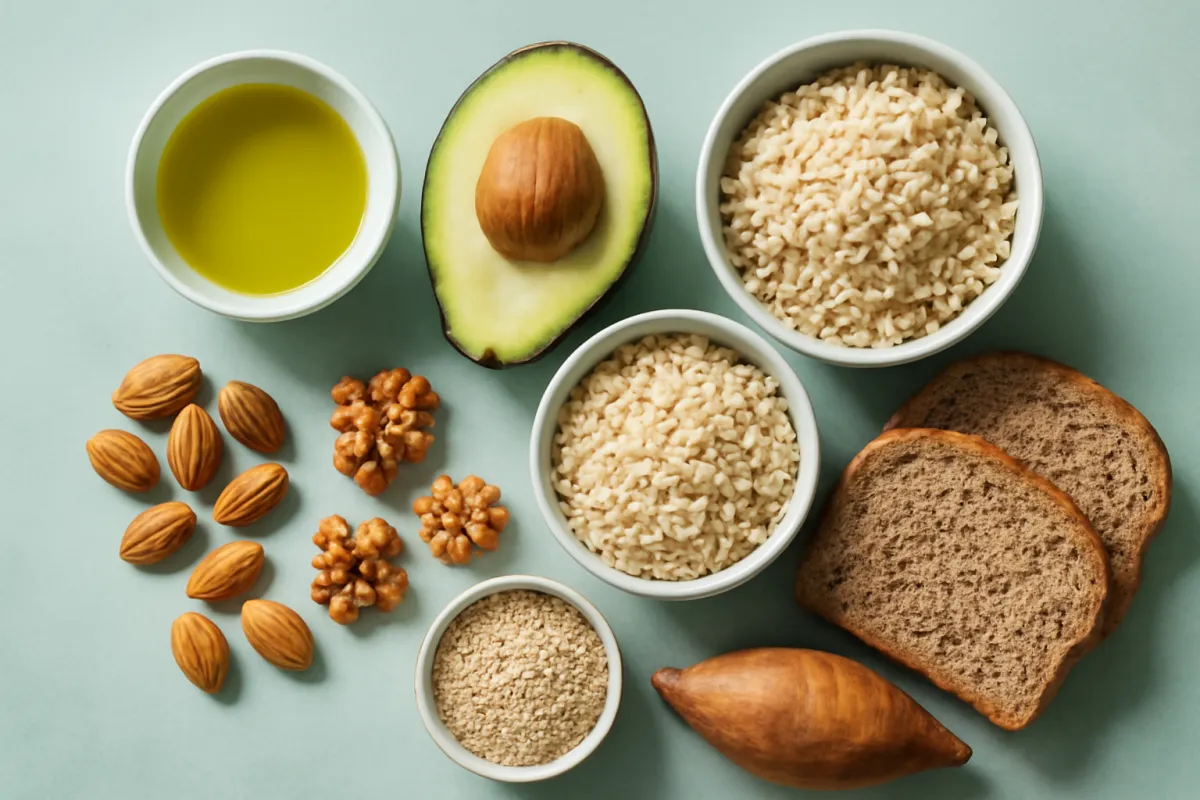
The steadiest way to talk about avocado calories, and the one that sidesteps the size problem entirely, is per 100 grams of flesh. Commonly cited reference figures put raw Hass avocado at about 160 calories per 100 grams, and because that value is anchored to a fixed weight rather than to a subjective fruit size, it is the number to reach for whenever you can weigh what you are eating. Multiply the grams of flesh by 1.6 and you have the calories, which is as precise as a home kitchen realistically gets.
That per 100 gram value also lets you place avocado honestly among other foods. At about 160 calories per 100 grams, avocado is roughly three times as calorie dense as apple at about 52, close to double a banana at about 89, and far above the watery fruits like strawberries and watermelon that sit in the low 30s. It is also well below nuts, which commonly run in the region of 550 to 650 calories per 100 grams, and well below oils, which are nearly pure fat at around 880. Avocado occupies an unusual middle ground: fatty enough to behave like a fat source, watery enough to still be a fruit.
The reason is compositional rather than mysterious. Avocado flesh is roughly three quarters water by weight, which dilutes the energy considerably, but the non-water portion is dominated by oil rather than by sugar or starch. Remove the water, as happens when avocado is dried into powder or pressed into oil, and the concentration climbs steeply. The 160 figure is a commonly cited average across many fruits, so your particular avocado scatters around it, but for weighing and comparing it is the most reliable number in this review.
Where the calories in an avocado come from
Pull an avocado’s calories apart and the picture is lopsided in a way that explains almost everything else about the fruit. This is the chart that makes avocado make sense.
Where the calories in an avocado come from
Illustrative breakdown of about 160 calories per 100 grams of Hass flesh, by share of calories. Fat counted at 9 calories per gram, protein and counted carbohydrate at 4.
Shares are of the calories in 100 grams of flesh and sum to 100 percent. Total carbohydrate is about 8 g, of which roughly 6 g is fiber that contributes little usable energy, leaving about 2 g counted here. Approximate values, not measurements.
The arithmetic behind that chart is worth showing because it is the part most avocado explanations skip. Fat supplies about 9 calories per gram, so 16 grams of fat gives 144 calories. Protein supplies about 4 calories per gram, so 2 grams gives 8. Carbohydrate also supplies about 4 calories per gram, and although 100 grams of avocado holds about 8 grams of total carbohydrate, roughly 6 grams of that is fiber, which passes through largely without delivering usable energy. The 2 grams that remain give about 8 calories. Add 144, 8 and 8 and you land on 160, which is exactly where the per 100 gram figure sits.
Scale that up to a whole medium fruit and the same arithmetic holds: 24 grams of fat gives 216 calories, 3 grams of protein gives 12, and the roughly 3 grams of counted carbohydrate gives another 12, for 240 in total. This is the reconciliation that makes avocado look strange on a fruit table and ordinary on a fat table. If you track macros, our macro calculation walkthrough and our macro counting reference show how a food this fat-heavy fits a set of daily targets.
The fat in an avocado
Fat is the whole story of an avocado’s calories, so it deserves its own section. A whole medium fruit carries roughly 24 grams of fat, and half a fruit about 12, which places a single half in the same neighbourhood as a generous tablespoon of oil or a small handful of nuts. That is a large amount of fat by the standards of anything else in the produce aisle, and it is the entire reason avocado sits where it does on a calorie chart.
The composition of that fat is what people usually want to know next. Of the roughly 16 grams in 100 grams of flesh, commonly cited figures put around 11 grams as monounsaturated fat, about 2 grams as polyunsaturated and about 2 grams as saturated, with a small remainder made up of minor fatty acids and rounding. Monounsaturated fat dominating the profile is the composition avocado is known for, and it is the same broad family that dominates olive oil. That is a description of the fat’s chemistry rather than a claim about what it does in a body, and this review makes no claim that any fat prevents or treats any condition.
What matters practically is that fat is not optional in a diet and avocado is a convenient whole-food source of it. Our balanced meal reference treats fat as one of the components a plate needs rather than something to minimise, and avocado is one of the easier ways to supply it without a bottle. The counting rule is simply that fat carries more than twice the calories per gram of protein or carbohydrate, so fat-rich foods move a daily total faster than their volume suggests. Anyone advised to manage fat intake for a medical reason should follow their clinician’s guidance rather than any general figure here.
Fiber in an avocado
Fiber is the counterweight to an avocado’s fat, and it is the nutrient that keeps avocado from behaving like pure oil. Commonly cited figures put avocado near 6 grams of fiber per 100 grams of flesh, which comes to roughly 9 grams in a whole medium fruit and about 4.5 grams in a half. Most fruit tables round the half-avocado figure to 5 grams, which is where our high fiber foods list places it among the fruit entries.
That is genuinely high. Against the daily fiber intakes commonly cited for adults, in the region of 25 grams for many women and up to about 38 grams for many men under 50 as our fiber requirement review sets out, a single half avocado supplies somewhere around a sixth of a day. Very few fruits do that in a portion that size. The fiber is a mix of soluble and insoluble types, and it is a large part of why the fat in an avocado behaves differently in a meal than the same fat poured from a bottle.
There is a counting consequence too. Because roughly three quarters of an avocado’s total carbohydrate is fiber, the carbohydrate that actually registers as usable energy is small, which is why avocado shows up in low-carbohydrate eating patterns despite being a fruit. Our carbohydrate reference explains why total and counted carbohydrate diverge in high-fiber foods. Anyone increasing fiber quickly may find it uncomfortable, which is a reason to build up gradually with adequate fluids rather than to avoid fiber-rich food, and a reason to talk to a clinician if a digestive condition is in play.
Carbs and sugar in an avocado
Carbohydrate is the smallest part of an avocado’s calorie picture, and sugar is smaller still. A whole medium fruit carries about 12 grams of total carbohydrate, of which roughly 9 grams is fiber and well under 1 gram is sugar. That leaves around 3 grams of carbohydrate delivering usable energy, which is about 12 calories out of 240, or 5 percent of the total.
This makes avocado an outlier among fruits in a second way. Most fruit is a sugar delivery vehicle in the nicest possible sense: an apple carries roughly 19 grams of natural sugar and a medium banana rather more, and in both cases sugar accounts for the great majority of the calories. An avocado carries a trace. That is why avocado does not taste sweet, why ripeness changes its texture rather than its flavour profile in the way a banana’s does, and why it appears on carbohydrate-restricted food lists that exclude nearly every other fruit.
The practical use of this is narrow but real. If you are counting carbohydrate for a personal reason, an avocado costs you very little of that budget while costing a fair amount of your calorie budget, which is the opposite trade from most fruit. If you are counting calories, the reverse holds. Neither observation is a recommendation. Anyone managing blood sugar or carbohydrate intake for a medical reason should follow personalised guidance from a clinician rather than a general figure, and the nutrient intake reference on this site is a starting point for context rather than a plan.
Protein in an avocado
Protein in an avocado is a footnote, and it is worth saying so plainly because avocado occasionally gets described as a protein source. A whole medium fruit carries about 3 grams of protein, and half a fruit about 1.5 grams. That is roughly half the protein in a single large egg and a small fraction of what a palm-sized portion of chicken, fish or legumes supplies.
Three grams is not nothing across a day, and avocado’s protein is a real contribution in the same way the protein in vegetables and grains is real. But as a share of the fruit’s calories it is about 5 percent, which means avocado does almost nothing to move a protein target while doing quite a lot to move a calorie target. If a meal is built around avocado, the protein needs to come from somewhere else on the plate. Our protein in common foods reference lists the foods that actually carry the load, and our high protein snacks collection covers the between-meal versions.
The pairing consequence is the useful one. Avocado combines well with eggs, fish, beans, yogurt and poultry precisely because it supplies what those foods do not and vice versa. Avocado on toast with an egg is a more complete construction than avocado on toast alone, not because avocado is deficient, but because it was never carrying that job.
Potassium and other minerals in an avocado
Potassium is where an avocado quietly outperforms its reputation. Commonly cited figures put avocado near 485 milligrams of potassium per 100 grams of flesh, which works out to roughly 730 milligrams in a whole medium fruit and around 365 in a half. For comparison, our banana review puts a medium banana near 420 milligrams, so a whole medium avocado carries meaningfully more potassium than the fruit everyone names first when potassium comes up.
That is a contribution rather than a headline. Potassium intakes commonly cited for adults run into the thousands of milligrams a day, and potatoes, beans, leafy greens, dairy and many other everyday foods carry as much or more per serving. Avocado is a useful contributor to a varied diet rather than a solution to anything on its own.
Beyond potassium, avocado carries folate, vitamin K, vitamin E, vitamin C, magnesium and a range of B vitamins in modest amounts, along with the plant compounds that give the flesh its colour. Because several of those vitamins are fat soluble, they arrive in a food that already contains the fat needed to absorb them, which is a tidy piece of packaging. Potassium needs and limits differ between people, and some medical conditions and medications change how much potassium is appropriate, so anyone managing potassium for a health reason should follow their clinician’s guidance rather than a general figure.
Hass versus Florida avocados
Variety matters more for avocado than it does for almost any other fruit on a calorie table, and it is the single most common reason a looked-up figure fails to match the fruit in front of someone. The two broad types on most shelves behave differently.
Hass avocados are the small, dark, pebbly-skinned fruit sold year round, and they are what nearly every published avocado figure describes, including every figure in this review. They are oil-rich, creamy, and commonly cited near 160 calories per 100 grams of flesh.
Florida avocados, sometimes labelled green-skin, tropical or simply large avocados, are the bigger fruit with smooth, glossy, brighter green skin. They hold more water and less oil, and are commonly cited nearer 120 calories per 100 grams of flesh, with roughly 12 grams of fat rather than 16. Run the same arithmetic and it reconciles: 12 grams of fat at 9 calories gives 108, about 2 grams of protein gives 8, and about 1 gram of counted carbohydrate gives 4, for 120 in total. Fiber is broadly similar across the two types, commonly cited near 6 grams per 100 grams either way, while potassium runs nearer 350 milligrams per 100 grams in the green-skinned fruit against about 485 in Hass.
The trap is that lower density does not mean fewer calories per fruit. A Florida avocado is often twice the size of a Hass, so a whole one can easily hold 300 grams of flesh and land near 360 calories, above a whole large Hass. Lighter per gram, heavier per fruit. The habit that fixes this is to look at the skin before you look at the table: dark and bumpy means the 160 figure, smooth and bright green means the 120 figure, and either way the weight decides the total.
Does ripeness change avocado calories
This question comes up constantly, largely by analogy with bananas, and the answer is different for avocado. Ripening in a banana converts starch into sugar, which changes taste noticeably while leaving the calorie count roughly where it was. Ripening in an avocado is mostly a softening process: enzymes break down the cell walls, the flesh goes from firm and waxy to creamy and spreadable, and the oil content that supplies nearly all the calories stays approximately where it was when the fruit left the tree.
Avocados are unusual in that they do not ripen on the tree at all. The fruit accumulates oil over months while hanging, and only begins to soften after it is picked, which is why a supermarket avocado is hard on Monday and ready on Thursday. The energy was largely banked before harvest. A hard avocado and the same fruit four days later carry approximately the same calories.
What ripeness genuinely changes is yield. An underripe avocado clings to its skin and leaves a noticeable layer of flesh behind when you scoop it, so you eat less than the fruit contained. A properly ripe one gives up nearly all of itself. An overripe one loses some of that back to brown, stringy patches you cut away. In practice, ripeness moves what you actually eat by a small amount in either direction, which is well inside the margin of the approximate figures in this review anyway.
Why an avocado is calorie dense but filling
The apparent contradiction at the heart of avocado is that it is one of the most calorie-dense whole foods in the produce aisle and also one of the ones people report feeling most satisfied by. Both are true, and they are true for related reasons.
The density comes from fat, which packs 9 calories into every gram against 4 for protein and carbohydrate. There is no way around that arithmetic. A hundred grams of avocado holds the calories of roughly three hundred grams of apple, and it goes down in a fraction of the time.
The satiety comes from the same fat plus the fiber. Fat slows gastric emptying, meaning a meal containing it leaves the stomach more gradually, and fiber adds bulk and slows digestion further. Avocado supplies both in the same mouthful, in a food that also carries a lot of water and requires actual chewing. That combination is why half an avocado on toast tends to hold longer than the equivalent calories in a sweet spread, a comparison our bread review works through with the whole spread ledger.
The honest framing is that neither property cancels the other. Avocado is filling for its calories compared with sugar, and expensive in calories compared with vegetables. Which of those facts matters more depends entirely on the rest of a person’s day, which is the sort of question our calorie needs review frames and a registered dietitian answers properly.
How an avocado compares with other fruit
Placing avocado next to other fruit clears up why it feels like an outlier, because it genuinely is one. The comparison below uses commonly cited approximate values per 100 grams of edible portion, which is the only fair basis for comparing fruits of wildly different sizes.
| Fruit | Approx. calories per 100 g | Dominant macro |
|---|---|---|
| Watermelon | ~30 | Carbohydrate |
| Strawberries | ~32 | Carbohydrate |
| Orange | ~47 | Carbohydrate |
| Apple, with skin | ~52 | Carbohydrate |
| Grapes | ~69 | Carbohydrate |
| Banana | ~89 | Carbohydrate |
| Avocado, Hass | ~160 | Fat |
Every fruit on that list except avocado gets nearly all of its calories from carbohydrate, and most of that from natural sugar. Avocado is the one entry where fat dominates, and it sits at roughly double the next densest fruit. That is the whole explanation for why avocado breaks fruit-based rules of thumb.
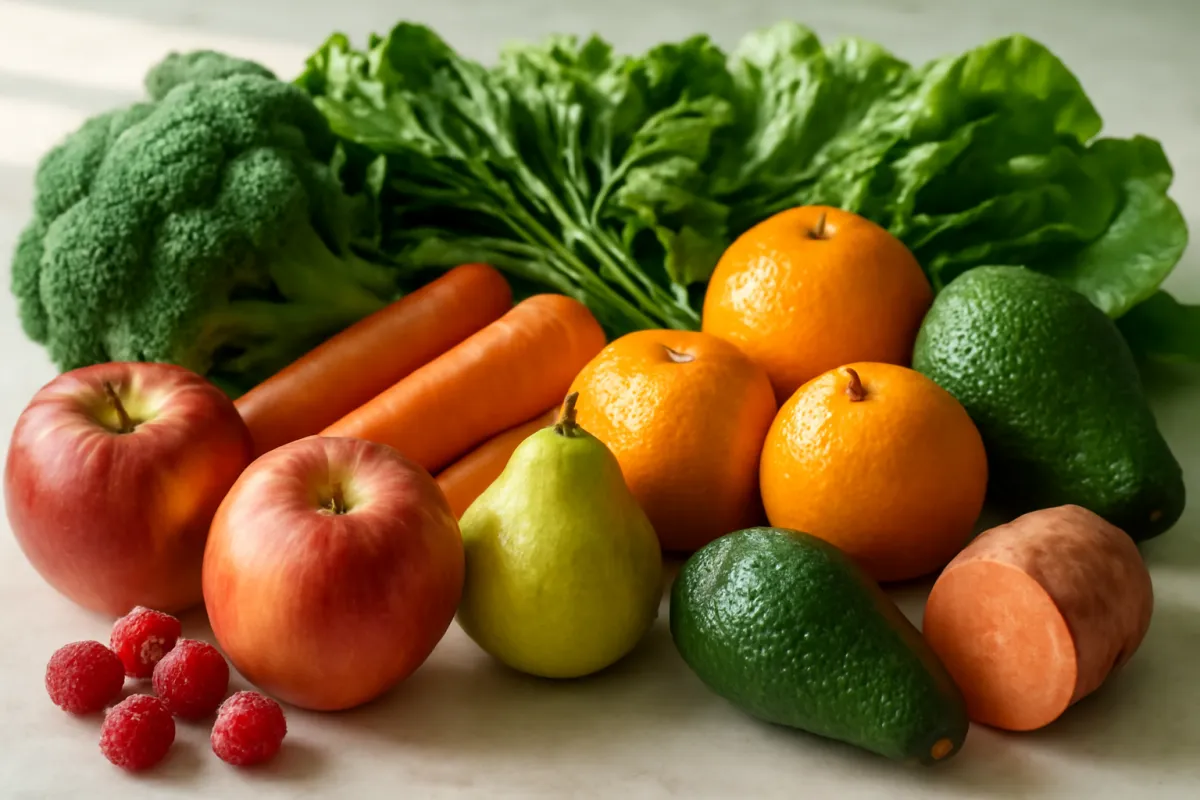
By common serving rather than by weight the picture shifts slightly. Half an avocado at 120 calories sits close to a medium apple at 95 and a medium banana at 105, because half an avocado is a smaller quantity of food than a whole apple. That coincidence is why avocado often looks unremarkable on a serving-based table and alarming on a weight-based one. Both are honest. The serving figure tells you what a typical portion costs; the per 100 gram figure tells you what the food actually is.
Avocado toast, guacamole, and the calories around the fruit
Avocado is rarely eaten alone, and what surrounds it commonly matters as much as the fruit itself. The counting rule is the same one that applies to bread and to tuna on this site: log the additions as their own line, because the avocado is the stable part.
Avocado toast. A standard slice of bread is commonly cited near 75 calories, so half a medium avocado on one slice lands near 195 calories for the honest base version. A thick bakery-cut slice, a drizzle of olive oil at roughly 120 calories per tablespoon, a poached egg near 72, and a generous scatter of seeds push the same dish toward 300 to 400, which is the range our bread review attaches to a café version. None of that is a criticism of the dish. It is an argument for counting the slice, the fruit and the drizzle separately.
Guacamole. Made simply, guacamole is mostly avocado with lime, onion, tomato, coriander and salt, all of which add negligible calories. A quarter cup, roughly 60 grams, lands near 95 calories on that basis. Restaurant and packaged versions vary widely, since some are extended with sour cream, mayonnaise or oil, which changes the figure substantially. The chips are usually the larger line item by some margin.
Smoothies and dressings. Avocado blends into both and disappears visually while its calories do not. A quarter of a medium fruit in a smoothie is 60 calories that nobody sees. That is fine if it was counted and awkward if it was not.
How an avocado fits a daily calorie target
Against a daily calorie reference, avocado is a moderate line item that behaves predictably once you know the portion. Half a medium fruit at 120 calories is roughly 6 percent of an illustrative 2,000 calorie day. A whole medium at 240 is about 12 percent. A whole large at 305 is a little over 15 percent.
Those percentages are the useful frame because they put avocado in proportion without moralising about it. Twelve percent of a day for a food that supplies 24 grams of fat, 9 grams of fiber, 730 milligrams of potassium and a range of vitamins is a reasonable exchange by most measures. Twelve percent of a day eaten unnoticed on top of everything else is a different situation, and it is the more common one, because avocado tends to be added to meals rather than substituted into them.
The practical approach is substitution rather than addition. Avocado in place of a fat-based spread on a sandwich changes the calorie total very little while adding fiber and potassium. Avocado in place of nothing adds its whole figure. Our balanced meal reference treats fat as a plate component with a size rather than an optional extra, which is the framing that makes this easy. You can price your own portion against your own daily reference in the companion tool on this page. None of this is a recommendation about how much anyone should eat, and personal targets belong with a doctor or registered dietitian.
Practical ways to portion an avocado
Portioning avocado is genuinely awkward, which is why so many people either eat a whole one by default or waste half of one. A few habits make it manageable, and they are mechanical rather than restrictive.
Cut before you plan, not after. Halving an avocado and immediately deciding which half is for now removes the drift that happens when you eat from an open fruit with a spoon. The visible line between what you took and what remains is the portion control.
Use the thirds convention. A third of a medium avocado, roughly 50 grams and near 80 calories, is a common serving size in nutrition information and a genuinely useful portion for topping a bowl or a salad. Three servings from one fruit is easier to divide by eye than four.
Store the pitted half cut side down. Pressing the cut surface against a plate or wrapping it tightly limits the browning that pushes people to eat the rest immediately.
Slice rather than mash when counting matters. Slices are visible and countable at roughly 30 calories each for an eighth of a medium fruit. Mashed avocado spreads to fit whatever surface it is on, and a spread portion is much harder to estimate honestly.
Weigh the flesh once. Scooping a half onto a kitchen scale a single time recalibrates your eye for months, and it is the only way to know whether your usual avocado is a 100 gram fruit or a 190 gram one.
How to count an avocado accurately
If you want the number to be right rather than approximately right, the method is short and it has one step that people skip.
Step one: weigh the flesh, not the fruit. Scoop the avocado out, put it on the scale, and read the grams. Skin and pit are commonly around a quarter of the whole fruit’s weight, and skipping this step is the single largest source of error in avocado counting.
Step two: multiply by 1.6 for Hass or 1.2 for a green-skinned variety. That gives calories. Multiply the same grams by 0.16 for grams of fat, by 0.06 for grams of fiber, and by 0.02 for grams of protein, using the Hass factors.
Step three: count the additions separately. Oil, bread, cheese, mayonnaise, sour cream and chips each get their own line, because they move a dish’s total far more than the difference between a medium and a large avocado does. Our label reading walkthrough covers how to pull those figures off a package correctly.
Step four: accept a margin. Even done carefully, these are approximate reference values for a food that varies with variety, growing conditions, ripeness and how thoroughly you scrape the skin. A count within ten percent of the truth is a good count, and chasing more precision than that from a fruit is effort spent in the wrong place.
Common mistakes when counting avocado calories
The errors here are consistent enough to list, and most of them are portion errors rather than data errors.
Weighing the whole fruit. Covered above, and worth repeating because it inflates a medium avocado by around 80 calories.
Assuming half means 120 regardless of the fruit. Half of a large avocado is nearer 150 and half of a small one nearer 80. The fraction is stable; the weight is not.
Reading an ounce figure as a serving figure. Forty-five calories per ounce is a real number that describes a small quantity. Most people eat two to four ounces at a sitting.
Treating avocado as a free food because it is a fruit or because the fat is unsaturated. Neither classification changes the arithmetic. Unsaturated fat carries the same 9 calories per gram as any other fat.
Forgetting the oil. Avocado dishes attract olive oil, and a tablespoon at roughly 120 calories can equal the half avocado it was drizzled over.
Double counting fiber. If you are tracking counted carbohydrate, the roughly 9 grams of fiber in a medium fruit should not also be counted as energy. The 240 calorie figure already accounts for this.
Using a Hass figure for a green-skinned fruit. A 33 percent difference in density is not a rounding error, and it runs in the direction people rarely expect.
Avocado in a balanced diet
Where avocado fits is a question about the whole plate rather than about the fruit. As a fat source it does a job that a plate needs done, alongside the protein anchor and the vegetables and grains that carry the rest, and it does that job in whole-food form with fiber, potassium and vitamins attached. That is the argument for it in general terms.
The counterargument is not that avocado is unhealthy but that it is easy to over-apply. Because it tastes good on almost everything and improves texture in almost every dish, avocado tends to be added to meals that already had their fat covered by cheese, oil, dressing or a fatty protein. Two or three fat sources on one plate is the mechanism by which a sensible meal quietly becomes a heavy one, and avocado is a frequent participant simply because it is popular.
Variety is the other consideration. An eating pattern built around a small number of favoured foods narrows the range of nutrients it supplies, so avocado works best as one of several produce items rather than the produce item. Our grocery list walkthrough treats produce variety as a shopping habit rather than a daily decision, which is the level at which it is actually solved. Nothing in this section is a prescription, and no food here prevents or treats any condition.

How much avocado a day is reasonable
There is no universal number, and this review does not set one. For many healthy people, half to a whole avocado a day fits comfortably within a varied diet, contributing useful fat, a meaningful amount of fiber, potassium and a range of vitamins. Nothing about avocado makes it hazardous at ordinary intakes.
The considerations are practical rather than alarming. Avocado is calorie dense, so a person eating two large ones a day is taking on roughly 600 calories from a single food, which crowds a calorie budget and crowds out other produce. Fiber increases can be uncomfortable if they happen suddenly, which argues for building up gradually with adequate fluids. Potassium is relevant for people with kidney conditions or on certain medications, where higher-potassium foods may need managing, and that is a conversation for a clinician rather than a decision to make from a nutrition table. Avocado allergy exists and is uncommon, and some people with latex allergy report cross-reactivity, which again belongs with a medical professional.
The general posture that fits the evidence is unremarkable: avocado is a nutritious, calorie-dense whole food that suits many diets in ordinary amounts and needs counting like anything else. Anyone with a medical condition, a medication regimen, a pregnancy, or a specific therapeutic diet should confirm their approach with a doctor or registered dietitian rather than with a general figure.
How many calories in an avocado, in every phrasing
The question arrives in a dozen wordings and the answer does not change with any of them. A whole medium Hass avocado is commonly cited near 240 calories, half near 120, a third near 80, a quarter near 60, and a single slice near 30, all of it scaled from about 160 calories per 100 grams of edible flesh. Whether someone asks how many calories in an avocado, how many calories in half an avocado, or how many calories in avocado slices, they are asking the same question with a different portion attached.
Form is the second variable, and it changes the number more than phrasing does. Mashed avocado is the same food by weight but much easier to over-portion by eye. Guacamole is mostly avocado but varies with what a kitchen adds. Avocado oil is a different food entirely at roughly 120 calories per tablespoon and none of the fiber. Dried avocado powder concentrates everything by removing the water. Avocado on toast is two foods and often three.
Separate the fruit from everything around it, count each on its own line, and the answer stays honest in every phrasing. If a lighter option is what you are after rather than a more accurate count, our low calorie snacks collection lists the alternatives without pretending avocado is a problem. These are commonly cited approximate reference values for food composition, illustrative rather than exact, and nothing here is a recommendation about how much avocado anyone should eat.
The bottom line
The calories in an avocado stop being confusing the moment you separate the fraction from the weight and remember what the fruit actually is. Using commonly cited approximate values, a single slice sits near 30 calories, a quarter near 60, a third near 80, a half near 120, a whole medium near 240 and a whole large near 305, all measured as edible flesh after the skin and pit come off. Underneath sits about 160 calories per 100 grams for Hass and nearer 120 for the larger green-skinned varieties, with roughly 90 percent of the energy coming from fat, about 5 percent from protein and about 5 percent from the small share of carbohydrate the body counts. Along with those calories come around 24 grams of fat, 9 grams of fiber and 730 milligrams of potassium in a whole medium fruit, which is more potassium than a medium banana and more fiber than almost any other fruit at that portion size. Avocado is neither a diet food nor a food to fear: it is a calorie-dense, nutrient-rich whole food that rewards being counted deliberately, ideally by substitution rather than addition. Pair these figures with our calories in common foods reference and our calorie needs review, weigh the flesh when precision matters, and confirm anything tied to your weight, blood lipids, potassium, digestion or any medical condition with a qualified professional such as a doctor or registered dietitian.
This evidence review exists to explain the commonly cited approximate composition of avocados and nothing more. It is educational writing about food, not medical advice, dietetic advice or a nutrition plan, and reading it establishes no clinician-patient relationship of any kind. Every calorie, gram, milligram and percentage above is an approximate reference value that varies with variety, fruit size, growing region, ripeness, and how much flesh a spoon actually recovers, so treat the figures as a well-centred range rather than a laboratory measurement of the fruit in front of you. Packaged avocado products, prepared guacamole, avocado oils and restaurant dishes carry their own compositions that only their own labels can supply. Nothing here tells any reader how much avocado to eat, endorses any diet, or claims that avocado prevents, treats or affects any disease or health condition. If you are managing weight, blood lipids, blood sugar, potassium, kidney function, digestion, a food allergy, a pregnancy, or any medication or medical condition, take your figures and your plan from a qualified health professional such as a doctor or registered dietitian rather than from this page.
Frequently asked questions
How many calories are in an avocado?
Size is the variable that moves the number most, and commonly cited reference figures put a whole medium Hass avocado, roughly 150 grams of edible flesh once the skin and pit are gone, near 240 calories. A small one lands closer to 160 and a large one nearer 305, so the honest answer is a range anchored to a familiar fruit rather than a single fixed figure. Underneath every size sits one steady value of about 160 calories per 100 grams of flesh, which is high for a fruit because avocado stores its energy as oil rather than as sugar. Treat 240 as a commonly cited approximate value for an average medium fruit rather than a laboratory reading of the avocado in your kitchen, and weigh the flesh when you want precision.
How many calories are in half an avocado?
Half a medium Hass avocado, roughly 75 grams of flesh, is commonly cited near 120 calories, which is the figure most fruit tables carry for avocado. That follows directly from the approximate value of 160 calories per 100 grams scaled to half of a 150 gram fruit. Alongside those calories sit about 12 grams of fat, close to 4.5 grams of fiber, roughly 1.5 grams of protein and around 365 milligrams of potassium. Half a large avocado is a different quantity of food and lands nearer 150 calories, so the phrase half an avocado is only as precise as the fruit it came from.
How many calories are in a slice of avocado?
A single slice cut from a halved fruit is commonly about an eighth of the whole avocado, roughly 19 grams of flesh, which works out near 30 calories. An ounce of avocado, about 28 grams, comes to roughly 45 calories, and a quarter of a medium fruit sits near 60. Slices are the portion most people underestimate, not because any one of them is large, but because they are easy to keep taking from an open half. Counting slices against the fraction of the fruit they represent is far more reliable than counting them as individual pieces, since slice thickness varies with the knife and the cook.
Why is an avocado so high in calories for a fruit?
Because an avocado stores its energy as fat rather than as sugar, which is unusual among fruits. Roughly 90 percent of an avocado's calories come from fat, which carries about 9 calories per gram compared with about 4 for carbohydrate, so the same weight of flesh holds far more energy than the same weight of apple or banana. Commonly cited figures put avocado near 160 calories per 100 grams against about 52 for apple and about 89 for banana. That density is a description of the food, not a judgement about it, since the fat arrives with fiber, potassium and other nutrients, and whether it suits any particular eating pattern is a question for you and a qualified health professional.
How much fiber is in an avocado?
Avocado is one of the more fiber-dense fruits, with commonly cited figures near 6 grams per 100 grams of flesh. That works out to roughly 9 grams in a whole medium fruit and about 4.5 grams in a half, which is why avocado appears near the top of most fiber tables for fruit. Against the daily fiber intakes commonly cited for adults, somewhere in the region of 25 to 38 grams depending on age and sex, a single half avocado is a meaningful contribution rather than a rounding error. These are approximate reference values that shift with fruit size and ripeness, and anyone managing a digestive condition should follow guidance from a doctor or registered dietitian rather than a general figure.
Do Hass and Florida avocados have the same calories?
No, and the gap is large enough to matter when you count. Hass avocados, the small dark pebbly-skinned fruit sold year round in most supermarkets, are commonly cited near 160 calories per 100 grams of flesh. The larger smooth green-skinned varieties often labelled Florida avocados hold more water and less oil, and are commonly cited nearer 120 calories per 100 grams. A Florida avocado is usually a much bigger fruit, though, so a whole one can still carry as many total calories as a whole Hass despite being lighter per gram. Check which variety you actually bought before applying any figure from a table.
Does an avocado get more caloric as it ripens?
Not meaningfully. Ripening in an avocado is mostly a softening process driven by enzymes breaking down cell walls, along with small changes in water content, rather than a conversion of starch into sugar of the kind that changes a banana's texture and taste. The oil content that supplies nearly all of an avocado's calories is largely set on the tree before harvest, so a rock-hard avocado and the same fruit four days later carry approximately the same energy. What does change with ripeness is how much flesh you can actually scrape out, since a properly ripe fruit gives up more of itself than an underripe one that clings to the skin.
Is avocado good for weight loss?
No single food causes or prevents weight change, and avocado is neither a fat-burning food nor one to avoid. What avocado offers is fat and fiber, both of which many people find satisfying, packaged in a whole food that takes time to eat, at a commonly cited 120 calories per half. It is also genuinely calorie dense, so it is easy to eat a lot of energy quickly if the portion runs away from you. Weight change tracks total intake and many other factors over weeks and months, so anyone with a specific goal should work it out with a doctor or registered dietitian rather than adding or removing one fruit.

Hamza Hai is the editor of NourishMark. She holds an MBA and reviews the site's articles against our editorial standards, checking that every figure is labelled for what it is, that nothing is presented as verified fact without a source the reader can check, and that the writing stays useful to a non-specialist.