
What's in this review
- What counting macros actually means
- Before you start: what you need to count macros
- Step 1: Estimate your calorie needs
- Step 2: Set your macro split
- How to calculate your macros: protein first, then fat, then carbs
- Step 3: Convert grams to calories
- Step 4: Read food labels and weigh your portions
- Step 5: Pick a tracking method or app
- Step 6: Log consistently and hit your targets
- Step 7: Adjust your macros over time
- A worked example: counting macros for one day
- Common mistakes when counting macros
- Troubleshooting and edge cases
- Do you need to count macros at all?
- Your macro-counting checklist
- The bottom line
Short answer: Counting macros means turning a calorie figure into three daily gram targets for protein, carbohydrate, and fat, then logging what you eat against them. Grams and calories are linked by fixed values of about 4 calories per gram for protein and carbohydrate and about 9 for fat. A kitchen scale and a phone app do most of the work, and the habit sticks when you aim close and stay consistent.
Almost everyone who looks up how to count macros ends up looking up how to calculate your macros ten minutes later, because they are two halves of one job rather than two different subjects. The calculating half turns a calorie figure into three gram targets. The counting half checks what you actually ate against them. Most people who try this quit in the first week, and it is almost never because the math is hard. They quit because nobody showed them the whole chain: how a calorie estimate becomes a gram target, how a target becomes a number on a label, and how a plate becomes an entry in an app on a normal busy day.
This evidence review is a step-by-step walkthrough for both halves, from the numbers you start with to the logging that makes them stick. It covers what you need before you begin, what counting actually means, the seven steps in order, the calculation that turns calories into protein, fat and carbohydrate targets, two worked examples pointed at opposite goals, a full day run through, the mistakes that make people give up, the awkward edge cases like eating out, and the honest question of whether you need to count at all. Everything here is general information, not medical or dietary advice, and every figure is a commonly cited illustrative reference rather than a personal target. Run your own numbers in the companion below as you read.
Key takeaways
- Counting macros is a chain of habits, not a calculation: set targets, read labels and portions, pick a place to log, and record what you eat against your goals.
- Grams and calories are the same information in two forms, linked by the fixed values of about 4 calories per gram for protein and carbohydrate and about 9 for fat.
- A kitchen scale and a phone app do most of the heavy lifting; the daily habit shrinks to a couple of minutes once your regular foods are saved.
- The biggest reason people fail is chasing perfect accuracy, so aim close, stay consistent, and treat every number as an estimate with a real margin.
- Counting is an optional, usually temporary teaching tool; every figure here is illustrative and general, so confirm anything specific with a doctor or registered dietitian.
What counting macros actually means
Before any steps, one plain definition, because the word “counting” hides two separate jobs. “Macros” is short for macronutrients, the three parts of food that carry energy: protein, carbohydrate, and fat. Counting them means keeping a running daily tally of how many grams of each you eat and checking that tally against a target you set ahead of time. So counting is really targets plus tracking, and most of the trouble people run into is confusing one job for the other, or skipping the first entirely and just logging into a void.
The reason any of this is possible is that each macronutrient carries a fixed, known amount of energy. Protein supplies about 4 calories per gram, carbohydrate also about 4 calories per gram, and fat about 9 calories per gram. That fixed exchange rate is why an app can take your food entries and show grams and calories at the same time, and why hitting your gram targets and hitting a calorie range are two views of one thing. You are not choosing between counting macros and counting calories; logging the grams settles the calories automatically.
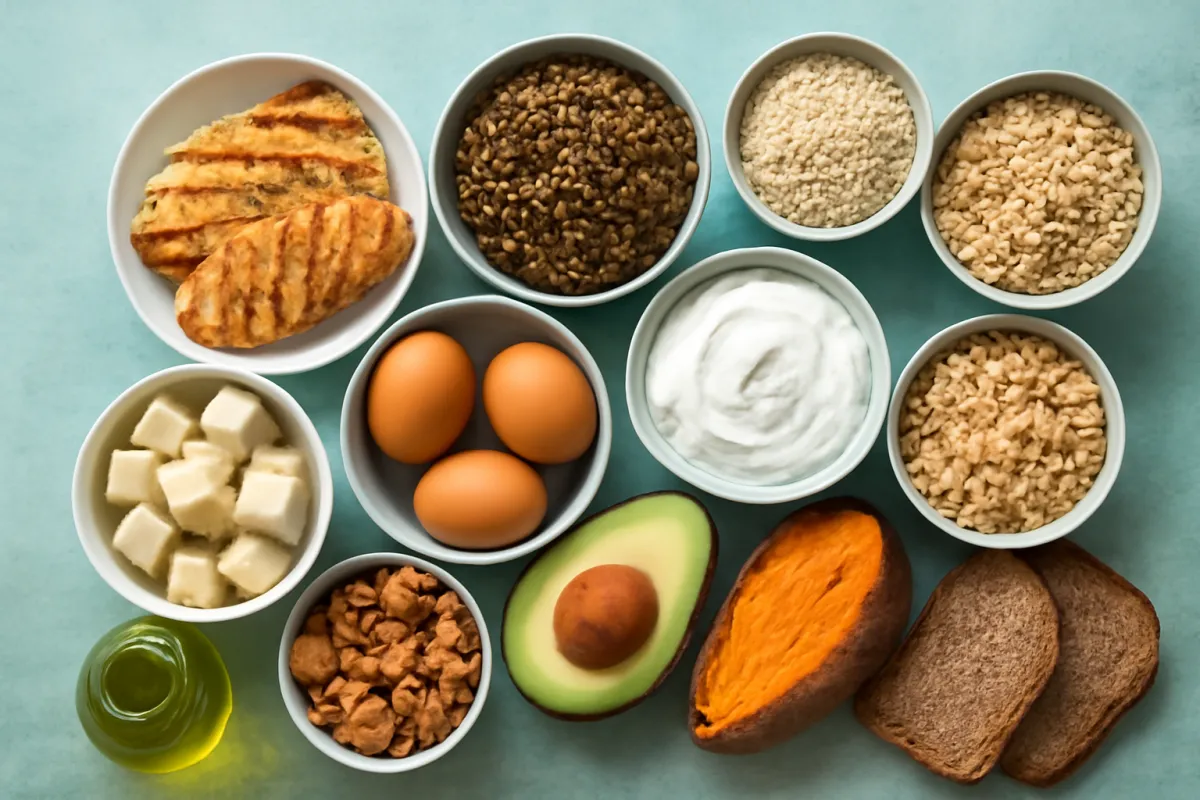
The practical upshot is that counting is a workflow, not a talent. You decide the targets, you measure or estimate what is on your plate, and you record it somewhere that adds it up. The seven steps below walk that workflow in order, front-loading the setup so the daily part becomes light. Keep in mind throughout that this is a general educational description of a common practice, not a plan built for your body, health, or goals.
Before you start: what you need to count macros
Counting macros needs very little equipment and about fifteen minutes of setup, and after that the daily habit takes only a couple of minutes. Gather these before your first day so you are not improvising mid-meal.
- A set of daily macro targets, in grams, for protein, carbohydrate, and fat. If you do not have them yet, the macro calculation section below builds them from your calories in three moves.
- A tracking app or a notebook, somewhere to log entries and see the running total. An app that adds the grams for you removes almost all of the friction.
- A kitchen food scale, ideally one that reads grams, which makes portions far more accurate than cups for dense foods.
- A few minutes of patience for the first week, since the very first time you log each food is the slow part; it gets fast once your regulars are saved.
Difficulty is low and the tools are cheap, but the mindset matters more than the gear. The aim is honest, consistent estimates, not laboratory precision, and the first week always feels slower than the weeks that follow. One important caution before you begin: detailed food tracking is not right for everyone. Anyone with a history of disordered eating, and anyone who is pregnant, managing a condition like diabetes or kidney disease, or working toward a clinical goal, should treat this evidence review as background only and set any targets or tracking plan with a registered dietitian or doctor.
Step 1: Estimate your calorie needs
Counting starts one level above the macros themselves, with calories, because your gram targets are slices of a daily calorie figure and every one of them inherits any error here. What you want is your maintenance calories, sometimes called total daily energy expenditure or TDEE, meaning the rough number that holds your weight steady given your size and activity. Get this into the right neighborhood and the macro targets that follow are trustworthy; guess it, and you are logging carefully against the wrong goalposts.
The common way to estimate maintenance is to calculate your resting metabolism from a standard equation using your weight, height, age, and sex, then multiply by an activity factor from roughly 1.2 if you are mostly sedentary up to about 1.7 if you train hard most days. As an illustration, a 175-pound, moderately active adult often lands near 2,000 to 2,500 maintenance calories a day, though the real figure varies widely between people of the same size. If your goal is fat loss or gain, you then nudge that number down or up, but for counting purposes the point is to lock in one daily calorie figure to build on.
Watch out for the activity multiplier, which is where most estimates go wrong: a few workouts a week rarely makes someone “very active,” and overrating it inflates every downstream target. Our calorie needs evidence review walks the full equation, and the companion below starts from a calorie figure so you can plug in your own. Treat whatever you get as a starting estimate with a genuine margin, not a measurement, and revisit it as your body and results change.
Step 2: Set your macro split
With a daily calorie figure in hand, decide how to divide it among the three macronutrients, which is your macro split. This is the target half of counting, and doing it before you log a single meal is what separates purposeful tracking from aimless data entry. The split is usually expressed either as a percentage of calories for each macro or, more usefully for counting, as a gram target you can aim at directly.
A common approach anchors protein first, often tied to body weight in commonly cited illustrative ranges of roughly 0.7 to 1.0 gram per pound for active people, then sets fat as a share of calories, frequently around 20 to 35 percent, and lets carbohydrate take whatever calories remain. As a worked illustration on a 2,000-calorie day, a split of about 30 percent protein, 40 percent carbohydrate, and 30 percent fat gives targets near 150 grams of protein, 200 grams of carbohydrate, and 67 grams of fat. Those three gram numbers are what you will count toward every day.
The watch-out here is treating the split as sacred. There is no single correct division of calories, the ranges are wide for a reason, and preference plays a real role, since some people feel better with more carbohydrate and less fat and others the reverse. The section immediately below derives those same targets from scratch rather than assuming them, and our protein and carbohydrate evidence reviews cover the ranges in depth. These percentages are population reference points, not a plan for you specifically.
How to calculate your macros: protein first, then fat, then carbs
Choosing a split from a list is the quick version of step two. Calculating one is the version that stays useful, because every number ends up traceable to a reason and adjustable when your results change. The method runs in one direction and never doubles back: calories, then protein, then fat, then whatever remains goes to carbohydrate. The order is the whole trick, since the macro you set last is the one that absorbs every rounding error, and carbohydrate is the one best suited to that job.
Run it on the same worked figures used above. Calories: an illustrative 175-pound, moderately active adult lands near 2,000 calories for the day after any goal adjustment. Protein: anchored to body weight rather than to a percentage, at a middle figure near 0.85 gram per pound, 175 pounds gives about 150 grams of protein, which at 4 calories per gram claims 600 calories. Fat: set as a share of calories, and at 30 percent of 2,000 that is 600 calories, which divided by 9 is about 67 grams of fat. Carbohydrate: subtract the 1,200 calories already spoken for from 2,000, leaving 800 calories, or 200 grams of carbohydrate at 4 calories per gram.
Those are exactly the three targets step two handed you, arrived at from the other end. Check the arithmetic the same way you will check a logged day: 600 plus 600 plus 800 returns 2,000, so the split holds together. Commonly cited illustrative ranges put protein anywhere from about 0.36 gram per pound for mostly sedentary adults up to roughly 0.7 to 1.0 for people who are active or holding onto muscle in a deficit, and fat anywhere from about 20 to 35 percent of calories with a general floor near 20. Where you land inside those ranges is partly preference, and both ends can work.
The same three moves handle the opposite goal without changing anything but the inputs. An illustrative 200-pound, very active adult who trains most days might sit near 3,000 maintenance calories and add a modest surplus of about 300, setting the target at 3,300. Protein at a middle figure near 0.9 gram per pound gives about 180 grams, claiming 720 calories. Fat at 30 percent of 3,300 is 990 calories, or about 110 grams. Subtracting the 1,710 calories already assigned leaves about 1,590 calories, which is close to 400 grams of carbohydrate. Run the check, 720 plus 990 plus 1,590 returns 3,300, and notice what moved: the protein per pound barely changed while the larger budget and the surplus sent nearly all of the difference to carbohydrate, which is the fuel the training runs on.
Two watch-outs belong with this. The first is guessing the calorie figure in step one, since every gram target is a slice of it and inherits its error, which is the single most common way a carefully logged month gets measured against the wrong goalposts. The second is chasing false precision at the other end: whether carbohydrate lands at 197 or 204 grams is inside the margin of the estimate that produced it. Set the numbers in the companion below, then spend your care on the logging rather than on the decimal places. Every figure in this section is a commonly cited illustrative reference rather than a personal prescription, and anyone managing a health condition should set their own targets with a doctor or registered dietitian.
Step 3: Convert grams to calories
Counting fluently means moving between grams and calories without stopping to think, so this short step cements the arithmetic that ties your targets together. The whole conversion rests on three fixed numbers: protein and carbohydrate each carry about 4 calories per gram, and fat carries about 9. Multiply grams by those values to get calories, or divide calories by them to get grams. That is the entire currency exchange of macro counting.
Run the worked split through it as a check. Protein at 150 grams times 4 is 600 calories. Carbohydrate at 200 grams times 4 is 800 calories. Fat at 67 grams times 9 is about 600 calories. Add those up, 600 plus 800 plus 600, and you land back at roughly 2,000 calories, which confirms the split is internally consistent. This add-it-back check is the single most useful habit in counting, because when your logged day does not sum to something near your calorie target, you know a number is off and can hunt for it.
Calories per gram by macronutrient
The fixed exchange rate that turns your logged grams into calories. These values are what let an app total your day, and they never change.
Bars scale to fat at 100 percent. Values are commonly cited general figures; fat carries a little over twice the calories per gram of protein or carbohydrate, which is why small amounts of fat move your totals quickly.
The watch-out is that fat’s higher value makes it easy to underestimate. A tablespoon of oil or a spoon of nut butter looks trivial yet adds close to a hundred calories, so the dense fats are exactly the foods worth weighing rather than eyeballing, which is where the next step comes in.
Step 4: Read food labels and weigh your portions
Here counting turns physical, because a target is worthless if you cannot tell how much you actually ate. Two skills carry this step: reading a nutrition label correctly and measuring portions honestly. The label gives you the grams of each macro per serving, and the scale tells you how many servings are really on your plate, which is almost never the tidy single serving the package assumes.
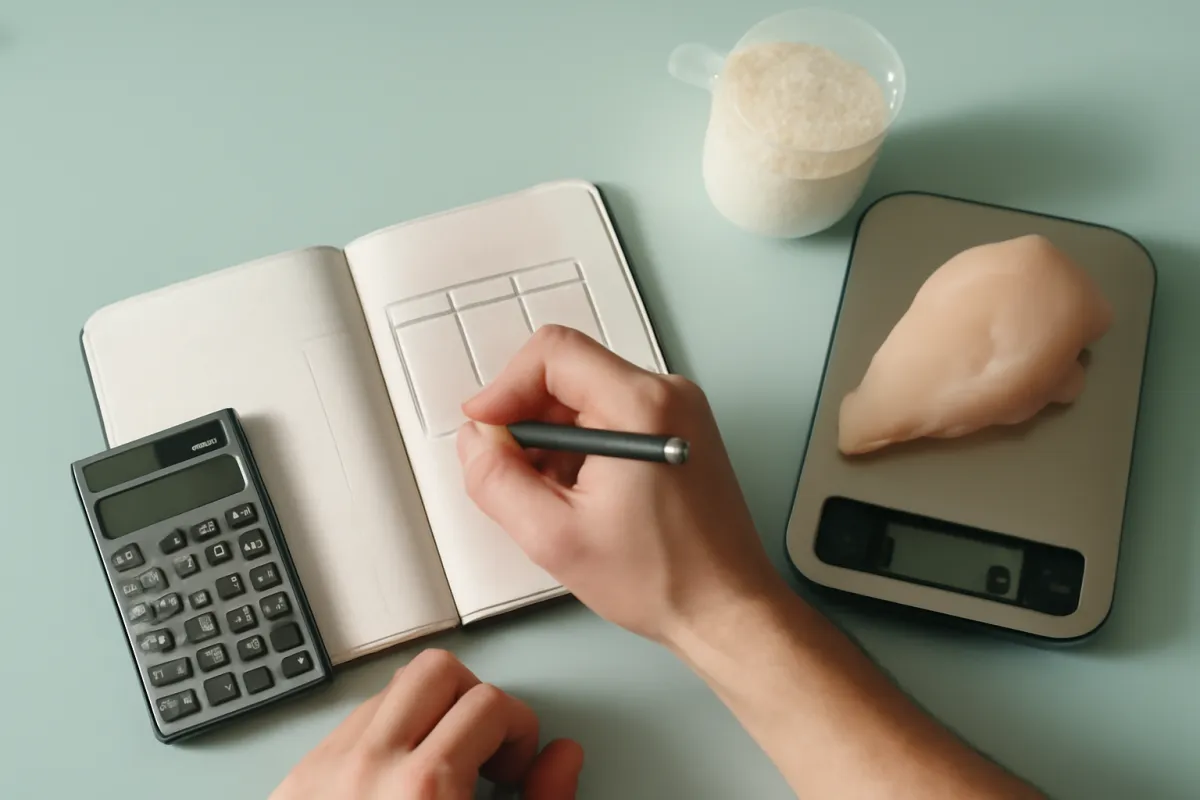
Start with the serving size line, because every macro number on the panel is per serving and scales with what you eat. If a label lists 8 grams of protein per serving and you eat two servings, that is 16 grams, and the same doubling applies to carbohydrate, fat, and calories. Our nutrition label evidence review walks the full panel. Then reach for the scale: weigh dense, easy-to-underestimate foods like rice, pasta, oats, oils, cheese, and nut butters, where a small volume difference hides a big macro difference, and feel free to estimate low-calorie foods like leafy greens. Weighing food raw and dry, before it soaks up water or cooks down, gives the most consistent readings.
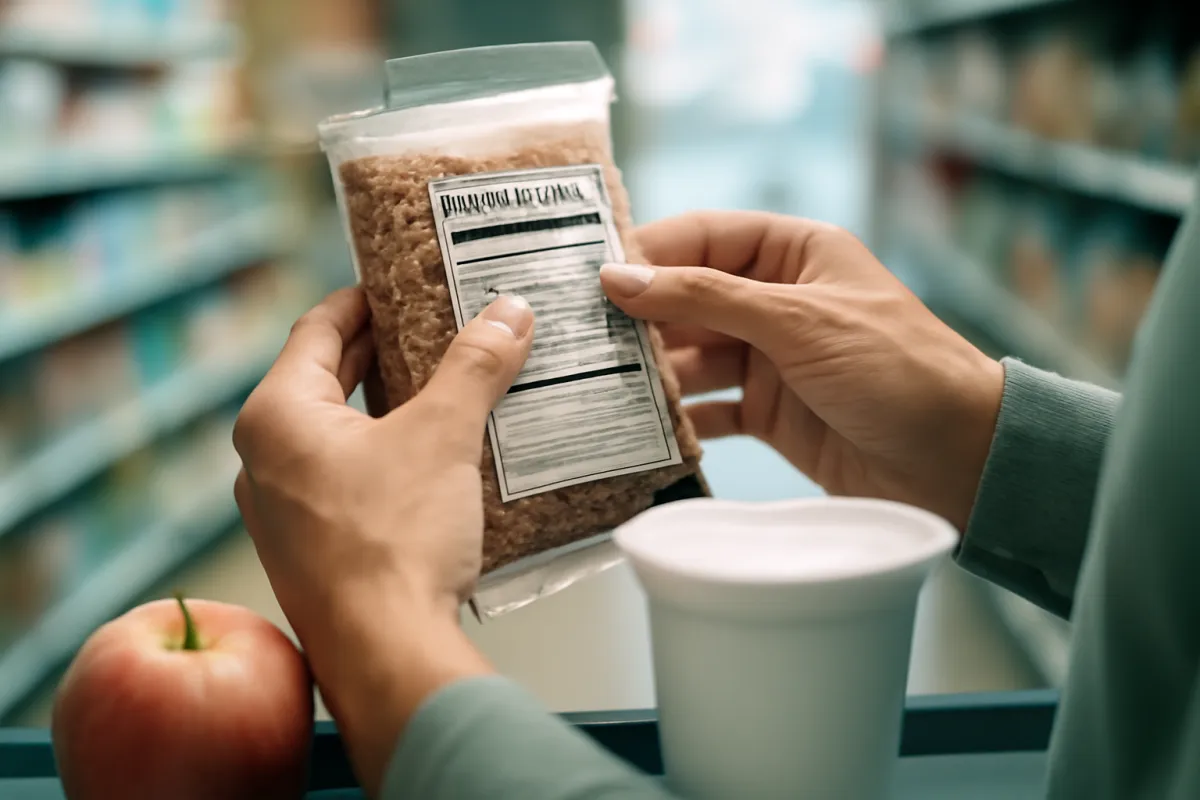
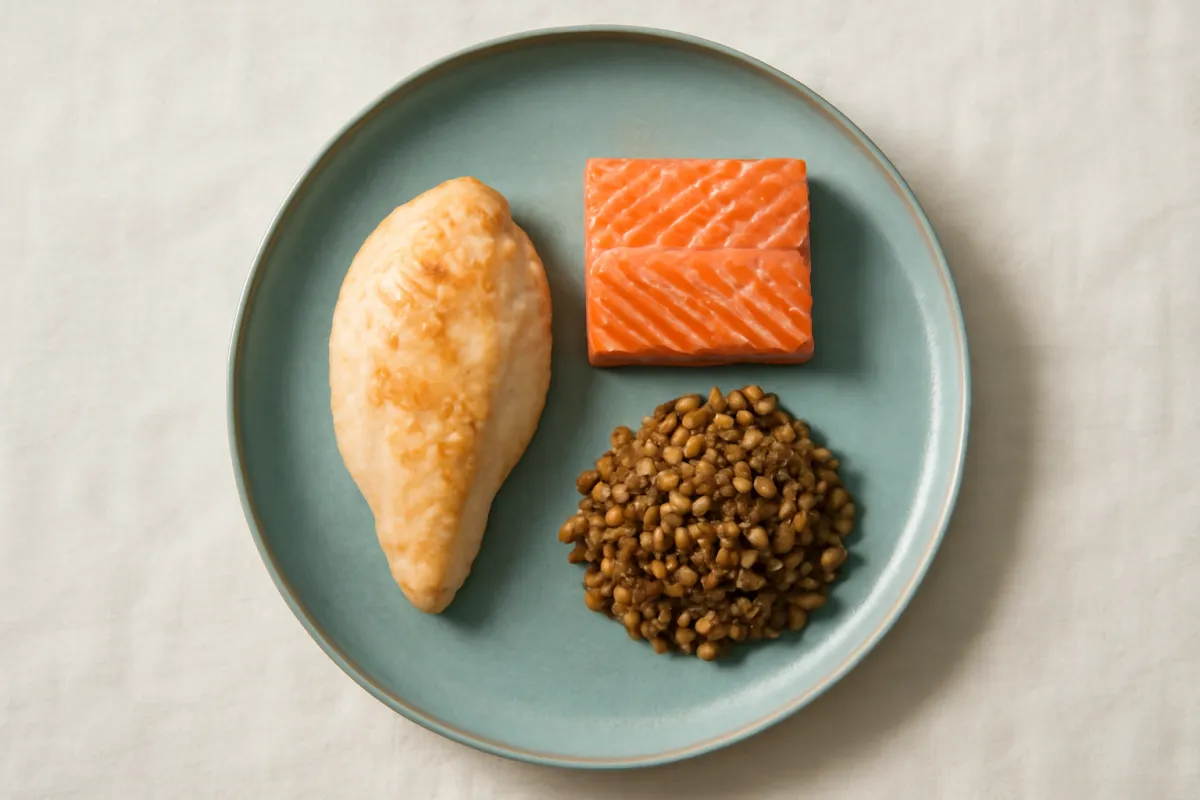
The watch-out is inconsistency. It is fine to weigh some foods and estimate others, but be consistent about which is which, because random switching between careful and casual is what makes a logged day drift from the real one. For foods with no label, a database entry plus a scale reading, or a hand-based estimate rounded up, keeps you close.
Step 5: Pick a tracking method or app
Now choose where the numbers live, because counting only works if you have one reliable place to record entries and see the running total. Most people use a phone app, and the reason is simple: a good tracker holds a searchable food database, scans barcodes, saves your recipes and regular meals, and adds up your macros against your targets automatically, turning logging into a few taps. A notebook and the label math work too, and suit people who prefer to stay off their phone, but they ask more of you each day.
Rather than hunt for a perfect app, pick a well-reviewed one, set your protein, carbohydrate, and fat targets from step two inside it, and spend the first week building a small library of your regular foods. Once your usual breakfast, your go-to lunch, and a handful of staples are saved, logging them again is instant, and that saved library, not any single feature, is what makes counting sustainable. Barcode scanning helps for packaged foods, and a saved-recipe function is worth learning if you cook the same dishes often.
The watch-out is trusting the database blindly. Community-entered foods can be wrong, sometimes badly, so sanity-check surprising entries against the actual label and prefer verified or your own saved entries where you can. This evidence review does not endorse any specific product, and every app’s numbers are estimates, not measurements.
Step 6: Log consistently and hit your targets
This is the step the whole workflow exists for: recording what you eat, every day, and steering toward your targets as the day unfolds. Consistency beats intensity here. A roughly logged day that you actually finish is worth far more than a perfectly logged breakfast followed by three untracked meals, because the value of counting comes from the complete picture, not from precision on any one entry.
Two habits make hitting targets realistic. First, log as you go or pre-log rather than reconstructing the day from memory at midnight, since real-time entries are more accurate and let you adjust the next meal while it still matters. Second, watch protein first: it is the target most people fall short on and the one most worth protecting, so many counters aim to bank enough protein early and let carbohydrate and fat fill the rest. Spreading a target like 150 grams of protein across three meals is about 50 grams each, a very doable amount, which the chart below puts in context against the day’s split.
An illustrative daily macro split (share of calories)
The worked example's 2,000-calorie day by share of calories: protein and fat near a third each, carbohydrate filling the rest. Shares sum to 100 percent.
Segments show each macro's illustrative share of calories in the worked example. A real split shifts with body weight, activity, goal, and preference; this is a reference shape, not a target.
A third habit worth building is pre-logging the day, or at least the next meal, before you eat it. Entering a planned plate in advance lets you see whether it fits your remaining macros while you can still swap the rice for extra vegetables or add a protein, which is far easier than discovering a shortfall at bedtime. Pre-logging turns the app from a scorekeeper into a planner, and many people find it the single change that makes hitting targets feel effortless rather than reactive.
The watch-out is all-or-nothing thinking. Missing your targets on a given day, or eating something you did not plan, is not a failure that spoils the week; log it honestly and move on. A single high or low day barely registers against a two-week trend, and pretending otherwise is what turns a useful tool into a source of stress.
Step 7: Adjust your macros over time
The targets you set are a first draft built on estimates, so the final step is to treat them as adjustable and let your real results refine them. Your body is the last word, not the calculator, and a number that fit a month ago can drift as your weight, activity, and routine change. Counting gives you the feedback loop that makes sensible adjustment possible.
A common general approach is to hold your targets steady for two to three weeks while you track how your weight trend, energy, hunger, sleep, and workouts respond. Two weeks matters because daily weight swings with water, salt, and digestion, so a single week can mislead. If a fat-loss goal has clearly stalled after that window, you might trim calories modestly, usually from carbohydrate or fat while protein holds, and if you are losing too fast or feeling drained, you nudge them back up. Adjust in small steps of roughly 100 to 200 calories rather than large swings, which just trade one problem for another.

The watch-out is over-adjusting. Recalculating every few days chases noise rather than signal, and it usually undoes the consistency that made counting work. Change one thing, wait, and read the trend. Any meaningful change to how you eat is worth discussing with a doctor or registered dietitian if you manage a health condition.
A worked example: counting macros for one day
Pulling the steps together across a single realistic day shows how light the habit becomes once the setup is done. Meet an illustrative person: a 175-pound, moderately active adult whose targets from the earlier steps are 150 grams of protein, 200 grams of carbohydrate, and 67 grams of fat on about 2,000 calories. Nothing here is a recommendation for any real person; it is one scenario run through the workflow so the numbers are concrete.
Breakfast: they weigh 60 grams of dry oats and log it, add a scoop of protein powder from its label, and a spoon of peanut butter weighed on the scale, landing near 40 grams of protein, 55 grams of carbohydrate, and 18 grams of fat. Lunch: a weighed 6-ounce chicken breast, a cup of cooked rice weighed dry before cooking, and vegetables estimated by eye add roughly 50 grams of protein, 65 grams of carbohydrate, and 12 grams of fat. Dinner and a snack: salmon, potatoes, more vegetables, and Greek yogurt bring the day to a close. Logging each item as they eat, the app’s running total climbs toward the targets.
By evening the app shows about 148 grams of protein, 205 grams of carbohydrate, and 64 grams of fat, each within a handful of grams of target, which counts as a clean hit. Notice what made it work: the protein was banked early, the dense foods were weighed while the vegetables were estimated, and no single entry was agonized over. Multiply the day’s grams by their calorie values, 148 times 4 plus 205 times 4 plus 64 times 9, and it sums to roughly 1,988 calories, right on the 2,000 target, confirming the day holds together. That add-it-back check is your proof the count is honest.
Common mistakes when counting macros
Most counting failures are habit slips, not math slips, and each is easy to sidestep once named.
- Chasing perfect accuracy. Agonizing over five grams of carbohydrate treats an estimate like a measurement. Aim close, usually within five to ten grams of each target, and let the weekly trend, not the daily score, be the judge.
- Only logging the “good” days. Skipping entries when you eat off-plan erases exactly the information you need. An honest imperfect log beats a flattering incomplete one every time.
- Underestimating dense foods. Oils, nut butters, cheese, and dressings pack calories into tiny volumes, so eyeballing them quietly wrecks the count. Weigh the dense foods and estimate the light ones.
- Ignoring the serving size. Logging one serving when you ate two doubles the error across every macro. Always read the serving line first and scale to your real portion.
- Trusting the database blindly. Community food entries can be wrong, sometimes wildly, so sanity-check surprising numbers against the label and save your own verified entries.
- Counting forever out of fear. Treating tracking as a permanent obligation, or feeling anxious without it, is a signal the tool has stopped serving you. Counting is meant to be temporary and educational.
- Guessing the calorie figure. Every gram target is a slice of your daily calorie estimate, so a careless figure at the top makes all three targets wrong no matter how carefully you log against them.
- Setting protein last. Leaving protein to soak up whatever remains after carbohydrate and fat is the calculation done backwards. Protein is the target to protect, especially in a deficit, which is why it is anchored to body weight first.
Clear these eight and counting does its job quietly, building awareness without the stress that makes people quit.
Troubleshooting and edge cases
A few common situations change the practical details, though never the underlying workflow. What if you are eating out or there is no label? Estimate with the best information available: search the restaurant’s published data if it exists, log a similar database dish otherwise, round portions up since restaurant servings and added fats tend to run high, and picture the plate in components, a palm of protein, a fist of carbohydrate, a thumb of fat. These are rough by nature, and that is fine.
What if your homemade recipe has no numbers? Use your app’s recipe function: enter each weighed ingredient once, tell it how many servings the dish makes, and it stores a reusable per-serving entry. This front-loads a little work and then makes your regular cooked meals log in a single tap.
What if two apps or entries disagree? Prefer the actual package label over any database entry, and among database entries prefer verified or your own saved ones. When entries conflict and you cannot tell which is right, pick the more conservative number and stay consistent, since consistency matters more than which reasonable estimate you chose.
What if you have a medical condition? This is the important one. Diabetes, kidney disease, heart conditions, pregnancy, eating disorders, and other situations can make generic targets or detailed tracking inappropriate or even risky, and they call for individualized guidance that overrides any general figure here. If any apply to you, treat this walkthrough as background reading and set your actual plan with a doctor or registered dietitian.
Do you need to count macros at all?
It is worth stepping back, because the honest answer is that plenty of people eat well and reach their goals without logging a single gram. Counting is a tool, useful for some and unnecessary or even harmful for others, not a requirement of healthy eating. Its real value is educational: a stretch of tracking teaches you where your protein comes from, how big a real portion of rice is, and what a balanced day looks like, and that awareness often outlasts the tracking itself.
For many people the smart play is to count for a defined period, a few weeks to a few months, until the lessons stick, then taper to occasional spot-checks or stop and eat by the habits they built. A gentler alternative that captures much of the benefit is the plate model: fill about half the plate with vegetables and fruit, a quarter with a palm-sized protein, a quarter with a whole-food carbohydrate, and add a little healthy fat, which lands most people in a reasonable place without a calculator, as our balanced meal evidence review explains. Use counting if it genuinely helps, drop it if it does not, and if food or body image is a struggle, that is a conversation for a professional rather than a spreadsheet. Anyone with a history of disordered eating should be especially cautious about tracking at all.
Your macro-counting checklist
Keep this short routine on hand to run the whole workflow, whether you are starting out or restarting after a break.
- Set your targets first, in grams of protein, carbohydrate, and fat, before you log anything.
- Get a scale and an app, and spend the first week saving your regular foods so logging gets fast.
- Read the serving size, then scale every macro on the label to the portion you actually eat.
- Weigh the dense foods, estimate the light ones, and be consistent about which is which.
- Log as you go, banking protein early and letting carbohydrate and fat fill the rest of the day.
- Check the math by multiplying each macro’s grams by its calorie value and confirming the day sums near your target.
- Read the trend over two to three weeks, then adjust in small steps, with professional input for any health condition.
Run your own targets through the companion below to see the grams and per-meal split you would be counting toward.
The bottom line
Counting macros looks like a numbers game, but it is really two halves of a short chain of habits. The calculating half runs in one direction: estimate your calories, anchor protein to your body weight, set fat as a share, and let carbohydrate take what remains, which on an illustrative 2,000-calorie day for a 175-pound adult lands near 150 grams of protein, 200 of carbohydrate, and 67 of fat. The counting half then checks reality against those three numbers: read a label and a scale, choose one place to log, and record what you eat honestly. Run the worked day and you see the point of it, about 148 grams of protein, 205 of carbohydrate, and 64 of fat, each within a few grams of target, every number an estimate rather than a verdict. Aim close instead of perfect, log the imperfect days too, and read your results over weeks rather than hours. Treat all of it as an optional, usually temporary teaching tool, keep the quality of the food ahead of the precision of the grams, and remember that every figure here is a commonly cited illustrative reference, not a personal prescription. Pair this walkthrough with our calorie needs, protein, and nutrition label evidence reviews, and confirm anything specific to your health, goals, or conditions with a qualified professional.
This evidence review is published for general education and describes a commonly used, illustrative approach to tracking macronutrients, not medical, nutritional, or dietary advice, and reading it creates no clinician-patient relationship. Every calorie figure, gram amount, percentage, and worked example above is a population reference or illustration rather than a measurement or a personal recommendation, and real foods, database entries, and bodies vary widely. Detailed food tracking is not appropriate for everyone: it can be harmful for anyone with a current or past eating disorder, and situations including diabetes, kidney disease, heart conditions, pregnancy, and certain medications call for individually managed nutrition that overrides any general figure here. For targets and a tracking approach suited to your body, goals, and any medical condition, and before changing how you eat, consult a qualified health professional such as a doctor or registered dietitian.
Frequently asked questions
What does it actually mean to count macros?
Counting macros means tracking how many grams of protein, carbohydrate, and fat you eat across a day and comparing that running total against a set of targets you chose in advance. In practice it is two habits stitched together: setting a daily goal for each of the three macronutrients, then logging your food so you can see how close you land. The logging is usually done in a phone app that stores food entries and adds the grams up for you. This is a general educational description of a common practice, not a personal recommendation, and anyone with a health condition or a history of disordered eating should speak with a registered dietitian before tracking.
How do you calculate your macros step by step?
The commonly cited method runs in one direction, from calories down to grams, and it is the first half of counting rather than a separate skill. Estimate your daily maintenance calories, adjust that figure up or down for your goal, set protein first by anchoring it to your body weight, set fat as a share of the calories, and give whatever calories remain to carbohydrate. Each macronutrient has a fixed energy value, about 4 calories per gram for protein and carbohydrate and about 9 for fat, so dividing calories by those values turns every target into grams. Worked through on 2,000 calories for a 175-pound adult, that lands near 150 grams of protein, 200 grams of carbohydrate, and 67 grams of fat. These are general educational figures rather than a personal prescription, and anyone with a health condition or a specific goal should confirm the numbers with a registered dietitian.
What is a good macro split for most people?
There is no single correct split, which is why general guidance gives wide ranges rather than one answer. A commonly cited illustrative starting point is roughly 25 to 35 percent of calories from protein, about 20 to 35 percent from fat, and the rest from carbohydrate, though activity, preference, and the foods someone actually enjoys all shift those shares. The more useful idea is to anchor protein to your body weight first, keep fat above a sensible floor, and let carbohydrate flex around your activity. These percentages are population reference figures, not a plan for any one person, and a professional can tailor them to you.
Do I have to weigh my food to count macros?
A kitchen scale makes counting far more accurate because it removes the guesswork that cups and eyeballing introduce, especially for calorie-dense foods like oils, nut butters, rice, and pasta. That said, many people count perfectly well using label serving sizes, standard packages, and consistent hand or spoon measures, accepting a little more error in exchange for less friction. A reasonable middle path is to weigh the dense, easy-to-underestimate foods and estimate the low-calorie ones like leafy vegetables. Whatever level you pick, consistency matters more than precision, and these are general practices rather than advice for your specific situation.
Which macro tracking app is best?
There is no single best app, because the right one is mainly the one you will actually open every day. Most popular trackers share the same core features: a searchable food database, a barcode scanner, saved meals and recipes, and a daily readout of your macro totals against your targets. Rather than chase the perfect tool, pick a well-reviewed app, spend a week learning its quirks, and build a small library of your regular foods so logging gets faster. This walkthrough does not endorse any specific product, and any app's database entries can be inaccurate, so treat its numbers as estimates rather than exact measurements.
How accurate do I need to be when counting macros?
Close is genuinely good enough, because the whole system rests on estimates: your calorie target, the database entries, and the natural variation in foods all carry a real margin. Chasing perfection, agonizing over whether carbs landed at 198 or 205 grams, tends to add stress without changing results. A common general rule of thumb is to aim within roughly five to ten grams of each target and call that a hit. The goal of counting is awareness and consistency over weeks, not a flawless daily score, and these tolerances are illustrative habits rather than a clinical standard.
How do I count macros when eating out or there is no label?
Restaurant and homemade meals are the hardest to log because you did not measure the ingredients, so you estimate with the best information available. Many chains publish nutrition data you can search in your app, and for independent spots you can log a similar database entry for the dish and round portions up rather than down, since restaurant servings and added fats tend to run high. Building a plate you can picture in components, a palm of protein, a fist of carbs, a thumb of fat, also helps you estimate. These are rough approximations by nature, offered as general practice, and they are not a substitute for guidance tailored to your health or goals.
Can I count macros without counting calories?
In effect you are always doing both, because macros and calories are two views of the same food. Once you log grams of protein, carbohydrate, and fat, the calories follow automatically from the fixed values of about 4 calories per gram for protein and carbohydrate and about 9 for fat, so most apps show both at once. Some people prefer to watch only their protein target and a general calorie range while paying less attention to the exact carb and fat split, which is a lighter form of tracking. Any of these approaches can work, and the right level of detail is a personal and general matter, not a prescription.
How long should I count macros for?
Counting is best thought of as a temporary teaching tool rather than a permanent way of eating. Many people track closely for a few weeks to a few months, long enough to learn what their targets look like on a plate and which foods make hitting protein easy, then taper to spot-checking or stop entirely and eat by the habits they built. Others prefer to track during focused phases and take breaks in between. There is no required duration, and if tracking ever starts to feel compulsive or anxious, that is a strong signal to step back and, if needed, talk with a professional.
Is counting macros safe for everyone?
For most healthy adults, tracking macros for a period is a low-risk way to build nutrition awareness, but it is not right for everyone. Detailed food logging can worsen anxiety and rigid thinking around eating, and it is generally discouraged for anyone with a current or past eating disorder, for whom it can be genuinely harmful. People who are pregnant, managing diabetes or kidney disease, taking certain medications, or working toward a clinical goal should set any targets with a professional rather than a general framework. This evidence review is educational only, and it does not replace individual advice from a doctor or registered dietitian.

Hamza Hai is the editor of NourishMark. She holds an MBA and reviews the site's articles against our editorial standards, checking that every figure is labelled for what it is, that nothing is presented as verified fact without a source the reader can check, and that the writing stays useful to a non-specialist.

Dr. Shayaan Khan is the medical reviewer for NourishMark. He holds an MBBS from MGM Medical College, Navi Mumbai, and is the author of published research including a narrative review of postpartum anxiety and depression in Mental Health Science. He has taught physiology at university level. He reviews the site's health content for medical accuracy: that physiology and mechanisms are described correctly, that no claim is stated more strongly than the evidence behind it, and that anything specific to an individual reader is sent to that reader's own clinician.
Not medical advice. Dr. Khan reviews NourishMark's health content for medical accuracy. He is not a registered dietitian, he does not hold a United States practising licence, and he is not your doctor. His review does not make anything here medical advice. Always talk to a qualified health professional about your own situation, and never delay or stop care because of something you read here.