What's in this review
- How many calories in an egg
- How many calories in eggs: 1 egg vs 2 vs 3
- Calories in an egg by size
- An egg size and calorie table
- Calories in an egg per 100 grams
- Whole egg vs egg white vs yolk
- Calories in an egg white
- Calories in an egg yolk
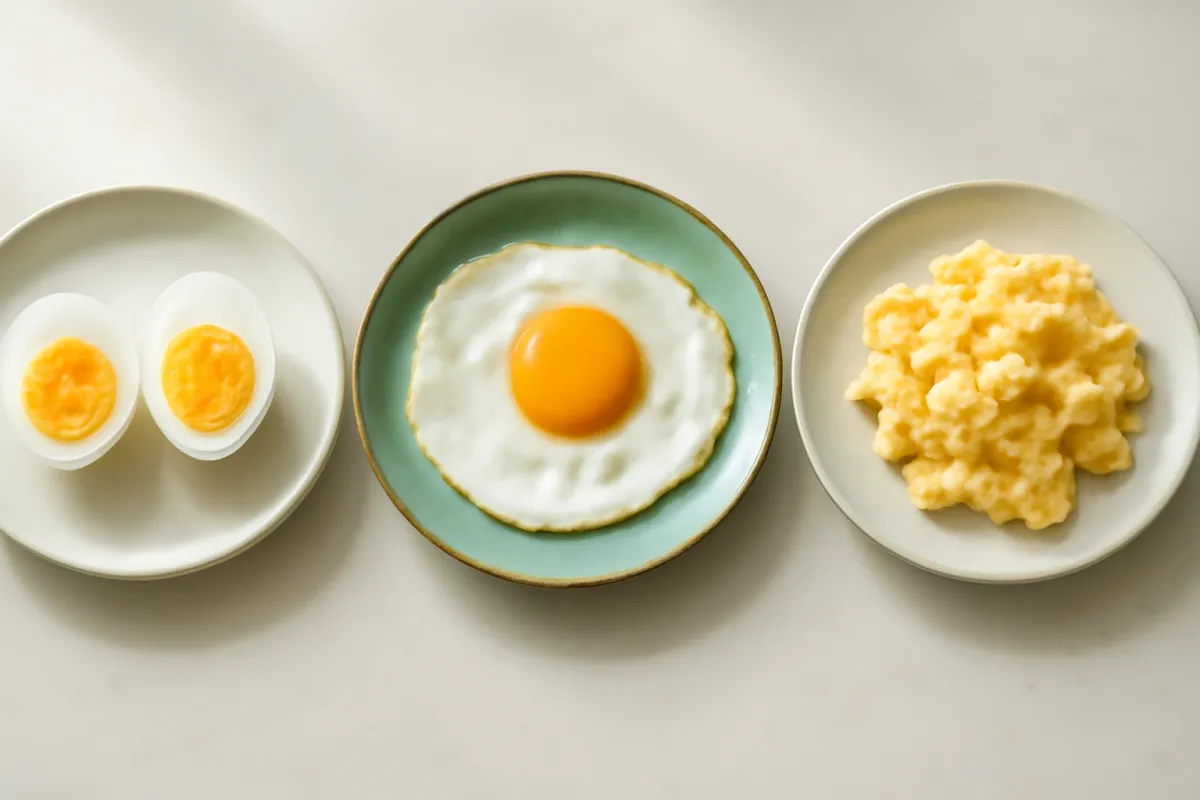
- Calories in a boiled egg
- Calories in a fried egg
- Calories in a scrambled egg
- How cooking method changes the calories
- Where the calories in an egg come from
- Protein in an egg for context
- Fat and cholesterol in an egg
- Eggs and weight loss
- Eggs in a high-protein diet
- How many eggs a day is reasonable
- Eggs compared with other breakfast foods
- A worked example: an egg breakfast by the numbers
- Eggs, how many calories across a week of breakfasts
- Common mistakes counting egg calories
- How to count egg calories accurately
- The bottom line
Short answer: A large egg carries about 72 calories, a small one about 54, and a jumbo about 90, using commonly cited USDA figures, so two large eggs come to roughly 145. Almost all of the energy sits in the yolk, near 55 calories, while the white carries only about 17. Boiling and poaching add nothing; frying adds roughly 18 from the cooking fat, and scrambling with butter or cheese adds more.
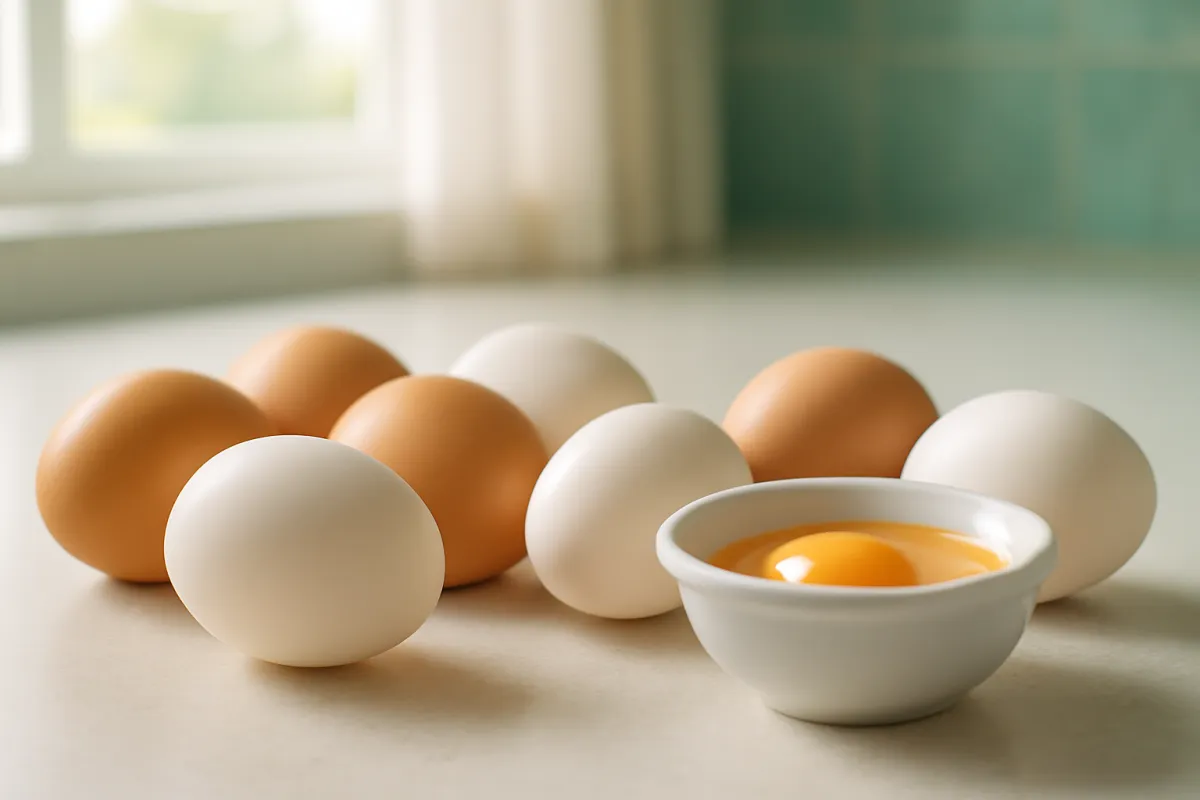
How many calories in an egg? A large egg carries about 72 calories, a small one about 54, and a jumbo about 90, using commonly cited figures from the United States Department of Agriculture, with two large eggs coming to roughly 145. The number comes down almost entirely to two things: the size of the egg and how you cook it, because the energy in a whole egg tracks its weight fairly closely and the pan adds the rest. Nearly all of those calories live in the yolk, since the white is almost pure protein and water, and the number on your plate climbs when butter or oil enters the pan. The figure is not mysterious once you know which egg you are holding and how it was prepared.
This evidence review is a plain-language reference for the calories in an egg, organized so you can find the size and preparation you have and understand the figure once you do. It answers the headline question first, then walks through USDA calories by size, the split between white and yolk, what boiling, frying, and scrambling do to the number, the protein, fat, and cholesterol that travel alongside the calories, and how eggs fit into weight management and a higher-protein diet. It is educational, describes food composition only, and is not diet or medical advice. For the protein angle in depth, see our review of how much protein is in an egg; for a broader table, our reference on calories in common foods; and for how much you personally need, our calorie needs review. You can also tally an egg in the companion below.
Key takeaways
- USDA figures put a large egg (about 50 grams) near 72 calories, with a small egg near 54 and a jumbo near 90, so size drives the base number.
- Almost all of an egg's calories sit in the yolk, commonly cited near 55, while the white carries only about 17, since the yolk holds the fat.
- Boiling and poaching add nothing, so a boiled egg stays near 72; frying adds roughly 18 and scrambling with butter or cheese more, all from the cooking fat.
- A large egg carries about 6 grams of complete protein and 5 grams of fat, which makes it protein-dense for its modest calories.
- Every figure here is a commonly cited, USDA-based reference, not an exact measurement or a personal target; for anything tied to your health, consult a doctor or registered dietitian.
How many calories in an egg
Start with the question people search for most. Using USDA reference data, a large egg, about 50 grams, is commonly cited at about 72 calories. That is the figure most databases use for a standard egg, and it is the anchor for everything that follows. A smaller egg lands lower and a larger one higher, because the calories follow the weight of the egg, which is true of most whole foods. Around 72 calories arrive with about 6 grams of complete, high-quality protein, which is part of why eggs have such a strong reputation as an efficient, inexpensive food.
The single number hides where the energy actually sits, which is the first thing worth understanding. Almost all of an egg’s calories are in the yolk, commonly cited near 55 calories, while the white carries only about 17, because the yolk holds the egg’s fat and the white is nearly all protein and water. That split explains most of what follows: eating whites alone cuts the calories sharply, and cooking the egg in fat raises them. Read 72 as a commonly cited, USDA-based reference for a large egg rather than an exact reading of the egg in your hand, and adjust for the size on your carton and whatever goes into the pan. Set your own egg count, size, and cooking method in the companion below to see the arithmetic update as you read.
How many calories in eggs: 1 egg vs 2 vs 3
Almost nobody eats one egg on its own, so the more useful question is how many calories are in eggs as people actually cook them, in twos and threes and sometimes as whites alone. The arithmetic is simple because eggs scale cleanly: each large egg is a stable base near 72 calories, so two land near 145 and three near 215, before anything goes into the pan. What moves the total from there is the cooking fat and whether the yolks are in or out, and the table below puts all three variables in one place for large eggs.
| Large eggs | Boiled or poached | Fried in light oil | Scrambled with butter | Whites only |
|---|---|---|---|---|
| 1 egg | ~72 | ~90 | ~95 | ~17 |
| 2 eggs | ~145 | ~180 | ~190 | ~34 |
| 3 eggs | ~215 | ~270 | ~285 | ~51 |
Read across any row and the cooking lever is obvious: three boiled eggs near 215 calories and three scrambled in butter near 285 are the same eggs with roughly 70 calories of fat added. Read down any column and the count lever is just as clear, since each additional large egg adds about 72 calories boiled or about 90 fried. Read the last column against the first and the yolk lever appears, because three whites near 51 calories carry less energy than a single whole egg while still supplying close to 11 grams of protein.
Egg size shifts every figure in the table proportionally. Three small eggs come to about 160 calories rather than 215, and three jumbo eggs to about 270, so the grade printed on the carton is worth a glance before trusting any per-egg number. The same scaling applies to the protein, which is the reason these totals are usually considered well spent: two large eggs carry roughly 12 grams of complete protein and three about 18, figures our review of how much protein is in an egg works through in detail alongside the white and yolk split.
A common and calorie-efficient middle path is mixing whole eggs with extra whites. One whole egg plus two whites lands near 106 calories with about 13 grams of protein, which beats two whole eggs on protein per calorie while keeping one yolk and its nutrients on the plate. Two whole eggs plus two whites reach roughly 179 calories for about 19 grams of protein. Neither is better in any absolute sense, since the yolk carries most of the egg’s vitamins, minerals, and fats, but it is a genuine lever for anyone counting calories closely.
The honest caveat on all of these totals is that they describe the eggs and the fat in the pan, nothing else. Toast, butter on the toast, cheese folded into a scramble, bacon alongside, or mayonnaise in an egg salad each carry their own calories, often more than the eggs themselves. Count the eggs by size and count, add the cooking fat, then tally the companions separately, or set your own count, size, and method in the companion below to watch the figures move. Every value here is a commonly cited USDA-based reference rounded for readability, illustrative rather than an exact measurement of any particular egg.
Calories in an egg by size
Because an egg’s calories track its weight, the most useful way to answer the question is by size, and eggs are sold in standard grades from small to jumbo. The 72-calorie figure assumes a large egg, which is the default in most recipes and databases, but the number shifts by a meaningful amount across the size range. The values below follow USDA reference weights and the per 100 gram calorie figure, rounded and framed as approximate because real eggs vary.
Illustrative calories in a raw egg by size
Commonly cited figures from USDA reference weights, rounded. Approximate values, not exact measurements of any one egg.
Bars scale to the jumbo egg at 100 percent. Figures follow USDA reference weights and the per 100 gram calorie value; a real egg varies with size and grading, and cooking fat is not included here.
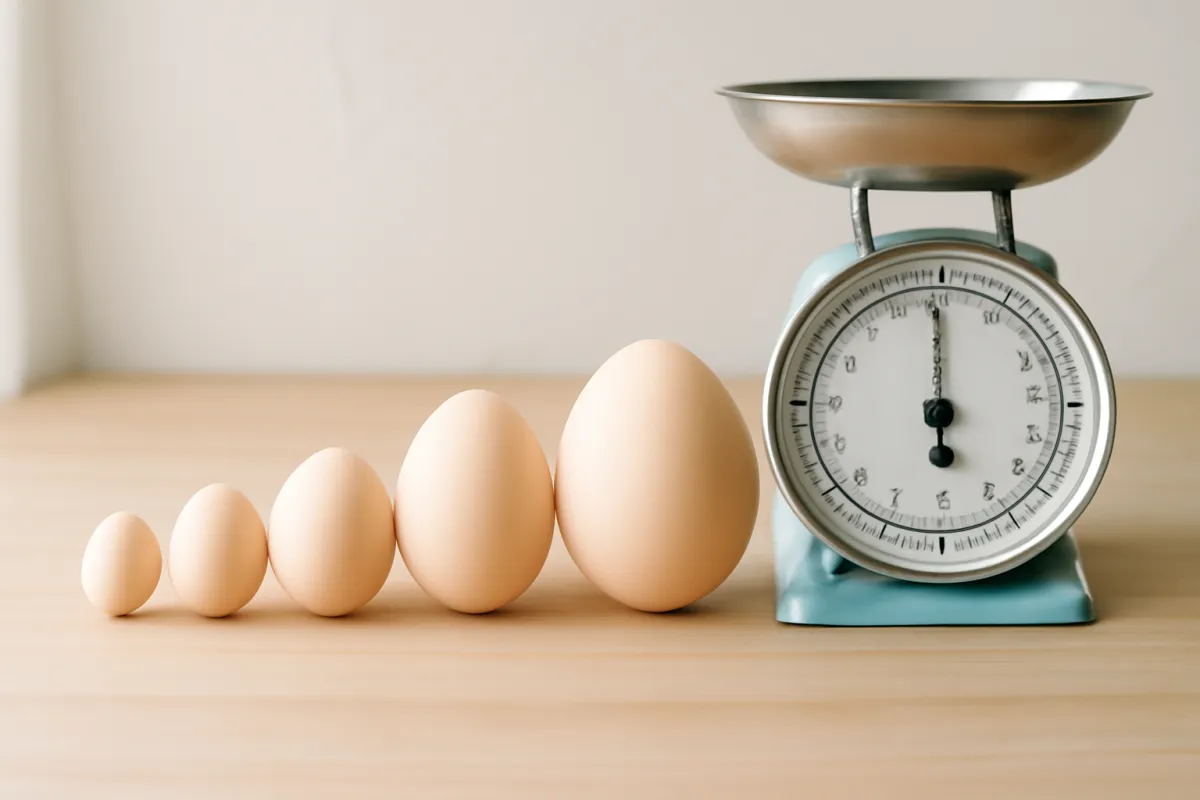
The spread is worth sitting with. A small egg near 54 calories and a jumbo near 90 differ by more than 35 calories, which adds up quickly when you eat several. That is why a single quoted figure can feel wrong: it was probably measured on a different size than the one you have. The practical habit is to glance at the grade on the carton, since the size you actually bought shifts the total. For everyday purposes the difference is small enough to round, but if you are tallying calories carefully across a three or four egg breakfast, the size matters. These are commonly cited USDA-based averages that describe the egg alone, before any cooking fat is added.
An egg size and calorie table
Here is the same information as a quick table, with the protein and fat that travel with the calories, scaled from USDA figures to each size’s reference weight. The weight column is what the figures describe, and it is the first thing to check, since the calories, protein, and fat all scale with it. The final rows add the two most common cooked forms for a large egg, so the effect of the pan sits right beside the raw baseline.
| Egg (large unless noted) | Approx. weight | Calories | Protein | Fat |
|---|---|---|---|---|
| Small, raw | ~38 g | ~54 | ~5 g | ~3.6 g |
| Medium, raw | ~44 g | ~63 | ~5.5 g | ~4.3 g |
| Large, raw or boiled | ~50 g | ~72 | ~6 g | ~5 g |
| Extra large, raw | ~56 g | ~80 | ~7 g | ~5.6 g |
| Jumbo, raw | ~63 g | ~90 | ~8 g | ~6.3 g |
| Large, fried in a little oil | ~50 g | ~90 | ~6 g | ~7 g |
| Large, scrambled with butter | ~60 g | ~100 | ~7 g | ~8 g |
Two things stand out. First, the raw and boiled rows are the same, because boiling adds no fat, so a boiled egg is simply the raw egg with nothing put in the pan. Second, the fried and scrambled rows climb even though the egg itself has not changed, since the extra calories come entirely from the cooking fat. This is the portion trap in a different form: the same egg can read as 72 or 100 calories depending only on how it meets the heat. Read the preparation beside every figure, and treat the table as an illustrative, USDA-based map rather than a precise ledger for the specific egg in front of you.
Calories in an egg per 100 grams
The steadiest way to talk about egg calories, and the one that sidesteps the size confusion entirely, is per 100 grams. USDA lists a whole raw egg at about 143 calories per 100 grams, and because that figure is tied to a fixed weight rather than a subjective grade, it is the number to reach for when you weigh the egg. A large egg is about 50 grams of edible content, so half of 143 lands near the familiar 72 calories, which is exactly where the reference figure comes from.
That per 100 gram value also lets you place an egg among other foods honestly. At 143 calories per 100 grams, a whole egg is denser than most fresh fruit or lean white fish and lighter than cheese, nuts, or fatty cuts of meat, which run several times higher because they are rich in fat. The density comes almost entirely from the yolk, which is why the two parts of the egg look so different on a per 100 gram basis: the white sits near 52 calories per 100 grams while the yolk runs above 320, a gap that explains everything about how egg calories behave. The 143 figure is a commonly cited USDA average across many eggs, so your particular egg scatters around it a little, but for weighing and comparing it is the most reliable single number in this review.
Whole egg vs egg white vs yolk
One of the most useful things to understand about egg calories is that they are not spread evenly through the egg. The yolk, though smaller by weight, holds most of the energy, because it carries all of the egg’s fat. In a large egg near 72 calories, the yolk is commonly cited around 55 calories and the white only around 17, which is why the choice to eat whole eggs, whites, or a mix changes the calorie count so much.
Where a large egg's calories sit: yolk vs white
Share of a large egg's roughly 72 calories. Illustrative USDA-based figures.
Segments show each part's share of a large egg's calories, summing to 100 percent. The yolk carries most of the energy because it holds the fat; the white is almost pure protein and water. Illustrative figures.
The practical upshot runs in two directions. If you want to cut the calories of an egg, eating the white alone removes roughly three quarters of them, which is exactly why egg-white omelets are a fixture of calorie-trimming menus. But the same move discards most of the egg’s vitamins, minerals, healthy fats, and a good share of its nutrients, which concentrate in the yolk. For most people simply eating whole eggs is the straightforward choice, and the yolk’s calories buy real nutrition, not empty energy. Anyone told by a clinician to manage dietary fat or cholesterol for a specific medical reason should follow that individual guidance, which is a separate matter from the general composition described here. These are illustrative USDA-based figures that vary slightly with egg size.
Calories in an egg white
The white of a large egg is commonly cited near 17 calories, which makes it one of the leanest protein sources in an ordinary kitchen. Almost all of that small figure is protein, about 3.6 grams, since the white is essentially protein dissolved in water with virtually no fat and no cholesterol. Per 100 grams the white sits near 52 calories, far below the whole egg, which is the whole reason people separate it out.
Egg whites earn their place on a calorie-conscious plate because they deliver high-quality protein for very little energy. Three or four whites can supply a solid slug of protein for well under 70 calories, which is hard to match with any whole food. The trade-off is that the white gives up the yolk’s vitamins, minerals, and fats, so an all-white habit is a calorie and fat decision rather than a nutrition-maximizing one. Many people split the difference, cooking one or two whole eggs with a couple of extra whites to keep the protein high while trimming the calories and fat that ride along with the yolks. That is a reasonable approach if calories are a concern, though it is a personal choice rather than a nutritional requirement. The 17-calorie figure is a commonly cited USDA-based reference that shifts a little with egg size.
Calories in an egg yolk
The yolk of a large egg is commonly cited near 55 calories, which surprises people who assume the smaller part of the egg must carry less energy. It holds most of the whole egg’s calories because it holds all of the egg’s fat, about 4.5 grams, along with the cholesterol and the bulk of the vitamins and minerals. Per 100 grams the yolk runs above 320 calories, several times the density of the white, entirely because of that fat.
It is worth defending the yolk a little, because its calories are often treated as something to avoid. Those 55 calories carry the fat-soluble vitamins A, D, E, and K, most of the egg’s B vitamins, choline, and a meaningful share of the protein, around 2.7 grams. The yolk is not empty energy; it is where much of the egg’s nutritional value lives. For most healthy people the yolk is a feature rather than a cost, and the case for skipping it comes down to trimming calories and fat rather than avoiding anything harmful. Anyone with a specific medical reason to limit dietary cholesterol or fat should of course follow their clinician’s guidance. These are commonly cited USDA-based figures for a large egg yolk, illustrative rather than exact.
Calories in a boiled egg
A hard or soft boiled egg is commonly cited near 72 calories for a large egg, the same as the raw egg it started from, because boiling adds no fat or oil. Cooking in water changes the texture and makes the egg easier to eat and to carry, but it does not add energy, which makes a boiled egg one of the leanest ways to eat a whole egg. This is why boiled eggs are a staple of packed lunches, salads, and simple high-protein snacks for anyone watching calories.
The figure only climbs if you dress the egg afterward, and this is where boiled eggs quietly gain calories. A boiled egg mashed into mayonnaise for egg salad, sliced onto buttered toast, or dropped into a dressing-heavy salad can easily pick up more calories from the additions than the egg contributes on its own. A tablespoon of mayonnaise alone carries roughly as many calories as the egg. So a plain boiled egg near 72 calories is a genuinely lean choice, but the way it is served can change that quickly. Enter a boiled egg count in the companion below with the cooking method set to boiled to see the base figure, and count any dressings separately. These are commonly cited USDA-based references, not exact readings of any particular egg.
Calories in a fried egg
A fried egg is commonly cited near 90 calories for a large egg, higher than the roughly 72 in a boiled one, and the entire difference comes from the fat in the pan. The egg itself does not gain calories from the heat; the oil or butter it cooks in does. How much it climbs depends heavily on how much fat you use and how much the egg absorbs, so the 90-calorie figure assumes a modest amount of oil in a decent pan rather than a generous pat of butter.
The practical lever here is the cooking fat, not the egg. A fried egg cooked in a well-seasoned or non-stick pan with just a spray of oil lands close to the boiled figure, while one fried in a tablespoon of butter can add 100 calories or more on top of the egg, since a tablespoon of butter is itself roughly 100 calories. That is a wide range for the same egg, and it is worth knowing which end of it your usual method sits near. For anyone tracking calories, trimming the cooking fat is a far bigger lever than choosing a different egg. The 90-calorie figure is a commonly cited USDA-based reference for a lightly fried large egg; adjust it up for a richer pan and down for a drier one.
Calories in a scrambled egg
Scrambled eggs are where the calorie count depends most on the recipe, because scrambling invites additions. Plain scrambled eggs, cooked with just a little fat to stop them sticking, carry roughly the same energy as the eggs plus whatever fat went into the pan, commonly cited near 90 to 100 calories per large egg. But scrambled eggs are often made with butter, a splash of milk or cream, and sometimes cheese, and each of those adds calories that have nothing to do with the eggs themselves.
This is the section where the honest figure has the widest range. Two large eggs scrambled dry in a non-stick pan land near 145 calories, close to their raw total. The same two eggs scrambled with a generous knob of butter, a splash of cream, and a handful of shredded cheese can easily reach 300 calories or more, doubling the figure through the add-ins. Neither is wrong; they are different dishes built on the same eggs. The lesson mirrors the fried-egg one: the eggs are a stable base near 72 calories each, and the cooking choices are what move the total. If you scramble with butter and cheese by habit, count those separately rather than assuming the egg figure covers them. These are commonly cited USDA-based references, and the additions are yours to tally.
How cooking method changes the calories
Pulling the cooking methods together makes the pattern clear: the egg’s own calories barely change with how you cook it, and nearly all of the variation between a boiled egg and a fried or scrambled one comes from added fat. Boiling and poaching add nothing, so those methods keep the egg near its 72-calorie baseline. Frying and scrambling add the calories of whatever fat you cook in, which can range from almost nothing to more than the egg itself.
| Preparation (large egg) | Added fat | Illustrative calories |
|---|---|---|
| Raw | none | ~72 |
| Hard or soft boiled | none | ~72 |
| Poached | none | ~72 |
| Fried, light oil | ~1 tsp | ~90 |
| Scrambled, a little butter | ~1 tsp | ~95 |
| Scrambled with butter and cheese | more | ~130+ |
| Fried in butter | ~1 tbsp | ~170 |
The table makes the single most useful point in this review: the cooking fat, not the egg, is the calorie lever. An egg is a stable base near 72 calories, and the preparation decides whether the finished dish reads as a lean 72 or a rich 170. For anyone managing total calories, this is good news, because it means you control most of the figure through the pan rather than the egg. Boiling and poaching are the leanest routes, a light non-stick fry sits in the middle, and butter or cheese pushes the number up. These are commonly cited USDA-based references, and the added-fat calories vary with exactly how much you use.
Where the calories in an egg come from
Pull a large egg’s roughly 72 calories apart by macronutrient and the picture explains why the yolk matters so much. About 5 grams of fat supply near 45 of those calories, since fat carries about 9 calories per gram. Around 6 grams of protein supply about 25 calories at 4 calories per gram. Carbohydrate is barely present, under half a gram, adding only a calorie or two. So an egg is roughly a fat-and-protein food in energy terms, with fat the larger share and essentially no carbohydrate.
That breakdown is worth holding onto because it makes the white-versus-yolk difference intuitive. The fat lives entirely in the yolk, so removing the yolk removes the largest slice of the calories and leaves the lean protein of the white behind. It also explains why eggs are described as protein-dense despite their fat: 6 grams of complete, high-quality protein for 72 calories is an efficient trade, even though fat contributes more of the raw energy. For a fuller look at how eggs stack up as a protein source, our review of how much protein is in an egg handles that angle directly, while this review keeps the focus on the calories. These are commonly cited USDA-based figures that vary a little with size and preparation.
Protein in an egg for context
Calories are only half the story, and with eggs the protein alongside them is a big part of why the calories are considered so well spent. A large egg carries about 6 grams of complete protein, meaning it supplies all nine essential amino acids in useful proportions within a single food. Egg protein is so well balanced that it has historically been used as a reference standard against which other proteins are compared, which is a large part of why eggs are regarded as a benchmark protein source.
For the calorie-minded, the useful way to frame this is protein per calorie. At 6 grams of protein for 72 calories, a whole egg delivers about 8 grams of protein per 100 calories, and an egg white, at 3.6 grams for 17 calories, delivers even more since it strips out the yolk’s fat. That density is why eggs anchor so many high-protein, calorie-aware breakfasts. The protein is also highly digestible, so the grams an egg lists are grams the body can readily use. For how eggs compare with other protein foods and how much protein you personally might aim for, see our review of how much protein is in an egg. These figures describe food composition and are not a recommendation about how much anyone should eat.
Fat and cholesterol in an egg
The fat and cholesterol in an egg deserve a careful, general answer, because they are the source of both the yolk’s calories and decades of debate. A large egg carries about 5 grams of total fat, most of it in the yolk, split across saturated, monounsaturated, and polyunsaturated types, with the unsaturated fats making up the larger share. That fat is what gives the yolk its calorie density and carries its fat-soluble vitamins, so it is doing nutritional work rather than simply adding energy.
The cholesterol question is the one people ask about most. A large egg’s yolk is high in dietary cholesterol, commonly cited near 186 milligrams, which is why eggs were viewed with suspicion for decades and older guidance urged strict limits. The current scientific consensus has shifted considerably: for most healthy people, the cholesterol in food has a smaller effect on blood cholesterol than once believed, and many dietary guidelines have relaxed or dropped a specific daily cholesterol cap. This is exactly the kind of area where individual circumstances matter, though. Some people are more sensitive to dietary cholesterol than others, and anyone with diabetes, existing heart disease, high cholesterol, or another relevant condition may have been given specific individual guidance about eggs. If so, that personal advice takes precedence over any general statement here, and questions about your own cholesterol or heart health belong with your doctor or a registered dietitian.
Eggs and weight loss
This is where the honest answer has to push back on the question a little, because no single food causes or prevents weight change on its own. An egg is neither a fat-burning superfood nor a food to fear, despite both claims circulating widely. What an egg offers someone managing weight is practical rather than magical: a modest, commonly cited 72 calories that buys 6 grams of complete, satisfying protein, in a naturally portioned package that is quick to cook and keeps well.

The features that make eggs useful for weight management are the protein and the fullness it brings, which several eating patterns lean on, and the fact that a boiled or poached egg keeps the calories low while the protein stays high. That combination can make eggs a filling, calorie-efficient anchor for a meal or snack. The catch is that the cooking method decides much of the calorie story, so an egg fried in butter or scrambled with cheese is a different proposition from a boiled one. Weight change tracks total calories and many other factors over weeks and months, not the presence or absence of one food, so the meaningful question is how eggs fit your overall day, which our calorie needs review helps you frame. Anyone with a specific weight goal, medical condition, or medication that affects appetite should work the plan out with a doctor or registered dietitian rather than adding or cutting eggs on their own.
Eggs in a high-protein diet
For anyone eating for a higher-protein target, eggs are one of the most convenient building blocks available, and their calorie figures make them easy to plan around. Each large egg contributes about 6 grams of protein for 72 calories, so a two or three egg breakfast delivers a real slug of protein early in the day, at the meal where protein most often goes missing. Because the protein is complete and highly digestible, those grams count fully toward the day.
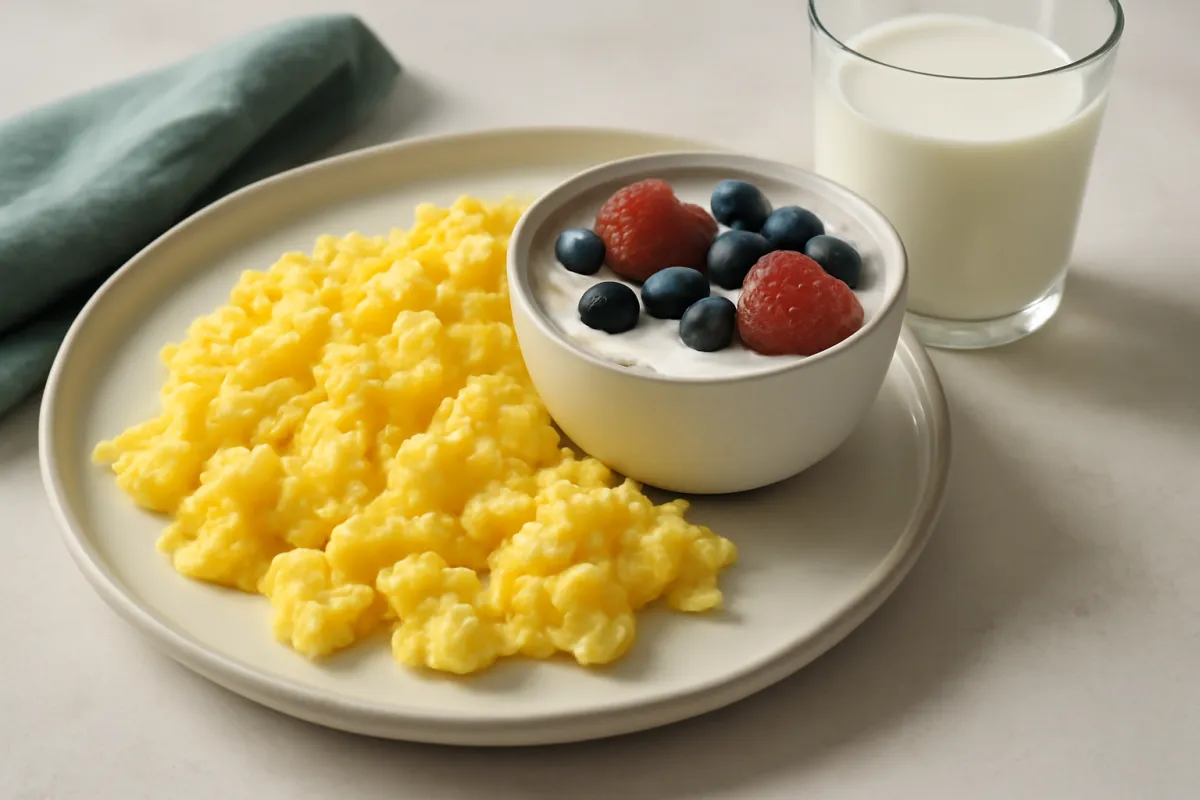
The calorie-aware version of a high-protein egg habit uses two levers. The first is mixing whole eggs with extra whites, since whites add protein for almost no calories or fat, which lets you push the protein up while keeping the total in check. The second is choosing leaner cooking methods, so a scramble made in a non-stick pan with a couple of whole eggs and a few whites lands high on protein and low on calories, while the same scramble drowned in butter and cheese does not. Eggs also pair naturally with other protein foods like Greek yogurt, cottage cheese, or milk to reach a target more comfortably than eggs alone. For how the pieces fit a whole day, see our review of how much protein is in an egg, and use the companion below to see the calories and protein for your own egg count and method. These are commonly cited USDA-based figures, not a prescribed portion.
How many eggs a day is reasonable
People often ask whether there is a limit on eggs, and the honest answer is that there is no universal number, only sensible context. For most healthy people, an egg or two a day fits easily within a varied diet, contributing modest calories and high-quality protein without crowding out other foods. Much of the older ceiling came from the cholesterol worry, and for the general population that concern has eased considerably in current evidence, as the section on fat and cholesterol above describes.
The caveats are real and worth stating. Because each egg carries calories and fat, someone counting either for a personal reason should fold eggs into that count rather than treating them as free, especially once the count climbs and the cooking fat adds up. More importantly, people with diabetes, heart disease, high cholesterol, or certain other conditions may have been advised to limit eggs or yolks specifically, which is exactly the kind of individual guidance a doctor or dietitian provides and which overrides any general figure. Variety also matters, since building too much of a diet around any single food narrows its range of nutrients. There is no single right number of eggs, and anyone with a specific health situation should let their clinician, not a general article, set the guidance. The figures here describe the egg, not a recommended quantity.
Eggs compared with other breakfast foods
Placing an egg among other breakfast options clears up the sense that it is either unusually caloric or unusually lean, because for the protein it delivers it sits in a favorable spot. A large egg near 72 calories carries about 6 grams of complete protein, a better protein-per-calorie trade than most breakfast staples like toast, cereal, or pastries, which are largely carbohydrate. Two eggs near 145 calories anchor a breakfast with real protein, where the same calories from a muffin or a bowl of sweetened cereal bring little.
| Breakfast item | Common serving | Illustrative calories | Protein |
|---|---|---|---|
| Egg | 1 large, boiled | ~72 | ~6 g |
| Two eggs | 2 large, boiled | ~145 | ~12 g |
| Egg white | 1 large | ~17 | ~3.6 g |
| Plain oatmeal | 1 cup cooked | ~150 | ~5 g |
| Greek yogurt | 3/4 cup plain | ~130 | ~17 g |
| White toast | 1 slice | ~75 | ~3 g |
| Bacon | 2 strips | ~90 | ~6 g |
The comparison shows why eggs are such a common breakfast anchor: they bring complete protein for modest calories and pair naturally with the higher-protein options like Greek yogurt or with carbohydrate foods like oatmeal and toast to build a fuller plate. Where the egg’s calorie count climbs is not the egg but the company it keeps, since bacon, buttered toast, and fried potatoes add far more than the eggs. For a wider side-by-side look across many foods, our reference on calories in common foods is the broader companion to this egg-specific one, and for a fruit comparison our look at the calories in a banana sits alongside it. All of these are commonly cited averages that vary with brand, portion, and preparation.
A worked example: an egg breakfast by the numbers
To pull the figures together, here is an illustrative breakfast built around eggs, chosen only to show the arithmetic rather than to recommend a figure for anyone. Start with 2 large eggs, boiled, for roughly 145 calories and about 12 grams of protein, with nothing added in the pan. That alone is a lean, protein-forward start, more protein than most cereal or toast breakfasts for similar calories.
Now watch how the cooking and add-ons move the total. Fry those same two eggs in a tablespoon of butter and the figure climbs past 250 calories, since the butter roughly doubles the energy while the protein stays near 12 grams. Scramble them with cheese and the number climbs further. Alternatively, keep them boiled and pair them with a three-quarter-cup serving of plain Greek yogurt for about 130 calories and 17 more grams of protein, and you reach nearly 30 grams of protein for under 300 calories from two simple, inexpensive foods. The lesson is the one that runs through this review: the eggs are a stable base near 72 calories each, and the cooking fat and companions decide the final number. Build your own version, with your egg count, size, and method, in the companion below. The figures here are illustrative, chosen to show the math, not a plan this review advises anyone to follow.
Eggs, how many calories across a week of breakfasts
Eggs, how many calories they contribute, and whether that adds up to much are easier to judge over a week than a single plate, because a breakfast habit repeats. Take the most common version, two large eggs boiled or poached at about 145 calories, and seven mornings come to roughly 1,015 calories, a little over a thousand, with about 84 grams of protein along the way. That is a modest share of most weekly intakes for a meal that carries real protein every day of it.
Now change one variable at a time and the week tells the story the single plate hides. Fry those same two eggs in a light film of oil, near 180 calories a morning, and the week reaches about 1,260, roughly 245 calories more from the pan alone. Fry them in a generous tablespoon of butter, near 340 calories a morning, and the week runs closer to 2,380, more than double the boiled version, while the protein sits unchanged near 84 grams. Step up to three boiled eggs instead of two and the week lands near 1,505 calories with about 126 grams of protein, which is a different trade entirely: more of both, in proportion.
The point of running the arithmetic weekly is not to prescribe a number of eggs, which is a personal question, but to show where the leverage sits. The eggs themselves are the stable part of the sum, and the cooking fat is the variable that swings it by a thousand calories or more across seven mornings without changing the protein at all. Anyone tracking calories closely will get more out of adjusting the pan than out of dropping an egg. Try your own count, size, and method in the companion below and multiply by however many mornings you eat that way. These are commonly cited USDA-based reference figures, illustrative rather than exact, and nothing here recommends how many eggs anyone should eat in a week.
Common mistakes counting egg calories
A handful of recurring errors explain most of the confusion about egg calories, and each is easy to avoid once named.
- Ignoring the size. A single quoted figure like 72 calories describes a large egg, so applying it to a small or a jumbo egg can be off by 15 to 20 calories per egg, which compounds across several.
- Forgetting the cooking fat. The biggest swing in egg calories is the oil or butter in the pan, not the egg, so a fried or scrambled egg carries the egg’s calories plus the fat’s, often overlooked.
- Treating whites and whole eggs as similar. The white holds only about a quarter of a whole egg’s calories, so an egg-white dish is far leaner than a whole-egg one, and the two should not be counted the same.
- Ignoring the dressings. A boiled egg is lean, but the mayonnaise in egg salad or the butter on the toast beneath it can carry more calories than the egg itself.
- Treating the figures as exact. Every number here is a commonly cited USDA-based average with a real margin, not a precise reading of your particular egg.
Each of these is a reading error more than an eating one, and clearing them up makes the tables and charts above far more useful. The numbers are only as reliable as your grasp of which egg, and which preparation, the figure describes.
How to count egg calories accurately
When a rough estimate is not enough, counting an egg’s calories precisely is simple. The most accurate approach is to start from the size and preparation rather than a generic figure. For a raw or boiled egg, match your egg to its grade, small near 54, medium near 63, large near 72, extra large near 80, and jumbo near 90, or weigh the shelled egg and multiply the grams by about 1.43 for calories, since a whole egg runs near 143 calories per 100 grams.
Then account for the pan separately, because that is where most of the error creeps in. A full teaspoon of oil carries roughly 40 calories and a tablespoon of butter roughly 100, but a fried or scrambled egg does not absorb everything that touches the pan; a light film that clings to the egg is closer to the 18 to 25 calories reflected in the fried and scrambled figures earlier in this review, while a generously oiled or buttered pan pushes the total closer to the full amount. Count milk, cream, or cheese in a scramble as their own items. For dressings on a boiled egg, add the mayonnaise or dressing on top of the egg figure rather than folding it in. This two-part habit, the egg by size plus the cooking fat by amount, gets you a reliable total without a database for most meals. You can run an egg through the companion below to see calories and protein by size and cooking method, and reach for a food label or a reputable database whenever a recipe or a goal genuinely depends on the figure. Every value here is a commonly cited USDA-based reference, not an exact measurement of your egg.
The bottom line
The calories in an egg are not a mystery once you know the size and how it is cooked. Using USDA figures, a small egg sits near 54 calories, a large near 72, and a jumbo near 90, almost all of that energy held in the yolk, which carries roughly 55 calories to the white’s 17. Boiling and poaching add nothing, so a boiled egg stays near its raw figure, while frying and scrambling add the calories of whatever fat meets the pan, which can range from a little to more than the egg itself. Alongside the calories, each egg brings about 6 grams of complete, high-quality protein, which makes it protein-dense for its modest energy and a useful anchor for weight management and higher-protein eating alike. On cholesterol, the general consensus has relaxed for most healthy people, but individual guidance from a clinician always comes first. Every figure here is a commonly cited, USDA-based reference for food composition, not an exact measurement or a personal target, so pair it with our review of how much protein is in an egg and our calorie needs review, account for the cooking fat, and confirm anything tied to your weight, cholesterol, heart health, or any medical condition with a qualified professional such as a doctor or registered dietitian.
This evidence review is published for education and describes the commonly cited, USDA-based nutrient content of eggs, not medical, dietetic, or dietary advice, and reading it creates no clinician-patient relationship. Every calorie, gram, and milligram figure above is an illustrative reference averaged from USDA data rather than an exact measurement of any particular egg, and real eggs vary by size, grading, and how they are cooked, with added fats from frying or scrambling changing the total. This article does not tell anyone how many eggs to eat, endorse any eating pattern, or make claims about weight, cholesterol, or any health condition; dietary cholesterol in particular can matter more for some people, including those with diabetes or heart conditions. For a calorie, protein, cholesterol, or egg intake plan suited to your body, goals, medications, pregnancy, or any medical condition, consult a qualified health professional such as a doctor or registered dietitian.
Frequently asked questions
How many calories are in an egg?
It depends mostly on size, which is the main thing that moves the number. USDA figures put a large egg, about 50 grams, near 72 calories, with a small egg closer to 54 and a jumbo nearer 90. Almost all of that energy sits in the yolk, since the white is nearly fat free, and the whole egg also carries about 6 grams of protein. Treat 72 as a commonly cited USDA-based reference for a large egg rather than an exact reading of the egg in your hand, and remember that frying or scrambling adds calories through the cooking fat.
How many calories are in a large egg?
A large egg, which USDA describes as about 50 grams, is commonly cited near 72 calories. Roughly 55 of those calories sit in the yolk and only about 17 in the white, because the yolk holds the egg's fat while the white is almost all protein and water. Alongside the calories, a large egg carries about 6 grams of protein and 5 grams of fat. As with every figure here, 72 is an illustrative, widely referenced average rather than a precise measurement, since real eggs vary by size and grading.
How many calories are in a boiled egg?
A hard or soft boiled egg carries about the same calories as the raw egg it started from, near 72 for a large one, because boiling adds no fat or oil. That makes a boiled egg one of the leanest ways to eat an egg, with nothing added in the pan. The number climbs only if you dress it with mayonnaise, butter, or salad dressing afterward, which can easily add more calories than the egg itself. This is a commonly cited USDA-based reference for a plain large egg, not an exact measurement of any particular one.
How many calories are in a fried egg?
A fried egg is commonly cited near 90 calories for a large egg, higher than the roughly 72 in a boiled one because frying adds fat from the oil or butter in the pan. The exact figure depends heavily on how much fat you use and how much the egg absorbs, so a lightly fried egg in a non-stick pan lands closer to the boiled figure while one cooked in a generous pat of butter runs higher. The egg itself does not gain calories from the heat; the added fat does. These are illustrative USDA-based references that vary with the cooking fat.
How many calories are in an egg white?
The white of a large egg is commonly cited near 17 calories, which is why egg whites are a popular choice for anyone trimming calories or fat. The white is almost entirely protein and water, carrying about 3.6 grams of protein with virtually no fat and no cholesterol. Eating whites alone cuts the calories of an egg by roughly three quarters, but it also removes most of the egg's vitamins, minerals, and healthy fats, which concentrate in the yolk. This is a commonly cited USDA-based figure for a large egg white, not an exact measurement.
How many calories are in an egg yolk?
The yolk of a large egg is commonly cited near 55 calories, meaning it holds most of the whole egg's energy despite being the smaller part by weight. That is because the yolk carries all of the egg's fat, about 4.5 grams, along with the cholesterol and most of the vitamins and minerals. The yolk also holds a bit less than half of the egg's protein, around 2.7 grams. These are illustrative USDA-based references for a large egg yolk that shift a little with egg size.
Do eggs have a lot of calories?
Not especially, for a food that delivers complete, high-quality protein. A large egg near 72 calories is a modest, protein-dense package, lighter than most cheeses or fatty meats per gram of protein. What raises the number is usually the cooking, since frying in butter or scrambling with cream and cheese can add more calories than the egg contributes on its own. Whether eggs fit a given day depends on the whole diet and personal goals, which is a question for you and a qualified professional rather than an egg's calorie count alone.
How many eggs a day is reasonable?
There is no single universal number, only sensible context. For most healthy people, an egg or two a day fits comfortably within a varied diet, and much of the older worry about eggs and cholesterol has been eased for the general population by current evidence. That said, people with diabetes, heart disease, high cholesterol, or another relevant condition may have been given specific individual guidance about eggs by their clinician, and that personal advice takes precedence over any general statement. Anyone unsure how eggs fit their own health picture should ask a doctor or registered dietitian rather than a general figure.
Eggs are how many calories each?
Each large egg is commonly cited near 72 calories, which is the reference figure most food databases use, and that is before anything goes into the pan. Smaller eggs land lower, near 54 calories for a small one, and larger eggs higher, near 90 for a jumbo, because the energy tracks the weight of the egg. Those 72 calories arrive with about 6 grams of complete protein and 5 grams of fat, nearly all of the fat sitting in the yolk. Treat the per-egg figure as an illustrative USDA-based average and add the cooking fat separately, since oil or butter is what moves the total most.
How many calories in 2 eggs or 3 eggs?
Two large eggs come to roughly 145 calories and three to about 215, following the commonly cited figure of near 72 calories per large egg, with no fat added in the pan. Cooked in a little oil the same two eggs land nearer 180 and three nearer 270, and fried in a generous amount of butter they climb considerably higher, because the added fat is the variable rather than the eggs. Egg whites alone move the totals sharply down, to about 34 for two and 51 for three. Alongside the calories, two eggs carry roughly 12 grams of protein and three about 18, as our review of the protein in an egg sets out in more detail. These are illustrative USDA-based references rather than exact measurements.

Hamza Hai is the editor of NourishMark. She holds an MBA and reviews the site's articles against our editorial standards, checking that every figure is labelled for what it is, that nothing is presented as verified fact without a source the reader can check, and that the writing stays useful to a non-specialist.

Dr. Shayaan Khan is the medical reviewer for NourishMark. He holds an MBBS from MGM Medical College, Navi Mumbai, and is the author of published research including a narrative review of postpartum anxiety and depression in Mental Health Science. He has taught physiology at university level. He reviews the site's health content for medical accuracy: that physiology and mechanisms are described correctly, that no claim is stated more strongly than the evidence behind it, and that anything specific to an individual reader is sent to that reader's own clinician.
Not medical advice. Dr. Khan reviews NourishMark's health content for medical accuracy. He is not a registered dietitian, he does not hold a United States practising licence, and he is not your doctor. His review does not make anything here medical advice. Always talk to a qualified health professional about your own situation, and never delay or stop care because of something you read here.