
What's in this review
- What the Mediterranean diet actually is
- The core principles of the Mediterranean diet
- The Mediterranean diet food pyramid, in practice
- Vegetables, fruit, and legumes: the daily foundation
- Whole grains and why refined carbs are not the point
- Olive oil as the primary fat
- Fish and seafood: how often is often enough
- Poultry, eggs, and dairy in moderation
- Red meat and sweets: occasional, not banned
- Herbs, spices, and flavor without salt
- Wine: an optional, debated piece of the pattern
- A practical Mediterranean diet food list by group
- What a day on the Mediterranean diet might look like
- What the research says, honestly
- Weight and the Mediterranean diet
- Heart health and the Mediterranean pattern
- Getting started: a realistic first-week approach
- Eating Mediterranean on a budget
- Eating out and travel
- Common mistakes when starting
- Who should check with a professional first
- How the Mediterranean diet compares to other popular approaches
- Stocking a Mediterranean-style pantry
- A note on portion awareness within an inclusive pattern
- Building your own Mediterranean week
- A quick checklist for getting started
- The bottom line
Short answer: The Mediterranean diet is a long-term eating pattern built around vegetables, fruit, whole grains, legumes, nuts, and olive oil as the main fat, with fish and seafood eaten regularly, poultry, eggs, and dairy in moderation, and red meat and sweets kept occasional rather than daily. Nothing is strictly forbidden; the pattern works mainly by shifting proportion and frequency, more plants and olive oil most days, less processed food and red meat most days, which is a large part of why nutrition research and major health organizations commonly point to it as a sustainable, evidence-informed way of eating.
The Mediterranean diet gets mentioned so often, in nutrition coverage, in doctor’s office pamphlets, in diet comparison lists, that the actual substance of it can get lost. It is easy to come away thinking it means “eat more olive oil and maybe some fish” without a clear sense of what the pattern actually asks of a normal week of meals, or why nutrition researchers keep returning to it as a reference point.
This review lays out the pattern itself: the core principles, a practical food list organized by group, how often different foods commonly show up, a worked sample day, and what the commonly cited research does and does not show. For the protein side of building a plate like this, see our balanced meal guide, and for the fat side specifically, our daily fat guide. Build your own illustrative week in the companion below.
Key takeaways
- The Mediterranean diet is a long-term pattern, not a short-term plan: vegetables, fruit, whole grains, legumes, nuts, and olive oil most days, fish regularly, and red meat and sweets occasionally.
- Nothing is strictly banned; the pattern works through shifted proportion and frequency rather than exclusion of entire food groups.
- Olive oil is commonly described as the primary added fat in the pattern, generally used in place of butter rather than alongside it.
- The pattern is one of the more extensively studied eating patterns in cardiovascular nutrition research, though individual results and appropriateness still depend on a person's own health picture.
- These figures and frequencies are illustrative references for reasoning about a pattern, not a personal prescription; anyone with a health condition should confirm changes with a doctor or registered dietitian.
What the Mediterranean diet actually is
The Mediterranean diet is not a single, codified menu; it is a pattern of eating inspired by the traditional diets of countries bordering the Mediterranean Sea, including Greece, Italy, and Spain, as commonly described in nutrition research dating back several decades. Researchers studying these regions noticed a recurring structure across otherwise different local cuisines: a heavy emphasis on vegetables, fruit, whole grains, and legumes, olive oil as the primary fat rather than butter or other solid fats, regular fish and seafood, and comparatively little red meat or sweets.
That structure, rather than any single named ingredient, is what research and nutrition guidance mean by “the Mediterranean diet.” Because it was built by observing existing eating habits rather than designed from scratch as a prescriptive plan, it tends to allow for more regional and personal variation than many other named diets, which is part of why it travels reasonably well outside the Mediterranean region itself.
The core principles of the Mediterranean diet
A handful of principles recur across nearly every description of the pattern. Plants form the base of most meals: vegetables, fruit, whole grains, and legumes make up the largest share of what is eaten across a typical week. Olive oil replaces butter and other solid fats as the primary added fat. Fish and seafood appear with real regularity, commonly cited as at least a couple of times per week. Poultry, eggs, and dairy, often yogurt and cheese, show up in moderate amounts. Red meat and sweets are treated as occasional foods rather than daily staples. Herbs and spices do much of the flavor work, which commonly keeps added salt lower than in many conventional diets. Meals are often social and unhurried, eaten with others where possible, a cultural detail that shows up in some discussions of the pattern alongside the food itself.
None of these principles function as a hard rule with a specific gram threshold; they describe an emphasis and a general shape, which is also why the pattern adapts reasonably well to different budgets, cuisines, and personal preferences without losing its core structure.

The Mediterranean diet food pyramid, in practice
Mediterranean diet guidance is often presented as a pyramid or a tiered chart, with the foods eaten most often at the base and the foods eaten least often at the top. Vegetables, fruit, whole grains, legumes, nuts, and olive oil sit at the base, commonly described as foods to include at most meals. Fish and seafood sit in the next tier, suggested at least a couple of times a week in many descriptions. Poultry, eggs, and dairy sit above that, suggested in moderate amounts, commonly a few times a week for poultry and eggs and daily to a few times weekly for yogurt or cheese in modest portions. Red meat and sweets sit at the top, suggested only occasionally, sometimes described as a few times a month rather than a few times a week.
The chart below shows one illustrative way to read that pyramid as a frequency scale, using a seven day week as the reference point.
Illustrative weekly frequency by food group
Bars show how many days out of seven a food group commonly appears in Mediterranean-style eating descriptions. An illustrative reference, not a personal prescription.
Bars scale to a 7 day week. These are illustrative, commonly cited frequencies for reasoning about the pattern's shape, not a fixed schedule.
Vegetables, fruit, and legumes: the daily foundation
Vegetables and fruit are the single largest category in most descriptions of the pattern, commonly discussed in terms of filling a substantial share of the plate at most meals rather than a specific count of servings. Tomatoes, leafy greens, zucchini, eggplant, peppers, onions, and cucumber are frequently cited Mediterranean-region staples, alongside fruit like citrus, grapes, figs, and melon used for dessert and snacking in place of refined sweets.
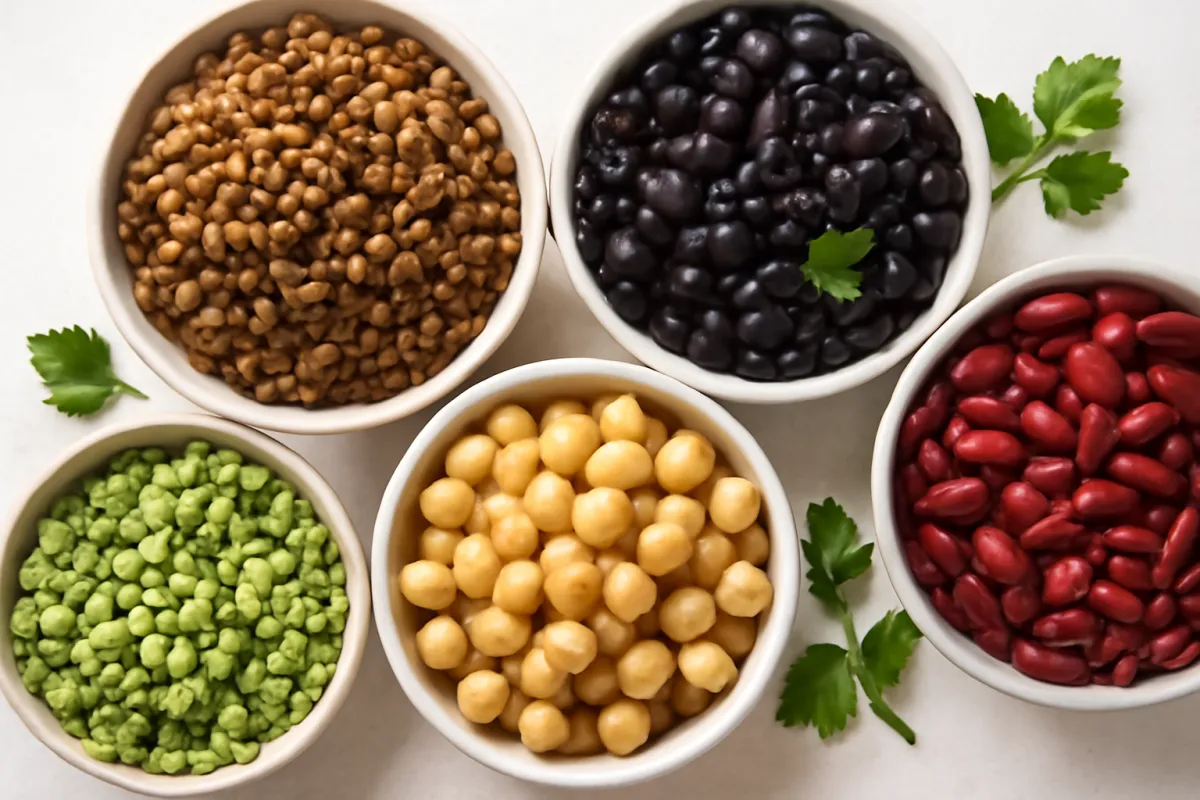
Legumes, lentils, chickpeas, white beans, and fava beans, sit alongside vegetables as a near-daily to several-times-weekly staple, valued in the pattern for contributing protein and fiber from a plant source rather than from meat. A legume-based soup or stew is a traditional centerpiece in many Mediterranean-region meals, not a side dish, which is a useful mental model for how central this food group is to the pattern.
Whole grains and why refined carbs are not the point
Whole grains, including whole wheat bread and pasta, bulgur, farro, brown rice, and barley, are another near-daily component, and this is one of the clearer distinctions between the Mediterranean pattern and lower-carbohydrate diets like keto. Carbohydrate is not minimized in Mediterranean-style eating; it is simply sourced mostly from whole, minimally processed grains rather than refined white flour and added sugar.
The distinction between whole and refined grains matters more in this pattern than the total carbohydrate count, since whole grains retain more fiber, which is commonly linked with digestive health and fullness, as our fiber guide covers in more depth. Refined grains are not strictly excluded, but they are generally described as the less emphasized option rather than the default.
Olive oil as the primary fat
Olive oil is probably the most recognizable single ingredient associated with the Mediterranean diet, and it functions as the primary added fat throughout the pattern, used for cooking, dressing vegetables, and finishing dishes, largely in place of butter and other solid fats. It is a source of monounsaturated fat, a fat type commonly discussed favorably in cardiovascular nutrition research relative to saturated fat, though olive oil itself is still calorie-dense and is used thoughtfully rather than without any portion awareness.
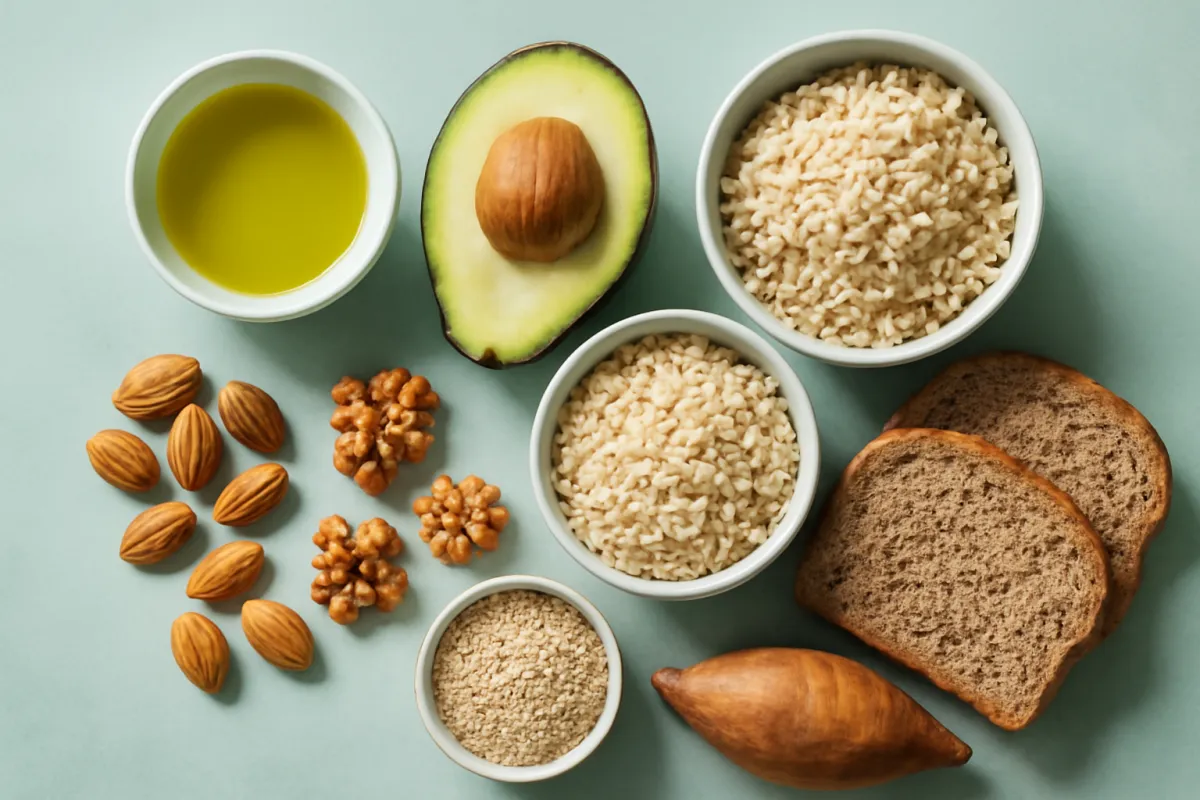
There is no single universally cited daily amount for olive oil in the pattern, and any specific number presented as a fixed target would be more precise than the evidence supports for an individual. What is consistently described is the substitution itself, olive oil used where butter or another solid fat might otherwise go, rather than olive oil added on top of an already high-fat diet. Our daily fat guide covers overall fat targets by calorie level in more detail.
Fish and seafood: how often is often enough
Fish and seafood are the primary animal protein emphasized in Mediterranean-style eating, commonly cited at a couple of times per week or more, which sets the pattern apart from diets where red meat or poultry is the default protein at most meals. Fatty fish in particular, like sardines, mackerel, and salmon, are frequently highlighted for their omega-3 fatty acid content, covered in more depth in our omega-3 foods guide.
White fish, shellfish, and canned options like sardines and tuna all fit the pattern and tend to be more budget-friendly and accessible than fresh fillets, which matters for making the fish-forward principle realistic on an ordinary grocery budget rather than only on special occasions.
Poultry, eggs, and dairy in moderation
Poultry and eggs occupy a middle tier in most descriptions of the pattern, eaten regularly but not treated as the default protein at every meal the way they might be in some other eating patterns. A few servings of poultry per week and eggs used a few times weekly, whether at breakfast or worked into other meals, both fit comfortably within commonly cited Mediterranean-style frequencies.
Dairy appears mainly as yogurt and cheese, generally in moderate portions, with yogurt frequently cited at breakfast or as a snack and cheese used more as a flavoring component, a sprinkle of feta or parmesan, than as a primary dish. Milk itself is less central to the traditional pattern than yogurt and cheese, though it is not excluded.
Red meat and sweets: occasional, not banned
Red meat and sweets are the two categories most consistently described as occasional in Mediterranean-style eating research, commonly cited in the range of a few times a month rather than a few times a week, though exact frequency varies across descriptions and individual circumstances. This does not mean either is forbidden; it means they sit at the top of the pyramid rather than the base, reserved more for special meals than for a daily default.
The practical value of this framing is that it avoids the all-or-nothing trap some diets create. A red-meat dinner or a dessert does not represent failure on the Mediterranean pattern; it simply reflects an occasional food being treated as occasional, which is a meaningfully different mental model from a diet with hard daily limits or forbidden foods.
Herbs, spices, and flavor without salt
A consistent, if sometimes overlooked, feature of Mediterranean-region cooking is a heavy reliance on herbs, garlic, lemon, and spices for flavor rather than salt alone. Oregano, basil, rosemary, thyme, and bay leaf appear constantly across the region’s traditional dishes, alongside garlic and citrus for brightness.
This matters beyond flavor: a pattern that leans on herbs and acid for taste tends to need less added salt to taste satisfying, which is one reason the Mediterranean pattern is sometimes discussed favorably alongside sodium-conscious eating, covered directly in our daily sodium guide. None of this requires special or hard-to-find ingredients; dried herbs from any grocery store work for most of this.
Wine: an optional, debated piece of the pattern
Wine, typically a modest amount with meals, shows up in many traditional descriptions of the Mediterranean pattern and in some research examining it, but it is worth being precise about its role: it is a cultural detail observed in some Mediterranean-region populations, not a required component of the eating pattern itself, and the research on alcohol and health is genuinely debated and continues to evolve.
People who do not drink alcohol, are pregnant or breastfeeding, have a history of alcohol-related problems, or take medications that interact with alcohol should simply leave this piece out entirely; nothing about the core pattern, vegetables, whole grains, legumes, olive oil, and fish, depends on it. Anyone with questions about alcohol and their own health should raise them with a doctor rather than relying on general dietary pattern descriptions.
A practical Mediterranean diet food list by group
Pulling the principles above into a single reference list makes grocery planning considerably easier. This is a structural list of food groups and commonly cited examples, not a specific menu or a claim about any individual food’s exact nutrient content.
- Vegetables: tomatoes, leafy greens, zucchini, eggplant, peppers, onions, cucumber, artichokes, and similar produce.
- Fruit: citrus, grapes, figs, melon, apples, pears, and berries, commonly used in place of refined desserts.
- Whole grains: whole wheat bread and pasta, bulgur, farro, brown rice, barley, and oats.
- Legumes: lentils, chickpeas, white beans, and fava beans.
- Nuts and seeds: almonds, walnuts, pistachios, and sesame, generally eaten in small, portioned amounts.
- Olive oil: the primary added fat, used for cooking, dressing, and finishing dishes.
- Fish and seafood: sardines, mackerel, salmon, white fish, and shellfish, aimed at a couple of times a week or more.
- Poultry and eggs: chicken, turkey, and eggs, a few times weekly.
- Dairy: yogurt and cheese, generally in moderate portions.
- Herbs and spices: oregano, basil, rosemary, thyme, garlic, and lemon, used liberally for flavor.
- Occasional foods: red meat and sweets, reserved for a few times a month in many descriptions rather than daily.

What a day on the Mediterranean diet might look like
Rather than a prescribed menu, here is one illustrative way the food groups above might distribute across a day’s meals, shown as a share of an illustrative plate composition rather than exact calories or grams.
An illustrative Mediterranean-style plate, by food group
Approximate share of a typical plate across a day. Illustrative structure, not a fixed recipe or nutrition claim.
Segments are an illustrative structure for reasoning about proportions across a day, not a measured nutrition breakdown or a prescribed recipe.
A structurally similar day might start with plain yogurt, fruit, and a small handful of nuts or whole grain toast; continue with a lunch built around a vegetable-heavy salad with legumes or a portion of fish and a whole grain side; and close with a dinner following the same plate structure, vegetables filling the largest share, a modest whole grain or legume portion, and a palm-sized portion of fish, poultry, or a plant protein, dressed with olive oil, herbs, and lemon rather than a heavier sauce. Readers looking for meal-specific ideas can see our companion breakfast and dinner pieces linked throughout this site’s Mediterranean coverage.
What the research says, honestly
The Mediterranean pattern is one of the more extensively studied eating patterns in nutrition research, including observational studies following large populations over many years and randomized trials, most notably the Spanish PREDIMED trial, which examined Mediterranean-style eating supplemented with olive oil or nuts in relation to cardiovascular outcomes. Research in this area is commonly summarized as associating the pattern with favorable cardiovascular markers and, in some studies, with a lower rate of major cardiovascular events compared with a lower-fat comparison diet, though exact figures vary by study, population, and design, and this article does not present a specific invented number as a fact.
It is worth being equally honest about the limits of this evidence. Observational studies, which make up a large share of Mediterranean diet research, can show association without proving that the diet alone caused the outcome, since people who eat this way often differ from comparison groups in other health-relevant habits too. Randomized trials like PREDIMED address some of that limitation but still apply to the specific populations studied, not automatically to every individual reading this review. The honest summary is that the Mediterranean pattern has unusually strong, consistent support among named diets, not that any specific numeric outcome is guaranteed for any one person.
Weight and the Mediterranean diet
The Mediterranean pattern is not primarily designed as a weight loss diet, and it does not include a calorie restriction by default; it is a pattern of what to eat, not how much. That said, several studies comparing it with other patterns report comparable or sometimes favorable weight outcomes, commonly attributed to the pattern’s emphasis on vegetables, legumes, and whole grains, foods that tend to be filling for relatively few calories, alongside less reliance on refined, highly processed foods.
Anyone using the Mediterranean pattern specifically for weight loss still needs to pay attention to total calorie intake, since olive oil, nuts, and cheese are nutrient-dense parts of the pattern that are also calorie-dense; eating them without any portion awareness can offset a deficit even while sourcing fat from these generally favored foods. Our calorie deficit review covers how a deficit is set directly.
Heart health and the Mediterranean pattern
Cardiovascular health is the area most commonly associated with Mediterranean diet research, and major health organizations frequently cite it as a reasonable pattern to discuss for heart health, generally attributed to its emphasis on unsaturated fats from olive oil, fish, and nuts in place of saturated fat and highly processed food, alongside its fiber-rich vegetable, fruit, and legume content.
This review is not a substitute for a cardiologist’s or primary care provider’s assessment of any individual’s cardiovascular risk, which depends on cholesterol levels, blood pressure, family history, smoking status, and other factors this article cannot see. Anyone with existing heart disease, high blood pressure, high cholesterol, or a family history of cardiovascular disease should discuss dietary changes, including a shift toward this pattern, with their doctor rather than treating this review as personalized medical guidance.
Getting started: a realistic first-week approach
Overhauling every meal in a single week tends to be harder to sustain than a gradual shift, and the Mediterranean pattern’s own research base leans on long-term adherence rather than short bursts, which argues for a gradual start. A commonly suggested approach for a first week: swap butter for olive oil in one or two regular dishes, add a vegetable or side salad to a meal that currently lacks one, plan one or two fish-based meals, and build one meal around legumes instead of meat.
Keeping fruit, nuts, and plain yogurt visible and accessible for snacking, rather than only in the pantry, is a small logistical change that tends to make the daily-plant-foods principle easier to follow without extra planning effort each day.
Eating Mediterranean on a budget
A common misconception is that Mediterranean-style eating requires expensive ingredients, fresh fish flown in or imported olive oil. In practice, the pattern’s base, dried or canned legumes, seasonal vegetables, whole grains like rice and oats, and canned fish like sardines or tuna, is among the more affordable way to eat, since legumes and whole grains are consistently some of the cheapest sources of protein and carbohydrate at the grocery store.
Buying a reasonably priced olive oil for everyday cooking rather than a premium bottle reserved for finishing dishes, choosing frozen vegetables when fresh is costly or out of season, and leaning on canned beans and canned fish for quick, inexpensive meals all keep the pattern accessible on an ordinary budget. Our budget grocery list guide and eating healthy on a budget review go further into stretching a grocery budget around a pattern like this.
Eating out and travel
Mediterranean, Greek, Italian, and Middle Eastern restaurants make this pattern relatively easy to follow while eating out, since grilled fish, vegetable-forward mezze, salads, and legume-based dishes are commonly on the menu. Outside of those specific cuisines, the same general approach still applies: choose a vegetable-heavy side or salad over fries, pick a grilled or baked protein over a fried one, and ask for olive oil and lemon or a light vinaigrette rather than a cream-based sauce where possible.
Buffets and hotel breakfasts are more workable than they first appear: plain yogurt, fruit, eggs, and whole grain bread are almost always available in some form, and building a plate around those options, rather than pastries and processed meats, keeps a travel day reasonably close to the pattern without requiring a special restaurant.
Common mistakes when starting
A handful of patterns undercut this approach more often than any single food choice does.
- Treating olive oil as unlimited because it is a “good fat.” Olive oil is still calorie-dense; it replaces other fats in the pattern, it does not stack on top of them without any portion awareness.
- Skipping the legumes and whole grains and focusing only on olive oil and fish. The plant-forward base is the largest part of the pattern by volume, not a side note to the fat and protein choices.
- Treating red meat and sweets as fully forbidden rather than occasional. This can create an all-or-nothing mindset the pattern itself does not require.
- Assuming any Mediterranean-labeled packaged product automatically fits the pattern. Reading the ingredient list, as our nutrition label guide covers, matters more than a marketing claim on the front of a box.
- Expecting a specific, guaranteed weight or cardiovascular outcome. The pattern is associated with favorable outcomes in commonly cited research, not a guaranteed individual result.
Who should check with a professional first
The Mediterranean pattern is broadly considered appropriate for most healthy adults, but a few situations call for professional input before making changes. Anyone with an existing heart condition, diabetes, kidney disease, or another chronic condition should discuss dietary shifts with their doctor or a registered dietitian, since some of the pattern’s components, legumes, fish, sodium levels, or alcohol if wine is included, interact with specific conditions and medications in ways a general-audience article cannot evaluate.
Pregnant or breastfeeding individuals should pay particular attention to fish choices, since some fish carry mercury guidance specific to pregnancy that a general nutrition pattern description does not cover, and should raise any dietary pattern change with their obstetric provider. None of the guidance in this review is a substitute for that kind of individualized medical input.
How the Mediterranean diet compares to other popular approaches
The Mediterranean pattern is often placed alongside keto, paleo, and intermittent fasting in diet comparisons, and it is worth being precise about how it differs. Unlike keto, it does not restrict carbohydrate; whole grains and legumes are core components rather than foods to minimize. Unlike many paleo interpretations, it does not exclude grains or legumes; both are staples. Intermittent fasting is a timing pattern, restricting when food is eaten rather than what, and it is a separate axis that can technically be combined with Mediterranean-style food choices, covered directly in our intermittent fasting review.
What distinguishes the Mediterranean pattern from several of these alternatives in commonly cited research is less any single rule and more its emphasis on inclusion over exclusion, few food groups are removed entirely, paired with an unusually large and long-running evidence base relative to many other named diets.
Stocking a Mediterranean-style pantry
A well-stocked pantry does more to make this pattern stick than any single recipe, because it removes the daily decision of what counts as a reasonable option. A workable shelf-stable core runs through dried or canned legumes, lentils, chickpeas, and white beans; canned fish, sardines, tuna, and salmon, for a quick protein that needs no cooking; whole grains, brown rice, bulgur, whole wheat pasta, and oats; a everyday olive oil for cooking plus a slightly higher quality bottle for finishing dishes if the budget allows; and a rotating set of dried herbs, oregano, basil, thyme, and rosemary, alongside garlic.
The refrigerator side is simpler than it might seem: plain yogurt, a block or wedge of a hard cheese used sparingly as a flavor accent, eggs, and whatever vegetables and fruit are in season and reasonably priced. Nuts and seeds, almonds, walnuts, and sesame, keep well at room temperature or in the freezer and serve as a portioned snack or a salad topping. None of this requires specialty grocery stores; most of it is available at a typical supermarket, and the canned and dried items in particular keep for months, which makes last-minute, low-effort meals considerably easier to build around the pattern rather than around whatever is fastest to prepare.
A note on portion awareness within an inclusive pattern
Because the Mediterranean diet does not forbid specific foods, it is sometimes mistaken for a pattern with no portion considerations at all. That is not quite accurate. Olive oil, nuts, cheese, and whole grains are all calorie-dense relative to vegetables, and eating unlimited amounts of any of them, even though each is a generally favored food within the pattern, can still offset other goals, whether that goal is weight management or simply matching the proportions described earlier in this review.
The practical way to hold both ideas at once, inclusion without exclusion, alongside reasonable portions, is to let vegetables and fruit occupy the largest physical share of the plate by default, and to treat olive oil, nuts, cheese, and grains as meaningful but secondary components measured roughly rather than eaten without any attention to amount. This is a different kind of portion awareness than counting every gram; it is closer to the plate-based structure covered in our balanced meal guide, applied to this pattern’s specific food list.
Building your own Mediterranean week
Bringing the pieces together: build most meals around vegetables, fruit, whole grains, and legumes; use olive oil as the primary added fat in place of butter; include fish or seafood at least a couple of times a week; keep poultry, eggs, and dairy to moderate amounts; and treat red meat and sweets as occasional rather than daily. None of the specific frequencies in this review are a personal prescription; they are a worked framework for reasoning about the pattern that adapts to your own cuisine, budget, and household.
Use the companion below to set your own weekly fish, legume, and red meat frequency and see how closely an illustrative week lines up with the pattern described here.
A quick checklist for getting started
- Fill half the plate with vegetables and fruit at most meals, the single most consistent principle across descriptions of the pattern.
- Use olive oil in place of butter for cooking and dressing most dishes.
- Plan fish or seafood at least a couple of times a week, canned options count.
- Build at least one meal a week around legumes instead of meat.
- Keep red meat and sweets occasional, a few times a month rather than a daily default.
- Check in with a doctor or registered dietitian before making significant dietary changes if you have a heart condition, diabetes, kidney disease, or another relevant condition.
The bottom line
The Mediterranean diet is a long-term eating pattern, not a short-term plan, built around vegetables, fruit, whole grains, and legumes as the daily foundation, olive oil as the primary fat, fish eaten regularly, and poultry, eggs, dairy, red meat, and sweets eaten in decreasing order of frequency, with nothing strictly forbidden. It is one of the more extensively studied eating patterns in nutrition research, commonly associated with favorable cardiovascular markers, though individual outcomes are not guaranteed and specific medical questions belong with a doctor. Pair this review with our balanced meal guide and daily fat guide for the rest of the framework.
This evidence review is published for general education about how the Mediterranean diet is commonly described in nutrition research, and it is not medical or dietary advice, and reading it creates no clinician-patient relationship. Every frequency, proportion, and plate composition above is an illustrative, commonly cited reference for reasoning about a pattern, not a personal prescription, a guaranteed outcome, or a measured nutrition claim about any specific food or meal. This article does not diagnose any condition. Anyone with heart disease, diabetes, kidney disease, another medical condition, or who is pregnant or breastfeeding, should discuss dietary changes with a doctor or registered dietitian before adopting a new eating pattern.
Frequently asked questions
What is the Mediterranean diet, in simple terms?
The Mediterranean diet is an eating pattern inspired by the traditional food habits of countries bordering the Mediterranean Sea, built around vegetables, fruit, whole grains, legumes, nuts, and olive oil as the main fat, with fish and seafood eaten regularly and red meat and sweets eaten only occasionally. It is not a single fixed menu or a short-term plan with a start and end date; it is commonly described in nutrition research as a long-term pattern of eating, closer to a set of habits than a diet in the restrictive sense. Because it does not eliminate entire food groups, many people find it easier to sustain for years than plans built around strict exclusion.
What foods are not allowed on the Mediterranean diet?
Nothing is strictly forbidden, which is one of the pattern's more distinctive features compared with elimination-style diets. Red meat, butter, refined grains, and sweets are simply shifted toward occasional rather than daily, while processed and ultra-processed foods, like packaged snacks, sugary drinks, and refined fast food, are the items most consistently described as worth limiting in Mediterranean-style eating research. The practical goal is a shift in proportion and frequency, more plants and olive oil most days, less processed food and red meat most days, rather than a list of banned ingredients.
How much weight can you lose on the Mediterranean diet?
There is no reliable individual number to give here, and any specific figure would be a guess rather than a fact. Weight change depends on total calorie intake relative to what a person burns, not on the Mediterranean pattern by itself; a person can eat Mediterranean-style foods in a surplus and gain weight, or in a deficit and lose it, the same as with any other pattern. What the Mediterranean diet does offer, according to commonly cited research, is a structure, vegetables, legumes, and lean proteins that tend to be filling for relatively few calories, which can make a deficit easier to sustain for some people. Our companion sodium page and calorie deficit review cover the mechanics of a deficit directly.
Is the Mediterranean diet good for heart health?
The Mediterranean pattern is one of the more extensively studied eating patterns in cardiovascular nutrition research, including large studies conducted in Mediterranean countries, and it is commonly cited by major health organizations as a reasonable, evidence-informed pattern to discuss with a doctor for cardiovascular health. That said, this article is not making a personal medical claim about any individual's heart health or risk, and it cannot substitute for a cardiologist's or primary care provider's evaluation of a specific person's cholesterol, blood pressure, family history, and other risk factors. Anyone with existing heart disease or related risk factors should discuss dietary changes with their doctor.
Can vegetarians or vegans follow the Mediterranean diet?
Yes, with some adjustment. The traditional pattern already leans heavily on plant foods, vegetables, fruit, whole grains, legumes, nuts, and olive oil, and fish is the only animal protein eaten with real regularity in most descriptions of the pattern. A vegetarian version simply replaces fish with eggs, dairy, and a larger share of legumes and nuts; a fully vegan version leans further into legumes, tofu, nuts, and seeds for protein. Our guide to getting protein without meat covers the mechanics of building complete plant-based meals in more depth.
Do you have to drink wine on the Mediterranean diet?
No. Wine, typically in modest amounts with meals, appears in many traditional descriptions of Mediterranean-region eating and in some research on the pattern, but it is an optional cultural detail, not a requirement, and it is not appropriate or necessary for everyone. People who do not drink alcohol, are pregnant, have a history of alcohol-related problems, or take medications that interact with alcohol should simply leave it out; the core pattern, vegetables, whole grains, legumes, olive oil, and fish, stands on its own without it.
How is the Mediterranean diet different from keto or paleo?
The differences are structural, not just about specific foods. The Mediterranean pattern does not restrict carbohydrate the way keto does; whole grains and legumes, both carbohydrate-containing, are core components rather than foods to minimize. It also does not exclude entire food groups the way some paleo interpretations exclude grains and legumes; both appear throughout traditional Mediterranean-region eating. Where keto and some paleo approaches emphasize what to remove, the Mediterranean pattern is more commonly described in nutrition literature in terms of what to emphasize, plants, olive oil, and fish, while still leaving room for less central foods in smaller amounts.
What is a realistic first week on the Mediterranean diet?
A commonly suggested approach is to change a few defaults rather than overhaul every meal at once: swap butter for olive oil where it makes sense, add a vegetable or a side salad to meals that currently lack one, plan one or two fish-based meals and one legume-based meal for the week, and keep a bowl of fruit and a container of nuts somewhere visible for snacking. Small, repeatable swaps like these tend to be more sustainable over months than an ambitious full rebuild of every meal in a single week, which is consistent with the pattern's own long-term, habit-based framing.

Hamza Hai is the editor of NourishMark. She holds an MBA and reviews the site's articles against our editorial standards, checking that every figure is labelled for what it is, that nothing is presented as verified fact without a source the reader can check, and that the writing stays useful to a non-specialist.

Dr. Shayaan Khan is the medical reviewer for NourishMark. He holds an MBBS from MGM Medical College, Navi Mumbai, and is the author of published research including a narrative review of postpartum anxiety and depression in Mental Health Science. He has taught physiology at university level. He reviews the site's health content for medical accuracy: that physiology and mechanisms are described correctly, that no claim is stated more strongly than the evidence behind it, and that anything specific to an individual reader is sent to that reader's own clinician.
Not medical advice. Dr. Khan reviews NourishMark's health content for medical accuracy. He is not a registered dietitian, he does not hold a United States practising licence, and he is not your doctor. His review does not make anything here medical advice. Always talk to a qualified health professional about your own situation, and never delay or stop care because of something you read here.