What's in this review
- What the keto diet actually is
- The core principle behind keto
- Illustrative keto macronutrient ratios
- How ketosis works, in plain terms
- The induction phase and the so-called keto flu
- Foods that generally fit a keto plan
- Non-starchy vegetables and why they still matter
- Protein and fat sources on keto
- Foods a keto plan typically limits or avoids
- How strict does the carb ceiling need to be
- A sample keto day, illustrative structure
- Variations: standard, cyclical, and targeted keto
- What the research says about keto and weight
- How long to try keto before deciding
- Keto and blood sugar, what is commonly discussed
- Electrolytes and hydration on keto
- Common mistakes when starting keto
- Who should check with a professional before starting keto
- How keto compares to other eating patterns
- Reading labels for hidden carbs
- Keto on a budget
- Eating out on keto
- A quick checklist for starting keto
- The bottom line
Short answer: The keto diet sharply reduces carbohydrate, commonly cited around 20 to 50 grams a day, and raises fat to the dominant share of calories, with moderate protein, so that the body shifts much of its fuel use toward fat and ketones instead of glucose. It is not a specific menu but a macronutrient structure, and strictness, food choices, and suitability vary by person, which is why this review treats every figure as an illustrative reference rather than a personal prescription, and flags who should talk to a doctor before starting.
Keto gets talked about constantly, in headlines, in gym conversations, in before-and-after posts, yet the actual mechanics behind it rarely get explained past “eat fat, skip carbs.” That shorthand is not wrong, but it skips the parts that actually matter for deciding whether the approach fits a particular person’s life and health picture: how the ratios work, what ketosis actually is, which foods genuinely fit, and where the real cautions sit.
This review builds the keto diet explained from the ground up: the macronutrient structure, how ketosis functions, a practical food list for what generally fits and what generally does not, a sample day, the honest state of the research on weight and blood sugar, and a clear list of who should involve a doctor before changing anything. For the general carbohydrate range most adults are guided toward outside of keto, see our daily carb guide, and for the fat side specifically, our daily fat guide. Build your own illustrative macro split in the companion below.
Key takeaways
- Keto is a macronutrient structure, not a menu: carbohydrate is commonly cut to roughly 20 to 50 grams a day, fat becomes the dominant share of calories, and protein stays moderate.
- The goal is a metabolic shift toward burning fat and fat-derived ketones for fuel instead of relying mainly on glucose from carbohydrate, a state commonly referred to as nutritional ketosis.
- Non-starchy vegetables, meat, poultry, fish, eggs, full-fat dairy, nuts, seeds, and added fats like oil and butter generally fit; grains, most fruit, starchy vegetables, legumes, and sugar are generally limited or avoided.
- Early, rapid weight loss on keto is commonly attributed in large part to water and glycogen loss, not fat loss alone, and any individual weight outcome still depends on total calories.
- Keto carries real cautions for people with diabetes on glucose-lowering medication, kidney disease, gallbladder or pancreatic conditions, and pregnancy; anyone in those groups should talk to a doctor before starting, not after.
What the keto diet actually is
The ketogenic diet is a high-fat, moderate-protein, very-low-carbohydrate way of eating designed around a specific metabolic goal: pushing the body to rely on fat and fat-derived ketone bodies for a large share of its energy instead of glucose. It was originally developed in a clinical setting nearly a century ago as a therapy for epilepsy that was resistant to other treatment, and it is still used medically for that purpose today under close supervision, which is a useful reminder that the diet is a genuine metabolic intervention, not a casual eating style.
The popular, general-audience version of keto borrows that same macronutrient structure without the clinical monitoring, aiming instead at weight management, appetite control, or simply a different way of eating. That distinction matters: the medical ketogenic diet is calculated and supervised precisely for a specific patient, while the general-audience version described in this review is a looser, self-directed approximation, which is part of why the cautions later in this review matter so much.
The core principle behind keto
Ordinarily, the body’s preferred and most readily available fuel is glucose, derived mainly from dietary carbohydrate and, to a lesser extent, from protein through a process called gluconeogenesis. When carbohydrate intake drops low enough, commonly cited in the range of 20 to 50 grams a day, the body’s glycogen stores, the stored form of glucose in the liver and muscles, are drawn down within a few days, and the body increasingly turns to fat for fuel instead.
That shift is the entire premise of the diet. Rather than counting total calories as the primary lever, as a general-audience calorie deficit approach does, keto restructures where the calories come from, fat instead of carbohydrate, on the premise that the resulting metabolic state changes appetite, fuel use, and, for some people, how readily the body draws on its own fat stores. This review describes that mechanism honestly, including its limits, rather than presenting it as an automatic result for anyone who tries it.
Illustrative keto macronutrient ratios
Most general descriptions of keto express the diet as a rough percentage split of daily calories, commonly cited around 70 to 75 percent from fat, 20 to 25 percent from protein, and only about 5 to 10 percent from carbohydrate. Converted to grams on an illustrative 2,000 calorie day, that split works out to roughly 155 to 165 grams of fat, 100 to 125 grams of protein, and 25 to 50 grams of carbohydrate, though individual plans vary and these figures are a reference for reasoning, not a prescription.
The chart below lays out one illustrative version of that split as a share of daily calories.
An illustrative keto macronutrient split, by share of calories
One commonly cited way to divide a day's calories on a standard ketogenic approach. Illustrative structure, not a personal prescription or a measured nutrition claim.
Segments are an illustrative structure for reasoning about the diet's shape, not a fixed recipe, a lab-verified figure, or a personal target.
The protein figure deserves a specific note: keto is not a high-protein diet in the way some other plans are. Protein is kept moderate on purpose, because the body can convert excess protein into glucose through gluconeogenesis, which can work against the low-carbohydrate state the diet is built around. That is a detail many casual descriptions of keto skip, and it is part of why simply “eating low-carb and lots of meat” does not automatically reproduce a calculated ketogenic ratio.
How ketosis works, in plain terms
Ketosis is the metabolic state in which the liver converts fat into molecules called ketone bodies, which then circulate and serve as an alternative fuel source for the brain, muscles, and other tissues when glucose availability is low. It is a normal, well-studied metabolic pathway, not a malfunction, and the body uses a milder version of it during extended fasting or very low-carbohydrate eating even outside a deliberate diet.
Reaching a measurable level of ketosis on a general-audience ketogenic diet commonly takes a few days to about two weeks of consistently low carbohydrate intake, and it can be checked, where a person is curious and a clinician has advised it, through blood, breath, or urine ketone measurement, each with different accuracy and cost tradeoffs that a doctor or dietitian is better positioned to walk through than a general article. It is worth being precise about terminology here: nutritional ketosis, the mild, intentional state this diet aims for, is a different and much less dangerous condition than diabetic ketoacidosis, a serious medical emergency that occurs almost exclusively in people with inadequately treated diabetes and involves dramatically higher, dangerous ketone and blood sugar levels together.
The induction phase and the so-called keto flu
The first one to two weeks of a ketogenic diet are commonly described as the induction phase, the period during which glycogen stores are depleted and the body’s metabolic machinery shifts toward fat and ketone use. This is also when most people who experience the keto flu, a cluster of symptoms including fatigue, headache, irritability, nausea, and muscle cramps, notice it, generally attributed to shifting water and electrolyte balance as glycogen, which holds several times its weight in water, is drawn down.
For most healthy adults, these symptoms are described in commonly cited guidance as temporary, typically resolving within a week or two, and manageable with attention to fluid intake and electrolytes, particularly sodium, potassium, and magnesium. That said, symptoms that are severe, that involve signs of low blood sugar in someone on glucose-lowering medication, or that simply do not improve are a reason to stop and call a doctor rather than push through, since a general description like this one cannot distinguish a normal adjustment from something that needs medical attention for a specific person.
Foods that generally fit a keto plan
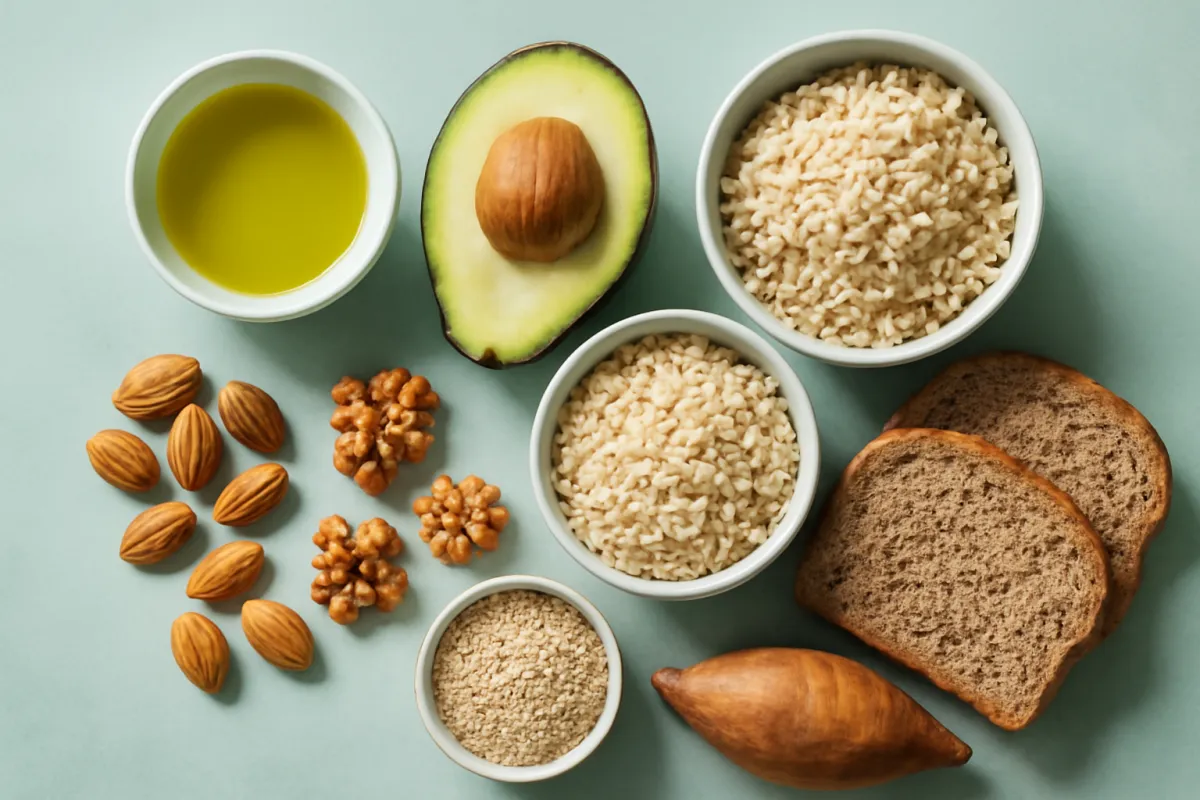
A practical keto food list centers on foods that are naturally low in carbohydrate and that can supply the diet’s large fat share without added sugar or starch. Meat, poultry, and fish are core protein and fat sources; eggs fit easily across most meals; full-fat dairy, including cheese, butter, and plain yogurt in moderation, supplies fat; and non-starchy vegetables, leafy greens, broccoli, cauliflower, zucchini, peppers, and similar produce, supply fiber, volume, and micronutrients without much carbohydrate.
Nuts, seeds, and added fats, olive oil, avocado oil, and butter, round out the fat side of the ratio, and avocado itself is a frequently cited keto staple for its fat content and relatively low net carbohydrate for a fruit. Berries, in modest portions, are commonly the exception on the fruit side, since they carry meaningfully less sugar per serving than most other fruit.

Non-starchy vegetables and why they still matter
It is a common misconception that keto means skipping vegetables, when in fact non-starchy vegetables are one of the diet’s more consistently emphasized categories, precisely because they deliver fiber, volume, and micronutrients for a comparatively small carbohydrate cost. Leafy greens, broccoli, cauliflower, zucchini, cucumber, peppers, mushrooms, and cabbage are frequently cited staples that fill out meals without consuming much of the daily carbohydrate ceiling.
Fiber in particular deserves attention on keto, since cutting grains and legumes, two major fiber sources for most people, removes a meaningful share of a typical diet’s fiber unless non-starchy vegetables and, where the carbohydrate budget allows, seeds like chia and flax take their place. Our fiber guide covers daily fiber needs in more depth, and the concern is a real one worth planning around rather than an incidental detail.
Protein and fat sources on keto
Protein on keto is typically built around meat, poultry, fish, eggs, and, for some, full-fat dairy, sized to a moderate daily target rather than an unlimited amount, since the diet’s math depends on protein not crowding out the fat share. A commonly cited starting reference is a gram range per pound or kilogram of body weight similar to what general strength-training guidance suggests, though the exact right figure for an individual depends on body composition, activity, and goals best worked out with a dietitian.
Fat sources split roughly into saturated, from butter, fatty cuts of meat, and coconut oil, and unsaturated, from olive oil, avocado, nuts, and fatty fish, and most general keto guidance suggests leaning toward a mix with a meaningful unsaturated share rather than fat from any single source, consistent with broader cardiovascular nutrition guidance outside of keto specifically. Fatty fish in particular pulls double duty, supplying both the diet’s fat requirement and omega-3 fatty acids, covered in our omega-3 foods guide.
A practical note on sourcing both macronutrients at once: fattier cuts and preparations, chicken thighs rather than breast, salmon rather than cod, eggs cooked in butter rather than dry-fried, tend to fit the ratio more naturally than lean, dry-cooked protein eaten alongside a separately measured spoonful of oil, since the fat is already built into the food rather than something to remember to add every time. This is a matter of practical convenience rather than a rule, and either approach can reach the same macronutrient result over a full day.
Foods a keto plan typically limits or avoids
The foods most consistently placed off the standard keto list are grains and anything made from them, bread, pasta, rice, cereal, and oats; most fruit, with berries as the common partial exception; starchy vegetables, including potatoes, corn, and winter squash; legumes, beans, lentils, and chickpeas, which carry meaningful carbohydrate alongside their fiber and protein; added sugar in any form; and most conventional desserts and sweetened beverages.
None of this is framed as these foods being unhealthy in general nutrition terms; many of them, whole grains and legumes especially, are emphasized rather than limited in other evidence-based patterns, including the Mediterranean approach covered in our Mediterranean diet review. They are limited specifically on keto because of their carbohydrate content relative to the diet’s narrow daily ceiling, which is a structural tradeoff of this particular pattern rather than a general verdict on the foods themselves.
How strict does the carb ceiling need to be
There is no single, universally agreed number, and commonly cited ranges for a standard ketogenic approach run from about 20 grams of total or net carbohydrate a day on the strict end to around 50 grams on a more liberal end, against a typical, unrestricted daily carbohydrate intake that can run well past 200 grams. Net carbohydrate, total carbohydrate minus fiber, is the figure some keto resources track instead of total carbohydrate, on the premise that fiber is not digested the same way, though this convention is not universal and labels do not always make the distinction easy to apply consistently.
The chart below shows one illustrative way several commonly cited keto strictness levels compare on daily carbohydrate ceiling, set against a typical unrestricted intake for scale.
Illustrative daily carbohydrate ceiling by keto strictness
Commonly cited grams of carbohydrate per day. Bars are illustrative reference points for comparison, not personal targets.
Bars scale to an illustrative 225 g typical intake. These are commonly cited reference ranges, not individualized targets; confirm your own needs with a professional.
Staying within whichever ceiling a person chooses, consistently, is generally described as more important to reaching and maintaining ketosis than the exact number picked, which is part of why tracking carbohydrate intake closely, at least at the start, is such a commonly repeated piece of practical keto advice.
A sample keto day, illustrative structure
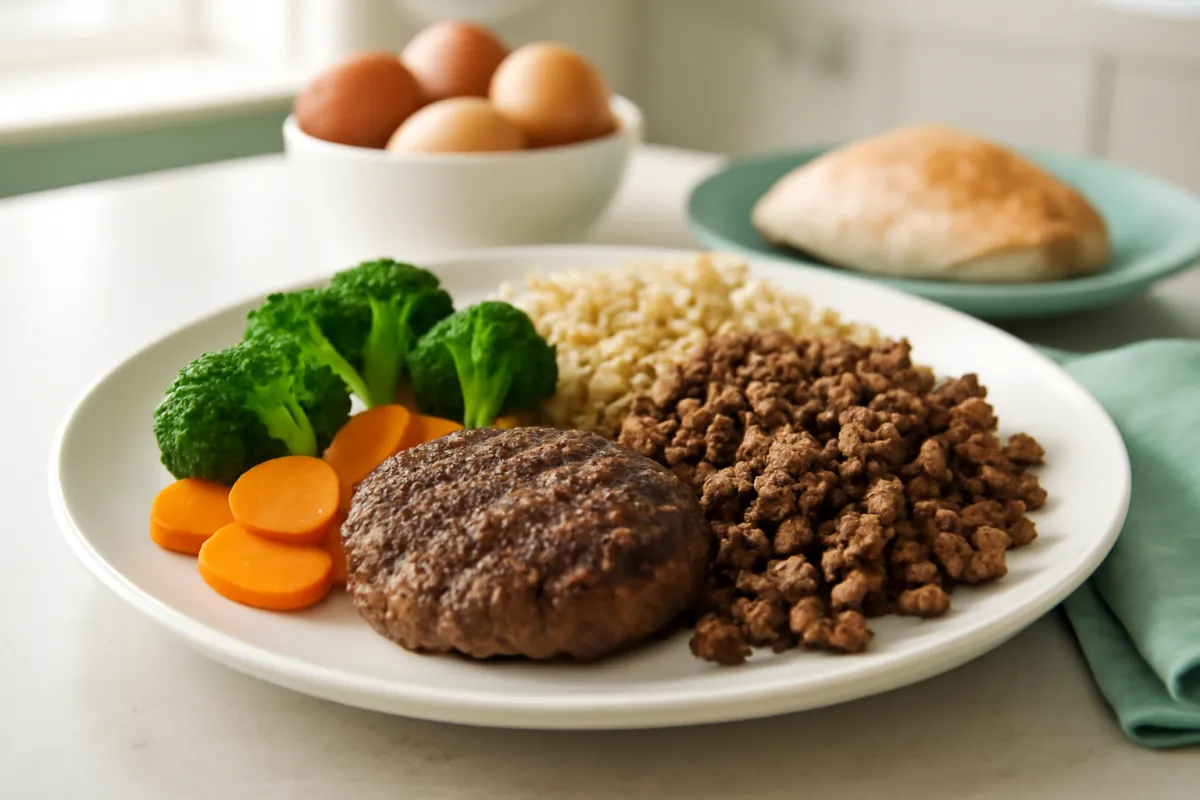
Rather than a specific recipe, here is one illustrative way a day’s meals might be structured to fit the macronutrient shape described above, shown as a rough composition rather than an exact menu or calorie count.
A structurally similar breakfast might be eggs cooked in butter with spinach and avocado; a midday meal could be a large salad of leafy greens and non-starchy vegetables topped with a portion of chicken, fish, or another protein, dressed with olive oil; and dinner might follow the same shape, a fat-and-protein anchor like salmon or a fattier cut of meat, a generous side of non-starchy vegetables, and a fat source such as butter or olive oil used in cooking. Snacks, where included, commonly lean on nuts, cheese, or a small amount of berries within the day’s carbohydrate budget.
Variations: standard, cyclical, and targeted keto
Several named variations of keto exist, and it is worth being clear about which one most general descriptions, including this one, refer to by default. Standard keto is the consistent, every-day low-carbohydrate approach described throughout this review. Cyclical keto involves alternating, commonly cited as several strict keto days followed by one or two higher-carbohydrate days, an approach sometimes used by athletes to replenish glycogen. Targeted keto involves adding a small amount of carbohydrate around exercise specifically, on the premise that it fuels performance without pulling the body out of ketosis for long.
The research base for these variations is considerably smaller and less consistent than for standard keto, and they are generally discussed as approaches for people with specific athletic performance goals rather than a default recommendation for someone starting keto for general health or weight reasons. Anyone considering a variation for athletic performance is better served by a sports dietitian’s individualized guidance than a general description like this one.
What the research says about keto and weight
Keto is one of the more heavily studied low-carbohydrate approaches in weight research, and several trials and reviews commonly cited in this area report that keto can produce weight loss, including in some studies comparable to or somewhat greater than lower-fat diets over shorter study periods, often attributed to appetite reduction from higher fat and protein intake and the structural elimination of many calorie-dense, carbohydrate-heavy processed foods. It is equally well documented in this same research that much of the difference narrows over longer follow-up periods, commonly cited at a year or more, as adherence becomes the dominant factor across diet types rather than the specific macronutrient split.
A particularly important honest caveat concerns the early, often dramatic weight drop many people see in the first one to two weeks of keto: this is commonly attributed in large part to water loss tied to depleted glycogen stores, not fat loss, since each gram of glycogen is stored with several grams of water. That does not make the later weight loss illusory, but it does mean the first week’s number on the scale is not a reliable preview of the diet’s fat-loss effect, and no specific outcome can be promised to any individual reading this review.
How long to try keto before deciding
A commonly cited guideline is to give a ketogenic approach at least two to four weeks before judging whether it is working, since the first one to two weeks are dominated by the induction phase and its water-related weight shifts, and appetite and energy commonly take a similar stretch to settle as the body adapts to relying more on fat and ketones for fuel. Judging the diet from day three or four, when keto flu symptoms are most likely, tends to produce an unfairly negative impression that does not reflect how most people report feeling a few weeks in.
Beyond the scale, commonly suggested markers to track include energy levels, hunger and fullness cues, sleep quality, and how clothing fits, since water weight fluctuations can mask or exaggerate what is actually happening with body composition in the short term. For anyone tracking blood markers, cholesterol panels and, where relevant and supervised, blood glucose are worth discussing with a doctor both before starting and again after a few months, since individual responses to a high-fat diet vary and are worth monitoring rather than assuming.
If energy stays persistently low, if mood or concentration noticeably suffers beyond the first couple of weeks, or if any concerning symptom appears, that is a signal to reassess with a doctor or registered dietitian rather than to assume more time alone will fix it. Not every eating pattern suits every person, and keto not working well for someone is informative, not a personal failure.
Keto and blood sugar, what is commonly discussed
Because keto sharply limits the primary dietary driver of blood glucose, carbohydrate, it is frequently discussed in relation to blood sugar management, and some research in people with type 2 diabetes has reported improved blood sugar markers on a ketogenic approach under clinical supervision. This is precisely the area where the diet’s most serious safety caution also lives: for anyone using insulin or a sulfonylurea medication, a large, sudden drop in carbohydrate intake can cause dangerously low blood sugar if medication is not adjusted in parallel, and that adjustment needs to be made by the prescribing clinician, not inferred from a general-audience article.
People with type 1 diabetes face an additional, more serious risk on very low-carbohydrate, higher-fat eating: a risk of diabetic ketoacidosis, a genuine medical emergency that is a different condition from the mild nutritional ketosis this diet targets, which is why type 1 diabetes is consistently flagged in clinical literature as a condition requiring specialist supervision before any such dietary change, not a general caution to simply be careful.
Electrolytes and hydration on keto
Lower carbohydrate intake tends to lower insulin levels, which in turn causes the kidneys to excrete more sodium and water than usual, a mechanism commonly cited as the main driver of both the keto flu and an ongoing, somewhat elevated electrolyte need on the diet compared with a higher-carbohydrate pattern. Commonly cited practical responses include salting food more liberally than usual, drinking adequate fluids, and deliberately including potassium- and magnesium-rich foods, leafy greens, avocado, and nuts among them.

People with kidney disease, heart failure, or high blood pressure should not independently add sodium or start an electrolyte supplement, since the general advice above does not apply safely to those conditions, and this is a clear instance where this review’s honest answer is to point to a doctor rather than offer a number.
Common mistakes when starting keto
A handful of recurring errors trip up far more people than any single food choice does.
- Not actually tracking carbohydrate at the start. “Eating low-carb” by feel often lands well above the ceiling needed to reach ketosis; a food diary or tracking app for the first few weeks removes the guesswork.
- Eating too much protein and not enough fat. Keto’s math depends on fat, not protein, carrying most of the calories; a plate built mainly around meat without added fat can undershoot the intended ratio.
- Fearing vegetables as “too many carbs.” Non-starchy vegetables are a core, encouraged category; the carbohydrate to watch is from grains, sugar, and starchy foods, not broccoli.
- Ignoring electrolytes during induction. Most keto flu symptoms trace back to sodium and fluid shifts that a little extra salt and water can meaningfully ease.
- Expecting the first week’s weight drop to be fat loss. Early loss is heavily water-related; judging the diet’s actual effect takes several weeks, not several days.
Who should check with a professional before starting keto
Keto is not a default-safe starting point the way some milder dietary changes are, and several groups should treat a doctor’s involvement as a prerequisite rather than an afterthought. People with type 1 diabetes or type 2 diabetes managed with insulin or a sulfonylurea face a real risk of dangerously low blood sugar or, less commonly, ketoacidosis without coordinated medication adjustment. People with kidney disease should discuss the diet’s protein and electrolyte load with their nephrologist or doctor first.
People with a history of gallbladder removal or disease, certain pancreatic or liver conditions, or a history of disordered eating should also raise a change this structural with a doctor or registered dietitian before starting, and pregnant or breastfeeding individuals should not begin keto without obstetric guidance, since the research in pregnancy specifically is limited. None of the general information in this review is a substitute for that kind of individualized medical assessment.
How keto compares to other eating patterns
Keto sits at the strict end of the low-carbohydrate spectrum, distinguished from a general low-carbohydrate approach by how far it pushes the carbohydrate ceiling down and by its explicit goal of measurable ketosis rather than simply “less carbohydrate than before.” It is structurally close to opposite the Mediterranean pattern covered in our Mediterranean diet review, which treats whole grains and legumes as daily staples rather than foods to remove.
Intermittent fasting is a separate axis entirely, a timing approach rather than a macronutrient one, and it can technically be combined with keto, though doing both at once compounds the adjustment period and is not something this review recommends without professional guidance; our intermittent fasting review covers that pattern on its own terms. For the calorie side that ultimately still governs weight outcomes under any of these patterns, see our calorie deficit review.
Reading labels for hidden carbs
Packaged food labels are where keto carbohydrate budgets most often get derailed quietly, since sauces, dressings, flavored yogurts, and “healthy” snack bars frequently carry added sugar or starch that is easy to miss without checking the total carbohydrate and added sugar lines directly. Our nutrition label guide and hidden sugar guide both cover how to read those lines accurately rather than relying on front-of-package marketing claims, which are not a reliable indicator of a product’s actual carbohydrate content.
Net carbohydrate claims on some keto-marketed products are worth particular scrutiny, since the subtraction of fiber and sugar alcohols from total carbohydrate is not standardized the same way across brands, and some sugar alcohols affect blood sugar more than their marketing implies for some individuals. Checking the actual total carbohydrate and ingredient list, rather than a front-of-package “keto-friendly” claim, is the more reliable habit.
Keto on a budget
A common assumption is that keto requires expensive specialty products, but the core of the diet, eggs, ground meat, chicken thighs, canned fish, frozen non-starchy vegetables, and basic cooking fats like butter and vegetable oil, is among the more affordable way to eat within the pattern, since these staples are consistently inexpensive relative to pre-packaged “keto” snack foods marketed at a premium. Buying proteins and fats in bulk where storage allows, leaning on frozen vegetables over fresh when cost matters, and skipping the specialty snack aisle in favor of whole foods keeps the diet accessible on an ordinary grocery budget. Our budget grocery list guide applies directly to building a keto-compatible cart without overspending.
Eating out on keto
Restaurants are more workable on keto than they might first appear, since most menus include a protein and a vegetable side that can be ordered without the starch, bread, rice, or fries typically paired with it. Grilled or roasted meat, poultry, or fish with a non-starchy vegetable side, a salad with a protein and a non-creamy dressing, or an omelet at breakfast all fit without much modification, and asking for sauces and dressings on the side avoids hidden sugar or starch thickeners.
Fast food is workable too, with more planning: a burger without the bun, a salad with a protein, or a breakfast built around eggs rather than toast or hash browns are all commonly cited strategies, though sauces again deserve a second look, since many carry more added sugar than their savory flavor suggests.
A quick checklist for starting keto
- Set an illustrative carbohydrate ceiling, commonly cited between 20 and 50 grams a day, and track it closely for the first few weeks.
- Build meals around protein and fat first, then fill in with non-starchy vegetables, rather than defaulting to a plate built mainly around meat alone.
- Plan for the induction phase, extra salt, fluid, and potassium- and magnesium-rich foods, to ease the keto flu’s water and electrolyte shifts.
- Check food labels directly rather than trusting front-of-package “keto” or “low-carb” claims.
- Talk to a doctor first if you have diabetes on glucose-lowering medication, kidney disease, a gallbladder or pancreatic condition, are pregnant or breastfeeding, or have a history of disordered eating.
- Judge the diet over several weeks, not the first few days, since early weight change is heavily influenced by water loss.
The bottom line
The keto diet is a high-fat, moderate-protein, very-low-carbohydrate macronutrient structure, commonly built around a daily carbohydrate ceiling near 20 to 50 grams, designed to shift the body’s fuel use toward fat and ketones. Non-starchy vegetables, meat, poultry, fish, eggs, full-fat dairy, nuts, and added fats generally fit; grains, most fruit, starchy vegetables, legumes, and sugar are generally limited. The research shows real, commonly cited short-term benefits for weight and, under supervision, blood sugar, alongside real cautions, particularly for people on diabetes medication, with kidney disease, or who are pregnant, that make a doctor’s input a prerequisite rather than an afterthought for those groups. Pair this review with our daily carb guide and calorie deficit review for the rest of the framework.
This evidence review is published for general education about how the ketogenic diet is commonly described in nutrition and clinical research, and it is not medical or dietary advice, and reading it creates no clinician-patient relationship. Every ratio, gram figure, and sample structure above is an illustrative, commonly cited reference for reasoning about the diet’s shape, not a personal prescription, a guaranteed outcome, or a measured nutrition claim about any specific food. This article does not diagnose any condition. Anyone with diabetes, kidney disease, a gallbladder or pancreatic condition, a history of disordered eating, or who is pregnant or breastfeeding, should talk to a doctor or registered dietitian before starting a ketogenic diet.
Frequently asked questions
What is the keto diet, in simple terms?
The keto, or ketogenic, diet is a way of eating that sharply reduces carbohydrate and raises fat to the point where the body shifts much of its fuel use toward fat and fat-derived compounds called ketones, instead of relying mainly on glucose from carbohydrate. Most descriptions of the diet center on an illustrative daily carbohydrate ceiling, commonly cited in the neighborhood of 20 to 50 grams, with the remaining calories split between fat as the dominant share and a moderate amount of protein. It is a structural, macronutrient-level change rather than a specific menu, and strictness varies across the versions people actually follow.
How many carbs can you eat on keto?
There is no single official number, but a commonly cited range for a standard ketogenic approach runs from about 20 grams a day on the stricter end to around 50 grams on a more liberal end, out of a typical day's total carbohydrate intake that can run well over 200 grams for someone not restricting it. Where an individual lands within that range depends on body size, activity, and how reliably they want to stay in a fat-burning state, which is a personal and clinical question rather than a fixed rule. Our companion carb guide covers the general carbohydrate range for non-keto eating for comparison.
What is the keto flu, and is it dangerous?
The keto flu is the informal name for a cluster of short-term symptoms, commonly cited as fatigue, headache, irritability, nausea, and muscle cramps, that some people report during the first several days to roughly two weeks of sharply cutting carbohydrate. It is generally attributed to shifts in water and electrolyte balance as the body's glycogen stores, which hold water, are drawn down, rather than to anything uniquely dangerous about ketosis itself. For most healthy adults it is described as temporary and manageable with fluid and electrolyte attention, but anyone with a medical condition, especially diabetes treated with insulin or other glucose-lowering medication, should not treat this as reassurance and should talk to a doctor before and during any such change.
Is the keto diet safe for everyone?
No single eating pattern is appropriate for every person, and keto carries specific cautions that make it a diet to begin alongside a doctor rather than alone for several groups: people with type 1 diabetes or type 2 diabetes treated with insulin or sulfonylureas, due to a meaningful risk of dangerously low blood sugar and, rarely, a serious complication called ketoacidosis; people with kidney disease, since the diet's protein and electrolyte load can matter clinically; people with a history of gallbladder problems or certain pancreatic or liver conditions; and anyone who is pregnant, breastfeeding, or has a history of disordered eating. This article is general education, not a personal medical clearance, and a doctor or registered dietitian is the appropriate source for an individual safety assessment.
How much weight can you lose on keto?
There is no reliable individual figure to offer here, and any specific number would be an invented guess rather than a fact. Weight change ultimately depends on total calorie intake relative to what the body burns, and keto does not override that; what the diet commonly offers, according to frequently cited research, is an eating structure, high protein and fat, that some people find reduces appetite and makes a calorie deficit easier to sustain, plus an early, often substantial drop tied to water and glycogen loss that is not the same as fat loss. Our calorie deficit review covers the mechanics of a deficit directly, and a doctor or registered dietitian can help set an appropriate, individualized goal.
What is the difference between keto and a general low-carb diet?
Keto is best understood as one specific, strict version within the broader low-carb category. A general low-carb approach typically reduces carbohydrate to a moderate degree, often cited loosely in a 50 to 150 gram daily range, without necessarily pushing the body into measurable ketosis, and it can include more fruit, starchy vegetables, and legumes along the way. Keto pushes further, to a commonly cited ceiling near 20 to 50 grams a day, specifically to shift fuel use toward fat and ketones. Every ketogenic diet is a low-carb diet, but most low-carb diets are not strict enough to be ketogenic.
Do you need to take electrolyte supplements on keto?
Not automatically, but many descriptions of the diet recommend paying deliberate attention to sodium, potassium, and magnesium, since a lower-carbohydrate intake tends to increase fluid and sodium loss through the kidneys, especially in the first couple of weeks. Some people manage this through food, broth, lightly salting meals, and leafy greens or avocado for potassium and magnesium, while others use a supplement, particularly if cramping or fatigue persists. Anyone with high blood pressure, kidney disease, or a heart condition should not add sodium or supplement electrolytes without a doctor's input first, since the usual general advice does not apply the same way to those conditions.
Can you build muscle on a ketogenic diet?
It is possible for some people to maintain or build muscle on keto, particularly with adequate total calories and a protein intake toward the higher end of what the diet's macronutrient math allows, but the research comparing keto directly with higher-carbohydrate diets for muscle building is mixed and smaller in scale than the broader weight-related keto literature. Carbohydrate is the body's preferred fuel for high-intensity training, so some athletes report reduced performance on very low-carbohydrate intakes, which is part of why targeted and cyclical keto variations exist. Anyone training seriously for strength or performance goals is better served discussing macronutrient strategy with a sports dietitian than following a general-audience description like this one.

Hamza Hai is the editor of NourishMark. She holds an MBA and reviews the site's articles against our editorial standards, checking that every figure is labelled for what it is, that nothing is presented as verified fact without a source the reader can check, and that the writing stays useful to a non-specialist.

Dr. Shayaan Khan is the medical reviewer for NourishMark. He holds an MBBS from MGM Medical College, Navi Mumbai, and is the author of published research including a narrative review of postpartum anxiety and depression in Mental Health Science. He has taught physiology at university level. He reviews the site's health content for medical accuracy: that physiology and mechanisms are described correctly, that no claim is stated more strongly than the evidence behind it, and that anything specific to an individual reader is sent to that reader's own clinician.
Not medical advice. Dr. Khan reviews NourishMark's health content for medical accuracy. He is not a registered dietitian, he does not hold a United States practising licence, and he is not your doctor. His review does not make anything here medical advice. Always talk to a qualified health professional about your own situation, and never delay or stop care because of something you read here.