What's in this review
- What the DASH diet actually is
- The core principle behind DASH
- Illustrative DASH food group targets
- How sodium limits work on DASH
- The standard sodium ceiling versus the lower-sodium version
- Foods that generally fit a DASH plan
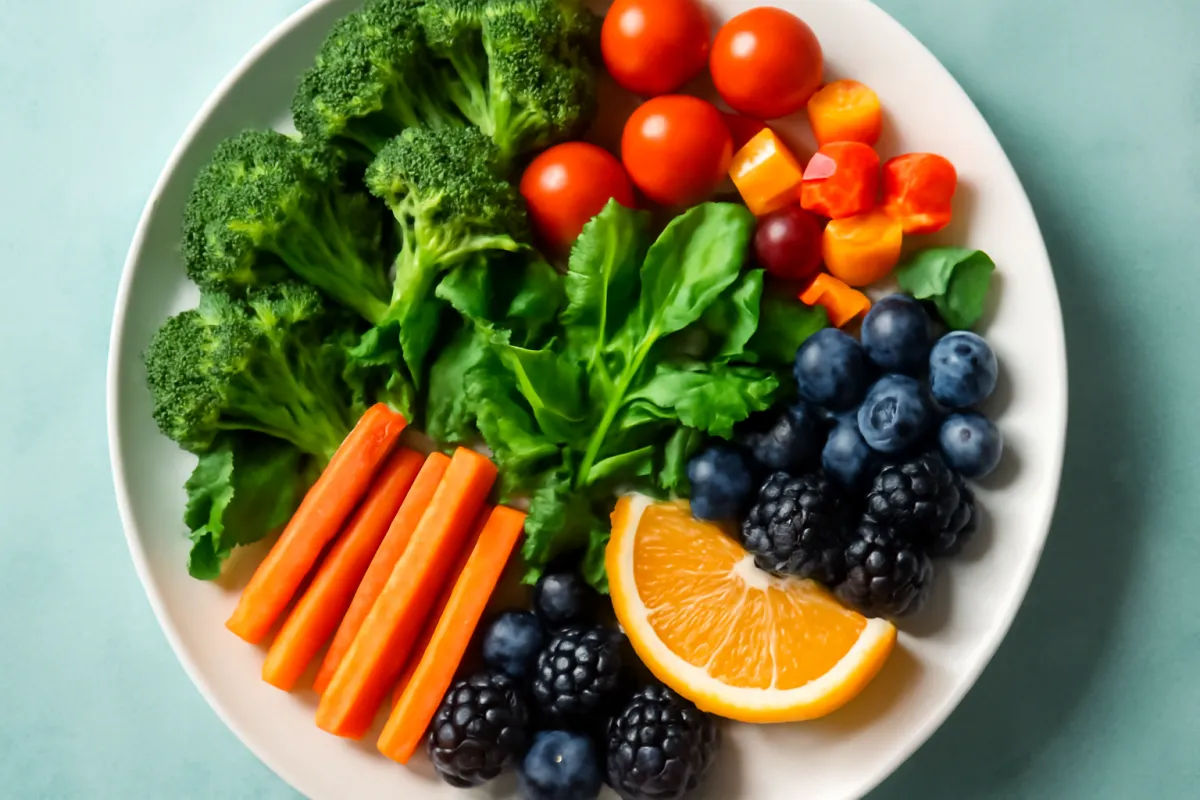
- Vegetables and fruit: the largest categories
- Low-fat and fat-free dairy on DASH
- Lean protein, poultry, and fish
- Nuts, seeds, and legumes: a weekly category
- Foods a DASH plan typically limits
- Reading labels for sodium
- An illustrative DASH day: sample structure
- What the research says about DASH and blood pressure
- How long to try DASH before expecting changes
- DASH and potassium, calcium, and magnesium together
- Common mistakes when starting DASH
- Who should check with a professional before starting DASH
- How DASH compares to the Mediterranean diet
- DASH on a budget
- Eating out on DASH
- A quick checklist for starting DASH
- The bottom line
Short answer: DASH, short for Dietary Approaches to Stop Hypertension, is an eating pattern built around generous vegetables, fruit, whole grains, and low-fat dairy, moderate lean protein, and limited red meat and sweets, paired with a sodium ceiling commonly cited at 2,300 milligrams a day, or 1,500 for a lower-sodium version. It is not a calorie-counting plan or a salt-only fix. It is a food group structure developed through clinical research specifically to study blood pressure, and this review treats every serving count and sodium figure as a commonly cited reference, not a personal prescription.
DASH gets recommended constantly by doctors and dietitians, yet most explanations compress it down to “eat less salt,” which skips most of what actually made it a landmark piece of nutrition research. The real pattern is a full food structure, tested in controlled trials, with specific food group targets and a sodium ceiling that work together rather than either one alone.
This review builds the DASH diet explained from the ground up: where the pattern came from, the food group targets at a 2,000 calorie level, how the sodium ceiling actually works, a practical food list for what generally fits and what generally does not, the honest state of the blood pressure research, and a clear list of who should involve a doctor before changing anything. For the sodium side specifically, see our daily sodium guide, and for the pattern DASH is most often compared with, see our Mediterranean diet review. If protein is also part of your overall picture, our daily protein target tool gives a quick starting estimate from your weight and activity. Build your own illustrative food group tally in the companion below.
Key takeaways
- DASH is a food pattern, not a salt-only fix: generous vegetables, fruit, whole grains, and low-fat dairy, moderate lean protein, and limited red meat and sweets, paired with a sodium ceiling.
- The standard sodium ceiling is commonly cited at 2,300 milligrams a day, with a lower-sodium version commonly cited at 1,500, both counting sodium from every source, not just the salt shaker.
- At a 2,000 calorie level, commonly cited daily targets run roughly 6 to 8 grain servings, 4 to 5 vegetable servings, 4 to 5 fruit servings, 2 to 3 low-fat dairy servings, and 6 or fewer ounce-equivalents of lean meat, poultry, or fish, with nuts, seeds, and legumes and sweets handled as weekly categories.
- Clinical trials behind DASH and research summarized since commonly report a measurable blood pressure benefit, generally larger in people who start with elevated blood pressure, though this review gives no individual number.
- DASH carries real cautions for people with kidney disease or on blood pressure or heart medication that affects potassium; anyone in those groups should talk to a doctor before starting, not after.
What the DASH diet actually is
DASH is a food pattern developed through clinical trials funded by the National Institutes of Health in the 1990s, built specifically to test whether a structured way of eating, rather than a single nutrient change, could affect blood pressure. The acronym stands for Dietary Approaches to Stop Hypertension, and the name describes the research question directly: not whether cutting salt alone helps, but whether a whole food pattern does.
The pattern that emerged from that research centers on vegetables, fruit, whole grains, and low-fat or fat-free dairy as the largest categories, moderate amounts of lean meat, poultry, and fish, and smaller, weekly amounts of nuts, seeds, and legumes, with red meat, full-fat dairy, sweets, and sodium all deliberately limited. It is still recommended today by national health authorities and clinical guidelines as one of the better-studied approaches for blood pressure management, used both on its own and alongside medication when a doctor determines that is appropriate.
The core principle behind DASH
The organizing idea behind DASH is that food groups interact, rather than any single nutrient acting in isolation. Potassium, calcium, magnesium, and fiber, all concentrated in vegetables, fruit, whole grains, and low-fat dairy, are discussed in reference sources as working alongside a lower sodium intake rather than any one of them doing the job alone. That is a meaningfully different premise from an eating pattern built around a single restriction, and it is part of why DASH is described as a food pattern rather than a nutrient-elimination diet.
Reference sources commonly frame the mechanism this way: potassium is discussed as helping the body manage sodium and relax blood vessel walls, calcium and magnesium are discussed as playing supporting roles in blood vessel function, and fiber is tied to the broader cardiovascular benefits of the fruit, vegetable, and whole grain emphasis. None of these mechanisms is presented in the DASH research as acting alone, which is consistent with how the trials were actually designed, as a food pattern compared against a typical diet, not a single-nutrient experiment.
Illustrative DASH food group targets
Most descriptions of DASH set out commonly cited serving targets for a 2,000 calorie day, with the understanding that a lower or higher calorie level scales every category up or down. The categories most consistently cited are grains, commonly 6 to 8 servings a day; vegetables, commonly 4 to 5 servings; fruit, commonly 4 to 5 servings; low-fat or fat-free dairy, commonly 2 to 3 servings; lean meat, poultry, and fish, commonly 6 or fewer one-ounce equivalents a day; fats and oils, commonly 2 to 3 servings; nuts, seeds, and legumes, commonly 4 to 5 servings a week rather than daily; and sweets, commonly 5 or fewer servings a week.
The chart below sets out the daily categories at their commonly cited midpoint, scaled against the largest, grains, for comparison.
Commonly cited DASH daily reference amounts, 2,000 calorie plan
Midpoints of commonly cited ranges for each daily category. Lean meat, poultry, and fish is measured in one-ounce equivalents rather than whole servings; bars are illustrative reference points, not personal targets.
Values are the midpoint of each commonly cited range, scaled against the 7-serving grain reference. The meat row uses a different unit, one-ounce equivalents, flagged in its label; comparing it against the others is a reference for scale, not an apples-to-apples serving count. Weekly categories, nuts, seeds, legumes, and sweets, are discussed separately below since they do not share a daily unit with this chart.
Reading this chart alongside the food list further down matters more than memorizing the numbers themselves, since reference sources are consistent that the overall shape, generous plants and dairy, moderate lean protein, limited everything else, matters more than hitting any single serving count exactly on a given day.
How sodium limits work on DASH
Sodium on DASH is capped as a daily total from every source, not managed by simply setting the salt shaker aside at the table. Reference sources, including national dietary guidance, consistently point to packaged, processed, and restaurant food as the largest source of sodium in a typical diet, commonly described as supplying the clear majority of daily sodium intake for most people, well ahead of salt added during cooking or at the table.
That distinction changes where the practical effort goes. Someone trying to hit a DASH sodium ceiling by only skipping the salt shaker is addressing a comparatively small share of a typical day’s sodium, while someone who also checks labels on bread, canned soup, deli meat, sauces, and restaurant meals is addressing the larger share. Our sodium guide and nutrition label guide both cover reading sodium off a label accurately, which is the more reliable habit than estimating from taste, since a food does not need to taste salty to carry a meaningful sodium load.
The standard sodium ceiling versus the lower-sodium version
DASH research and the guidance built on it commonly cite two sodium figures rather than one. The standard DASH plan is commonly paired with a 2,300 milligram daily ceiling, matching general national dietary guidance for most adults. A lower-sodium version of the identical food pattern is commonly cited at 1,500 milligrams a day, generally discussed for people specifically advised to reduce sodium further, which can include people with higher blood pressure or certain other health conditions.
Illustrative share of a 2,000 calorie DASH day's servings, by daily food group
The five daily-serving categories above as a share of their combined total. Lean meat, poultry, and fish (measured in ounce-equivalents) and the weekly nuts, seeds, legumes, and sweets categories are not included, since they do not share the same unit.
Segments sum to 100 percent of the five daily-serving categories' combined total, computed from the midpoints used in the chart above. Not a calorie breakdown, a plate-proportion rule, or a personal target; lean protein and the weekly categories sit outside this particular comparison.
Neither figure is the “correct” one in isolation. The standard ceiling is the figure most adults following general guidance are pointed toward, while the lower figure is generally a clinician’s recommendation for a specific person rather than a default everyone should adopt on their own. Confirm which applies to you with a doctor or registered dietitian rather than assuming the stricter number is automatically better.
It is worth noting how large a gap 2,300 and 1,500 milligrams actually represent in practice. The difference, 800 milligrams, is the kind of amount a single serving of a heavily processed food, a fast-food sandwich or a cup of canned soup made with regular salt, is commonly reported to carry on its own, which is one more reason reference sources point toward processed and restaurant food as the more useful place to focus attention than the salt shaker at home.
Foods that generally fit a DASH plan
A practical DASH food list centers on foods that supply potassium, calcium, magnesium, and fiber without a heavy sodium load. Vegetables and fruit, fresh, frozen without added sauce, or canned with no added salt, make up the two largest categories. Whole grains, brown rice, whole wheat bread and pasta, oats, and similar foods, are generally favored over their refined counterparts for the additional fiber and micronutrients.
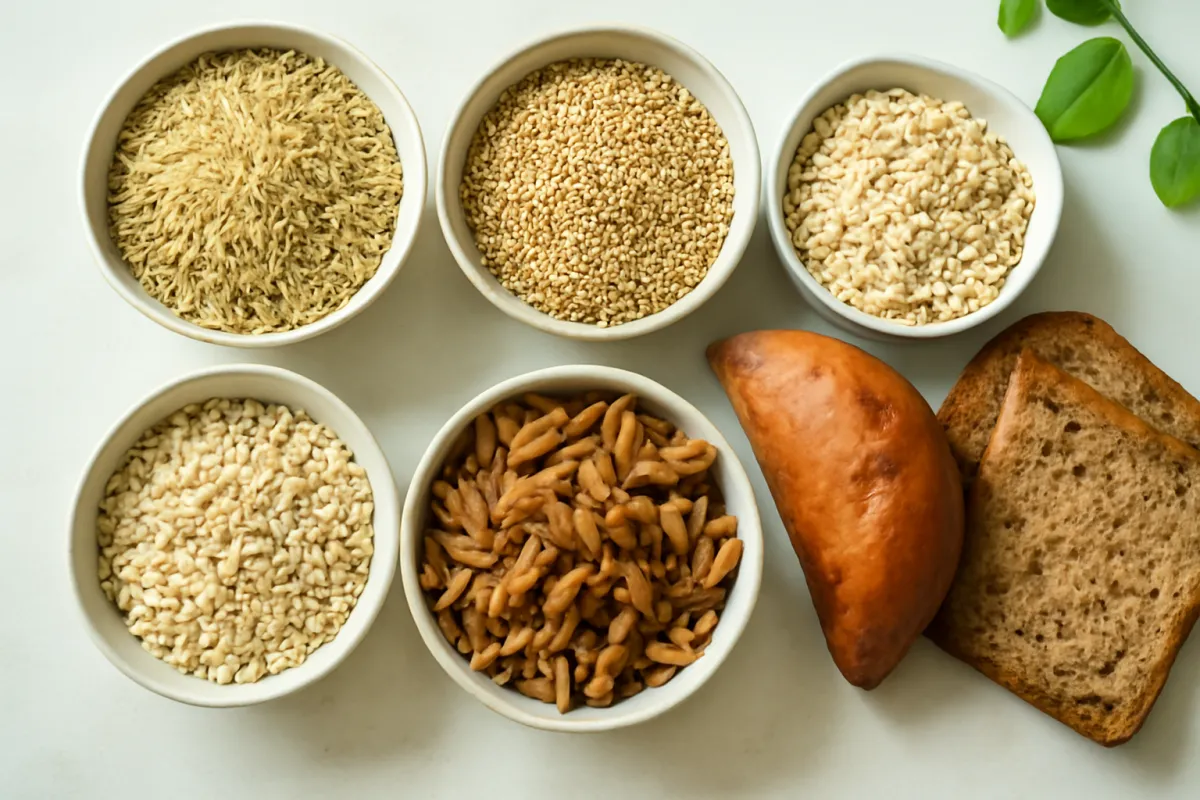
Low-fat or fat-free dairy, milk, yogurt, and reduced-fat cheese, supplies calcium and protein within the diet’s limits on saturated fat. Lean meat, poultry with the skin removed, and fish round out the protein side in moderate daily amounts, and nuts, seeds, and legumes appear as a smaller, weekly category rather than a daily one.
Vegetables and fruit: the largest categories
Vegetables and fruit together make up the largest share of a DASH day by serving count, and reference sources describe this as a deliberate structural choice rather than an incidental one, since these two categories carry most of the potassium, fiber, and magnesium the pattern’s mechanism depends on. A serving is commonly described in familiar household terms, roughly a cup of raw leafy vegetables, a half cup of other vegetables or fruit, or one medium piece of fruit, though exact serving definitions vary slightly across sources.
Variety matters more than any single vegetable or fruit choice, since different produce concentrates different nutrients, and reference sources generally describe a wide rotation across the week as more aligned with the pattern’s intent than repeating the same few items. Frozen and no-salt-added canned produce count the same as fresh for this purpose, which matters for cost and convenience, covered further down this review.
Low-fat and fat-free dairy on DASH
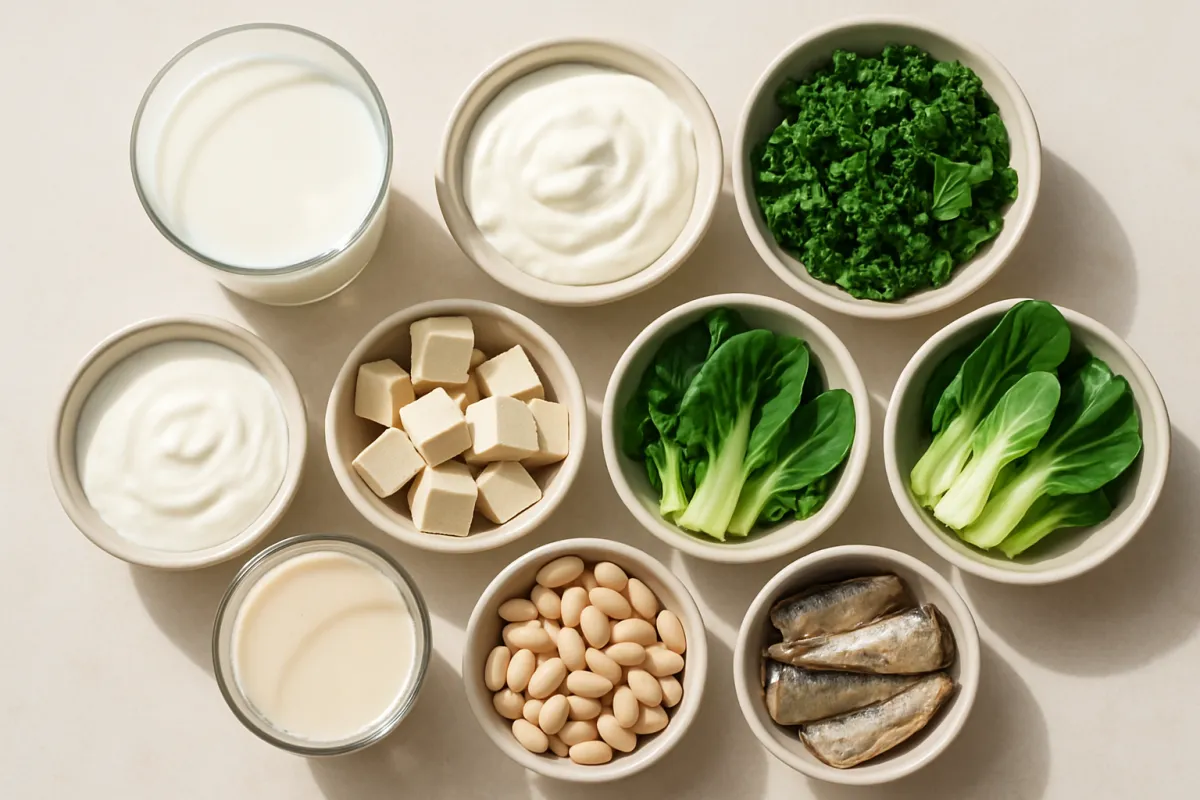
Low-fat or fat-free milk, yogurt, and cheese are specifically called out in the DASH pattern, distinguishing it from a general-audience dairy recommendation, because the research specifically compared low-fat dairy against a typical diet’s dairy intake rather than dairy at any fat level. The reasoning given in reference sources ties to the diet’s broader limit on saturated fat, which full-fat dairy would work against.
People who are lactose intolerant or who prefer not to eat dairy can meet the calcium and potassium goals DASH targets through fortified plant milks, tofu set with calcium, and leafy greens, as our calcium foods guide covers, though the exact substitution is worth discussing with a dietitian if dairy is being removed entirely rather than reduced.
Lean protein, poultry, and fish
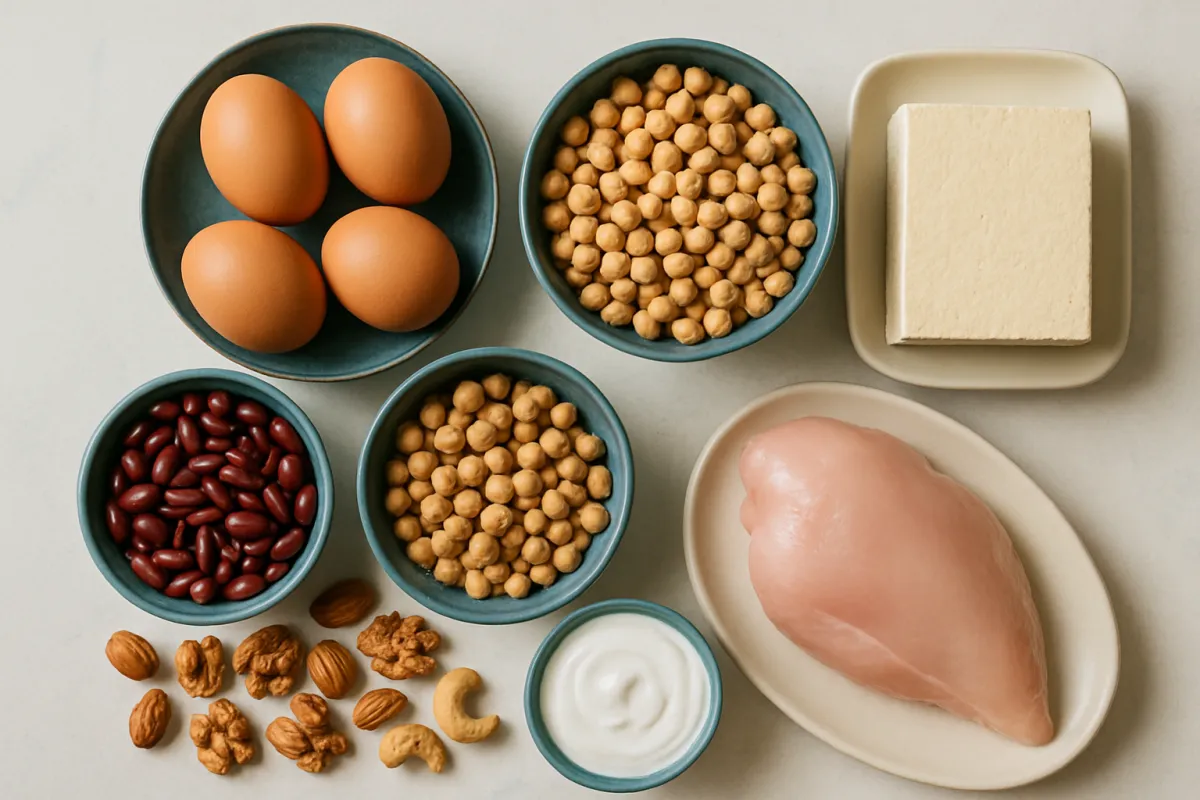
Lean meat, skinless poultry, and fish are kept to a moderate daily amount on DASH, commonly cited at 6 or fewer one-ounce equivalents a day, which is noticeably lower than a protein-forward eating pattern might suggest. Fish in particular is called out favorably in reference sources both for fitting the protein category and for supplying omega-3 fatty acids, covered in our omega-3 foods guide.
Preparation matters as much as the cut on DASH, since breading, frying, and high-sodium marinades or sauces can turn an otherwise DASH-appropriate protein into a sodium-heavy dish. Grilling, baking, or roasting with herbs and spices rather than salt-heavy seasoning blends keeps the preparation aligned with the pattern’s sodium ceiling.
Nuts, seeds, and legumes: a weekly category
Unlike the daily categories above, nuts, seeds, and legumes are commonly cited as a weekly rather than daily target on DASH, roughly 4 to 5 servings a week. Reference sources describe this group as supplying magnesium, potassium, fiber, and plant protein that complement the rest of the pattern, while being naturally more calorie-dense than vegetables or fruit, which is part of why the target is set weekly rather than as a daily addition.
Legumes specifically do double duty, counting toward this category while also being a lower-sodium alternative to some animal proteins when prepared without added salt, which is worth checking on canned bean labels specifically, since canned legumes can carry a meaningful sodium load unless a no-salt-added or low-sodium version is chosen or the beans are rinsed before use.
Foods a DASH plan typically limits
The foods most consistently placed on the limit side of DASH are red meat, full-fat dairy, tropical oils and other sources of saturated fat, sweets and sugar-sweetened beverages, and foods high in sodium, chiefly processed, packaged, and restaurant foods rather than any single ingredient. None of this is framed in the DASH research as outright elimination; these are foods to have less often or in smaller portions, set against the backdrop of the generous categories covered above.
Sodium deserves its own emphasis here because it cuts across every category rather than sitting in one food group. A vegetable, a whole grain, or a lean protein can all individually fit the DASH food list while still carrying a sodium load that works against the diet’s ceiling if it arrives heavily processed, breaded, sauced, or canned without a no-salt-added label.
Reading labels for sodium
Checking the sodium line on a nutrition label directly, rather than guessing from taste or trusting front-of-package claims, is the single most reliable DASH habit for most people, since reference sources consistently describe much of a typical diet’s sodium as coming from foods that do not taste obviously salty, bread and cereal among them. Our nutrition label guide covers reading the sodium line specifically, alongside the %DV figure that shows how one serving compares against a 2,300 milligram reference.
Terms like “reduced sodium” and “lightly salted” describe a comparison against a regular version of the same product, not an absolute low-sodium guarantee, so the product can still carry a meaningful amount even with that label. Checking the actual milligram figure against your own daily ceiling is the more reliable habit than relying on the claim alone.
Condiments deserve a specific mention here, since they are easy to overlook against a main dish. Soy sauce, bottled salad dressing, barbecue sauce, and many pre-made marinades can each carry a few hundred milligrams of sodium in a single serving, which adds up quickly across a day that also includes bread, cheese, and a packaged snack. None of this means avoiding condiments entirely; it means checking a few regularly used ones against their label rather than assuming a small amount could not matter.
An illustrative DASH day: sample structure
Rather than a specific menu, here is one illustrative way a day’s meals might be structured to fit the pattern described above, shown as a rough composition rather than an exact recipe or calorie count.
A structurally similar breakfast might be oatmeal topped with berries and a small glass of low-fat milk; a midday meal could be a large salad of leafy greens and mixed vegetables topped with grilled chicken or a serving of beans, dressed with olive oil and vinegar rather than a salted bottled dressing; and dinner might follow the same shape, a portion of fish or lean poultry, a generous side of vegetables, and a whole grain such as brown rice or quinoa. A snack, where included, might be a piece of fruit, a small handful of unsalted nuts, or plain yogurt.
Someone working toward the lower-sodium version of the pattern would generally make the same structural choices with closer attention to sodium at each step: unsalted or low-sodium broth and canned goods, herbs and citrus instead of a salted seasoning blend, and fewer restaurant or packaged meals across the week, since those are where sodium accumulates fastest. The food groups themselves do not change between the standard and lower-sodium versions; only how carefully sodium is tracked within them does.
What the research says about DASH and blood pressure
DASH is one of the more rigorously studied dietary patterns for blood pressure specifically, built from controlled clinical trials rather than observational association alone. The original trials and research summarized by national health authorities since commonly report a measurable blood pressure reduction on the DASH pattern compared with a typical diet at the same sodium level, with an additional, separate benefit reported when sodium is also reduced on top of the pattern. The effect is generally reported as larger in people who start with elevated blood pressure than in people whose blood pressure already sits in a typical range.
This evidence review deliberately does not state a specific point-reduction figure here, since any individual’s response depends on starting blood pressure, how closely the pattern is followed, medication, and other health factors a general article cannot know. A doctor is the right source for what blood pressure change, if any, is realistic for your specific situation.
How long to try DASH before expecting changes
Reference sources commonly describe blood pressure changes on DASH as measurable within a few weeks of consistent adherence, faster than the timeline often associated with weight-focused dietary changes, since DASH’s mechanism works through food composition rather than primarily through weight loss, though weight loss, where it occurs alongside the pattern, is generally described as adding to the benefit rather than being required for it.
Judging the pattern fairly means giving it a real, consistent trial, generally several weeks, and tracking blood pressure with a clinician rather than relying on how you feel day to day, since blood pressure changes are not something most people can sense directly. Anyone on blood pressure medication should have that medication and any dose changes managed by the prescribing clinician throughout, not adjusted independently based on how the diet seems to be going.
DASH and potassium, calcium, and magnesium together
The three minerals DASH’s food groups concentrate, potassium, calcium, and magnesium, are discussed in reference sources as working together within the pattern rather than as separate targets to track individually. Our potassium guide, calcium foods list, and magnesium intake review each cover their own daily reference figures in more depth for anyone who wants the specifics, though following the DASH food groups themselves is generally sufficient without separately tracking three different mineral totals.
One caution belongs here specifically: potassium intake matters clinically for people with kidney disease or for anyone on a medication that affects potassium levels, which is one of the main reasons those groups are flagged below as needing a doctor’s involvement before adopting DASH rather than starting on their own.
Calcium and magnesium carry fewer of these clinical cautions for most adults, but they share the same general pattern: both are concentrated in foods DASH already emphasizes, low-fat dairy and leafy greens for calcium, whole grains, legumes, and leafy greens for magnesium, so following the food groups generally moves intake of all three minerals in the same direction without requiring three separate tracking systems. Someone with a specific diagnosed deficiency, covered in more depth in our magnesium deficiency symptoms review and its companion pages on iron and vitamin D, should still work from a clinician’s guidance rather than treating DASH alone as a correction for a confirmed low result.
Common mistakes when starting DASH
A handful of recurring errors trip up far more people than any single food choice does.
- Only skipping the salt shaker. Table salt is a comparatively small share of most people’s sodium intake; packaged, processed, and restaurant foods are the larger, less obvious source.
- Trusting “reduced sodium” labels at face value. These describe a comparison against a regular version of the product, not an absolute low number; check the actual milligram figure.
- Treating canned beans and vegetables as automatically DASH-friendly. Many carry added sodium unless labeled no-salt-added or rinsed before use.
- Skipping the weekly nuts, seeds, and legumes category entirely. It is easy to drop since it is weekly rather than daily, but it supplies magnesium and fiber the daily categories do not fully replace.
- Expecting a fast, dramatic blood pressure change. Reference sources describe a measurable benefit over weeks of consistent adherence, not an overnight effect.
Who should check with a professional before starting DASH
DASH is widely described as a generally safe pattern for most adults, but it is not a default-safe starting point for every single person without exception. People with kidney disease should discuss DASH’s higher potassium, phosphorus, and protein content with their nephrologist or doctor before adopting it, since those levels can matter clinically depending on kidney function. People on blood pressure or heart medication should involve the prescribing clinician, since a real blood pressure reduction or a shift in potassium intake can interact with some prescriptions and may call for a dose adjustment managed by that clinician, not self-directed.
Anyone with a condition specifically affecting how their body handles potassium, and anyone pregnant or breastfeeding with questions about an eating pattern change, is better served discussing DASH with a doctor or registered dietitian first than adopting it from a general article alone.
How DASH compares to the Mediterranean diet
DASH and the Mediterranean pattern, covered in our Mediterranean diet review, overlap substantially: both emphasize vegetables, fruit, whole grains, and legumes, and both limit red meat, closer to cousins than opposites. The clearest structural difference is that DASH was built and studied around specific food group serving counts and an explicit sodium ceiling aimed squarely at blood pressure, while the Mediterranean pattern is generally described more loosely around regional food traditions and olive oil as the primary fat, without the same numeric sodium target built into its definition.
In practice, many people eating in a DASH-consistent way are also eating in a broadly Mediterranean-consistent way, since the underlying food choices, more plants and fish, less red meat and sodium, point in largely the same direction. Choosing between the two as a label matters less than consistently leaning toward the food choices both patterns share.
DASH on a budget
A common assumption is that a produce-heavy diet is expensive, but frozen and no-salt-added canned vegetables and fruit count the same toward DASH’s targets as fresh versions and are often considerably cheaper, with the added benefit of a longer shelf life that reduces food waste. Dried beans and lentils, buying grains like rice and oats in bulk, and choosing lower-cost proteins like eggs and canned fish stretch a DASH-consistent grocery budget further than consistently buying fresh, out-of-season produce or pre-portioned convenience foods. Our budget grocery list guide applies directly to building a DASH-consistent cart without overspending.
Eating out on DASH
Restaurants are workable on DASH with attention mainly to sodium rather than to the food choices themselves, since a grilled protein with a vegetable side and a whole grain fits the pattern at most restaurants. The harder part is sodium, since restaurant food is specifically named in reference sources as one of the largest sodium sources in a typical diet, often well above what the same dish would carry made at home. Asking for sauces and dressings on the side, requesting no added salt where possible, and being selective about soups, which are frequently high in sodium, are commonly cited practical strategies.
Fast food is workable too with more planning, leaning on grilled rather than breaded or fried options, choosing water or unsweetened beverages over sugar-sweetened ones, and being mindful that condiments and sauces can carry a meaningful sodium load even in small packets.
Travel and work meetings are the other common gap, since catered food and airport options skew heavily toward processed, pre-salted choices with few vegetables or whole grains on offer. Packing a piece of fruit, unsalted nuts, or a simple sandwich made with lower-sodium bread and fillings covers the gap without requiring a full kitchen, and asking for a side salad or steamed vegetables instead of fries at a catered buffet is usually a reasonable, low-friction substitution worth making a habit of rather than a one-time exception.
A quick checklist for starting DASH
- Build meals around vegetables and fruit first, aiming for the commonly cited 4 to 5 servings of each a day, then fill in with whole grains and low-fat dairy.
- Check sodium on labels directly, especially bread, canned goods, deli meat, sauces, and anything frozen or packaged, rather than relying on taste.
- Keep lean meat, poultry, and fish moderate, commonly cited around 6 or fewer one-ounce equivalents a day, and prepare it without salt-heavy seasoning.
- Do not skip nuts, seeds, and legumes just because the target is weekly, since this category supplies magnesium and fiber the daily groups do not fully cover.
- Talk to a doctor first if you have kidney disease, take blood pressure or heart medication, or have a condition affecting potassium.
- Judge the pattern over several weeks, tracking blood pressure with a clinician rather than relying on how you feel.
The bottom line
The DASH diet is a food pattern, developed and tested through clinical research, built around generous vegetables, fruit, whole grains, and low-fat dairy, moderate lean protein, and a sodium ceiling commonly cited at 2,300 milligrams a day, or 1,500 for a lower-sodium version. Red meat, full-fat dairy, sweets, and sodium-heavy processed and restaurant foods are generally limited rather than banned. The research shows a real, commonly cited blood pressure benefit, generally larger in people who start with elevated blood pressure, alongside real cautions, particularly for people with kidney disease or on blood pressure medication, that make a doctor’s input a prerequisite rather than an afterthought for those groups. Pair this review with our sodium guide, Mediterranean diet review, and daily protein target tool for the rest of the framework.
This evidence review is published for general education about how the DASH, Dietary Approaches to Stop Hypertension, eating pattern is commonly described in nutrition and clinical research, and it is not medical or dietary advice, and reading it creates no clinician-patient relationship. Every serving count, sodium figure, and sample structure above is an illustrative, commonly cited reference for reasoning about the pattern’s shape, not a personal prescription, a guaranteed blood pressure outcome, or a measured nutrition claim about any specific food. This article does not diagnose any condition and states no individual blood pressure reduction. Anyone with kidney disease, a condition affecting potassium, or who takes blood pressure or heart medication, should talk to a doctor or registered dietitian before adopting the DASH pattern.
Frequently asked questions
What does DASH stand for, and what is the diet in simple terms?
DASH stands for Dietary Approaches to Stop Hypertension. It is an eating pattern built around vegetables, fruit, whole grains, low-fat or fat-free dairy, and lean protein, with a deliberately capped sodium intake and limited saturated fat and added sugar. Rather than a specific menu, it is a structure of food group targets, commonly cited as roughly 6 to 8 grain servings, 4 to 5 vegetable servings, 4 to 5 fruit servings, and 2 to 3 low-fat dairy servings a day on a 2,000 calorie plan, paired with a sodium ceiling. It was developed through clinical research funded by the National Institutes of Health specifically to study the effect of a food pattern on blood pressure.
How much sodium can you eat on the DASH diet?
The standard DASH plan is commonly paired with a sodium ceiling of 2,300 milligrams a day, matching general national dietary guidance, while a lower-sodium version of the same eating pattern is commonly cited at 1,500 milligrams a day for people advised to reduce sodium further. Both figures describe total sodium from all sources, not just the salt shaker, since reference sources consistently point to packaged and restaurant food as the largest contributor to sodium intake for most people rather than salt added at the table. Confirm which ceiling applies to you with a doctor or registered dietitian, since the right target can depend on your blood pressure, kidney function, and other health factors.
Is the DASH diet just about cutting salt?
No, and treating it as a salt-only diet misses most of what the research actually studied. The original DASH trials tested a full food pattern, higher in vegetables, fruit, whole grains, low-fat dairy, nuts, and legumes, and lower in red meat, sweets, and sugar-sweetened beverages, compared against a typical diet at the same sodium level, and found a blood pressure benefit from the food pattern itself. A separate arm of the research then layered different sodium levels on top and found an additional benefit from lowering sodium. The pattern and the sodium ceiling are both part of DASH, and reference sources describe the combination as working better than either piece alone.
Can the DASH diet actually lower blood pressure?
The DASH eating pattern is one of the more heavily studied dietary approaches for blood pressure, and the clinical trials behind it, along with research summarized by national health authorities since, commonly report a measurable blood pressure reduction, with a larger effect generally reported in people who start with elevated blood pressure than in people whose blood pressure is already in a typical range. This evidence review does not state an individual number, since any specific reduction depends on a person's starting point, how closely the pattern is followed, and other health factors a general article cannot know. Discuss your own blood pressure goals and expected response with a doctor.
Is the DASH diet safe for everyone?
DASH is widely described in reference sources as a generally safe eating pattern for most adults, since it does not require an extreme restriction of any food group, but a few groups should involve a doctor before adopting it: people with kidney disease, since the diet's fruit, vegetable, and dairy emphasis affects potassium, phosphorus, and protein intake in ways that can matter clinically; people on blood pressure or heart medication, since a real reduction in blood pressure or a shift in potassium can interact with some prescriptions; and anyone with a condition affecting how their body handles potassium specifically. This article is general education, not an individual medical clearance.
How is DASH different from the Mediterranean diet?
The two patterns overlap substantially, both emphasizing vegetables, fruit, whole grains, legumes, and limited red meat, and a dietitian would call them close cousins rather than opposites. The clearest structural difference is that DASH was built and studied around specific food group serving counts and an explicit sodium ceiling aimed at blood pressure, while the Mediterranean pattern, covered in our Mediterranean diet review, is generally described more loosely around regional food traditions and olive oil as the primary fat, without the same numeric sodium target. Many of the underlying food choices, more plants and fish, less red meat and sodium, point in the same direction either way.
Do you need to count calories on the DASH diet?
Not inherently. DASH is a food pattern, organized around what to eat and in roughly what proportion, rather than a calorie-restriction plan, and the commonly cited serving counts are themselves set for a specific calorie level, often shown at 2,000 calories as a reference point, with lower or higher calorie versions scaling the servings up or down. Someone using DASH specifically for weight management alongside blood pressure would generally still need to pay attention to total calories, which our calorie deficit review covers on its own, but following the DASH food pattern itself does not require tracking calories.
What foods does the DASH diet limit?
DASH generally limits red meat, full-fat dairy, sweets and sugar-sweetened beverages, and foods high in sodium, chiefly processed and packaged foods and restaurant meals, rather than banning any food outright. The pattern treats these as foods to have less often or in smaller amounts, alongside the sodium ceiling that applies across the whole day's eating regardless of where the sodium comes from. Nothing in the DASH research this evidence review is aware of frames these foods as forbidden; the pattern is about proportion and frequency, set against a backdrop of generous vegetables, fruit, and whole grains.

Hamza Hai is the editor of NourishMark. She holds an MBA and reviews the site's articles against our editorial standards, checking that every figure is labelled for what it is, that nothing is presented as verified fact without a source the reader can check, and that the writing stays useful to a non-specialist.

Dr. Shayaan Khan is the medical reviewer for NourishMark. He holds an MBBS from MGM Medical College, Navi Mumbai, and is the author of published research including a narrative review of postpartum anxiety and depression in Mental Health Science. He has taught physiology at university level. He reviews the site's health content for medical accuracy: that physiology and mechanisms are described correctly, that no claim is stated more strongly than the evidence behind it, and that anything specific to an individual reader is sent to that reader's own clinician.
Not medical advice. Dr. Khan reviews NourishMark's health content for medical accuracy. He is not a registered dietitian, he does not hold a United States practising licence, and he is not your doctor. His review does not make anything here medical advice. Always talk to a qualified health professional about your own situation, and never delay or stop care because of something you read here.