
What's in this review
- What a low-carb diet actually is
- How low-carb differs from keto
- Illustrative low-carb macronutrient ranges
- Why cutting carbohydrate works the way it does
- Foods that generally fit a low-carb diet
- Non-starchy vegetables as the daily base
- Protein sources on a low-carb diet
- Fruit on a low-carb diet: moderation, not elimination
- Where legumes and whole grains fit
- Foods a low-carb diet typically limits
- A sample low-carb day
- Levels of low-carb: liberal, moderate, and strict
- Choosing the right tier for you
- Transitioning between tiers over time
- What the research says about low-carb and weight
- Low-carb and blood sugar
- Nutrient gaps worth watching on a low-carb diet
- Common mistakes when starting low-carb
- Who should check with a professional first
- How low-carb compares to other eating patterns
- Reading labels on a low-carb diet
- Low-carb on a budget
- Eating out on a low-carb diet
- A quick checklist for starting low-carb
- The bottom line
Short answer: A low-carb diet reduces carbohydrate intake below a typical Western diet, commonly cited in a range of roughly 50 to 150 grams a day depending on strictness, replacing some of those calories with protein, non-starchy vegetables, and natural fat. It is a broad category, not one fixed plan, and keto is its strictest, most specific version rather than a separate diet; this review covers the general category, how it differs from keto, a practical food list, and who should talk to a doctor before starting.
Low-carb gets used loosely, sometimes meaning keto, sometimes meaning a vague sense of “fewer carbs than before,” and the imprecision makes it hard to know what a given piece of low-carb advice actually recommends. That looseness is not entirely a mistake: low-carb really is a spectrum, running from a modest reduction to the strict ceiling that defines keto, and understanding it as a spectrum is more useful than treating it as a single diet.
The confusion shows up constantly in everyday conversation: one person’s “low-carb” might mean skipping dessert and swapping white rice for brown, while another’s means tracking every gram toward a 30 gram daily ceiling. Both are genuinely low-carb relative to a typical diet, but they differ enormously in strictness, food list, and sustainability, which is exactly why this review treats low-carb as a range with named tiers rather than assuming a single definition applies.
This review lays out the low-carb diet explained as that spectrum: the general principles, a practical food list, how the category differs from keto specifically, a sample day, what commonly cited research shows, and a clear list of who should involve a doctor. For the stricter, specific version of this approach, see our keto diet review, and for the general carbohydrate guidance most adults are given outside of any low-carb framing, our daily carb guide. Build your own illustrative carbohydrate split in the companion below.
Key takeaways
- Low-carb is a broad category, commonly cited from roughly 50 to 150 grams of carbohydrate a day, not one fixed diet; keto is its strictest version, built around a much lower, commonly cited 20 to 50 gram ceiling.
- Unlike keto, a general low-carb approach often includes moderate fruit, legumes, and some whole grains, depending on how strict the specific plan is.
- Non-starchy vegetables, protein, and natural fat form the daily base across nearly every version of the pattern, strict or liberal.
- Commonly cited research links low-carb eating with effective, though not uniquely superior, weight loss compared with other calorie-matched diets over longer follow-up.
- These ranges are illustrative references for reasoning about the category, not a personal prescription; anyone with diabetes, kidney disease, or another condition should confirm an approach with a doctor.
What a low-carb diet actually is
A low-carb diet is any eating pattern that deliberately reduces carbohydrate intake below what is typical in a standard Western diet, generally replacing those calories with more protein and fat. Unlike a single named diet with one fixed rule, “low-carb” describes a spectrum of approaches that share a direction, less carbohydrate than before, without sharing one specific number or food list.
That spectrum runs from a fairly liberal reduction, still well above keto’s ceiling, through a moderate middle ground, to a strict end that overlaps with and eventually becomes keto. Most general nutrition guidance, including the Dietary Reference Intakes referenced in our daily carb guide, suggests carbohydrate commonly make up somewhere around 45 to 65 percent of calories for a typical adult; a low-carb diet deliberately pulls that share down, with how far down depending on which version a person follows.
How low-carb differs from keto
This is the single most common point of confusion in this space, worth stating plainly: keto is a low-carb diet, but it is a specific, strict subset of the broader low-carb category, not a separate or competing approach. A general low-carb diet commonly allows roughly 50 to 150 grams of carbohydrate a day and does not require reaching measurable ketosis, the metabolic state where the body shifts toward burning fat and ketones that keto specifically targets.
Because of that looser ceiling, a general low-carb diet typically has more room for foods keto generally excludes: moderate fruit, some legumes, and occasionally a measured portion of whole grains, depending on how strict the particular plan is. Our keto diet review covers that stricter version’s specific mechanics, macronutrient ratios, and ketosis process in depth; this review stays with the broader category and the foods and principles that apply across most of its range.
Illustrative low-carb macronutrient ranges
Because low-carb spans a range rather than one fixed diet, it helps to see the three commonly cited tiers side by side. A liberal low-carb approach is often described around 100 to 150 grams of carbohydrate a day; a moderate approach around 50 to 100 grams; and a stricter low-carb approach closer to 20 to 50 grams, which is where the category begins to overlap with keto’s range. None of these bands are official medical thresholds; they are commonly cited reference points used across popular and clinical low-carb literature to describe roughly how strict a given plan is. Different sources draw the lines in slightly different places, so a plan described elsewhere as “moderate low-carb” might land closer to this review’s liberal tier, and that inconsistency is normal across a category this loosely defined rather than a sign that one source is wrong.
Illustrative daily carbohydrate ranges across the low-carb spectrum
Commonly cited grams of carbohydrate per day, shown against a typical unrestricted intake for scale. Illustrative reference points, not personal targets.
Bars scale to an illustrative 225 g typical intake. These are commonly cited reference ranges, not individualized targets; confirm your own needs with a professional.
Where protein and fat land depends on which carbohydrate tier a person is following and their total calorie target, and this review deliberately does not assign a single ratio the way the keto review does, since low-carb’s looser structure does not depend on one fixed split the way keto’s ketosis target does.
Why cutting carbohydrate works the way it does
Reducing carbohydrate intake lowers the demand on insulin, the hormone that manages blood glucose and also promotes fat storage, and commonly cited research links this shift with several downstream effects: more stable blood sugar and energy between meals, often reduced appetite tied to higher protein and fiber intake, and for some people, an easier time maintaining a calorie deficit than on a higher-carbohydrate pattern with more refined food. None of these effects is unique to low-carb eating specifically, since calorie balance remains the dominant factor in weight change across diet types, but the mechanism is a genuine, well-studied one rather than a marketing claim.
Protein in particular plays an outsized role in how low-carb eating is commonly described as working: it is more satiating per calorie than carbohydrate or fat for many people, and replacing some carbohydrate calories with protein is one of the more consistent findings across low-carb and higher-protein diet research, covered further in our protein needs guide.
Foods that generally fit a low-carb diet
A practical low-carb food list centers on protein, non-starchy vegetables, and natural fat, the same core as keto, but with meaningfully more room around the edges depending on the specific plan’s strictness. Meat, poultry, fish, and eggs anchor the protein side; non-starchy vegetables, leafy greens, broccoli, peppers, zucchini, and similar produce, supply fiber and volume; and natural fats, olive oil, avocado, nuts, and full-fat dairy, round out the pattern.
Where low-carb more clearly diverges from strict keto is in the moderate middle: berries and other lower-sugar fruit in reasonable portions, legumes in measured amounts on more liberal versions of the plan, and occasionally a controlled serving of a whole grain, depending on the carbohydrate tier a person is following. This flexibility is the practical reason many people find a general low-carb approach easier to sustain long-term than strict keto.

Non-starchy vegetables as the daily base
Non-starchy vegetables function as the one category nearly every version of low-carb eating, from liberal to keto-strict, agrees on including generously, since they deliver fiber, volume, and micronutrients for relatively little carbohydrate. Leafy greens, broccoli, cauliflower, peppers, zucchini, cucumber, and mushrooms are frequently cited staples that can fill out a plate at almost any meal without threatening even a stricter carbohydrate ceiling.

Treating these vegetables as close to unrestricted, rather than counting them with the same caution as grains or sugar, is a commonly repeated piece of practical low-carb advice, since their carbohydrate content per serving is small relative to the fiber and nutrients they carry.
Protein sources on a low-carb diet
Protein on a low-carb diet is generally emphasized more than in a typical higher-carbohydrate pattern, both because it replaces some of the calories carbohydrate used to supply and because of its satiating effect. Meat, poultry, fish, and eggs are the most straightforward sources, and plant-based options, tofu, tempeh, and, on more liberal versions of the plan, legumes, can fill the same role for those eating less or no meat, covered in more depth in our plant protein guide.
A commonly cited starting reference for protein intake is similar to general strength-and-satiety-focused guidance used outside low-carb eating specifically, and our protein needs guide covers that figure and how activity level shifts it, since there is no single low-carb-specific protein number that applies to everyone.
Fruit on a low-carb diet: moderation, not elimination
Fruit is one of the clearest places a general low-carb diet diverges from strict keto, and it is worth naming plainly: most low-carb approaches do not eliminate fruit, they moderate it. Berries, raspberries, blackberries, and strawberries among them, are frequently cited as the lower-carbohydrate fruit choices and fit comfortably even on a stricter low-carb plan, while apples, citrus, melon, and other fruit generally fit in reasonable portions on moderate to liberal versions of the diet.
This is a meaningfully different stance from keto, where fruit beyond berries is typically minimized to protect a narrow carbohydrate ceiling. On a liberal or moderate low-carb plan, a piece of fruit as a snack or alongside a meal is commonly treated as a reasonable, normal choice rather than an exception, which is one of the practical reasons some people find general low-carb eating easier to sustain than keto specifically.
Where legumes and whole grains fit
Legumes and whole grains are the other major area where low-carb’s looser structure separates it from keto, and the honest answer is that it depends entirely on which tier of the spectrum a person is following. A liberal or moderate low-carb approach often includes measured portions of lentils, beans, or chickpeas, and occasionally a controlled serving of a whole grain like oats or brown rice, since both food groups carry meaningful fiber, protein, and micronutrients alongside their carbohydrate. A stricter low-carb plan, and especially keto, generally limits or removes both.
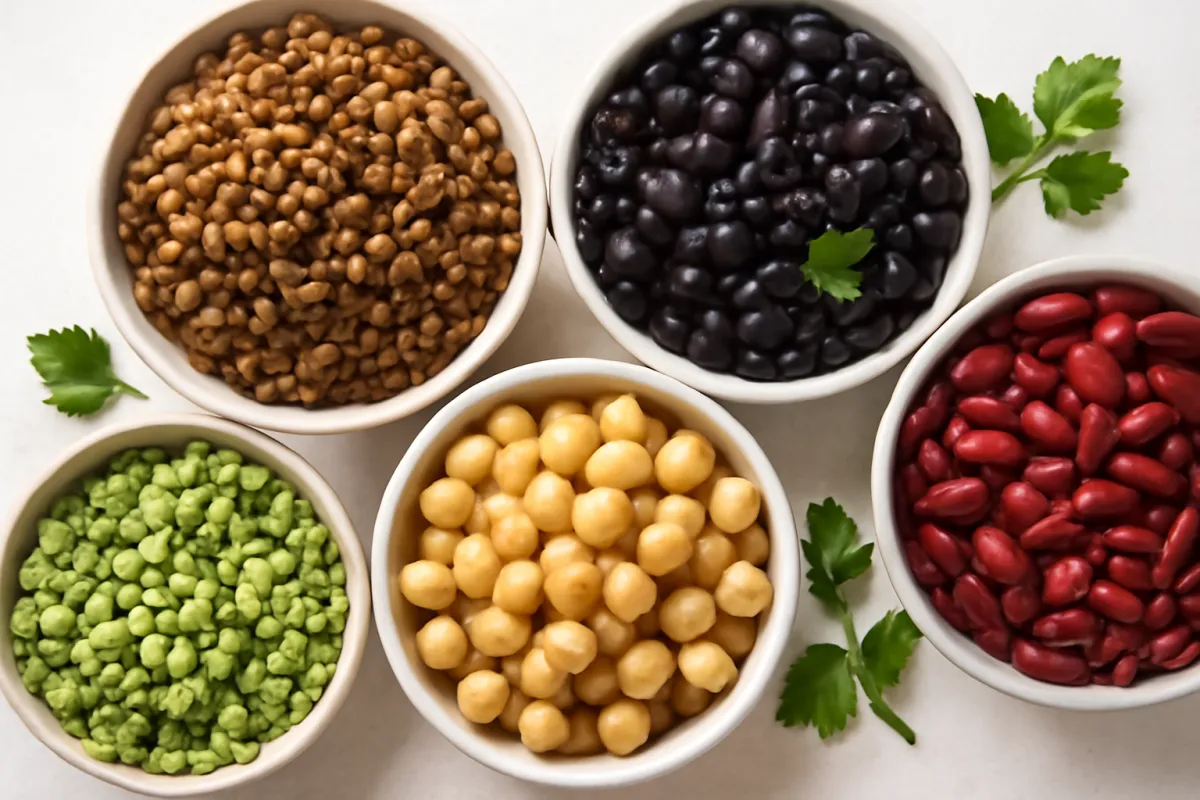
There is no single correct answer here; it is a dial each plan or person sets deliberately based on their chosen carbohydrate ceiling, and our fiber guide covers why keeping some fiber-rich carbohydrate sources, where the budget allows, is worth weighing against a stricter cut.
Foods a low-carb diet typically limits
Across nearly every tier of the spectrum, a handful of categories are consistently limited: added sugar and sweetened beverages, refined grains like white bread, white rice, and most packaged cereal, and, on stricter versions, starchy vegetables such as potatoes and corn. How far these limits extend, a liberal plan allowing small portions, a strict plan removing them almost entirely, is the main variable that separates the tiers described earlier in this review.
This is a structural tradeoff rather than a verdict that these foods are inherently unhealthy; whole grains and legumes in particular are actively emphasized in other evidence-based patterns, including the Mediterranean approach covered in our Mediterranean diet review. They are limited on low-carb plans specifically because of their carbohydrate content relative to whichever ceiling a person has chosen, not because of a general nutritional verdict against them.
A sample low-carb day
Rather than a single prescribed menu, here is one illustrative way a moderate low-carb day, roughly in the 75 to 100 gram carbohydrate range, might be structured. A structurally similar breakfast could be eggs with vegetables and a small piece of fruit; a midday meal might be a salad with a protein, non-starchy vegetables, and a modest portion of legumes or a whole grain; and dinner could follow a similar shape, a protein anchor, a generous vegetable side, and a controlled starch portion if the day’s carbohydrate budget allows it.
A stricter low-carb day would simply narrow the starch and fruit portions further, while a more liberal day would widen them, illustrating how the same basic meal structure stretches across the spectrum described earlier rather than requiring an entirely different set of foods at each tier.
Levels of low-carb: liberal, moderate, and strict
It is worth restating the three commonly cited tiers together, since they are the organizing idea of this whole review. Liberal low-carb, roughly 100 to 150 grams a day, is often the easiest entry point and includes measured portions of fruit, legumes, and whole grains. Moderate low-carb, roughly 50 to 100 grams, tightens those portions further and is a commonly cited middle ground. Strict low-carb, roughly 20 to 50 grams, begins to overlap with keto’s range and, at its lower end, becomes functionally the same diet, covered specifically in our keto diet review.
Moving between tiers over time, starting liberal and tightening gradually, or the reverse, loosening a strict approach toward something more sustainable, is a commonly described practical strategy rather than a sign that the earlier tier failed.
Choosing the right tier for you
There is no universally correct tier, and the honest way to choose is to weigh sustainability against strictness rather than assuming the strictest option produces the best result. A liberal low-carb approach, roughly 100 to 150 grams a day, tends to require the least adjustment from a typical diet and leaves the most room for fruit, legumes, and occasional whole grains, which some people find considerably easier to maintain for months or years. A moderate approach tightens that further and commonly produces a more noticeable shift in appetite and energy for people who respond well to lower carbohydrate intake. A strict approach, bordering on keto, asks for the most planning and the most significant food list changes, and suits people specifically pursuing the metabolic effects keto targets or who find a firmer boundary easier to follow than a flexible one.
Several practical signals can help with the choice. Someone who finds moderate portion control easier than outright elimination usually does better starting liberal and tightening only if needed. Someone managing a specific goal under medical supervision, such as blood sugar control, may be guided by a clinician toward a stricter tier with closer monitoring. And someone who has tried and abandoned very strict diets before is often better served starting at the liberal end and building consistency first, since a sustainable moderate approach followed for months commonly outperforms a strict approach abandoned after two weeks. None of this is a personal prescription; it is a framework for the kind of conversation worth having with a doctor or registered dietitian who knows an individual’s health history.
Transitioning between tiers over time
Moving between tiers is a normal, commonly described part of following a low-carb approach long-term, not a sign that an earlier choice failed. Someone starting liberal might tighten toward moderate once the initial adjustment feels comfortable and they want a firmer result; someone who started strict or at keto’s level might deliberately loosen toward a moderate or liberal tier for easier long-term maintenance, particularly around travel, social events, or simply after reaching an initial goal.
The practical mechanics of moving between tiers are the same regardless of direction: adjust the daily carbohydrate ceiling, and let fruit, legume, and whole grain portions expand or contract to match it, while keeping the non-starchy vegetable and protein base steady throughout, since that base is the one part of the pattern that does not need to change between tiers. Reassessing the chosen tier every few months against how it is actually going, energy, hunger, adherence, and any relevant lab markers discussed with a doctor, is a more useful habit than committing permanently to whichever tier was picked on day one.
What the research says about low-carb and weight
Low-carbohydrate diets are among the most heavily studied dietary approaches in weight research, and numerous trials and reviews commonly cited in this area report that low-carb eating produces effective weight loss, in some studies comparable to or modestly better than low-fat diets over shorter follow-up periods, often attributed to the appetite-reducing effect of higher protein and the removal of some refined, calorie-dense carbohydrate sources. It is equally well established in the same body of research that these differences tend to narrow over longer follow-up, commonly cited at a year or more, with adherence becoming the dominant factor across nearly every diet type rather than the specific macronutrient split.
The honest summary commonly drawn from this research is that low-carb eating works well for people who find it sustainable, not that it holds a unique metabolic advantage over every other calorie-matched approach; our calorie deficit review covers the calorie mechanics that ultimately govern any diet’s weight effect.
Low-carb and blood sugar
Because carbohydrate is the main dietary driver of blood glucose, low-carb eating is frequently discussed in relation to blood sugar management, and research in people with type 2 diabetes has reported improved blood sugar markers on various low-carb approaches, generally under clinical supervision and with medication reviewed alongside the dietary change. As with keto, this is the area carrying the most serious caution: anyone using insulin or a sulfonylurea medication needs coordinated medication adjustment before cutting carbohydrate meaningfully, since an unadjusted dose against a lower carbohydrate intake can cause dangerously low blood sugar.
This caution scales with strictness: a liberal low-carb reduction carries a smaller risk than a strict low-carb or keto-level cut, but anyone on glucose-lowering medication should still involve their prescribing clinician before making the change, rather than assuming a milder reduction is automatically safe to manage alone. Home blood glucose monitoring, where a doctor has already set a person up with it, is one of the more direct ways to see how a specific tier is actually affecting an individual’s own blood sugar, rather than relying on general research findings that describe group averages rather than any one person’s response.
Nutrient gaps worth watching on a low-carb diet
Cutting grains, fruit, and legumes, even partially, removes some of the sources most people rely on for fiber, certain B vitamins, and potassium, which is worth watching rather than assuming non-starchy vegetables and protein automatically cover everything those food groups supplied. Fiber is the most commonly flagged gap, since whole grains and legumes are major contributors for a typical diet, and a low-carb plan that does not deliberately substitute with non-starchy vegetables, seeds like chia and flax, or a smaller portion of berries and legumes can land well under commonly cited daily fiber targets, covered in our fiber guide.
Potassium and magnesium can also run lower on a low-carb diet, partly because some of their common sources, potatoes, beans, and certain fruits, are among the foods being limited, and partly through the same fluid and sodium shifts described for keto, though generally to a lesser degree on a more liberal low-carb tier. Leafy greens, avocado, nuts, and fish are commonly cited ways to keep these minerals up without relying on the limited foods. None of this means a low-carb diet cannot be nutritionally adequate; it means these specific nutrients are worth paying attention to rather than assuming they take care of themselves, and a registered dietitian can review an individual’s actual intake far more precisely than a general list like this one.
Common mistakes when starting low-carb
A handful of recurring patterns undercut a low-carb approach more often than any single food choice does.
- Treating “low-carb” as a single fixed number. Picking a tier, liberal, moderate, or strict, deliberately, rather than guessing, makes the whole approach easier to plan around and judge.
- Replacing carbohydrate with processed “low-carb” products instead of whole foods. Many packaged low-carb snacks and sauces carry sugar alcohols, lower overall nutrient quality, or hidden carbohydrate that undercuts the pattern’s intent.
- Cutting fruit entirely on a liberal or moderate plan. Unless following a strict low-carb or keto approach specifically, moderate fruit does not need to be eliminated.
- Ignoring fiber as carbohydrate drops. Grains and legumes are major fiber sources for most people; a low-carb plan that cuts them without a deliberate fiber substitute, through non-starchy vegetables or seeds, can leave a real gap.
- Expecting low-carb to work uniquely better than any other sustainable, calorie-appropriate diet. The evidence points to effective, not uniquely superior, outcomes compared with other approaches people can actually stick with.
Who should check with a professional first
A moderate or liberal low-carb approach is generally considered reasonable for most healthy adults without a specific medical caution, but several groups should involve a doctor before starting, especially at the stricter end of the spectrum. Anyone with diabetes managed with insulin or a sulfonylurea needs coordinated medication review, since cutting carbohydrate without adjusting medication can cause dangerously low blood sugar.

People with kidney disease should discuss the protein load of a low-carb diet with their doctor, and pregnant or breastfeeding individuals should raise any significant dietary change with their obstetric provider rather than adopting one from a general-audience article. None of the information in this review substitutes for that kind of individualized medical input.
How low-carb compares to other eating patterns
Low-carb sits in direct contrast to the Mediterranean pattern covered in our Mediterranean diet review, which treats whole grains and legumes as daily staples rather than foods to limit, though both patterns share an emphasis on vegetables, protein quality, and minimizing refined, processed food. Intermittent fasting is a separate axis entirely, a timing approach rather than a macronutrient one, covered in our intermittent fasting review, and it can technically be combined with any tier of low-carb eating.
Within the low-carb category itself, the main comparison that matters is the one this review has returned to throughout: general low-carb eating against its strictest version, keto, detailed fully in our keto diet review. Choosing between them is less about which is objectively better and more about which carbohydrate ceiling, and which resulting food list, a person can sustain.
Reading labels on a low-carb diet
Packaged food labels are where low-carb carbohydrate budgets most commonly get derailed, since sauces, dressings, flavored yogurts, and snack bars marketed as healthy frequently carry added sugar or starch that is easy to miss without checking the total carbohydrate and added sugar lines directly. Our nutrition label guide and hidden sugar guide both cover reading those lines accurately rather than relying on front-of-package marketing claims.
“Net carbs” claims on some low-carb-marketed products deserve particular scrutiny, since the method of subtracting fiber and sugar alcohols from total carbohydrate is not standardized across brands, and checking the actual total carbohydrate and ingredient list is more reliable than trusting a front-of-package claim.
Low-carb on a budget
A general low-carb diet does not require expensive specialty products, and the core of the pattern, eggs, chicken thighs, ground meat, canned fish, frozen non-starchy vegetables, and, on more liberal versions, dried or canned legumes, is among the more affordable way to eat within it. Dried and canned legumes in particular are some of the cheapest protein and fiber sources available, which is a practical argument for including them on any but the strictest low-carb tier.
Leaning on frozen vegetables when fresh is costly, buying proteins in bulk where storage allows, and skipping the marked-up specialty low-carb snack aisle in favor of whole foods keeps the pattern accessible on an ordinary grocery budget. Our budget grocery list guide and eating healthy on a budget review both apply directly here.
Eating out on a low-carb diet
Restaurants are generally easier to navigate on a liberal or moderate low-carb plan than on strict keto, since most menus include a protein and vegetable combination that fits without much modification, and a moderate carbohydrate side, rice, a piece of bread, or a small portion of potato, can often still fit within a liberal daily budget. Asking for a sauce or dressing on the side avoids hidden sugar, and choosing a side salad or extra vegetables over fries is a straightforward swap at almost any restaurant.
On a stricter low-carb day, the same strategies used for keto apply: a protein with a non-starchy vegetable side, skipping the bread basket, and treating any starch on the plate as optional rather than default. Buffets and hotel breakfasts tend to be more workable than they first appear on any tier, since eggs, meat, cheese, and vegetables are almost always available in some form, and building a plate around those rather than pastries and cereal keeps a travel day reasonably close to whichever tier a person is following without requiring a special restaurant or a long search for a specific menu item.
A quick checklist for starting low-carb
- Choose a tier deliberately, liberal, moderate, or strict, rather than a vague sense of “fewer carbs,” so there is a clear reference point to plan around and judge.
- Build meals around protein and non-starchy vegetables first, then add fruit, legumes, or whole grains according to your chosen tier’s budget.
- Keep berries and other lower-carbohydrate fruit in reasonable reach rather than treating all fruit as off-limits, unless following a strict or keto-level plan specifically.
- Check labels directly for added sugar and starch, especially in sauces, dressings, and packaged snacks.
- Talk to a doctor first if you take insulin or another glucose-lowering medication, have kidney disease, or are pregnant or breastfeeding.
- Judge the approach over several weeks, and feel free to move between tiers if one proves easier or harder to sustain than expected.
The bottom line
A low-carb diet is a broad category, commonly cited from roughly 50 to 150 grams of carbohydrate a day depending on strictness, built around protein, non-starchy vegetables, and natural fat, with keto as its strictest, most specific version rather than a separate diet. Unlike keto, a general low-carb approach commonly leaves room for moderate fruit, legumes, and some whole grains, which is a large part of why many people find it easier to sustain long-term. The research shows effective, commonly cited weight and blood sugar benefits without proof of a unique metabolic advantage over other sustainable, calorie-appropriate diets, and anyone on diabetes medication, with kidney disease, or who is pregnant should talk to a doctor before starting. Pair this review with our keto diet review and daily carb guide for the rest of the framework.
This evidence review is published for general education about how low-carbohydrate eating is commonly described in nutrition and clinical research, and it is not medical or dietary advice, and reading it creates no clinician-patient relationship. Every range, gram figure, and sample structure above is an illustrative, commonly cited reference for reasoning about the category’s shape, not a personal prescription, a guaranteed outcome, or a measured nutrition claim about any specific food. This article does not diagnose any condition. Anyone with diabetes, kidney disease, another chronic condition, or who is pregnant or breastfeeding, should talk to a doctor or registered dietitian before making a significant change to carbohydrate intake.
Frequently asked questions
What is a low-carb diet, in simple terms?
A low-carb diet is an eating pattern that reduces carbohydrate intake below what is typical in a standard Western diet, generally without pushing as far as keto's strict ceiling. Commonly cited ranges for a general low-carb approach run from roughly 50 to 150 grams of carbohydrate a day, compared with a typical unrestricted intake that can run well past 200 grams, and the diet is built around more protein, non-starchy vegetables, and natural fat in place of grains, added sugar, and some starchy foods. It is a broad category with real variation in strictness rather than one fixed plan.
What is the difference between low-carb and keto?
Keto is one specific, strict version within the broader low-carb category, not a separate or competing diet. A general low-carb diet commonly allows roughly 50 to 150 grams of carbohydrate a day and can include moderate amounts of fruit, legumes, and even some whole grains, without necessarily aiming for measurable ketosis. Keto pushes further, to a commonly cited ceiling near 20 to 50 grams a day, specifically to shift the body toward burning fat and ketones for fuel. Every ketogenic diet is low-carb, but most low-carb eating is not strict enough to be ketogenic, which our companion keto review covers in full.
How many carbs should you eat on a low-carb diet?
There is no single official number, and commonly cited low-carb ranges span fairly widely: a liberal low-carb approach is often described around 100 to 150 grams a day, a moderate approach around 50 to 100 grams, and a stricter low-carb approach closer to 20 to 50 grams, which begins to overlap with keto's range. Where a given person lands depends on goals, activity level, and medical history, and is a reasonable question to work through with a doctor or registered dietitian rather than a number this general review can assign.
Can you eat fruit on a low-carb diet?
Yes, generally in moderation rather than elimination, which is one of the clearer differences from stricter keto. Berries are commonly cited as lower-carbohydrate fruit choices, and other fruit, apples, citrus, melon, can fit a low-carb pattern in reasonable portions depending on how strict the specific plan is and what the person's daily carbohydrate budget allows. This is a structural description of how fruit commonly fits, not a personal recommendation, and any individual's fruit allowance depends on their chosen carbohydrate range.
Can you eat legumes and whole grains on a low-carb diet?
It depends on how strict the specific plan is, and this is one of the more useful distinctions within the low-carb category. A liberal or moderate low-carb approach often includes measured portions of legumes and whole grains, since both carry meaningful fiber and nutrients alongside their carbohydrate, while a stricter low-carb plan, and especially keto, generally limits or removes them. There is no universal rule here; it is a dial each person or plan sets based on their chosen carbohydrate ceiling, not a fixed inclusion or exclusion.
How much weight can you lose on a low-carb diet?
There is no reliable individual number to give, and any specific figure would be an invented guess rather than a fact. Weight change depends on total calorie intake relative to what the body burns, and low-carb eating does not override that; what commonly cited research suggests is that higher protein and fiber intake, along with fewer refined, calorie-dense carbohydrate sources, can make a calorie deficit easier for some people to sustain. Our calorie deficit review covers the underlying mechanics, and a doctor or registered dietitian can help set an appropriate, individualized goal.
Is a low-carb diet safe for everyone?
A moderate low-carb approach is generally considered reasonable for most healthy adults, but it still carries cautions for specific groups: people with diabetes on insulin or other glucose-lowering medication need coordinated medication adjustment, people with kidney disease should discuss the diet's protein load with their doctor, and pregnant or breastfeeding individuals should raise any significant dietary change with their obstetric provider. This article is general education, not a personal medical clearance, and anyone with a chronic condition should talk to a doctor before making a significant change.
Do you need to count carbs precisely on a low-carb diet?
Not necessarily, though many people find tracking helpful, at least at the start, since "eating low-carb" by feel without checking labels often lands higher than intended, particularly with sauces, dressings, and packaged snacks that carry hidden sugar or starch. A simpler approach some people use is building meals around a protein, a generous portion of non-starchy vegetables, and a controlled portion of a carbohydrate source, which approximates a moderate low-carb structure without gram-by-gram counting. Either approach is a personal preference rather than a requirement.

Hamza Hai is the editor of NourishMark. She holds an MBA and reviews the site's articles against our editorial standards, checking that every figure is labelled for what it is, that nothing is presented as verified fact without a source the reader can check, and that the writing stays useful to a non-specialist.

Dr. Shayaan Khan is the medical reviewer for NourishMark. He holds an MBBS from MGM Medical College, Navi Mumbai, and is the author of published research including a narrative review of postpartum anxiety and depression in Mental Health Science. He has taught physiology at university level. He reviews the site's health content for medical accuracy: that physiology and mechanisms are described correctly, that no claim is stated more strongly than the evidence behind it, and that anything specific to an individual reader is sent to that reader's own clinician.
Not medical advice. Dr. Khan reviews NourishMark's health content for medical accuracy. He is not a registered dietitian, he does not hold a United States practising licence, and he is not your doctor. His review does not make anything here medical advice. Always talk to a qualified health professional about your own situation, and never delay or stop care because of something you read here.