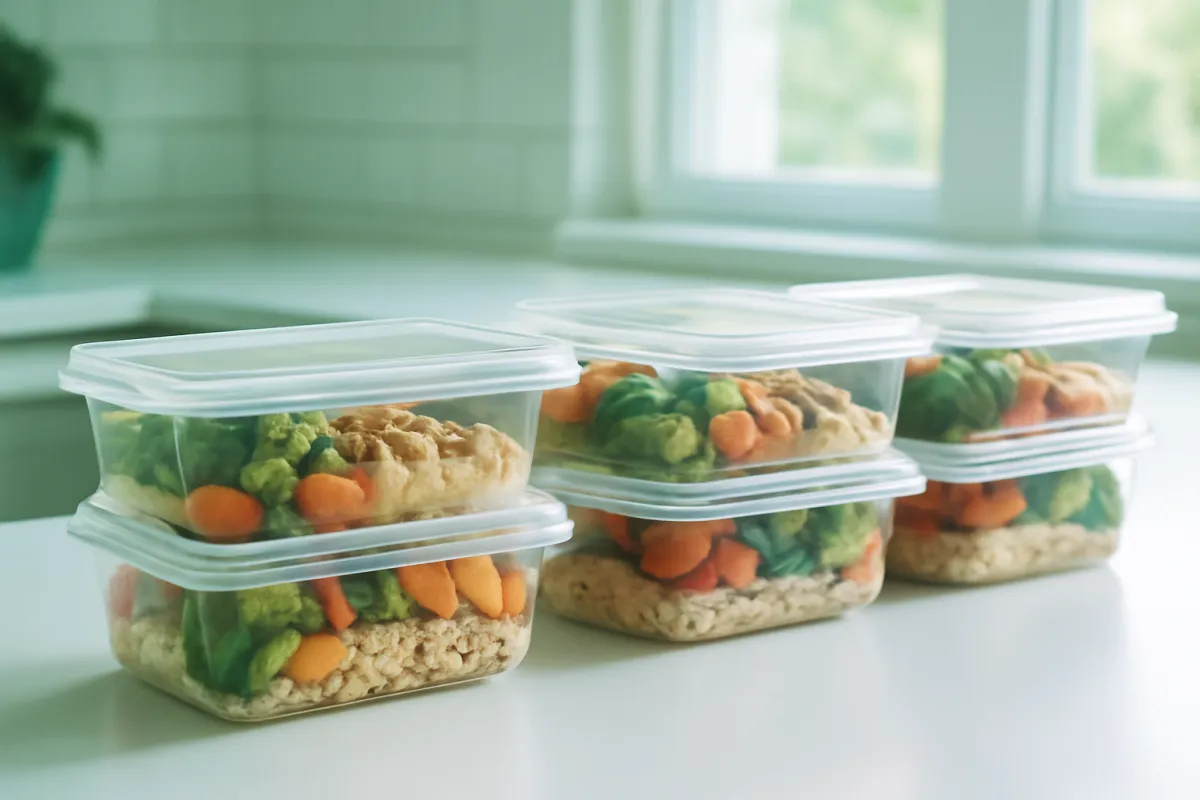
What's in this review
- What a school lunch actually has to do
- The balanced lunchbox shape
- Macro basics for a packed lunch
- How much lunch: calories in context
- Protein: the anchor of the box
- Carbohydrates that last until the final bell
- Fruits and vegetables: the half that comes home uneaten
- Fats: small amounts doing real work
- Fiber: the quiet shortfall
- Added sugar: where it hides in a lunchbox
- Drinks: the quiet calorie decision
- Three illustrative lunch builds
- Build one: the classic sandwich box
- Build two: the no-sandwich bento
- Build three: the thermos lunch
- Snacks that carry the afternoon
- Picky eaters: strategies that lower the stakes
- Allergy policies and protein swaps
- Keeping a packed lunch safe until noon
- Batch-packing the week without burnout
- A worked example: one packed week
- When to bring in a professional
- The bottom line
Short answer: A balanced school lunch borrows the commonly cited plate shape: roughly half fruits and vegetables, a quarter protein, a quarter whole grains, with water or milk to drink. One deliberate protein anchor per box, such as an egg, yogurt, cheese, meat, beans, or edamame, commonly lands an illustrative 15 to 25 grams of protein without tracking. Set sweet defaults once, since drinks, flavored yogurts, and bars hide most added sugar.
Every September, millions of lunchboxes leave home carrying the same quiet gamble: whether the food inside will actually feed the afternoon, and whether any of it will get eaten at all. The packed school lunch is one of the highest-repetition meals in family life, made 180ish times a year per child, usually at seven in the morning, and it tends to be assembled by habit rather than by any plan. That repetition is exactly what makes it worth a plan: a small improvement to the default box compounds across a whole school year.
This evidence review covers back-to-school lunch nutrition from the ground up: the balanced shape a lunchbox borrows from our balanced plate walkthrough, the macro basics scaled to a school day, three illustrative lunch builds with calorie and protein ranges, picky-eater strategies that lower the daily standoff, allergy-aware swaps, and the food-safety and batch-packing logistics that keep the whole routine alive past October. Everything here is general education for families, not pediatric or dietary advice, and every calorie and gram is a commonly cited illustrative figure rather than a target for any specific child. The wellness tools can frame the adult side of the household’s day while you read.
Key takeaways
- A balanced lunchbox borrows the commonly cited plate shape: roughly half fruits and vegetables, a quarter protein, a quarter whole grains, water or milk to drink.
- One deliberate protein anchor per box, an egg, yogurt, cheese, meat, beans, or edamame, commonly lands an illustrative 15 to 25 grams of protein without any tracking.
- The lunchbox is where added sugar hides: drinks, flavored yogurts, and bar-shaped snacks can quietly make the whole box sweet unless the defaults are set once.
- For picky eaters, most of the box should be reliably accepted food, with one small, pressure-free portion of something newer alongside: exposure over bargaining.
- These are illustrative, population-level figures: a child's actual needs vary with age, size, growth, and health, so confirm anything specific with a pediatrician or registered dietitian.
What a school lunch actually has to do
A packed lunch has a narrower job than most nutrition writing admits, and naming the job makes the packing easier. It has to bridge the long gap between breakfast and the end of the school day with steady energy, deliver a meaningful share of the day’s protein, fruit, vegetables, and fiber, survive four or five hours in a bag, and, above all, actually get eaten by a child sitting in a loud room on a short clock. A nutritionally perfect box that comes home full has delivered exactly nothing.
That last constraint is the honest one, and it shapes everything in this evidence review. School lunch periods are short, social, and distracting, so packed food needs to be easy to open, easy to eat, and familiar enough not to be traded away or abandoned. The practical standard is not the best possible lunch but the best lunch that reliably disappears, improved patiently over a school year. Parents deciding between packing and the cafeteria line can hold both options to the same standard, because the question is never the category, it is the contents and whether they get eaten.
The balanced lunchbox shape
The lunchbox does not need its own nutrition theory; it borrows the commonly cited plate shape our balanced plate walkthrough lays out and folds it into a box. Roughly half the box goes to fruits and vegetables, about a quarter to a quality protein, about a quarter to whole grains or a starchy carbohydrate, with a small amount of healthy fat arriving inside the other components and water or plain milk riding alongside as the default drink.
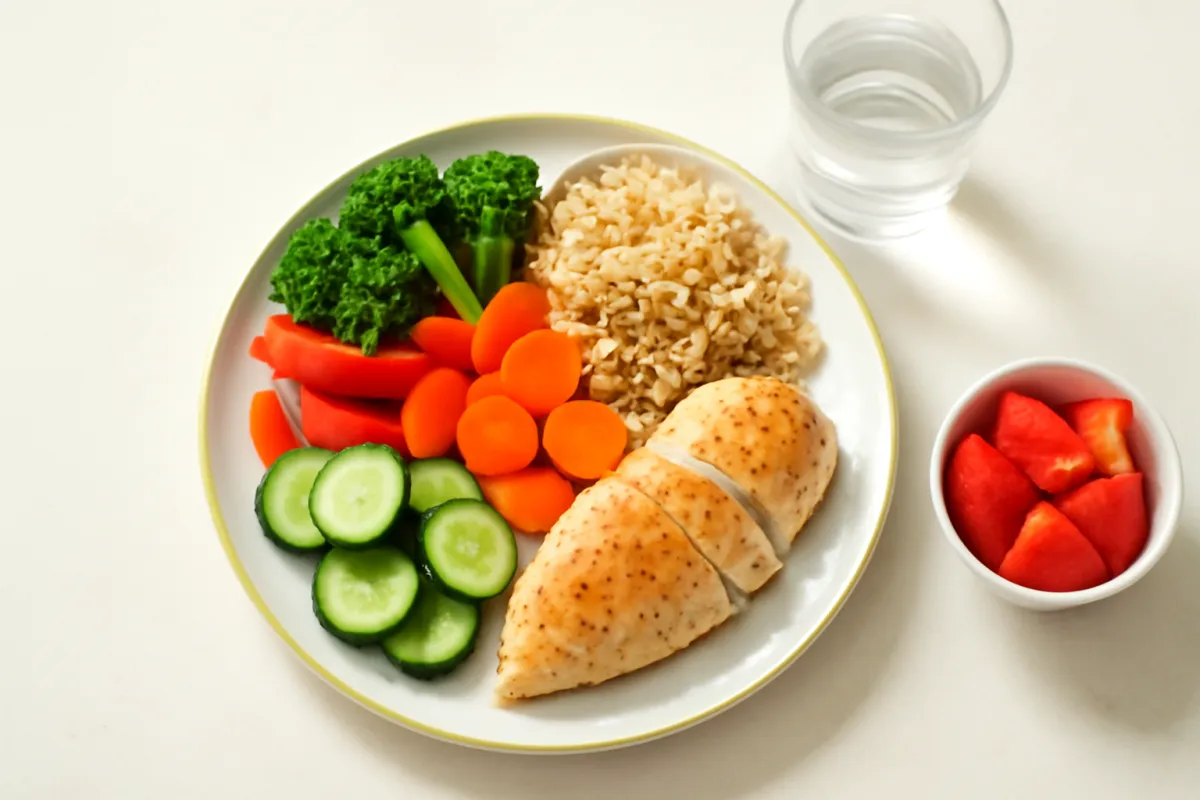
In box terms the shape is concrete: a whole-grain sandwich with a real filling covers the grain and protein quarters, a clementine and some cucumber sticks cover the produce half, and a water bottle finishes it. Bento-style boxes make the shape almost automatic, because the compartments enforce the proportions visually, but a plain container and a sandwich bag manage the same shape with no equipment. The proportions are a flexible general guideline, not a measurement: some days the vegetables shrink and the fruit doubles, and across a week the shape matters far more than any single box.
Macro basics for a packed lunch
The three macronutrients each carry a distinct job through a school afternoon, and a box that includes all three is the whole strategy. Carbohydrates supply the readiest fuel; protein and fat slow the meal down and stretch its staying power; fiber, riding along with whole grains and produce, extends the same effect. A lunch of refined carbohydrate alone, crackers, white bread, sweet snacks, tends to be eaten fast and spent fast, which is the pattern behind the classic mid-afternoon slump many families describe.
For reference points, the National Academies’ Dietary Reference Intakes, the same framework behind our daily nutrient reference tables, set protein recommendations for children and teens by body weight, modestly higher per kilogram than the adult figure, and set fiber guidance proportional to calories at a commonly cited 14 grams per 1,000 calories across ages. None of that demands gram-counting at seven in the morning. The packing version of the science is one sentence: every box gets a protein anchor, a whole-grain carbohydrate, produce for half the space, and a little fat, and the macros land close enough without arithmetic. These are population-level reference values, educational rather than prescriptive, and a child’s individual needs belong in a conversation with a pediatric professional.
How much lunch: calories in context
Calorie talk around children deserves a lighter touch than the adult version in our calorie needs evidence review, and this section stays deliberately general. Children’s energy needs vary enormously with age, size, growth spurts, and activity, so no article can name the right number for any specific child, and none of the figures here are targets. The useful general frame is proportional: lunch commonly supplies somewhere around a quarter to a third of a day’s food, and the illustrative builds later in this evidence review land roughly in the 400 to 600 calorie range, with older, larger, and more active students commonly at or past the top of it.
Where an illustrative school day's food commonly lands
One general way a school-age day of eating distributes across meals. Illustrative shares, not a plan for any child.
Segments sum to 100 percent of an illustrative day. Real days shift constantly with appetite, sport schedules, and growth, which is normal rather than a problem.
The other calibration tool is the child’s own appetite. Many children regulate intake across days better than adults expect when they are offered balanced options on a reliable schedule, eating lightly one day and heartily the next, and a returned half-lunch is often information about portion size rather than a crisis. The parental job, commonly framed, is deciding what is offered and when; how much gets eaten belongs mostly to the child. Persistent concerns about a child’s intake, weight, or growth are exactly what pediatric checkups exist for.
Protein: the anchor of the box
Protein is the component most likely to go missing from a hastily packed lunch, because the convenient fillers, crackers, fruit snacks, granola bars, are nearly all carbohydrate. The fix costs one decision: every box gets one deliberate protein anchor. Our protein evidence review covers the daily science; the lunchbox translation is that a single real anchor commonly puts an illustrative 15 to 25 grams of protein in the box, a sensible midday share when breakfast and dinner carry their own.
Illustrative protein in common lunchbox anchors
Commonly cited approximate figures per typical lunchbox portion. Illustrative, not measurements of any product.
Bars scale to the tuna pouch at 100 percent. Pairing two smaller anchors, an egg plus a cheese stick, reaches the same range as one large anchor; the per-food detail lives in our protein reference tables.
The anchors rotate to prevent fatigue: eggs, yogurt, cheese, deli turkey, tuna, leftover chicken, beans, hummus, edamame, cottage cheese. Two smaller anchors combine as well as one large one, which suits grazers and bento boxes, and the full per-food numbers live in our protein food reference. As with every figure here, these are commonly cited illustrative values; children’s needs scale with age and size, and specifics belong with a pediatric professional.
Carbohydrates that last until the final bell
Carbohydrate is the fuel a school afternoon actually runs on, so the packing question is never whether to include it but which kind lasts. Whole and intact grains, whole-wheat bread and wraps, brown rice, oats, whole-grain crackers and pasta, carry their fiber with them, and fiber slows digestion enough to stretch the same calories across more of the afternoon. Refined versions of the same foods do the same job faster and quit sooner, which is fine occasionally and tiring as a daily default.
The practical move is upgrading the default carbohydrate slot rather than policing individual days: the sandwich bread becomes whole-grain, the cracker box in the pantry becomes the whole-grain version, the thermos rice trends brown. Starchy vegetables and fruit carry carbohydrate too, which is partly why the produce half of the box supports the energy job and not just the vitamin one. Portion instincts can stay relaxed: the grain quarter of the box, roughly a sandwich’s worth or a fist of rice or pasta, is a commonly cited, comfortable illustrative frame for a school-age lunch, adjusted freely for age and appetite. The daily carbohydrate picture, including why quality matters more than grams for most people, lives in our carbohydrate evidence review.
Fruits and vegetables: the half that comes home uneaten
Produce holds half the balanced box on paper and the record for coming home untouched in practice, so this half deserves the most packing craft. The reliable pattern is one fruit plus one vegetable per box, both chosen for lunchroom logistics: easy to open, easy to eat in ninety seconds, no utensils, no mess. Clementines, grapes, berries, apple slices treated against browning, banana in its own wrapper; cucumber sticks, snap peas, cherry tomatoes, pepper strips, baby carrots. Whole large fruits and salads that need assembly lose on logistics, not nutrition.
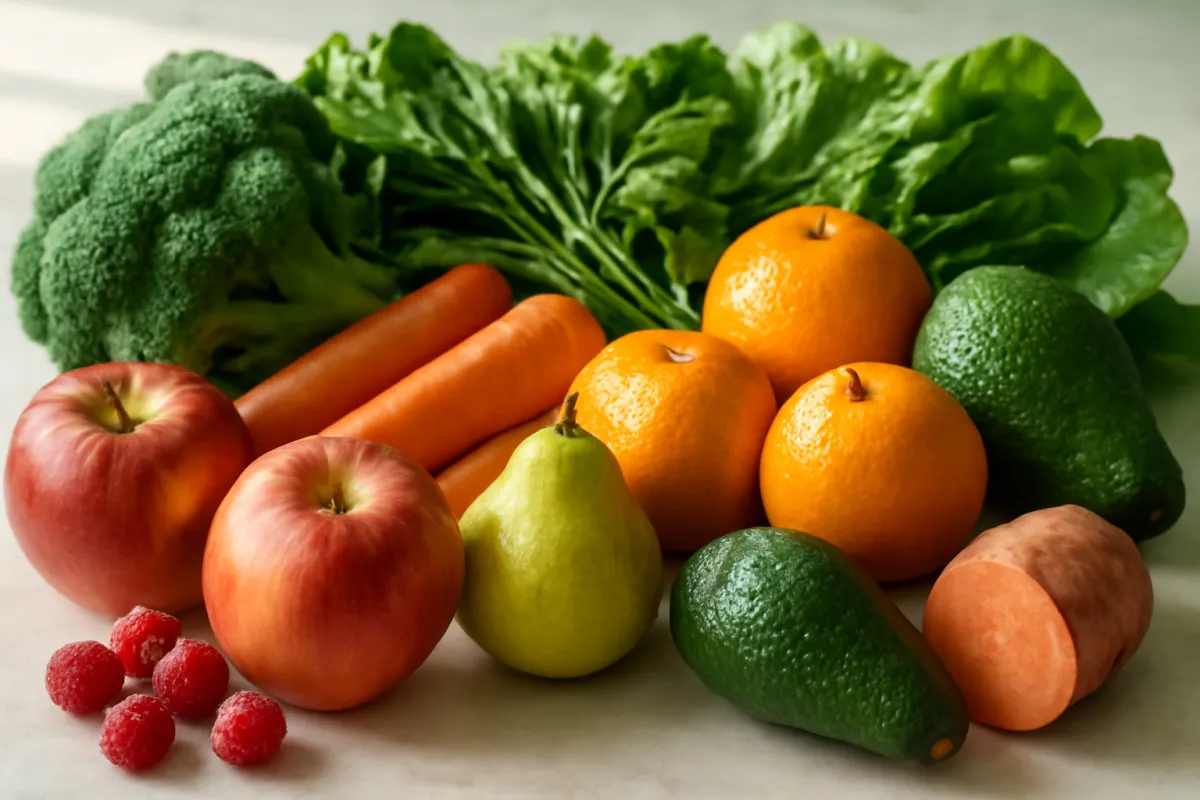
Two quiet levers raise the eaten rate. Cutting matters: the same apple returns whole and disappears sliced, a pattern parents report so consistently it is almost a law of the lunchbox. And dips convert vegetables from obligation to activity: a small container of hummus, yogurt-based dressing, or nut-free bean dip regularly doubles what the vegetables’ own merits achieve. Variety across the week beats variety within the day; two produce items per box, rotated, outperforms an ambitious medley that overwhelms a short lunch period. Frozen and canned options, chosen plain, count fully toward the half and survive the budget weeks.
Fats: small amounts doing real work
Fat needs the least packing effort of the three macros because it arrives inside foods already doing other jobs, but it earns a section because lunchboxes drift to extremes. A box with no fat at all, fat-free everything plus plain produce, commonly eats light and quits early, because fat contributes meaningfully to how long a meal satisfies. A box where fat dominates, fried snacks and processed items end to end, crowds out the produce and grain jobs. The balanced middle mostly packs itself: cheese, eggs, yogurt, hummus, meat, avocado, and seed butters all bundle fat with protein.
The quality lean is the same one our adult reviews describe: most of the fat coming from foods like dairy, eggs, avocado, olive-oil-based dips, nuts and seeds where policies allow, rather than from deep-fried and heavily processed items, as a general pattern rather than a rule. In practice, choosing a real protein anchor nearly always settles the fat question at the same time, which is one more argument for anchoring every box. No fat number needs computing for a child’s lunch, and none is offered here; the household-level science lives in the daily references, and child-specific questions belong with a pediatric professional.
Fiber: the quiet shortfall
Fiber is the nutrient a snack-heavy school day most reliably underdelivers, because typical kid convenience foods, white bread, crackers, fruit snacks, bars, are exactly the category fiber has been refined out of. Our fiber evidence review covers the commonly cited guidance, proportional to calories at about 14 grams per 1,000, and the practical reading for a lunchbox is simple: the fiber arrives automatically wherever the earlier sections were followed, and almost nowhere else.
Every fiber contributor is already in the balanced box. The whole-grain bread or wrap carries several grams the white version drops. The fruit and vegetable half contributes with every item, skins on where practical. Beans, hummus, and edamame double as protein anchors and fiber sources, which makes them the quiet overachievers of the category. A box built to the balanced shape therefore covers its share of the day without a single labeled decision, while a box of refined snack items misses almost entirely, and the difference commonly shows up as how soon the afternoon appetite comes roaring back. One caution runs the other way: fiber increases work best gradually and alongside fluids, so a household upgrading its defaults does better phasing changes in over weeks than overhauling every slot on the first school day.
Added sugar: where it hides in a lunchbox
The lunchbox is one of the main doors added sugar walks through in a child’s day, and it rarely looks like dessert when it does. The commonly flagged carriers are the box’s supporting cast: juice drinks and pouches, flavored yogurts and flavored milks, granola and cereal bars, fruit snacks that are candy in produce costume, and sweetened spreads. Each contributes more than its size suggests, and a box assembled entirely from these can be sweet end to end without containing a single cookie.
The workable strategy sets defaults once instead of negotiating daily. Water or plain milk becomes the standing drink. Whole fruit owns the sweet slot most days. Yogurt trends plain or lightly sweetened, dressed up with the fruit already in the box. Bar-shaped items get read by their labels, using the skills from our sugar label walkthrough, and the sweeter ones move from daily slot to occasional inclusion. None of this argues for zero-sugar strictness, which tends to backfire socially and psychologically; a treat that appears sometimes, openly, keeps the whole system honest. The daily context, including the commonly cited guidance on added-sugar shares of calories, lives in our added-sugar evidence review, and it makes the lunchbox’s leverage obvious: fix the default drink and snack slots, and most of the problem retires.
Drinks: the quiet calorie decision
The drink slot decides more of the lunchbox’s sugar and calorie profile than any food slot, because sweetened drinks deliver their load without registering as food. A juice pouch or sweetened milk carton can rival the dessert it rides beside, and thirst refills faster than appetite. That makes the drink the single highest-leverage default in the whole box: set it once, and the daily decision disappears.
Water is the standing answer, and an insulated bottle packed cold does the job while doubling as the box’s cold source in a pinch. Plain milk, where it suits the child and the family, is the classic alternative and carries protein and other nutrients along with its calories. One hundred percent juice occupies the honest middle: it brings real nutrients but concentrates fruit sugar without fruit fiber, which is why commonly cited guidance treats it as an occasional small serving rather than a default, and why whole fruit in the box outranks its juice in the bottle. Sweetened sodas, sports drinks, and juice cocktails have no daily slot to argue for. Hydration across the school day matters beyond lunch, and the general picture, including how needs scale with activity and heat, lives in our hydration evidence review.
Three illustrative lunch builds
Principles pack no boxes, so the next three sections run the balanced shape as concrete builds, each with an illustrative calorie and protein range consistent with our calorie and protein reference tables. The three cover the main formats a school week actually uses: the sandwich box, the no-sandwich bento, and the thermos lunch. Every number is a commonly cited approximation for typical portions, not a measurement or a target, and portions flex freely with the age and appetite at the table.
The builds share one architecture on purpose. Each has a protein anchor, a whole-grain carbohydrate, a fruit and a vegetable, a small fat source riding inside the other components, and water as the default drink. Held to that architecture, the three formats land in a similar illustrative neighborhood, roughly 400 to 600 calories and 15 to 25 grams of protein, despite containing entirely different foods, which is the point: the shape is the recipe, and the foods rotate underneath it. Families can run their own combinations against the same reference tables, and the wellness tools hold the adult versions of the day’s math.
Build one: the classic sandwich box
The sandwich box is the workhorse for a reason: it assembles in four minutes, survives a backpack, and eats fast in a loud room. The illustrative build: two slices of whole-grain bread at a commonly cited 75ish calories each, filled with two ounces of turkey and a slice of cheese, alongside a clementine, cucumber sticks, and water. The bread contributes several grams of protein itself, the turkey roughly ten, the cheese around seven, and the produce a little more, landing the box near an illustrative 450 to 550 calories and 20 to 25 grams of protein.
The build flexes without leaving its shape. Tuna or egg salad swaps into the filling slot at similar protein; hummus with grated carrot makes the meatless version, leaning on the bread and a cheese stick to keep the protein respectable; a whole-grain wrap or pita replaces the slices for variety. The produce pair rotates through whatever survives the week’s logistics. The common failure modes are both fillings: the barely-filled sandwich, mostly bread and spread, drops the protein anchor and eats like crackers, while the drowning-in-spread version quietly turns the box sweet or greasy. Two ounces of real filling is the difference between the formats, and it costs thirty seconds.
Build two: the no-sandwich bento
The bento build serves the child who abandons sandwiches by week two, and the grazing style many children genuinely prefer: many small compartments, everything eatable by hand, nothing requiring assembly. The illustrative build: a hard-boiled egg and a cheese stick as paired anchors, whole-grain crackers as the carbohydrate, snap peas with a small hummus cup, grapes, and water. The egg’s commonly cited six grams and the cheese’s seven, plus the crackers and hummus, land the box near an illustrative 400 to 500 calories and 15 to 20 grams of protein.
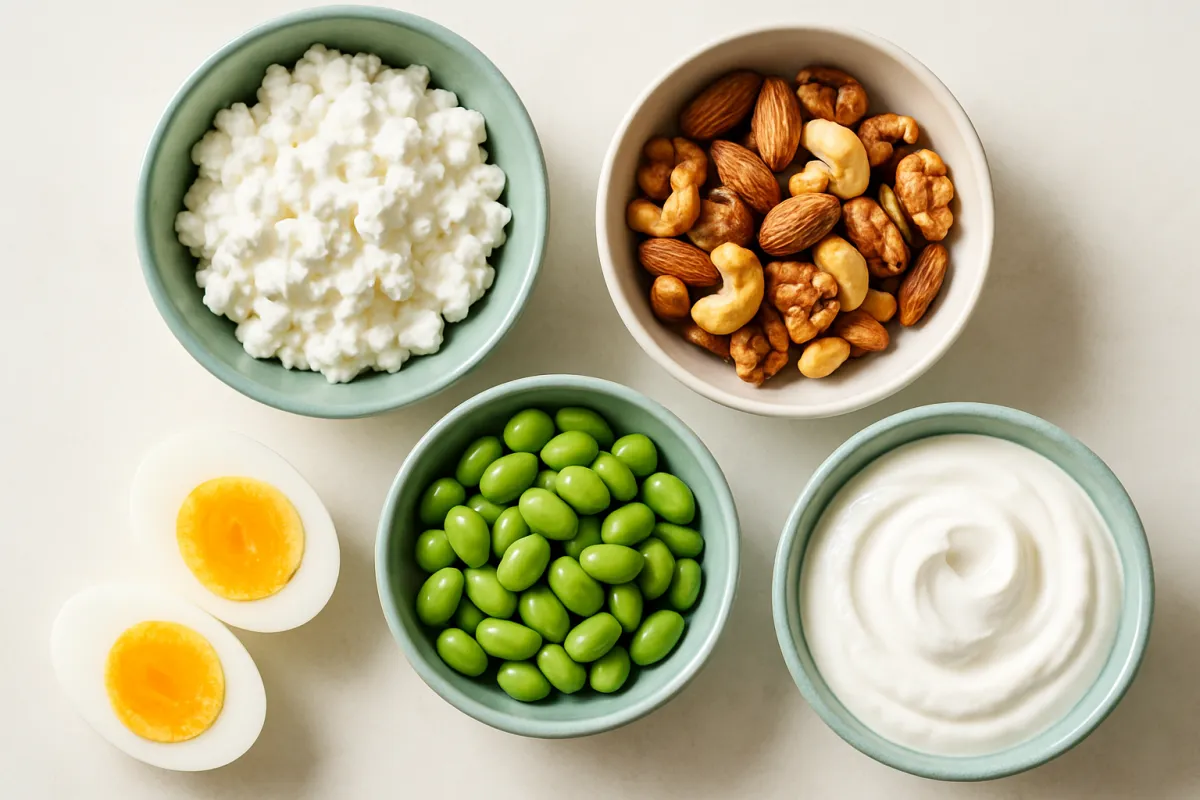
The compartment format has a quiet nutritional advantage: it makes the balanced shape visible at packing time, because an all-beige box looks all-beige in a way a wrapped sandwich never does. It also rotates easily, edamame or leftover chicken cubes into the anchor slots, pepper strips or cherry tomatoes into the vegetable one, berries into the fruit one, which keeps novelty inside a familiar structure, the exact combination picky eaters tolerate best. The watch-out is drift: without a deliberate anchor, bento boxes slide toward crackers-and-fruit-snack assortments that eat like the afternoon slump feels. Two anchors, always, and the format holds.
Build three: the thermos lunch
The thermos build brings hot food to the table and rescues the lunch-packing week’s best shortcut: last night’s dinner. The illustrative build: a preheated insulated thermos of chili, lentil soup, or pasta with meat sauce at a commonly cited 300 to 400 calories and 15 to 20 grams of protein for a school-size portion, with a whole-grain roll or crackers, apple slices, and water completing the shape. Beans and lentils make this the easiest format for meatless protein, and rice-based leftovers lean brown when the pantry default has been upgraded.
Execution is the whole format. The thermos gets preheated with boiling water for a few minutes, emptied, then filled with food heated fully hot, not warm, so it holds a safe temperature until noon; lukewarm food packed at seven is the mistake the format cannot forgive. Wide-mouth containers eat faster on a short clock, and a spoon in the bag saves the whole enterprise. The strategic value is bigger than any single box: cooking one extra portion at dinner converts tonight’s meal into tomorrow’s lunch at near-zero morning cost, which is the meal-prep walkthrough’s core logic scaled to a lunchbox. Food-safety practice for hot holding varies by container and food, so confirm current guidance with a recognized food-safety authority.
Snacks that carry the afternoon
Most school days include at least one snack window, and the snack slot is where the day’s balance is most often won or lost, because it defaults to whatever bar or pouch is nearest the door. The fix mirrors the lunchbox’s: give the slot a shape. A snack that pairs a carbohydrate with a protein or fat, apple with cheese, crackers with hummus, yogurt with berries, banana with a seed-butter packet where policies allow, carries an afternoon meaningfully further than the same calories of refined carbohydrate alone.
The pantry does the daily work if it is stocked once with defaults that fit the shape: cheese sticks, single-serve plain yogurts, washed fruit at reach height, cut vegetables somewhere visible, whole-grain crackers, roasted chickpeas or edamame. The child choosing freely from that shelf cannot choose badly, which converts a daily negotiation into a stocking decision, the cheapest kind of discipline a household gets. Sports afternoons commonly earn a second, larger snack rather than a bigger lunch, timed close to the activity. Our snack reference covers the lighter end of the category with per-item illustrative figures; for a growing child the goal is rarely minimizing snack calories, it is making the calories that fill the slot do afternoon-length work.
Picky eaters: strategies that lower the stakes
Picky eating turns the lunchbox into a negotiation, and the strategies that hold up over time all share one property: they lower the stakes instead of raising them. The foundation is packing from the accepted-foods list, building most of each box from food the child reliably eats, even when that list is short and beige. A lunch period is the worst venue in a child’s day for a food battle, no adult support, social pressure, a ticking clock, so the box is where reliability belongs and ambition goes elsewhere.
Ambition gets its slot anyway, shrunk and defused: one small portion of something newer, packed beside the safe foods, offered with no instruction and no follow-up interrogation. Repeated neutral exposure is the approach most commonly described for widening a narrow range, and its unit of progress is contact, not consumption; a food that gets touched, smelled, and returned untouched a dozen times before it gets eaten is on schedule. Choice does quiet work too: a child who picked between the clementine and the grapes owns the outcome in a way no packed-for-them box achieves. Typical pickiness is a normal developmental phase for many children. Eating so restricted that growth, energy, or family functioning suffers is a different matter, and it belongs with a pediatrician or pediatric registered dietitian, not a packing strategy.
Allergy policies and protein swaps
Modern school lunches get packed inside allergy policies, most commonly nut restrictions, and a family’s lunch system has to work within them without losing its nutrition. The direct swaps are straightforward: seed butters stand in for peanut butter on sandwiches and with apple slices, and the anchor rotation from the protein section, eggs, dairy, meats, tuna, beans, hummus, edamame, runs entirely nut-free already. A box built on this evidence review’s architecture loses nothing to a nut policy except one spread.
Two labels matter more under a policy: check that seed butters and granola-style items are actually produced nut-free where the school requires it, and read the cross-contact lines on anything bar-shaped, because the category runs on shared equipment. Families managing a child’s own diagnosed allergy live under stricter rules than any general article can cover: their food decisions, substitutions, and emergency plans belong with the child’s allergist and care team, and nothing here overrides that guidance. For the unaffected majority, the polite physics of the shared lunch table still apply, and the swaps above make compliance cheap. Where dairy or egg is the restricted category instead, beans, meats, and fortified alternatives carry the anchor job, and the same professional guidance applies to any child eating around multiple exclusions.
Keeping a packed lunch safe until noon
A lunch packed at seven gets eaten around noon, and those five unrefrigerated hours are the food-safety problem the whole system has to solve daily. The commonly cited practice is temperature discipline: perishable foods, meat, dairy, eggs, cut fruit, cooked leftovers, ride cold, and hot foods ride genuinely hot in a preheated thermos, with the lukewarm middle being the zone to avoid. An insulated bag plus a frozen ice pack is the standard cold rig; a frozen water bottle does the same job and becomes the drink by lunchtime, which is the rare optimization with no downside.
The supporting habits are cheap. Packing the night before and refrigerating the whole box means the food starts the day cold instead of racing the clock from room temperature. Shelf-stable components, whole fruit in its skin, crackers, sealed pouches, need no protection and can carry the box on ice-pack-crisis mornings. Insulated bags earn their small cost over paper ones, lunch boxes get washed like dishes rather than like backpacks, and anything perishable that comes home uneaten after a day in the bag gets discarded rather than repacked. Specific safe-holding times and temperatures are published and occasionally updated by food-safety authorities, so confirm current figures there; the figures here describe the commonly cited practice rather than exact rules.
Batch-packing the week without burnout
The nutrition above fails at scale if every box is assembled from scratch at seven in the morning, so the last system is logistical: move the deciding and the prep to a calmer hour, exactly as our meal-prep walkthrough prescribes for adult weeks. A Sunday half-hour covers most of it: wash and cut the week’s vegetables into a grab bin, portion crackers and snacks into cups, boil a week of eggs, and post a short menu so mornings execute instead of invent.
The nightly version takes five minutes: pack the box after dinner, fold in tonight’s extra portion for tomorrow’s thermos, refrigerate the whole thing, and the morning’s job shrinks to adding the ice pack. Children join the system as they grow, first choosing between two options, then packing their own box against the balanced shape, which quietly teaches the architecture this evidence review spells out, and hands the daily labor to its eventual owner. Cafeteria days slot in deliberately as rest days for the system, one or two a week, which keeps the packing sustainable and the child’s relationship with both lunch formats ordinary. A system that survives to June beats a perfect week that dies in September, which is the meal-prep lesson translated whole.
A worked example: one packed week
Run the whole system across one illustrative week. Sunday’s half-hour: eggs boiled, vegetables cut into the grab bin, crackers portioned, a four-line menu on the fridge. Monday is the sandwich box: turkey and cheese on whole-grain, clementine, cucumber sticks, water, an illustrative 500ish calories and low twenties of protein. Tuesday the bento: boiled egg, cheese stick, whole-grain crackers, snap peas with hummus, grapes, mid-400s and high teens. Wednesday the thermos carries Tuesday night’s chili with a roll and apple slices, similar territory. Thursday repeats the sandwich in wrap form with tuna; Friday is the chosen cafeteria day, and the system rests.
Each box held the same architecture while containing different food every day, which is the whole trick: rotation inside a fixed shape delivers variety to the child and simplicity to the packer at once. Across the week the produce half showed up ten times, the protein anchor five, added sugar stayed in its occasional slot, and no morning ran past five minutes of assembly. The numbers stayed in the illustrative 400 to 600 calorie neighborhood without a single day of counting, because the shape did the counting. A real family’s version will differ in every particular, food, portions, policies, appetite, and should; the architecture is the part that transfers.
When to bring in a professional
An honest evidence review about children’s nutrition ends by drawing its own boundary. Everything here is population-level, educational, and illustrative: the plate shape, the builds, the commonly cited reference values from the National Academies’ framework in our nutrient reference tables. None of it is an assessment of any child, and several situations put a family’s questions past what any general article should answer.
Growth concerns lead the list: a child eating notably less or more than seems right, weight or height trends a parent worries over, energy that flags through ordinary days. Restriction beyond typical pickiness belongs there too, an accepted-foods list that shrinks instead of grows, distress around eating, meals that dominate family life. So do diagnosed conditions and allergies, athletic loads heavy enough to raise real fueling questions, and any sign of disordered eating in an older child or teen, where early conversation with a clinician matters most of all. The right doors are the pediatrician first, and registered dietitians, especially pediatric specialists, for the food-level work; school nurses and counselors also see more lunchrooms than any parent and make practical allies. Using this evidence review as background for those conversations is exactly its intended job; substituting for them is exactly not.
The bottom line
Back-to-school lunch nutrition comes down to an architecture, not a menu: half the box fruits and vegetables picked for lunchroom logistics, a quarter whole-grain carbohydrate, a quarter anchored by one real protein, small fats riding inside, water as the standing drink, and added sugar held to its occasional slot by defaults set once. Run it as the sandwich box, the bento, or the thermos, and the numbers land in the same illustrative 400 to 600 calorie, 15 to 25 gram protein neighborhood without counting anything. Pack mostly accepted foods with one small new thing for the picky years, respect the allergy policies and the ice pack, and batch the prep so the system survives to June. Every figure here is commonly cited and illustrative, a child’s actual needs are their own, and the balanced plate walkthrough plus the nutrient reference tables hold the wider context when the lunchbox questions grow into diet ones.
This evidence review is general nutrition education for families and is not pediatric, medical, nutritional, or dietary advice for any child, and reading it creates no clinician-patient relationship. Children’s energy, protein, and nutrient needs vary substantially with age, body size, growth, activity, and health status, and every calorie, gram, and proportion above is a commonly cited illustrative figure or population-level reference value rather than a recommendation for any specific child. Food-safety practices and school allergy policies carry real stakes and change over time, so verify current guidance with a recognized food-safety authority and your school rather than relying on any figure here as exact. Growth concerns, restrictive eating, food allergies, diagnosed conditions, and any question about whether a particular child is eating enough or well belong with that child’s pediatrician, allergist, or a registered dietitian, ideally one specializing in pediatric nutrition, whose individualized guidance overrides anything written here.
Frequently asked questions
What does a balanced school lunch look like?
The commonly cited plate shape scales straight into a lunchbox: roughly half the box fruits and vegetables, about a quarter a quality protein, about a quarter whole grains or a starchy carbohydrate, with a small amount of healthy fat folded through and water or milk to drink. In lunchbox terms that might be a whole-grain sandwich with a real protein filling, a fruit, a vegetable a child will actually eat, and a simple drink. The proportions are a flexible general guideline rather than a measurement, and the best packed lunch is a balanced one the child reliably eats rather than a perfect one that comes home untouched. For nutrition planning specific to a child's health, growth, or diet, consult a pediatrician or registered dietitian.
How many calories should a school lunch have?
There is no single correct number, because children's needs vary widely with age, size, growth, and activity, so any figure here is an illustrative range rather than a target. A useful general frame is that lunch commonly supplies somewhere around a quarter to a third of a day's food, and the illustrative builds in this evidence review land roughly in the 400 to 600 calorie range for school-age children, with older and more active students commonly at or above the top of that range. Appetite is also a reasonable guide at this age: many children self-regulate portions better than adults expect when offered balanced options. For calorie guidance tailored to a specific child, a pediatrician or registered dietitian is the right source, not a general article.
How much protein does a child need at lunch?
The National Academies' Dietary Reference Intakes set protein recommendations for children by body weight, modestly higher per kilogram than for adults, but a packed lunch does not need gram-level tracking to do its job. As a general illustrative frame, a lunch anchored by one real protein source, an egg, yogurt, cheese, turkey, tuna, beans, or edamame, commonly lands somewhere near 15 to 25 grams of protein, which pairs a school-age midday meal sensibly with protein at breakfast and dinner. The practical rule is one deliberate protein anchor per box rather than a number to hit. Children's individual needs vary with age, size, and health, so treat these figures as educational context and confirm anything specific with a pediatric professional.
What are good school lunch proteins besides sandwiches?
Plenty of lunchbox proteins need no bread at all: hard-boiled eggs, cheese cubes or sticks, plain or lightly sweetened yogurt, hummus with dippable vegetables, edamame, leftover chicken served cold, tuna packed with crackers, bean and cheese wraps, and a thermos of chili, lentil soup, or leftover pasta with meat sauce. Rotating two or three of these against the sandwich default keeps protein present without repetition fatigue, which is one of the quiet reasons lunches come home uneaten. Where a school runs nut-free policies, seeds, dairy, eggs, beans, and meats carry the protein job comfortably. Our protein reference tables cover the per-food numbers, all as commonly cited illustrative figures rather than requirements.
How do I pack a lunch a picky eater will actually eat?
Start from the accepted-foods list rather than the ideal menu: build each box so most of it is food the child reliably eats, then add one small, low-pressure portion of something newer alongside it. Repeated neutral exposure, offered without bargaining or pressure, is the strategy most commonly described for widening a narrow eater's range, and it works better when the new food appears in tiny amounts next to safe foods rather than replacing them. Involving the child in choosing between two acceptable options also raises the odds the box comes home empty. Typical pickiness is a normal phase for many children; if eating is so restricted that growth, energy, or family life are affected, that is a conversation for a pediatrician or a pediatric registered dietitian rather than a lunchbox strategy.
How much sugar is okay in a packed school lunch?
Commonly cited guidance suggests keeping added sugars to a modest share of a day's calories, and the lunchbox is where a surprising amount of a child's added sugar quietly arrives: sweetened drinks, flavored yogurts, granola bars, and dessert-like snacks can each contribute more than their size suggests. A practical approach is to make water or plain milk the default drink, lean on whole fruit for sweetness, and treat obviously sweet items as an occasional inclusion rather than a daily slot. None of this requires zero-sugar strictness, which tends to backfire; the aim is a default box that is not sweet end to end. These are general educational figures, and our added-sugar evidence review covers the daily context in detail.
How do I keep a packed lunch safe until lunchtime?
Commonly cited food-safety practice is to keep cold foods cold and hot foods hot for the hours between packing and eating. In practice that means an insulated lunch bag with a frozen ice pack, or a frozen water bottle doing double duty, for anything perishable such as meat, dairy, eggs, or cut fruit, and a preheated insulated thermos for hot foods, filled with boiling water for a few minutes before the food goes in. Packing the night before and refrigerating the whole box also helps it start the day cold. Food-safety guidance can change and varies by food, so confirm current recommendations with a recognized food-safety authority rather than treating any figure here as exact.
Are school cafeteria lunches or packed lunches healthier?
Neither wins automatically, and the honest answer is that it depends on the specific cafeteria menu and the specific packed box. School meal programs work to published nutrition standards and can be a solid, budget-friendly option, while a thoughtful packed lunch offers control over ingredients and a better fit for a picky or allergic eater; a hastily packed box of snack foods, on the other hand, can easily be the weaker choice. Many families mix both across a week, which also lightens the packing load. The useful comparison is not the category but the contents, and the balanced-lunchbox shape in this evidence review works as a yardstick for either. For diet questions tied to a child's health, consult a pediatric professional.

Hamza Hai is the editor of NourishMark. She holds an MBA and reviews the site's articles against our editorial standards, checking that every figure is labelled for what it is, that nothing is presented as verified fact without a source the reader can check, and that the writing stays useful to a non-specialist.

Dr. Shayaan Khan is the medical reviewer for NourishMark. He holds an MBBS from MGM Medical College, Navi Mumbai, and is the author of published research including a narrative review of postpartum anxiety and depression in Mental Health Science. He has taught physiology at university level. He reviews the site's health content for medical accuracy: that physiology and mechanisms are described correctly, that no claim is stated more strongly than the evidence behind it, and that anything specific to an individual reader is sent to that reader's own clinician.
Not medical advice. Dr. Khan reviews NourishMark's health content for medical accuracy. He is not a registered dietitian, he does not hold a United States practising licence, and he is not your doctor. His review does not make anything here medical advice. Always talk to a qualified health professional about your own situation, and never delay or stop care because of something you read here.