What's in this review
- Foods high in iron, at a glance
- How to read the iron figures in this list
- Heme and non-heme iron: the difference that changes everything
- Red meat and other heme sources
- Poultry and fish
- Shellfish: oysters, clams and mussels
- Organ meats: the most concentrated animal source
- Legumes: lentils, beans and chickpeas
- Tofu, tempeh and soy foods
- Dark leafy greens: spinach, chard and beyond
- Seeds and nuts: pumpkin, sesame and cashews
- Fortified grains and cereals
- Dried fruit, dark chocolate and the small additions
- The complete high-iron foods list by group
- Which foods have the most iron per serving
- Vitamin C: the pairing that does the heavy lifting
- What blocks non-heme iron: tea, coffee, calcium and phytates
- Where a day’s iron comes from
- How much iron a day these foods add up to
- Who commonly needs more iron
- Iron and vegetarian or vegan eating
- Cooking in cast iron and other kitchen habits
- A worked example: a day built from this list
- Common mistakes when trying to eat more iron
- Why more is not better: iron overload and supplements
- When a blood test, not a food list, is the answer
- A quick high-iron shopping checklist
- The bottom line
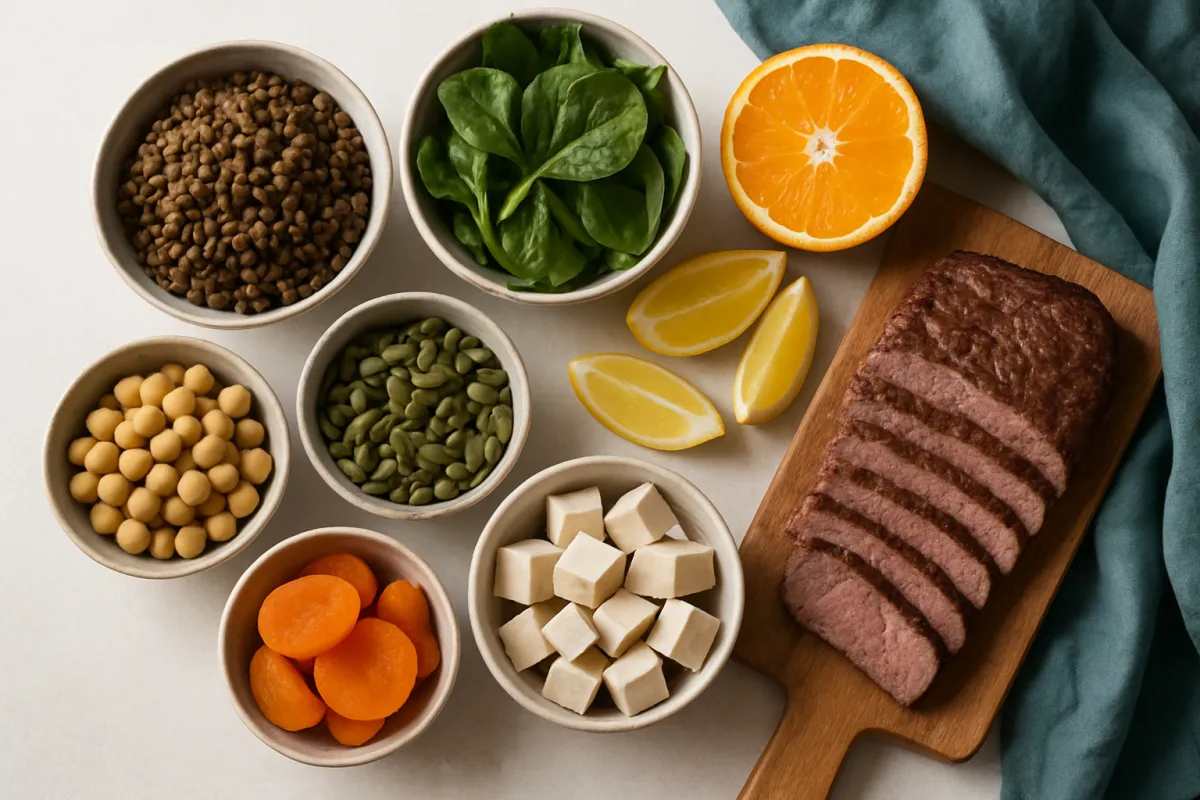
Foods high in iron are not obscure. They are beans, greens, meat, shellfish, seeds and the breakfast cereal already in the cupboard, and the milligram figures for them are easy enough to look up. What almost every iron list buries, though, is the part that decides how much of those milligrams actually reaches you: the form the iron takes, and what else is on the plate with it. Two meals carrying the same printed number can deliver very different amounts, and that gap is larger for plant foods than for anything else.
This food reference is a plain-language list of iron-rich foods organized by group, with illustrative, commonly cited milligrams per typical serving for meat, poultry and fish, shellfish, organ meats, legumes, soy foods, dark leafy greens, seeds and nuts, fortified grains and dried fruit. It also spends real space on absorption, because pairing is the lever most readers have never been shown. For the amount question and the wider set of reference figures, our daily nutrient intake reference sits alongside this piece. Everything here is general education describing approximate figures, not medical or dietary advice, and you can run your own tally in the companion below.
Key takeaways
- Per serving, the highest-iron foods are canned clams (~23 mg), fortified breakfast cereal (up to ~18 mg), chicken liver (~9 mg), oysters and canned white beans (~8 mg each), then lentils (~6.5 mg) and cooked spinach (~6 mg).
- Heme iron from meat, poultry, fish and shellfish is taken up considerably more readily than the non-heme iron in plants, eggs and fortified grains, and it is far less affected by the rest of the meal.
- Vitamin C eaten in the same meal is the most widely cited enhancer of non-heme absorption; tea, coffee, calcium and phytates are the commonly cited dampeners.
- Commonly cited daily reference figures are about 8 mg for adult men and women 51 and over, about 18 mg for women 19 to 50, and about 27 mg in pregnancy, with an upper level near 45 mg.
- More is not better: iron overload is a real condition, supplements should never be self-prescribed, and suspected deficiency is settled by a blood test and a clinician, not by a food list.
Foods high in iron, at a glance
Before the group-by-group detail, the headline is worth seeing in one place. The top of the list is unusual: a few shellfish and heavily fortified cereals sit far above everything else, with canned clams commonly cited near 23 mg for a 3 oz serving and a fortified cereal serving reaching as high as about 18 mg. Below those outliers, organ meats lead the animal foods, with chicken liver near 9 mg and beef liver near 5 mg for 3 oz, and oysters near 8 mg.
The everyday middle of the list is where most real diets live, and it is dominated by plants. Canned white beans sit near 8 mg a cup, cooked lentils near 6.5 mg, cooked spinach near 6 mg, chickpeas near 4.5 mg, firm tofu near 3 mg for half a cup, and an ounce of pumpkin seeds or dark chocolate near 2.5 to 3 mg. Familiar animal portions are lower than most people expect: a 3 oz beef steak lands near 2.5 mg and 3 oz of chicken breast near 1 mg. That last comparison is the one that makes absorption unavoidable, because the smaller heme number often delivers more than the larger non-heme one.
How to read the iron figures in this list
A word on the numbers keeps the whole reference honest. Every milligram figure here is a commonly cited, rounded, approximate reference for a typical serving, of the kind that food-composition tables and nutrition labels echo. Real foods vary a great deal: iron content shifts with the cut of meat, the variety of the bean, the soil and the brand, and fortified products vary most of all because fortification is a formulation choice rather than a property of the grain. Two boxes of cereal on the same shelf can differ several-fold.
That is why this list leans on words like “about”, “near” and “commonly cited” throughout, and why the tilde appears before almost every figure. The numbers are for reasoning and comparison, not for precise counting, and no figure here is a measurement of the food in front of you. When a label is available, the printed iron line for that specific product is more reliable than any general figure. Treat this reference as a map of which foods sit in the high, middle and low tiers, and use that shape to build meals rather than chasing an exact daily total.
Heme and non-heme iron: the difference that changes everything
Dietary iron arrives in two forms, and the distinction does more work than any single milligram figure. Heme iron is bound inside the hemoglobin and myoglobin of animal tissue, so it comes from meat, poultry, fish and shellfish. Non-heme iron is the mineral in a simpler chemical form, and it is what plants, eggs, dairy and fortified grains supply. Most of the iron in most diets is non-heme, simply because grains, legumes and vegetables make up most of what people eat by weight.
The two are absorbed by different routes, and heme iron is taken up considerably more readily. Just as importantly, heme iron is relatively indifferent to the rest of the meal, while non-heme uptake swings widely depending on what accompanies it. Published ranges for both are wide and depend heavily on a person’s own iron status, so this reference deliberately does not put a percentage on either. The direction is the useful part: a plate of plant iron is worth far more when it is assembled thoughtfully, and far less when it is not.
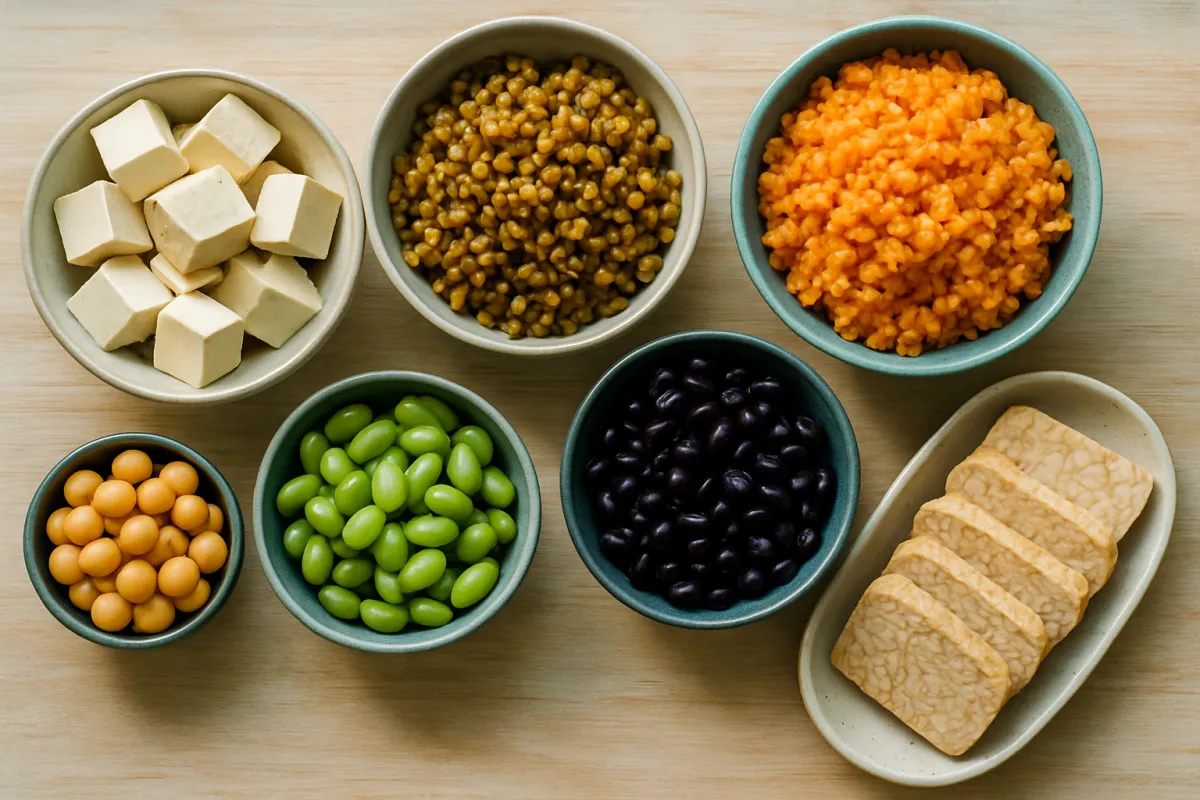
This is also why a straight ranking of foods by milligram can mislead. A cup of cooked spinach outranks a steak several times over on paper, and yet the steak may well contribute more usable iron. Neither food is wrong, and the sensible conclusion is not to abandon plants but to stop reading the milligram column in isolation. The sections on vitamin C and on absorption blockers below are, in practice, the most useful part of this reference.
Red meat and other heme sources
Red meat is the food most associated with iron, and it earns the association for the form rather than the amount. A 3 oz cooked serving of beef, roughly the size of a deck of cards, is commonly cited near 2.5 mg, with lamb near 2 mg and pork nearer 1 mg. Those figures are modest next to a cup of lentils, but the iron is heme, which is why red meat keeps appearing at the top of practical recommendations even though it sits mid-table on a milligram list.
Within red meat, the darker and more worked the muscle, the more iron it tends to carry, which is the same principle that separates poultry thigh from breast. Fattier cuts carry slightly less iron per ounce than leaner ones, simply because fat displaces muscle tissue. For portion context, our reference on protein in common foods uses the same 3 oz serving throughout, so the two lists can be read side by side.
| Meat | Typical serving | Iron per serving |
|---|---|---|
| Beef steak or ground beef, cooked | 3 oz | ~2.5 mg |
| Lamb, cooked | 3 oz | ~2 mg |
| Turkey, dark meat | 3 oz | ~1.5 mg |
| Chicken thigh, cooked | 3 oz | ~1.2 mg |
| Pork chop, cooked | 3 oz | ~1 mg |
| Chicken breast, cooked | 3 oz | ~1 mg |
| Egg | 1 large | ~0.9 mg |
Two things stand out. First, the whole group clusters between roughly 1 and 2.5 mg, so choosing between cuts matters far less than whether meat appears in the meal at all. Second, eggs sit near the bottom and their iron is non-heme despite being an animal food, which is a common point of confusion.
Poultry and fish
Poultry and fish supply heme iron in smaller amounts than red meat, and the pattern within each is consistent. Dark meat carries more than white: turkey thigh and chicken thigh land near 1.2 to 1.5 mg for 3 oz where breast meat sits near 1 mg. Among fish, the oilier and darker-fleshed species tend to carry more, with canned sardines near 2.5 mg for 3 oz thanks partly to the soft edible bones, canned light tuna near 1.3 mg, and salmon nearer 0.5 mg.
None of these are headline numbers, and it would be misleading to present fish as an iron food in the way shellfish or legumes are. What poultry and fish do offer is heme iron in a form that is well absorbed and, usefully, a well-documented enhancing effect: including meat, poultry or fish in a meal is commonly described as improving the absorption of the non-heme iron eaten alongside it. A small piece of fish next to a bowl of beans is doing more than its own milligram figure suggests.
| Poultry and fish | Typical serving | Iron per serving |
|---|---|---|
| Sardines, canned with bones | 3 oz | ~2.5 mg |
| Turkey, dark meat | 3 oz | ~1.5 mg |
| Tuna, canned light | 3 oz | ~1.3 mg |
| Chicken thigh, cooked | 3 oz | ~1.2 mg |
| Chicken breast, cooked | 3 oz | ~1 mg |
| Salmon, cooked | 3 oz | ~0.5 mg |
| Shrimp, cooked | 3 oz | ~0.5 mg |
Shellfish: oysters, clams and mussels
Shellfish are the genuine surprise of any iron list, and the figures are high enough that they distort every chart they appear in. Canned clams are commonly cited near 23 mg for a 3 oz serving, cooked oysters near 8 mg, and mussels near 5.5 mg. A single modest portion of clams can exceed a full day’s commonly cited reference figure for an adult, which is a claim almost no other whole food can make.
The practical caveat is that these are not everyday foods for most households, and the figures for canned clams in particular vary between products and preparations. Shrimp, by contrast, is the shellfish most people eat most often and it is near the bottom at roughly 0.5 mg for 3 oz, which is a useful reminder that “shellfish” is not one category for this purpose. Where clams and oysters do appear, whether in a chowder, a pasta sauce or a tin on toast, they contribute heme iron in unusually concentrated form.
| Shellfish | Typical serving | Iron per serving |
|---|---|---|
| Clams, canned, drained | 3 oz | ~23 mg |
| Oysters, cooked | 3 oz | ~8 mg |
| Mussels, cooked | 3 oz | ~5.5 mg |
| Shrimp, cooked | 3 oz | ~0.5 mg |
Organ meats: the most concentrated animal source
Liver is the densest ordinary animal source of iron, with chicken liver commonly cited near 9 mg for 3 oz and beef liver near 5 mg. Organ meats also concentrate several other nutrients, which is exactly why they come with a caution rather than an unqualified recommendation: liver is extremely high in preformed vitamin A, and that is a nutrient where excess carries its own risks. Pregnancy guidance in many countries specifically addresses liver for this reason.
The honest framing is that liver is a very effective iron food eaten occasionally, and that nobody should scale it up as a strategy without checking whether it is appropriate for them. Pâté and liver sausage carry the same nutrients in smaller amounts per serving. If organ meats are not appealing, nothing in this reference depends on them; the legume and fortified-grain routes reach the same daily totals without any liver at all.
Legumes: lentils, beans and chickpeas
Legumes are the backbone of a high-iron diet that does not lean on meat, and they carry the largest milligram figures of any everyday plant food. Canned white beans lead at roughly 8 mg a cup, with cooked soybeans similar near 8.5 mg, cooked lentils near 6.5 mg, kidney beans near 4 mg, chickpeas near 4.5 mg and black beans near 3.5 mg. They are cheap, shelf-stable, and already the anchor of most fiber-forward eating, which is why our high-fiber foods list and this one overlap so heavily.
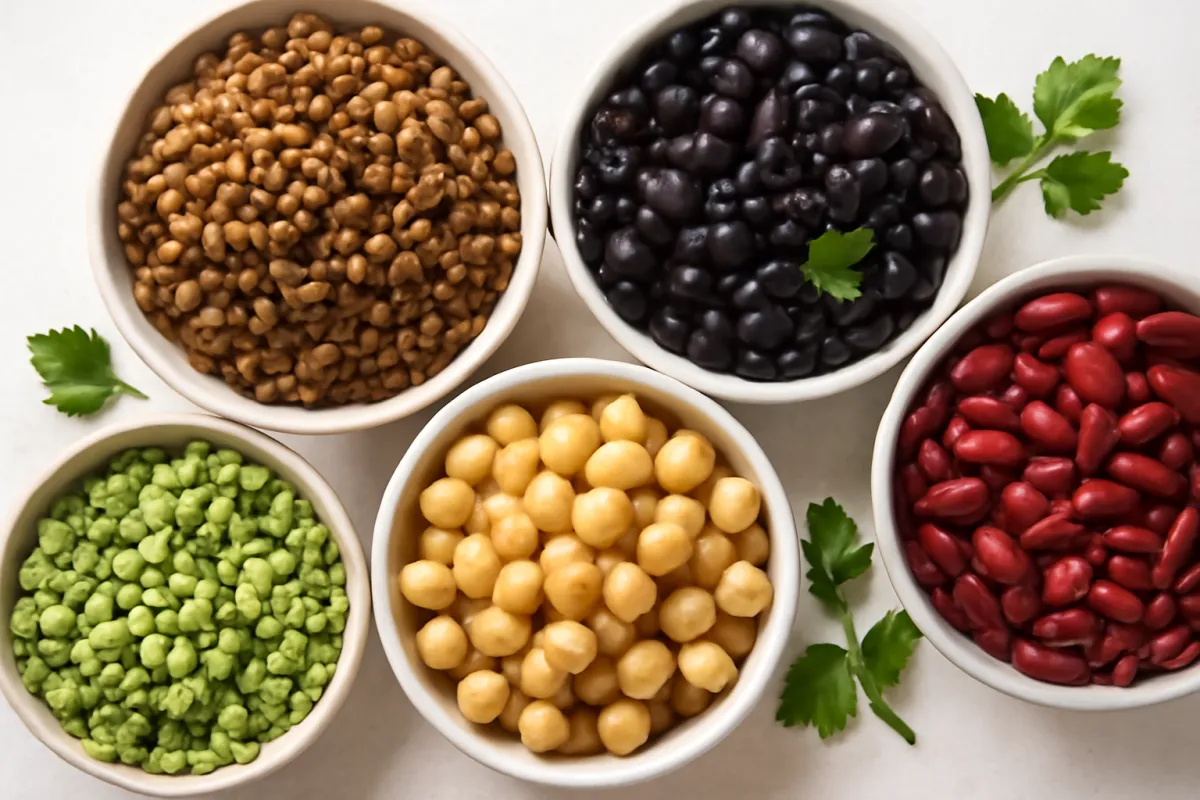
The same foods contain phytates, which bind iron and reduce how much is absorbed, so legumes are simultaneously the biggest plant source and one of the foods most affected by preparation. Soaking dried beans, discarding the soaking water, cooking thoroughly, sprouting and fermenting are all commonly suggested ways to reduce phytate content. Canned beans, already cooked and drained, are a perfectly reasonable convenience version.
| Legume | Typical serving | Iron per serving |
|---|---|---|
| Soybeans, cooked | 1 cup | ~8.5 mg |
| White beans, canned | 1 cup | ~8 mg |
| Lentils, cooked | 1 cup | ~6.5 mg |
| Chickpeas, cooked | 1 cup | ~4.5 mg |
| Kidney beans, cooked | 1 cup | ~4 mg |
| Black beans, cooked | 1 cup | ~3.5 mg |
| Edamame, shelled and cooked | 1 cup | ~3.5 mg |
Tofu, tempeh and soy foods
Soy foods deserve their own line because they are unusually iron-dense for their calorie content and because they slot into meals that legumes sometimes do not. Firm tofu is commonly cited near 3 mg per half cup, tempeh near 2 mg per half cup, and shelled edamame near 3.5 mg a cup. Tofu also happens to absorb the flavors of whatever it is cooked with, which makes it easy to pair with the acidic, vitamin C rich sauces that help non-heme iron along.
Calcium-set tofu, the most common style, contains meaningful calcium, and calcium is one of the commonly cited dampeners of iron absorption. This is not a reason to avoid tofu, which remains one of the better plant iron sources on any list, but it is a reason to make the vitamin C pairing habitual with it. For readers building meals without meat, our review on how to get protein without meat covers the same food group from the protein angle, and the two goals mostly point at the same shopping basket.
Dark leafy greens: spinach, chard and beyond
Cooked spinach is the plant most people name first when asked about iron, and the figure is genuinely high: about 6 mg for a cup cooked. The catch is the word cooked. A cup of raw spinach is a much smaller amount of spinach once you account for how far it wilts, and it carries under 1 mg. The gap between the two is the single most common reason a salad feels like it should have delivered more than it did.
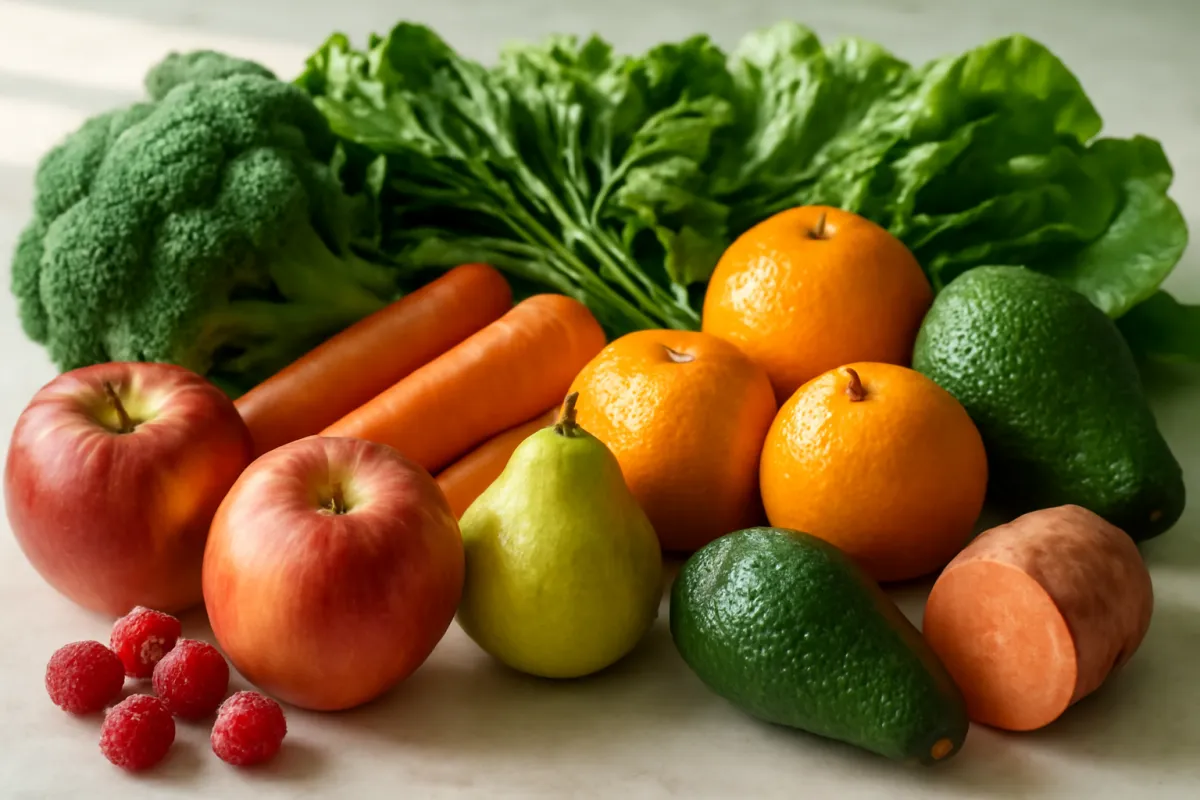
Spinach and chard also contain oxalates, which bind iron much as phytates do, so the absorbed fraction from greens is lower than the printed milligrams imply. Greens remain worth eating for many reasons, and they contribute real iron, but they are better treated as a contributor than as the centerpiece of an iron strategy. Cooking reduces the volume dramatically and makes a meaningful serving realistic.
| Leafy green | Typical serving | Iron per serving |
|---|---|---|
| Spinach, cooked | 1 cup | ~6 mg |
| Swiss chard, cooked | 1 cup | ~4 mg |
| Beet greens, cooked | 1 cup | ~2.7 mg |
| Kale, cooked | 1 cup | ~1 mg |
| Broccoli, cooked | 1 cup | ~1 mg |
| Spinach, raw | 1 cup | ~0.8 mg |
Seeds and nuts: pumpkin, sesame and cashews
Seeds are quietly one of the most efficient ways to add iron to a meal that is already on the table. An ounce of pumpkin seeds is commonly cited near 2.5 mg, two tablespoons of sesame seeds or tahini near 2.5 mg, three tablespoons of hemp seeds near 2.5 mg, and an ounce of cashews near 2 mg. A spoonful over a salad, a bowl of soup or a piece of toast costs no cooking time and no planning.
Nuts and seeds carry phytates too, and they are usually eaten in small amounts, so their contribution is real but incremental rather than transformative. The reason to include them is repetition: a habit that adds 2 mg on most days adds up more reliably than an occasional large serving of anything. Tahini in a dressing, pumpkin seeds in a jar by the kettle and a spoon of hemp seeds in a bowl of oats are the sort of small, durable additions that survive a busy week.
| Seed or nut | Typical serving | Iron per serving |
|---|---|---|
| Pumpkin seeds | 1 oz | ~2.5 mg |
| Sesame seeds or tahini | 2 tbsp | ~2.5 mg |
| Hemp seeds | 3 tbsp | ~2.5 mg |
| Cashews | 1 oz | ~2 mg |
| Sunflower seeds | 1 oz | ~1 mg |
| Almonds | 1 oz | ~1 mg |
Fortified grains and cereals
Fortified grains are the largest single source of iron in many national diets, and they are also the most variable. A serving of a heavily fortified breakfast cereal can carry up to about 18 mg, matching the full daily reference figure for women aged 19 to 50, while another cereal on the same shelf may carry a quarter of that. A packet of fortified instant oatmeal is commonly cited near 5 mg, enriched white rice near 2 mg a cup cooked, and a slice of bread, whole wheat or enriched white, near 1 mg.
Because fortification is a manufacturing decision, the only reliable way to know is the label, where iron is listed with a percent Daily Value based on 18 mg. A cereal at 100 percent DV carries about 18 mg; one at 45 percent carries about 8 mg. Our walkthrough on how to read a nutrition label covers how that percentage is calculated and where it can mislead. The iron added to fortified foods is non-heme, so everything in the pairing sections applies to it.
| Grain | Typical serving | Iron per serving |
|---|---|---|
| Fortified breakfast cereal | 1 serving | up to ~18 mg |
| Fortified instant oatmeal | 1 packet | ~5 mg |
| Quinoa, cooked | 1 cup | ~2.8 mg |
| Enriched white rice, cooked | 1 cup | ~2 mg |
| Rolled oats, cooked | 1 cup | ~2 mg |
| Whole wheat bread | 1 slice | ~1 mg |
Dried fruit, dark chocolate and the small additions
The tail of the list is made of foods that nobody eats for their iron, which is precisely why they are useful: they add milligrams to meals that were happening anyway. An ounce of dark chocolate at 70 to 85 percent cocoa is commonly cited near 3 mg, a tablespoon of blackstrap molasses near 3.5 mg, half a cup of dried apricots near 2 mg, half a cup of raisins or prunes near 1.5 mg, a cup of prune juice near 3 mg, and a medium baked potato eaten with the skin near 2 mg.
None of these will carry a day on their own, and dried fruit and chocolate come with sugar and calories that belong in the wider picture rather than being ignored because the iron figure is flattering. Still, a handful of dried apricots at three in the afternoon is a more realistic habit than an extra bowl of lentils, and the arithmetic of a day is additive. Small, repeatable contributions are how most people close a gap.
The complete high-iron foods list by group
The master table below gathers the whole reference in one place, sorted roughly from the highest figures down. It mixes animal and plant sources deliberately, because the point of a single list is to let you see where the real milligrams sit before you decide which route suits your kitchen. The form column is the reminder that the number alone is not the whole story.
| Food | Typical serving | Iron | Form |
|---|---|---|---|
| Clams, canned | 3 oz | ~23 mg | Heme |
| Fortified breakfast cereal | 1 serving | up to ~18 mg | Non-heme |
| Chicken liver, cooked | 3 oz | ~9 mg | Heme |
| Soybeans, cooked | 1 cup | ~8.5 mg | Non-heme |
| Oysters, cooked | 3 oz | ~8 mg | Heme |
| White beans, canned | 1 cup | ~8 mg | Non-heme |
| Lentils, cooked | 1 cup | ~6.5 mg | Non-heme |
| Spinach, cooked | 1 cup | ~6 mg | Non-heme |
| Mussels, cooked | 3 oz | ~5.5 mg | Heme |
| Beef liver, cooked | 3 oz | ~5 mg | Heme |
| Fortified instant oatmeal | 1 packet | ~5 mg | Non-heme |
| Chickpeas, cooked | 1 cup | ~4.5 mg | Non-heme |
| Swiss chard, cooked | 1 cup | ~4 mg | Non-heme |
| Kidney beans, cooked | 1 cup | ~4 mg | Non-heme |
| Blackstrap molasses | 1 tbsp | ~3.5 mg | Non-heme |
| Black beans, cooked | 1 cup | ~3.5 mg | Non-heme |
| Edamame, cooked | 1 cup | ~3.5 mg | Non-heme |
| Tofu, firm | 1/2 cup | ~3 mg | Non-heme |
| Dark chocolate, 70 to 85% | 1 oz | ~3 mg | Non-heme |
| Prune juice | 1 cup | ~3 mg | Non-heme |
| Quinoa, cooked | 1 cup | ~2.8 mg | Non-heme |
| Beet greens, cooked | 1 cup | ~2.7 mg | Non-heme |
| Beef steak or ground beef | 3 oz | ~2.5 mg | Heme |
| Pumpkin seeds | 1 oz | ~2.5 mg | Non-heme |
| Sesame seeds or tahini | 2 tbsp | ~2.5 mg | Non-heme |
| Sardines, canned with bones | 3 oz | ~2.5 mg | Heme |
| Dried apricots | 1/2 cup | ~2 mg | Non-heme |
| Tempeh | 1/2 cup | ~2 mg | Non-heme |
| Lamb, cooked | 3 oz | ~2 mg | Heme |
| Cashews | 1 oz | ~2 mg | Non-heme |
| Enriched white rice, cooked | 1 cup | ~2 mg | Non-heme |
| Potato with skin, baked | 1 medium | ~2 mg | Non-heme |
| Turkey, dark meat | 3 oz | ~1.5 mg | Heme |
| Raisins or prunes | 1/2 cup | ~1.5 mg | Non-heme |
| Tuna, canned light | 3 oz | ~1.3 mg | Heme |
| Chicken thigh, cooked | 3 oz | ~1.2 mg | Heme |
| Kale, cooked | 1 cup | ~1 mg | Non-heme |
| Chicken breast, cooked | 3 oz | ~1 mg | Heme |
| Whole wheat bread | 1 slice | ~1 mg | Non-heme |
| Egg | 1 large | ~0.9 mg | Non-heme |
| Spinach, raw | 1 cup | ~0.8 mg | Non-heme |
| Salmon, cooked | 3 oz | ~0.5 mg | Heme |
| Shrimp, cooked | 3 oz | ~0.5 mg | Heme |
Read down the form column and the shape of the problem appears. The top of the list is mostly non-heme, the bottom is heavily heme, and the two halves therefore behave differently in the body. Anyone building an iron-conscious plate is really answering two questions at once: which foods carry the milligrams, and what will be eaten alongside them.
Which foods have the most iron per serving
The chart below lines up twelve of the strongest single servings so the scale is visible. Canned clams set the top of the range and every other bar is drawn as its share of that figure, which is why the shellfish and fortified cereal bars run away from the rest and why the familiar chicken breast bar is barely there.
Iron per typical serving, twelve high-iron foods
Commonly cited iron per typical serving, in milligrams. Approximate reference figures that vary widely by cut, variety, brand and preparation, not exact measurements.
Bars scale to the canned clams figure at 100 percent. These are commonly cited reference figures that vary by cut, variety, brand and preparation; confirm any specific product against its own label.
The chart makes one argument well and one badly, and both are worth naming. It shows correctly that a handful of foods sit in a different league from everything else, so a single serving of clams, oysters or a fortified cereal can move a day’s total more than a week of careful small choices. What it cannot show is that the bottom bar, chicken breast, delivers heme iron that the body takes up more readily than the non-heme iron in the taller plant bars above it. Bar length is milligrams, not delivery.
Vitamin C: the pairing that does the heavy lifting
Vitamin C is the most widely cited enhancer of non-heme iron absorption, and the mechanism is chemical rather than mysterious: it holds iron in a form the gut takes up more easily. That means the vitamin C has to be in the same meal, not taken hours before or after. Lemon squeezed over lentils, tomato in a bean chilli, peppers in a stir fry, salsa on a burrito, strawberries on fortified cereal and a glass of orange juice with breakfast are all versions of the same move.
The habit is worth building because it costs nothing and applies to the foods most people are already eating. A bowl of lentil soup and a bowl of lentil soup with a squeeze of lemon carry identical milligrams and are not equivalent. Our review on how much vitamin C per day covers the vitamin in its own right, including food sources and the upper limit; here it matters only as a partner. Run your own meal combinations through the companion below to see how the tally changes.
Two practical notes. Meat, poultry and fish are themselves commonly described as improving the absorption of non-heme iron eaten in the same meal, which is sometimes called the meat factor, so a small amount of animal protein in a bean dish helps twice. And vitamin C is heat-sensitive, so raw or lightly cooked sources such as peppers, citrus, tomatoes and strawberries pair more effectively than long-simmered ones.
What blocks non-heme iron: tea, coffee, calcium and phytates
The other side of the ledger matters just as much, and it is where a lot of well-intentioned eating quietly loses ground. Tea and coffee contain polyphenols that are commonly described as reducing non-heme iron absorption when drunk with a meal, and tea is usually singled out as the stronger of the two. Calcium, from dairy or a supplement, is the one factor often said to interfere with both forms of iron. Phytates in whole grains, legumes, nuts and seeds bind iron, and oxalates in spinach, chard and rhubarb do something similar.
The reasonable response is scheduling, not elimination. Shifting tea and coffee to between meals rather than with the iron-heaviest one, keeping a calcium supplement away from the meal built around beans, and soaking, sprouting, fermenting or simply thoroughly cooking legumes and grains all address the same issue without removing anything worthwhile from a diet. None of these foods are villains: dairy, tea, coffee and whole grains all earn their place. It is the timing that is adjustable.
| Enhances non-heme iron | Reduces non-heme iron |
|---|---|
| Vitamin C sources in the same meal | Tea and coffee with the meal |
| Meat, poultry or fish alongside plants | Calcium, from dairy or supplements |
| Soaking, sprouting and fermenting legumes | Phytates in unsoaked grains and legumes |
| Acidic cooking, including tomato and citrus | Oxalates in spinach, chard and rhubarb |
Where a day’s iron comes from
It helps to see how a mixed day distributes its iron across the groups. The breakdown below follows the worked example later in this reference exactly, so the shares are not a generic guess but the arithmetic of one specific illustrative day totalling about 23.5 mg. A real day can lean very differently and still land well.
Where one illustrative day's iron comes from
Share of the worked example day's ~23.5 mg by food group. Shares sum to 100 percent and describe one illustrative day, not a rule.
Segments show each group's share of the worked example day's total milligrams, not of the iron actually absorbed, which depends on form and pairing. One illustrative day, not a prescription.
Two readings of that chart are useful. The obvious one is that no single food has to carry a day: four ordinary eating occasions, none of them heroic, assemble the total between them. The less obvious one is that the smallest segment, the meat at 11 percent of milligrams, is the only heme portion of the day, so its share of what is actually absorbed is larger than its share of the bar. That mismatch is the reason this reference keeps returning to form and pairing rather than to the milligram column alone.
How much iron a day these foods add up to
A list of foods only means something against a reference figure. The Dietary Reference Intakes set by the National Academies of Sciences, Engineering, and Medicine are the figures most health bodies echo: commonly cited as about 8 mg a day for adult men and for women 51 and over, about 18 mg for women aged 19 to 50, and about 27 mg during pregnancy, easing to about 9 mg while breastfeeding for adults. Teenagers are cited a little differently, with about 11 mg for boys aged 14 to 18 and about 15 mg for girls in the same range. A tolerable upper intake level near 45 mg a day for adults is also commonly cited, counting all sources together.
Those are population reference figures rather than a personal quota, and iron is a nutrient where individual circumstances matter more than most. Against them, the arithmetic of this list is manageable: a cup of lentils and a fortified cereal serving between them can exceed 18 mg on paper, and a mixed day rarely needs anything exotic. The companion below tallies a few servings against a reference figure you pick, and our daily nutrient intake reference sets iron alongside the other reference values. For the figure that suits your own body, ask a doctor or registered dietitian rather than adopting a population average as a personal rule.
Who commonly needs more iron
Some groups are commonly discussed as having higher iron needs, and it is worth naming them plainly while being equally plain that this is a description of general guidance, not an assessment of anyone reading. Menstruating people lose iron regularly, which is why the reference figure for women aged 19 to 50 is more than double the figure for men. Pregnancy raises the figure again, to about 27 mg, because blood volume expands substantially. Endurance athletes, particularly runners, are frequently discussed in this context. Vegetarians and vegans are often advised to aim higher because all their iron is non-heme. Regular blood donors are another group commonly mentioned.
Being in one of those groups is a reason to pay attention to the food list and the pairings, and it is not a diagnosis of anything. This reference deliberately does not describe how a deficiency feels, because reading symptoms off a page is a poor way to reach a conclusion about your own body and a good way to reach the wrong one. Iron status is established by blood tests, and the interpretation of those tests is a clinician’s work.
Iron and vegetarian or vegan eating
Plant-based eaters face an interesting situation: the milligram supply is not the problem. Canned white beans, lentils, tofu, cooked spinach, fortified cereals, pumpkin seeds and dried fruit between them make an 18 mg or even a 32 mg day entirely reachable without any animal food. The complication is that every one of those milligrams is non-heme, so it is absorbed less readily and is more exposed to whatever else is in the meal. This is why vegetarians and vegans are commonly advised to aim at roughly 1.8 times the standard reference figure, which lands near 14 mg for men and near 32 mg for women aged 19 to 50.
The practical response is not more supplements but better meal construction: an iron-bearing plant food at most meals, a vitamin C source with each of them, tea and coffee moved to between meals, legumes soaked or bought canned and well drained, and calcium-rich foods spread across the day rather than concentrated on the bean-heavy meal. Our balanced meal method is a reasonable frame for assembling that plate, and our protein without meat review covers the overlapping food group. Anyone eating fully plant-based and concerned about iron should ask a clinician about testing rather than adjusting alone.
Cooking in cast iron and other kitchen habits
Cooking acidic, moist foods in a cast iron pan is widely described as transferring a small amount of iron into the food, and tomato sauce simmered for a long stretch is the example everyone reaches for. Longer cooking, more acidity and a less heavily seasoned pan are all generally associated with more transfer. The amounts are variable and essentially unmeasurable in a home kitchen, which is why this belongs in the habits section rather than the food list.
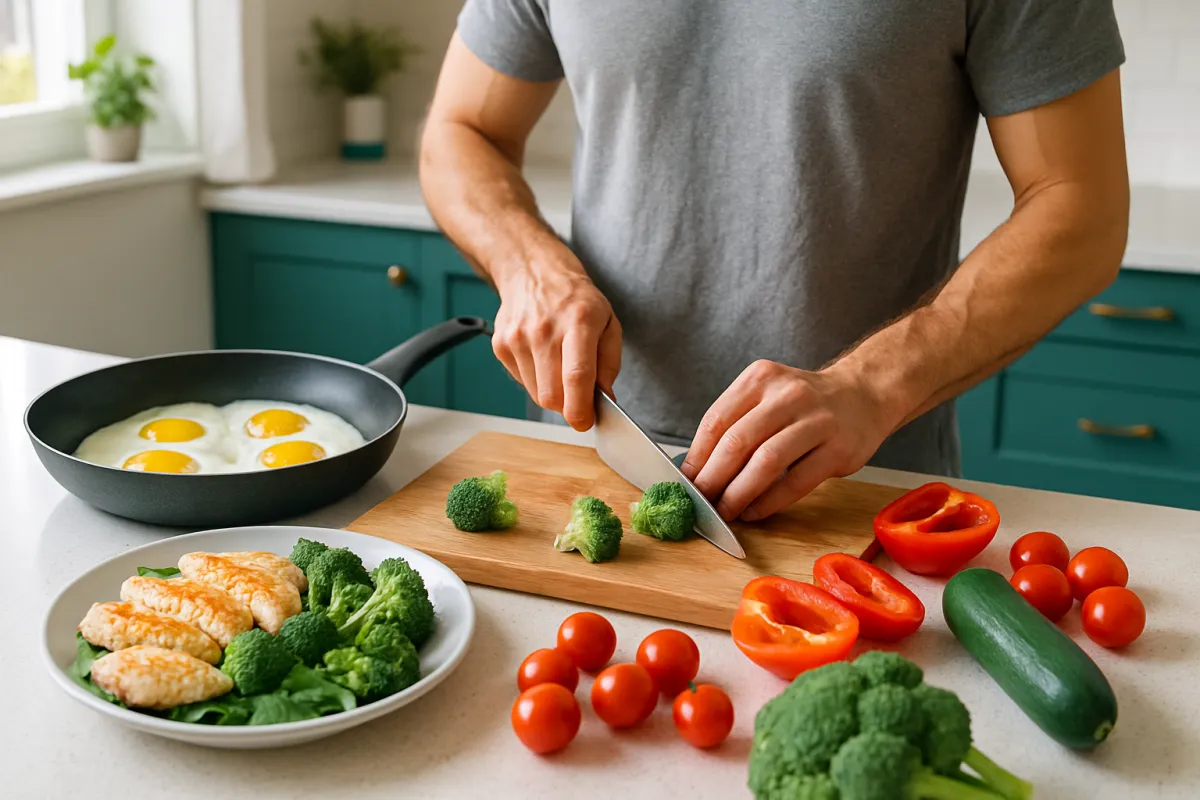
Other kitchen habits do more measurable work. Soaking dried legumes overnight and discarding the water, buying canned beans and draining them well, cooking greens rather than eating volume-defeating raw salads, keeping a jar of pumpkin seeds within reach, and pairing acid with iron-heavy dishes are all small and repeatable. Cast iron is a pleasant bonus on top of those, not a substitute for any of them, and nobody should treat a pan as a remedy.
A worked example: a day built from this list
Here is one illustrative day assembled from the tables above, chosen to be ordinary rather than optimized. Breakfast is a packet of fortified instant oatmeal at about 5 mg with a quarter cup of dried apricots at about 1 mg, alongside a glass of orange juice for the vitamin C. Lunch is a bowl of lentil soup, about a cup of lentils at 6.5 mg, with a slice of whole wheat bread at about 1 mg and raw pepper strips on the side. The afternoon snack is an ounce of pumpkin seeds at about 2.5 mg.
Dinner is a 3 oz beef steak at about 2.5 mg with half a cup of cooked spinach at about 3 mg and a cup of enriched rice at about 2 mg, finished with a tomato salad. The day totals roughly 23.5 mg: 6 mg at breakfast, 7.5 mg at lunch, 2.5 mg at the snack and 7.5 mg at dinner. That comfortably clears the 18 mg reference figure for women aged 19 to 50 and sits well under the 45 mg upper level, and three of the four eating occasions include a vitamin C source.
Notice what the day did not require. No liver, no shellfish, no supplements and no unusual shopping. Notice also that the beef contributes only about 2.5 mg of the 23.5, roughly 11 percent of the milligrams, and yet as the day’s only heme source its contribution to absorbed iron is proportionally larger. Enter your own foods in the companion below to build a comparable day.
Common mistakes when trying to eat more iron
The first mistake is reading raw spinach figures as though they applied to the pile on a salad plate. A cup of raw spinach carries under 1 mg where a cup of cooked spinach carries about 6 mg, and the difference is almost entirely how much spinach fits in the cup. The second is finishing an iron-heavy meal with tea or coffee, which puts a commonly cited dampener directly alongside the food it affects most.
The third is treating all iron as interchangeable, so that a plant-only day of high milligram totals is assumed to be equivalent to a mixed one. The fourth is relying on a single heroic meal rather than a repeatable pattern, since iron intake is a running average rather than a weekly event. The fifth, and the one with real consequences, is buying an iron supplement because a food list looked worrying. That last one is covered in its own section below, because it is the mistake that can cause harm rather than merely wasted effort.
Why more is not better: iron overload and supplements
Iron is one of the clearest examples of a nutrient where more is not better. The body has no efficient route for excreting excess iron, so what is absorbed and not used is stored, and stored iron accumulates. That is the reason a tolerable upper intake level near 45 mg a day for adults is commonly cited, counting food and supplements together, and it is the reason iron supplements sit in a different category from a multivitamin.
Iron overload is a genuine condition. Some people carry inherited disorders that cause them to absorb and retain more iron than they need, and for them additional iron is actively unwanted rather than merely unnecessary. Others accumulate iron for reasons connected to medical treatment. None of this is detectable from how a person feels or from reading a food list, which is exactly why iron supplements should not be self-prescribed. Getting into trouble from ordinary food alone is uncommon; the risk concentrates in supplements taken without a reason to take them.
There is one further caution that deserves its own sentence. Iron tablets are a leading cause of accidental poisoning in young children, and a small number of adult-strength tablets can be dangerous to a small child. Any iron supplement in a household with children belongs in a child-resistant container, stored out of sight and out of reach, and never in a bag or bedside drawer. If a child is thought to have swallowed iron tablets, that is an immediate emergency call, not a wait-and-see.
When a blood test, not a food list, is the answer
This reference can tell you which foods carry iron and how to eat them so that more of it counts. It cannot tell you whether you are short of iron, and neither can any article, because iron status is a laboratory question. Blood tests, and the interpretation of several markers together, are how that is established, and the same numbers can mean different things in different people and different circumstances.
If you have a reason to wonder about your iron, whether because of a group described earlier, because of something a clinician has already raised, or because of anything that concerns you, the useful next step is an appointment rather than a supplement aisle. A clinician can decide whether testing is appropriate, what the results mean, and whether any change is warranted. Food is a good default and a poor diagnostic, and the honest position of this reference is that it belongs on the food side of that line.
A quick high-iron shopping checklist
A compact list is easier to act on than a long one. For plant iron, a bag or tins of lentils, white beans and chickpeas, firm tofu, frozen spinach, pumpkin seeds, tahini and dried apricots cover almost everything. For heme iron, any red meat, dark-meat poultry, canned sardines and, if they appeal, a tin of clams or oysters. For fortified grains, check the iron percentage on the cereal box rather than assuming, since the range across products is enormous.
For the pairing half, keep citrus, tomatoes, peppers and frozen berries in the house, because they are what turns the plant column into something the body makes better use of. That is the entire shop. It overlaps almost completely with a fiber-forward basket, so our grocery list method and the high-fiber foods list can be run alongside this one without adding a second trip.
The bottom line
Foods high in iron split cleanly into two groups that behave differently. Shellfish, organ meats, red meat and dark poultry supply heme iron in modest milligram amounts that the body takes up readily and that the rest of the meal barely disturbs. Legumes, soy foods, dark greens, seeds, fortified grains and dried fruit supply larger milligram amounts in the non-heme form, where pairing decides a great deal. Both routes reach the commonly cited reference figures of about 8 mg, 18 mg or 27 mg a day, and neither requires anything unusual in the cart.
If only two habits survive from this reference, make them these: put a vitamin C source in every meal built around plant iron, and move tea and coffee away from that meal. Then leave the diagnosing alone. Iron is a nutrient where enthusiasm can do harm, supplements are not a casual purchase, and a suspected shortfall is a blood test and a conversation with a clinician, not a longer list of beans.
This food reference is published for general education and describes approximate, commonly cited nutrition figures. It is not medical, nutritional or dietary advice, and reading it establishes no clinician-patient relationship. Every milligram figure above is a rounded population reference rather than a measurement of any particular food, and iron content varies substantially with cut, variety, brand, soil and preparation, so a specific product’s own label is always the better source for that product. Nothing here is intended to help anyone identify, rule out or treat an iron deficiency or any other condition; that work belongs to blood testing and a qualified clinician. Iron supplements carry real risks, including harm from accumulation and serious danger to young children, and should only be taken when a doctor has determined they are appropriate. Before changing your diet, starting any supplement, or acting on anything in this reference, speak with a doctor or registered dietitian who knows your history.
Frequently asked questions
What foods are highest in iron?
Per typical serving, the highest-iron foods are canned clams at roughly 23 mg, a serving of a heavily fortified breakfast cereal at up to about 18 mg, chicken liver near 9 mg, and then oysters and canned white beans around 8 mg each. Cooked lentils near 6.5 mg, cooked spinach near 6 mg, beef liver near 5 mg and chickpeas near 4.5 mg fill the strong middle of the list. Everyday portions of beef, tofu, pumpkin seeds and dark chocolate land in the 2.5 to 3 mg range. These are commonly cited approximate figures that shift with cut, variety, brand and preparation, offered as general education rather than a personal plan, so confirm anything specific against its own label and your own clinician.
What is the difference between heme and non-heme iron?
Heme iron comes from the hemoglobin and myoglobin of animal tissue, so it is found in meat, poultry, fish and shellfish, and the body takes it up considerably more readily than the non-heme form. Non-heme iron is the kind in plants, eggs, dairy and fortified grains, and it makes up most of the iron in most people's diets by milligram. The practical difference is not only the efficiency but the variability: non-heme uptake swings a great deal with what else is on the plate, while heme iron is much less affected by the rest of the meal. That is why a plant-forward eater benefits far more from deliberate pairing than an omnivore does, and why the milligram number alone never tells the whole story.
Does vitamin C really help iron absorption?
Vitamin C is the most widely discussed enhancer of non-heme iron absorption, and it works chemically rather than by any trick of timing: it keeps iron in a form the gut takes up more easily. In practice that means eating the vitamin C source in the same meal as the iron, not hours later, which is why lemon on lentils, salsa on beans, peppers in a stir fry and citrus alongside fortified cereal all get recommended. The effect is on non-heme iron in particular, so it matters most for plant sources. Our companion review on how much vitamin C per day covers the vitamin itself in detail, and this is general information rather than a treatment for any deficiency.
Do tea, coffee and calcium block iron?
Tea and coffee contain polyphenols, and both are commonly described as reducing non-heme iron absorption when consumed with a meal. Calcium, whether from dairy or a supplement, is the one factor often said to interfere with both heme and non-heme iron. Phytates in whole grains, legumes, nuts and seeds also bind iron, which is one reason soaking, sprouting, fermenting and simply cooking these foods are often suggested. None of this makes tea, coffee or dairy bad foods, and the usual practical suggestion is to shift them away from the iron-heaviest meal rather than to give them up, which is a general principle rather than advice for any individual.
How much iron do adults need per day?
The Dietary Reference Intakes set by the National Academies of Sciences, Engineering, and Medicine are the figures most health bodies echo, commonly cited as about 8 mg a day for adult men and for women 51 and over, about 18 mg for women aged 19 to 50, and about 27 mg during pregnancy. Vegetarians and vegans are often advised to aim higher, with a figure of roughly 1.8 times the standard reference sometimes quoted, which lands near 14 mg and 32 mg respectively. A tolerable upper intake level of about 45 mg a day for adults is also commonly cited for iron from all sources combined. These are population reference figures rather than a personal quota, and your own number belongs with a doctor or registered dietitian.
Can vegetarians and vegans get enough iron from food?
Plant foods carry a great deal of iron by milligram, with canned white beans near 8 mg a cup, cooked lentils near 6.5 mg, cooked spinach near 6 mg and firm tofu near 3 mg per half cup, so the raw supply is rarely the limitation. The complication is that all of it is non-heme, so the same milligrams are absorbed less readily and are more affected by tea, coffee, calcium and phytates in the meal. The common practical response is to eat iron-bearing plants at most meals, pair them routinely with a vitamin C source, and shift tea and coffee to between meals rather than with them. Anyone eating fully plant-based who is concerned about their iron status should raise it with a clinician and ask about testing rather than guess.
Does cooking in a cast iron pan add iron to food?
Cooking acidic, moist foods such as tomato sauce in a cast iron pan is widely described as transferring a small amount of iron into the food, with longer cooking times and more acidity generally associated with more transfer. The amounts are variable and unpredictable, depending on the pan, its seasoning, the food and the cooking time, so cast iron is best treated as a modest bonus rather than a source you can count on or measure. It is a pleasant habit rather than a strategy. Nobody should rely on a pan to correct a suspected deficiency, which is a question for a blood test and a clinician.
Can you get too much iron?
Yes. Iron overload is a real condition, and the body has no efficient way to excrete excess iron, which is why a tolerable upper intake level near 45 mg a day for adults is commonly cited and why iron supplements are not a casual purchase. Some people carry inherited conditions that cause them to absorb and store too much iron, and for them extra iron is actively unwanted. Getting too much from ordinary food alone is uncommon; the risk sits with supplements taken without a reason. Iron tablets are also a leading cause of accidental poisoning in young children, so any iron supplement in a house with children belongs in a child-resistant container out of reach, and no adult should start one without a clinician confirming it is needed.

Hamza Hai is the editor of NourishMark. She holds an MBA and reviews the site's articles against our editorial standards, checking that every figure is labelled for what it is, that nothing is presented as verified fact without a source the reader can check, and that the writing stays useful to a non-specialist.