What's in this review
- Chicken Breast Protein: The Direct Answer
- Protein by Chicken Breast Size: A Quick Table
- How Much Protein in 100g of Chicken Breast?
- How Much Protein in 4 oz of Chicken Breast?
- How Much Protein in a 6 oz Chicken Breast?
- How Much Protein in an 8 oz Chicken Breast?
- Protein by Weight and Serving: A Reference Table
- Raw vs Cooked Chicken Breast Protein
- How Much Protein in a Cooked Chicken Breast?
- Chicken Breast as a Complete Protein
- Calories Alongside the Protein
- Chicken Breast vs Thigh Protein
- Skin-On vs Skinless Chicken Breast
- Chicken Breast vs Other Protein Foods
- How Chicken Breast Fits Your Daily Protein Needs
- How Much Chicken for 30, 50, or 100 Grams of Protein?
- Does Cooking Method Change the Protein?
- A Worked Example: A Day That Hits a Protein Target
- Common Mistakes Counting Chicken Protein
- The Bottom Line
Short answer: A typical cooked, skinless chicken breast has roughly 40 to 55 grams of protein, with a medium 6 ounce breast landing near 50 grams. The reference figure is about 31 grams of protein per 100 grams of cooked breast, which gives about 35 grams for 4 ounces, 53 for 6 ounces, and 70 for 8 ounces. Raw breast reads lower, near 23 grams per 100 grams, because water cooks off.
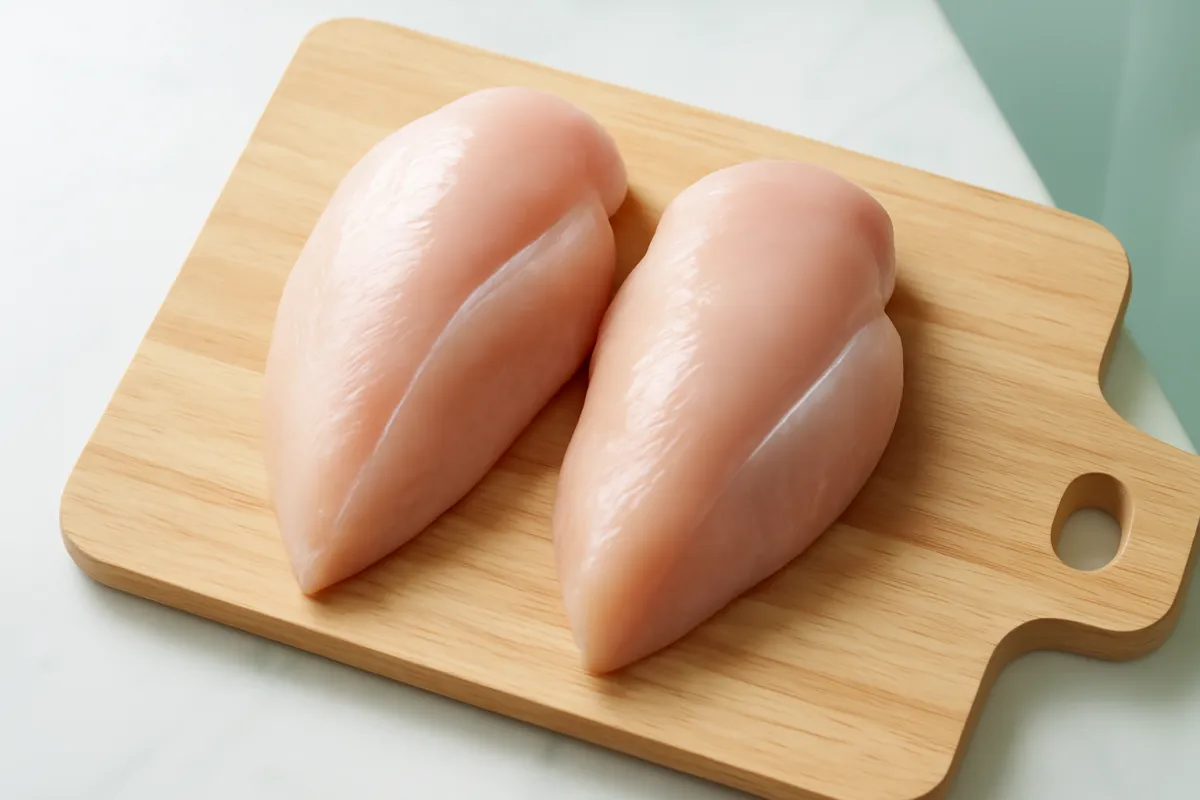
If you want to know how much protein is in a chicken breast, here is the direct answer: a typical cooked, skinless chicken breast has roughly 40 to 55 grams of protein, with a medium 6 oz breast landing near 50 grams. The reference figure to remember is about 31 grams of protein per 100 grams of cooked chicken breast, and everything else scales from there by size and weight. That makes chicken breast one of the leanest, most protein-dense whole foods most people eat.
This evidence review is the chicken-breast-specific answer, distinct from our broader protein in common foods review that covers dozens of staples at once. It works through the per-100-gram figure, the totals for 4, 6, and 8 oz portions, why raw and cooked numbers differ, whether chicken breast counts as a complete protein, how it compares to thigh and to other proteins, the calories that come with it, and how it fits a day’s protein needs. It is educational, describes food composition and general nutrition science only, and is not medical or dietary advice. For how much protein you personally need, see our protein needs review, and you can match a portion to your own target in the companion below.
Key takeaways
- Cooked, skinless chicken breast is commonly cited at about 31 grams of protein per 100 grams, the reference figure most databases use.
- A typical whole cooked breast runs roughly 40 to 55 grams of protein: about 35 g for 4 oz, 53 g for 6 oz, and 70 g for 8 oz.
- Raw chicken breast shows a lower figure, near 23 grams per 100 grams, because raw meat holds water that cooks off and concentrates the protein.
- Chicken breast is a complete, highly digestible protein, leaner and slightly higher in protein than thigh, and among the most protein-dense whole foods.
- Every figure here is a commonly cited, illustrative reference for food composition, not a personal target or medical advice; confirm your own needs with a professional.
Chicken Breast Protein: The Direct Answer
The direct answer is that a cooked, skinless chicken breast has roughly 40 to 55 grams of protein, and the reason it is a range rather than a single number is that breasts vary a great deal in size. The figure that stays fixed is the rate: about 31 grams of protein per 100 grams of cooked chicken breast, which is the value most national food databases and nutrition labels converge on. Multiply that rate by the weight of your breast and you have the total.
It helps to anchor the range. A small breast around 4 oz cooked carries close to 35 grams, a medium 6 oz breast lands near 50 grams, and a large 8 oz breast reaches about 70 grams. Even the small end is a serious amount of protein from one piece of meat, more than half a dozen eggs, which is why chicken breast is such a popular staple for anyone trying to eat more protein. The rest of this review breaks that rate down by weight and portion, sorts out the raw-versus-cooked confusion, and sets chicken breast against thigh, skin-on cuts, and other protein foods. Set your own portion and a target in the companion below to see the arithmetic update as you read. As with everything here, these are commonly cited, illustrative references rather than an exact reading of any particular breast.
Protein by Chicken Breast Size: A Quick Table
Because chicken breasts are sold in such a wide range of sizes, the protein per breast is best shown as a small table by size rather than a single number. The figures below assume cooked, skinless meat at the commonly cited rate of about 31 grams of protein per 100 grams, and they give a quick sense of how much the size on the package matters.
| Breast size | Weight (cooked) | Protein, roughly |
|---|---|---|
| Small | ~4 oz (~113 g) | ~35 g |
| Medium | ~6 oz (~170 g) | ~53 g |
| Large | ~8 oz (~227 g) | ~70 g |
| Extra large | ~10 oz (~283 g) | ~88 g |
Protein by chicken breast size
Grams of protein in a cooked, skinless breast at about 31 g per 100 g. Illustrative reference figures.
Bars scale to an extra-large breast at 100 percent. Figures assume cooked, skinless meat and shift with the exact weight; they are illustrative references, not a target.
The chart makes the point that a single word like “a chicken breast” can mean anything from 35 to nearly 90 grams of protein depending on the size, which is a large spread when you are counting closely. Modern supermarket breasts have grown noticeably larger over the decades, so a breast today often sits at the medium-to-large end rather than the small one. The practical takeaway is to weigh or eyeball the actual portion rather than assuming a fixed protein number per breast. These are commonly cited averages, and the exact protein in any single breast varies with the bird and the trimming.
How Much Protein in 100g of Chicken Breast?
The cleanest way to state chicken breast protein is per 100 grams, because that removes the guesswork about breast size. Cooked, skinless chicken breast is commonly cited at about 31 grams of protein per 100 grams, and that is the reference figure this whole review builds on. It is also one of the highest protein-per-100-grams figures among common whole foods, which is a big part of why chicken breast is a staple for anyone focused on protein.
The one thing to watch is whether the 100 grams is weighed raw or cooked, because the two give different numbers. Cooked chicken breast is near 31 grams per 100 grams, while raw chicken breast is closer to 23 grams per 100 grams. That is not because cooking adds protein; it is because raw meat holds more water, so a raw 100-gram sample is partly water that cooks away. The raw-versus-cooked section below handles this in detail, but the short version is that the 31-gram figure applies to cooked meat. Enter a weight in grams and a raw-or-cooked setting in the companion below to see the difference for yourself. These are illustrative reference values that vary a little with the cut and preparation.
How Much Protein in 4 oz of Chicken Breast?
Four ounces of cooked chicken breast is about 113 grams, which carries roughly 35 grams of protein at the commonly cited rate of 31 grams per 100 grams. A 4 oz cooked portion is a common recommendation for a single serving of meat, often described as about the size of a deck of cards or the palm of a hand, and 35 grams is a substantial amount of protein from that modest piece.
To put 35 grams in context, it is comparable to the protein in nearly six large eggs, or a large scoop and a half of protein powder, from one small chicken breast. For many people a 4 oz cooked portion covers a solid chunk of a meal’s protein on its own, with room to add a side. One detail worth flagging: if you weigh the 4 oz raw rather than cooked, the protein per ounce is a little lower, because raw meat holds more water, and the same raw portion shrinks after cooking. So a 4 oz cooked serving and a 4 oz raw serving are not quite the same thing. This is an illustrative reference figure rather than an exact measurement of any specific portion.
How Much Protein in a 6 oz Chicken Breast?
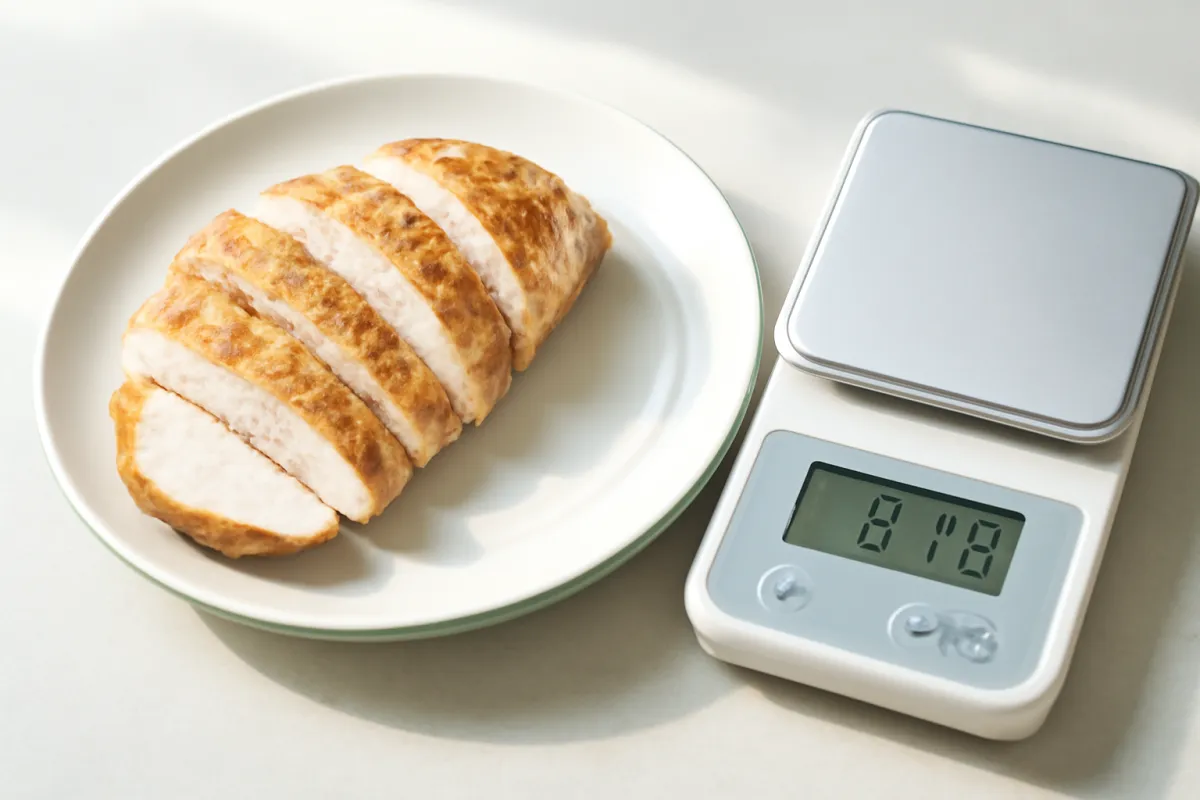
A 6 oz cooked chicken breast, about 170 grams, carries roughly 53 grams of protein, which is why a medium breast is so often described as delivering around 50 grams. Six ounces is a common restaurant and recipe portion, and it sits right in the middle of the size range for a typical supermarket breast, so it is a useful figure to keep in mind as a default.
Fifty-plus grams from a single food is a lot: for many adults it covers a large share of a day’s protein in one sitting. That is what makes a 6 oz chicken breast such an efficient centerpiece for a high-protein meal, whether at lunch or dinner. It also explains why people building a protein-forward plate often start with a chicken breast and add smaller protein sources around it rather than the other way around. As with every figure here, 53 grams is a commonly cited, illustrative estimate that shifts with the exact size of the breast and whether it is weighed raw or cooked. See how a 6 oz portion stacks against your own target in the companion below.
How Much Protein in an 8 oz Chicken Breast?
An 8 oz cooked chicken breast, roughly 227 grams, carries about 70 grams of protein at the reference rate of 31 grams per 100 grams. That is a very large single serving, and 70 grams is enough protein to cover most or all of a typical adult’s daily needs from one piece of meat. Large breasts sold at 8 oz or more are common in warehouse packs, and a single one can dominate a plate.
There is an important weighing caveat at this size. Chicken breasts are usually sold and labeled by their raw weight, and a breast loses roughly a quarter of its weight as it cooks, mostly water. So an 8 oz raw breast cooks down to about 6 oz, and its protein total settles nearer 53 grams than 70. If you want the 70-gram figure, the breast needs to be 8 oz after cooking, which means starting from a considerably larger raw piece. This is a frequent source of overcounting, and it is worth being precise about when the portion is large. These figures are illustrative references for planning rather than a prescribed portion for anyone.
Protein by Weight and Serving: A Reference Table
This is the table that answers the common weight-based questions in one place: how protein scales across the portions people actually search for. All figures assume cooked, skinless chicken breast at about 31 grams of protein per 100 grams, with calories alongside so you can see the full picture.
| Serving | Weight (cooked) | Protein, roughly | Calories, roughly |
|---|---|---|---|
| 3 oz | ~85 g | ~26 g | ~140 kcal |
| 4 oz | ~113 g | ~35 g | ~187 kcal |
| 6 oz | ~170 g | ~53 g | ~281 kcal |
| 8 oz | ~227 g | ~70 g | ~375 kcal |
| 100 g | 100 g | ~31 g | ~165 kcal |
The table shows how cleanly the protein scales with weight, because the rate per 100 grams is fixed: double the weight and you double the protein. It also shows how lean chicken breast is, with the calories staying modest relative to the protein at every portion, a point the calories section returns to. Use whichever row matches your usual portion and you have the protein figure without a scale. Every number here is a commonly cited reference for cooked, skinless meat, so adjust for skin, thigh, or a raw weight and treat the totals as illustrative rather than exact.
Raw vs Cooked Chicken Breast Protein
The single most common confusion about chicken protein is the gap between raw and cooked figures, so it is worth slowing down on it. Cooked chicken breast shows about 31 grams of protein per 100 grams, while raw chicken breast shows closer to 23 grams per 100 grams. The instinct is to think cooking somehow adds protein, but it does not. Cooking cannot create protein.
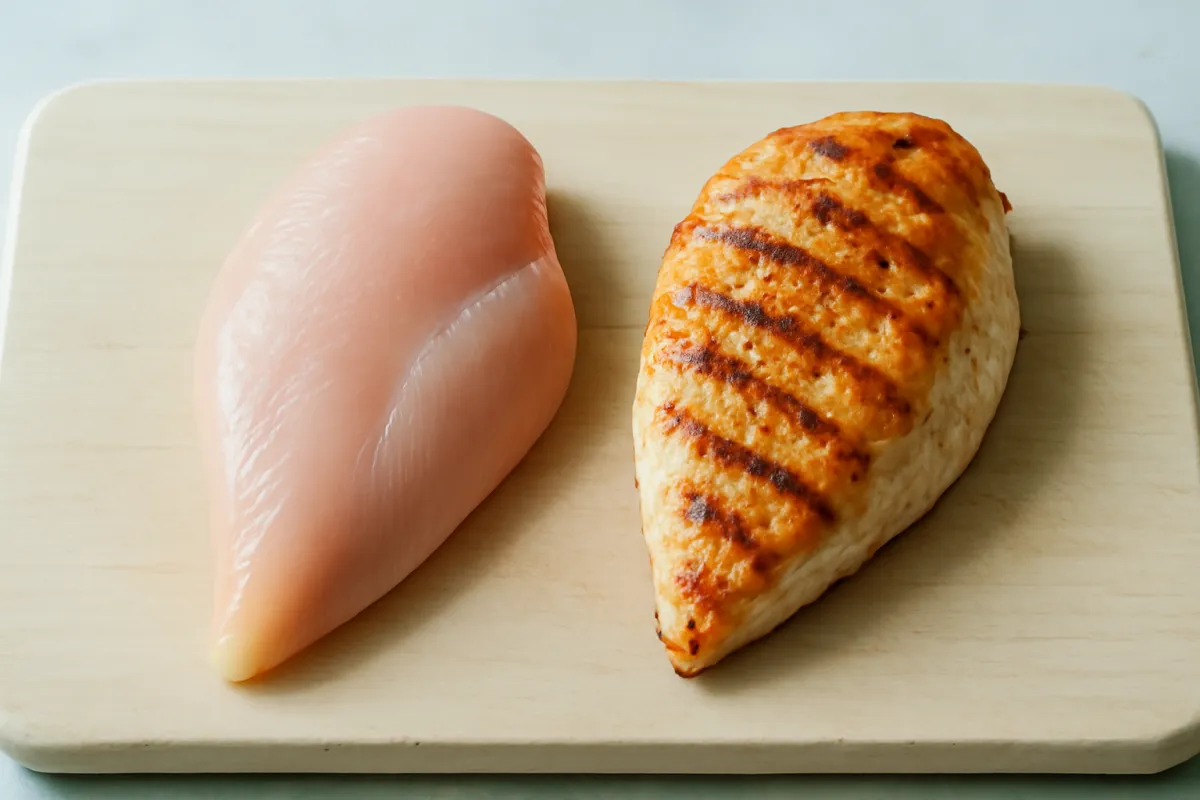
What actually happens is that raw meat holds a lot of water, and heat drives much of that water off. A chicken breast loses roughly a quarter of its weight as it cooks, almost all of it water, which shrinks the piece and concentrates the protein into a smaller mass. So the protein per gram rises even though the total protein in the meat barely changes. A raw breast weighing 170 grams holds about 39 grams of protein; after cooking it might weigh 128 grams, still holding about 40 grams of protein, now at a higher concentration per 100 grams. The practical rule is to be consistent: use the cooked rate for cooked meat and the raw rate for raw meat, and never mix them. Since chicken is usually sold by raw weight, this matters when you weigh before cooking. These are illustrative reference figures for general information.
How Much Protein in a Cooked Chicken Breast?
Bringing the previous section to a point: a cooked chicken breast is the version most people are actually eating and counting, and it carries about 31 grams of protein per 100 grams of cooked weight. For a whole breast, that means the 40-to-55-gram range described up top, depending on size, and the reference table gives the exact steps by portion. Cooked is the figure to use when you are weighing food on your plate.
The reason to state this separately is that the cooked figure is the practical one, while the raw figure is mainly relevant when you are weighing meat before it goes in the pan. If you weigh a breast raw and want to know the protein, you can use the raw rate of about 23 grams per 100 grams on that raw weight, and you will land at roughly the same total protein, since the water loss during cooking does not remove protein. Either path gives a similar total for the actual piece of meat; the per-100-gram rate simply differs because the weight it is measured against differs. For everyday counting, cooked weight at 31 grams per 100 grams is the cleaner tool. This is a commonly cited, illustrative reference rather than an exact reading.
Chicken Breast as a Complete Protein
Yes. Chicken breast is a complete protein, which means it supplies all nine essential amino acids, the building blocks the body cannot make and must obtain from food, in useful proportions within a single food. Like other animal foods, it clears that bar on its own, without needing to be paired with a complementary protein the way some individual plant foods do. That completeness is part of what makes chicken breast such a reliable protein staple.
Chicken breast is also highly digestible, so most of the protein listed on the label is available to the body in usable form. On the scoring systems nutrition scientists use to rank protein quality, which weigh both the amino-acid profile and how well a protein is absorbed, lean poultry scores near the top alongside eggs, dairy, and other high-quality animal proteins. This means the roughly 31 grams per 100 grams is not just present but well used. That said, this is a factual description of food composition and general nutrition science rather than a health claim or an instruction to eat any particular amount. For how chicken stacks up against other high-quality proteins, our protein in common foods review lays out the wider comparison, and our egg protein review covers the classic reference protein in detail.
Calories Alongside the Protein
Chicken breast earns its reputation as a lean protein because of how little comes along with the protein. A 100-gram cooked, skinless breast carries about 165 calories with its 31 grams of protein, and only around 3 to 4 grams of fat. That is a very high ratio of protein to calories, which is exactly what people mean when they call a food lean and protein-dense.
A chicken breast's macros (protein / fat / other)
Approximate makeup by weight of 100 g of cooked, skinless chicken breast. Illustrative reference figures.
Segments show each part's share of 100 g of cooked, skinless breast by weight. Chicken breast is roughly a third protein and almost no fat; the rest is largely water. Illustrative figures.
The chart shows why chicken breast is so efficient: it is about a third protein by weight and carries very little fat, with the remainder mostly water. Skinless breast is the leanest common cut of chicken, which is why it is the default choice for high-protein, lower-calorie eating. The calorie figure climbs, of course, with how you cook it, since oil, butter, breading, and sauces add energy without adding protein. How this fits your overall day is a matter for our calorie needs review, which handles daily energy directly. These are commonly cited, illustrative figures that vary with the cut and preparation.
Chicken Breast vs Thigh Protein
Breast and thigh are the two cuts people compare most, and the difference is real but modest. Cooked, skinless chicken breast is near 31 grams of protein per 100 grams, while cooked, skinless thigh is closer to 26 grams per 100 grams. So breast is the higher-protein cut, but thigh is still a solid protein source, not a weak one.
Where the cuts really diverge is fat and calories. Thigh is a darker, fattier cut, carrying roughly two to three times the fat of breast, which pushes its calories higher for the same weight, often near 210 calories per 100 grams cooked versus 165 for breast. That extra fat is also why many people find thigh juicier and more flavorful, and more forgiving to cook without drying out. Neither cut is nutritionally wrong: breast is the leaner, slightly higher-protein choice favored when the goal is maximum protein per calorie, while thigh trades a little protein for more fat, flavor, and moisture. The right pick depends on taste and on how the meal fits the rest of your day, not on any rule. These are commonly cited, illustrative figures that vary with trimming and preparation.
Skin-On vs Skinless Chicken Breast
The skin question is really a fat-and-calorie question, not a protein one. Leaving the skin on a chicken breast adds a meaningful amount of fat and calories, but it changes the protein figure very little, because the skin itself contributes only a small amount of protein relative to a lot of fat. So a skin-on breast still carries roughly the same protein as a skinless one of the same meat weight, just with more calories on top.
In rough terms, skin-on cooked chicken breast runs closer to 195 or more calories per 100 grams versus about 165 for skinless, with the gap coming almost entirely from the fat in and under the skin. If your aim is maximum protein per calorie, skinless is the leaner path, which is why it is the default in high-protein eating. If you prefer the skin for flavor and texture, the protein you are getting is essentially unchanged; you are simply adding some fat and calories to the meal. As with thigh versus breast, this is a taste and calorie trade-off rather than a protein one, and neither choice is wrong. These are illustrative reference figures that vary with how much skin remains and how the breast is cooked.
Chicken Breast vs Other Protein Foods
Chicken breast is a benchmark high-protein food, and it helps to see where it sits against other staples. Per 100 grams cooked it is near the top of the pack, ahead of most cuts of beef and fish on protein per gram, and far denser than eggs or yogurt on a per-100-gram basis. The table below gathers common comparisons at commonly cited figures.
| Food | Serving | Protein, roughly |
|---|---|---|
| Chicken breast | 100 g cooked | ~31 g |
| Lean beef | 100 g cooked | ~26 g |
| Salmon | 100 g cooked | ~25 g |
| Canned tuna | 100 g | ~26 g |
| Greek yogurt | 100 g | ~10 g |
| Large egg | 1 egg | ~6 g |
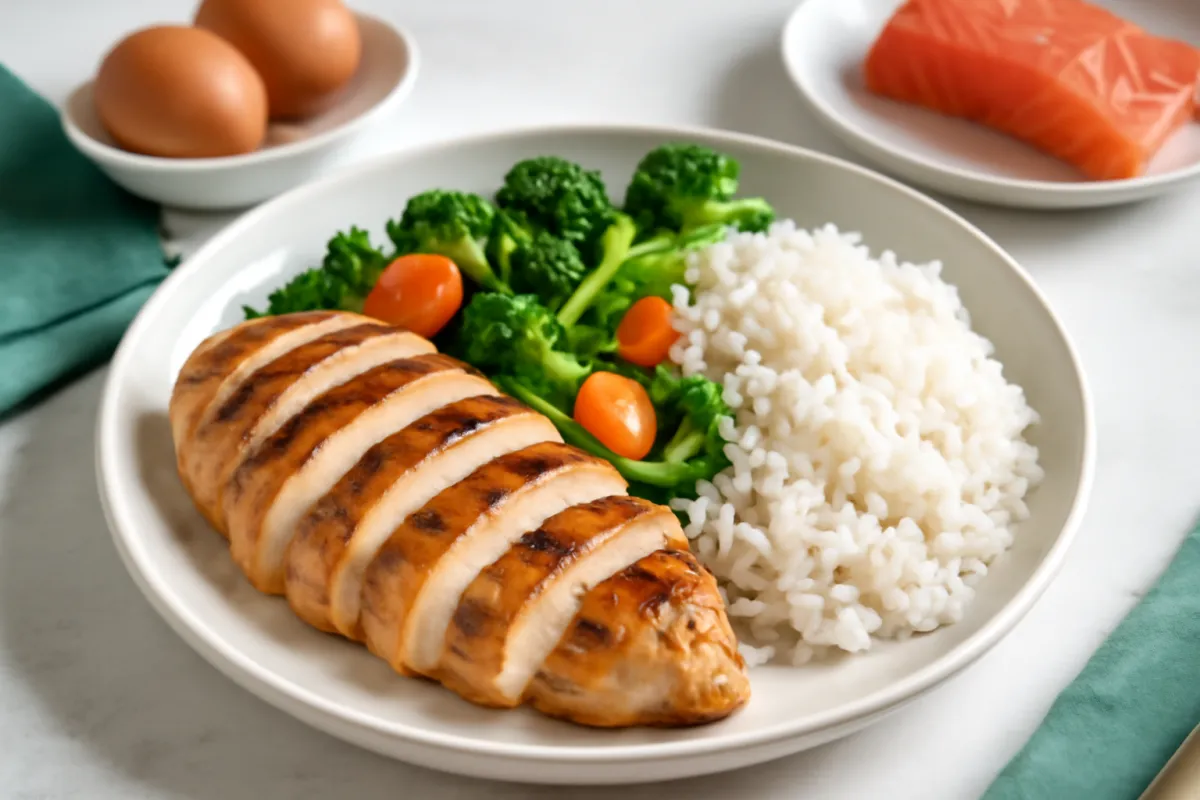
Where chicken breast wins is on protein density combined with low fat and moderate cost, delivering more protein per 100 grams than most alternatives while staying lean. Where variety matters is in the other nutrients: fish brings omega-3 fats, eggs bring a broad micronutrient package, and plant proteins bring fiber, so a rotation beats leaning on any single food. For a side-by-side look at how chicken compares to beans, tofu, dairy, and the rest, our protein in common foods review is the broader companion to this chicken-specific one, and our egg protein review covers eggs in depth. This review takes no position on which foods anyone should choose; it only places chicken breast accurately on the map. All figures are commonly cited references that vary by cut, brand, and preparation.
How Chicken Breast Fits Your Daily Protein Needs
A chicken breast’s protein only means something against a daily target, and that target is a separate question this review does not try to set for you. Daily protein needs depend on body size, activity, age, and goals, which our protein needs review walks through in detail. A common reference point is that many adults aim for somewhere in a wide range of grams per day, and a single chicken breast can supply a large fraction of it, sometimes most of it, in one meal.
That density is what makes chicken breast such a useful lever for anyone who keeps falling short on protein. A medium 6 oz breast at lunch or dinner puts around 50 grams on the plate at once, which can be half or more of a daily target for many people, leaving the rest to fill in with smaller sources across the day. Because chicken is cheap, versatile, and predictable in its protein, it is one of the simplest ways to build a protein-forward day without much planning. The point is not that everyone should eat a specific amount of chicken, but that it slots neatly into whatever target applies to you. Enter a portion and your target in the companion below to see the share it covers. Your personal target is best confirmed with a qualified professional, particularly if you have any medical condition.
How Much Chicken for 30, 50, or 100 Grams of Protein?
A practical way to use the 31-grams-per-100-grams figure is in reverse: starting from a protein goal and working out how much cooked chicken it takes. Because the rate is fixed, the arithmetic is simple, and here are the common round-number targets people search for.
| Protein goal | Cooked chicken breast | In everyday terms |
|---|---|---|
| ~30 g | ~100 g (~3.5 oz) | a small portion |
| ~50 g | ~160 g (~5.5 oz) | about one medium breast |
| ~100 g | ~320 g (~11 oz) | about two medium breasts |
The table shows how efficiently chicken delivers protein: a fairly small portion covers 30 grams, and a single medium breast gets you to about 50. Reaching 100 grams from chicken alone means roughly two breasts, which is a lot of chicken for one day, so in practice most people spread a high target across chicken plus other protein foods rather than eating it all from one source. That is usually more comfortable and more balanced than piling on chicken. These are illustrative reference figures for planning, and any specific target belongs with a professional rather than a table. Build your own version in the companion below.
Does Cooking Method Change the Protein?
A frequent worry is that grilling, baking, boiling, or pan-frying somehow changes how much protein a chicken breast delivers. It does not, at least not meaningfully. The protein in the meat is essentially fixed; what the cooking method changes is mostly the water content, which affects the per-100-gram figure, and the added fat, which affects calories.
All cooking drives off some water, which is what concentrates the protein into the roughly 31-grams-per-100-grams cooked figure regardless of method. A drier method like grilling or roasting removes a bit more water than a moist method like poaching, so grilled chicken can read a touch higher per 100 grams simply because it is more concentrated, but the total protein in the piece is about the same. Where the methods really differ is added fat: frying in oil, breading, or finishing with butter or sauce adds calories without adding protein, while grilling, baking, poaching, and air-frying keep it lean. So the protein figure is stable across methods, and the calorie figure is what you make it. These are general nutrition points and illustrative figures, not a personal recommendation.
A Worked Example: A Day That Hits a Protein Target
To pull the numbers together, here is an illustrative day built to reach about 120 grams of protein, chosen only to show the arithmetic rather than to recommend a figure for anyone. Start dinner with a medium 6 oz cooked chicken breast for roughly 53 grams, already close to half the day’s total from one food. That is the anchor the rest of the day builds around.
Add three eggs at breakfast for about 18 grams, a cup of Greek yogurt for around 17 grams, a 4 oz portion of salmon or a second smaller chicken serving at lunch for roughly 25 to 35 grams, and a handful of smaller sources across snacks, and the day clears 120 grams comfortably. The lesson mirrors the reverse-target table: chicken breast does a great deal of the heavy lifting because it is so protein-dense, but spreading the rest across a few other foods reaches a meaningful target more easily and with better nutritional balance than stacking chicken alone. Build your own version, with your portion and target, in the companion below. The 120-gram figure here is illustrative, chosen to show the math, not a number this review advises anyone to hit.
Common Mistakes Counting Chicken Protein
A handful of recurring errors explain most of the confusion around chicken breast protein, and each is easy to fix once named.
- Mixing raw and cooked figures. Cooked chicken is about 31 grams per 100 grams and raw is about 23; using the cooked rate on a raw weight, or the reverse, throws the count off.
- Assuming every breast is the same size. Breasts range from about 35 to nearly 90 grams of protein each; weighing or eyeballing the actual portion beats a fixed per-breast number.
- Forgetting the cooking shrink. A breast loses roughly a quarter of its weight cooking, so an 8 oz raw breast is nearer 6 oz cooked, and its protein total settles lower than the raw label suggests.
- Counting skin or sauce as protein. Skin, oil, breading, and sauces add fat and calories, not protein, so they raise the calorie count without raising the protein.
- Treating illustrative figures as exact. Every number here is a commonly cited reference that varies with the bird, the cut, and the preparation.
Each of these is a counting error rather than an eating error, and clearing them up makes the simple 31-grams-per-100-grams rule far more reliable. The arithmetic only works when you know which weight, raw or cooked, and which size you are dealing with.
The Bottom Line
How much protein is in a chicken breast comes down to one rate and one caveat: about 31 grams of protein per 100 grams of cooked, skinless meat, and it all depends on the size of the breast. A small 4 oz breast carries near 35 grams, a medium 6 oz breast around 53, and a large 8 oz breast about 70, so a typical whole breast lands in the 40-to-55-gram range. Raw chicken reads lower per 100 grams, near 23 grams, only because raw meat holds water that cooks off and concentrates the protein; the total in the actual piece barely changes. Chicken breast is a complete, highly digestible protein, leaner and slightly higher in protein than thigh, and among the most protein-dense whole foods most people eat. Every figure here is a commonly cited, illustrative reference for food composition, not a personal prescription, so pair it with our protein needs review for how much you need and confirm anything specific to your health with a qualified professional.
This evidence review is published for general education and describes the commonly cited composition of chicken breast and broad nutrition science, not medical, dietetic, or dietary advice, and reading it creates no clinician-patient relationship. Every protein figure, calorie figure, and portion weight above is an illustrative, widely referenced approximation rather than an exact measurement, and real chicken varies with the bird, the cut, the trimming, and the preparation. This article does not tell anyone how much chicken to eat, and its comparisons between cuts and foods describe general food composition rather than guidance for any individual. For a protein target or eating plan suited to your body, goals, medications, pregnancy, kidney health, or any medical condition, consult a qualified health professional such as a doctor or registered dietitian.
Frequently asked questions
How much protein is in a chicken breast?
A typical cooked, skinless chicken breast has roughly 40 to 55 grams of protein, with a medium 6 oz breast landing near 50 grams. The reference figure most food databases use is about 31 grams of protein per 100 grams of cooked chicken breast, so the total depends mainly on the size of the breast. Because breasts vary a lot in weight, from small to extra large, the protein per breast covers a wide range. Treat these as commonly cited, illustrative figures for food composition rather than an exact reading of any particular breast.
How much protein is in 100g of chicken breast?
Cooked, skinless chicken breast is commonly cited at about 31 grams of protein per 100 grams, which is the reference figure most nutrition databases use. Raw chicken breast is lower on the same 100-gram basis, closer to 23 grams, because raw meat holds more water that cooks off. That difference is the single biggest source of confusion when people compare protein figures, since the number depends on whether the 100 grams is weighed raw or cooked. These are illustrative reference values that vary a little with the cut and the exact preparation.
How much protein is in 4 oz of chicken breast?
Four ounces of cooked chicken breast is about 113 grams, which carries roughly 35 grams of protein at the commonly cited rate of 31 grams per 100 grams. That makes a 4 oz cooked portion a substantial single serving of protein, comparable to about six large eggs from one modest piece of meat. If the 4 oz is weighed raw instead of cooked, the protein is a little lower per ounce because raw meat holds more water. This is an illustrative reference figure rather than an exact measurement of any specific portion.
How much protein is in a 6 oz chicken breast?
A 6 oz cooked chicken breast, about 170 grams, carries roughly 53 grams of protein, which is why a medium breast is often described as delivering around 50 grams. That single portion covers a large share of many people's daily protein from one food. A 6 oz breast is a common restaurant and recipe portion, so it is a useful anchor to remember. As always, this is a commonly cited, illustrative figure that shifts with the exact size of the breast and whether it is weighed raw or cooked.
How much protein is in an 8 oz chicken breast?
An 8 oz cooked chicken breast, roughly 227 grams, carries about 70 grams of protein at the reference rate of 31 grams per 100 grams. That is a very large single serving, enough protein to cover most or all of a typical adult's daily needs from one piece of meat. Large raw breasts sold at 8 oz will weigh less after cooking as water cooks off, so the cooked portion and its protein settle a little lower. These figures are illustrative references for planning rather than a prescribed portion for anyone.
Is chicken breast a complete protein?
Yes, chicken breast is a complete protein, meaning it supplies all nine essential amino acids, the ones the body cannot make and must get from food, in useful proportions. Like other animal foods, it clears that bar on its own, without needing to be combined with another protein source. Chicken breast is also highly digestible, so most of its stated protein is available to the body in usable form. This is a description of food composition and general nutrition science, not a recommendation about how much anyone should eat.
What are complete protein foods?
Complete proteins supply all nine essential amino acids in useful proportions within a single food. Most animal foods qualify on their own, including chicken and other poultry, beef, fish and seafood, eggs, and dairy such as milk, yogurt, and cheese. Among plant foods, soy foods like tofu, tempeh, and edamame, along with quinoa and buckwheat, are commonly cited as complete, while many other plant proteins are lower in one amino acid and are easily balanced by eating a variety of sources across the day. This is a general description of food composition rather than dietary advice, so anyone planning protein around specific goals or a health condition should check with a doctor or registered dietitian.
Why does raw and cooked chicken breast have different protein per 100g?
Raw chicken breast holds more water than cooked, so a 100-gram raw sample is partly water that cooks away. As a breast cooks it loses roughly a quarter of its weight, mostly water, which concentrates the protein into a smaller mass. That is why cooked chicken shows about 31 grams of protein per 100 grams while raw shows closer to 23 grams, even though cooking does not add or destroy protein. The total protein in the actual piece of meat stays about the same; only the per-100-gram figure rises. These are illustrative reference figures for general information.
How does chicken breast protein compare to thigh?
Chicken breast is leaner and slightly higher in protein than thigh, with cooked breast near 31 grams of protein per 100 grams and cooked thigh closer to 26 grams. Thigh carries more fat and therefore more calories for the same weight, though it is still a good protein source with a richer flavor that many people prefer. Neither is nutritionally wrong; breast is the leaner high-protein choice, while thigh trades a little protein for more fat and taste. These are commonly cited, illustrative figures that vary with trimming and preparation, not a judgment about which anyone should eat.

Hamza Hai is the editor of NourishMark. She holds an MBA and reviews the site's articles against our editorial standards, checking that every figure is labelled for what it is, that nothing is presented as verified fact without a source the reader can check, and that the writing stays useful to a non-specialist.

Dr. Shayaan Khan is the medical reviewer for NourishMark. He holds an MBBS from MGM Medical College, Navi Mumbai, and is the author of published research including a narrative review of postpartum anxiety and depression in Mental Health Science. He has taught physiology at university level. He reviews the site's health content for medical accuracy: that physiology and mechanisms are described correctly, that no claim is stated more strongly than the evidence behind it, and that anything specific to an individual reader is sent to that reader's own clinician.
Not medical advice. Dr. Khan reviews NourishMark's health content for medical accuracy. He is not a registered dietitian, he does not hold a United States practising licence, and he is not your doctor. His review does not make anything here medical advice. Always talk to a qualified health professional about your own situation, and never delay or stop care because of something you read here.