What's in this review
- Potato Calories: The Direct Answer
- Calories in a Potato by Size and Preparation: A Quick Table
- How Many Calories in a Medium Baked Potato?
- Calories in 100g of Potato
- Calories in a Boiled Potato
- Calories in Mashed Potatoes
- Roasted Potatoes and the Oil Question
- French Fries: Where the Calories Multiply
- Potato Chips and Processed Forms
- Sweet Potato vs White Potato Calories
- Russet, Red, Gold, and Fingerling Compared
- What a Baked Potato Is Made Of
- Carbs and Fiber in Potatoes
- Skin On or Off?
- Potatoes and Fullness: The Satiety Story
- Potatoes and Blood Sugar
- Toppings: How a Plain Potato Becomes a Loaded One
- How a Potato Fits Your Daily Calories
- A Worked Example: A Potato Dinner by the Numbers
- Common Mistakes Counting Potato Calories
- The Bottom Line
Short answer: Using USDA figures, a plain medium baked potato with skin, about 173 grams, lands near 160 calories, with boiled potato near 87 calories per 100 grams and baked near 93. Preparation is the whole story: mashed with milk and butter runs near 110 per 100 grams, oil-roasted near 140, fast-food fries near 315, and chips near 540. A medium potato is a full carbohydrate serving of roughly 37 grams.
The calories in a potato depend far less on the potato than on what happens to it in the kitchen. Using figures from the United States Department of Agriculture, a plain medium baked russet with its skin, about 173 grams, lands near 160 calories, and plain boiled potato sits near 87 calories per 100 grams, which makes the unadorned potato one of the lightest starches on any plate. The same vegetable fried becomes a different food: fast-food fries are commonly cited near 310 to 320 calories per 100 grams and potato chips near 540, three to six times the plain rate, with butter, cheese, and cream staking out the territory in between. A potato’s calorie story is really a preparation story, and this reference walks through every rung of that ladder.
This food reference is a plain-language companion for potato calories, organized so you can find the size and preparation you actually have: baked, boiled, mashed, roasted, fried, chipped, and the sweet potato beside them. It is narrower than our reference on calories in common foods, which covers the whole pantry, and it pairs with our review of how many carbs per day, since a potato is first and foremost a carbohydrate serving. It works through the USDA-based figures by size and method, what a potato is made of, the fiber and potassium that get overlooked, the satiety research that complicates the potato’s junk-food reputation, and the counting mistakes that make this vegetable seem less predictable than it is. It is educational, describes food composition only, and is not diet or medical advice. You can tally your own potato in the companion below.
Key takeaways
- USDA figures put a plain medium baked potato with skin, about 173 grams, near 160 calories, with boiled potato near 87 calories per 100 grams and baked near 93.
- Preparation is the whole story: mashed with milk and butter runs near 110 calories per 100 grams, oil-roasted near 140, fast-food fries near 315, and chips near 540, all the same vegetable plus fat and lost water.
- A medium potato is a full carbohydrate serving, roughly 37 grams with about 4 grams of fiber, comparable to a cup of cooked rice or two slices of bread.
- Plain potatoes are among the most filling foods per calorie in commonly cited satiety research, and they carry notable potassium and vitamin C; the reputation problem belongs to the fryer, not the vegetable.
- Every figure here is a commonly cited, USDA-based reference, not an exact measurement or a personal target; for anything tied to your health, consult a doctor or registered dietitian.
Potato Calories: The Direct Answer
The direct answer is that a plain medium baked potato with its skin carries roughly 160 calories, built from a USDA-based rate near 93 calories per 100 grams and a typical medium weight around 173 grams. Boiled potato reads slightly lower per gram, near 87 calories per 100 grams, and raw potato near 77, the differences reflecting water content rather than any change in the potato’s energy.
Size scales the figure in the obvious way: a small potato near 140 grams runs about 130 calories, a large baking potato near 300 grams about 280. Preparation scales it far more dramatically, which is the theme this reference returns to in every section: the plain potato is a light food, and almost everything famous about potato calories, fries, chips, loaded skins, comes from added fat and lost water rather than from the vegetable. It is worth saying plainly that a potato is a substantial carbohydrate serving, near 37 grams for a medium, so it occupies the same plate position as rice or bread, not the vegetable-side position of broccoli. Set your own potato, by size and method, in the companion below and the arithmetic will follow you through the sections. As with everything here, these are commonly cited, illustrative references rather than an exact reading of the potato on your counter.
Calories in a Potato by Size and Preparation: A Quick Table
Because both the size and the method move the figure, the calories are best shown as a small table. The figures below draw on USDA-based food composition data for plain preparations, with commonly cited restaurant-style figures for the fried rows.
| Potato | Portion | Calories, roughly | Carbs, roughly |
|---|---|---|---|
| Baked, with skin | Medium (~173 g) | ~160 kcal | ~37 g |
| Baked, with skin | Small (~140 g) | ~130 kcal | ~30 g |
| Baked, with skin | Large (~300 g) | ~280 kcal | ~64 g |
| Baked, with skin | 100 g | ~93 kcal | ~21 g |
| Boiled, plain | 100 g | ~87 kcal | ~20 g |
| Mashed, milk and butter | 1 cup (~210 g) | ~230 kcal | ~35 g |
| Roasted in oil | 100 g | ~140 kcal | ~19 g |
| French fries, fast food | Medium serving (~115 g) | ~365 kcal | ~46 g |
| Potato chips | 1 oz (~28 g) | ~155 kcal | ~15 g |
| Sweet potato, baked | Medium (~130 g) | ~115 kcal | ~27 g |
The table’s shape tells the story before any prose does. The plain rows, baked and boiled, cluster near 90 calories per 100 grams, and every step away from plain climbs: a modest step for home mashed, a bigger one for oil-roasting, and a different world for the fryer, where a medium serving of fries outweighs two medium baked potatoes on calories while delivering a third of the food by weight. Use whichever row matches your plate, and treat the totals as commonly cited references rather than exact measurements, since potato sizes vary more than almost any packaged food and recipes vary more still.
How Many Calories in a Medium Baked Potato?
The medium baked potato is the reference potato, and its arithmetic is simple: about 173 grams at a USDA-based rate near 93 calories per 100 grams with skin, landing near 160 calories. Alongside ride roughly 37 grams of carbohydrate, about 4 grams of each of fiber and protein, and almost no fat at all, a profile that makes the plain baked potato one of the leanest substantial foods in the kitchen.
Two things about that figure deserve emphasis. First, “medium” is doing real work: grocery russets run anywhere from 130 grams to well past 300, so the honest range for “a baked potato” is roughly 120 to 280 calories, and a restaurant baker is usually at the top of it. Weighing a potato once or twice calibrates the eye quickly. Second, the 160 calorie figure describes a naked potato, and baked potatoes are rarely eaten naked. A tablespoon of butter adds roughly 100 calories, a quarter cup of shredded cheese near 110, two tablespoons of sour cream near 60, and bacon bits more still, which is how a loaded steakhouse potato commonly lands near 400 to 500 calories, the toppings outweighing the vegetable. The topping section below prices the ladder in detail. These are illustrative, commonly cited figures, and your potato’s weight is the variable that matters most.
Calories in 100g of Potato
Stated per 100 grams, the plain potato is remarkably light for a starch. USDA-based figures put boiled potato near 87 calories per 100 grams, baked with skin near 93, and raw potato near 77, the raw figure lowest because uncooked potato holds the most water. For comparison on the same basis, cooked rice runs near 130, bread near 265, and cooked pasta near 160, which places plain potato at roughly half to a third of the density of the starches it substitutes for.
That low density is the potato’s quiet advantage: a generous 300 gram plate of boiled potatoes costs about 260 calories, the price of two slices of bread, while delivering far more food by weight and volume. The density ladder climbs with preparation because the two levers, added fat and lost water, both concentrate calories. The chart below draws that ladder in one view.
Potato calories per 100 g by preparation
Approximate calories per 100 g of the same vegetable across common preparations, based on USDA-derived and commonly cited figures. Illustrative reference values.
Bars scale to chips at 100 percent. Each step up the ladder adds fat, removes water, or both; the potato's own energy never changes. Illustrative references, not a target.
The chart is the whole reference compressed: the plain preparations huddle together at the light end, the home enrichments step up moderately, and the fried forms stand apart at three to six times the base rate. The 100 gram basis is also the cleanest way to compare potato varieties, which the variety section below shows to be a near tie. Per-100-gram rates are the potato’s stable math; everything else is portion size and recipe. These are commonly cited, illustrative references that vary with variety and cooking.
Calories in a Boiled Potato
Boiled potato is the lightest common preparation and the baseline the rest of this reference measures against. Plain boiled potato, with or without skin, is commonly cited near 87 calories per 100 grams, so a medium potato boiled runs near 150 calories, a fist-sized 200 gram portion near 175, and a hearty 300 gram plate near 260, all drawing on USDA-based figures.
Boiling neither adds nor removes energy; the potato simply stays fully hydrated, which keeps its calories diluted through its own water. That hydration is also why boiled potatoes performed so strikingly in the satiety research covered later in this reference: heavy, water-rich food fills the stomach at a low calorie cost. Practical notes for counting are few. Cut potatoes lose a trace of starch to the cooking water, not enough to matter. Cooling boiled potatoes converts a modest share of their starch to resistant starch, which is commonly cited as slightly reducing digestible calories and feeding gut bacteria, an interesting but small effect that also underlies potato salad’s slightly gentler glycemic profile. And the moment butter or a creamy dressing arrives, the dish should be counted as its recipe rather than as boiled potato. A plain boiled potato with herbs remains one of the cheapest full servings of food, in calories and in money, on any stove. These are illustrative, commonly cited figures.

Calories in Mashed Potatoes
Mashed potatoes are the first rung on the enrichment ladder, and their calories are honestly a recipe question. The standard home version, potatoes mashed with milk and a knob of butter, is commonly cited near 210 to 240 calories per cup, about 210 grams, which works out to roughly 110 calories per 100 grams against 87 for the plain boiled potato underneath.
The spread between versions is wide enough that a single figure misleads. Mashed with broth, or with skim milk and no butter, sits essentially at the plain-potato rate, near 90 per 100 grams. The standard home recipe adds 20 to 30 percent. Restaurant and holiday versions, mounted with butter and heavy cream in quantities home cooks rarely admit to, can run 150 to 180 per 100 grams, double the plain rate, and boxed instant mash lands wherever its preparation directions put it, typically near the home-recipe figure once milk and butter go in. The potato’s contribution to a cup is steady at roughly 150 calories; everything above that is dairy fat. So the counting method is the one that works for every mixed dish: price the recipe once, potatoes plus each addition, divide by servings, and reuse the figure. Gravy, of course, is its own line. These are illustrative, commonly cited ranges, and your own pot is the real number.
Roasted Potatoes and the Oil Question
Roasted potatoes sit halfway between the oven and the fryer, and the variable is entirely the oil. Potato roasted with a typical coating of oil is commonly cited near 140 calories per 100 grams, against 93 for dry-baked, with the exact figure set by how much oil the pan carries and how much surface the cut exposes. Small cubes and wedges hold more oil than halved potatoes for the same reason crushed and smashed styles hold the most: more surface, more clinging fat.
The arithmetic is worth seeing once. A tablespoon of olive oil carries roughly 120 calories, and a typical roasting tray for four might use two to three tablespoons, adding 240 to 360 calories across the batch, roughly 60 to 90 per serving on top of the potatoes’ own 90 per 100 grams. That is a meaningful but moderate addition, which is why oven-roasting with measured oil is the standard advice for fry lovers counting calories: crisp edges at a third of the fryer’s cost. Air fryers push the same trade further, achieving fry-like texture with a teaspoon or two of oil, commonly landing finished potatoes near 110 to 130 per 100 grams. The counting rule is mechanical: log the potatoes at the plain rate and the oil by the spoon that actually went on the tray. These are commonly cited, illustrative figures that vary with recipe and cut.
French Fries: Where the Calories Multiply
Fries are the preparation that gave the potato its reputation, and the numbers earn it. Fast-food french fries are commonly cited near 310 to 320 calories per 100 grams, more than triple the plain baked rate, so a medium serving of about 115 grams lands near 365 calories and a large near 480 to 560, drawing on commonly cited restaurant figures. A single large fries can outweigh three plain medium baked potatoes on calories.
Two mechanisms drive the multiplication, and both belong to the fryer rather than the potato. Oil soaks in: fries absorb frying fat through their cut surfaces, and at roughly 9 calories per gram, that absorbed oil carries most of the added energy. Water cooks off: frying dehydrates the potato, so the remaining mass is more concentrated in starch and fat. Thin cuts amplify both effects, which is why shoestring fries run denser than steak fries and why chips, the thinnest cut of all, top the chart in the next section. Home oven fries with a measured tablespoon of oil land far lower, commonly near 130 to 160 per 100 grams. None of this is a moral judgment; fries are a deliberate treat in most eating patterns. It is simply the arithmetic of oil and water, and it is the single largest calorie swing any potato undergoes. These are illustrative, commonly cited figures that vary by chain, cut, and fry method.
Potato Chips and Processed Forms
Chips complete the density ladder. Potato chips are commonly cited near 540 calories per 100 grams, roughly six times the plain boiled potato, because slicing paper-thin and frying removes nearly all the water and replaces much of it with oil. The practical unit is the ounce: a standard 28 gram serving, about 15 chips, runs near 155 calories, and the honest caveat is that few open bags stop at one serving.
The other processed forms line up along the same logic. Stacked crisps made from potato flake dough sit near the chip figure. Baked chips trade some oil away, commonly landing near 450 to 470 per 100 grams, lower but still dense because the water is gone regardless. Tots and hash browns, being fried shredded potato, commonly run 220 to 280 per 100 grams depending on the fryer, and frozen oven versions print their own panel, which is the number to trust. Kettle and thick-cut chips are marketing distinctions more than calorie ones. What all these forms share is the loss of the plain potato’s two virtues, water weight and fullness per calorie, which is why a food that began as one of the most satiating tested becomes one of the easiest to overeat. Our low-calorie snacks review covers the lighter end of the snack aisle for contrast. These are commonly cited, illustrative figures; the bag’s panel is the authority for any brand.
Sweet Potato vs White Potato Calories
The sweet potato’s health-food reputation implies a calorie advantage that does not exist. Baked sweet potato is commonly cited near 90 calories per 100 grams and baked white potato with skin near 93, a difference within measurement noise, both drawing on USDA-based data. A medium baked sweet potato lands near 100 to 115 calories mostly because typical sweet potatoes weigh less than typical russets, not because the flesh is lighter.
The real differences are in character rather than calories. Sweet potatoes carry substantially more vitamin A, delivered as beta-carotene in amounts few foods match, along with a little more sugar, which is the sweetness on the tongue, and slightly less protein. White potatoes answer with more potassium, a bit more vitamin C per typical serving, and a starchier profile that some find more filling. Fiber is similar, near 3 to 4 grams per medium potato in each. Both take the same preparation ladder in the same direction: sweet potato fries are commonly cited near 300-plus calories per 100 grams once fried, and a marshmallow-topped holiday casserole outpaces any loaded baked potato. The honest conclusion is to choose by flavor and the rest of the plate, not by calories, and to rotate both for the wider nutrient coverage. These are commonly cited, illustrative figures.
Russet, Red, Gold, and Fingerling Compared
Among white potato varieties, the calorie differences are small enough to ignore. Russets, reds, Yukon golds, fingerlings, and purple potatoes all land near 85 to 95 calories per 100 grams cooked plain, drawing on USDA-based figures, with the modest spread reflecting moisture and starch content rather than anything worth planning around. A waxy red potato holds slightly more water and reads at the low end; a dry, floury russet reads at the top.
The differences that matter are culinary, and they do bend the calorie math indirectly. Starchy russets absorb the most butter and oil, which is why they make the fluffiest mash and the crispest fries, and also why russet dishes tend to arrive richer. Waxy reds and fingerlings hold their shape, take less fat to be palatable, and suit the plain and boiled preparations that keep the figures low. Golds sit between, creamy enough to mash with less butter. Skin thickness varies too, with russets carrying the most substantial skins and most of the fiber advantage of eating them. For counting purposes, though, one rule covers the aisle: any plain-cooked white potato is near 90 calories per 100 grams, and the variety line on a label or database entry is not worth chasing. Size and preparation, the two levers this reference keeps pointing at, dwarf everything the variety changes. These are commonly cited, illustrative figures.
What a Baked Potato Is Made Of
Understanding what a potato physically is explains most of its numbers. A medium baked potato, about 173 grams, is dominated by water even after the oven’s drying, with its carbohydrate a distant second and everything else a rounding error.
What a medium baked potato is made of (by weight)
Approximate makeup by weight of a ~173 g baked russet with skin, based on USDA-derived figures. Illustrative reference values.
Segments show each component's share of the potato's weight. The ~160 calories come almost entirely from the carbohydrate slice, since fat is a trace. Illustrative figures.
The chart explains the potato’s whole calorie personality. Because three quarters of the weight is water, the plain potato is filling and light per gram; because nearly all the dry matter is starch, the calories track carbohydrate almost exactly, at 4 calories per gram, with the potato’s trace fat contributing almost nothing. Every high-calorie potato dish works by attacking one or both segments: frying and chipping shrink the water slice, and butter, oil, cheese, and cream bolt a fat segment onto a food that naturally has none. It also shows why the potato pairs so naturally with protein foods, since it brings only about 4 grams of its own. These are commonly cited, illustrative figures that vary with size and bake time.
Carbs and Fiber in Potatoes
A potato is a carbohydrate serving before it is anything else, and honest counting treats it that way. A medium baked potato carries roughly 37 grams of carbohydrate, at USDA-based rates near 21 grams per 100 grams baked and 20 boiled, which slots it beside a cup of cooked rice, near 45 grams, or two slices of bread, near 30, as the starch of the meal rather than a vegetable side. Our review of calories in rice and our review of calories in bread give those neighbors the same treatment.
Within the potato’s carbohydrate, about 4 grams is fiber, concentrated toward the skin, and only 2 to 3 grams is natural sugar; the remainder is starch. Two carbohydrate details reward attention. First, potatoes eaten with the skin are a legitimate fiber contributor, comparable per serving to many whole grains, which our high-fiber foods list puts in context. Second, cooked-then-cooled potatoes develop resistant starch, a fraction that digests like fiber rather than starch, modestly lowering the effective calories and feeding gut bacteria; reheating keeps much of it. For anyone budgeting carbohydrate across a day, the frameworks in our how many carbs per day review apply directly, with the potato counted like any other starch serving. Anyone managing diabetes should set carbohydrate targets with their clinician. These are commonly cited, illustrative figures.
Skin On or Off?
The skin question changes the potato less than folklore suggests, but the direction is consistent: the skin is where a disproportionate share of the fiber and some of the minerals live, at nearly no calorie cost. A medium baked potato with skin carries about 4 grams of fiber; peeled, closer to 2. The calories barely move with peeling, since skin is light, so skin-on is the higher-nutrition version of the same figure.
The practical case for skins goes beyond fiber. Baking a potato whole in its skin also protects the flesh from absorbing cooking fat, which is part of why the dry-baked potato anchors the light end of the preparation ladder. Roasted skin-on wedges hold their shape with less oil than peeled cubes. And the crisped skin itself carries flavor that reduces the need for toppings, which is where the real calories hide. The case for peeling is culinary, silkier mash, and occasionally practical, since the skin holds the eyes and any green patches, which should be trimmed regardless because greening indicates solanine, the potato’s natural defensive compound, best not eaten in quantity. Washed well and trimmed sensibly, the skin is the free upgrade on nearly every preparation. These are general food-composition points, commonly cited and illustrative, not a rule anyone must follow.
Potatoes and Fullness: The Satiety Story
The most surprising fact in potato nutrition is how filling the plain versions are. In commonly cited satiety research, where equal-calorie portions of foods are ranked by how full they leave people, plain boiled potatoes have repeatedly performed at or near the top of the foods tested, ahead of brown rice, whole wheat bread, and most protein foods on a per-calorie basis. The mechanics are unglamorous: water weight, volume, and starch that digests steadily fill the stomach at a low calorie cost.
That finding complicates the potato’s junk-food reputation in a useful way. The vegetable itself is one of the more weight-management-friendly starches available; the famous problem preparations earn their reputation precisely by stripping the properties that make it filling, removing the water and adding the fat, until the least satiating versions per calorie, chips and fries, are the ones most people mean by “potato”. For practical eating, the satiety story suggests the obvious pattern: plain or lightly dressed potatoes as the meal’s starch, portioned like any starch, deliver unusual fullness per calorie, while the fried forms are treats to portion deliberately. Satiety varies between people, and research rankings describe averages under test conditions, not a promise for any plate. These are commonly cited, illustrative findings, offered as context rather than as a weight-loss claim.
Potatoes and Blood Sugar
Potatoes are a high-starch food, and their carbohydrate digests quickly, so they raise blood glucose faster than many other whole foods; commonly cited glycemic index tables place plain potatoes, especially baked russets and instant mash, among the higher-reading whole foods. That is a real property worth knowing, and also one that context moderates more than single-food tables suggest.
Several factors slow the response in practice. Eating potatoes with protein, fat, and vegetables, which is how they are usually eaten, flattens the rise relative to a potato alone. Waxy varieties and boiled preparations commonly read lower than dry-baked russets. Cooling potatoes, as in potato salad, converts starch to resistant starch and is commonly cited as reducing the glycemic response, with some effect surviving reheating. Skin-on preparations add fiber, and portion size scales everything, since 37 grams of carbohydrate behaves differently than a double serving’s 74. Individual responses vary widely between people, a variability modern glucose monitoring has made visible even among the healthy. For most people the practical guidance is unremarkable: potatoes are a normal starch to be portioned like one, inside the balanced-plate pattern our review of building a balanced meal describes. Anyone managing diabetes or prediabetes should build their carbohydrate approach with their own clinician or dietitian. This is educational context, not medical advice.

Toppings: How a Plain Potato Becomes a Loaded One
The baked potato’s topping bar is where its calories are really decided, and pricing the ladder once makes every future potato legible. The plain medium baker starts near 160 calories. Salt, pepper, herbs, mustard, and hot sauce leave it there. Salsa adds perhaps 20. Two tablespoons of sour cream add near 60; a quarter cup of shredded cheddar near 110; a tablespoon of butter near 100; two slices of crumbled bacon near 90; a ladle of chili near 150 to 200.
Stack the classics, butter, cheese, sour cream, bacon, and the loaded potato lands near 480 to 520 calories, three times its base, with the potato now the minority partner on its own plate, which is exactly the trajectory of a restaurant loaded baker or twice-baked potato. The lighter builds work the same ladder downward: Greek yogurt stands in for sour cream at a third of the calories with more protein, cottage cheese does similar work, chives and salsa carry flavor for nearly nothing, and a modest single fat chosen deliberately, one pat of butter or one spoon of cheese, keeps the potato recognizable as the light food it started as. The counting rule is the same one this reference applies to mash and fries: the potato is the stable line, near 93 calories per 100 grams, and every topping is its own entry. These are commonly cited, illustrative figures that vary by spoon and kitchen.
How a Potato Fits Your Daily Calories
A potato’s calories only mean something against a daily total, and that total is personal, set by body size, activity, age, and goals, the territory of our review of how many calories you need. Against the 2,000 calorie day used on labels for illustration, the potato’s forms span an instructive range: a plain medium baker near 160 calories is 8 percent of such a day, a cup of home mashed near 230 about 11 percent, a loaded baker near 500 a full quarter, and a large fast-food fries near 500 to 560 similar, as a side.
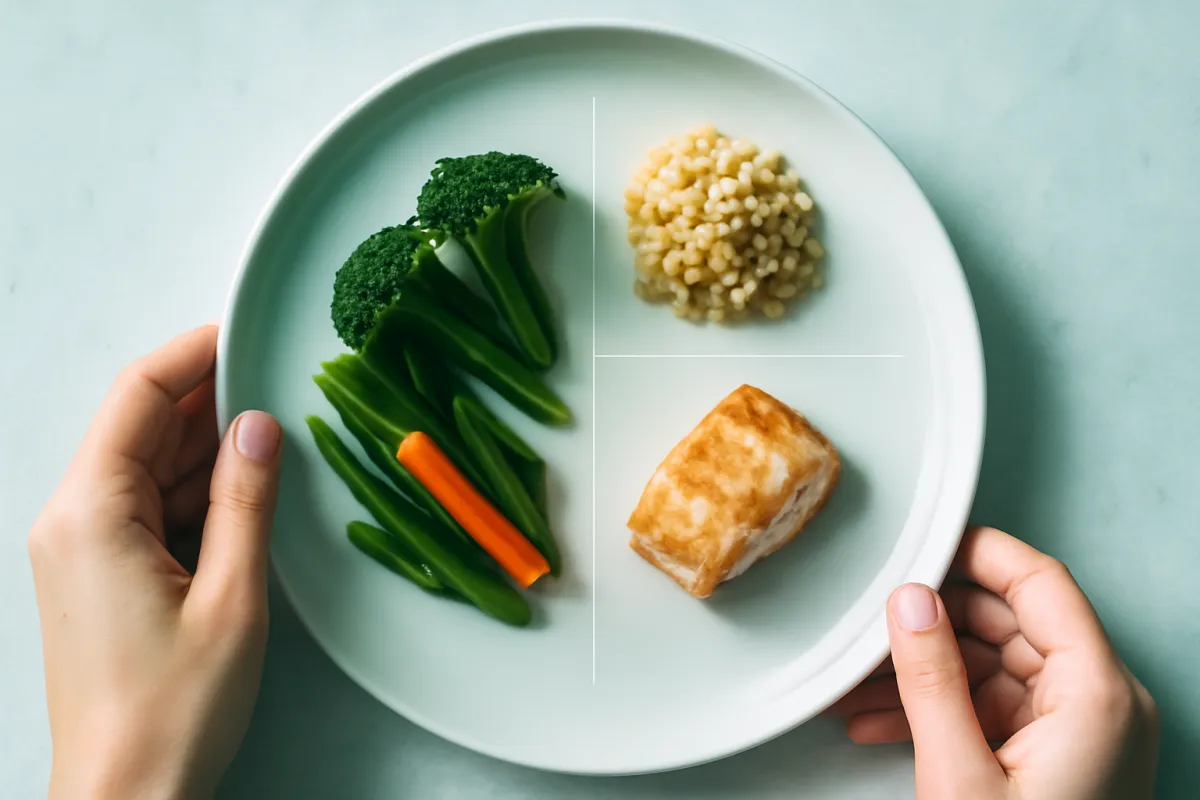
The plate position matters as much as the number. As the meal’s starch quarter, in the pattern our balanced meal guide lays out, a medium potato is a modest, filling anchor that pairs with a protein and vegetables into a 500 to 600 calorie dinner. As a side to another starch, or as fries beside a sandwich, the same potato calories stack on top of a complete meal, which is where days quietly overrun. Carbohydrate budgeting follows the same logic, with the potato’s 37 grams counted alongside the day’s other starches; our daily nutrient reference tabulates the commonly cited daily figures it fits into. Set your own day in the companion below and it will show each preparation as a share. These are illustrative reference points, not targets; your own numbers belong with a qualified professional.
A Worked Example: A Potato Dinner by the Numbers
To pull the arithmetic together, here is one illustrative dinner priced line by line, chosen to show the method rather than to recommend a meal. The starch: a medium baked russet with skin, about 173 grams, near 160 calories. The protein: a 4 ounce cooked chicken breast, near 185. The vegetables: a large pile of roasted broccoli and carrots tossed with one teaspoon of the tray’s oil, near 90 with its share of oil counted. The potato’s dressing: two tablespoons of Greek yogurt with chives, near 25, and a half pat of butter, near 50.
The plate lands near 510 calories, with roughly 45 grams of carbohydrate, 45 grams of protein, and the fiber of both the potato skin and the vegetables, a balanced dinner by most common reference points. The instructive part is the sensitivity analysis. Swap the yogurt-and-half-pat dressing for the full butter, cheese, sour cream treatment and the plate passes 750. Swap the baked potato for a medium fries and it passes 700 with less protein and fiber. Shrink the potato to a small one and the plate drops near 480. The potato itself was never the swing; the preparation and the toppings were, which is the entire thesis of this reference demonstrated on one plate. Build your own version in the companion below. All figures are illustrative, chosen to show the math.
Common Mistakes Counting Potato Calories
A short list of recurring errors explains most potato miscounts, and each is easy to fix once named.
- Treating every potato as medium. Real potatoes run from 120 to 300-plus grams, an honest range of roughly 110 to 280 calories; a restaurant baker is usually large. Weighing one occasionally calibrates the eye.
- Counting fries and chips at potato rates. Fried forms run three to six times the plain rate per gram; a medium fries near 365 calories is not “a potato side”.
- Logging mashed potatoes as boiled. The milk and butter in a standard cup add 60 to 90 calories over the plain potato, and rich recipes add far more.
- Ignoring tray oil on roasted potatoes. Two to three tablespoons across a roasting pan add 240 to 360 calories to the batch; the spoon count is the honest entry.
- Letting toppings ride for free. Butter, cheese, sour cream, and bacon routinely double or triple a baked potato; each belongs on its own line.
- Calling the potato a vegetable serving. Nutritionally it occupies the starch position, near 37 grams of carbohydrate per medium, beside rice and bread rather than beside broccoli.
- Treating illustrative figures as exact. Every number here is a commonly cited, USDA-based reference that varies with size, variety, and recipe.
Each of these is a counting error rather than an eating error. Corrected, the potato becomes one of the most predictable foods on the plate: near 90 calories per plain 100 grams, plus whatever the kitchen honestly added.
The Bottom Line
The calories in a potato are a preparation story wrapped around a light vegetable: plain boiled potato near 87 calories per 100 grams and baked with skin near 93 by USDA-based figures, so a plain medium baker lands near 160 calories, one of the lightest full starch servings available and, in commonly cited satiety research, one of the most filling per calorie. Every famous potato number comes from the ladder above that baseline, mashed near 110 per 100 grams, oil-roasted near 140, fries near 315, chips near 540, built by adding fat and removing water from the same vegetable. A medium potato is a genuine carbohydrate serving, roughly 37 grams with 4 of fiber, best counted beside rice and bread in the starch position of the plate. Sweet and white potatoes tie on calories and differ on nutrients, and the varieties tie closely enough to ignore. Every figure here is a commonly cited, illustrative reference, not a personal target, so pair it with our calorie needs review for the day around the plate and our calories in common foods reference for the wider pantry, and confirm anything specific to your health with a qualified professional.
This food reference is offered for general education about the commonly cited, USDA-based composition of potatoes and their common preparations, and none of it is medical, dietetic, or weight-management advice for any individual, nor a substitute for your own clinician’s guidance. Every calorie, carbohydrate, fiber, and portion figure above is an illustrative approximation: real potatoes vary widely in size and variety, recipes vary in fat, and restaurant figures vary by chain, so the number on your plate is only ever near these references. The satiety and glycemic discussions summarize commonly reported research averages, which do not predict any one person’s fullness or glucose response. This article does not tell anyone how many potatoes, fries, or chips to eat. Anyone managing diabetes or prediabetes, kidney disease affecting potassium, nightshade sensitivity, or any other health matter that touches diet, and anyone setting personal calorie or carbohydrate targets, should take those decisions to a doctor or registered dietitian.
Frequently asked questions
How many calories are in a medium potato?
A medium baked russet potato with its skin, about 173 grams, is commonly cited near 160 calories, drawing on USDA food composition data of roughly 93 calories per 100 grams for baked potato with skin. A small potato around 140 grams runs closer to 130 calories, and a large baking potato near 300 grams reaches about 280. Those figures are for the plain potato: butter, cheese, sour cream, and frying change the number far more than the potato's size does. Treat these as commonly cited, illustrative references rather than an exact reading of any particular potato, since sizes vary widely and the same potato reads differently by cooking method.
How many calories are in 100g of potato?
Plain boiled potato is commonly cited near 87 calories per 100 grams and baked potato with skin near 93, both drawing on USDA food composition data, with raw potato near 77 because it holds more water. Those low rates make plain potato one of the least calorie-dense starches on the plate, close to half the rate of bread per gram. The figure climbs with preparation: mashed with milk and butter commonly reads near 110 per 100 grams, oil-roasted potatoes near 140 or more, fast-food french fries near 310 to 320, and potato chips near 540. Same vegetable, five different foods. These are illustrative reference values that vary by variety and recipe.
Are boiled potatoes lower in calories than baked?
Per 100 grams they are close: boiled potato is commonly cited near 87 calories and baked with skin near 93. The small gap exists because baking dries the potato slightly, concentrating the same energy into less water weight, while boiling keeps the flesh fully hydrated. Neither method adds or removes energy; only added fats do that. In practice the choice between boiling and baking is about texture and use, and either produces one of the lightest starches available as long as the potato stays plain. What lands on the potato afterward, butter, oil, cheese, or cream, decides the final figure far more than the cooking water or oven does. These are commonly cited, illustrative figures.
How many calories are in mashed potatoes?
One cup of mashed potatoes made the standard home way, with milk and butter, is commonly cited near 210 to 240 calories, which works out to roughly 110 calories per 100 grams against about 87 for plain boiled potato. The spread between recipes is wide: mashed with broth or skim milk sits near the plain-potato rate, while restaurant and holiday versions enriched with butter and cream can run half again higher. The potato itself contributes near 150 of a typical cup's calories; the dairy contributes the rest. So mashed potatoes are best counted by recipe rather than by a single figure. These are illustrative, commonly cited references, and your own recipe is the real number.
Why do french fries have so many more calories than baked potatoes?
Frying adds oil, and oil is the most calorie-dense ingredient in the kitchen at roughly 9 calories per gram. Fast-food french fries are commonly cited near 310 to 320 calories per 100 grams against about 93 for plain baked potato, more than a threefold difference, because the frying oil soaks into the potato and the frying drives off water, concentrating everything further. A medium fast-food fries serving, about 115 grams, commonly lands near 350 to 370 calories, more than two medium baked potatoes. The potato inside the fry is unchanged; the oil around it is the story. These are commonly cited, illustrative figures that vary by chain, cut, and cooking.
Do sweet potatoes have fewer calories than regular potatoes?
They are nearly identical. Baked sweet potato is commonly cited near 90 calories per 100 grams and baked white potato with skin near 93, a difference too small to matter in practice, and a medium baked sweet potato lands near 100 to 115 calories mostly because typical sweet potatoes weigh a little less than typical russets. The real differences are nutritional character: sweet potatoes carry substantially more vitamin A as beta-carotene and a little more sugar, while white potatoes carry more potassium and a slightly higher protein share. Neither is the lower-calorie choice in any meaningful way, so the pick is about flavor and the rest of the plate. These are commonly cited, illustrative figures.
Are potatoes good or bad for weight loss?
Potatoes on their own are neither, because no single food determines weight; calorie balance across the whole diet does. Plain boiled and baked potatoes are actually among the lighter starches per gram, near 87 to 93 calories per 100 grams, and satiety research has often ranked boiled potatoes among the most filling foods tested per calorie, which is a useful property for anyone eating less. The reputation problem comes from the popular preparations, since fries and chips are three to six times more calorie-dense than the plain vegetable, and loaded toppings can double a baked potato's figure. A plain or lightly dressed potato fits a weight goal easily. Anyone pursuing weight change with a health condition should work with a doctor or registered dietitian rather than food-level rules.
How many carbs are in a potato?
A medium baked potato with skin carries roughly 37 grams of carbohydrate, drawing on USDA figures, of which about 4 grams is fiber and only a few grams are natural sugar; the rest is starch. Per 100 grams, baked potato runs near 21 grams of carbohydrate and boiled near 20. That makes a potato comparable to a cup of cooked rice or two slices of bread as a carbohydrate serving, which is the fair way to slot it into a meal plan. Potatoes eaten with their skin also contribute meaningful potassium and vitamin C for a starch. How much total carbohydrate suits a day is individual, and anyone managing blood sugar should set targets with a doctor or registered dietitian. These are illustrative, commonly cited figures.

Hamza Hai is the editor of NourishMark. She holds an MBA and reviews the site's articles against our editorial standards, checking that every figure is labelled for what it is, that nothing is presented as verified fact without a source the reader can check, and that the writing stays useful to a non-specialist.

Dr. Shayaan Khan is the medical reviewer for NourishMark. He holds an MBBS from MGM Medical College, Navi Mumbai, and is the author of published research including a narrative review of postpartum anxiety and depression in Mental Health Science. He has taught physiology at university level. He reviews the site's health content for medical accuracy: that physiology and mechanisms are described correctly, that no claim is stated more strongly than the evidence behind it, and that anything specific to an individual reader is sent to that reader's own clinician.
Not medical advice. Dr. Khan reviews NourishMark's health content for medical accuracy. He is not a registered dietitian, he does not hold a United States practising licence, and he is not your doctor. His review does not make anything here medical advice. Always talk to a qualified health professional about your own situation, and never delay or stop care because of something you read here.