What's in this review
- Tuna Protein: The Direct Answer
- Protein in Tuna by Form and Portion: A Quick Table
- How Much Protein in a Can of Tuna?
- How Much Protein in 100g of Tuna?
- Canned Light vs Albacore Tuna Protein
- Tuna in Water vs Tuna in Oil
- Fresh Tuna: Yellowfin, Ahi, and Tuna Steaks
- Tuna Pouches and Single-Serve Portions
- Where the Calories in Tuna Come From
- Tuna Protein Quality: A Complete Protein
- Protein per 3 Ounces: Tuna Forms Compared
- Calories in Tuna
- Mercury and How Often to Eat Tuna
- Tuna and Muscle: Protein per Calorie
- How Tuna Fits a Daily Protein Target
- A Worked Example: A Tuna Lunch by the Numbers
- What Mayo and Add-Ins Do to Tuna Salad
- Budget Protein: What Tuna Does per Dollar
- Common Mistakes Counting Tuna Protein
- How to Read a Tuna Label
- Tuna vs Salmon and Other Proteins
- The Bottom Line
Short answer: USDA figures put drained light tuna canned in water near 19 to 20 grams of protein per 100 grams, so a standard 5 ounce can, about 113 grams drained, carries roughly 22 grams of protein for only about 100 calories. Albacore in water is commonly cited near 23 to 24 grams per 100 grams, oil-packed light tuna near 29 once drained, and cooked fresh tuna near 29 to 30.
How much protein is in tuna comes down to which form of tuna you are holding: the fish itself is one of the most protein-dense foods sold, and the differences between cans mostly reflect water. Using figures from the United States Department of Agriculture, drained light tuna canned in water carries roughly 19 to 20 grams of protein per 100 grams with only about 85 to 90 calories, so a standard 5 ounce can, which yields near 113 grams of drained fish, lands close to 22 grams of protein for about 100 calories. Albacore in water reads a little higher per gram, oil-packed tuna higher still once drained, and a cooked fresh tuna steak higher again, near 29 to 30 grams per 100 grams. Those gaps are almost entirely about how much water each form holds, and once you see that, the numbers stop being confusing.
This evidence review is a plain-language reference for tuna protein, organized so you can find the exact form and portion you have: light versus albacore, water versus oil, cans, pouches, and fresh steaks. It is narrower than our broader reference on protein in common foods, which sets tuna alongside dozens of other sources, and it pairs with our review of how much protein you need for the daily-total question this review deliberately does not answer for you. It also covers calories, protein quality, the mercury question every tuna article owes its readers, and the counting mistakes that make can labels confusing. It is educational, describes food composition only, and is not medical advice. You can tally your own can or steak in the companion below.
Key takeaways
- USDA figures put drained light tuna in water near 19 to 20 grams of protein per 100 grams, so a standard 5 ounce can, about 113 grams drained, carries roughly 22 grams of protein for only about 100 calories.
- Albacore in water is commonly cited near 23 to 24 grams per 100 grams, oil-packed light tuna near 29 once drained, and cooked fresh tuna near 29 to 30; the differences are mostly water content, not better fish.
- Water-packed light tuna delivers roughly 90 percent of its calories from protein, one of the highest protein-per-calorie ratios of any everyday food.
- Mercury varies by species: light skipjack is generally listed lower, albacore higher, so public health guidance commonly describes a weekly rhythm rather than daily tuna, with extra care in pregnancy and for children.
- Every figure here is a commonly cited, USDA-based reference, not an exact measurement or a personal target; for anything tied to your health, consult a doctor or registered dietitian.
Tuna Protein: The Direct Answer
The direct answer is that drained light tuna canned in water carries roughly 19 to 20 grams of protein per 100 grams, drawing on USDA food composition data, and that figure is the anchor for everything that follows. It applies to the plain drained fish, before mayonnaise or anything else joins it. Multiply that rate by the drained weight of your portion and you have the protein.
It helps to anchor the rate in portions people actually eat. A 3 ounce serving of drained light tuna, about 85 grams, carries near 17 grams of protein for roughly 75 calories. A standard 5 ounce can yields about 4 ounces of drained fish, near 113 grams, which is about 22 grams of protein for roughly 100 calories. A 2.6 ounce pouch lands near 16 grams. Albacore, oil-packed, and fresh tuna all read higher per gram, near 23 to 30 grams per 100 grams, and the sections below sort out why: those forms simply hold less water, so the same fish protein is packed into fewer grams. What makes tuna stand out is not just the protein total but the ratio, since water-packed light tuna gives up almost nothing to fat or carbohydrate. Set your own portion in the companion below to see the arithmetic update as you read. As with everything here, these are commonly cited, illustrative references rather than an exact reading of any particular can.
Protein in Tuna by Form and Portion: A Quick Table
Because tuna is sold in more forms than almost any other fish, the protein is best shown as a small table rather than a single number. The figures below draw on USDA-based food composition data for drained canned tuna and cooked fresh tuna, with calories alongside so the protein-per-calorie story is visible at a glance.
| Tuna | Portion | Protein, roughly | Calories, roughly |
|---|---|---|---|
| Light, in water (drained) | 3 oz (~85 g) | ~17 g | ~75 kcal |
| Light, in water (drained) | 100 g | ~19.5 g | ~86 kcal |
| Light, in water (drained) | 5 oz can (~113 g drained) | ~22 g | ~100 kcal |
| Albacore, in water (drained) | 3 oz (~85 g) | ~20 g | ~110 kcal |
| Albacore, in water (drained) | 100 g | ~23.5 g | ~128 kcal |
| Light, in oil (drained) | 3 oz (~85 g) | ~25 g | ~170 kcal |
| Fresh yellowfin (cooked) | 3 oz (~85 g) | ~25 g | ~110 kcal |
| Fresh yellowfin (cooked) | 6 oz steak (~170 g) | ~50 g | ~220 kcal |
| Light, pouch (2.6 oz) | 1 pouch (~74 g) | ~16 g | ~70 kcal |
The table carries the two lessons this review keeps returning to. First, every form of tuna is a serious protein source: even the smallest single-serve pouch delivers what many reference points would call a solid protein snack. Second, the per-gram differences track water content, so oil-packed and fresh tuna read higher per 100 grams while water-packed reads lower, even though the underlying fish is similar. Use whichever row matches what you have, keep the weight basis drained, and treat the totals as commonly cited references rather than exact measurements, since brands and draining vary.
How Much Protein in a Can of Tuna?
A standard can of tuna in the United States is labeled 5 ounces, but that weight includes the packing liquid. Drain it and you are typically left with about 4 ounces of fish, near 113 grams, and at the commonly cited rate of 19 to 20 grams of protein per 100 grams, that drained can of light tuna in water carries roughly 22 grams of protein for about 100 calories. That is the single most useful tuna figure to memorize, because the 5 ounce can is the unit most people actually buy and eat.
Two variations shift the figure. A drained can of albacore in water lands higher, often near 25 to 27 grams of protein, because white tuna reads about 23 to 24 grams per 100 grams. And larger 12 ounce cans, drained to roughly 250 grams of fish, carry protein in the high 40s. It is worth noticing what the can does not carry: essentially no carbohydrate, very little fat in the water-packed version, and around 100 calories, which is less than many single cookies. Few foods put 22 grams of protein on a plate that cheaply on the calorie ledger, a point our reference on protein in common foods makes in the wider context. These are illustrative, USDA-based reference figures, and any single can varies a little with the brand and how firmly you press out the liquid.
How Much Protein in 100g of Tuna?
The cleanest way to state tuna protein is per 100 grams of drained fish, because it removes the guesswork about can sizes and fill levels. Drained light tuna in water is commonly cited near 19 to 20 grams of protein per 100 grams, with albacore in water near 23 to 24, drained oil-packed light tuna near 29, and cooked fresh tuna near 29 to 30, all drawing on USDA food composition data.
That spread looks strange until you see the pattern: the ranking follows water content, not fish quality. Water-packed tuna sits in liquid and absorbs some of it, so each 100 grams holds more water and less fish solids. Oil does not soak into the muscle the way water does, so drained oil-packed tuna is denser in fish per gram. Cooked fresh tuna has lost moisture to the heat, concentrating its protein the same way. In other words, the protein was always in the fish; the forms just dilute it with different amounts of water. The practical rule is to match the rate to the form you have and always weigh the fish drained. If you weigh tuna undrained, the packing liquid inflates the weight and the per-gram figures above will overstate your protein. These are illustrative reference values that vary by species and brand.
Canned Light vs Albacore Tuna Protein
The two everyday canned choices are light tuna, usually skipjack and sometimes yellowfin, and albacore, sold as white tuna, and on protein they are close but not identical. Drained in water, light tuna is commonly cited near 19 to 20 grams of protein per 100 grams, while albacore reads near 23 to 24. Over a standard drained can that is roughly 22 grams against 26 to 27, a real but modest gap.
The other differences matter as much as the protein. Albacore is a larger, longer-lived fish, so it typically carries more mercury, which is why public health guidance treats it more conservatively; the mercury section below covers the commonly described weekly rhythms. Albacore also carries a little more fat, including more of the omega-3 fats fish are valued for, which is part of why it tastes milder and richer. Light tuna is generally cheaper and is the workhorse choice for frequent eaters precisely because its mercury listing is lower. On protein alone there is no wrong answer: both put a can’s worth of high-quality protein in the low-to-high 20s of grams. Choosing between them is a taste, budget, and frequency question more than a protein question. These are commonly cited, illustrative figures that vary by brand and batch.
Tuna in Water vs Tuna in Oil
Water-packed and oil-packed tuna start as similar fish, but the can changes the arithmetic. Per drained 100 grams, oil-packed light tuna is commonly cited near 29 grams of protein against roughly 19 to 20 for water-packed, which sounds like a win for oil until you see the calories: near 200 per 100 grams for drained oil-packed against roughly 85 to 90 for water-packed, based on USDA-derived figures.
Both differences have the same explanation. Oil does not absorb into the fish the way water does, so oil-packed tuna is denser in fish solids per gram, which raises the protein reading. At the same time, some oil always clings to the meat after draining, and at roughly 9 calories per gram of fat, that clinging oil more than doubles the calorie figure. So oil-packed tuna genuinely delivers more protein per 100 grams, but water-packed delivers far more protein per calorie, which is usually the ratio people counting closely care about. There are honest reasons to choose oil: flavor, texture, and the fact that a little fat makes tuna more satisfying without mayonnaise. If you do, pressing the fish firmly in a strainer removes a meaningful share of the clinging oil. Neither choice is wrong; they are different tools. These are illustrative reference figures that vary with the oil, the brand, and how thoroughly you drain.
Fresh Tuna: Yellowfin, Ahi, and Tuna Steaks
Fresh tuna is the same fish family with the water dial turned down by cooking. Cooked yellowfin, the species most often sold as ahi or as tuna steaks, is commonly cited near 29 to 30 grams of protein per 100 grams with roughly 130 calories, drawing on USDA food composition data. A typical 6 ounce cooked steak, about 170 grams, therefore lands near 50 grams of protein, one of the largest single-food protein portions on any menu.
A few practical notes help with counting. Raw preparations read lower per gram than cooked: seared rare ahi or the cubes in a poke bowl are closer to raw composition, near 24 to 25 grams of protein per 100 grams, because the water has not cooked off. Bluefin, the fattier sushi species, carries similar protein with more fat and therefore more calories, commonly cited near 150 to 160 calories per cooked 3 ounces. And restaurant steaks are frequently 6 to 8 ounces, so the protein arrives in the 50s and 60s of grams whether or not you planned it. Fresh tuna is also where mercury deserves the most attention, since steak species like bigeye and bluefin are large predators; the mercury section below covers the commonly described guidance. As throughout, these are illustrative reference figures that vary by species, cut, and cooking.
Tuna Pouches and Single-Serve Portions
Pouches have become the grab-and-go form of tuna, and the arithmetic is the same fish at smaller weights. A standard 2.6 ounce pouch of light tuna in water, about 74 grams, carries roughly 16 grams of protein for near 70 calories, since pouch tuna is packed with little added liquid and needs no draining. Larger 5 ounce pouches roughly double that, near 30 grams of protein.
The pouch’s real feature is convenience rather than composition: no can opener, no draining, and a protein snack that keeps at room temperature. That makes pouches a common answer to the gap our review of protein per meal describes, where breakfasts and snacks run light on protein while dinner runs heavy. A pouch added to a light lunch moves that meal by 16 grams, which is the size of adjustment that spread-out protein intakes are built from. Flavored pouches deserve a label check, since sauces and oils add calories and sometimes a few grams of carbohydrate; plain water-packed pouches are the leanest version. Prices per gram of protein run higher for pouches than cans, which is the usual convenience trade. These are commonly cited, illustrative figures, and the label on your pouch is the final word for that product.
Where the Calories in Tuna Come From
Tuna’s reputation as a protein food is earned at the level of its calorie ledger. In drained light tuna canned in water, nearly all of the calories come from protein, with a small remainder from fat and essentially nothing from carbohydrate. Per 100 grams, that is roughly 19.5 grams of protein against about 1 gram of fat.
Where the calories in water-packed light tuna come from
Approximate calorie sources per 100 g of drained light tuna canned in water, based on USDA-derived figures. Illustrative reference values.
Segments show each nutrient's share of the roughly 86 calories in 100 g of drained water-packed light tuna. Oil-packed tuna shifts the fat share sharply upward. Illustrative figures.
The chart is the whole tuna story in one bar: roughly 90 percent of the calories arrive as protein, a ratio that almost no other everyday food matches, with skinless chicken breast and nonfat Greek yogurt as the nearest company. This is why tuna features so heavily in high-protein eating patterns, and it is also why the additions matter so much, since a food this lean takes on the character of whatever you mix into it. Oil-packed tuna tells a different story, with fat carrying more than half its calories via the clinging oil. Fresh tuna sits between, lean but with enough fat to carry its omega-3s. These are commonly cited, illustrative figures that vary by species and packing.
Tuna Protein Quality: A Complete Protein
Quantity is only half the protein question; quality is the other half, and tuna scores as well as quantity. Tuna is a complete protein, meaning it supplies all nine essential amino acids, the ones the body cannot make and must get from food, in proportions the body uses efficiently. That includes leucine, the amino acid most discussed for signaling muscle protein synthesis, which fish supplies in amounts comparable to other animal proteins.
In practice this means a can of tuna does the same structural work as an equivalent portion of chicken, eggs, or beef: it supports muscle repair, enzyme and hormone production, and the everyday tissue maintenance protein exists for. Digestibility scores for fish protein sit at the top of the commonly used scales, alongside eggs and dairy. What tuna adds beyond the amino acids is context: vitamin B12, selenium, vitamin D in meaningful amounts for a food, and in fattier tuna the omega-3 fats EPA and DHA, all packed into very few calories. None of this makes tuna uniquely necessary, and plant-forward eaters combine legumes and grains to the same amino acid end, a pattern our reference on protein in common foods lays out. It simply means the grams on a tuna label are high-quality grams. These are general food-composition points, not a recommendation for any individual.
Protein per 3 Ounces: Tuna Forms Compared
Because portion labels in the United States so often use the 3 ounce serving, about 85 grams, it is worth lining the tuna forms up on that single basis. The chart below draws on the USDA-based figures used throughout this review, for drained canned tuna and cooked fresh tuna.
Protein per 3 oz (85 g) serving of tuna
Approximate protein in a 3 oz serving by form, drained or cooked, based on USDA-derived figures. Illustrative reference values.
Bars scale to the ~25 g forms at 100 percent. Higher per-gram readings mostly reflect lower water content, not better fish. Illustrative references, not a target.
The chart makes the water story visible: the two forms that hold the least water per gram, drained oil-packed and cooked fresh tuna, read highest, while water-packed light tuna reads lowest even though the underlying fish protein is similar. It also shows that the differences, while real, are not dramatic; every bar is a strong protein serving by any common reference. The calorie picture is what separates them, since the 17 gram bar costs about 75 calories while the oil-packed 25 gram bar costs near 170. Which ratio matters more depends on your goal. These are commonly cited averages, and any particular can or steak varies.
Calories in Tuna
Protein is tuna’s headline, but the calorie figures deserve their own summary because they change so much by form. Drained light tuna in water is commonly cited near 86 calories per 100 grams, so a 3 ounce serving is about 75 calories and a standard drained can about 100. Albacore in water runs near 128 per 100 grams, cooked fresh yellowfin near 130, and drained oil-packed light tuna near 200, based on USDA-derived data.
Set against other proteins, water-packed tuna is about as lean as food gets: fewer calories per gram than skinless chicken breast and far fewer than most beef, with salmon roughly double per gram because of its valuable fat. This is why tuna appears constantly in calorie-conscious eating patterns, and it is also the honest caveat, since almost nobody eats tuna plain. Two tablespoons of mayonnaise add roughly 180 calories, more than the drained can itself, which is how a 100 calorie can becomes a 400 calorie sandwich filling. The additions section below walks that arithmetic. For how tuna’s calories compare across the wider pantry, our reference on calories in common foods sets the field. These are illustrative reference figures that vary by species, packing, and brand.
Mercury and How Often to Eat Tuna
An honest tuna review has to cover mercury, because it is the one real constraint on an otherwise excellent food. Tuna are predatory fish that accumulate methylmercury from the fish they eat, and larger, longer-lived species accumulate more. Light skipjack tuna is generally listed among the lower-mercury choices by public health agencies, albacore carries roughly three times more on commonly cited averages, and large species like bigeye and bluefin run higher still.
United States food safety guidance from the Food and Drug Administration and the Environmental Protection Agency has commonly described a weekly rhythm: 2 to 3 servings a week from the lower-mercury list, which includes canned light tuna, or about 1 serving a week of albacore, with the most caution during pregnancy, while breastfeeding, and for young children, whose developing nervous systems are the population mercury guidance is built to protect. Those summaries are paraphrases of guidance that can change, so confirm the current version rather than treating this paragraph as the rule. For most adults eating tuna a few times a week, the commonly described position is that the benefits of fish outweigh the mercury concern at those frequencies. If you eat tuna heavily, are pregnant, or are feeding it to children often, this is a conversation for a clinician, not a food article. This is general educational context, not medical advice.

Tuna and Muscle: Protein per Calorie
For people eating toward a strength or body-composition goal, tuna’s appeal reduces to one ratio: grams of protein per calorie. Water-packed light tuna delivers roughly 19.5 grams of protein per 86 calories, which is about 23 grams per 100 calories, a ratio at the very top of the food supply alongside nonfat Greek yogurt and egg whites. Chicken breast lands near 19 grams per 100 calories, salmon near 12, and most plant proteins lower still once their carbohydrate and fat are counted.
That ratio matters most in a calorie deficit, where the commonly cited pattern in sports nutrition is to hold protein high while calories fall so that more of the lost weight comes from fat rather than muscle. A food that supplies a meal’s worth of protein for 100 calories leaves most of the day’s calorie budget for everything else. Tuna also arrives fully cooked, keeps in a pantry, and takes zero preparation, which are quiet but real advantages for actually hitting a daily number. The honest limits: the leanest tuna is not filling for long on its own, it needs accompaniment to be a meal, and the mercury rhythm above caps how many meals a week should be tuna. Our review of how to eat more protein places tuna among the other levers. These are commonly cited, illustrative figures, not a training prescription.
How Tuna Fits a Daily Protein Target
A can of tuna only means something against a daily protein total, and that total is personal. The commonly cited baseline, the RDA, is about 0.8 grams per kilogram of body weight per day, near 55 grams for a 150 pound adult, while active people and strength trainers commonly aim higher, in ranges our review of how much protein you need walks through and our daily nutrient reference tabulates alongside the other nutrients.
Against numbers like those, tuna portions are large moves. A standard drained can at roughly 22 grams covers a third to a half of an RDA-level day on its own, and a 6 ounce fresh steak near 50 grams covers most of one. For higher targets, say 120 grams for a training day, a can is still nearly a fifth of the day from about 100 calories. Distribution matters too: protein research commonly favors spreading intake across meals rather than loading one, in the 25 to 40 grams per meal ranges our protein per meal review covers, and a can of tuna lands a lunch squarely in that band. Enter your own target in the companion below to see what your portion covers. These are illustrative reference points, not personal targets; the right protein intake for you is a question for a qualified professional, particularly with any kidney or other medical condition.
A Worked Example: A Tuna Lunch by the Numbers
To pull the figures together, here is an illustrative lunch built around one standard can, chosen to show the arithmetic rather than to recommend a meal. Start with a 5 ounce can of light tuna in water, drained: roughly 113 grams of fish, about 22 grams of protein, near 100 calories.
Build it into a meal three ways. Version one, the lean bowl: fold the tuna into a large salad with vegetables, a half cup of cooked chickpeas, and 2 teaspoons of olive oil; the plate lands near 350 calories with roughly 30 grams of protein. Version two, the classic sandwich: mix the tuna with 2 tablespoons of mayonnaise, near 180 calories, and serve on two slices of bread near 150 calories more; the sandwich lands near 430 calories, still with about 26 grams of protein counting the bread’s few grams, and the mayonnaise now outweighs the fish on calories. Version three, the swap: make the same sandwich with Greek yogurt in place of mayonnaise and the total drops near 300 calories while the protein rises a few grams. The lesson is the one lean foods always teach: the tuna’s numbers barely move between versions, and the additions decide the meal. Build your own version in the companion below. All figures are illustrative and chosen to show the math.
What Mayo and Add-Ins Do to Tuna Salad
Tuna salad deserves its own section because it is how a majority of canned tuna is actually eaten, and the additions routinely triple the calories while barely moving the protein. Mayonnaise is the main event: at roughly 90 to 100 calories per tablespoon, a typical two-tablespoon mix adds about 180 to 200 calories of nearly pure fat to a can that started near 100 calories. Sweet relish, celery, and onion are rounding errors; oil-based dressings are not.
None of this makes tuna salad a mistake; fat carries flavor and makes a lean fish satisfying. It just changes what the dish is: a can mixed with two tablespoons of mayonnaise is closer to a 300 calorie spread with 22 grams of protein than to the 100 calorie can on the label. Common lighter builds that keep the protein-per-calorie ratio strong include plain Greek yogurt in place of some or all of the mayonnaise, which adds protein as it replaces fat; mashed avocado, which swaps in different fat with fiber; or simply one tablespoon instead of two. Mustard, lemon, pepper, and herbs move flavor for nearly zero calories. The counting rule is mechanical: log the additions separately from the fish, because the fish is the stable part. These are commonly cited, illustrative figures that vary by brand and spoon.
Budget Protein: What Tuna Does per Dollar
Part of tuna’s place in the food supply is economic, and it belongs in an honest review even without exact prices, which vary too much by store and year to state. Among complete animal proteins, canned light tuna routinely sits with eggs and chicken leg quarters among the cheapest sources per gram of protein, which is why it anchors so many budget high-protein patterns. It needs no refrigeration until opened, keeps for years, involves zero cooking, and wastes nothing, all of which are costs in disguise for fresh proteins.
The budget hierarchy within tuna itself is consistent: store-brand light tuna in water is usually the cheapest per gram of protein, albacore costs more for its milder flavor and higher mercury ceiling, pouches charge for convenience, and fresh steaks are priced as the restaurant fish they are. Dried legumes undercut tuna on pure cost per protein gram, though as incomplete proteins they do different work per serving, a comparison our reference on protein in common foods covers. The practical takeaway is that a pantry of canned light tuna is one of the least expensive ways to guarantee a week of protein floors, with the mercury rhythm above as the only real cap on how hard to lean on it. This is general context, not financial or dietary advice, and current prices at your store are the real numbers.
Common Mistakes Counting Tuna Protein
A handful of recurring errors explain most of the confusion around tuna labels, and each is easy to fix once named.
- Counting the can’s label weight as fish. A 5 ounce can holds about 4 ounces of drained tuna; the difference is packing liquid. Protein math done on 5 ounces of “tuna” overstates the fish by a quarter.
- Mixing drained and undrained bases. USDA-style figures for canned tuna are usually for drained solids. Applying a drained per-100-gram rate to undrained weight inflates the protein.
- Assuming oil-packed means more fish. Its higher protein per gram mostly reflects less water, and the clinging oil roughly doubles the calories; the protein-per-calorie ratio favors water-packed.
- Forgetting the servings-per-can line. Some labels state 2 servings per 5 ounce can, so the protein number shown is half the can, which makes tuna look weaker than it is.
- Logging tuna salad as tuna. Two tablespoons of mayonnaise can carry more calories than the fish; the additions need their own line in any count.
- Treating illustrative figures as exact. Every number here is a commonly cited, USDA-based reference that varies by species, brand, and draining.
Each of these is a counting error rather than an eating error, and clearing them up makes tuna one of the most predictable foods in the pantry: a drained can is roughly 22 grams of protein, almost regardless of brand.
How to Read a Tuna Label
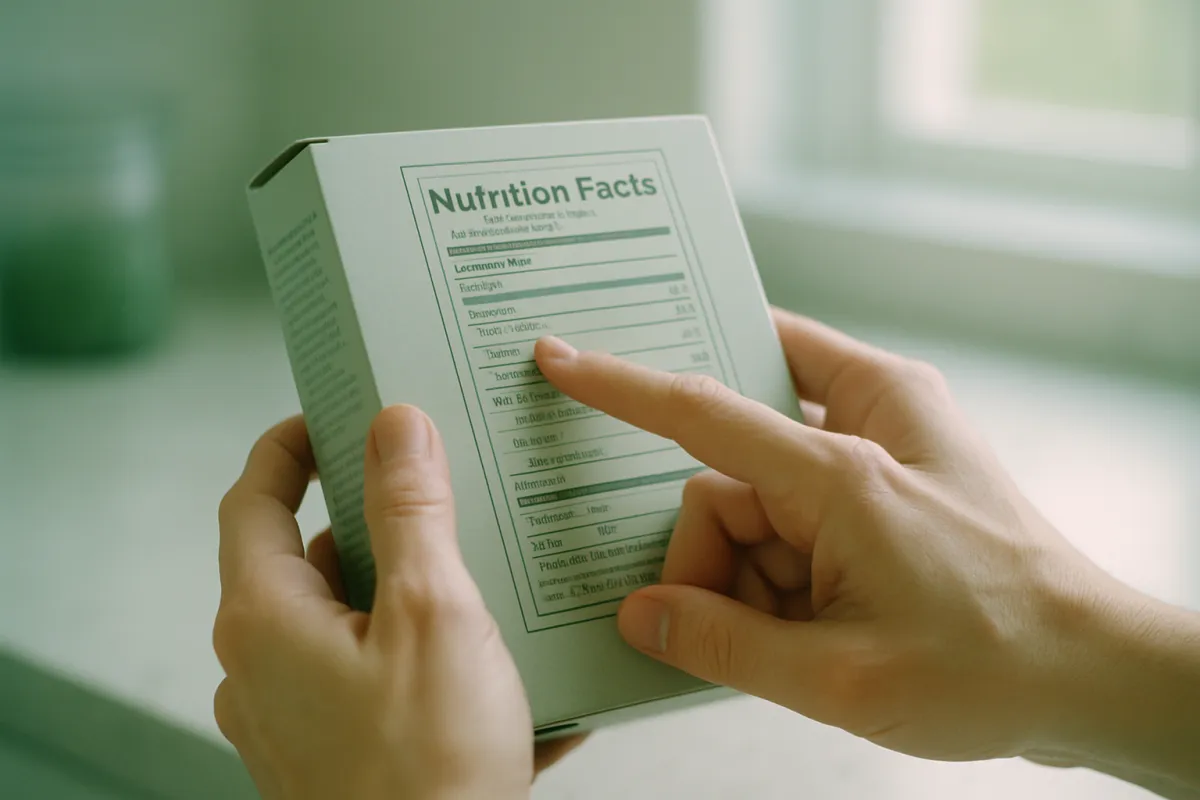
The nutrition panel on a tuna can rewards one minute of attention, and the habits transfer to every packaged protein. Start with the serving size and servings per container, because this is where cans differ most: some brands call a 5 ounce can one serving, others call it two, and every number on the panel scales to that choice. The drained weight, when stated, is the honest denominator for any per-gram math.
Then read three lines. Protein is the headline, typically 16 to 22 grams per serving depending on how the serving is defined. Calories separate water-packed from oil-packed at a glance, roughly 70 to 100 per serving against 150 to 200. Sodium is the quiet variable, since brining commonly puts 200 to 400 milligrams per serving in regular tuna, and low-sodium versions exist for anyone watching it. Flavored and sauced products add an ingredient list worth scanning for oils and sugars. The same panel-reading habits, serving size first, then the lines you care about, are the subject of our review of how to read a nutrition label, and tuna is one of the simplest labels to practice on. These are general label-reading points; the panel on your specific can is the final word for that product.
Tuna vs Salmon and Other Proteins
Tuna’s closest everyday comparison is canned salmon, and the two split the fish decision neatly. Per 3 cooked or drained ounces, both carry roughly 17 to 23 grams of protein, but salmon brings more fat, and with it more calories, commonly cited near 120 to 175 per 3 ounces against tuna’s 75 to 110, along with substantially more of the omega-3 fats EPA and DHA in most comparisons. Salmon, especially canned with bones, also carries more calcium and vitamin D, while light tuna wins the mercury listing and usually the price. Our review of protein in salmon gives salmon the same treatment this review gives tuna.
Against land proteins, tuna’s protein-per-calorie ratio leads almost everything: skinless chicken breast comes closest, eggs carry about 6 grams each with more fat, and ground beef trades fat content by the ratio you buy. The honest summary is that no single protein food is the answer; they differ in fats, micronutrients, price, and constraints like mercury, and rotation covers more ground than loyalty. Tuna’s specific role in that rotation is the leanest, cheapest, most shelf-stable complete protein in the store. These are commonly cited, illustrative comparisons that vary by cut, brand, and preparation.
The Bottom Line
How much protein is in tuna comes down to one rate per form, all drawing on USDA food composition data: drained light tuna in water near 19 to 20 grams per 100 grams, so a standard 5 ounce can carries roughly 22 grams of protein for about 100 calories; albacore near 23 to 24 per 100 grams; drained oil-packed near 29; and cooked fresh tuna near 29 to 30, with the differences mostly reflecting water content rather than better fish. Water-packed light tuna delivers roughly 90 percent of its calories as complete, high-quality protein, a ratio almost nothing else in the store matches, and the additions, mayonnaise above all, decide what a tuna meal actually costs in calories. Mercury is the one real constraint, managed in common guidance by a weekly rhythm and extra care in pregnancy and childhood. Every figure here is a commonly cited, illustrative reference, not a personal target, so pair it with our review of how much protein you need for the daily question and our daily nutrient reference for the wider table, and confirm anything specific to your health with a qualified professional.
This evidence review exists for general education: it describes the commonly cited, USDA-based composition of tuna and broad protein science, and nothing in it is medical, dietetic, or nutrition advice for any individual, nor does reading it create a clinician-patient relationship. The protein, calorie, and portion figures above are illustrative approximations that vary by species, brand, packing, draining, and preparation, and the mercury discussion paraphrases public guidance that changes and must be confirmed at the source rather than relied on here. This article does not tell anyone how much tuna to eat. Anyone who is pregnant or breastfeeding, feeds fish to young children, manages kidney disease, gout, a fish allergy, or any condition touched by diet, or simply wants a protein target of their own, should take those questions to a doctor or registered dietitian rather than to any figure in this reference.
Frequently asked questions
How much protein is in a can of tuna?
A standard 5 ounce can of light tuna in water yields roughly 4 ounces of drained fish, about 113 grams, which carries approximately 22 grams of protein at the commonly cited rate near 19 to 20 grams per 100 grams, drawing on USDA food composition data. Albacore in water runs a little higher per gram, so a drained can of white tuna often lands near 25 to 27 grams. The drained weight matters: the label weight includes the packing water or oil, which is why the protein on the can sometimes reads lower than people expect per stated serving. Treat these as commonly cited, illustrative reference figures rather than an exact reading of any particular can, since brands, fill levels, and draining all move the number a little.
How much protein is in 100g of tuna?
Drained light tuna canned in water is commonly cited near 19 to 20 grams of protein per 100 grams, based on USDA food composition data, with roughly 85 to 90 calories. Albacore in water reads a little higher, often near 23 to 24 grams per 100 grams. Oil-packed light tuna, once drained, is commonly cited near 29 grams per 100 grams, and cooked fresh tuna such as yellowfin also lands near 29 to 30, in both cases because those forms hold less water per gram, not because the fish itself changed. These are illustrative reference values that vary by species, brand, and preparation.
Which has more protein, light tuna or albacore?
Per equal drained weight, albacore, sold as white tuna, is commonly cited a little higher than light tuna: roughly 23 to 24 grams of protein per 100 grams in water against about 19 to 20 for light. Over a standard drained can that is a gap of a few grams, meaningful for close counting but small in the context of a whole day. Light tuna, usually skipjack, is generally the cheaper option and is typically listed lower in mercury by public health agencies, which is why many people default to it. Both are excellent protein sources, so the choice usually turns on taste, budget, and how often you eat tuna rather than protein alone. These are commonly cited, illustrative figures.
Does tuna in oil have more protein than tuna in water?
Per drained 100 grams, oil-packed light tuna often reads higher on protein, commonly cited near 29 grams against about 19 to 20 for water-packed, but the difference is mostly water content rather than extra fish. Oil-packed tuna holds less water per gram, so the protein is more concentrated by weight. The bigger practical difference is calories: drained oil-packed tuna is commonly cited near 200 calories per 100 grams against roughly 85 to 90 for water-packed, because some packing oil clings to the fish even after draining. If the goal is the most protein for the fewest calories, water-packed wins clearly. These are illustrative, USDA-based reference figures that vary by brand and how thoroughly the can is drained.
How much protein is in fresh tuna or a tuna steak?
Cooked fresh tuna such as yellowfin is commonly cited near 29 to 30 grams of protein per 100 grams, with roughly 130 calories, drawing on USDA food composition data. A typical 6 ounce cooked steak, about 170 grams, therefore lands near 50 grams of protein, which is a very large single-sitting portion by most reference points. Per gram, cooked fresh tuna and drained oil-packed canned tuna are similar on protein, both higher than water-packed simply because they carry less water. Raw preparations like ahi in poke read a little lower per gram than cooked because raw fish holds more water. These are illustrative figures that vary by species and cooking method.
Is tuna a complete protein?
Yes. Like other animal proteins, tuna supplies all nine essential amino acids in proportions the body can use readily, which is what nutrition science means by a complete protein. It is also one of the leanest complete proteins available: water-packed light tuna delivers roughly 90 percent of its calories from protein, a ratio very few foods match. That makes it a common tool for people trying to raise protein without raising calories much, a topic our review of how to eat more protein covers in context. As always, no single food needs to carry a diet, and variety across protein sources covers more nutritional ground than leaning on any one fish.
How often can you eat tuna because of mercury?
Tuna contains mercury, and the amount varies by species: light skipjack tuna is generally listed among the lower-mercury choices by public health agencies, while albacore runs higher and large species like bigeye higher still. United States food safety guidance has commonly described 2 to 3 servings a week of lower-mercury fish, with albacore treated more conservatively at about 1 serving a week, and stricter care advised during pregnancy, while breastfeeding, and for young children. Those summaries change and depend on personal circumstances, so confirm the current guidance and, if you are pregnant or feeding tuna to children regularly, ask a clinician. This is general educational context, not medical advice, and it is the reason many people rotate tuna with other fish rather than eating it daily.
Does draining tuna change the protein?
Draining removes packing water or oil, not fish, so the grams of protein in the can barely change; what changes is the weight you are measuring against. Undrained, the label weight includes liquid, so the protein per stated ounce reads lower; drained, the same protein sits in less weight, so the per-gram figure reads higher. Calories are a different story with oil-packed tuna, where pressing the fish well can remove a meaningful share of clinging oil, while draining water-packed tuna changes calories very little. The practical rule is to use drained figures with drained weights and never mix the two bases. These are commonly cited, illustrative points about food composition rather than a personal recommendation.

Hamza Hai is the editor of NourishMark. She holds an MBA and reviews the site's articles against our editorial standards, checking that every figure is labelled for what it is, that nothing is presented as verified fact without a source the reader can check, and that the writing stays useful to a non-specialist.

Dr. Shayaan Khan is the medical reviewer for NourishMark. He holds an MBBS from MGM Medical College, Navi Mumbai, and is the author of published research including a narrative review of postpartum anxiety and depression in Mental Health Science. He has taught physiology at university level. He reviews the site's health content for medical accuracy: that physiology and mechanisms are described correctly, that no claim is stated more strongly than the evidence behind it, and that anything specific to an individual reader is sent to that reader's own clinician.
Not medical advice. Dr. Khan reviews NourishMark's health content for medical accuracy. He is not a registered dietitian, he does not hold a United States practising licence, and he is not your doctor. His review does not make anything here medical advice. Always talk to a qualified health professional about your own situation, and never delay or stop care because of something you read here.