
What's in this review
- Before you start: what you need
- What macros actually are: a 60-second primer
- Step 1: Estimate your daily calories first
- Step 2: Set your goal and adjust your calories
- Step 3: Set your protein target
- Step 4: Set your fat target
- Step 5: Fill the rest with carbs and convert to grams
- A worked example: from calories to a full macro split
- A second worked example: macros for muscle gain
- Adjusting your macros over time
- Common mistakes when calculating macros
- Troubleshooting and edge cases
- Do you even need to count macros?
- Your macro calculation checklist
- The bottom line
Most macro advice hands you a finished split, three numbers with no explanation, and expects you to trust them. That is the wrong way round. The numbers only make sense, and only become adjustable, once you can build them yourself from your own calories. Do the arithmetic once and the whole idea stops being mysterious: you see exactly where each gram comes from, why protein gets set first, and what to change when your results stall. It is five short steps, a little multiplication, and one fact about how many calories each macronutrient carries.
This evidence review is a step-by-step walkthrough for calculating your macros from the top down, from calories to a full split in grams. It covers what you need before you start, a quick primer on what macros are, the five steps in order, a worked example run end to end with real numbers, how to adjust over time, the common mistakes that trip people up, and the edge cases worth knowing. For the calorie figure this whole process depends on, see our calorie needs evidence review, and for the two macronutrients people ask about most, our protein evidence review and carbohydrate evidence review. Everything here is general information, not medical or dietary advice, and every figure is a commonly cited illustrative reference rather than a personal target. Run your own numbers in the companion below as you read.
Key takeaways
- The method runs in one direction: estimate calories, adjust for your goal, set protein, set fat, then fill the rest with carbohydrate, converting each to grams as you go.
- The whole thing works because protein and carbohydrate carry about 4 calories per gram and fat about 9, so calories divide cleanly into grams.
- Protein is set first and anchored to body weight (commonly cited illustrative ranges of about 0.7 to 1.0 gram per pound for active people), not left as an afterthought.
- The single biggest mistake is guessing your calories, because every macro number is built on that figure and inherits its error.
- Macros are a starting estimate to revisit, not a permanent prescription; every figure here is illustrative and general, so confirm anything specific with a doctor or registered dietitian.
Before you start: what you need
Calculating your macros takes about fifteen to twenty minutes the first time and only a couple of minutes once you know the routine, and it needs nothing more than a few numbers you already know and a calculator. Gather these before you begin so you are not stopping halfway to look something up.
- Your body weight in pounds, since protein and the calorie estimate both lean on it.
- Your height, age, and sex, which feed the calorie estimate in step one.
- An honest read of your activity level, from mostly sedentary to training hard several days a week, because this swings your calorie needs more than almost anything else.
- A clear goal, whether you want to lose fat, maintain, or gain, since it decides which way to nudge your calories in step two.
- A calculator and somewhere to jot four or five numbers.
Difficulty is genuinely low: if you can multiply and divide, you can do this. The one thing worth doing carefully is being honest about activity and portions, because the arithmetic is only as good as the inputs you feed it. Everything below is a general educational framework, and none of it substitutes for guidance from a registered dietitian or doctor, particularly if you manage a health condition, take medication, are pregnant, or have any history of disordered eating.
What macros actually are: a 60-second primer
Before the steps, one quick foundation, because the whole method rests on it. “Macros” is short for macronutrients, the three components of food that supply energy: protein, fat, and carbohydrate. Nearly everything you eat is some combination of these three, plus water, fiber, vitamins, and minerals that carry few or no calories. When people talk about calculating their macros, they mean deciding how many grams of each of the three to aim for in a day.
The reason macros can be calculated at all is that each one carries a fixed, known amount of energy. Protein supplies about 4 calories per gram, carbohydrate also about 4 calories per gram, and fat about 9 calories per gram, a little over twice as much. (Alcohol, if you drink, adds about 7 per gram, but it is not a macro you plan around.) These values are the exchange rate between grams and calories, and they never change, which is what lets you move back and forth between a calorie budget and a set of gram targets with nothing more than multiplication and division.

Hold that idea and the rest is procedure. You start with a calorie total, hand slices of it to each macronutrient in a sensible order, and divide each slice by its calorie value to land on grams. The chart below shows those calorie values side by side, because they are the hinge the whole method turns on.
Calories per gram by macronutrient
The fixed energy value of each macro. These numbers are the exchange rate between grams and calories, and they are what make the whole calculation possible.
Bars scale to fat at 100 percent. Values are commonly cited general figures; fat carries a little over twice the calories per gram of protein or carbohydrate, which is why fat targets look small in grams.
Step 1: Estimate your daily calories first
Start with calories, because every macro number you set later is a slice of this figure, and an error here flows into all three. What you want is your maintenance calories, often called total daily energy expenditure or TDEE, meaning the rough number that keeps your weight steady given your size and activity. This is the anchor the whole calculation hangs from, so it is worth getting into the right ballpark rather than guessing.
The common way to estimate it is a two-part calculation. First estimate your resting metabolism using a standard equation, then multiply by an activity factor. A widely used version, the Mifflin-St Jeor equation, takes your weight, height, age, and sex to estimate resting calories, and then you multiply by roughly 1.2 if you are sedentary up to about 1.7 if you train hard most days. For a worked illustration, a 175-pound, 5-foot-10, 35-year-old man lands near 1,700 resting calories, and at a moderate activity factor of about 1.45, that scales to roughly 2,500 maintenance calories a day.
Watch out for the activity multiplier, which is where most people go wrong: it is tempting to rate yourself “very active” because you train a few times a week, but for most people with a desk job, “lightly” or “moderately” active is more honest, and overrating it inflates every downstream number. Our calorie needs evidence review walks through the full equation, and the companion below starts from a calorie figure so you can plug in your own. Treat whatever you get as a starting estimate with a real margin of error, not a precise measurement, and remember it is a population-average figure rather than a truth about your body.
Step 2: Set your goal and adjust your calories
Maintenance is the pivot, not the destination. Step two adjusts that number in the direction of what you actually want, because the same person eats a different amount to lose fat, hold steady, or build. This step decides the calorie total that steps three through five will divide up, so make the adjustment before you touch any macros.
The three directions are simple. To maintain, you leave your maintenance figure alone. To lose fat, you eat below it, with a commonly cited moderate deficit of around 300 to 500 calories a day, which is often described as supporting a gradual loss of roughly half a pound to a pound a week. To gain muscle or weight, you eat above it, with a modest surplus commonly cited near 200 to 400 calories a day so the gain leans toward muscle rather than fat. Carrying the worked example forward, a 2,500-calorie maintenance with a moderate 500-calorie deficit for fat loss gives a target of 2,000 calories a day.
The caveat here is to resist the temptation of a bigger adjustment. A very large deficit does not reliably speed things up and tends to cost you muscle, energy, and consistency, while a very large surplus mostly adds fat. Bigger is not better; moderate and sustainable is the point, and the deficit or surplus is a starting figure to test against real results rather than a promise. None of these numbers is a recommendation for you specifically, and anyone pursuing weight change with a health condition, on medication, or with any history of disordered eating should set the target with a doctor or registered dietitian rather than from a general rule.
Step 3: Set your protein target
With your adjusted calorie figure in hand, set protein first, before fat or carbohydrate, because it is the macro most worth protecting and the one most easily tied to your body rather than to a percentage. Protein supports muscle, matters most when you are losing fat and want to keep it, and tends to be the most filling of the three, so anchoring it first makes sure it does not get squeezed out by whatever is left over.
The common approach ties protein to body weight rather than to a share of calories. Widely cited illustrative ranges run from a general baseline near 0.36 gram per pound for mostly sedentary adults up to roughly 0.7 to 1.0 gram per pound for people who are active or trying to preserve muscle in a calorie deficit. A practical middle figure for someone active is about 0.8 gram per pound. For the 175-pound person in the example, 175 multiplied by 0.8 is 140 grams of protein a day. Since protein carries about 4 calories per gram, that is 560 calories claimed from the day’s total, a number you will subtract in step five.

Watch out for two things. First, more is not endlessly better: beyond roughly the top of these ranges, extra protein offers little added benefit for most people, so there is no prize for overshooting. Second, protein needs can differ with age, activity, and kidney health, so anyone with reduced kidney function or another relevant condition should treat these general figures with caution and set their target with a professional. Our protein evidence review covers the ranges in depth, and the companion below sets protein from your weight automatically.
Step 4: Set your fat target
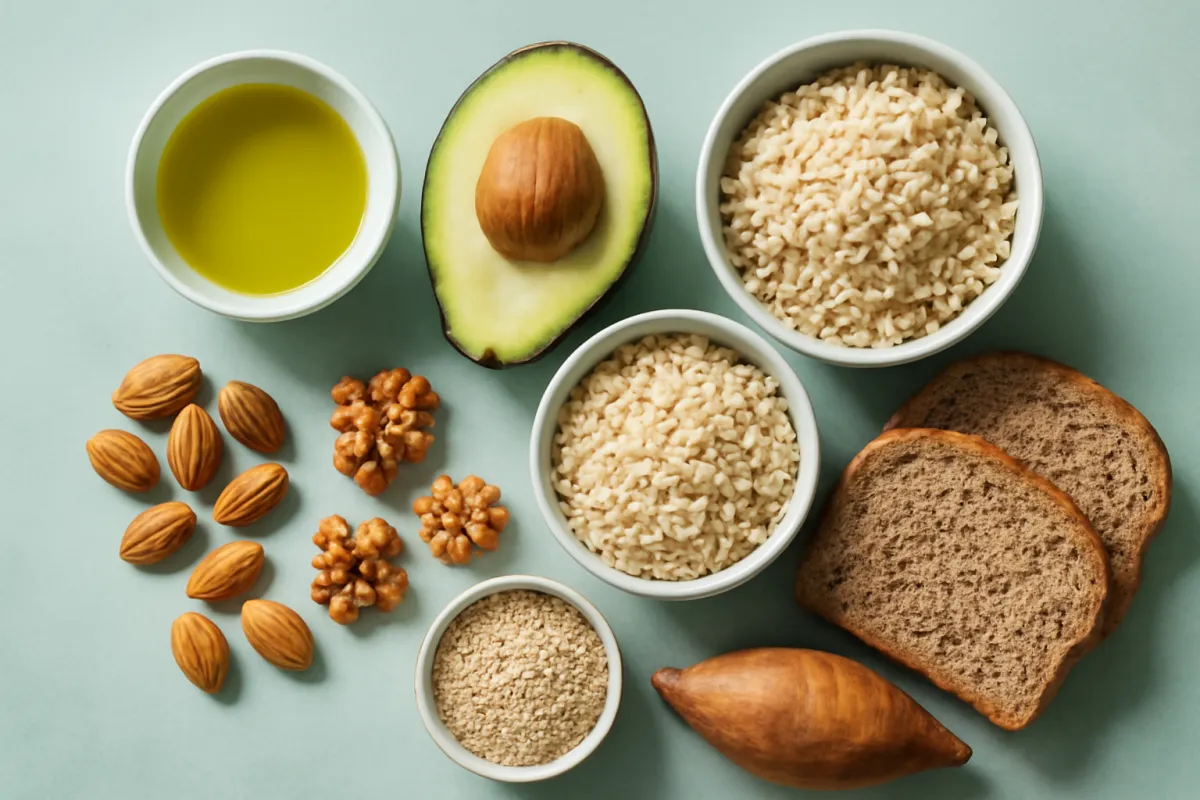
Protein is on the board, so fat comes next, and here the logic flips: fat is usually set as a percentage of your total calories rather than tied to body weight. Dietary fat is essential, it supports hormones and the absorption of certain vitamins, and it should not be driven too low, so this step is partly about hitting a sensible floor and partly about deciding how much of the remaining budget you want in fat versus carbohydrate.
A commonly cited illustrative range for fat is about 20 to 35 percent of total calories, with a general lower guardrail often placed around 20 percent so intake does not drop too far. A reasonable middle choice is 25 percent. Taking the example’s 2,000-calorie target, 25 percent is 500 calories from fat. To turn that into grams, divide by fat’s calorie value of about 9: 500 divided by 9 is roughly 56 grams of fat a day. Where you land inside the range is partly preference, since some people feel better with a bit more fat and less carbohydrate and others the reverse, and both can work.
The caveat is to respect that lower guardrail. Cutting fat very low to free up calories for other macros can leave you feeling worse and is rarely worth it, so keep fat in its range rather than sacrificing it. As with every figure here, the percentages are population reference points, not a personal prescription, and anyone managing cholesterol, heart conditions, or another concern where fat type and amount matter should follow their clinician’s guidance over any general share.
Step 5: Fill the rest with carbs and convert to grams
The last step is the satisfying one, because carbohydrate is simply whatever calories remain after protein and fat are set. You do not choose a carb percentage; you let it fall out of the arithmetic, which is exactly why the order of these steps matters. Add up the calories already claimed, subtract from your target, and convert the remainder to grams.
Run the example all the way through. The target is 2,000 calories. Protein took 140 grams at 4 calories each, which is 560 calories. Fat took 56 grams at 9 calories each, which is about 500 calories. Together that is 1,060 calories spoken for, leaving 940 calories for carbohydrate. Since carbohydrate carries about 4 calories per gram, divide 940 by 4 to get 235 grams of carbohydrate a day. That completes the split: about 140 grams of protein, 56 grams of fat, and 235 grams of carbohydrate, which is the four-four-nine math working in reverse from calories back to grams.
Do one quick check to catch errors: multiply each gram figure by its calorie value and add them up. Here that is 560 plus 500 plus 940, which lands right back at 2,000, confirming the split adds up. If your three numbers do not return roughly your target, you have a slip somewhere to hunt down. Watch out for fearing this carbohydrate number: carbohydrate is the body’s main fuel, especially for activity, and it landing as the largest share on many splits is normal and fine, as our carbohydrate evidence review explains. Quality still matters more than the raw gram count, so build most of it from whole, fiber-rich foods. The companion below does this subtraction for your own numbers automatically.
A worked example: from calories to a full macro split
Pulling the five steps together in one place shows how quickly a pile of guesses becomes a clean split. Meet an illustrative person: a 175-pound, moderately active adult who wants to lose fat gradually while keeping muscle. Nothing here is a recommendation for any real person; it is one scenario run through the method so the arithmetic is concrete.
Step 1, calories: their maintenance estimate comes out near 2,500 calories a day. Step 2, goal: wanting gradual fat loss, they apply a moderate 500-calorie deficit, setting the working target at 2,000 calories. Step 3, protein: at 0.8 gram per pound, 175 pounds gives 140 grams of protein, claiming 560 calories. Step 4, fat: choosing 25 percent of 2,000 calories gives 500 calories of fat, which divided by 9 is about 56 grams. Step 5, carbohydrate: subtracting the 1,060 calories already used from 2,000 leaves 940 calories, or 235 grams of carbohydrate.
The finished split is roughly 140 grams of protein, 56 grams of fat, and 235 grams of carbohydrate on 2,000 calories. As a share of calories that is about 28 percent protein, 25 percent fat, and 47 percent carbohydrate, which the chart below lays out. Notice how it reads: protein anchored to the body, fat at a sensible quarter, carbohydrate filling the rest. Change one input, say the goal shifts to maintenance at 2,500 calories, and only the downstream numbers move: protein stays near 140 grams, while fat and carbohydrate both rise to use the larger budget. That is the point of building the split yourself, because every number has a reason and every one is adjustable.
An illustrative daily macro split (share of calories)
The worked example's 2,000-calorie split by share of calories: protein anchored to body weight, fat at a quarter, carbohydrate filling the rest. Shares sum to 100 percent.
Segments show each macro's illustrative share of calories in the worked example. A real split shifts with body weight, activity, goal, and preference; this is a reference shape, not a target.
A second worked example: macros for muscle gain
The first worked example ran a fat-loss day; a second, aimed the other way, shows that the same five steps handle a completely different goal without changing the method. Meet another illustrative person: a 200-pound, very active adult who trains hard most days and wants to gain muscle gradually. As before, this is one scenario run through the arithmetic, not advice for any real person.
Step one, calories: a larger, very active body carries a higher maintenance estimate, and for this person the two-part calculation lands near 3,000 calories a day. Step two, goal: wanting to gain lean mass rather than fat, they add a modest surplus, around 300 calories, setting the working target at roughly 3,300 calories. A modest surplus is deliberate, since a large one mostly adds fat, as the goal section explained.
Step three, protein: at a middle figure near 0.9 gram per pound for someone active and building, 200 pounds gives about 180 grams of protein, which at 4 calories per gram claims 720 calories. Step four, fat: choosing 30 percent of 3,300 calories gives about 990 calories of fat, which divided by 9 is roughly 110 grams. Step five, carbohydrate: subtracting the 1,710 calories already assigned from 3,300 leaves about 1,590 calories, or near 400 grams of carbohydrate at 4 calories per gram, a large figure that makes sense for someone whose training burns through fuel.
The finished split is roughly 180 grams of protein, 110 grams of fat, and 400 grams of carbohydrate on 3,300 calories. Set beside the fat-loss example, the contrast is instructive: the protein per pound is similar, but the higher calorie budget and the surplus send far more of the total to carbohydrate, which fuels the training that muscle gain depends on. Nothing about the method changed, only the inputs and the direction of the calorie adjustment. Run the quick check, 720 plus 990 plus 1,590 returns 3,300, and the split holds together. Every figure here is an illustrative reference rather than a target, and anyone building a plan around a health condition or a specific athletic goal should set the numbers with a professional.
Adjusting your macros over time
The numbers you just calculated are a first draft, not a verdict, and treating them as fixed is a quiet mistake. They rest on an estimated calorie figure, which itself rests on population averages, so the honest way to use them is to set them, eat to them consistently, and let real results refine them. Your body is the final calculator.
A common general approach is to hold your macros steady for two to three weeks while you track how your weight trend, energy, hunger, sleep, and training respond. Two weeks matters because day-to-day weight swings with water, salt, and digestion, so a single week can mislead. If after two or three weeks a fat-loss goal has clearly stalled, you might trim calories modestly, usually from carbohydrate or fat while protein holds, and if you are losing too fast or feeling wrecked, you nudge them back up. Adjust in small steps of roughly 100 to 200 calories rather than large swings, since overcorrecting just trades one problem for another.
Your targets also drift as you do. As body weight changes, your calorie needs and your weight-based protein figure change with them, so a split that fit at 175 pounds needs refreshing at 160. Activity, age, and life circumstances shift the picture too. None of this is a reason to recalculate obsessively, only a reminder that macros are a living estimate to revisit every so often, not a number to defend. Any meaningful change to how you eat is worth discussing with a professional if you manage a health condition.
Common mistakes when calculating macros
Most macro errors are not math slips but framing slips, and each is easy to sidestep once named.
- Guessing your calories. This is the big one. Every macro number is a slice of your calorie figure, so if that figure is wrong, all three grams are wrong. Spend your care on step one, and use a proper estimate rather than a hunch.
- Setting protein too low. Leaving protein as an afterthought, whatever is left after fat and carbs, is backwards. Protein is the macro to protect, especially in a deficit, so set it first and anchor it to your body weight.
- Fearing carbohydrate or fat. Cutting carbs to near zero or driving fat below its sensible floor to look “cleaner” usually backfires, hurting energy, hormones, and how sustainable the plan feels. Both are needed; balance beats elimination.
- Chasing false precision. Agonizing over whether carbs are 233 or 240 grams misses that the whole thing is an estimate with a real margin. Close is the goal; perfect is a mirage.
- Never adjusting. Calculating once and never revisiting ignores that your body and your results are the real feedback. Macros are meant to be tuned over weeks, not set in stone.
- Ignoring food quality. Hitting your grams from soda and refined snacks is not the same as hitting them from whole foods, even when a tracker shows identical numbers. The split is a frame, not a free pass.
Clear these six and the method does its job calmly, without the anxiety that makes people quit.
Troubleshooting and edge cases
A few common situations change the practical details, though never the five-step logic itself. What if you are vegetarian or vegan? The method is identical, but you will usually build protein from a wider spread of sources such as legumes, tofu, tempeh, soy foods, seitan, and higher-protein grains, some of which also carry carbohydrate that counts toward your day. Reaching a high protein figure can take a little more planning, but it is entirely doable, and our protein evidence review covers plant sources.
What if you are very active or an endurance athlete? Your calorie needs in step one climb steeply, and carbohydrate, the fuel that refills the energy your training burns, tends to take a larger share in step five. Protein may also sit toward the upper end of its range. Serious training is exactly the situation where a sports dietitian can tailor numbers a general framework only approximates.
What if your weight has plateaued for weeks? First confirm it is a genuine plateau, meaning two to three weeks with no trend, not normal daily noise. Then check that you are actually eating your targets consistently, since drift and untracked extras are the usual culprits before the math is at fault. If it holds, a small downward nudge in calories is the typical next move, made gradually.
What if you have a medical condition? This is the important one. Diabetes, kidney disease, heart conditions, pregnancy, eating disorders, and other situations can make a generic macro split inappropriate or even risky, and they call for individualized guidance that overrides any general figure here. If any of these apply to you, treat this walkthrough as background reading only and set your actual numbers with a doctor or registered dietitian.
Do you even need to count macros?
It is worth stepping back, because the honest answer is that many people reach their goals without calculating a single gram. Counting macros is a tool, useful for some and unnecessary or even harmful for others, not a requirement of eating well. Its real value is educational and structural: doing the calculation once teaches you where calories come from, why protein deserves priority, and what a balanced day actually looks like, and that understanding often outlasts the tracking itself.
For some people, a period of tracking builds awareness they keep for good, after which they eat by informed habit rather than by numbers. For others, especially anyone prone to rigid or anxious thinking about food, detailed counting can tip into an unhealthy relationship with eating, and for them the whole exercise is best skipped. A gentler alternative that captures much of the benefit is the plate model: fill roughly a quarter of the plate with a protein, a quarter with a whole-food carbohydrate, half with vegetables, and add a little healthy fat, which lands most people in a reasonable neighborhood without a calculator. If you do decide to track, our walkthrough on how to count macros covers the day-to-day side, from reading labels to logging food in an app. Use macros if they genuinely help you, drop them if they do not, and if food and body image are a struggle, that is a conversation for a professional rather than a spreadsheet.
Your macro calculation checklist
Keep this short routine on hand to run the method any time, whether you are setting up for the first time or refreshing your numbers.
- Estimate your maintenance calories honestly, using a proper equation and a realistic activity level rather than a guess.
- Adjust for your goal, subtracting a moderate deficit to lose, holding steady to maintain, or adding a modest surplus to gain.
- Set protein first, anchored to your body weight in the commonly cited illustrative range, and protect it.
- Set fat as a share of calories, keeping it inside its sensible range and above the lower floor.
- Fill the rest with carbohydrate, converting the leftover calories to grams at about 4 per gram.
- Check the math by multiplying each gram figure by its calorie value and confirming the three sum back to your target.
- Revisit every few weeks, letting your real results, not the calculator, have the final say, and refreshing as your body changes.
Run your own weight, calories, and goal through the companion below to see where an illustrative split lands for you.
The bottom line
Calculating your macros is far less mysterious than the finished numbers make it look, because it is really just one calorie figure divided up in a sensible order. Estimate your maintenance calories, adjust them for whether you want to lose, maintain, or gain, set protein first against your body weight, set fat as a share of your calories, and let carbohydrate soak up the rest, converting each to grams with the fixed four-four-nine values. Run through the example and you get roughly 140 grams of protein, 56 grams of fat, and 235 grams of carbohydrate on a 2,000-calorie fat-loss day, every number traceable to a reason and every one adjustable. Treat the result as a living first draft to test and refine over weeks, not a rule to obey, keep the quality of the food ahead of the precision of the grams, and remember that counting is an optional tool rather than a requirement. Every figure here is a commonly cited, illustrative reference rather than a personal prescription, so pair it with our calorie, protein, and carbohydrate evidence reviews, and confirm anything specific to your health, goals, or conditions with a qualified professional.
This evidence review is published for general education and describes a commonly cited, illustrative method for estimating macronutrient targets, not medical, nutritional, or dietary advice, and reading it creates no clinician-patient relationship. Every calorie figure, gram amount, percentage, and range above is a population reference or worked example rather than a measurement or a personal recommendation, and real bodies, foods, and results vary widely. Calorie and macronutrient needs differ from person to person with body size, activity, age, and health, and some situations, including diabetes, kidney disease, heart conditions, pregnancy, and any history of disordered eating, call for individually managed nutrition that overrides any general figure here. For a macro plan suited to your body, goals, medications, or any medical condition, and before changing how you eat, consult a qualified health professional such as a doctor or registered dietitian.
Frequently asked questions
How do you calculate your macros step by step?
The commonly cited method works in one direction, from calories down to grams. First estimate your daily maintenance calories, then adjust that number up or down for your goal, then set protein based on your body weight, then set fat as a share of your calories, and finally give the calories that remain to carbohydrate. Each macronutrient has a fixed energy value, about 4 calories per gram for protein and carbohydrate and about 9 for fat, so dividing calories by those numbers turns each target into grams. This is a general educational framework rather than a personal prescription, and anyone with a health condition or specific goal should confirm the numbers with a registered dietitian.
What is a good macro split for most people?
There is no single correct split, which is why general guidance gives wide ranges rather than one answer. A commonly cited illustrative starting point is roughly 25 to 35 percent of calories from protein, about 20 to 35 percent from fat, and the rest, often around 40 to 50 percent, from carbohydrate, though active people, less active people, and different food preferences all shift these shares. The more useful idea is to anchor protein to your body weight first, keep fat above a sensible minimum, and let carbohydrate flex around your activity. These percentages are population reference figures, not a plan for any one person, and a professional can tailor them to you.
How much protein should I set when calculating macros?
Protein is usually set first because it is the macronutrient most often tied directly to body weight rather than to a percentage of calories. Commonly cited illustrative ranges run from roughly 0.7 to 1.0 gram of protein per pound of body weight for people who are active or trying to preserve muscle while losing fat, with a general baseline near 0.36 grams per pound for mostly sedentary adults. For a 175-pound person, a middle figure near 0.8 grams per pound works out to about 140 grams a day. These are general reference figures rather than a personal target, and needs vary with age, activity, kidney health, and goals, so confirm yours with a professional.
How do I turn my macro percentages into grams?
Every macronutrient has a fixed calorie value, so the conversion is simple arithmetic. Protein and carbohydrate each supply about 4 calories per gram, and fat supplies about 9. To turn a target into grams, take the calories assigned to that macronutrient and divide by its calorie value: 500 calories of fat divided by 9 is about 56 grams, and 940 calories of carbohydrate divided by 4 is about 235 grams. Doing this for all three should return you close to your total calorie figure, which is a useful check. These conversions are illustrative examples of the math, not personal recommendations.
Do I need to calculate macros to lose weight?
No. Weight change tracks your overall energy balance rather than any exact macro split, and many people reach their goals without ever counting a gram. Calculating macros is a tool that helps some people eat enough protein, stay reasonably consistent, and understand where their calories come from, but it is optional and can become counterproductive if it turns into rigid obsession. If tracking helps you eat with more awareness, it is useful; if it fuels anxiety around food, it is not the right tool. Anyone with a history of disordered eating should be especially cautious and speak with a professional before tracking.
How often should I recalculate my macros?
Your macros are an estimate built on other estimates, so they are meant to be revisited rather than set once. A common general approach is to hold your numbers steady for a few weeks, watch how your weight, energy, hunger, and performance respond, and adjust only if the trend clearly stalls or moves the wrong way for two to three weeks. Your calorie needs also shift as your body weight, activity, and age change, so a figure that fit six months ago may need refreshing. Adjust in small steps rather than large swings, and treat any change to diet as something to discuss with a professional if you have a health condition.
Can vegetarians and vegans calculate macros the same way?
Yes, the five-step method is the same regardless of what foods fill the plate, because it works from calories and grams rather than from specific foods. The practical difference is that plant-forward eaters often reach their protein target from a wider spread of sources, such as legumes, tofu, tempeh, seitan, soy foods, and higher-protein grains, some of which also carry meaningful carbohydrate that counts toward the day. That can make hitting a high protein figure take a little more planning, but it is entirely doable. This is general information, and anyone following a restrictive pattern who is unsure about meeting their needs should work with a registered dietitian.
Are online macro calculators accurate?
They are reasonable starting estimates, not precise measurements. Every calculator rests on population-average equations for calorie needs and on assumptions about your activity, both of which can be off for any individual, so two calculators can hand you noticeably different numbers. The honest way to use one is as a first draft: take its output, eat to it consistently for a few weeks, and let your real-world results refine the figure. The companion on this page follows the same commonly cited method and is offered for education, not as a personal target, and it does not replace advice from a qualified health professional.