What's in this review
- Folate Deficiency Symptoms: The Direct Answer
- What Counts as a Folate Deficiency
- Fatigue, Weakness and the Anemia Connection
- A Sore Tongue and Mouth Ulcers
- Irritability and Mood Changes
- How Consistently Each Finding Is Associated With Low Folate
- Why Pregnancy Changes This Entire Conversation
- Why Folic Acid Fortification and Supplementation Exist
- Folate Reference Intakes by Age and Life Stage
- Dietary Folate Versus Folic Acid: Why They Are Counted Differently
- Who Is at Higher Risk of Folate Deficiency
- Alcohol Use and Folate Status
- Methotrexate and Other Folate-Interfering Medications
- An Illustrative Risk Picture, by Factor
- Folate and Vitamin B12: Why They Are Tested Together
- The MTHFR Question, Addressed Honestly
- The Only Way to Know: A Blood Test
- What Happens After a Result
- Folate Food Sources: A Reference Table
- A Short Folate-Forward Shopping List
- Common Misunderstandings About Folate Deficiency
- Hemolytic Anemias and Other Conditions That Raise Folate Demand
- Why Folate Deficiency Develops Faster Than B12 Deficiency
- When to See a Doctor
- The Bottom Line
Short answer: Folate deficiency symptoms are commonly linked to fatigue, a sore tongue, mouth ulcers, and irritability, connected to the same impaired red blood cell production process as vitamin B12 deficiency. In adults, folate deficiency anemia generally responds well to correction. The far more serious consideration is pregnancy, where inadequate folate around conception and in the earliest weeks is strongly associated with neural tube defects in the developing baby, which is why folic acid guidance targets anyone who could become pregnant, not only confirmed pregnancies.
Folate deficiency symptoms, read in isolation, look like a fairly ordinary entry on this site’s list of nutrient deficiencies: fatigue, a sore tongue, some irritability, all nonspecific and all resolving well once corrected. That description, while accurate for most adults, badly undersells why folate receives the specific public health attention it does, which has almost nothing to do with how deficiency feels to the person experiencing it and almost everything to do with a developing baby in the earliest weeks of pregnancy, often before anyone knows a pregnancy exists at all.
This evidence review works through what clinical references associate with low folate in general, why pregnancy changes the entire conversation, who else is at higher risk, the well-documented overlap with vitamin B12 deficiency, and the honest, measured answer to the frequently asked MTHFR gene question. Nothing here is a diagnosis or a substitute for a doctor. For the closely related B12 picture, see our vitamin B12 deficiency symptoms review. You can sketch your own risk picture in the companion below.
Key takeaways
- Fatigue, a sore tongue, mouth ulcers, and irritability are the folate deficiency findings most consistently named in clinical references, connected to the same impaired cell-division process as vitamin B12 deficiency.
- In adults, folate deficiency anemia generally responds well to correction once identified, without the longer-term risk profile associated with significant B12 deficiency.
- Adequate folate before conception and in the earliest weeks of pregnancy is strongly associated with a reduced risk of neural tube defects, which is why folic acid guidance targets anyone who could become pregnant.
- Alcohol use, malabsorptive conditions, certain medications including methotrexate, and pregnancy are the risk factors named most consistently for acquired folate deficiency.
- Folate and vitamin B12 deficiency can look alike on a basic blood count, and high-dose folate can mask the specific signs that would otherwise point toward B12 deficiency, which is why both are often checked together.
Folate Deficiency Symptoms: The Direct Answer
Ask what folate deficiency symptoms look like in an adult and clinical references name a fairly contained cluster: fatigue and weakness, a sore, red, and sometimes smooth-looking tongue, mouth ulcers, and irritability or mood changes. These connect to the same underlying mechanism discussed for vitamin B12 deficiency elsewhere on this site, since folate and B12 are both required for the same cell-division process central to producing healthy red blood cells, and a shortfall in either can produce a similar pattern of anemia.
As with every deficiency on this site, each of these findings is nonspecific. Fatigue has an enormous list of ordinary causes, mouth ulcers happen to people with entirely adequate folate status, and irritability is one of the least specific symptoms in medicine. None of these findings was identified by isolating folate deficiency as their one cause; they are associations observed more often in people with confirmed low folate, which is weaker evidence than a symptom pointing at one cause alone.
What Counts as a Folate Deficiency
“Deficiency” describes a measured shortfall, generally a blood folate level, below a threshold associated with the symptoms described on this page. Thresholds and the specific test used vary somewhat by laboratory, which is one reason a result belongs with a clinician rather than a fixed number quoted in an article.
Unlike vitamin B12, which the body stores in a substantial reserve that can take years to run down, folate body stores are comparatively modest, and reference sources generally describe folate deficiency as capable of developing over a period of weeks to a few months of inadequate intake or increased loss, considerably faster than the B12 picture covered elsewhere on this site and a point worth remembering throughout the rest of this page. This difference in timeline is one of the more practically important distinctions between the two nutrients, despite their closely related roles.
Fatigue, Weakness and the Anemia Connection
Fatigue and weakness are the symptoms most frequently mentioned in patient-facing summaries of folate deficiency, connected to the same mechanism discussed for B12: when folate-dependent cell division is disrupted, the red blood cells produced can be fewer or abnormally large, a pattern called megaloblastic anemia, and less effective at carrying oxygen, which the body commonly experiences as tiredness.
This anemia is, in adults outside of pregnancy, generally described in reference sources as responding well to correcting the folate shortfall once identified, without the slower, more prolonged course sometimes seen with significant B12 deficiency. That does not make the symptom itself diagnostic; fatigue remains one of the least specific symptoms in medicine, and a clinician investigating persistent fatigue considers many more common explanations before folate specifically, including sleep, thyroid function and iron status.
A Sore Tongue and Mouth Ulcers
A sore, red, sometimes smooth-looking tongue, a finding called glossitis, and mouth ulcers are named in clinical references as recognized findings in folate deficiency, connected to the same rapid cell-turnover process in the lining of the mouth and tongue that is disrupted alongside red blood cell production. This finding closely resembles what our vitamin B12 deficiency symptoms review describes for low B12, for exactly the shared mechanistic reason.
This finding is comparatively more specific than fatigue, though it is still not exclusive to folate deficiency, since a sore or inflamed tongue and mouth ulcers have other nutritional and non-nutritional causes as well. A persistent sore tongue or recurring mouth ulcers, especially alongside fatigue or other items on this list, is a reasonable thing to mention at an appointment rather than to treat repeatedly with an over-the-counter mouth product.

Irritability and Mood Changes
Irritability and other mood changes are discussed in reference sources as associated with folate deficiency, though, as with every mood-related finding on this site, this connection is harder to attribute cleanly to one nutrient than a physical finding like glossitis is, given how common mood changes are for entirely unrelated reasons. Mood changes have an enormous number of more common causes entirely unrelated to folate status, and this finding should be read as one supporting piece of a larger clinical picture rather than a symptom worth self-diagnosing from.
How Consistently Each Finding Is Associated With Low Folate
How consistently each finding is linked to low folate
An ordinal reading of how often each item is named in clinical references and how well-established the mechanism behind it is. Not a probability, and not a score for any individual.
Bar length reflects how consistently patient-facing clinical references name each item, scaled to fatigue at 80. A reading aid built by this evidence review, not a published score or a diagnostic tool.
Why Pregnancy Changes This Entire Conversation
Everything written above describes folate deficiency as a manageable, generally reversible condition in adults, and that framing is accurate for non-pregnant adults. It is also almost beside the point for why folate is one of the most heavily emphasized nutrients in public health guidance, which has far less to do with adult symptoms and far more to do with a specific, serious risk to a developing baby.
Adequate folate before conception and during the earliest weeks of pregnancy, often before a pregnancy test turns positive, is strongly associated in reference sources with a reduced risk of neural tube defects, a category of serious birth defect affecting the brain and spinal cord, including conditions named spina bifida and anencephaly. Because the neural tube forms very early, within the first month of pregnancy, folate status at the time of conception and shortly after matters more than folate status discovered and corrected after a pregnancy is confirmed, which is the entire reason folic acid guidance targets anyone who could become pregnant rather than only people who are already pregnant.
Why Folic Acid Fortification and Supplementation Exist
The neural tube defect risk described above is the direct reason mandatory folic acid fortification of enriched grain products exists in several countries, including the United States, introduced specifically to raise population folate status broadly rather than relying on individual supplementation alone, since many pregnancies are not planned and the critical window closes before many people know they are pregnant. This fortification approach is credited in public health literature with measurably reducing neural tube defect rates since its introduction, a frequently cited example of a population-level nutrition policy with a demonstrable health outcome attached to it.
On top of fortification, a folic acid supplement is specifically and commonly recommended for anyone who could become pregnant, generally started before conception when a pregnancy is planned, which is a meaningfully different timeline than waiting for a positive pregnancy test to act. This evidence review does not state a specific dose, since that belongs with a doctor or the clinician providing preconception or antenatal care, who can weigh personal risk factors, including a personal or family history of a prior neural tube defect-affected pregnancy, which changes the picture considerably.

Folate Reference Intakes by Age and Life Stage
The table below lists the commonly cited Recommended Dietary Allowance for folate, expressed in Dietary Folate Equivalents, a unit explained in the next section, in micrograms per day.
| Group | Folate, mcg DFE per day |
|---|---|
| Children 1 to 3 years | 150 |
| Children 4 to 8 years | 200 |
| Children 9 to 13 years | 300 |
| Teens 14 to 18 years | 400 |
| Adults 19 and older | 400 |
| Pregnancy | 600 |
| Breastfeeding | 500 |
The jump to 600 micrograms during pregnancy is the figure that matters most on this entire table, for the reasons covered earlier regarding neural tube development. The commonly cited Tolerable Upper Intake Level for folic acid specifically, which applies only to the synthetic form from fortified foods and supplements rather than to natural food folate, is roughly 1,000 micrograms a day for adults.
Dietary Folate Versus Folic Acid: Why They Are Counted Differently
Folate exists in two meaningfully different forms that nutrition labeling counts differently, and understanding the distinction clarifies why the reference table above uses an unusual unit. Natural folate, the kind found in leafy greens, legumes and other whole foods, is absorbed somewhat less completely than folic acid, the synthetic form added to fortified grain products and used in supplements.
To account for this absorption difference, nutrition science uses Dietary Folate Equivalents, a unit that weights folic acid roughly 1.7 times more heavily than natural food folate when both are eaten with food, and weights folic acid from a supplement taken on an empty stomach roughly twice as heavily. This is why a fortified cereal’s folic acid content contributes more DFE to a day’s total than the same microgram amount of folate from a bowl of lentils would, and it is the reason this evidence review states figures in DFE rather than in plain micrograms, consistent with how the reference figures are actually published.
Who Is at Higher Risk of Folate Deficiency
Beyond the pregnancy-specific consideration above, reference sources name a fairly consistent set of groups for general acquired folate deficiency. The companion below lets you tally how many of these ordinary factors apply to your own situation, purely as a sketch rather than a risk score.
The groups named most consistently are people with heavy or long-term alcohol use, people with malabsorptive digestive conditions such as celiac disease or inflammatory bowel disease, people taking methotrexate or certain other medications that interfere with folate metabolism, people who are pregnant or breastfeeding, and people with conditions involving increased red blood cell turnover, such as some chronic hemolytic anemias, which raises ongoing folate demand well above the general reference figure.
Alcohol Use and Folate Status
Alcohol use is named consistently in reference sources as a significant driver of low folate status, through more than one route: reduced dietary intake often associated with heavy alcohol use, impaired absorption of folate in the intestine, and increased loss through the kidneys, all discussed as contributing simultaneously. This combination is part of why folate, alongside thiamine and vitamin B6, is specifically considered in the nutritional evaluation of someone with a heavy or long-term alcohol use pattern.
This evidence review does not provide guidance on alcohol use itself, which is a larger clinical conversation belonging with a doctor who can address it alongside any nutritional consequences, including folate alongside the other B vitamins commonly affected in the same pattern.
Methotrexate and Other Folate-Interfering Medications
Methotrexate, used for certain cancers and for autoimmune and inflammatory conditions including rheumatoid arthritis, works in part by directly interfering with how cells use folate, which is precisely its intended therapeutic mechanism in those conditions rather than an accidental side effect. Because this same mechanism can also produce unwanted folate-related side effects, folic acid or a related supplement is frequently prescribed specifically alongside methotrexate to offset those effects without undermining the medication’s intended action, a balance managed entirely by the prescribing clinician rather than something a patient should adjust independently.
Certain anti-seizure medications and a small number of other drugs are discussed in reference sources as affecting folate status through separate mechanisms. This evidence review does not name every such medication or adjust any prescribed regimen, since that is a question for the prescribing clinician or a pharmacist who understands the specific drug and the reason it was prescribed, and who can weigh whether monitoring or supplementation is warranted for that particular prescription.

An Illustrative Risk Picture, by Factor
The chart below is an illustrative example of how risk factors can stack in one plausible person, built to show the pattern rather than to describe any real individual or to assign a score.
An illustrative stack of overlapping risk factors
One illustrative example person with several documented risk factors present at once. Not a scoring system and not a real case.
Segments sum to 100 percent of one illustrative example and are not weighted probabilities, a scoring formula, or a statement about how these factors actually combine in any real person.
Folate and Vitamin B12: Why They Are Tested Together
Folate and vitamin B12 are frequently discussed and tested together because both are required for the same cell-division process behind healthy red blood cell production, and a shortfall in either can produce a similar pattern on a basic blood count, as our B12 deficiency symptoms review also notes. Reference sources flag a specific complication worth knowing: taking a high dose of folate can mask the blood count changes that would otherwise point toward a B12 deficiency, correcting the anemia’s appearance while leaving B12’s nerve-related effects to continue unaddressed underneath.
This is a reason clinicians generally want to know about both nutrients together rather than assuming a result for one tells the whole story, and it is a reason against self-treating a suspected deficiency with a folate supplement alone in the hope of covering B12 as well, a shortcut that can quietly worsen the B12 side of the picture. The two are related but genuinely distinct questions, each requiring its own test and its own corrective approach.
The MTHFR Question, Addressed Honestly
MTHFR refers to a gene involved in processing folate within the body, and common variations in this gene have become a frequent topic in wellness marketing, often paired with claims that a variant carrier needs specialized testing and high-dose, specially formulated folate supplements rather than ordinary folic acid. This evidence review addresses the question directly because it is a frequently searched term that deserves a straight answer rather than silence.
Mainstream clinical and public health guidance, as of current evidence, does not support routine MTHFR genetic testing or specialized supplementation protocols for the general population based on this variant alone, and standard folic acid guidance, including the fortification and preconception supplementation discussed earlier on this page, is considered adequate for most people regardless of MTHFR status, despite how the variant is frequently framed in popular wellness content. This is an evolving area of research, and anyone who has specific concerns, including a personal reason tied to recurrent pregnancy loss or another specific clinical situation, should raise it with a doctor rather than a product marketed directly around this gene variant, since guidance in this area can change as more research accumulates.
The Only Way to Know: A Blood Test
Every section above points toward the same conclusion for adult, non-pregnancy-specific deficiency. The only way to actually find out whether folate deficiency is present is a blood test measuring folate directly, often alongside a vitamin B12 test given the overlap described above, ordered by a clinician and interpreted alongside the person’s history and symptoms.
No symptom checklist, including the one on this page, and no online tool, including the companion calculator below, substitutes for this specific test and its clinical interpretation. The companion is built to sketch a rough risk picture from ordinary documented factors, not to estimate a blood result or offer anything resembling a diagnosis, and it does not address the separate, pregnancy-specific guidance covered earlier on this page, which applies regardless of any symptom or risk factor tally.
What Happens After a Result
If testing confirms folate deficiency in an adult, correction generally involves dietary folate or a folic acid supplement, alongside addressing the underlying cause, whether that is alcohol use, a malabsorptive condition, or a medication. As noted earlier, reference sources generally describe this correction as straightforward and the anemia as responding well once the shortfall is addressed, a notably different course from significant, prolonged B12 deficiency.
This evidence review does not recommend a dose, product or duration, because that decision depends on a specific result and cause this page does not have. Anyone of reproductive potential with a low result should discuss preconception folic acid guidance specifically with their clinician, since that conversation is distinct from simply correcting a lab value, and it may involve a different dose or timeline than correcting ordinary deficiency alone would require.
Folate Food Sources: A Reference Table
The figures below are commonly cited, approximate values for ordinary servings, useful for understanding why a varied diet including the right food groups generally supplies the reference figure without deliberate planning, outside of pregnancy’s raised requirement.
| Food | Typical serving | Folate, roughly (DFE) |
|---|---|---|
| Lentils, cooked | 1 cup | ~360 mcg |
| Black-eyed peas, cooked | 1 cup | ~355 mcg |
| Fortified breakfast cereal | 1 serving | varies; some supply 100% DV |
| Spinach, cooked | 1/2 cup | ~130 mcg |
| Asparagus, cooked | 1/2 cup | ~135 mcg |
| Black beans, cooked | 1 cup | ~255 mcg |
| Avocado | 1/2 fruit | ~60 mcg |
| Orange | 1 medium | ~40 mcg |
| Enriched white rice, cooked | 1 cup | ~90 mcg |
| Broccoli, cooked | 1/2 cup | ~50 mcg |
Legumes lead the list by a wide margin, echoing the same pattern seen for fiber and iron elsewhere on this site, and fortified grain products, mandated specifically because of the neural tube defect prevention goal discussed earlier, contribute meaningfully once the Dietary Folate Equivalent weighting is applied to their folic acid content.
A Short Folate-Forward Shopping List
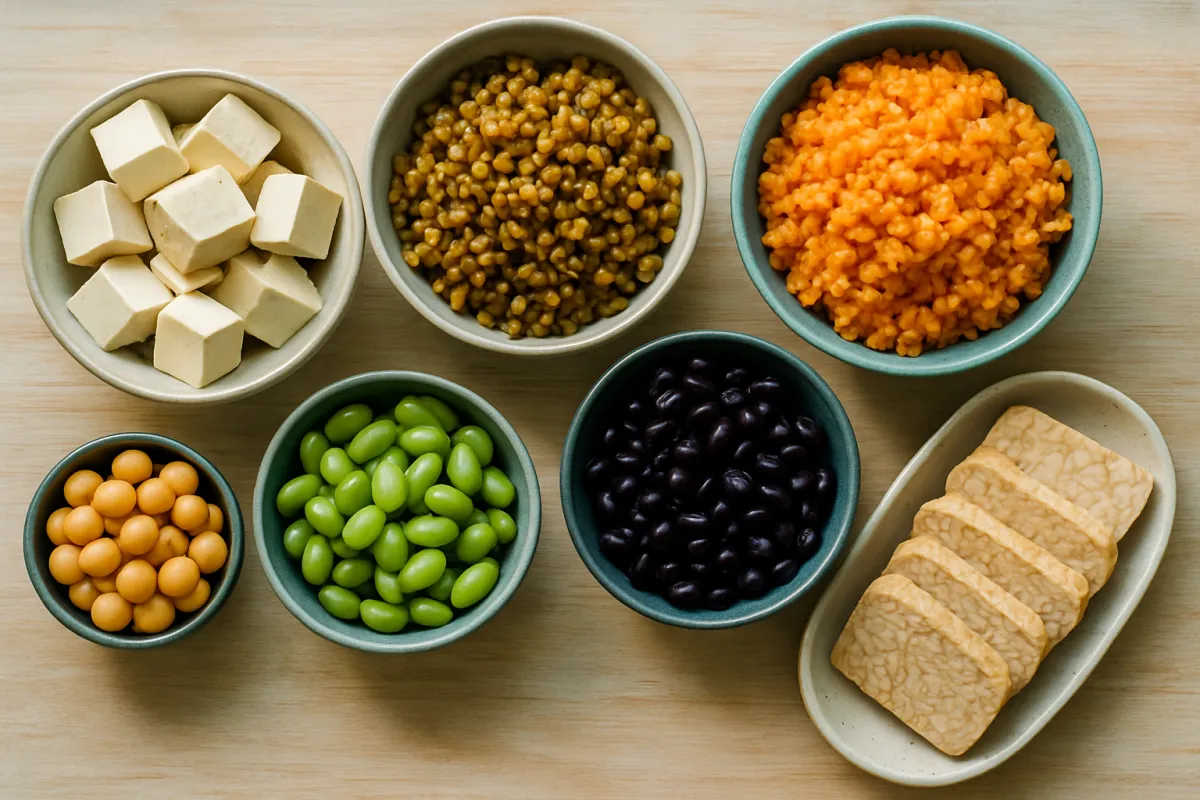
For anyone wanting to raise dietary folate, a short list beats an exhaustive one. Lentils and black-eyed peas lead by a wide margin and keep well dried or canned, making them a practical pantry staple rather than something requiring a special trip. Black beans and chickpeas round out the legume side of the list nicely.
Spinach and asparagus are the standout vegetables, both easy to add to an existing meal without much preparation or any special cooking technique. Checking a cereal box for its percent Daily Value of folate is worth doing specifically for anyone trying to raise their intake through breakfast, since fortified products vary considerably by brand and the panel is the only reliable figure for a specific box rather than any generic chart entry. Oranges and avocado round out the list as easy additions that require no cooking at all and fit naturally into an existing grocery routine.
Common Misunderstandings About Folate Deficiency
The first mistake is assuming folate deficiency is primarily an adult health concern comparable to iron or B12 deficiency, when its single most serious consequence involves a developing baby during the earliest weeks of pregnancy rather than the deficient adult’s own symptoms. The second is assuming folic acid only matters once a pregnancy is confirmed, when the critical window for neural tube development closes earlier than most pregnancies are typically diagnosed.
The third mistake is self-treating a suspected B12 deficiency with a folate supplement, believing the overlapping symptoms mean either nutrient will do, when high-dose folate can specifically mask the warning sign that would otherwise prompt B12 testing. The fourth is assuming an MTHFR gene variant, once discovered or suspected, requires a specialized supplement regimen, when mainstream guidance does not currently support that approach for most people. The fifth mistake is assuming folate deficiency behaves like vitamin B12 deficiency in every respect simply because the two are closely related and often tested together, when the body’s much smaller folate reserve means the practical timeline, and often the urgency, genuinely differs between the two.
Hemolytic Anemias and Other Conditions That Raise Folate Demand
Conditions involving increased red blood cell turnover, including certain chronic hemolytic anemias, are named in reference sources as raising folate demand above the ordinary reference figure, because the body is replacing red blood cells at a faster rate than usual and folate is specifically required for producing each new batch. This is a mechanism distinct from reduced intake or impaired absorption, the drivers behind most of the other risk factors covered on this page, and it means someone with such a condition can develop a folate shortfall despite an entirely adequate diet if supplementation appropriate to their condition is not also in place, which is an important nuance for anyone assuming diet alone explains every case.
Management of folate status in this context is generally handled as part of the broader care for the underlying blood condition, with a hematologist or the managing specialist determining whether ongoing folate supplementation is appropriate, rather than following the general population guidance described elsewhere on this page, since the right approach depends heavily on the specific condition and how actively it is being managed. Anyone with a known condition of this kind who has not discussed folate specifically with their specialist has a reasonable, concrete reason to raise it.
Why Folate Deficiency Develops Faster Than B12 Deficiency
The comparison to vitamin B12, raised earlier regarding body stores, is worth returning to because it has a genuinely practical consequence for how each deficiency is investigated. The body’s folate reserve is generally described as modest relative to daily need, commonly discussed in terms of a few months’ worth, compared with the B12 reserve, which can cover years in many people, as our B12 deficiency symptoms review explains.
The practical upshot is that a folate shortfall tends to show up, and tends to resolve, considerably faster than a B12 shortfall once the underlying cause is addressed. A recent, relatively short-term change in diet or alcohol use is a more plausible explanation for a folate problem than it generally is for a confirmed B12 deficiency, which is one of the pieces of context a clinician weighs when investigating a low result in either nutrient, alongside the rest of a person’s history and presentation.
When to See a Doctor
Raise folate with a clinician if you are planning a pregnancy or could become pregnant and have not discussed preconception folic acid guidance, regardless of whether you have any symptoms at all, since this guidance is preventive rather than something to wait on. Raise it also if you have persistent fatigue, a sore tongue, or recurring mouth ulcers that have not resolved with an obvious explanation ruled out.
Anyone with heavy or long-term alcohol use, a malabsorptive digestive condition, a relevant medication such as methotrexate, or a condition involving increased red blood cell turnover has a specific, concrete reason to mention folate status at a relevant appointment. Anyone being evaluated for one of the anemia-related findings on this page should expect both folate and B12 to be considered together, given the overlap described above, rather than being surprised that a doctor orders both tests at once.
The Bottom Line
Folate deficiency symptoms, where they occur in adults, most consistently mean fatigue, a sore tongue, mouth ulcers, and irritability, generally responding well to correction once identified. That relatively contained picture, however, is not why folate matters so much in public health guidance. Adequate folate before conception and in the earliest weeks of pregnancy is strongly associated with a reduced risk of neural tube defects in a developing baby, which is why folic acid guidance deliberately targets anyone who could become pregnant rather than only confirmed pregnancies.
Alcohol use, malabsorptive conditions, certain medications including methotrexate, and pregnancy itself are the risk factors named most consistently for acquired deficiency, and folate’s close relationship with vitamin B12 means the two are often tested and considered together rather than in isolation. None of that adds up to a self-diagnosis. The only way to actually know is a blood test, and the pregnancy-specific guidance applies regardless of any symptom at all, since waiting for a symptom to appear defeats the entire purpose of that particular recommendation.
This evidence review is published for general education about folate deficiency and the symptoms, risk factors, and pregnancy-specific guidance commonly discussed alongside it, reproducing commonly cited associations and reference intakes. It is not medical advice, does not diagnose or rule out any condition, and reading it creates no clinician-patient relationship. Every symptom described here is nonspecific and has other, often more common, explanations, and none of them, alone or in combination, confirms a deficiency. The relative-consistency chart and the illustrative risk-factor chart are reading aids built by this evidence review, not published scores, diagnostic tools, or statements about any individual. The discussion of MTHFR reflects mainstream clinical and public health guidance as generally described in reference sources at the time of writing and is not a statement about any individual’s genetic results or situation. Nothing here recommends any dose, product, route, test, or course of action for any person, and no specific medication beyond methotrexate is named, which is named because its interaction with folate is specifically and consistently documented, not as a complete list of relevant drugs. Anyone who is pregnant, breastfeeding, planning a pregnancy, or could become pregnant should discuss folic acid guidance with a doctor regardless of symptoms. Anyone with heavy or long-term alcohol use, a malabsorptive digestive condition, a relevant medication, or persistent symptoms described on this page should raise the question with a doctor, pharmacist, or registered dietitian who knows their full history.
Frequently asked questions
What are the most commonly reported folate deficiency symptoms?
Clinical references most often name fatigue and weakness, a sore and inflamed tongue, mouth ulcers, and irritability as symptoms associated with low folate, connected to the same impaired red blood cell production process discussed for vitamin B12 elsewhere on this site. Every one of these is nonspecific on its own and can come from many other causes. None of them, alone or together, confirms a deficiency, and a blood test is the only way to know your actual status.
Why is folate so important during pregnancy?
Adequate folate before conception and during the earliest weeks of pregnancy, often before a pregnancy is even confirmed, is specifically and strongly associated in reference sources with a reduced risk of neural tube defects in the developing baby, a serious category of birth defect affecting the brain and spinal cord. This is why folic acid supplementation is specifically recommended for anyone who could become pregnant, not only after a pregnancy is confirmed, and it is the single most consequential reason folate receives the attention it does in public health guidance.
Can folate deficiency and vitamin B12 deficiency look the same?
Yes, and clinical references specifically note this overlap. Both nutrients are needed for the same red blood cell production process, and a deficiency in either can produce a similar pattern of anemia on a basic blood count. A important complication is that high-dose folate can mask the blood count changes that would otherwise point toward a B12 deficiency, while leaving B12's nerve-related effects to continue unaddressed, which is why a doctor investigating either one generally checks both rather than assuming.
What is MTHFR and does it mean I need extra folate?
MTHFR refers to a gene involved in folate metabolism, and common variations in this gene are frequently discussed online as requiring special folate supplements or testing. Mainstream clinical and public health guidance does not currently support routine MTHFR testing or specialized high-dose folate protocols for the general population based on this variant alone, and standard folic acid guidance is considered adequate for most people regardless of their MTHFR status. Anyone who has seen this term and has specific concerns should discuss it with a doctor rather than a wellness product marketed around it.
Which medications can cause folate deficiency?
Methotrexate, a medication used for certain cancers and autoimmune conditions, works partly by directly interfering with folate metabolism, which is why folate or folic acid supplementation is frequently prescribed alongside it specifically to offset this effect. Certain anti-seizure medications and a few other drugs are also discussed in reference sources as affecting folate status through other mechanisms. This evidence review does not list every such medication, since that is a pharmacist's and prescriber's question specific to the drug involved.
Who is most at risk of folate deficiency?
Reference sources most consistently name people with heavy or long-term alcohol use, people with malabsorptive digestive conditions such as celiac disease, people taking methotrexate or certain other medications, people who are pregnant, and people with conditions involving rapid red blood cell turnover, which increases folate demand. Several of these can overlap in one person, and belonging to one or more groups is a reason to raise the subject at an appointment rather than a finding about your own status.
How is folate deficiency diagnosed and treated?
Diagnosis generally starts with a blood test measuring folate directly, often alongside a vitamin B12 test given the overlap described above, interpreted by a clinician alongside the person's history and symptoms. Treatment, when indicated, generally involves dietary folate or a folic acid supplement, with attention to the underlying cause, particularly where a medication or an alcohol-related pattern is responsible. This evidence review does not recommend a dose, product or duration, since that decision depends on a specific result and cause this page does not have.
Does folate deficiency cause permanent problems in adults?
In adults outside of pregnancy, folate deficiency anemia is generally described in reference sources as responding well to correction once identified and treated, without the same longer-term nerve-related risk discussed for significant, prolonged vitamin B12 deficiency on this site's companion review. The serious, largely irreversible risk specifically associated with folate is to a developing baby during early pregnancy, which is why the pregnancy guidance is emphasized so heavily throughout this evidence review rather than because adult deficiency itself is considered especially dangerous.

Hamza Hai is the editor of NourishMark. She holds an MBA and reviews the site's articles against our editorial standards, checking that every figure is labelled for what it is, that nothing is presented as verified fact without a source the reader can check, and that the writing stays useful to a non-specialist.

Dr. Shayaan Khan is the medical reviewer for NourishMark. He holds an MBBS from MGM Medical College, Navi Mumbai, and is the author of published research including a narrative review of postpartum anxiety and depression in Mental Health Science. He has taught physiology at university level. He reviews the site's health content for medical accuracy: that physiology and mechanisms are described correctly, that no claim is stated more strongly than the evidence behind it, and that anything specific to an individual reader is sent to that reader's own clinician.
Not medical advice. Dr. Khan reviews NourishMark's health content for medical accuracy. He is not a registered dietitian, he does not hold a United States practising licence, and he is not your doctor. His review does not make anything here medical advice. Always talk to a qualified health professional about your own situation, and never delay or stop care because of something you read here.